Please read our important disclaimers before using this content
What C-PTSD Actually Feels Like From the Inside (Not the Symptom List)
The ICD-11 criteria for complex PTSD can be read in ninety seconds. Those words are accurate. They are also, somehow, about someone else. This post is a felt-sense companion: a translation of what each cluster describes from the outside into what survivors often report it feels like on a Tuesday afternoon, in a body that remembers.
If you are flooded right now, the Key Takeaways, headings, and FAQ below are written to be scanned quickly instead — start there, and come back to the rest when there is more room.
Key Takeaways
- C-PTSD is more than PTSD. Under the ICD-11, complex PTSD includes all of PTSD's core symptoms plus three disturbances in self-organization: difficulty regulating emotion, a persistently negative self-concept, and disrupted relationships.1
- The felt sense is the missing layer. Symptom lists describe behavior from the outside. Recovery often begins when you can name the internal experience the list is pointing at.
- Recognition can reduce shame. Understanding that your reactions are predictable trauma adaptations — not character flaws — is consistent with the trauma-informed principle that understanding trauma responses matters.2
- A "small" reaction can be an enormous internal event. What looks from the outside like overreacting or shutting down is often a nervous system that has moved outside its window of tolerance.3
- Not feeling things can be a symptom too. Numbness, emotional blankness, and difficulty naming feelings (alexithymia) are strongly and consistently associated with PTSD — not evidence that nothing is wrong. By some estimates, a substantial share — roughly 40% or more — of people with PTSD show clinically significant alexithymia.45
"Persistent Sense of Current Threat" → Being Braced for a Blow That Already Landed
The clinical term is hypervigilance with an exaggerated startle response.6 From the inside, it does not feel like a symptom. It feels like accuracy. It feels like paying attention.
The body tunes to a frequency most people cannot hear. A particular tone in a voice, a notification sound, a certain kind of silence — and before any conscious thought arrives, the heart is already going, the jaw is already set, the eyes are already finding the exits. In someone with a history of real harm, that alarm system has learned — on the basis of real evidence — that vigilance is the price of staying safe. So it never clocks out.
The cruelty is that this looks, from the outside, like the problem itself. Others see the tension and read it as instability. They do not see that the alarm is responding to a fire that did, in fact, burn. The body remembers the heat long after the room has cooled.
"Affect Dysregulation" → No Volume Knob, Only On and Off
There is loud, and there is nothing, and almost no settings between.
A small frustration can open into a flood far out of proportion to its cause — not because the person chose that intensity, but because the brakes are gone. Then, just as suddenly: a flat, gray nothing where feeling should be. Beyond a person's window of tolerance — the band of activation in which thinking, feeling, and staying present remain possible — the nervous system tips either into hyperarousal (flooded, racing, unable to stop) or into hypoarousal (numb, shut down, far away).3 Both feel like failure from the inside. Both are, in fact, the system trying to protect itself.
Grief and anger and despair can trade places inside a single hour, creating a sense of being unreliable to oneself — as if there is no stable self underneath.
"Negative Self-Concept" → The Belief That Started Feeling Like the Ground
It is a conclusion settled long ago — so long ago that it has stopped feeling like an opinion. It simply feels like the ground.
Shame is the load-bearing wall of complex trauma. When a person is treated, over time, as the problem, the message stops sounding like an accusation from outside and starts sounding like a fact about themselves. The distortion is that it arrives as truth rather than injury — as clear-eyed honesty about one's own defectiveness. It does not argue. It simply assumes.
The symptom list cannot capture how much of the daily exhaustion of C-PTSD is the work of carrying that belief — not the dramatic episodes, but the background hum of believing, at all times, that one is fundamentally not enough.
"Re-Experiencing" → The Past Arriving Without a Timestamp
For many survivors, flashbacks do not resemble what is depicted in films. More often there is the feeling of past moments, arriving without an attached image and without any label reading this is a memory, this is then, not now.
This is what some clinicians call an emotional flashback — the affective residue of the original experience, surfacing in the present without the narrative that would allow it to be placed in time.7 The person does not think I am remembering. They simply feel, abruptly and completely, the helplessness or terror or smallness of an earlier moment, as if it were happening now.
"Avoidance" and Numbing → The Cost of Turning the Volume All the Way Down
When feeling everything is unbearable, the system learns to feel less of everything — and the dial that turns down the pain turns down the joy with it.
The term is alexithymia — difficulty identifying and describing what one feels — and it is strongly and consistently associated with trauma. Reviews estimate it affects a substantial share — by some estimates roughly 40% or more — of people with PTSD.45 Someone asks how you are, and you search honestly and find no answer — not good, not bad, just static where information should be. Feelings have not stopped occurring. The instrument that reads them has gone quiet.
This is a point worth naming directly: numbness is not proof that everything is fine. For many survivors it is frequently the opposite — a system so overloaded that, as the arousal literature describes, it has effectively thrown the breaker. The blankness is the symptom.3
What the Research Says
Complex PTSD was formally recognized as a distinct diagnosis in the ICD-11 (in use since 2022), defined as the full PTSD syndrome — re-experiencing, avoidance, and a persistent sense of current threat — plus disturbances in self-organization: affect dysregulation, a negative self-concept, and disturbed relationships.1 In one U.S. population-based survey, an estimated 3.8% of adults met criteria for complex PTSD, slightly more than the 3.4% who met criteria for PTSD without the additional cluster.8
Psychoeducation — the work of learning what your reactions are and where they come from — is consistent with trauma-informed care, which emphasizes understanding trauma responses rather than treating them as personal failings.2 You cannot regulate what you cannot name.
If any of this is landing, the next step is not to self-diagnose from a blog post. It is to bring the felt sense — not just the checklist — to someone qualified to help make sense of it. Access to trauma-informed care is not equal for everyone, and finding the right clinician can take time and persistence; that is a real barrier, not a personal failing. The list gets you in the door. The inside view is what a clinician can actually work with.
Frequently Asked Questions
Is C-PTSD an official diagnosis? Yes, in the World Health Organization's ICD-11 (in use since 2022), complex PTSD is a distinct diagnosis defined as PTSD plus three additional disturbances in self-organization.1 The American Psychiatric Association's DSM-5-TR does not list C-PTSD as a separate diagnosis; in U.S. clinical settings, much of the same clinical picture is captured within the PTSD diagnosis with additional description.9
What is the difference between PTSD and complex PTSD? Both share the core PTSD symptoms. Complex PTSD adds a layer of pervasive difficulty — with emotion regulation, self-worth, and relationships — that tends to follow prolonged or repeated trauma rather than a single event, and is associated with greater overall impairment.1
Why do I feel numb instead of upset — does that mean I am not really traumatized? No. Numbness, emotional flatness, and difficulty naming feelings are common features of trauma, not evidence against it. Alexithymia is strongly and consistently associated with PTSD; by some estimates, roughly 40% or more of people with PTSD show significant alexithymia.45 Shutting down is one of the nervous system's protective responses, not a sign that nothing is wrong.3
Why do small things set off a reaction that feels enormous? Because the reaction is often not to the small thing in front of you, but to everything it resembles. The threat-detection system responds before the reasoning brain can weigh in, and once a person is pushed outside their window of tolerance, even minor stressors can tip them into full activation or shutdown.36
Can complex PTSD get better? Trauma-focused, evidence-based treatments exist and help many people, though response varies from person to person, and no single approach is right for everyone. This post is educational and not a treatment plan — a qualified mental health professional can assess your situation and discuss options with you.2
Related Reading
- Complex PTSD: A Complete Guide to C-PTSD vs. PTSD
- Narcissistic Abuse and Complex PTSD: Why You Have C-PTSD
- Emotional Flashbacks: What They Are and How to Cope
- Hypervigilance in C-PTSD: When Your Nervous System Won't Rest
Important Notes and Disclaimers
This article is for educational and informational purposes only. It is general education and is not medical advice, not psychological advice, and not legal advice — this content does not create any professional relationship, and is not specific to the laws or clinical standards of any particular jurisdiction. It is not a substitute for professional treatment, therapy, or counsel, and is not a substitute for diagnosis by a qualified clinician. Reading it does not create a clinician–patient relationship. Complex PTSD and related conditions can only be assessed by a licensed clinician who can evaluate your individual circumstances.
The felt-sense descriptions in this post are drawn from the clinical literature on common survivor experience. They do not describe any specific person, incident, or legal matter, and should not be read as such.
If you are in crisis or thinking about harming yourself, please seek immediate help. In the U.S., call or text 988 to reach the Suicide and Crisis Lifeline (available 24/7), or call 911. If you would rather not make a call, you can text HOME to 741741 to reach the Crisis Text Line. If you are outside the U.S., contact your local emergency number or a regional crisis line.
References
- World Health Organization. ICD-11 for Mortality and Morbidity Statistics, 6B41 Complex post-traumatic stress disorder. Geneva: WHO. Stable code reference: https://icd.who.int/browse/2024-01/mms/en#585833559 (entity 6B41). Deep link: https://icd.who.int/browse11/l-m/en#/http%3a%2f%2fid.who.int%2ficd%2fentity%2f585833559 — defines complex PTSD as the core PTSD syndrome plus disturbances in self-organization (affect dysregulation, negative self-concept, disturbances in relationships). ↩
- Substance Abuse and Mental Health Services Administration (SAMHSA). SAMHSA's Concept of Trauma and Guidance for a Trauma-Informed Approach (HHS Publication No. SMA 14-4884). Rockville, MD: SAMHSA, 2014. https://store.samhsa.gov/product/samhsas-concept-trauma-and-guidance-trauma-informed-approach/sma14-4884 — describes a trauma-informed approach that emphasizes understanding trauma and trauma responses; cited here for that general principle, not as a treatment-efficacy source. ↩
- Corrigan, F. M., Fisher, J. J., & Nutt, D. J. (2011). Autonomic dysregulation and the Window of Tolerance model of the effects of complex emotional trauma. Journal of Psychopharmacology, 25(1), 17–25. https://doi.org/10.1177/0269881109354930 (PubMed: 20093318) — describes hyperarousal and hypoarousal as states outside the optimal "window of tolerance." ↩
- Frewen, P. A., Dozois, D. J. A., Neufeld, R. W. J., & Lanius, R. A. (2008). Meta-analysis of alexithymia in posttraumatic stress disorder. Journal of Traumatic Stress, 21(2), 243–246. https://doi.org/10.1002/jts.20320 (PubMed: 18404647) — meta-analytic evidence of a strong and consistent association between PTSD and alexithymia (difficulty identifying/describing emotions) across 12 studies (n = 1,095). This source establishes the association, not a prevalence figure; for prevalence estimates see [^8]. ↩
- Cloitre, M., Hyland, P., Bisson, J. I., Brewin, C. R., Roberts, N. P., Karatzias, T., & Shevlin, M. (2019). ICD-11 posttraumatic stress disorder and complex posttraumatic stress disorder in the United States: A population-based study. Journal of Traumatic Stress, 32(6), 833–842. https://doi.org/10.1002/jts.22454 (PubMed: 31800131) — U.S. population-based prevalence estimates of 3.4% (PTSD) and 3.8% (CPTSD). ↩
- National Institute of Mental Health (NIMH). Post-Traumatic Stress Disorder. U.S. Department of Health and Human Services, National Institutes of Health. https://www.nimh.nih.gov/health/publications/post-traumatic-stress-disorder-ptsd — overview of re-experiencing/intrusion, avoidance, arousal/hyperarousal (including hypervigilance and exaggerated startle), and negative cognition/mood symptom clusters. ↩
- The term "emotional flashback" is associated with the work of Pete Walker. The underlying mechanism — trauma memories intruding as vivid, affect-laden, context-free experiences that are not recognized as memories of the past — is described in Brewin, C. R., Gregory, J. D., Lipton, M., & Burgess, N. (2010). Intrusive images in psychological disorders: Characteristics, neural mechanisms, and treatment implications. Psychological Review, 117(1), 210–232. https://doi.org/10.1037/a0018113 (PubMed: 20063969). ↩
- Recent systematic reviews and meta-analyses report that alexithymia affects a substantial share of people with PTSD, with estimates including a pooled prevalence of approximately 53% (95% CI 42–65%) and systematic-review figures of roughly 42% (with a reported range of about 16–43% across populations). Prevalence varies by sample (e.g., it is notably higher in combat/veteran PTSD samples). These figures support the "roughly 40% or more" framing used in the body and FAQ; the underlying PTSD–alexithymia association is established separately by Frewen et al. (2008) [^4]. ↩
- American Psychiatric Association. Diagnostic and Statistical Manual of Mental Disorders, Fifth Edition, Text Revision (DSM-5-TR). Washington, DC: APA, 2022. https://doi.org/10.1176/appi.books.9780890425787 — the DSM-5-TR does not include complex PTSD as a separate diagnosis; in U.S. clinical settings the related presentation is generally captured within the PTSD diagnosis. ↩
Recommended Reading
From Clarity House Press — plus trusted books for deeper understanding
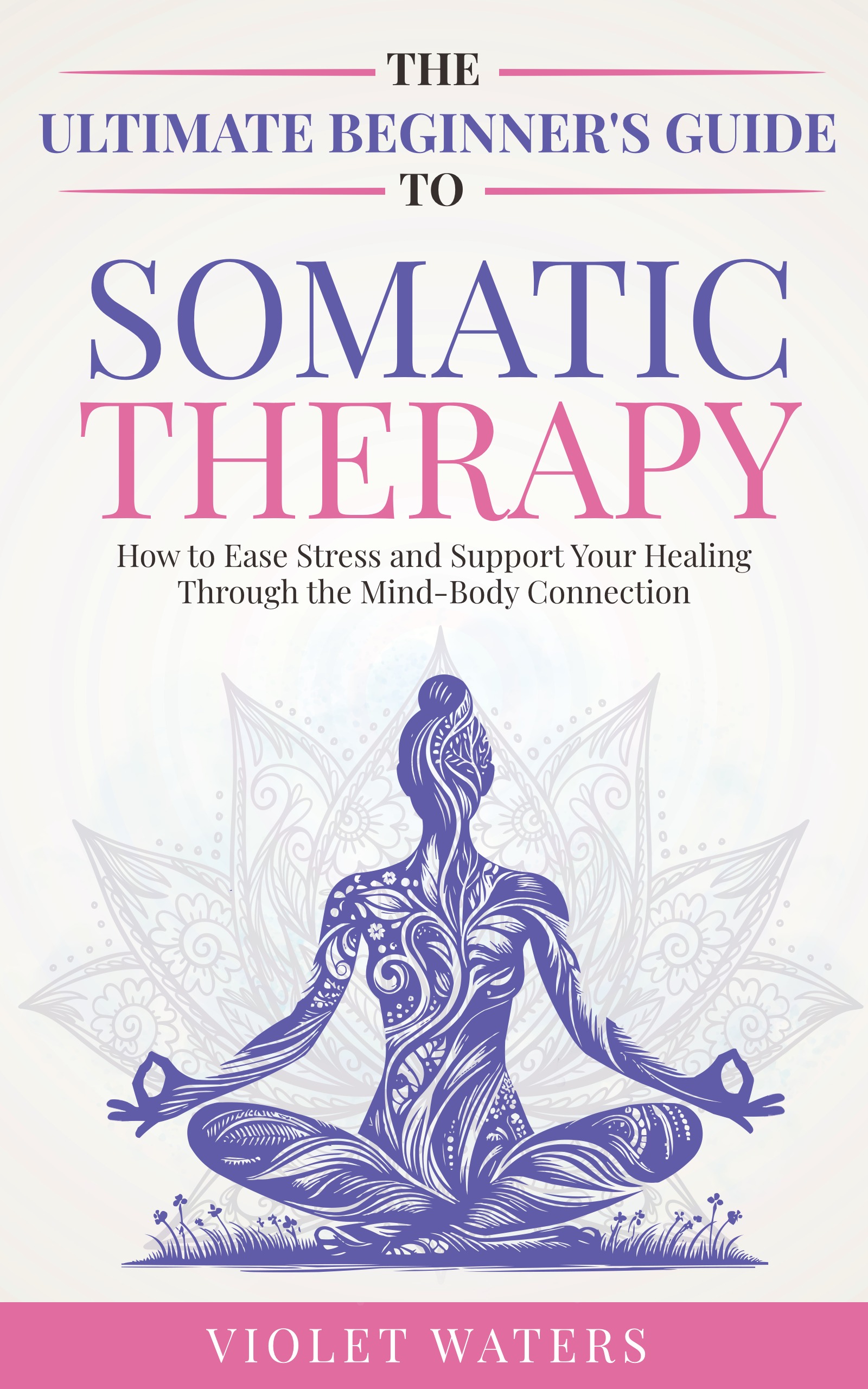
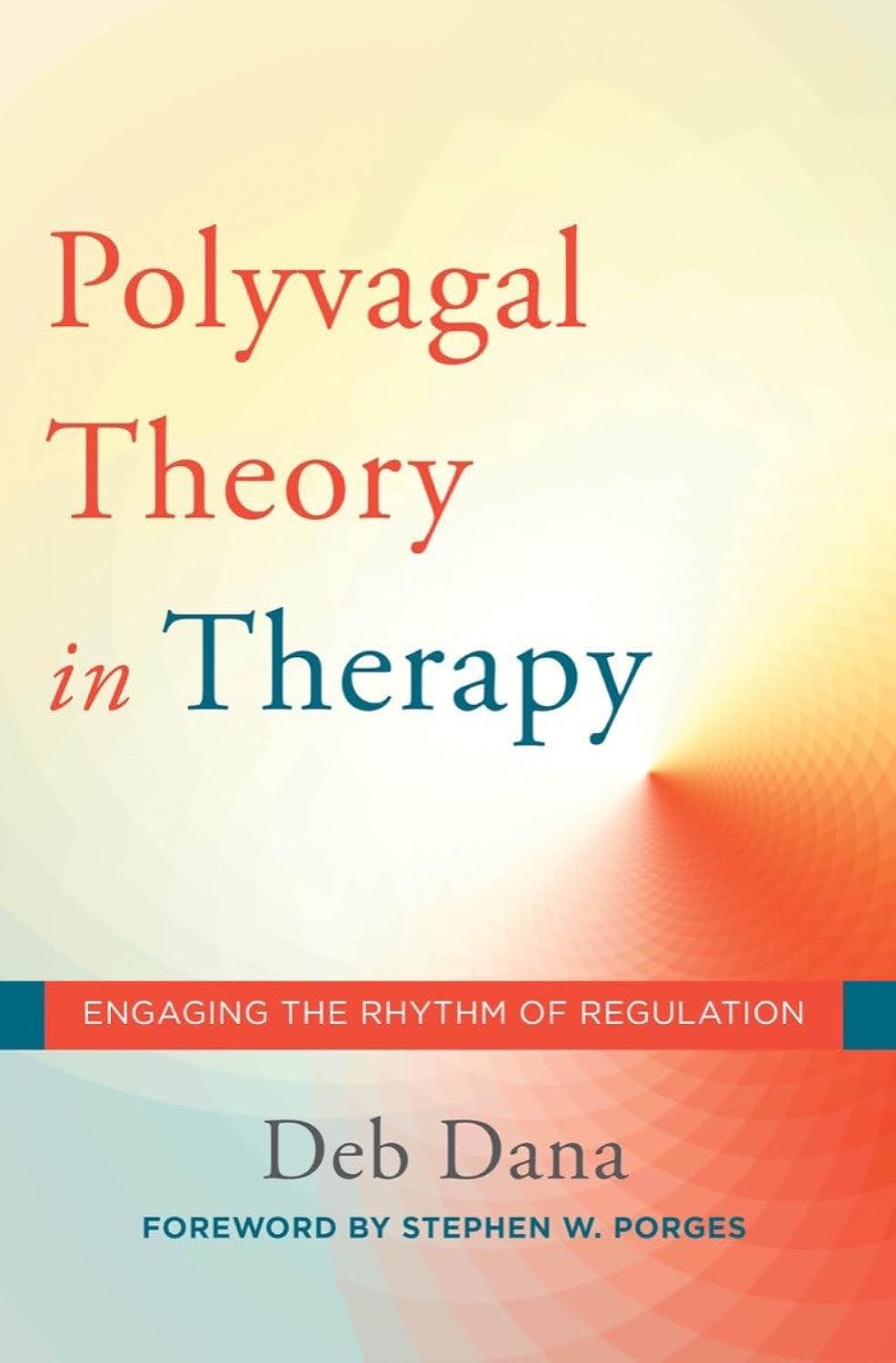
The Polyvagal Theory in Therapy
Deb Dana
Accessible guide to using Polyvagal Theory to regulate your nervous system and feel safe in your body.
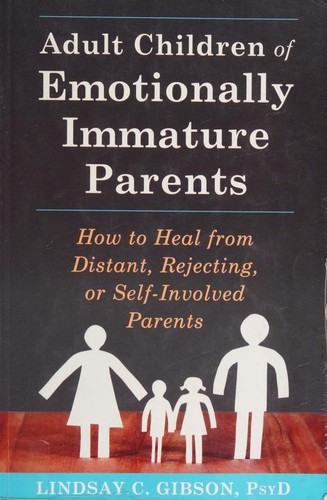
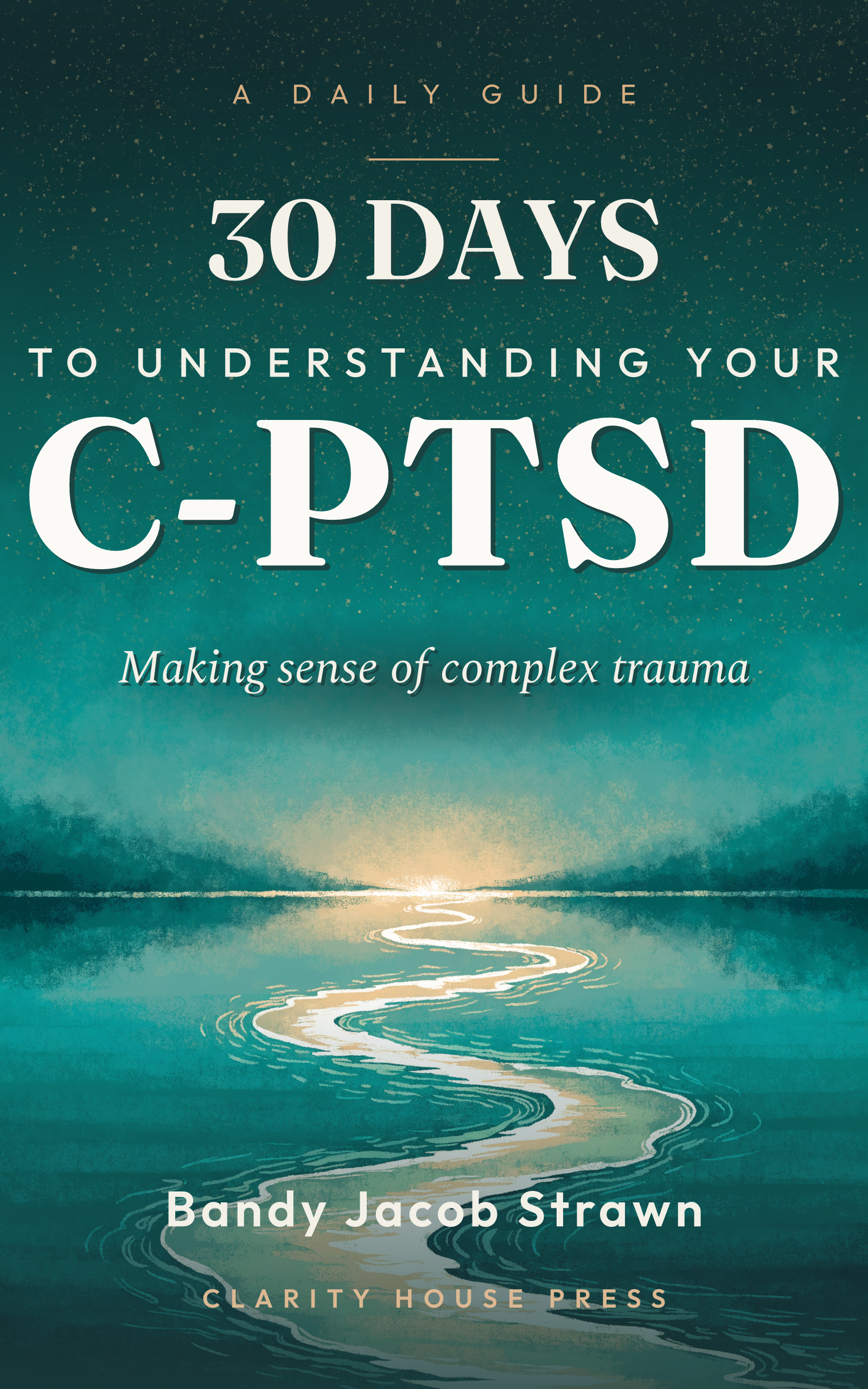
Adult Children of Emotionally Immature Parents
Lindsay C. Gibson, PsyD
A gentle, practical guide to understanding relationships with emotionally distant parents and reclaiming your inner life.
As an Amazon Associate, Clarity House Press earns from qualifying purchases. Your price is never affected.
Found this helpful?
Share it with someone who might need it.
About the Author

Bandy Jacob Strawn
Founder
Founder of Clarity House Press and author of evidence-based trauma recovery resources. His work combines intensive clinical research with lived experience in family court systems. After recognizing a critical gap in accessible, research-backed resources for parents facing high-conflict custody, Bandy created the materials he wished had existed.
View all posts by Bandy Jacob Strawn →Published by Clarity House Press Editorial Team