Please read our important disclaimers before using this content
You have heard of PTSD. Soldiers returning from war. Survivors of car accidents or natural disasters. A single traumatic event that shatters the sense of safety and leaves symptoms in its wake. But what happens when trauma is not a single event but a pattern? When it spans years rather than moments? When it occurs in relationships that should be safe, often during the formative years of childhood?
This is complex trauma, and it creates a distinct condition that researchers and clinicians increasingly recognize: Complex Post-Traumatic Stress Disorder (C-PTSD). Understanding how C-PTSD differs from standard PTSD matters because accurate diagnosis leads to more effective treatment, and because naming your experience accurately is itself validating and healing. Many survivors first connect C-PTSD to narcissistic abuse by reading about how narcissistic abuse specifically creates C-PTSD.
What Is Complex Trauma?
Complex trauma refers to traumatic experiences that share certain characteristics[^1]:
Prolonged or repeated: Not a single incident but ongoing exposure, often spanning months, years, or decades.
Interpersonal: Caused by other people, typically in relationships of trust or dependency.
Often childhood: Frequently occurs during developmental periods when the brain and sense of self are still forming.
Involves captivity: The victim is trapped in the situation, whether literally (as a child dependent on caregivers) or psychologically (through coercion, manipulation, or circumstance).
Examples of Complex Trauma
- Childhood abuse (physical, emotional, sexual) by caregivers
- Childhood neglect (physical, emotional)
- Growing up with a mentally ill, addicted, or personality-disordered parent
- Domestic violence (experiencing or witnessing)
- Human trafficking
- Cult involvement
- Long-term hostage situations
- Repeated bullying
- Ongoing medical trauma
- Prolonged combat exposure
What these share is duration, interpersonal violation, and often the inability to escape.
The Diagnostic Gap: Why C-PTSD Isn't in the DSM-5
Here's what creates confusion for American survivors: C-PTSD doesn't exist in the DSM-5. The American Psychiatric Association's diagnostic manual, which guides most U.S. mental health treatment, doesn't include Complex PTSD as a distinct diagnosis. Instead, clinicians often use multiple diagnoses—PTSD, depression, anxiety, personality disorders—to capture the full symptom picture.
The World Health Organization's ICD-11, which became effective in 2022, does recognize C-PTSD as distinct from PTSD. This international diagnostic manual defines C-PTSD with specific criteria that finally match what trauma specialists have observed for decades: prolonged trauma creates different, more pervasive effects than single-incident trauma.
This diagnostic gap matters practically. Insurance reimbursement, disability determinations, treatment planning, and even self-understanding hinge on diagnostic frameworks. A survivor with C-PTSD often receives fragmented treatment because their symptoms are diagnosed separately rather than understood as an integrated trauma response.
The ICD-11 Criteria: Core and Additional Symptoms
The WHO's ICD-11 establishes C-PTSD diagnosis through two distinct symptom clusters: the core PTSD symptoms and three additional disturbances in self-organization.
Core PTSD Symptoms (Present in Both PTSD and C-PTSD)
These mirror standard PTSD criteria and must persist for at least several weeks:
Re-experiencing in the present. Traumatic memories intrude as vivid, sensory-rich flashbacks or nightmares. Unlike ordinary remembering, re-experiencing brings the past into the present with full emotional and physiological intensity. A survivor might smell their abuser's cologne on a stranger and feel their body flood with the same terror they experienced during actual abuse. The temporal boundaries collapse—this isn't remembering the past, it's experiencing it now.
Avoidance. The person actively avoids trauma reminders—thoughts, memories, activities, situations, people. This isn't casual preference ("I don't really enjoy crowds"). This is compulsive, life-limiting avoidance that narrows existence. A childhood abuse survivor might avoid all contact with family, even siblings who weren't abusive, because family gatherings trigger overwhelming symptoms. They might avoid entire emotional territories—never allowing themselves to feel anger, never discussing their childhood, never forming close relationships.
Hypervigilance and threat perception. The nervous system remains in sustained high alert. Survivors startle easily, sleep poorly, scan environments constantly for danger, react to neutral stimuli as threatening. Their bodies haven't received the safety signal that the trauma has ended. A domestic violence survivor might check door locks repeatedly, sleep with weapons nearby, position themselves facing exits in restaurants, and experience racing heart rate when hearing footsteps in their apartment hallway—despite living alone and having restraining orders.
These three core symptoms cause significant impairment in functioning. They're not just distressing—they actively disrupt work, relationships, daily activities.
Disturbances in Self-Organization (Additional C-PTSD Symptoms)
C-PTSD includes all PTSD symptoms PLUS three additional domains:
1. Affect dysregulation: Difficulty managing emotions, feeling overwhelmed by feelings, chronic emptiness or numbness
Emotional responses become unpredictable and overwhelming. Survivors experience difficulty controlling emotions, have intense emotional reactions disproportionate to triggers, feel emotionally numb or disconnected, or swing rapidly between emotional extremes.
This isn't ordinary moodiness. A C-PTSD survivor might experience sudden, intense rage at minor frustrations—a slow driver, a misplaced item, a partner's innocent comment—that feels volcanic and uncontrollable. Or they might feel nothing at all during moments that should evoke emotion, watching their own life from behind glass. Some survivors describe emotional flashbacks: sudden, intense feelings of shame, terror, or worthlessness that emerge without clear triggers and feel like drowning.
The emotional control that most people develop through secure childhood attachment and safe emotional expression never fully developed for many C-PTSD survivors. Their trauma occurred in relationships—with caregivers, partners, authorities—precisely where they should have learned emotional regulation.
2. Negative self-concept: Persistent beliefs of worthlessness, shame, guilt, feeling fundamentally damaged
Deep, persistent feelings of worthlessness, shame, failure, or being fundamentally damaged. This extends beyond situational low self-esteem into a core identity of being defective, unlovable, or deserving of mistreatment.
A survivor might believe at a cellular level that they are responsible for their abuse, that they are dirty or contaminated, that something essential within them is broken beyond repair. These beliefs resist logical challenge because they formed during developmental periods when the brain was literally wiring itself, or during prolonged trauma when survival required accepting the abuser's narrative.
When a child's caregiver repeatedly communicates through abuse that the child is worthless, the child's developing brain integrates this as fundamental truth about reality. When a domestic violence victim hears for years that they are stupid, incompetent, and lucky anyone tolerates them, these messages carve neural pathways deeper than conscious belief.
3. Relational disturbances: Difficulty trusting, maintaining relationships, feeling close to others
Persistent problems forming and maintaining close connections. Survivors might avoid relationships entirely, maintain only superficial connections, have intense and unstable relationships, or feel consistently detached even within relationships.
This manifests variably. Some survivors isolate completely, protecting themselves from potential betrayal or harm by maintaining emotional distance from everyone. Others form intense, chaotic relationships characterized by desperate clinging alternating with furious rejection. Many experience a painful paradox: intense loneliness coupled with inability to tolerate true intimacy.
The relational difficulties aren't personality flaws or choices. They're logical adaptations to prolonged relational trauma. When your attachment figures were also your abusers, when the people who should have protected you caused harm, when expressing needs led to punishment, learning to navigate healthy relationships becomes neurologically complex.
Common C-PTSD Experiences Not in PTSD Criteria
Dissociation: Feeling detached from yourself or reality, losing time, depersonalization/derealization. While dissociation can occur in PTSD, it's more severe and pervasive in C-PTSD. When you can't physically escape, your mind escapes instead. This becomes a default response that's hard to turn off.
Emotional flashbacks: Re-experiencing the emotions of trauma without specific memory (coined by Pete Walker). Unlike visual flashbacks, these are sudden waves of overwhelming emotion from past trauma without clear memory triggers. You might suddenly feel intense fear, crushing shame, or helplessness that doesn't match your current situation. Our guide to emotional flashbacks in C-PTSD explains what they are and how to cope.
Chronic emptiness: Feeling hollow, numb, like there's nothing inside.
Intense shame: Not just about what happened, but about who you are. This goes beyond "I feel bad about myself" to "I am fundamentally broken."
Difficulty knowing what you feel: Alexithymia—inability to identify or describe emotions. You feel something intensely but can't name it.
Problems with boundaries: Either rigid (no one gets close) or absent (anyone can violate). Years of violated boundaries leave you either rigidly defended or completely porous.
Survivor's guilt: Feeling you should have prevented the trauma or don't deserve to heal.
Attachment wounds: Difficulty trusting, fear of abandonment, relationship chaos.
Somatic symptoms: Chronic pain, digestive issues, autoimmune conditions. Trauma stored in your body manifests as physical symptoms without medical explanation: headaches, fatigue that doesn't improve with rest, muscle tension, immune dysfunction.
These aren't "complications" of PTSD. They're core features of C-PTSD.
The Key Distinctions Between PTSD and C-PTSD
Trauma type:
- PTSD: Single event or series of similar events
- C-PTSD: Prolonged, repeated trauma, often beginning in childhood
Identity impact:
- PTSD: Identity disrupted but usually intact ("This happened to me")
- C-PTSD: Identity shaped by trauma ("I don't know who I am without it")
Relational impact:
- PTSD: Relationships may be strained but capacity for connection usually remains
- C-PTSD: Fundamental difficulty with trust, intimacy, relationships
Emotional regulation:
- PTSD: Usually maintained between triggers
- C-PTSD: Chronic dysregulation, difficulty managing emotions generally
Self-concept:
- PTSD: Self-esteem may be affected but core worth usually intact
- C-PTSD: Deep shame, worthlessness, feeling fundamentally broken
Treatment approach:
- PTSD: Trauma processing often sufficient
- C-PTSD: Requires skills-building, affect regulation, relationship repair alongside trauma processing
The Neurobiology Differs Too
Complex trauma and single-incident trauma affect the brain differently.
Single-incident PTSD: Primarily affects fear processing, with hyperactive amygdala and impaired prefrontal regulation during threat reminders.
Complex trauma: Creates more pervasive changes[^2]:
- Structural brain changes from chronic stress hormone exposure
- Developmental disruption when trauma occurs in childhood
- Changes in attachment systems and social engagement
- More extensive dissociative tendencies
- Altered stress hormone patterns (sometimes elevated, sometimes blunted)
These neurobiological differences support the distinction between PTSD and C-PTSD and have implications for treatment approaches. Research demonstrates that prolonged childhood trauma produces cascading neurobiological effects that alter brain development across multiple stress-sensitive regions, including the hippocampus, prefrontal cortex, and amygdala1.
What Complex Trauma Does to Development
When complex trauma occurs in childhood, it affects development across domains.
Attachment
Children develop internal working models of relationships based on early caregiving experiences. When caregivers are the source of trauma, attachment becomes disorganized:
- The child needs the caregiver for survival
- But the caregiver is also the source of fear
- This creates impossible conflict: approach for survival, avoid for safety
- Disorganized attachment patterns persist into adulthood
Self-Concept
Identity develops through mirroring in relationships. When mirrors are distorting:
- Children do not develop coherent, positive self-concept
- They internalize abusers' negative messages
- They develop shame as a core identity component
- They may have difficulty knowing who they are apart from others
Emotional Development
Emotional regulation develops through co-regulation with caregivers. When caregivers are unavailable, abusive, or dysregulated themselves:
- Children do not learn to regulate emotions
- They may learn to suppress emotions entirely
- Or they may become flooded without ability to modulate
- Dissociation may develop as the primary regulation strategy
Social Development
Safe relationships teach social skills and trust. When relationships are dangerous:
- Children learn hypervigilance to others' states
- They may develop fawning behaviors for safety
- Trust becomes difficult or impossible
- Intimacy feels dangerous
These developmental impacts explain why C-PTSD involves more than just trauma symptoms.
Developmental Trauma: When C-PTSD Starts in Childhood
When prolonged trauma occurs during developmental years, it affects:
- Brain architecture (structures form differently)
- Attachment patterns (relationship templates)
- Identity formation (you build self-concept around trauma)
- Emotion regulation (never learned)
- Self-worth (developed in context of abuse/neglect)
This is why childhood-onset C-PTSD looks different from adult-onset.
Adult-onset C-PTSD (e.g., prolonged domestic violence as adult):
- Had some period of normal development
- Possessed some skills before trauma
- Identity was formed pre-trauma
Childhood-onset C-PTSD:
- No baseline of normal development
- Skills were never learned
- Identity formed within trauma context
Recovery from developmental trauma requires learning things that should have been developmental: how to regulate emotions, trust people, know what you feel, believe you're worthy.
This isn't "fixing" damage. It's learning what was never taught.
Why Standard PTSD Treatment Can Fail for C-PTSD
Exposure therapy (repeatedly accessing trauma memory) is gold-standard for PTSD. For C-PTSD, it can:
- Retraumatize if affect regulation isn't established first
- Miss the relational and identity wounds
- Feel reductive ("My trauma isn't just one memory—it's my entire childhood")
Cognitive processing helps with PTSD-related thoughts. For C-PTSD:
- Core beliefs are deeper and more pervasive
- They're not just "thoughts about the trauma"—they're foundational beliefs about self and world
- Cognitive work alone doesn't address relational and emotional dysregulation
Time-limited approaches (8-12 sessions) work for many PTSD cases. C-PTSD typically requires:
- Long-term therapy
- Phase-based approach
- Multiple modalities
- Years, not months
None of this means PTSD treatment is wrong—it means C-PTSD requires additional components.
The Three Phases of Complex Trauma Treatment
The most widely accepted model for treating complex trauma follows three phases, as outlined by Dr. Judith Herman in her foundational work "Trauma and Recovery." This phase-based approach has strong empirical support, with research demonstrating that stabilization followed by trauma-focused treatment yields significantly better outcomes than exposure-focused treatment alone2.
Phase One: Safety and Stabilization
The first phase establishes the foundation for all subsequent work.
Goals of Phase One:
- Establishing physical safety (safe living situation, protection from ongoing abuse)
- Building emotional regulation skills
- Reducing self-destructive behaviors
- Developing internal and external resources
- Creating a safe therapeutic relationship
- Psychoeducation about trauma and its effects
Duration: Phase One often takes months to years, depending on severity and resources. Rushing this phase destabilizes later work.
Why it matters: Trauma processing without sufficient stabilization can retraumatize. You need the capacity to regulate what arises before deliberately activating trauma material.
C-PTSD requires phase-based treatment:
- Phase 1: Safety and stabilization (skills-building, affect regulation)
- Phase 2: Trauma processing
- Phase 3: Integration and reconnection
Jumping straight to trauma processing (standard PTSD treatment) can destabilize someone with C-PTSD who lacks the regulation capacity to handle it.
Phase Two: Trauma Processing
Once adequate stabilization exists, specific trauma memories and their meanings can be processed.
Goals of Phase Two:
- Processing specific traumatic memories
- Integrating fragmented trauma memories into coherent narrative
- Updating trauma-based beliefs
- Releasing stored bodily trauma responses
- Grieving losses associated with trauma
Approaches used: EMDR, Somatic Experiencing, Sensorimotor Psychotherapy, Cognitive Processing Therapy (modified for complex trauma), Internal Family Systems.
Important: Phase Two is not linear. Survivors often move between Phases One and Two as new material emerges or destabilization occurs.
Phase Three: Reconnection and Integration
The final phase focuses on building the life you want.
Goals of Phase Three:
- Building new relationships and deepening existing ones
- Pursuing meaningful activities and goals
- Integrating the trauma into your life story without being defined by it
- Contributing to community or causes
- Developing a coherent sense of identity
What this looks like: Reconnection means engaging fully with life. It may include education, career development, creative pursuits, intimate relationships, parenting, activism, or spiritual practice.
Effective C-PTSD Treatment Approaches
Phase-based trauma therapy:
- Stabilization first
- Trauma processing second
- Integration third
Dialectical Behavior Therapy (DBT):
- Emotion regulation skills
- Distress tolerance
- Interpersonal effectiveness
Originally developed for borderline personality disorder (which shares features with C-PTSD), DBT teaches four skill modules:
- Mindfulness: Staying present without judgment
- Distress tolerance: Surviving crises without making things worse
- Emotion regulation: Understanding and managing intense emotions
- Interpersonal effectiveness: Asking for what you need, saying no, maintaining relationships
DBT is particularly valuable for the emotional dysregulation component of C-PTSD.
Internal Family Systems (IFS):
- Working with protective parts
- Accessing wounded parts safely
- Building internal cohesion
IFS views your psyche as composed of different "parts" with protective roles. It helps you understand these protective strategies and gradually allow your Self to care for wounded parts.
Schema Therapy:
- Addressing core beliefs formed in childhood
- Meeting unmet emotional needs
- Building healthy adult capacity
EMDR with C-PTSD modifications:
- More preparation phase
- Resource building first
- Slower pacing
Research published in the Journal of EMDR Practice and Research demonstrates that EMDR helps process traumatic memories through bilateral stimulation (eye movements, taps, or sounds) while recalling trauma. Multiple randomized controlled trials support EMDR's effectiveness, with evidence showing it to be more rapid and/or more effective than trauma-focused cognitive behavioral therapy in several studies3.
Somatic approaches (Somatic Experiencing, Sensorimotor Psychotherapy):
- Body-based trauma processing
- Regulation through sensation
- Completing survival responses
Focuses on releasing trauma stored in the nervous system. SE recognizes that trauma lives in the body, not just the mind. Randomized controlled research supports somatic experiencing as an effective treatment for PTSD, with effect sizes ranging from moderate to large4.
Attachment-focused therapy:
- Repairing relational wounds
- Learning secure attachment
- Building trust capacity
The key: addressing ALL domains (trauma memories, affect regulation, self-concept, relationships), not just memory processing.
Medication Considerations
While therapy is the primary treatment, medication can support recovery:
SSRIs (Selective Serotonin Reuptake Inhibitors):
- Sertraline (Zoloft) and paroxetine (Paxil) are FDA-approved for PTSD
- Can reduce hyperarousal, intrusive thoughts, and avoidance
- Take 4-6 weeks for full effect
Prazosin:
- Reduces nightmares and improves sleep
- Particularly helpful for trauma-related sleep disturbance
Other medications may address specific symptoms (anxiety, depression, mood stabilization) but should be part of comprehensive treatment, not standalone.
Common Misdiagnoses and Overlaps
Because C-PTSD isn't in the DSM-5, many therapists don't recognize it. You might be diagnosed with:
Borderline Personality Disorder (BPD): Shares emotional dysregulation, relationship difficulties, fear of abandonment, unstable sense of self. This misdiagnosis is so common it's worth reading our dedicated guide on C-PTSD vs BPD misdiagnosis, which addresses the specific stakes this confusion creates in custody cases. The emotional dysregulation, relationship difficulties, and identity disturbance of C-PTSD overlap significantly with BPD criteria. Research using latent class analysis demonstrates distinct symptom profiles between ICD-11 PTSD, C-PTSD, and BPD in multiply traumatized samples, supporting the diagnostic distinction5. Many people diagnosed with BPD are actually complex trauma survivors.
Key distinctions:
Etiology: C-PTSD is explicitly trauma-based. BPD's causes are considered multifactorial (genetic vulnerability, environmental factors, trauma). However, emerging research suggests most BPD cases involve significant trauma history, raising questions about whether BPD is itself a trauma disorder.
Stigma: BPD carries significant clinical stigma. Many therapists refuse to treat BPD clients, viewing them as manipulative or untreatable. C-PTSD diagnosis frames the same symptoms as trauma responses rather than personality pathology, which can improve treatment access and therapeutic alliance.
Major Depressive Disorder: The numbness, hopelessness, and anhedonia overlap. But depression doesn't explain the hypervigilance, flashbacks, or relationship disturbances.
Generalized Anxiety Disorder: The constant worry and physical tension overlap. But GAD doesn't explain the dissociation, negative self-concept, or trauma-specific triggers.
Bipolar Disorder: The emotional swings in C-PTSD can look like mood episodes. But they're triggered by trauma reminders, not cyclical brain chemistry changes.
ADHD: The concentration difficulties, restlessness, and emotional dysregulation of C-PTSD can mimic ADHD.
These aren't wrong, exactly. You might have depression and anxiety and C-PTSD. But if the underlying issue is complex trauma and you're only treating the symptoms, you're not addressing the root.
Many people with C-PTSD have been misdiagnosed for years:
- Borderline Personality Disorder
- Bipolar Disorder
- Depression + Anxiety
- "Treatment-resistant" depression
- PTSD (missing the "complex" part)
The C-PTSD framework often finally explains:
- Why relationships are so hard
- Why emotions feel unmanageable
- Why you can't remember large parts of childhood
- Why self-worth feels impossible
- Why standard treatment hasn't worked
Finding Appropriate Treatment
If you suspect you have C-PTSD, seeking appropriate treatment matters.
What to Look For
Trauma specialization: Look for therapists specifically trained in trauma treatment. General therapists often lack the specific skills needed.
Complex trauma experience: Not all trauma therapists have experience with complex, developmental trauma. Ask specifically about their training and experience with childhood abuse, neglect, or ongoing relational trauma.
Phase-oriented approach: Be cautious of therapists who want to dive immediately into trauma processing without stabilization work. Ask about their approach to treatment phases.
Relational focus: The relationship should feel central to the work, not just a vehicle for techniques. The therapeutic relationship itself is healing for relational trauma.
Modalities that help: EMDR, Internal Family Systems (IFS), Somatic Experiencing, Sensorimotor Psychotherapy, and DBT all have evidence for complex trauma. Therapists trained in multiple modalities can individualize treatment.
Patience with the process: Look for therapists who communicate realistic timelines. Complex trauma treatment typically takes years, not months.
What to Avoid
Purely cognitive approaches: Thinking your way out of complex trauma is insufficient. Approaches that only address thoughts miss the body, emotions, and relational dimensions.
Rushing trauma processing: Stabilization must come first. Therapists who push for trauma exposure before you have regulation skills may retraumatize.
One-size-fits-all treatment: Complex trauma requires individualized, flexible approaches. Be wary of rigid protocols applied without consideration of your specific situation.
Invalidation: A therapist who does not understand complex trauma may minimize, rush, or misunderstand your experience. Trust your sense of whether you feel understood.
Boundary violations: Therapists who share too much about themselves, become friends, or cross professional boundaries may themselves be harmful.
Clinical Assessment
Clinical C-PTSD assessment involves:
Trauma history evaluation: Detailed exploration of prolonged trauma experiences, timing, duration, relationships involved, escape possibilities, and ongoing impact.
Symptom assessment across all clusters: Structured interviews or validated questionnaires measuring PTSD core symptoms and self-organization disturbances.
Differential diagnosis: Ruling out or identifying co-occurring conditions like depression, anxiety disorders, substance use, eating disorders, or personality disorders.
Functional impairment assessment: How symptoms affect work, relationships, daily activities, and quality of life.
Cultural context consideration: Trauma symptoms and expression vary across cultures. Competent assessment accounts for cultural factors in symptom interpretation.
Qualified assessors include psychologists, psychiatrists, licensed clinical social workers, and licensed professional counselors with trauma specialization. Seek providers who specifically mention complex trauma, developmental trauma, or C-PTSD in their practice descriptions.
Timeline Expectations and What Recovery Looks Like
Timeline Expectations
PTSD can sometimes resolve in months with focused treatment.
C-PTSD typically requires years. It's not "worse PTSD"—it's fundamentally different work.
Years, not months. This isn't discouraging—it's realistic. You're not healing from an event; you're reorganizing your entire nervous system and self-concept.
Recovery from C-PTSD is not linear. You don't simply "get over it." Instead, you:
- Develop capacity to tolerate difficult emotions without being overwhelmed
- Build a coherent narrative about what happened to you
- Separate past danger from present safety
- Reconnect with your body as a source of information, not just pain
- Form relationships based on trust, not trauma patterns
- Reclaim parts of yourself shut down for survival
Relationship to identity
PTSD: "I experienced trauma." C-PTSD: "I don't know who I am without the trauma."
Recovery from C-PTSD involves identity reconstruction, not just memory processing.
The Validation of Accurate Diagnosis
This isn't just semantic. Accurate understanding changes treatment and validates your experience.
You're not "doing PTSD wrong." You have a different condition that requires a different approach.
And recovery is possible. It looks different than PTSD recovery—longer, more complex, addressing more domains—but it's absolutely possible.
Validation of experience: Many C-PTSD survivors grew up in environments that denied, minimized, or rationalized abuse. "It wasn't that bad." "They did their best." "You're too sensitive." C-PTSD diagnosis validates that prolonged trauma has real, documented, recognized effects. The symptoms aren't exaggeration, attention-seeking, or weakness.
Self-compassion foundation: Understanding C-PTSD as a coherent response to prolonged trauma reduces self-blame. Survivors often spend decades believing they are fundamentally broken, weak, or defective because they can't "just get over it."
Learning that emotional dysregulation, relationship difficulties, and negative self-concept are recognized symptom clusters—not character flaws—shifts the internal narrative from "I am broken" to "I was injured, and these are the injuries." This distinction makes recovery conceivable.
You're not broken beyond repair. You have C-PTSD. And C-PTSD has effective treatments.
Understanding the difference is the beginning of getting what you actually need.
What to Do With This Information
If you recognize C-PTSD in yourself:
- Seek a trauma specialist familiar with complex trauma (not all therapists are)
- Expect phase-based treatment, not quick resolution
- Focus on skills-building initially (not diving into trauma processing)
- Address all domains (affect regulation, self-concept, relationships) not just memories
- Be patient with timeline—years is normal
- Find community with others who have C-PTSD (validation matters)
Communicate your needs:
"I have complex PTSD from prolonged childhood trauma. I need treatment that addresses affect regulation and relational difficulties, not just trauma processing."
This helps providers understand what you need.
Living Between Diagnoses
If you're in the United States, your therapist might diagnose you with PTSD plus other conditions, while recognizing you're dealing with complex trauma effects. This diagnostic workaround reflects the DSM-5's limitations, not your experience's validity.
Your insurance claims might show PTSD, depression, and anxiety. Your therapist's conceptualization might center C-PTSD. Both can be true simultaneously. The billing codes and diagnostic systems serve administrative functions that don't always match clinical reality.
What matters more than the label: Does your treatment address affect regulation, identity, relationships, and trauma processing in an integrated, phase-based approach? Does your therapist understand that your symptoms represent adaptations to prolonged trauma rather than character defects? Do you feel the treatment is helping you build capacity for the life you want?
Key Takeaways
- Complex trauma involves prolonged, repeated, interpersonal trauma, often in childhood and in relationships of dependency
- C-PTSD includes standard PTSD symptoms plus affect dysregulation, negative self-concept, and relationship difficulties
- The ICD-11 recognizes C-PTSD as a distinct diagnosis; the DSM-5 does not yet
- C-PTSD is frequently misdiagnosed as BPD, depression, anxiety, bipolar disorder, or ADHD
- Treatment for C-PTSD requires modifications from standard PTSD treatment, including stabilization, relational focus, and phase-oriented approach
- When complex trauma occurs in childhood, it affects attachment, self-concept, emotional development, and social development
- Finding a therapist with specific complex trauma experience matters
- Recovery is possible but typically takes years, not months
- Neurobiological changes from prolonged trauma are real and measurable
Your Next Steps
-
Assess fit: Consider whether C-PTSD describes your experience better than standard PTSD or other diagnoses you may have received.
-
Research treatment: Learn about phase-oriented trauma treatment and modalities effective for complex trauma.
-
Find specialized help: Search for therapists with explicit experience in complex, developmental trauma. Bring your history, your questions, and your hope.
-
Connect with others: Online communities like r/CPTSD can provide validation and community.
-
Read further: Books like Pete Walker's Complex PTSD: From Surviving to Thriving, Bessel van der Kolk's The Body Keeps the Score, Judith Herman's Trauma and Recovery, and Coping with Trauma-Related Dissociation by Boon, Steele, and van der Hart provide extensive information and practical guidance.
-
Seek evaluation: If you recognize yourself in these criteria, seek evaluation from a trauma-specialized provider.
NOTE ON HOTLINE NUMBERS: Phone numbers for crisis hotlines, legal aid, and support services are provided as a resource. These numbers are current as of publication but may change. Please verify hotline numbers are still active before relying on them. For the National Domestic Violence Hotline, visit thehotline.org for current contact information.
Resources
Books and Educational Materials:
- Complex PTSD: From Surviving to Thriving by Pete Walker - Comprehensive self-help guide for C-PTSD recovery
- The Body Keeps the Score by Bessel van der Kolk - Neuroscience of trauma and healing
- Trauma and Recovery by Judith Herman - Foundational work on complex trauma
- Coping with Trauma-Related Dissociation by Boon, Steele, & van der Hart - Skills for dissociation management
Finding Trauma-Specialized Therapists:
- EMDR International Association - Find certified EMDR therapists
- Psychology Today - Trauma Therapists - Filter by trauma specialization and C-PTSD
- Internal Family Systems Institute - IFS-trained therapist directory
- Somatic Experiencing Trauma Institute - Find SE practitioners
Community Support and Crisis Resources:
- r/CPTSD Reddit Community - Peer support from C-PTSD survivors
- Out of the Storm - C-PTSD information and forum
- 988 Suicide & Crisis Lifeline - Call or text 988 for immediate crisis support
- Crisis Text Line - Text HOME to 741741 (free 24/7 counseling)
References
The fact that your trauma was prolonged means recovery takes time. It also means you already possess extraordinary survival capacity. The same strength that got you through trauma can carry you toward healing.
You are not broken. You are injured. Injuries heal.
References
- Cloitre, M., Courtois, C. A., Ford, J. D., Green, B. L., Alexander, P., Briere, J., ... & van den Bosch, L. M. (2012). Complex PTSD: Research directions for nosology/assessment, treatment, and public health. Journal of Traumatic Stress, 25(4), 375-380. https://pubmed.ncbi.nlm.nih.gov/25994023/ ↩
- Teicher, M. H., & Samson, A. Y. (2016). Annual research review: Enduring neurobiological effects of childhood abuse and neglect. Journal of Child Psychology and Psychiatry, 57(3), 241-266. https://pubmed.ncbi.nlm.nih.gov/12136507/ ↩
- Pechtel, P., & Pizzagalli, D. A. (2011). Effects of early life stress on cognitive and affective function: An integrated review of human literature. Psychopharmacology, 214(1), 55-70. https://pmc.ncbi.nlm.nih.gov/articles/PMC6428430/ ↩
- Cloitre, M., Stovall-McClough, K. C., Nooner, K., Zorbas, P., Cherry, S., Jackson, C. L., ... & Petkova, E. (2010). Treatment for survivors of childhood abuse: PTSD and complex PTSD. Journal of Traumatic Stress, 23(4), 537-543. Stabilisation and Phase-Orientated Psychological Treatment for Posttraumatic Stress Disorder: A Systematic Review and Meta-analysis. https://www.sciencedirect.com/science/article/abs/pii/S2468749922000539 ↩
- Shapiro, F., & Forrest, M. S. (2016). EMDR: The breakthrough therapy. Journal of EMDR Practice and Research, 10(4). Eye movement desensitization and reprocessing as treatment for posttraumatic stress disorder: A meta-analysis. https://www.ncbi.nlm.nih.gov/pmc/articles/PMC3951033/ ↩
- Leitch, L., Vain, G., Boler, T., & Hoermann, S. (2009). Somatic experiencing treatment with social service workers following indirect trauma exposure. Traumatology, 15(2), 34-42. Somatic Experiencing for Posttraumatic Stress Disorder: A Randomized Controlled Outcome Study. https://www.ncbi.nlm.nih.gov/pmc/articles/PMC5518443/ ↩
- Hyland, P., Shevlin, M., Fyvie, C., & Karatzias, T. (2018). Examining the differential relationships between dimensional indicators of ICD-11 PTSD, Complex PTSD, and Borderline Personality Disorder. Frontiers in Psychology, 9, 1995. https://pubmed.ncbi.nlm.nih.gov/31259603/ ↩
Recommended Reading
From Clarity House Press — plus trusted books for deeper understanding

Surviving the Storm: When the Court Takes Your Children
Clarity House Press
For fathers in active high-conflict custody battles. Understand your CPTSD symptoms, begin stabilization, and build foundation for healing. 17 chapters covering recognition, symptoms, and the healing path.
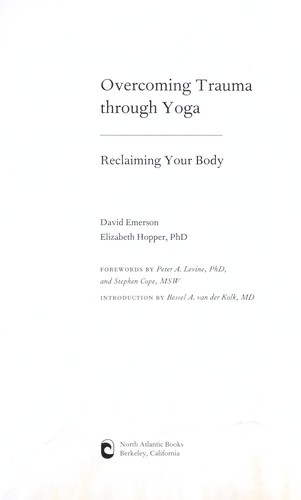
Overcoming Trauma through Yoga
David Emerson & Elizabeth Hopper, PhD
Evidence-based trauma-sensitive yoga program developed at the Trauma Center with Bessel van der Kolk.
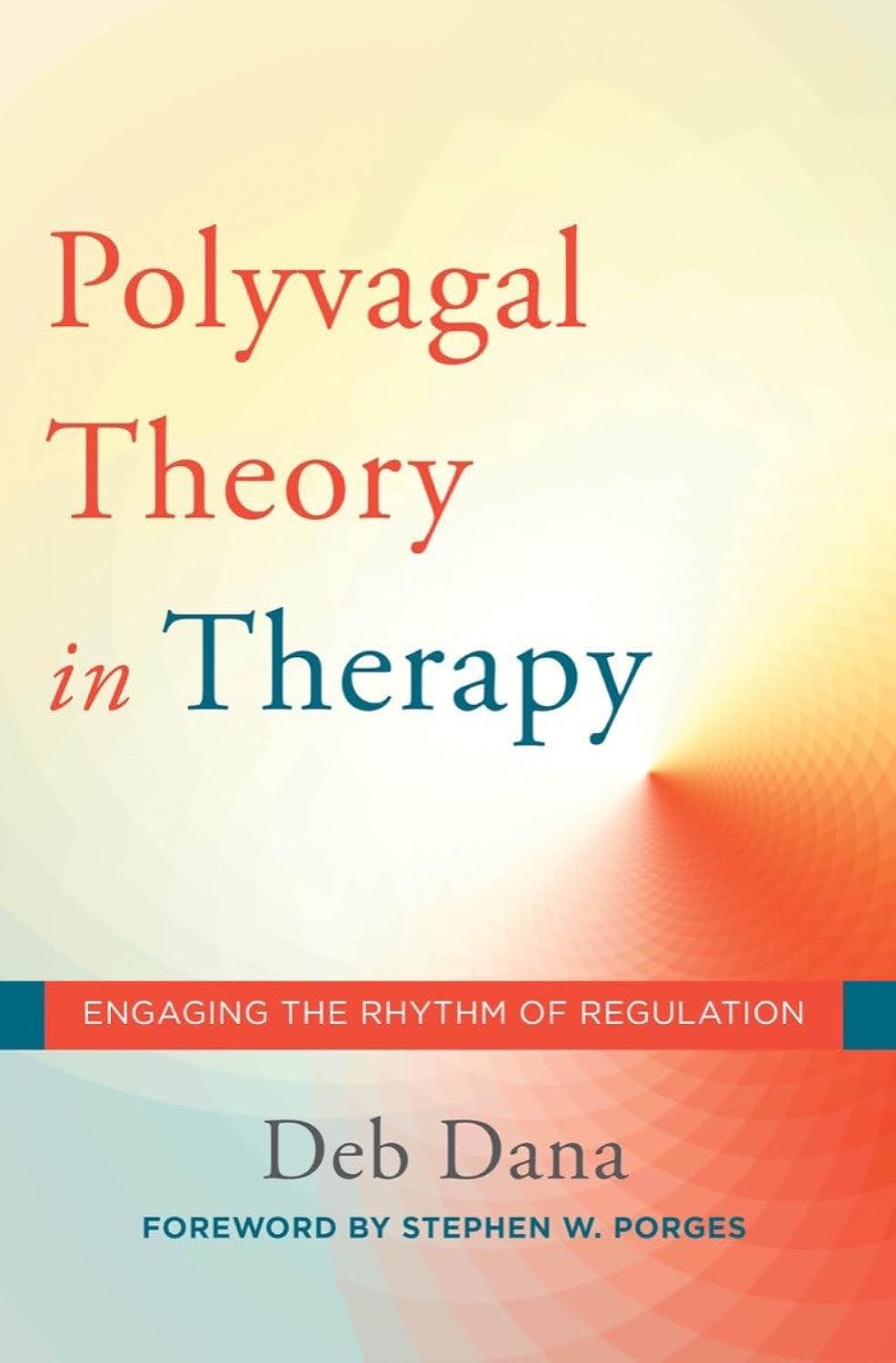
The Polyvagal Theory in Therapy
Deb Dana
Accessible guide to using Polyvagal Theory to regulate your nervous system and feel safe in your body.
As an Amazon Associate, Clarity House Press earns from qualifying purchases. Your price is never affected.
Found this helpful?
Share it with someone who might need it.
About the Author

Clarity House Press
Editorial Team
The editorial team at Clarity House Press curates and publishes evidence-based content on narcissistic abuse recovery, high-conflict divorce, and healing. Our content is informed by research, survivor experiences, and established trauma-informed approaches.
View all posts by Clarity House Press →Published by Clarity House Press Editorial Team