Loading books
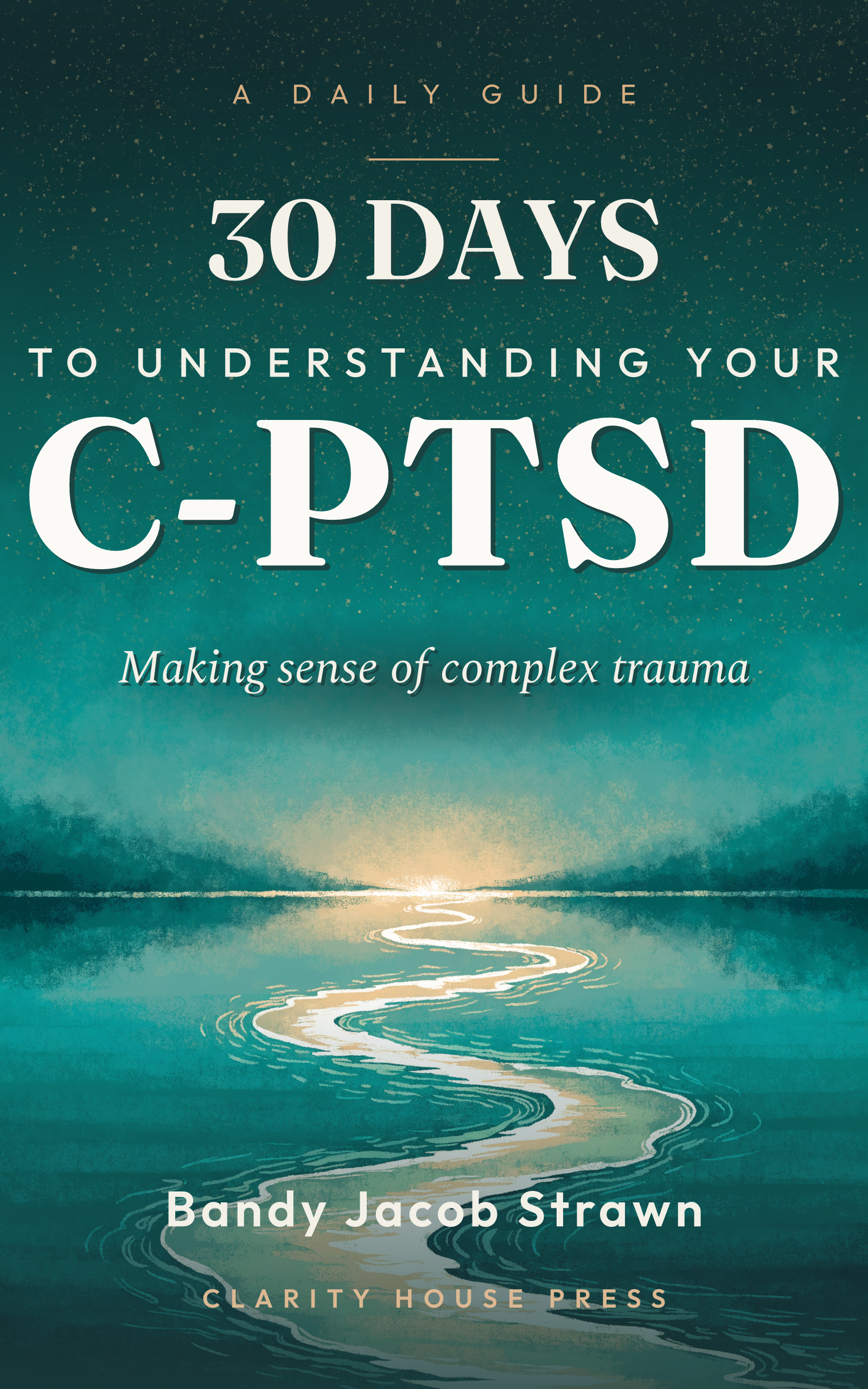
30 Days to Understanding Your C-PTSD
A Daily Guide to Making Sense of Complex Trauma

by
You are not broken. You adapted. In thirty short, gentle readings — one idea a day — this calm daily guide helps you understand what C-PTSD is, why your nervous system does what it does, and that the patterns you've blamed yourself for are reasonable adaptations to unreasonable conditions. Not homework. Not a diagnosis. Just clear, kind understanding.
Complex PTSDC-PTSD RecoveryTrauma RecoveryNervous System RegulationEmotional FlashbacksDaily CompanionSelf-Help

Where this book begins
You are not broken. You adapted.
Complex post-traumatic stress comes from prolonged, repeated, inescapable stress. What looks like weakness is something else entirely: a nervous system that learned to survive, and is still running the old program in a calmer chapter.
- short readings
- 30short readings
- idea a day
- 1idea a day
- stages
- 5stages
In crisis? Call or text 988 now, or see all crisis resources at the foot of this page.
About This Book
If this sounds familiar
A body that will not stand down even when you are safe. Emotions that swing wide or go flat. A quiet certainty that something is wrong with you — and no single word that seemed to fit.
This gentle guide was written for you.
Complex post-traumatic stress comes from prolonged, repeated, inescapable stress — conditions you could not leave and could not stop. What looks like weakness is something else entirely: a nervous system that learned to survive, and is still running the old program in a calmer chapter. The patterns you have blamed yourself for are reasonable adaptations to unreasonable conditions.
One idea a day
30 short readings, taken one at a time
This guide moves at the pace your nervous system can actually absorb — one short reading a day, never more than you can hold. Read the day, close the book, and let it settle. Nothing carries over. Nothing is owed. If you miss a day, the next one is still there.
- Not homeworkNothing to complete, catch up on, or get right.
- Not a diagnosisRecognition and language, not a label to carry.
- Not a substitute for therapyEducational throughout — it sits alongside real support.
What the thirty days give you
- Thirty short daily readings — one idea a day, never more than you can hold
- See how C-PTSD differs from PTSD, in plain language
- Recognize the four trauma responses — without shame
- Make sense of emotional flashbacks, the inner critic, and toxic shame
- Begin to befriend your body and meet the needs that went unmet
- Find realistic hope — and learn what good support actually looks like
The thirty days move through five gentle stages
Each stage builds on the one before it — recognition first, then the responses underneath it, then the harder feelings, then the body, and finally the tools and the life on the other side.
Orientation & Recognition
6 readingsWhat C-PTSD is, where it comes from, and the map underneath the chaos.
The Four Trauma Responses
6 readingsFight, flight, freeze, and fawn as survival strategies — and your personal blend.
Flashbacks, the Inner Critic & Shame
6 readingsRecognizing emotional flashbacks, quieting the inner critic, and meeting shame with self-compassion.
Grief, the Body & Self-Parenting
6 readingsMourning what went unwitnessed, befriending the body, and meeting the needs that went unmet.
Regulation, Connection & Growth
6 readingsWidening the window of tolerance, real regulation tools, boundaries, trust, and post-traumatic growth.
Who this is for
You do not need a diagnosis to open this book
It was written for people who want to understand what happened to them before anyone asks them to work on it.
- Adults living with complex trauma (C-PTSD)
- Survivors of prolonged or childhood trauma
- Readers who want to understand before 'doing the work'
- People who find clinical trauma books overwhelming
- Anyone supporting a loved one with C-PTSD
Educational, not diagnostic — never a substitute for therapy or medical care. If you are in crisis, call or text 988 (Suicide & Crisis Lifeline).
All Thirty Days, Mapped
Block I — Orientation & Recognition
- •What C-PTSD Is — and How It Differs from PTSD
- •You're Not Broken — Your Nervous System Adapted
- •The Origins — Prolonged, Repeated, Inescapable Stress
- •The Symptom Map — The Core Domains
- •Naming It — From Confusion to Clarity
- •Safety First — What Stabilization Means
Block II — The Four Trauma Responses
- •The Four Trauma Responses — Overview
- •Fight — When Anger Runs the Show
- •Flight — The Drive to Keep Moving
- •Freeze — Shutdown, Numbing, Dissociation
- •Fawn — People-Pleasing as Survival
- •Your Personal Blend
Block III — Flashbacks, the Inner Critic & Shame
- •Emotional Flashbacks — When the Past Floods the Present
- •Spotting a Flashback in Real Time
- •The Inner Critic — The Internalized Voice of Harm
- •Shrinking the Critic
- •Toxic Shame — 'I Am Bad' vs. 'I Did Something Bad'
- •Self-Compassion as the Antidote
Block IV — Grief, the Body & Self-Parenting
- •The Grief No One Acknowledged
- •The Body Keeps the Score — Somatic Symptoms
- •Befriending Your Body
- •Reparenting — Becoming Your Own Good Parent
- •Meeting Unmet Needs
- •Building Inner Safety
Block V — Regulation, Connection & Growth
- •Nervous-System Regulation — The Window of Tolerance
- •Practical Regulation Tools
- •Boundaries — Protecting Your Healing
- •Relationships & Trust After C-PTSD
- •Finding the Right Help
- •Post-Traumatic Growth — Who You're Becoming
In your hands
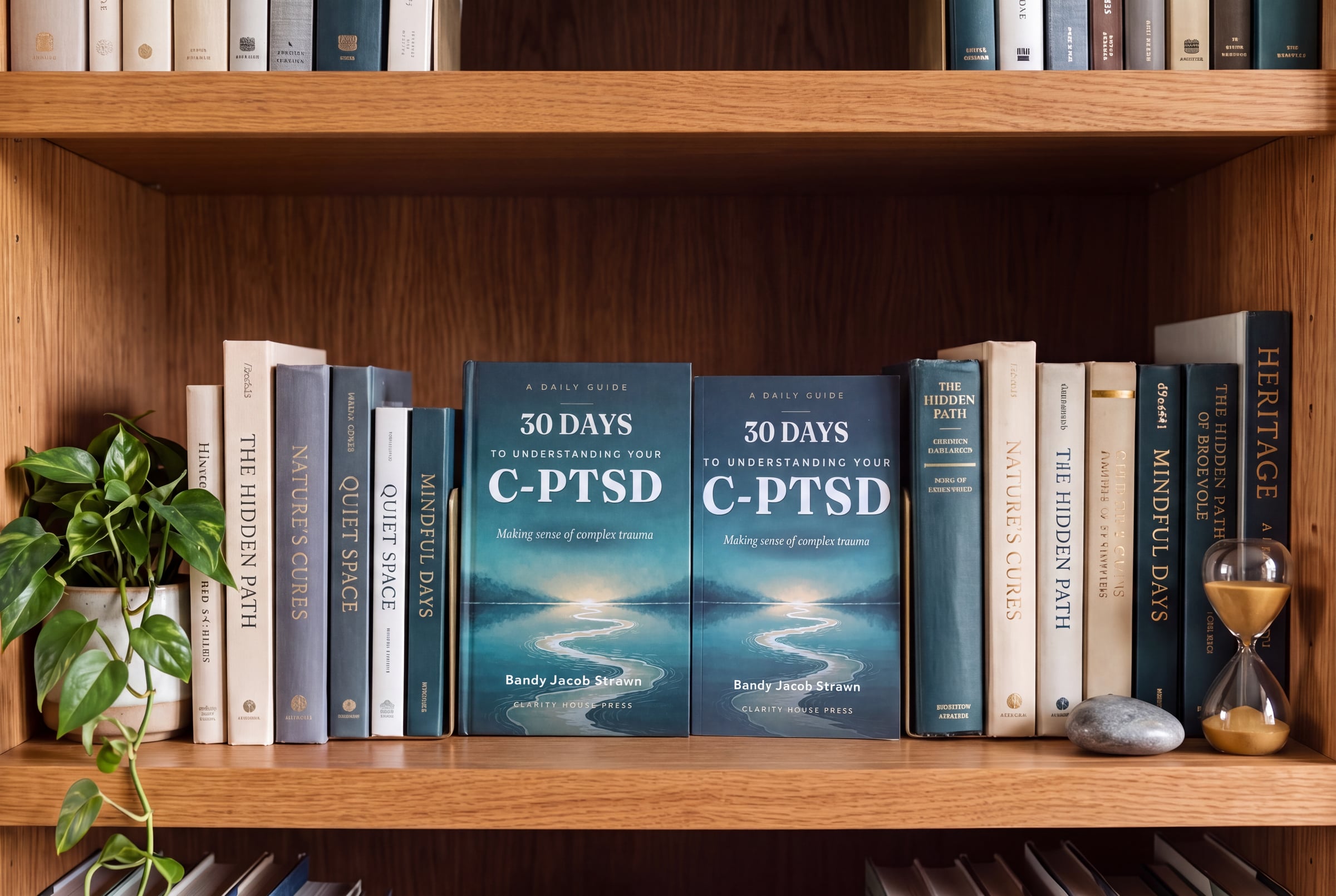
The hardcover and paperback editions — with the ebook on Amazon and direct from Clarity House Press.
Who This Book Is For
- Adults living with complex trauma (C-PTSD)
- Survivors of prolonged or childhood trauma
- Readers who want to understand before 'doing the work'
- People who find clinical trauma books overwhelming
- Anyone supporting a loved one with C-PTSD
What's Inside
- Thirty short daily readings — one idea a day, never more than you can hold
- See how C-PTSD differs from PTSD, in plain language
- Recognize the four trauma responses — without shame
- Make sense of emotional flashbacks, the inner critic, and toxic shame
- Begin to befriend your body and meet the needs that went unmet
- Find realistic hope — and learn what good support actually looks like
Book Details
Pages183
PublisherClarity House Press
ISBN · Paperback978-1-970807-27-1
ISBN · Hardcover978-1-970807-28-8
ISBN · eBook978-1-970807-26-4
Available Now
Best value
Buy the ebook direct — $7.99
Direct from the publisher · instant download to your inbox.
Also from Clarity House Press

Surviving the Storm: When the Court Takes Your Children
Your children aren't gone. They're alive, growing, changing—and you're missing it. This is ambiguous loss: grief without closure, mourning someone who's still alive. For fathers in high-conflict custody battles, this book provides the language for what you're experiencing, validation that this is severe trauma (not weakness), and clinical tools to survive while you fight for your children. This comprehensive 17-chapter guide addresses CPTSD, father-child separation, and the specific trauma of high-conflict custody—written specifically for fathers navigating it.
Free printable pack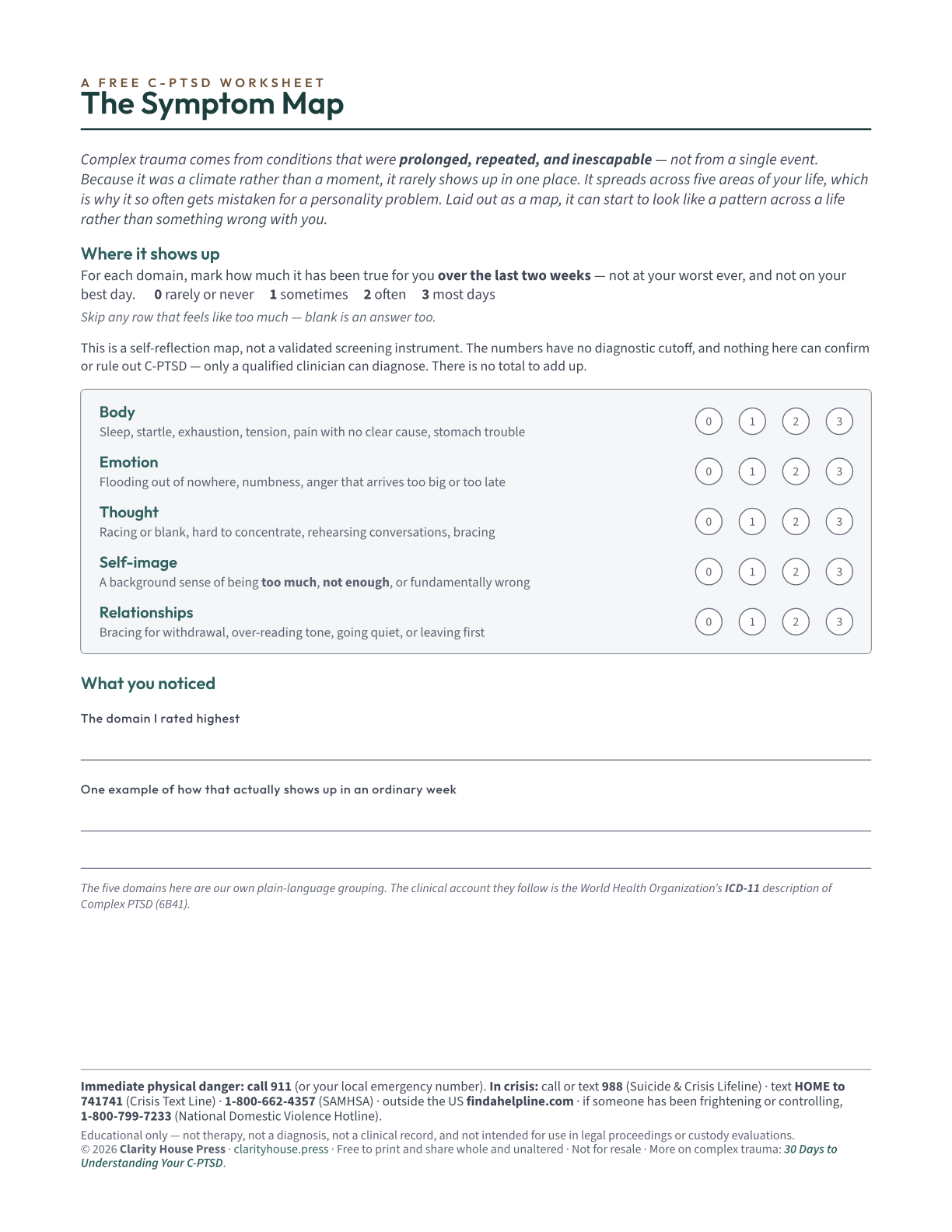
Free C-PTSD Worksheets
Print-and-fill worksheets you can use on your own. Each one teaches its idea from cold — none of them needs the book to make sense. Take what helps and leave the rest.
The Symptom Map
Download the full pack
The whole set in one PDF, sent to your inbox. Print what helps and leave the rest — it’s yours to keep, and you can unsubscribe from any email we send.
The pack is free; it costs an email address. We send it, we don’t share your address, and every email we send has a one-click unsubscribe.
Free C-PTSD Self-Assessment
Want a clearer picture first?
A free, clinically grounded screening based on the International Trauma Questionnaire (ITQ). It covers 7symptom areas, takes 5–7 minutes, and is completely anonymous — your results are never stored or shared.
A screening tool, not a diagnosis — only a qualified clinician can diagnose C-PTSD.
Begin with Day 1
Thirty short readings — one idea a day, never more than you can hold.
Direct from the publisher — instant download to your inbox.
Best value
Buy the ebook direct — $7.99
Direct from the publisher · instant download to your inbox.
Spread the Word
Know someone who needs this?
Share this book with a friend, family member, or anyone who might benefit from it.
If you need help right now
In the US, call or text 988 for the Suicide and Crisis Lifeline, or text HOME to 741741 for the Crisis Text Line. The National Domestic Violence Hotline is 1-800-799-7233. Outside the US, findahelpline.com lists services by country.
This book is educational. It is not a diagnosis, not treatment, and not for use in legal proceedings.