Please read our important disclaimers before using this content
When you're an LGBTQ+ survivor of narcissistic abuse seeking divorce or custody resolution, you face a unique dual battle: the abuse itself AND the systems that may not recognize your marriage, your parental rights, or even the reality that abuse occurs in same-sex and queer relationships. Understanding how coercive control and manipulation tactics operate is the same regardless of sexual orientation or gender identity—the patterns repeat.
Despite marriage equality being federal law since 2015, many LGBTQ+ survivors still encounter:
- Courts that don't understand power dynamics in same-sex relationships
- Custody battles where you're not recognized as a legal parent
- Domestic violence resources designed exclusively for heterosexual women
- Therapists and attorneys who lack LGBTQ+ competency
- The threat of being outed to employers, family, or community as retaliation
- Stereotypes that "women don't abuse women" or "gay men are just dramatic"
- Religious or conservative jurisdictions where homophobia compounds abuse
This post addresses the specific barriers LGBTQ+ survivors face and provides strategies for navigating family court, custody, and recovery while protecting your identity and your rights.
Why LGBTQ+ Abuse Is Overlooked and Minimized
Myth 1: "Abuse Only Happens in Heterosexual Relationships"
The reality: Intimate partner violence occurs at similar or higher rates in LGBTQ+ relationships compared to heterosexual ones. A comprehensive 2024 review in Archives of Sexual Behavior found significant associations between IPV victimization and adverse mental and physical health outcomes among sexual and gender minority individuals, including PTSD, depression, anxiety, and suicidal ideation (Canan et al., 2024).1
Statistics:
According to the CDC's National Intimate Partner and Sexual Violence Survey:
- 44% of lesbian women experience intimate partner violence (vs. 35% of heterosexual women)2
- 61% of bisexual women experience intimate partner violence
- 26% of gay men experience intimate partner violence
- 37% of bisexual men experience intimate partner violence
- Transgender individuals face disproportionately high rates of abuse, with the National Center for Transgender Equality reporting 54% experiencing intimate partner violence3
Why it's overlooked:
- Domestic violence was historically framed as "male violence against women"
- LGBTQ+ relationships assumed to be "equal" (ignoring power dynamics)
- LGBTQ+ community reluctant to acknowledge abuse (fear of confirming homophobic stereotypes)
- Lack of research and resources specific to LGBTQ+ IPV
Research confirms that LGBTQ+ survivors face unique barriers to help-seeking, including limited understanding of LGBTQ+ IPV, stigma, and systemic inequities that leave survivors with fewer options for safety planning and healing (Calton, Cattaneo, & Gebhard, 2016).4
Myth 2: "It's Just a Fight Between Equals"
Many people—including law enforcement and family court judges—assume same-sex or queer relationships can't have abuser/victim dynamics because "you're both women" or "you're both men."
The reality: Abuse is about power and control, not gender or physical size.
Power imbalances in LGBTQ+ relationships include:
- Financial control (one partner earns more, controls accounts)
- Immigration status (abuser holds visa sponsorship)
- Out status (one partner is out, the other is closeted—creates leverage)
- Parental rights (legal parent vs. non-legal parent)
- Age, experience, or social capital differences
- Gender expression or passing privilege disparities (in trans/non-binary partnerships)
- Community connections (abuser is well-known in LGBTQ+ community, victim is isolated)
Abuse looks the same regardless of gender: gaslighting, isolation, financial control, threats, intimidation, sexual coercion, and physical violence. The narcissistic abuse cycle of idealization, devaluation, and discard operates identically in same-sex and queer relationships.
Myth 3: "If You Were Really Abused, You'd Just Leave"
LGBTQ+ survivors face additional barriers to leaving:
- Smaller dating pools (fear you'll never find another partner)
- Chosen family vs. biological family (abuser may be integrated into your entire support network)
- Community isolation (LGBTQ+ communities are often tight-knit—leaving means losing community)
- Outing as retaliation (abuser threatens to out you to employer, family, church)
- Legal barriers (lack of legal recognition, custody rights, protection orders)
- Scarcity of LGBTQ+-affirming shelters and resources
Just like heterosexual survivors, LGBTQ+ survivors stay for complex reasons—and those reasons are compounded by systemic homophobia and transphobia.
Unique Forms of Abuse in LGBTQ+ Relationships
Weaponized Outing (Forced Disclosure)
What it is: Threatening to—or actually—revealing your sexual orientation or gender identity to people you haven't chosen to tell (employers, family, religious community, custody evaluators).
Examples:
- "If you leave me, I'll tell your parents you're gay"
- "I'll make sure the judge knows you're transgender—you'll never get custody"
- "I'll tell your boss about your past sex work / dating history / HIV status"
- Outing you on social media or to mutual friends to damage your reputation
- Sending photos or information to your employer or religious community
Why it works: In many states, you can still be fired for being LGBTQ+. In conservative or religious communities, being outed can mean losing family, church, and entire support systems. In custody cases, homophobic or transphobic judges may use your identity against you.
Impact: The threat of being outed keeps survivors trapped, compliant, and terrified. A 2024 scoping review on coercive control in LGBTQ+ relationships found that tactics such as outing, undermining someone's LGBTQ+ status, using homophobic or transphobic language, and isolating a person from the LGBTQ+ community are commonly utilized within coercive and controlling relationships (Ravi et al., 2024).5
Identity-Based Abuse
Invalidating your identity:
- "You're not really bi—you're just confused"
- "You'll never be a real woman" (to trans women)
- "You're too feminine to be taken seriously as butch"
- Refusing to use correct pronouns or name (for trans/non-binary partners)
- Claiming your gender identity or sexuality is a "phase" or mental illness
Controlling your presentation:
- Policing how "gay" or "straight" you present
- Forbidding you from attending Pride or LGBTQ+ events
- Controlling clothing, hair, makeup, or gender expression
- Forcing you to come out before you're ready—or stay closeted against your will
Sexual coercion based on identity:
- "If you were really queer, you'd be okay with [sexual act]"
- Pressuring you into non-monogamy or polyamory when you want monogamy
- Using your sexual history or past partners to shame or coerce you
Isolation Within LGBTQ+ Community
Turning the community against you:
- Narcissists in LGBTQ+ communities often have significant social capital
- They position themselves as the victim ("she's crazy," "he's abusive," "they're controlling")
- Use DARVO (Deny, Attack, Reverse Victim and Offender) to make you look like the abuser
- Ensure mutual friends believe their version before you can seek help
Why it's devastating: LGBTQ+ communities are often small and interconnected. Losing your community means losing your primary source of support, belonging, and safety.
"Missing stairs" phenomenon: The community knows someone is abusive but tolerates them because they're well-liked, influential, or "we don't have many [gay/trans/queer] people here, so we can't afford to exclude anyone."
Medical and Institutional Gaslighting
Healthcare discrimination:
- Doctors who dismiss abuse because "women don't hit women"
- Failure to screen for IPV in LGBTQ+ relationships
- Lack of LGBTQ+-competent mental health care
- Medical providers who focus on your sexual orientation/gender identity instead of abuse injuries
A 2025 systematic review found that even in the absence of overt discrimination, LGBTQ+ survivors face structural barriers when seeking support, with established processes drawing upon heteronormative stereotypes that can lead to survivors feeling misunderstood and minimized (Buckley et al., 2025).6
Law enforcement dismissal:
- Police who don't take same-sex DV seriously ("just a catfight," "drama")
- Dual arrest (both partners arrested because police can't identify primary aggressor)
- Homophobic or transphobic officers who side with the abuser
Family court bias:
- Judges who assume both parties are equally at fault
- Lack of understanding of power dynamics in LGBTQ+ relationships
- Homophobic judges who use your identity against you in custody decisions
Legal Challenges LGBTQ+ Survivors Face
1. Lack of Legal Recognition as a Parent
The problem: If you're not the biological parent AND you didn't complete a second-parent adoption, many states don't recognize you as a legal parent—even if you:
- Were married when the child was born
- Co-parented from birth
- Were listed on the birth certificate (not binding in all states)
- Have been the primary caregiver for years
Scenarios where you lose parental rights:
- Lesbian couple where only one partner gave birth (the non-biological parent has no legal rights in some states)
- Gay male couple using surrogacy (depending on state law and whose sperm was used)
- Trans man who gave birth but isn't recognized as legal father
- Partner who raised stepchildren but never formally adopted
Consequences:
- No custody rights (you can be completely cut out of your child's life)
- No visitation rights (your ex controls all access)
- No say in medical, educational, or religious decisions
- No child support obligations—but also no parental recognition
Strategic legal steps (if possible before divorce):
- Second-parent adoption: Establish legal parentage for non-biological parents
- Stepparent adoption: If you're the stepparent, complete adoption before divorce
- Assisted reproduction agreements: Legal contracts before conception outlining parental intent
- Establish parentage early: Don't wait until divorce to pursue legal recognition
If you're already divorcing without legal parentage: Consult an LGBTQ+ family law attorney immediately. Some states recognize "de facto parentage" or "psychological parentage" in limited circumstances, with the Uniform Parentage Act providing guidance on establishing parentage for non-biological parents. Research shows that legal vulnerabilities for same-sex parent families have historically resulted in non-genetic parents being denied standing to seek custody or visitation, though this is changing with marriage equality.7
2. Interstate Recognition Issues
The problem: Even with federal marriage equality, states differ in recognizing:
- Same-sex marriages performed before 2015
- Parental rights established in other states
- Name changes and gender markers for transgender individuals
- Domestic partnership or civil union dissolutions
Example scenarios:
- You married in California but moved to Texas—will Texas family court respect your California marriage fully?
- You established parentage in Massachusetts but ex moved with child to Mississippi—will Mississippi recognize your parental rights?
- You legally changed your name and gender marker in Oregon, but custody case is in Alabama—will they use your correct name/gender?
Strategic considerations:
- Research your state's specific laws on LGBTQ+ marriage and parental recognition
- Work with attorneys who understand interstate LGBTQ+ family law
- If possible, file in the most LGBTQ+-friendly jurisdiction available
- Be prepared for courts to "not understand" or slow-walk your case
3. Protective Orders and Domestic Violence Law
Barriers to obtaining restraining orders:
- Some states' DV laws were written for "male perpetrators / female victims"
- Police reluctance to issue orders in same-sex relationships
- Dual arrest situations where YOU are also arrested
- Judges who don't believe same-sex abuse is serious
- Lack of documentation (DV resources didn't screen for LGBTQ+ abuse)
"Mutual abuse" myth: Courts often assume same-sex partners are "mutually combative" rather than identifying a primary aggressor.
Reality: Like in heterosexual abuse, there is typically one primary aggressor and one victim (who may engage in reactive self-defense).
How to establish yourself as the victim, not the abuser:
- Document everything (texts, emails, photos of injuries, witnesses)
- Identify the pattern of power and control (not just isolated incidents)
- Work with LGBTQ+-competent DV advocates who can articulate the dynamics to the court
- Request judges and evaluators trained in LGBTQ+ IPV
4. Lack of LGBTQ+-Competent Professionals
Finding affirming legal help:
- Many family law attorneys have zero experience with LGBTQ+ divorce or custody
- Attorneys who are personally accepting may still lack knowledge of specific legal issues
- Conservative or religious attorneys may have biases that harm your case
What LGBTQ+ competency means in family law:
- Understanding of non-biological parental rights issues
- Knowledge of how to establish de facto parentage
- Awareness of outing as abuse tactic
- Ability to articulate power dynamics in same-sex relationships
- Familiarity with LGBTQ+-specific DV research and expert witnesses
Finding competent therapists:
- Many DV therapists only trained in heterosexual IPV
- Couples therapy is never appropriate with abuse—but some therapists don't know this
- Lack of understanding of identity-based abuse, weaponized outing, community isolation
For guidance on finding the right therapeutic support, see our guide to choosing a trauma-informed therapist.
Resources for finding LGBTQ+ family law attorneys:
- LGBTQ+ Bar Associations (by state)
- National Center for Lesbian Rights (nclrights.org)
- Lambda Legal (lambdalegal.org)
- Local LGBTQ+ community centers (often have legal referral lists)
5. Religious and Conservative Jurisdictions
Additional risks in conservative areas:
- Judges who personally oppose LGBTQ+ rights
- Court-appointed evaluators with religious biases
- Custody decisions influenced by homophobia or transphobia
- "Moral fitness" arguments used against you as a parent
Research demonstrates that discrimination against LGBTQ+ parents persists in courts despite evidence showing that gay and lesbian parents are equally effective and that their children are as well-adjusted as peers raised by heterosexual parents.8 Courts continue to make custody determinations based on bias rather than evidence.9
Examples of discriminatory custody arguments:
- "The children shouldn't be exposed to the 'gay lifestyle'"
- "Allowing them to live with a transgender parent will confuse them"
- "Their religious upbringing requires a traditional family"
- Using your sexual orientation to claim you're "unstable" or "immoral"
Strategic responses:
- Document your excellent parenting (school records, medical care, extracurriculars)
- Bring expert witnesses on child development (LGBTQ+ parents have same outcomes as heterosexual parents)
- Request change of venue if judge has known bias (difficult but sometimes possible)
- Appeal discriminatory rulings (precedent is increasingly on your side post-Obergefell)
Transgender and Non-Binary Survivor-Specific Issues
Deadnaming and Misgendering as Abuse
In the relationship:
- Refusing to use correct name and pronouns
- Outing you as transgender to others without consent
- Using your deadname or pre-transition photos to humiliate you
- Threatening to tell custody evaluators "who you really are"
In family court:
- Opposing attorney using your deadname or wrong pronouns
- Judges refusing to use correct name/pronouns (can request correction on record)
- Legal documents using old name if not legally changed
- Custody arguments claiming transition makes you "unstable" or "unfit"
Your rights:
- You can request the court use your correct name and pronouns
- You can file motions to seal records containing deadname
- Misgendering and deadnaming can be documented as harassment
- Expert witnesses can testify about harm to children when parents are misgendered
Healthcare Access and Control
Abusers may control:
- Access to hormone therapy (hiding medication, controlling insurance)
- Medical appointments for transition-related care
- Documents needed for legal name/gender marker changes
- Outing you to healthcare providers or insurance companies
After leaving:
- You may lose health insurance that covered transition care
- May need to find new LGBTQ+-competent healthcare providers
- Medical records may have deadname (can be corrected but takes time)
Custody and Transition
Common fears:
- "If I transition, I'll lose custody of my kids"
- "The court will say I'm unstable because I'm trans"
- "My ex will use my gender identity to prove I'm unfit"
Legal reality:
- Being transgender is NOT a valid reason to deny custody (though bias still exists)
- Courts must focus on best interests of the child (not parental gender identity)
- Expert testimony can counter transphobic arguments
- Your transition can actually model authenticity and self-acceptance for your children
The research context: Transgender parents have historically faced significant discrimination in courts, custody disputes, and foster care proceedings.10 However, recent legal guidance emphasizes protecting the rights of transgender parents and their children, and recognizes that transgender parents' gender status and medical transition should not be used as evidence against parental fitness.11
Strategic considerations:
- Document your parenting competence thoroughly
- Work with attorneys experienced in trans family law
- Prepare for transphobic arguments and have expert witnesses ready
- Know that case law is increasingly protective of trans parents
Finding LGBTQ+-Affirming Support
What "LGBTQ+ Competency" Actually Means
In domestic violence services:
- Intake forms that don't assume heterosexuality or binary gender
- Staff trained to recognize LGBTQ+-specific abuse tactics (outing, identity abuse)
- Safety planning that accounts for unique barriers (community isolation, legal recognition)
- Shelter policies that respect gender identity (trans women in women's shelters)
In therapy:
- Understanding that abuse dynamics aren't gender-dependent
- Awareness of minority stress and intersectional trauma
- Not assuming all LGBTQ+ people have the same experiences
- Willingness to address internalized homophobia/transphobia as part of healing
In legal representation:
- Knowledge of LGBTQ+ family law specifics (parentage, recognition issues)
- Ability to counter homophobic/transphobic custody arguments
- Understanding of how outing functions as coercive control
- Connections to LGBTQ+ expert witnesses
Red Flags: NOT LGBTQ+-Competent
Run from:
- "I've never worked with gay/trans clients, but I'm open to learning!" (You're not a teaching opportunity during crisis)
- "Have you considered that your sexuality/gender identity is part of the problem?"
- "Maybe couples therapy would help you both communicate better" (NEVER appropriate with abuse)
- "I don't see sexuality/gender—I treat everyone the same" (Ignores systemic barriers)
- Misgendering you or asking invasive questions about your body
- Suggesting you stay closeted for custody purposes (unless you strategically choose this)
#NOTE ON HOTLINE NUMBERS: Phone numbers for crisis hotlines, legal aid, and support services are provided as a resource. These numbers are current as of publication but may change. Please verify hotline numbers are still active before relying on them. For the National Domestic Violence Hotline, visit thehotline.org for current contact information.
Resources for Finding LGBTQ+ Support
Legal Help:
- National Center for Lesbian Rights: nclrights.org
- Lambda Legal: lambdalegal.org (help desk: 1-866-542-8336)
- Transgender Law Center: transgenderlawcenter.org
- LGBTQ+ Bar Association: Directory of LGBTQ+ attorneys by state
Domestic Violence Support:
- The Network/La Red (LGBTQ+ DV hotline): 617-742-4911
- National Coalition of Anti-Violence Programs: avp.org
- Northwest Network (LGBTQ+ abuse support): nwnetwork.org
- National Domestic Violence Hotline: 1-800-799-7233 (ask for LGBTQ+-trained advocates)
Therapy Directories:
- Psychology Today (filter for LGBTQ+ specialization)
- National Queer and Trans Therapists of Color Network: nqttcn.com
- LGBTQ+ community centers (often have therapist referrals)
- GLMA (LGBTQ+ healthcare providers): glma.org
Parental Rights Legal Support:
- Family Equality: familyequality.org
- Movement Advancement Project: lgbtmap.org (tracks state laws)
Action Steps for LGBTQ+ Survivors
If You're Planning to Leave
1. Secure legal parentage if possible
- File for second-parent adoption BEFORE filing for divorce
- Establish legal parentage while still married (if your state allows)
- Document your parenting role (photos, school records, medical appointments)
2. Prepare for weaponized outing
- Come out to critical people (employer, family) on YOUR terms before your ex can weaponize it
- Document threats of outing (texts, emails, recordings if legal in your state)
- Safety plan for worst-case scenario (if you're outed, where will you go? Who supports you?)
3. Find LGBTQ+-competent legal representation BEFORE filing
- Not just "gay-friendly"—actually experienced in LGBTQ+ family law
- Ask about specific experience with parentage, outing, identity-based abuse
4. Document the abuse specifically
- Screenshots of deadnaming, misgendering, outing threats
- Evidence of isolation from LGBTQ+ community
- Documentation of controlling your gender expression, healthcare, or out-status
- Financial control evidence (especially if abuser controls transition-related care)
If You're in Court or Custody Battle
1. Educate your attorney about LGBTQ+-specific abuse tactics
- Provide them with research on LGBTQ+ IPV
- Explain how outing functions as coercive control
- Help them understand community isolation dynamics
2. Request LGBTQ+-competent evaluators
- If custody evaluation is ordered, request evaluators with LGBTQ+ training
- Prepare to educate evaluators if necessary (not ideal, but sometimes required)
- Bring expert witnesses who can speak to LGBTQ+ parenting and abuse dynamics
3. Counter homophobic/transphobic custody arguments
- Research showing LGBTQ+ parents have same outcomes as heterosexual parents
- Expert witnesses (child psychologists, family therapists)
- Documentation of your excellent parenting
- Evidence that children thrive when parents are authentic
4. Protect your identity in court records
- Request use of correct name and pronouns on all documents
- File motions to seal records containing deadname or sensitive information
- Correct misgendering immediately (for the record)
If You're Healing Post-Divorce
1. Process LGBTQ+-specific trauma
- Betrayal by someone in your community
- Internalized homophobia/transphobia the abuser exploited
- Loss of chosen family or community
- Identity invalidation or forced closeting
For many LGBTQ+ survivors, healing includes reclaiming your identity after it was weaponized against you—work that overlaps with rebuilding identity after narcissistic abuse.
2. Rebuild connection to LGBTQ+ community
- You may need to find new LGBTQ+ spaces (if abuser controls your prior community)
- Online communities can be safer while rebuilding
- Gradual re-engagement as you heal
3. Address legal name/gender marker changes if needed
- Update documents to reflect your authentic identity
- Legal name change post-divorce (if you took abuser's name or want to reclaim your name)
- Gender marker corrections (if not done during marriage)
4. Redefine relationships and family
- Chosen family vs. biological family
- What does healthy partnership look like for you?
- What are green flags in LGBTQ+ relationships?
Learning to recognize green flags and building healthy new relationships after abuse is crucial for all survivors, with additional considerations for LGBTQ+ individuals navigating smaller community dating pools.
You Deserve Legal Recognition AND Freedom from Abuse
Being LGBTQ+ does not make you:
- Less deserving of legal protection
- Less credible as a victim
- Responsible for abuse because "you chose this lifestyle"
- Required to stay silent to avoid confirming stereotypes
You deserve:
- Courts that recognize your marriage and parental rights
- Domestic violence resources that understand your experience
- Therapists and attorneys who affirm your identity
- Community that believes and supports you
- Safety, healing, and freedom
Your identity is not the problem. The abuser is the problem.
Systemic homophobia and transphobia are problems. But YOU are not the problem.
You have the right to leave abuse, protect your children, and rebuild your life—regardless of your sexual orientation or gender identity.
The law is increasingly on your side. Culture is shifting. You are not alone.
Resources
LGBTQ+ Domestic Violence Support:
- The Network/La Red - LGBTQ+ partner abuse support (617-742-4911)
- NCAVP (National Coalition of Anti-Violence Programs) - LGBTQ+ violence prevention and support
- GLBT National Help Center - 1-888-843-4564 for LGBTQ+ crisis support
- National Domestic Violence Hotline - 1-800-799-7233 (SAFE) for all survivors
LGBTQ+ Legal Support and Family Law:
- Lambda Legal - Legal advocacy for LGBTQ+ family law cases
- National Center for Lesbian Rights - Family law and parenting rights
- Human Rights Campaign - Family Resources - LGBTQ+ parenting and legal information
- WomensLaw.org - State-specific legal resources including LGBTQ+ issues
Crisis Support and Community:
- 988 Suicide & Crisis Lifeline - Call or text 988 for immediate crisis support (24/7)
- Trevor Project - LGBTQ+ youth crisis support (call 1-866-488-7386 or text START to 678-678)
- Trans Lifeline - 877-565-8860 for transgender crisis support
- Crisis Text Line - Text HOME to 741741 for crisis counseling
References
Emergency Resources
LGBTQ+ Domestic Violence Hotlines:
- The Network/La Red: 617-742-4911 (LGBTQ+ DV)
- National Domestic Violence Hotline: 1-800-799-7233 (ask for LGBTQ+-trained advocate)
- Trans Lifeline: 1-877-565-8860 (peer support)
- Trevor Project: 1-866-488-7386 (LGBTQ+ youth crisis)
Legal Help:
- Lambda Legal Help Desk: 1-866-542-8336
- National Center for Lesbian Rights: nclrights.org/legal-help
- Transgender Law Center: transgenderlawcenter.org
If you are in immediate danger, call 911.
Your identity is valid. Your abuse is real. Your rights matter. You deserve affirming support and legal protection.
References
- Centers for Disease Control and Prevention. (2013). "Sexual Violence, Stalking, and Intimate Partner Violence by Sexual Orientation, United States." National Intimate Partner and Sexual Violence Survey (NISVS). https://archive.cdc.gov/www_cdc_gov/media/releases/2013/p0125_NISVS.html ↩
- James, S. E., Herman, J. L., Rankin, S., Keisling, M., Mottet, L., & Anafi, M. (2016). The Report of the 2015 U.S. Transgender Survey. Washington, DC: National Center for Transgender Equality. https://transequality.org/sites/default/files/docs/usts/USTS-Full-Report-Dec17.pdf ↩
- Siegel, Assenmacher, Meuwly, & Zemp (2021). The Legal Vulnerability Model for Same-Sex Parent Families: A Mixed Methods Systematic Review and Theoretical Integration.. Frontiers in psychology. https://pmc.ncbi.nlm.nih.gov/articles/PMC8007880/ ↩
- Bos, H. M., Gartrell, N. K., Peyser, H., & Deck, A. (2012). "The USA National Longitudinal Family Study (NLLFS): Homophobia, Internalized Homophobia, and Child Adjustment in Same-Sex Parent Families." Developmental Psychology, 48(5), 1480-1488. Referenced in: "What does the scholarly research say about the well-being of children with gay or lesbian parents?" Cornell University Department of Policy Analysis and Management. https://whatweknow.inequality.cornell.edu/topics/lgbt-equality/what-does-the-scholarly-research-say-about-the-wellbeing-of-children-with-gay-or-lesbian-parents/ ↩
- U.S. District Court, D. Massachusetts. (2014). "In Child Custody Disputes, LGBT Parents Face Bias in the Courts, New Drexel Review Finds." Drexel University News. https://drexel.edu/news/archive/2014/April/LGBT-Custody/ ↩
- Williams Institute, UCLA School of Law. (2014). "Transgender Parenting: A Review of Existing Research." https://williamsinstitute.law.ucla.edu/wp-content/uploads/Trans-Parenting-Review-Oct-2014.pdf ↩
- National Institute of Justice & Office of Justice Programs. "Protecting the Rights of Transgender Parents and Their Children: A Guide for Parents and Lawyers." https://nicic.gov/resources/nic-library/all-library-items/protecting-rights-transgender-parents-and-their-children ↩
- Canan, S. N., et al. (2024). "The Impact of Intimate Partner Violence on the Mental and Physical Health of Sexual and Gender Minorities: A Comprehensive Review of Quantitative Research." Archives of Sexual Behavior. https://link.springer.com/article/10.1007/s10508-024-03023-z ↩
- Calton, J. M., Cattaneo, L. B., & Gebhard, K. T. (2016). "Barriers to Help Seeking for Lesbian, Gay, Bisexual, Transgender, and Queer Survivors of Intimate Partner Violence." Trauma, Violence, & Abuse, 17(5), 585-600. https://journals.sagepub.com/doi/10.1177/1524838015585318 ↩
- Ravi, K., et al. (2024). "Coercive Control in 2SLGBTQQIA+ Relationships: A Scoping Review." PMC/International Journal of Environmental Research and Public Health. https://pmc.ncbi.nlm.nih.gov/articles/PMC11545122/ ↩
- Buckley, C., Radhakrishnan, A., Boran, L., Brennan, M., & Travers, A. (2025). "Barriers and Facilitators of Help-Seeking for LGBTQ+ Survivors of Sexual Violence: A Systematic Review." Trauma, Violence, & Abuse. https://journals.sagepub.com/doi/10.1177/15248380251355902 ↩
Recommended Reading
From Clarity House Press — plus trusted books for deeper understanding
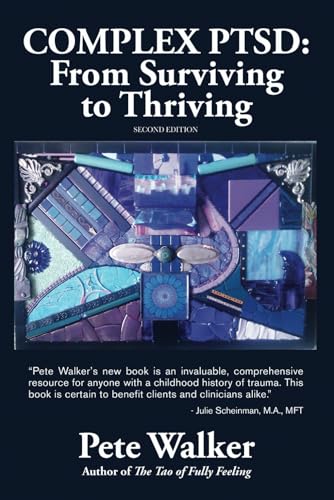
Complex PTSD: From Surviving to Thriving
Pete Walker
A clear, compassionate guide to recognizing and working with the lasting effects of prolonged childhood adversity.
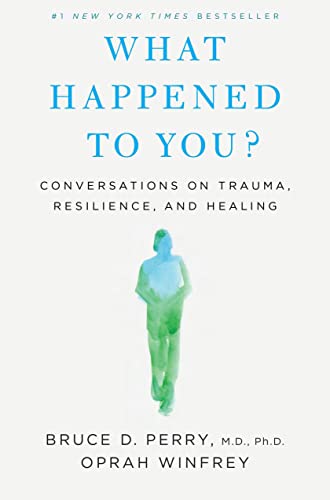
What Happened to You?
Bruce D. Perry, M.D., PhD & Oprah Winfrey
A conversational introduction to how early experience shapes us — reframing 'what's wrong with you' into 'what happened to you.'
As an Amazon Associate, Clarity House Press earns from qualifying purchases. Your price is never affected.
Found this helpful?
Share it with someone who might need it.
Tags
About the Author

Clarity House Press
Editorial Team
The editorial team at Clarity House Press curates and publishes evidence-based content on narcissistic abuse recovery, high-conflict divorce, and healing. Our content is informed by research, survivor experiences, and established trauma-informed approaches.
View all posts by Clarity House Press →Published by Clarity House Press Editorial Team