Please read our important disclaimers before using this content
Manipulation is rarely dramatic. It doesn't announce itself. Instead, it works quietly, systematically, in ways that leave you questioning your memory, your judgment, your sanity. This is closely related to the long game of narcissistic grooming and conditioning—the process by which abusers gradually normalize control before targets recognize it as abuse. Understanding these tactics isn't about developing cynicism—it's about recognizing patterns that trap you and learning to trust yourself again.
What is Coercive Control?
Coercive control is a pattern of acts and behaviors that systematically takes away your freedom and establishes dominance over your life1. Unlike isolated abusive incidents, coercive control creates a comprehensive system of control through intimidation, isolation, terror-inducing violence or threats, and psychological manipulation. A 2025 qualitative systematic review of 31 studies found that survivors describe living in "fear and unpredictability" while experiencing an "inability to exercise agency" across multiple life domains (Springer, 2025).
Research shows that coercive control is almost always an underlying dynamic of intimate partner violence, and the mental health impacts are severe. Compared to situational couple violence, coercive controlling violence is associated with elevated levels of trauma-associated mental health symptoms—including PTSD, depression, anxiety, and higher suicidality—both during and after the relationship2.
The invisibility of coercive control makes it particularly dangerous. It creates invisible chains and a sense of fear that pervades every element of a survivor's life, systematically depriving them of their liberty and reducing their ability for action. Foundational research by Dutton and Painter (1993) demonstrated that three factors establish traumatic bonding in abusive relationships: power imbalance, intermittent reinforcement of reward and punishment, and captivity. Their study of 75 women found that relationship variables including intermittency of abuse accounted for 55% of the variance in attachment to former abusive partners (Dutton & Painter, 1993).
Gaslighting: Making You Doubt Reality
Gaslighting is a specific manipulation tactic where someone denies, minimizes, or reframes events to make you doubt your own perception, memory, and sanity. Recent empirical research has begun documenting its psychological impact with precision.
In a validation study of the Gaslighting Relationship Exposure Inventory (GREI), researchers found that relationship gaslighting exposure is strongly linked with psychological abuse victimization and associated with greater depression and lower relationship quality3. The research demonstrated that gaslighting's effects extend beyond the immediate relationship, creating lasting doubt in survivors' cognitive processes.
A critical finding: gaslighting targets cognitive processes involved in evaluating memories, potentially undermining victims' recollection, confidence, and self-trust—which are essential in forensic processes like legal testimony4. When you're recovering from gaslighting, rebuilding trust in your own mind isn't just emotional work; it's neurological recovery.
Forms of Gaslighting
Gaslighting appears in multiple forms across contexts. Workplace gaslighting research identified it as a multidimensional construct encompassing trivialization (minimizing your concerns) and affliction (claiming victimhood while perpetuating harm)5. The same patterns appear in intimate relationships: "That never happened," "You're being too sensitive," "You're crazy for thinking that."
DARVO: The Reversal Tactic
DARVO is an acronym developed by psychologist Jennifer Freyd that describes a manipulation sequence: Deny the behavior, Attack the person confronting you, and Reverse Victim and Offender.
When you bring up abuse, the response isn't acknowledgment—it's this sequence:
- Denial: "I never did that"
- Attack: "You're the real problem here"
- Reversal: "Actually, I'm the victim in this situation"
DARVO is particularly common among perpetrators with narcissistic traits who use it to avoid accountability and maintain their self-image while simultaneously isolating you further. This tactic is closely related to projection and blame-shifting—two of the most common ways narcissists deflect accountability. A landmark 2024 study published in PLOS ONE found significant associations between DARVO use, sexual harassment perpetration, and rape myth acceptance, suggesting this defensive response is part of a larger worldview that justifies participation in violence and blames victims (Harsey, Adams-Clark, & Freyd, 2024).
Economic Abuse and Isolation
Coercive control frequently involves economic abuse: controlling your money, limiting your access to resources, preventing you from working, or using financial threats to maintain dominance1. Research shows that 94-99% of intimate partner violence survivors have experienced some form of economic abuse (Mellar et al., 2024). This economic component is critical because it removes your practical ability to leave, making the psychological control infinitely more effective. Financial dependency on an abusive partner has been reported as a key reason why leaving abusers is so difficult, with three-fourths of victims in one survey citing financial insecurity as why they remained.
Isolation is another key mechanism. By systematically restricting your freedom and independence—controlling who you see, monitoring your communications, isolating you from friends and family—abusers ensure you have no external reality checks, no alternative perspectives, and no support network to help you recognize the abuse for what it is.
Why Recognition Matters
Recognition isn't about assigning blame or determining intent. It's about naming what's happening so you can respond appropriately.
When you understand that these are patterns—that gaslighting, economic control, isolation, and reversal are coordinated tactics rather than isolated incidents—you stop thinking:
- "Maybe I'm overreacting"
- "They're right, I am crazy"
- "This is normal relationship conflict"
Instead, you think:
- "This is a pattern of control"
- "My perception is valid"
- "I need to protect myself"
Research consistently shows that survivors who recognize coercive control patterns experience better mental health outcomes, build stronger support networks, and make more informed decisions about their safety and future2.
Your Next Steps
If you're recognizing these patterns in your life:
-
Trust the pattern, not the incident: One gaslighting comment might be a mistake. A pattern of gaslighting combined with isolation and economic control is intentional.
-
Document reality externally: Write down dates, quotes, and incidents. Build external memory because your internal reality has been targeted.
-
Find one safe person: Tell someone outside the relationship what's happening. You need reality confirmation from someone who isn't invested in controlling you.
-
Understand the mental health impact: Your anxiety, hypervigilance, and self-doubt aren't personal failures—they're neurological responses to systematic psychological assault.
-
Seek trauma-informed support: A therapist trained in complex trauma and domestic abuse can help you rebuild trust in your own mind. Our guide to finding the right therapist for narcissistic abuse recovery helps you identify which therapeutic approaches are most effective.
-
Know that recovery is possible: Your mind isn't broken. It's been deliberately targeted by someone who wanted control. Recovery means gradually learning to trust yourself again—and you absolutely can.
Key Takeaways
- Coercive control is a systematic pattern of behavior designed to establish dominance and take away your freedom
- Gaslighting specifically targets your cognitive processes and memory, making you doubt your own perception—see our comprehensive guide to gaslighting for a deeper dive
- DARVO is a manipulation sequence that denies, attacks, and reverses victim/offender roles
- Economic abuse and isolation are control mechanisms that prevent escape
- Recognition of patterns (not isolated incidents) is the foundation of recovery
- Trauma-informed support helps rebuild trust in your own mind
Resources
Understanding Coercive Control and Manipulation:
- Why Does He Do That? by Lundy Bancroft - Comprehensive guide to abusive tactics and manipulation patterns
- See What You Made Me Do by Jess Hill - Coercive control and domestic abuse patterns
- The Gaslight Effect by Dr. Robin Stern - Recognizing and recovering from gaslighting
- In Sheep's Clothing by George Simon Jr. - Understanding manipulative people
Therapy and Recovery Support:
- Psychology Today - Therapists - Filter for "coercive control" and "narcissistic abuse"
- National Domestic Violence Hotline - 1-800-799-7233 (SAFE) for abuse identification
- EMDR International Association - Find trauma therapists for manipulation recovery
- Somatic Experiencing International - Body-based trauma therapy directory
Crisis Support and Legal Resources:
- 988 Suicide & Crisis Lifeline - Call or text 988 for crisis support (24/7)
- Crisis Text Line - Text HOME to 741741 for crisis counseling
- WomensLaw.org - State-specific legal information on coercive control
- r/NarcissisticAbuse - Reddit peer support community for manipulation survivors
References
- Coercive Control in Intimate Partner Violence: Relationship with Women's Experience of Violence, Use of Violence, and Danger. PMC National Center for Biotechnology Information. https://pmc.ncbi.nlm.nih.gov/articles/PMC6291212/ ↩
- The Trauma and Mental Health Impacts of Coercive Control: A Systematic Review and Meta-Analysis. PMC National Center for Biotechnology Information. https://pmc.ncbi.nlm.nih.gov/articles/PMC10666508/ ↩
- The gaslighting relationship exposure inventory: Reliability and validity in two cultures. Tair Tager-Shafrir, Ohad Szepsenwol, Maayan Dvir, Osnat Zamir, 2024. Sage Journals. https://journals.sagepub.com/doi/10.1177/02654075241266942 ↩
- Gaslighting and memory: the effects of partner-led challenges on recall and self-perception. Taylor & Francis Online. https://www.tandfonline.com/doi/full/10.1080/09658211.2025.2533253 ↩
- Workplace gaslighting: Conceptualization, development, and validation of a scale. PMC National Center for Biotechnology Information. https://pmc.ncbi.nlm.nih.gov/articles/PMC10097938/ ↩
- Coercive Control and Intimate Partner Violence: Relationship With Personality Disorder Severity and Pathological Narcissism. PMC National Center for Biotechnology Information. https://pmc.ncbi.nlm.nih.gov/articles/PMC12411753/ ↩
- Illuminating Gaslighting: A Comprehensive Interdisciplinary Review of Gaslighting Literature. Journal of Family Violence. https://link.springer.com/article/10.1007/s10896-025-00805-4 ↩
- Dutton, D. G., & Painter, S. (1993). Emotional attachments in abusive relationships: A test of traumatic bonding theory. Violence and Victims, 8(2), 105-120. PubMed. https://pubmed.ncbi.nlm.nih.gov/8193053/ ↩
- Harsey, S. J., Adams-Clark, A. A., & Freyd, J. J. (2024). Associations between defensive victim-blaming responses (DARVO), rape myth acceptance, and sexual harassment. PLOS ONE, 19(12), e0313642. https://journals.plos.org/plosone/article?id=10.1371/journal.pone.0313642 ↩
- Women's Experiences of Coercive Control in Intimate Partner Relationships: A Qualitative Systematic Review. (2025). Journal of Family Violence. https://link.springer.com/article/10.1007/s10896-025-00970-6 ↩
- Mellar, B. M., Fanslow, J. L., Gulliver, P. J., & McIntosh, T. K. D. (2024). Economic Abuse by An Intimate Partner and Its Associations with Women's Socioeconomic Status and Mental Health. Journal of Interpersonal Violence. https://journals.sagepub.com/doi/10.1177/08862605241235140 ↩
Recommended Reading
From Clarity House Press — plus trusted books for deeper understanding


Surviving the Storm: When the Court Takes Your Children
Clarity House Press
For fathers in active high-conflict custody battles. Understand your CPTSD symptoms, begin stabilization, and build foundation for healing. 17 chapters covering recognition, symptoms, and the healing path.

Becoming the Narcissist's Nightmare
Shahida Arabi
How to devalue and discard the narcissist while supplying yourself with empowerment and validation.
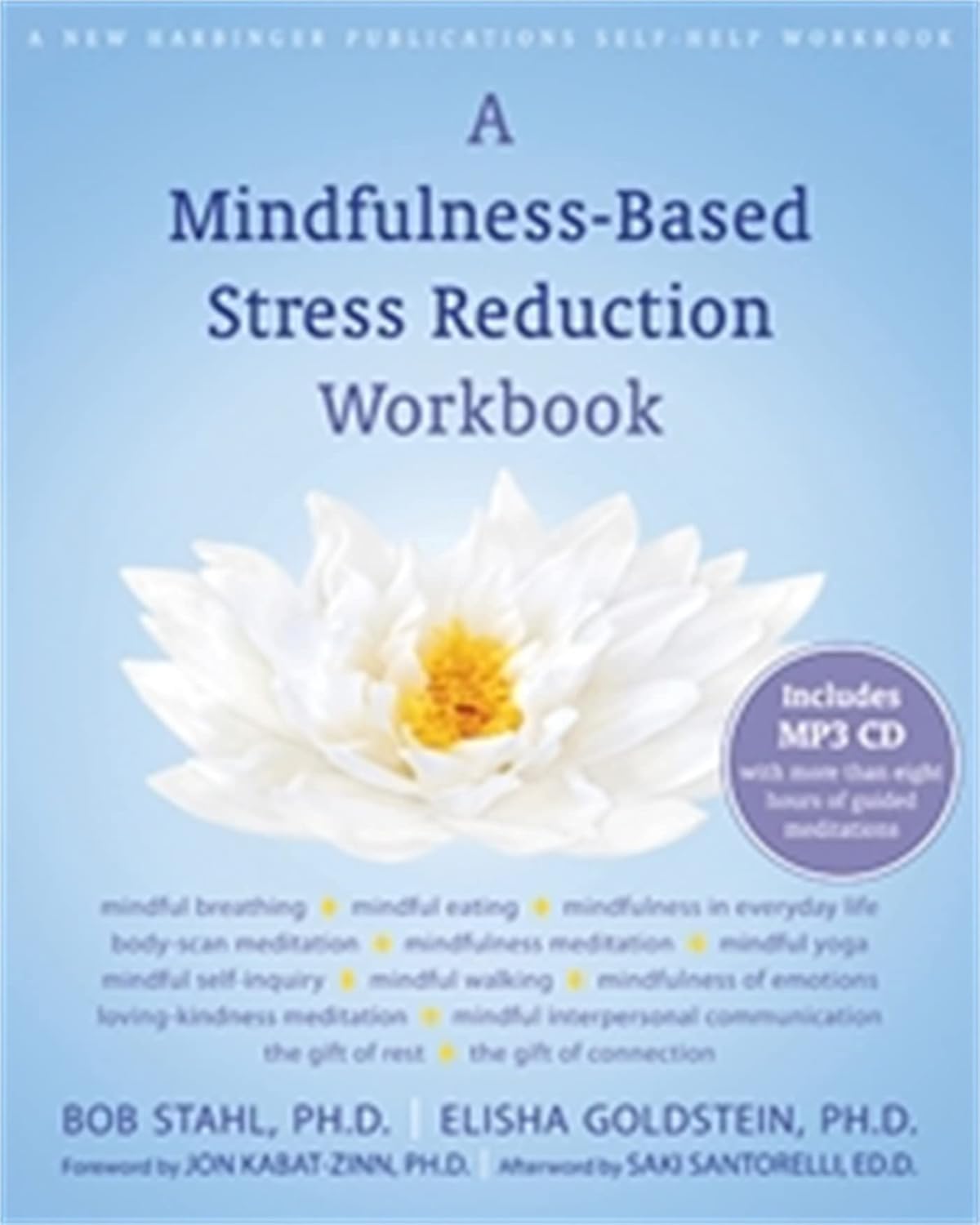
A Mindfulness-Based Stress Reduction Workbook
Bob Stahl, PhD & Elisha Goldstein, PhD
Proven mindfulness techniques to reduce stress, anxiety, and chronic pain associated with trauma.
As an Amazon Associate, Clarity House Press earns from qualifying purchases. Your price is never affected.
Found this helpful?
Share it with someone who might need it.
About the Author

Clarity House Press
Editorial Team
The editorial team at Clarity House Press curates and publishes evidence-based content on narcissistic abuse recovery, high-conflict divorce, and healing. Our content is informed by research, survivor experiences, and established trauma-informed approaches.
View all posts by Clarity House Press →Published by Clarity House Press Editorial Team