Please read our important disclaimers before using this content
You can spot red flags from a mile away now. Narcissistic patterns, manipulation tactics, love bombing—you've educated yourself thoroughly on what to avoid.
But when you meet someone who seems genuinely healthy, you're confused. Their consistency feels boring. Their respect for your boundaries seems too good to be true. Their emotional availability feels uncomfortable. You keep waiting for the other shoe to drop.
You've learned what unhealthy looks like. But you don't know what healthy actually feels like—and healthy might feel wrong simply because it's unfamiliar.
Learning to recognize green flags is as important as identifying red flags. You need to know what you're moving toward, not just what you're running from.
When "Boring" Means "Secure"
Your trauma brain interprets safety as danger.
After abuse, your nervous system learned that calm meant the calm before the storm. Predictability meant you were being lulled into complacency. Kindness was manipulation in disguise. Your survival depended on hypervigilance. Research on complex PTSD shows that trauma survivors often experience difficulty distinguishing between safety and danger cues1 in relationships.
So when someone is consistently kind, your body reads it as a threat. When there's no drama to manage, you feel restless. When they're emotionally available, you wonder what they're hiding.
Green flag recognition: Healthy relationships feel different from what you're used to—and that's the point.
If you were raised on chaos, consistency will feel unfamiliar. If you were trained to earn affection, unconditional care will feel suspicious. If you learned love through intensity, steadiness will feel like disinterest.
The uncomfortable truth: healthy love might make you anxious at first because your nervous system hasn't learned to trust safety yet.
The 20 Green Flags That Actually Matter
Communication Green Flags
1. They apologize without defensiveness.
When they've hurt you—even accidentally—they say "I'm sorry I hurt you" without adding "but you..." They don't explain away your feelings. They don't make you comfort them about their mistake. They take accountability and change their behavior.
Red flag equivalent: Defensive justifications, DARVO (Deny, Attack, Reverse Victim/Offender), weaponized apologies ("I'm sorry you feel that way").
2. They ask clarifying questions instead of making assumptions.
When they don't understand something you've said, they ask. When they're not sure about your boundaries, they check. When your behavior changes, they inquire with curiosity, not accusation.
"I noticed you seemed quiet during dinner. Is everything okay, or do you need some processing time?"
Red flag equivalent: Mind-reading accusations, assigning motives, "I know what you're really thinking."
3. They can disagree without making it personal.
Arguments stay focused on the issue at hand. They don't bring up past mistakes as ammunition. They don't attack your character. They don't threaten the relationship during conflict. They can say "I see it differently" without implying you're stupid or crazy.
Red flag equivalent: Character assassination, kitchen-sinking, silent treatment, withdrawal of affection.
4. They remember what you've told them.
Not just the big things—the small details too. Your coffee order. The name of your difficult coworker. The podcast you mentioned liking. That you have a big presentation next Tuesday.
Healthy people pay attention because they care about understanding you, not because they're gathering intelligence to use against you.
Red flag equivalent: Selective memory, weaponizing your vulnerabilities, "I don't remember saying that."
5. They communicate their needs directly.
They don't hint. They don't sulk and wait for you to guess. They don't create tests to see if you'll read their mind. They say, clearly and respectfully, what they need.
"I need about an hour to decompress after work before I'm ready to talk about planning. Can we discuss this after dinner?"
Red flag equivalent: Passive-aggressive behavior, sulking, punishment for not anticipating needs, covert contracts.
Boundary Green Flags
6. They respect "no" the first time.
No explaining. No convincing. No guilt-tripping. No pouting. No "Are you sure?" repeated five times. When you say no, they accept it gracefully.
This applies to everything: sex, social plans, sharing personal information, lending money, reconciling after a fight. "No" is a complete sentence, and they treat it as one.
Red flag equivalent: Boundary-pushing, guilt trips, wearing you down, "just one more time," retaliation.
7. They have their own boundaries—and articulate them clearly.
Healthy people don't just respect your boundaries; they have their own. They tell you what they're comfortable with. They're not infinitely accommodating. They say "I'm not comfortable with that" without apologizing excessively.
This is actually reassuring—it means they're not people-pleasing or love-bombing. They know themselves well enough to know their limits.
Red flag equivalent: Chameleon behavior, no clear preferences, excessive accommodation followed by resentment.
8. They encourage your independence.
They're happy when you spend time with friends. They support your hobbies that don't include them. They respect your need for alone time. They want you to have a full life, not a life that orbits them.
"I'm so glad you had fun at book club. I worked on my photography project—it was a good night for both of us."
Red flag equivalent: Isolation tactics, jealousy of your time, guilt about separate activities, "I thought you loved me."
9. They don't try to "fix" your emotions.
When you're upset, they sit with you. They don't minimize your feelings. They don't rush you to "look on the bright side." They don't offer unsolicited advice unless you ask for it. They validate first, problem-solve only if requested.
"That sounds really frustrating. Do you want to vent, or would you like help brainstorming solutions?"
Red flag equivalent: Emotional invalidation, toxic positivity, making your emotions about them, "you're too sensitive."
Emotional Availability Green Flags
10. They're comfortable with vulnerability—yours and theirs.
They can talk about their feelings without drama or shutdown. When you share something vulnerable, they don't weaponize it later. They don't punish emotional honesty. They treat your tender spots with care.
And they have their own emotional life they can articulate. They can say "I felt hurt when..." or "I'm worried about..." They're not emotionally unavailable or a bottomless pit of need.
Red flag equivalent: Stonewalling, emotional flooding, weaponizing vulnerabilities, "I don't do feelings."
11. They're consistent across contexts.
They treat you the same way in private and in public. They speak about you respectfully to others. They don't have a "public persona" that contradicts how they treat you privately. Their values are consistent, not situational.
You don't wonder which version of them you'll get today. There's one version—the real one.
Red flag equivalent: Jekyll/Hyde personality, public charm/private cruelty, triangulation, smear campaigns.
12. They share appropriate emotional responsibility.
They manage their own emotions. They don't make you responsible for their happiness. They don't blame you when they're in a bad mood. They can self-soothe. They can identify their feelings and take responsibility for them.
"I'm feeling stressed about work, so I might be a bit short today. That's not about you—I just wanted to give you a heads up."
Red flag equivalent: Emotional dumping, making you their therapist, blaming you for their mood, emotional blackmail.
13. They demonstrate empathy through action, not just words.
When you're sick, they bring soup. When you're stressed, they take something off your plate without being asked. When you mention something matters to you, they remember and follow through.
Empathy isn't just "I'm sorry you feel that way." It's "What can I do to help?" followed by actually doing it.
Red flag equivalent: Performative empathy, empty promises, "thoughts and prayers" with no action.
Trust and Respect Green Flags
14. Their words match their actions.
They do what they say they'll do. They show up when they say they will. Their promises are kept. If something changes, they communicate it proactively. You don't have to wonder if they mean what they say.
This builds trust over time: a track record of reliability, not grand gestures followed by disappointment.
Red flag equivalent: Future faking, broken promises, "I meant to," flakiness excused as spontaneity.
15. They're transparent about their life.
They don't hide their phone. They don't have secret social media accounts. They talk openly about their family, friends, work. They introduce you to important people in their life at an appropriate pace. Their life isn't compartmentalized in suspicious ways.
You're not investigating them to feel secure—security comes from their openness.
Red flag equivalent: Secretiveness, compartmentalization, trickle-truth, defensive privacy.
16. They take responsibility for their past.
They can talk about previous relationships with appropriate accountability. Not blaming all exes. Not trash-talking people from their past. They can identify what they learned and how they've grown.
"That relationship ended because we wanted different things. I realized I need to communicate my needs more directly—I used to just withdraw."
Red flag equivalent: All exes are "crazy," victim narrative with no accountability, pattern of destructive relationships blamed entirely on others.
17. They respect your healing process.
They don't push you to "get over" your past faster. They don't take your trauma responses personally. They educate themselves about abuse dynamics. They're patient with your triggers. They understand you're doing your best. If you're wondering what healing benchmarks to share with a new partner, the stages of recovery from narcissistic abuse gives a helpful framework.
They don't use your trauma against you: "You're just being paranoid because of your ex."
Red flag equivalent: Impatience with healing, weaponizing trauma, "I'm not like them," minimizing your experiences.
Equality and Partnership Green Flags
18. They view the relationship as a partnership, not a hierarchy.
Decisions are made together. Contributions are valued equally (not just financial—emotional labor, domestic work, planning). Neither person is "in charge." Power dynamics are balanced.
You're a team, not a leader and follower. Not a parent and child. Not a savior and victim.
Red flag equivalent: One-sided decision-making, financial control, infantilization, "I know best."
19. They support your growth—even when it doesn't benefit them.
They encourage you to pursue opportunities that might change the relationship dynamic. They're not threatened by your success. They celebrate your achievements. They want you to become the fullest version of yourself, even if that means you outgrow them.
Healthy love expands you. Abusive love shrinks you.
Red flag equivalent: Sabotaging your success, jealousy of achievements, keeping you small, "who do you think you are?"
20. They can tolerate your "no" without retaliation.
This deserves its own point beyond boundary-respect. When you set a boundary, prioritize yourself, or choose differently than they'd prefer, there's no punishment. No silent treatment. No passive-aggressive behavior. No withdrawal of affection. No "making you pay for it" later.
You can be yourself, have needs, and set limits without fearing consequences.
Red flag equivalent: Covert punishment, withdrawal, stonewalling, "fine, whatever," weaponized compliance.
My Story: When Kindness Felt Like a Trap
I met David eight months after leaving my ex-husband. I'd done the therapy, read the books, learned the red flags. I was ready. I was healed. (I was absolutely not healed.)
David was... confusing. He texted when he said he would. He showed up on time. When I said I needed to cancel plans because I was overwhelmed, he said "No problem, let me know when you're up for it" without guilt or pressure.
I kept waiting for the catch.
When would he use my vulnerability against me? When would the criticism start? When would he reveal what I "owed" him for all this niceness?
After our fifth date, I had a panic attack in my car before going home. His consistency was making me anxious. The lack of drama felt wrong. I was so used to scanning for danger that safety felt like the thing I'd missed—the warning sign I hadn't caught yet.
My therapist asked: "What if the catch is that there is no catch? What if kindness is just kindness?"
That question broke something open in me.
I'd been so focused on learning red flags that I'd never learned what green flags felt like. I'd studied pathology but not health. I could identify manipulation but not genuine care.
David and I didn't work out long-term (we wanted different things about kids), but that relationship taught me what healthy actually feels like:
Boring. Consistent. Respectful. Safe. And yes—at first, anxiety-inducing for someone whose nervous system learned love through chaos.
I had to learn that anxiety during connection wasn't always intuition warning me about danger. Sometimes it was trauma warning me about safety—because safety was unfamiliar. Understanding hyperarousal and your nervous system states helped me distinguish between real warning signals and trauma patterning.
The Green Flag vs. Red Flag Confusion Matrix
These patterns look similar but are completely different:
Intense Connection (Love Bombing vs. Genuine Chemistry)
Red flag version: Immediate declarations of love, moving incredibly fast, "I've never felt this way before" in week one, constant contact that feels overwhelming, idealization that doesn't match reality.
Green flag version: Strong connection that develops naturally, excitement balanced with patience, increasing intimacy at a comfortable pace, "I really like you and want to see where this goes," respecting each other's need for space while building connection.
The key difference: Pacing and respect for reality. Love bombing rushes past getting to know you. Real chemistry respects the time needed to build genuine intimacy. Clinical research identifies love bombing as a manipulation tactic commonly used by individuals with narcissistic traits2 to rapidly establish control. For a detailed look at what this phase actually involves, see the neurobiology of love bombing and idealization.
Independence (Avoidant Dismissiveness vs. Healthy Autonomy)
Red flag version: "I don't need anyone," extreme self-sufficiency that won't accept help, emotional unavailability disguised as independence, fear of intimacy masked as strength.
Green flag version: "I enjoy my own company and I value our connection," healthy balance of together time and alone time, can be vulnerable and ask for help, independence doesn't preclude intimacy.
The key difference: Healthy autonomy coexists with emotional availability. Avoidant dismissiveness uses independence to avoid intimacy.
Direct Communication (Brutal Honesty vs. Respectful Truth)
Red flag version: "I'm just being honest" used as excuse for cruelty, no tact or consideration for feelings, "I say it like it is" meaning "I don't care if I hurt you," honesty without kindness.
Green flag version: Truth delivered with care, difficult conversations approached with compassion, honesty that considers both truth AND impact, "Can I share something that might be hard to hear?"
The key difference: Kind honesty considers the other person's humanity. Brutal honesty uses "truth" as a weapon.
Taking It Slow (Breadcrumbing vs. Intentional Pacing)
Red flag version: Just enough contact to keep you interested, no clear intentions, inconsistent effort, "I'm not ready for a relationship" while acting like they're in one, stringing you along.
Green flag version: Clear communication about pacing, consistent effort within agreed-upon pace, "I want to take this slow because I want to do it right," honesty about intentions and timeline.
The key difference: Breadcrumbing is inconsistent and unclear. Healthy pacing is consistent and transparent.
Why Green Flags Might Feel Wrong
Your nervous system learned love through specific patterns:13
If you grew up with chaos, calm feels like the eerie quiet before a storm. If you learned love through intensity, steadiness feels like disinterest. If you earned affection through performance, unconditional care feels suspicious.
Common survivor experiences with green flags:
- Consistency feels boring (you're used to the dopamine roller coaster of intermittent reinforcement2)
- Respect for boundaries feels like they don't care enough to push (you learned "love" as boundary violation)
- Emotional availability feels vulnerable and scary (you learned to protect yourself through distance)
- Direct communication feels harsh (you're used to reading subtext and managing others' unstated emotions)
- Their independence feels like rejection (you learned enmeshment as intimacy)
- Lack of drama feels empty (you learned crisis bonding as connection2)
This doesn't mean green flags are red flags in disguise. It means your nervous system needs recalibration.
You're not broken for feeling this way. You're responding normally to an unfamiliar experience. Safety feels unsafe when danger became your baseline. The neurobiological impact of repeated trauma creates lasting changes in how your brain processes threat and safety cues1, and these changes are reversible with appropriate support.
Recalibrating to Healthy: Practical Steps
1. Name the feeling: "This is my trauma response, not my intuition."
When you feel anxious about someone's kindness, pause. Ask yourself: "Is this person actually showing red flags, or am I experiencing discomfort with a green flag?"
Sometimes anxiety during dating IS intuition about danger. Sometimes it's trauma responding to safety13. Learning to distinguish between these takes practice.
Helpful question: What specifically are they doing that's making me uncomfortable? Is it a boundary violation, or is it respect that feels unfamiliar?
2. Separate "familiar" from "right."
Familiar ≠ Healthy Unfamiliar ≠ Wrong
The relationship patterns you learned might feel "right" because they're familiar. That doesn't mean they're actually healthy. And healthy patterns might feel "wrong" because they're new.4 Research on interpersonal emotion regulation shows that people who grew up in dysfunctional environments often struggle to recognize healthy emotional support4, even when it's offered consistently.
Practice phrase: "This feels unfamiliar. That doesn't mean it's dangerous."
3. Track patterns over time, not isolated incidents.
One kind gesture could be manipulation. A consistent pattern of respect over months is data.
Keep a simple log if it helps:
- Times they respected a boundary
- Times their words matched their actions
- Times they took accountability
- Times they supported your independence
Green flags are demonstrated through patterns, not moments.
4. Notice your body's response—and challenge it gently.
When they do something kind, does your body tense? Does their consistency make you anxious? Does their respect feel like a trick?
Acknowledge: "My body is responding to this as danger." Investigate: "But what are they actually doing? Is this a threat or safety?" Reassure: "I can be curious about this instead of immediately running."
You're teaching your nervous system that safety exists. This takes time.
5. Talk about it (when appropriate).
With the right person—someone showing consistent green flags—you can share:
"I notice I get anxious when things are going well. It's a trauma response from my past relationship. It's not about you. I'm working on it in therapy, and I wanted you to know so you understand if I seem uncomfortable with kindness sometimes."
A healthy person will demonstrate secure attachment patterns5[^10]:
- Thank you for sharing
- Ask how they can support you
- Not take your trauma responses personally
- Give you space to heal while staying consistent6
6. Work with a trauma-informed therapist.
Recalibrating to healthy isn't something you should do alone. A therapist who understands complex trauma can help you. Professional support significantly improves relationship outcomes7 for trauma survivors. A therapist can help you:
- Distinguish between intuition and trauma responses
- Process why healthy feels threatening
- Build tolerance for safety and intimacy
- Recognize both red flags AND green flags accurately
This is deep work. It requires professional support.
Red Flags Disguised as Green Flags
Be aware of these manipulation tactics:
"I'm so honest/direct" (Cruelty disguised as authenticity)
Real green flag: Respectful honesty delivered with care Manipulation: "I'm just being real" as excuse for boundary violations and cruelty
"I respect your independence" (Avoidance disguised as respect)
Real green flag: Supporting your autonomy while maintaining emotional connection Manipulation: Emotional unavailability framed as giving you space
"I love how low-maintenance you are" (Praising self-abandonment)
Real green flag: Appreciating your easygoing nature while still welcoming your needs Manipulation: Rewarding you for having no needs or boundaries
"I've done so much work on myself" (Therapy-speak as manipulation)
Real green flag: Someone who has genuinely done healing work and demonstrates it through behavior Manipulation: Using therapy language to appear self-aware while behavior contradicts words
"I want to take things slow" (Keeping options open while getting benefits)
Real green flag: Intentional pacing with clear communication and consistent effort Manipulation: Breadcrumbing—just enough to keep you available while they explore other options
"You're so different from my crazy ex" (Idealization and triangulation)
Real green flag: Can speak about past relationships with appropriate accountability Manipulation: Setting you up for eventual devaluation while gathering information about what to hide
The pattern to watch for: Do their words match their actions over time? Are you being asked to minimize your needs while they meet theirs? Does their "enlightened" language coexist with controlling behavior?
Your Next Steps
If you're currently dating or considering it:
1. Make your own green flag list.
What matters specifically to you? What does healthy look like in your value system? What behaviors make you feel safe and respected?
Your list might include things like:
- Shares pet care responsibilities equally
- Supports my creative work even when it doesn't make money
- Can have political disagreements without making it personal
- Actively participates in therapy/healing work
2. Practice recognizing green flags in all relationships.
Not just romantic—friendships, professional relationships, family connections. Where do you already experience healthy dynamics? What does that look like?
Build your green flag recognition skills in lower-stakes contexts first.
3. Give yourself permission to be suspicious—and to be surprised.
You're allowed to take your time trusting. You're allowed to verify that kindness is real before relaxing into it. You're allowed to protect yourself.
AND you're allowed to be surprised by genuine care. You're allowed to gradually believe that some people are actually safe.
Both/and, not either/or.
4. Remember: You're not looking for perfect, you're looking for healthy.
Healthy people still:
- Make mistakes
- Have bad days
- Trigger you sometimes
- Need to repair ruptures
- Have their own trauma
The difference is how they handle these realities. Do they take accountability? Do they repair? Do they grow? Do they treat you with respect even during conflict?
5. Trust your timeline.
There's no "right" pace for learning to recognize and receive healthy love. Some survivors date immediately after leaving. Some wait years. Some never want romantic relationships again.
All of these are valid.
Your timeline is your own. Anyone pushing you to "move on" faster doesn't understand trauma recovery.
The Uncomfortable Truth
Learning to recognize green flags is harder than learning red flags.
Red flags are dramatic. They're obvious once you know what to look for. They trigger your alarm systems. Your body KNOWS something is wrong.
Green flags are subtle. They're quiet. They're consistent rather than intense. They don't trigger alarm bells—which can feel disorienting when alarm bells became your definition of love.
You're not just learning to avoid bad relationships. You're learning to tolerate good ones.
That's different work. Harder work, in some ways.
You're teaching your nervous system that safety exists. That kindness isn't always manipulation. That consistency isn't boring, it's secure. That respect isn't disinterest, it's love.
This recalibration takes time. Be patient with yourself.
You spent years or decades learning that love looks like chaos. Unlearning that pattern and learning what healthy actually feels like is a process, not an event.
You Don't Have to Figure This Out Alone
If you're struggling to distinguish between green flags and red flags, between trauma responses and intuition, between healthy and familiar—that's what therapy is for.
A trauma-informed therapist can help you:
- Process why safety feels threatening
- Distinguish between real danger and triggered responses
- Build tolerance for healthy relationships
- Recognize green flags accurately
- Navigate dating after abuse
You're not broken. You're responding normally to abnormal experiences.
And yes—you can learn what healthy love actually feels like. Even if right now it feels impossible to imagine.
The fact that you're reading this, educating yourself about green flags, trying to understand what healthy looks like? That's evidence you're already moving toward it.
Keep going.
Resources
Understanding Healthy Relationships and Attachment:
- Attached by Levine & Heller - Understanding attachment styles and healthy relationship patterns
- Hold Me Tight by Sue Johnson - Emotionally focused therapy for secure relationships
- The Gottman Institute - Research-based relationship education and green flags
- National Domestic Violence Hotline - Healthy relationship resources and red flag identification
Therapy and Relationship Education:
- Psychology Today - Therapists - Filter for "relationship trauma" and "attachment"
- Emotionally Focused Therapy Directory - Find EFT couples therapists
- Wired for Love by Stan Tatkin - Neuroscience of secure relationships
- Relationship Hero - Online relationship coaching and support
Support for Abuse Survivors:
- Out of the FOG - Support forum for learning healthy relationship patterns
- r/HealthyRelationships - Reddit community discussing relationship green flags
- National Alliance on Mental Illness (NAMI) - Relationship and mental health support
- SAMHSA Helpline - 1-800-662-4357 (mental health treatment referrals)
References
- Feeney, B. C., Monin, J. K., & Brock, R. L. (2024). Attachment, conflict and relationship quality: Laboratory-based and clinical insights. Current Opinion in Psychology, 29, 101-107. https://pubmed.ncbi.nlm.nih.gov/29753972/ ↩
- Dutton, D. G., & Painter, S. (1993). Emotional attachments in abusive relationships: A test of traumatic bonding theory. Violence and Victims, 8(2), 105-120. https://pubmed.ncbi.nlm.nih.gov/8193053/ ↩
- Maunder, R. G., & Hunter, J. J. (2001). Attachment and psychosomatic medicine: Developmental contributions to disease. Psychosomatic Medicine, 63(4), 556-567. https://pmc.ncbi.nlm.nih.gov/articles/PMC6920243/ ↩
- van der Kolk, B. (2014). Post-traumatic stress disorder: The neurobiological impact of psychological trauma. Frontiers in Psychiatry, 5, 8. https://pmc.ncbi.nlm.nih.gov/articles/PMC3182008/ ↩
- Foa, E. B., Hembree, E. A., & Rothbaum, B. O. (2007). Prolonged exposure therapy for PTSD: Emotional processing of traumatic experiences—Therapist guide. Oxford University Press. https://pmc.ncbi.nlm.nih.gov/articles/PMC3142267/ ↩
- Kim, Kwok, Mayes, Potenza, & Rutherford (2017). Early adverse experience and substance addiction: dopamine, oxytocin, and glucocorticoid pathways.. Annals of the New York Academy of Sciences. https://pmc.ncbi.nlm.nih.gov/articles/PMC5303188/ ↩
- Kearney, & Lanius (2022). The brain-body disconnect: A somatic sensory basis for trauma-related disorders.. Frontiers in neuroscience. https://pmc.ncbi.nlm.nih.gov/articles/PMC9720153/ ↩
- Su, J. C., D'Andrea, W., & Zywj, D. (2015). Resting amygdala connectivity and basal sympathetic tone as markers of chronic hypervigilance: An eye-tracking and heart rate variability study. Frontiers in Psychology, 6, 1049. https://pmc.ncbi.nlm.nih.gov/articles/PMC6605037/ ↩
- Davila, J., Kashy, D. A., & Bradbury, T. N. (1999). Attachment change processes in the early years of marriage. Journal of Personality and Social Psychology, 76(5), 783-802. ↩
- Wiebe, S. A., Johnson, S. M., Lafontaine, M. F., Hunter, J. J., & Messervey, D. (2017). Two-year follow-up outcomes in emotionally focused couple therapy: An investigation of relationship satisfaction and attachment trajectories. Journal of Marital and Family Therapy, 43(2), 227-244. https://pubmed.ncbi.nlm.nih.gov/27997704/ ↩
- Cacioppo, S., Zhou, H., & Cacioppo, J. T. (2014). Exploring the temporal dynamics and laterality of the amygdala and midbrain in depression and anxiety: A resting-state fMRI study. BioMed Research International, 2014, 898637. https://pmc.ncbi.nlm.nih.gov/articles/PMC3895245/ ↩
- Liu, Strube, & Thompson (2021). Interpersonal Emotion Regulation: an Experience Sampling Study.. Affective science. https://pmc.ncbi.nlm.nih.gov/articles/PMC9382965/ ↩
- Zaki, J., & Williams, W. C. (2013). Interpersonal emotion regulation. Emotion, 13(5), 803-810. https://pubmed.ncbi.nlm.nih.gov/29733662/ ↩
Recommended Reading
From Clarity House Press — plus trusted books for deeper understanding

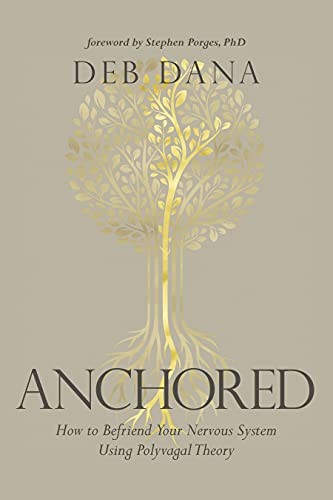
Anchored
Deb Dana, LCSW
Practical everyday ways to transform your relationship with your nervous system using Polyvagal Theory.
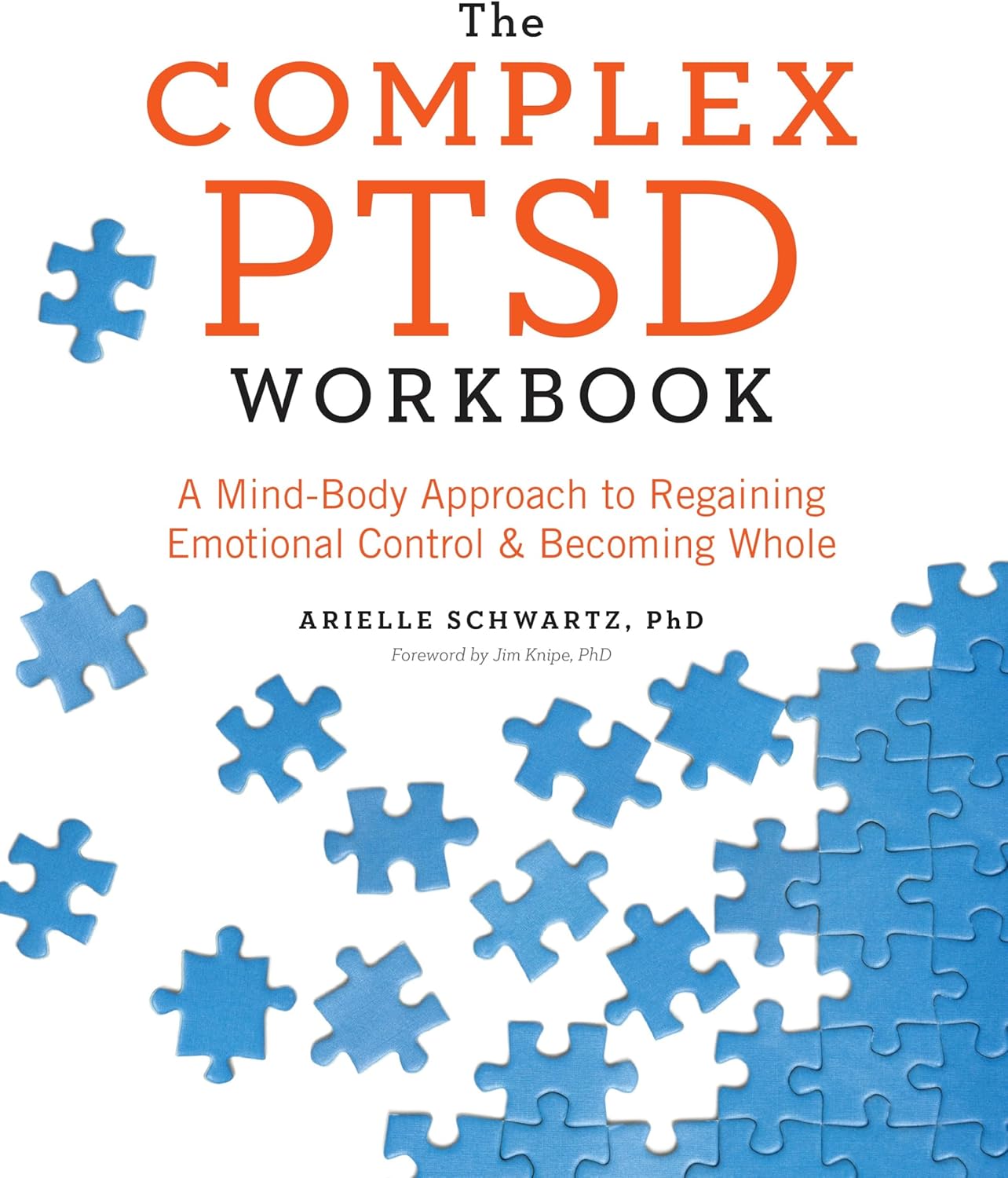
The Complex PTSD Workbook
Arielle Schwartz, PhD
A mind-body approach to regaining emotional control and becoming whole with evidence-based exercises.
As an Amazon Associate, Clarity House Press earns from qualifying purchases. Your price is never affected.
Found this helpful?
Share it with someone who might need it.
About the Author

Clarity House Press
Editorial Team
The editorial team at Clarity House Press curates and publishes evidence-based content on narcissistic abuse recovery, high-conflict divorce, and healing. Our content is informed by research, survivor experiences, and established trauma-informed approaches.
View all posts by Clarity House Press →Published by Clarity House Press Editorial Team