Please read our important disclaimers before using this content
Your partner swore an oath to protect and serve.
Just not you.
When your abuser is a law enforcement officer, you face dangers that survivors of non-LEO abusers never encounter. Your partner has professional training in intimidation, control, and surveillance. They have access to weapons, databases, and a network of colleagues who may prioritize loyalty over your safety.
And worst of all: the very systems designed to protect domestic violence survivors—police response, protective orders, legal consequences—are staffed by your abuser's colleagues, friends, and professional network.
This is your guide to surviving and escaping when your abuser wears a badge. Understanding the full range of manipulation tactics abusers use is the first step toward recognizing your situation clearly.
The Reality of Officer-Involved Domestic Violence
Domestic violence occurs at significantly higher rates in law enforcement families than in the general population.
Research findings:
- Studies estimate 15-40% of law enforcement families experience domestic violence (compared to 10% in the general population). A foundational study of 385 male officers, 40 female officers, and 115 spouses found that 28% of male officers self-reported perpetrating violence against their spouses (Neidig, Russell, & Seng, 1992)
- Officers who commit domestic violence rarely face professional consequences. Research analyzing 324 cases of officers arrested for domestic violence found that only 32% lost their jobs, even after conviction (Stinson & Liederbach, 2012)
- Victims of officer-involved domestic violence face unique barriers to reporting and escaping
- Lethality risk increases significantly when the abuser is trained in weapons and tactical response
Why rates are higher:
- Occupational stress and trauma exposure
- Access to weapons and training in their use
- Cultural norms that equate vulnerability with weakness
- Institutional protection that shields abusive officers
- Power and control dynamics reinforced by the profession
You're not imagining it. You're not overreacting. Officer-involved domestic violence is a documented, systemic problem.
Why Law Enforcement Officers Are High-Risk Abusers
Your partner's profession creates specific risk factors that make abuse more dangerous and escape more difficult.
Weapons Access and Lethality
Your abuser has:
- Department-issued firearms (often required to be carried 24/7)
- Personal weapons collection
- Training in lethal force
- Knowledge of how to make death look like suicide or accident
Lethality research shows: The presence of firearms in domestic violence situations increases the risk of homicide by 500%. Research using the Danger Assessment instrument found that women who were threatened or assaulted with a gun were twenty times more likely to be murdered than other abused women (Campbell et al., 2009). When the abuser is a trained law enforcement officer with constant weapon access, this risk escalates exponentially.
You cannot disarm them. Protective orders that require surrender of weapons are often unenforced when the abuser is law enforcement. Even if ordered to surrender personal weapons, they still have department-issued firearms.
Surveillance Capabilities
Law enforcement officers have professional training and tools for surveillance:
-
Database access: Your abuser can run your license plate, look up your address, check your vehicle registration, and track your movements using law enforcement databases.
-
GPS and tracking: They know how to install tracking devices on vehicles, how to monitor cell phones, and how to use technology for surveillance.
-
Informant networks: Other officers, dispatchers, and department personnel can provide information about protective order filings, police reports, or your location.
-
Tactical training: Your abuser knows how to conduct surveillance without being detected, follow you without being noticed, and gather information covertly.
You cannot hide from someone with access to law enforcement resources.
Professional Credibility
Your abuser's profession gives them automatic credibility in legal settings:
When they say: "I'm a police officer. I know the law. My spouse is lying/unstable/vindictive."
The court/mediator/evaluator hears: "This is a credible professional who serves the public. They wouldn't lie. The civilian spouse must be exaggerating."
Your word against theirs is not an equal contest when they wear a badge.
The Blue Wall of Silence
Law enforcement culture prioritizes loyalty to fellow officers above almost everything else. This "thin blue line" mentality means:
- Colleagues won't testify against them
- Supervisors minimize or ignore abuse reports
- Investigations are superficial or deliberately sabotaged
- Consequences are rare, even with documented evidence
Research confirms that police solidarity creates significant barriers, with fellow officers often reluctant or unwilling to report or charge colleagues for domestic violence offenses. Allegations are frequently dealt with internally, and investigations often result in no action against abusive officers (Russell & Pappas, 2018).
Your abuser's professional network is a protection system designed to shield them from accountability.
Barriers to Reporting and Escaping
Standard domestic violence intervention strategies—call the police, get a protective order, document abuse—don't work the same way when your abuser is law enforcement.
Calling the Police Is Not Safe
When you call the police:
- The responding officers may be your abuser's colleagues, friends, or subordinates
- Dispatchers may alert your abuser before officers arrive
- Officers may not take a report seriously or may take a report that minimizes the abuse
- Your abuser may show up at the scene "off-duty" and take control of the narrative
- You may be arrested instead (dual arrest or misidentified primary aggressor)
Understanding how protective orders work and their limitations is critical when your abuser has professional influence over enforcement.
What survivors of LEO domestic violence report:
"I called 911. My husband's partner responded. He didn't even take a report. He told me 'you two need to work this out.'"
"The dispatcher is my ex-husband's girlfriend. I can't call the police because I don't know if she'll send help or warn him."
"Officers arrived and immediately believed my husband's story. They told me if I called again, I'd be arrested for filing false reports."
Calling the police when your abuser is law enforcement can escalate danger rather than increase safety. Research interviewing victim-survivors of officer-involved domestic violence found that reporting experiences were categorized as either "hostile-obstructive" or "collusive-minimising," with police perpetrators utilizing their institutional power to undermine victims' credibility (Reeves et al., 2025).
Protective Orders Are Difficult to Obtain and Enforce
Challenges with protective orders:
-
Judges may be reluctant to issue orders against officers. The assumption is that officers are trustworthy and wouldn't violate orders.
-
Your abuser may be exempt from weapon surrender requirements. Many states have exemptions for law enforcement, meaning protective orders don't require them to surrender firearms.
-
Enforcement is non-existent. Who enforces a protective order against a police officer? Their colleagues won't arrest them for violations.
-
Orders can end their career—so judges hesitate. A protective order against an officer often results in job loss, so courts are reluctant to issue them even with substantial evidence.
Your protective order is only as strong as the willingness of your abuser's colleagues to enforce it. Often, that willingness is zero.
Evidence Is Controlled or Destroyed
Your abuser can:
- Access police reports and alter or destroy them
- Prevent reports from being filed in the first place
- Erase body camera or dashcam footage
- Influence dispatch records
- Intimidate witnesses (including you)
You may have evidence that mysteriously disappears or is "lost" in the system.
Professional Consequences Discourage Reporting
If your abuser faces consequences for domestic violence, they may lose their job. This creates impossible pressure:
Financial pressure: "If you report me, I'll lose my job, and you and the kids will have nothing."
Guilt manipulation: "You'll destroy my career. I've dedicated my life to serving the public, and you're going to ruin it over one mistake."
Threat: "If I lose my job because of you, you'll regret it."
Many survivors stay silent because they fear:
- Financial devastation if their partner loses their income
- Retaliation if their partner loses their career
- Guilt for "ruining" their partner's life
- Blame from the officer's family and professional community
You are not responsible for the professional consequences of your abuser's choices. They created this situation, not you.
The Institutional Failure to Protect
Law enforcement agencies systematically fail to address officer-involved domestic violence.
Internal Investigations Are Performative
When abuse is reported:
- Investigations are conducted by colleagues who have personal or professional loyalty to the abuser
- "Informal counseling" or "stress management" instead of disciplinary action
- Victim blamed: "She's overreacting. It's a stressful job. She doesn't understand the pressure he's under."
- Cases closed without findings despite clear evidence
Example:
You provide photos of injuries, recordings of threats, and witness statements. Internal affairs conducts a "thorough investigation" and concludes: "Insufficient evidence to sustain allegations. Case closed."
Dual Arrest and Misidentification of Primary Aggressor
Law enforcement training on domestic violence often results in:
Dual arrest: Both parties arrested because officers "can't determine the primary aggressor."
Misidentification: You're arrested because you fought back, raised your voice, or displayed emotion—behaviors that officers misinterpret as aggression rather than self-defense or trauma response.
Your abuser knows how to:
- Remain calm and professional when police arrive (they're trained to de-escalate)
- Present you as the "hysterical" or "unstable" one
- Claim they were defending themselves
- Use their professional credibility to be believed
You may end up arrested while your abuser walks free.
Retaliation for Reporting
Survivors who report officer-involved domestic violence face retaliation:
- Harassment from other officers (traffic stops, threats, intimidation)
- Social ostracism (officers' families shunning you)
- Professional sabotage (if you work in law enforcement or related fields)
- False criminal charges (your abuser or colleagues manufacture charges against you)
Reporting doesn't bring safety. Often, it brings escalation.
Navigating High-Conflict Divorce When Your Ex Is Law Enforcement
If you've decided to leave, the divorce and custody battle will be uniquely challenging. Many LEO survivors also experience smear campaigns targeting their credibility before and during legal proceedings.
Custody Battles with an Officer
Your ex's profession gives them advantages:
-
Automatic assumption of stability. "He's a police officer—of course he's responsible, law-abiding, and fit to parent."
-
Flexible schedule weaponized. Shift work allows them to claim they're available during unconventional hours, making them appear more available than you.
-
Professional reputation. Character witnesses from colleagues, supervisors, and community members who see them as a hero.
-
Your credibility questioned. "She's making these allegations to gain advantage in the divorce. Officers' spouses do this all the time."
Parental Alienation Accusations
Officers are trained to write reports, document incidents, and present evidence. Your ex will:
- Document every interaction meticulously to build a case against you
- Record conversations (legally or illegally)
- Keep detailed logs of your "parental alienation behaviors" (which are actually you protecting your children)
- Present this documentation as "evidence" of your unfitness
Meanwhile, your documentation of their abuse is dismissed as:
- "She's obsessed with attacking me."
- "This is classic parental alienation behavior."
- "She's manipulating the narrative."
Weapon Access and Child Safety
Standard custody orders often fail to address:
- Weapon storage around children
- Training children in weapon use without your consent
- Taking children to shooting ranges
- Exposing children to law enforcement culture that glorifies violence
Your parenting plan must specifically address:
"All firearms shall be stored unloaded in a locked safe, separate from ammunition, with no access by minor children. Neither parent shall provide firearms training or allow children to handle weapons without written agreement from both parents."
Many officers resist this language, claiming it infringes on their Second Amendment rights or professional requirements. Stand firm.
Surveillance During Divorce
Your ex may use law enforcement resources to:
- Track your location via license plate readers
- Monitor your communications
- Run background checks on your friends, family, or new partner
- Access protective order filings before you're served
- Gather information through official channels
Protect yourself:
-
Assume all electronic communication is monitored. Use devices they've never accessed. Change passwords frequently. Enable two-factor authentication.
-
Vary your routines. Don't go to the same places at the same times. Unpredictability reduces tracking effectiveness.
-
Document surveillance. If you notice pattern tracking, file reports with external agencies (state police, FBI, internal affairs departments outside your local jurisdiction).
-
Work with attorneys experienced in LEO domestic violence. They understand these dynamics and can subpoena database access logs.
Safety Planning When Your Abuser Is Law Enforcement
Standard safety planning must be modified when your abuser has law enforcement training and resources.
Do NOT Use Local Shelters
If your abuser is local law enforcement:
- They may know where shelters are located
- They may have professional relationships with shelter staff
- They can use law enforcement databases to track shelter intake records
- They can conduct "welfare checks" as a pretext to locate you
Instead:
- Seek shelter in a different jurisdiction (different city, county, or state)
- Use confidential shelters that don't disclose locations even to law enforcement without court orders
- Consider staying with family/friends in locations your abuser wouldn't predict
Report to External Agencies
Do not report abuse to:
- Your abuser's department
- Local police
- Agencies where your abuser has professional relationships
Instead, report to:
- State police (if your abuser is local law enforcement)
- FBI (if civil rights violations, stalking across state lines, or misuse of federal databases)
- External advocacy organizations that specialize in LEO domestic violence
- Domestic violence prosecutors in other jurisdictions who can pursue charges without local influence
Protective Order Strategy
If you file for a protective order:
-
File in a jurisdiction where your abuser has no professional connections if possible.
-
Request specific provisions:
- Surrender of ALL weapons (department-issued and personal)
- No use of law enforcement databases to locate you
- No contact through professional channels (no "welfare checks")
- GPS monitoring if the order is granted
-
Document violations meticulously. Your abuser's colleagues may not enforce the order, but external agencies or federal prosecutors might.
Financial Documentation
Officers often have:
- Off-duty security work (cash income that's unreported)
- Overtime manipulation (working less overtime during divorce to appear lower-income)
- Pension benefits that are valuable assets
- Disability claims that may be exaggerated
Hire a forensic accountant experienced with law enforcement compensation. Standard divorce attorneys may not understand the full scope of LEO financial benefits and hidden income.
Technology Safety
Your abuser has access to:
- GPS tracking devices
- Phone monitoring software
- Surveillance equipment
- Department-issued technology
Protective steps:
-
Get a new phone your abuser has never touched. Don't transfer data from the old phone.
-
Check your vehicle for GPS trackers regularly. Law enforcement trackers are more sophisticated than commercial devices.
-
Avoid smart home technology. If your abuser installed it, they control it.
-
Use encrypted communication apps (Signal, ProtonMail) for sensitive conversations.
-
Assume all communication is monitored until you're certain it's secure.
When the System Protects Your Abuser
The reality is that institutions often prioritize protecting officers over protecting victims.
How Departments Cover for Abusers
Common institutional responses:
- "This is a personal matter. We don't get involved in officers' domestic issues."
- "He's under a lot of stress. We'll provide counseling resources."
- "She's making allegations to hurt his career during the divorce."
- "We investigated thoroughly and found no wrongdoing."
What this means:
Your abuser faces no professional consequences. They keep their job, their weapon, their access to databases and power. The institution signals that abuse is tolerable as long as you're a "good officer."
How Courts Favor Officers
Judges often:
- View officers as inherently credible and law-abiding
- Dismiss allegations as "divorce tactics"
- Hesitate to issue protective orders that would end an officer's career
- Award custody to the "stable professional" (the officer) over the "emotional" civilian spouse
Even with evidence—photos, recordings, witnesses—courts may:
- Minimize the abuse ("every couple argues")
- Blame you ("you provoked him")
- Focus on your behavior instead of theirs ("why did you stay if it was so bad?")
You are not crazy. The system is designed to protect your abuser.
Finding Attorneys and Advocates Who Understand
Not all domestic violence attorneys understand the unique dynamics of LEO domestic violence.
What You Need in an Attorney
-
Experience with officer-involved domestic violence cases. They understand institutional protection, surveillance capabilities, and weapon access issues.
-
Willingness to challenge law enforcement. Some attorneys are intimidated by representing clients against officers. You need someone fearless.
-
Connections to external agencies. Attorneys who can involve FBI, state police, or civil rights organizations when local agencies won't help.
-
Understanding of law enforcement compensation. They know how to uncover hidden income, value pensions, and address off-duty work.
Red Flags in Attorneys
Avoid attorneys who:
- "I have a great relationship with the local police department" (this is a conflict of interest)
- "Are you sure this is abuse, or just a stressful job?" (victim-blaming)
- "Let's not make allegations that will ruin his career" (prioritizing abuser over your safety)
- "He's a cop—the court will never believe you anyway" (defeatism)
You deserve an attorney who believes you, understands the stakes, and fights strategically.
Your Next Steps: Escaping and Rebuilding
1. Safety First, Always
- Develop a safety plan with a LEO-domestic-violence-specialist advocate
- Report to external agencies (state police, FBI)
- Flee to a different jurisdiction if necessary
- Assume all technology is compromised
2. Document Everything
- Medical records of injuries
- Photos of bruises, property damage, weapons
- Recordings of threats (if legal in your state)
- Witness statements from people who've seen the abuse
- Evidence of database misuse (if you can obtain it)
3. Build an External Support System
- Find advocates outside your local community
- Connect with LEO domestic violence survivor networks
- Seek therapy from providers who understand institutional betrayal
- Don't rely on local resources your abuser can access
4. Prepare for Institutional Betrayal
Expect:
- Departments to protect your abuser
- Colleagues to lie or refuse to testify
- Courts to favor your abuser
- Violations of protective orders to go unenforced
This is not your failure. This is systemic failure.
5. Work with Specialists
- LEO-domestic-violence attorneys
- Forensic accountants experienced with law enforcement compensation
- Custody evaluators who understand officer-involved DV dynamics
- Therapists trained in institutional betrayal trauma
6. Financial Planning for the Long Fight
LEO domestic violence cases are often protracted and expensive. Your abuser may:
- Drain marital assets
- Hide income
- Use their salary to fund expensive legal battles while you struggle financially
Seek legal aid organizations specializing in DV cases. Some work pro bono or sliding scale for LEO domestic violence survivors. If financial abuse has left you with limited resources, read our guide on accessing legal help and resources when you can't afford to leave.
7. Protect Your Children
- Document their statements about abuse (appropriately, without leading questions)
- Seek therapy for them with providers who understand DV exposure
- Address weapon safety in custody agreements
- Prepare for your ex to use their profession to appear superior
The Path Forward
You're not fighting just one abuser. You're fighting an entire system designed to protect them.
That's not fair. It's not right. And it doesn't mean you can't win.
Thousands of survivors of officer-involved domestic violence have escaped and rebuilt their lives. It's harder. It takes longer. It requires external resources and strategic planning.
But it's possible.
You are not powerless. Your abuser wants you to believe the system will always protect them and you'll never be safe. That's a control tactic. Many survivors in similar situations have rebuilt their lives—our guide to moving forward and rebuilding after abuse offers practical steps for starting that process.
The truth is:
- Federal agencies can investigate when local agencies won't
- External advocacy organizations exist specifically for LEO DV survivors
- Some judges, attorneys, and evaluators see through the badge
- Your documentation, persistence, and courage matter
Your abuser may have a badge, but you have something more powerful: the truth.
NOTE ON HOTLINE NUMBERS: Phone numbers for crisis hotlines, legal aid, and support services are provided as a resource. These numbers are current as of publication but may change. Please verify hotline numbers are still active before relying on them. For the National Domestic Violence Hotline, visit thehotline.org for current contact information.
Resources for Survivors of Officer-Involved Domestic Violence
National Support:
- National Domestic Violence Hotline - 1-800-799-7233 (ask for LEO-DV specialist)
- National Center for Women & Policing - Resources for LEO family violence
- Blue HELP - Support for law enforcement families (mixed track record—use cautiously)
Legal Resources:
- WomensLaw.org - Legal information for survivors of law enforcement abuse
- FBI Tips and Public Leads - Report federal crimes including database misuse, stalking, civil rights violations
- Department of Justice - Civil Rights Division - External reporting when local agencies won't help
Safety Planning:
- Safe Horizon - Specialized support and safety planning for victims of law enforcement abuse
- DomesticShelters.org - Find domestic violence shelters including confidential options
Financial Resources:
- LawHelp.org - Free and low-cost legal assistance including pro bono representation for DV survivors
Mental Health:
- Psychology Today - Trauma Therapists - Find therapists specializing in institutional betrayal and trauma
- SAMHSA National Helpline - 1-800-662-4357, mental health treatment referrals
Federal Reporting:
- FBI Tips and Public Leads - Report federal crimes
- Civil Rights Violation Reporting - Report civil rights violations
You are not alone. You are believed. You deserve safety.
And no badge protects someone's right to abuse you.
Resources
Law Enforcement Abuse Support:
- National Domestic Violence Hotline - 1-800-799-7233 (SAFE) for safety planning with law enforcement abusers
- Blue HELP - Mental health and crisis support for law enforcement families
- National Center for Women & Policing - Research and resources on police domestic violence
- WomensLaw.org - Legal information for survivors of law enforcement abuse
Safety Planning and Legal Support:
- Safe Horizon - Specialized support for victims of law enforcement abuse
- FBI Tips and Public Leads - Report federal crimes including civil rights violations
- Department of Justice - Civil Rights Division - Report civil rights violations
- American Academy of Matrimonial Lawyers - Find attorneys experienced with law enforcement cases
Crisis Support and Documentation:
- 988 Suicide & Crisis Lifeline - Call or text 988 for immediate crisis support (24/7)
- Crisis Text Line - Text HOME to 741741 for crisis counseling
- TalkingParents - Court-admissible communication platform
- OurFamilyWizard - Co-parenting communication tool
- DomesticShelters.org - Find domestic violence shelters and services
References
Campbell, J. C., Webster, D. W., & Glass, N. (2009). The Danger Assessment: Validation of a lethality risk assessment instrument for intimate partner femicide. Journal of Interpersonal Violence, 24(4), 653-674. https://pmc.ncbi.nlm.nih.gov/articles/PMC2856517/
Neidig, P. H., Russell, H. E., & Seng, A. F. (1992). Interspousal aggression in law enforcement families: A preliminary investigation. Police Studies: The International Review of Police Development, 15(1), 30-38.
Reeves, E., Fitz-Gibbon, K., Meyer, S., & Walklate, S. (2025). "The fact that he was a police officer was probably my number 1 challenge": Victim-survivor experiences of officer-involved domestic violence in Australia. Violence Against Women. https://journals.sagepub.com/doi/10.1177/10778012251319761
Russell, B. L., & Pappas, N. (2018). Officer involved domestic violence: A future of uniform response and transparency. International Journal of Police Science & Management, 20(2), 83-97. https://journals.sagepub.com/doi/abs/10.1177/1461355718774579
Stinson, P. M., & Liederbach, J. (2012). Fox in the henhouse: A study of police officers arrested for crimes associated with domestic and/or family violence. Criminal Justice Policy Review, 24(5), 601-625. https://journals.sagepub.com/doi/10.1177/0887403412453837
Recommended Reading
From Clarity House Press — plus trusted books for deeper understanding

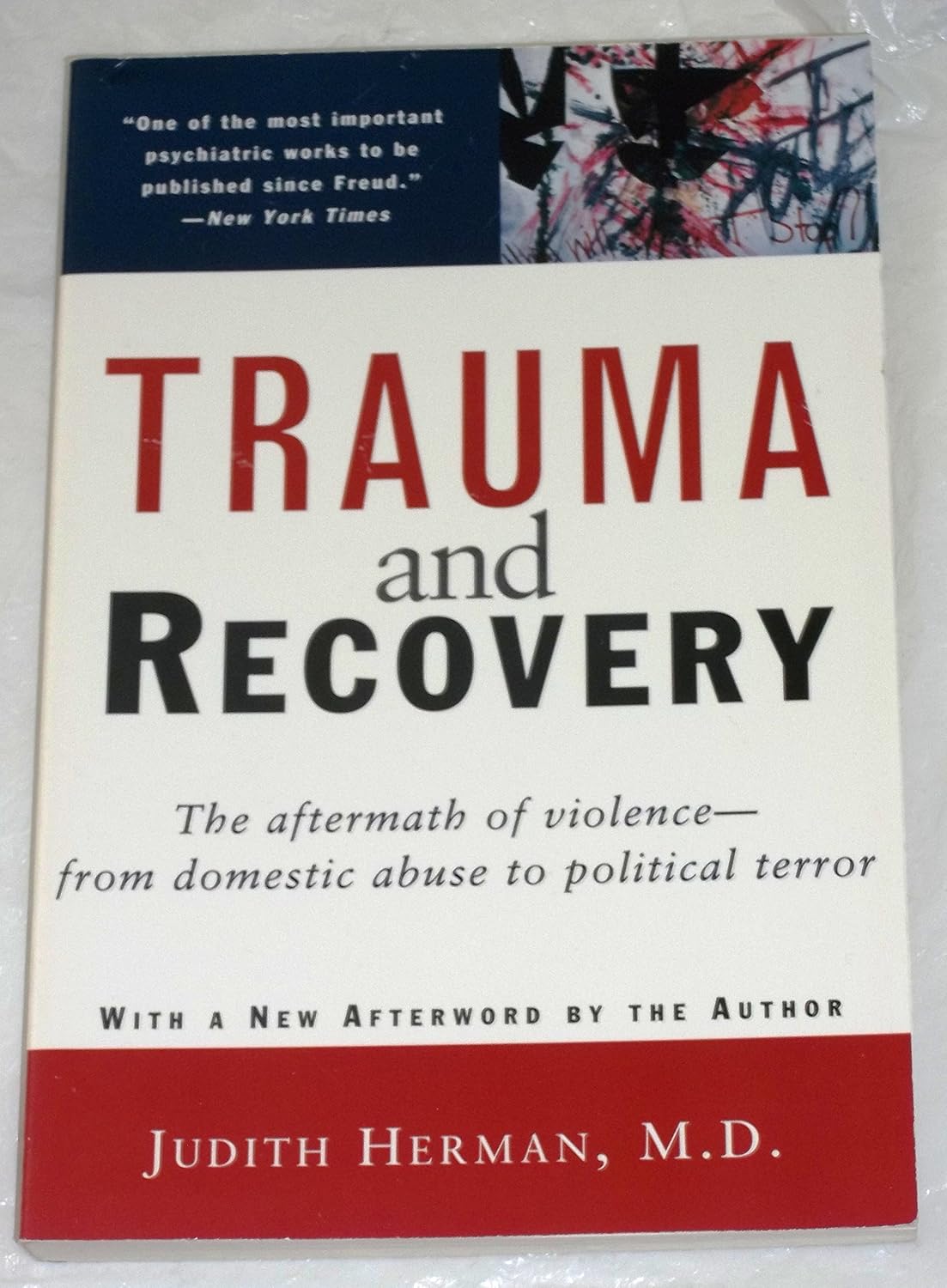
Trauma and Recovery
Judith Lewis Herman, M.D.
The seminal framework for understanding trauma and the stages of recovery — safety, remembrance, and reconnection.
Overcoming Trauma through Yoga
David Emerson & Elizabeth Hopper, PhD
Evidence-based trauma-sensitive yoga program developed at the Trauma Center with Bessel van der Kolk.
As an Amazon Associate, Clarity House Press earns from qualifying purchases. Your price is never affected.
Found this helpful?
Share it with someone who might need it.
Tags
About the Author

Clarity House Press
Editorial Team
The editorial team at Clarity House Press curates and publishes evidence-based content on narcissistic abuse recovery, high-conflict divorce, and healing. Our content is informed by research, survivor experiences, and established trauma-informed approaches.
View all posts by Clarity House Press →Published by Clarity House Press Editorial Team