Please read our important disclaimers before using this content
If you're reading this, you're likely facing challenges that few people truly understand. After leaving abuse, where do you start? Prioritized action plan for the first months of recovery covering safety, basics, and foundation-building.
This isn't abstract theory—it's practical guidance drawn from clinical expertise, legal strategy, and the lived experiences of survivors who've walked this path before you.
Understanding the Challenge
Recovery from narcissistic abuse isn't linear. There will be setbacks, relapses, and moments when you question whether you're making progress at all. This is normal. Research confirms that individuals vary greatly in their reactions to divorce and separation—some benefit, others experience temporary decline, and some face prolonged challenges (Guzman-Gonzalez et al., 2025).
Healing means more than just removing yourself from the abusive relationship. It requires rebuilding your sense of self, learning what healthy relationships look like, and developing new neural pathways to replace trauma responses. Research from the National Center for PTSD confirms that trauma recovery involves both psychological and neurobiological healing.
Key Concepts
Foundations First
You can't rebuild without stable foundation:
- Safety: Physical safety from abuse
- Survival needs: Housing, food, income
- Basic regulation: Ability to manage emotions enough to function
- Minimal support: At least one safe connection
Higher-level goals come after foundation is established.
Practical Strategies
Immediate Action Steps
-
Start where you are: You don't need to be perfect or have it all figured out. Begin with one small change.
-
Build your foundation: Prioritize safety, basic needs, and nervous system regulation before tackling deeper work.
-
Track your patterns: Keep a simple log of triggers, responses, and what helps. Patterns will emerge.
Medium-Term Strategies
Seek specialized support: Work with a trauma-specialized therapist who understands C-PTSD — our guide on finding the right trauma therapist who understands narcissistic abuse covers what to look for and red flags to avoid. The International Society for Traumatic Stress Studies provides evidence-based treatment guidelines.
Develop your toolkit: Build a collection of regulation techniques, grounding exercises, and self-soothing practices that work for your specific nervous system.
Connect with others who understand: Support groups, online communities, or peer support can reduce isolation and normalize your experience. A comprehensive meta-analysis synthesizing data from over 2,700 studies and 2.1 million participants found that social support yields a robust association with psychological adjustment across mental health outcomes, age groups, and cultural contexts (Holt-Lunstad et al., 2024).
Long-Term Approach
Recovery and healing are measured in years, not months. Pace yourself. Build capacity gradually. Celebrate small wins. Expect setbacks and plan for them.
Milestone Mapping: Tracking Progress Without Timeline Pressure
One of the most challenging aspects of rebuilding is knowing whether you're making progress when healing isn't linear. Traditional goal-setting with rigid timelines can trigger shame when trauma recovery doesn't follow a schedule.
Capacity-Based Milestones
Instead of time-based goals ("I should be over this by now"), track capacity-based milestones:
Nervous System Regulation Milestones:
- Recognizing activation before complete dysregulation
- Using grounding techniques successfully 25% of the time
- Recovering from triggers within hours instead of days
- Sleeping through the night most nights of the week
Relationship Milestones:
- Identifying red flags in real-time (not months later)
- Setting boundaries without excessive guilt
- Choosing people who respect your boundaries
- Ending unhealthy connections before deep investment
Identity Milestones:
- Making decisions based on your preferences, not anticipating others' reactions
- Knowing what you actually like (food, activities, values)
- Tolerating others' disapproval without collapsing
- Recognizing when you're performing vs. being authentic
Research from the Trauma Research Foundation demonstrates that tracking functional improvements—rather than symptom elimination—leads to better long-term outcomes and reduced shame.
The Milestone Markers Method
Create a simple tracking system:
- Baseline documentation: Where are you now? (No judgment, just observation)
- Capacity markers: What can you do today that you couldn't do three months ago?
- Pattern recognition: What triggers are you identifying earlier?
- Response improvement: How has your response to triggers changed?
This approach honors non-linear progress while providing concrete evidence of growth.
Identity Reconstruction: Reclaiming Who You Are
Narcissistic abuse systematically dismantles your sense of self. You learned to monitor your abuser's moods, anticipate their needs, and suppress your authentic responses. This is the focus of rebuilding your identity after narcissistic abuse. Rebuilding identity means rediscovering—or discovering for the first time—who you actually are.
The "I Don't Know" Phase
Many survivors panic when asked simple questions: "What do you want for dinner?" "What are your hobbies?" "What do you enjoy?"
The honest answer is often: "I don't know."
This isn't deficiency—it's a starting point. Your abuser required you to suppress preferences, dismiss your needs, and focus entirely on their reality. Not knowing who you are is evidence of what was done to you, not what's wrong with you.
Rebuilding Core Identity
Start with micro-preferences: You don't need to know your life purpose. Start smaller:
- Which of these two coffee flavors do you prefer?
- Do you like morning showers or evening showers?
- Would you rather sit or stand right now?
These tiny choices rebuild your connection to internal signals your nervous system learned to ignore.
Notice what draws your attention: What do you gravitate toward when no one is watching? What YouTube rabbit holes do you fall into? What topics make you lose track of time? These breadcrumbs reveal authentic interests your survival mode buried.
Experiment without commitment: Try activities with zero pressure to continue. Take a pottery class. Try rock climbing. Attend a book club. The goal isn't finding your passion—it's gathering data about what resonates.
Values Clarification
Your abuser likely imposed their values while claiming to respect yours. Rebuilding means identifying what actually matters to you.
Values exploration exercise:
- List values your abuser claimed to prioritize (honesty, family, loyalty, success)
- Notice your emotional response to each word—resentment might indicate their value, not yours
- Identify moments when you felt most alive—what values were present?
- Ask: If no one would ever know, what would I choose?
Research from the American Psychological Association confirms that identity reconstruction is a core component of complex trauma recovery, often requiring 2-3 years of focused therapeutic work.
Goal Setting for Survivors: A Trauma-Informed Approach
Traditional goal-setting frameworks (SMART goals, vision boards, productivity systems) often backfire for trauma survivors. These systems assume stable nervous system regulation, consistent energy, and linear progress—none of which apply during trauma recovery.
Flexible Framework Goal Setting
Anchor goals: Core directions that guide decisions without rigid timelines
- "I'm moving toward financial independence"
- "I'm building relationships based on mutual respect"
- "I'm creating a home that feels safe"
These provide direction without the shame of missed deadlines.
Capacity-contingent goals: Goals that adapt to your current capacity
- High-capacity days: Deeper therapeutic work, difficult conversations, complex tasks
- Medium-capacity days: Routine responsibilities, moderate social interaction, standard self-care
- Low-capacity days: Survival tasks only, minimal demands, nervous system regulation focus
Reversible goals: Experiment with low-stakes choices
- Try living alone (can get roommate later)
- Explore new career field (can return to previous work)
- Test geographic relocation (can move back)
This reduces the paralysis that comes from fear of making the "wrong" choice.
The Three-Tier Recovery Framework
Tier 1 - Stabilization (Weeks to months):
- Establishing physical safety
- Meeting basic needs (housing, food, income)
- Developing minimal nervous system regulation
- Creating one safe connection
Tier 2 - Integration (Months to years):
- Processing trauma memories with professional support
- Rebuilding identity and preferences
- Establishing healthier relationship patterns
- Developing emotional range beyond survival mode
Tier 3 - Growth (Years to ongoing):
- Pursuing goals beyond trauma recovery
- Experiencing post-traumatic growth
- Contributing to others from overflow, not depletion
- Living as a whole person, not defined by trauma history
Research on post-traumatic growth following divorce found positive associations between growth dimensions, subjective well-being, and self-esteem, with self-esteem serving as both a mediator and moderator of positive outcomes (Kaleta & Mroz, 2023).
Most survivors cycle through these tiers multiple times, not progress linearly through them once.
Practical Rebuilding Strategies by Life Domain
Financial rebuilding:
- Pull all three credit reports (annualcreditreport.com)
- Document fraudulent accounts with police reports and creditor disputes
- Open accounts in your name only at different institutions
- Build credit with secured credit cards ($200-500 deposit)
- Work with NFCC-certified counselor for debt strategy
- Create separate emergency fund, even if just $20/month
- See our guide on financial recovery after economic abuse for a full rebuilding roadmap
Professional rebuilding:
- Reframe resume gaps truthfully: "family caregiving," "personal health management," "family crisis management"
- Highlight transferable skills from survival: crisis management, complex problem-solving, resource coordination
- Start with contract/temp work to rebuild confidence
- Consider career counseling to identify paths aligned with rebuilt identity
- Network in low-pressure environments (professional associations, volunteer roles)
Social rebuilding:
- Start with low-stakes connections (class, hobby group, volunteer activity)
- Practice boundary-setting in safe relationships before high-stakes ones
- Notice who respects boundaries vs. who pushes back
- Accept that some relationships won't survive your growth
- Build diverse support network, not dependence on one person
Research distinguishes between specific relationships (with individual friends or family members) and network relationships (support groups, communities). Studies show that network relationships are particularly important for promoting positive adjustment, while specific relationships help buffer against maladjustment (Krumrei et al., 2007).
Physical space rebuilding:
- Create one space that's completely yours (even just a corner)
- Remove items that trigger trauma memories (don't force yourself to keep gifts from abuser)
- Gradually add elements that reflect your emerging preferences
- Prioritize safety cues (functioning locks, visible exits, control over entry)
- Make space for future self, not just current survival mode
Common Obstacles
Why This Is Hard
The knowledge-action gap: Understanding what you "should" do doesn't translate to doing it when your nervous system is activated.
Inconsistent progress: You'll have good days and terrible days. This doesn't mean you're failing—it's the normal rhythm of healing.
Limited support: Many people, including some professionals, don't understand complex trauma. You may face minimization or bad advice.
Common Pitfalls to Avoid
- Rushing the process: Pushing too hard too fast often triggers setbacks
- Isolating: Recovery happens in connection with safe others
- All-or-nothing thinking: Progress isn't linear; setbacks are part of healing
- Comparing your timeline: Your healing pace is uniquely yours
- Staying in abusive relationships: You can't heal in the environment that traumatized you
Real-World Examples
Lisa's journey: Two years post-divorce, Lisa still found herself checking her ex-husband's social media and feeling devastated by photos of him with his new partner. She realized she was grieving not the actual relationship, but the person she'd hoped he would become.
Understanding this allowed her to redirect that energy toward building her own life rather than monitoring his.
Andre's rebuilding: Andre left his marriage with destroyed credit, no savings, and a resume gap. He worked with a financial counselor to address fraudulent accounts, built credit through secured cards, and reframed his employment gap as "family caregiving" that demonstrated valuable skills. Resources like the Consumer Financial Protection Bureau provide free guidance on credit rebuilding after economic abuse.
Key Takeaways
- Moving Forward: Practical Steps to Rebuild Your Life requires understanding both the underlying dynamics and practical strategies for change
- You're not broken or damaged—your responses made sense in the context where they developed
- Healing takes time: Expect the process to unfold over months and years, not days and weeks
- Professional support matters: Specialized therapists significantly improve outcomes
- Small consistent actions compound over time into substantial change
- Connection and community are essential—isolation maintains trauma's grip
Your Next Steps
-
Today: Make one decision prioritizing your needs over others' convenience. Notice what that feels like.
-
This week: Identify one trusted person you can talk to honestly about your recovery. This might be a friend, family member, therapist, or support group member.
-
This month: Create a vision for one area of your rebuilt life. What does healthy feel like in relationships? Career? Home? Start with one domain.
-
Ongoing: Practice self-compassion when you notice yourself slipping into old patterns. Progress isn't linear—setbacks are part of the process, not evidence of failure.
Resources
Recovery and Healing Books:
- Psychopath Free by Jackson MacKenzie - Recovery from narcissistic abuse
- Should I Stay or Should I Go? by Lundy Bancroft - Relationship decision-making guidance
- The Body Keeps the Score by Bessel van der Kolk - Trauma recovery and healing
- Self-Compassion by Dr. Kristin Neff - Building self-compassion practices
Financial Recovery and Support:
- AnnualCreditReport.com - Free credit reports (federally mandated)
- National Foundation for Credit Counseling - Credit counseling and financial planning
- FreeFrom - Financial empowerment for domestic violence survivors
- Benefits.gov - Government assistance programs
Support Groups and Therapy:
- DivorceCare - Local divorce recovery support groups
- Psychology Today - Therapists - Find trauma-informed therapists
- 988 Suicide & Crisis Lifeline - Call or text 988 for crisis support (24/7)
- Crisis Text Line - Text HOME to 741741 for crisis counseling
References
Guzman-Gonzalez, M., Contreras, P., Parada, B. V., Barrientos, J., & Cuesta, M. (2025). Profiles of psychological adjustment to divorce and separation: Associations with attachment insecurity, forgiveness of the former partner, and emotion regulation difficulties. Journal of Marital and Family Therapy. https://doi.org/10.1111/jmft.70055
Holt-Lunstad, J., et al. (2024). Social support and psychological adjustment: A quantitative synthesis of 60 meta-analyses. Psychological Bulletin. https://pubmed.ncbi.nlm.nih.gov/38695783/
Kaleta, K., & Mroz, J. (2023). Posttraumatic growth and subjective well-being in men and women after divorce: The mediating and moderating roles of self-esteem. International Journal of Environmental Research and Public Health, 20(5), 3864. https://doi.org/10.3390/ijerph20053864
Krumrei, E. J., Coit, C., Martin, S., Fogo, W., & Mahoney, A. (2007). Post-divorce adjustment and social relationships: A meta-analytic review. Journal of Divorce & Remarriage, 46(3-4), 145-166. https://digitalcommons.pepperdine.edu/faculty_pubs/
Lazzari, C., & Rabottini, M. (2023). Posttraumatic growth in women who have experienced intimate partner abuse. Journal of Psychosocial Nursing and Mental Health Services, 61(6), 29-35. https://doi.org/10.3928/02793695-20230222-01
Recommended Reading
From Clarity House Press — plus trusted books for deeper understanding

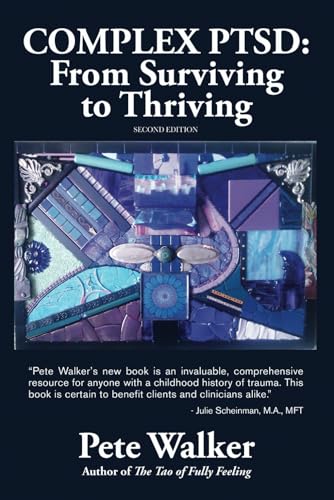
Complex PTSD: From Surviving to Thriving
Pete Walker
A clear, compassionate guide to recognizing and working with the lasting effects of prolonged childhood adversity.

Anchored
Deb Dana, LCSW
Practical everyday ways to transform your relationship with your nervous system using Polyvagal Theory.
As an Amazon Associate, Clarity House Press earns from qualifying purchases. Your price is never affected.
Found this helpful?
Share it with someone who might need it.
About the Author

Clarity House Press
Editorial Team
The editorial team at Clarity House Press curates and publishes evidence-based content on narcissistic abuse recovery, high-conflict divorce, and healing. Our content is informed by research, survivor experiences, and established trauma-informed approaches.
View all posts by Clarity House Press →Published by Clarity House Press Editorial Team