Please read our important disclaimers before using this content
When you leave a narcissistic relationship, people expect you to grieve. They bring casseroles and offer condolences. But they're grieving the wrong loss.
You're not mourning the person who hurt you. You're mourning the person who never existed in the first place. Understanding how narcissistic mirroring creates the illusion of a perfect match helps explain why this person felt so real.
This is the grief that has no name, no support groups, no cultural scripts. There are no sympathy cards for "I'm sorry you're mourning a hologram." No bereavement rituals for burying someone who was never born.
And yet this grief is as real, as devastating, and as necessary to process as any death.
The Phantom Funeral
Sarah sat in her therapist's office, trying to explain the inexplicable. "I know he was awful. I know he lied about everything. I know the person I loved was just a character he played. But I still miss that person—even though I know he was never real."
Her therapist nodded. "You're grieving a ghost."
This is the grief nobody warns you about. It doesn't fit the stages. It doesn't follow the timeline. It doesn't make sense to people who haven't lived it.
You're holding a funeral for someone who never died because they never lived.
The person you miss isn't the one who raged at you, gaslit you, or betrayed you. You're missing the version who seemed to understand you better than anyone ever had. The one who made you feel special, seen, chosen. The one who promised a future so beautiful you could taste it.
That person felt completely real. The love you felt for them was genuine. The connection seemed authentic. The future appeared possible.
But it was all a performance—and you were the only one in the theater who thought the play was real life.
What Are You Actually Losing?
When you leave a narcissistic relationship, you're not losing one thing. You're losing an entire reality. Understanding exactly what you're grieving can help you process the loss.
The Person You Thought They Were
During love bombing, they showed you exactly what you needed to see. They were attentive when you needed attention. They were supportive when you needed support. They mirrored your values, validated your dreams, and seemed like your perfect match.
That person was a carefully constructed character, designed based on what they learned you wanted. They studied you, figured out your deepest needs, and performed the role of someone who could meet them.
When you grieve, you're not missing the abuser. You're missing the character they created—the soulmate who seemed too good to be true, because they were.
The Relationship You Thought You Had
The inside jokes that felt like intimate connection were often manipulation tactics, creating a private world that isolated you from others. The "special understanding" was actually them using the information you shared against you. The partnership you believed in was actually a one-person show where they were simultaneously writer, director, and sole audience member.
You grieve the relationship you thought you were in. The loving partnership that existed in your mind. The mutual respect you believed was there. The connection you felt but now question.
The Future You Planned Together
You imagined the children you'd raise together, the home you'd build, the vacations you'd take, the retirement you'd share. You made sacrifices for that future. You turned down opportunities, moved cities, changed careers, all in service of a tomorrow that was never going to arrive.
Every plan you made was a promissory note written in invisible ink. The future you grieved for was never possible, but the loss of it is completely real.
The Reality You Thought You Shared
This may be the most disorienting loss of all. You believed you and your partner lived in the same world, saw the same events, experienced the same relationship. You thought you were in a love story.
They knew the whole time that they were running a con.
You weren't living in shared reality. You were living in the reality they constructed for you while they operated in a completely different one. You grieve not just the relationship but your own perception of what was real.
Your Trust in Yourself
If you couldn't see this person clearly after months or years of intimate relationship, what else are you missing? If your judgment was this wrong, how can you ever trust yourself again?
This loss echoes through everything. It undermines your confidence in your perceptions, your choices, your instincts. You grieve not just the relationship but your faith in your own mind. This is precisely why rebuilding your sense of identity is such a central part of recovery.
The Neuroscience of This Grief
Understanding why this grief is so powerful requires understanding how your brain processed the relationship.
Trauma Bonding and the Brain
When you were love bombed, your brain was flooded with dopamine, oxytocin, and other bonding chemicals. You formed genuine attachment to the person showing you all that attention and affection. Understanding the neurobiology of love bombing and idealization shows why this bond felt so powerful.
Then intermittent reinforcement took over. The unpredictable cycling between good and bad treatment created stronger neural pathways than consistent kindness would have. Your brain became wired to crave those highs, to work harder and harder to recapture the feeling of the love bombing phase.
Now your brain chemistry is grieving. It doesn't matter that the relationship was toxic. The attachment circuits don't care about logic. They're craving connection that felt real, even if the person behind it wasn't.
Memory and Emotional Truth
Your brain stored memories of the good times as genuine positive experiences. Those memories feel true because when you made them, the emotions were real. Your love was authentic. Your hope was genuine. Your joy was actual.
Now you're told those memories are lies—or at least, that they represent something false. But your emotional brain doesn't process information that way. It knows what it felt, and what it felt was real, even if the circumstances that created those feelings were manufactured.
This is why you can intellectually understand that the relationship was abusive while emotionally longing for the "good times." Your thinking brain and your feeling brain hold different truths.
Why This Grief Is Different
Normal grief has witnesses. When someone dies, people acknowledge the loss. They remember the deceased. They validate your pain. They understand why you're crying at the funeral.
This grief is invisible and invalidated.
People say: "You should be relieved he's gone." "At least you figured it out before it got worse." "Why are you still upset? He was terrible to you."
They don't understand you're not crying over the terrible person. You're crying over the wonderful person who turned out to be a hologram. You're mourning a death without a body, a loss without witnesses, a funeral where you're the only mourner—and everyone else thinks you're being dramatic.
You can't explain this without feeling like you're defending the abuser or excusing the abuse. And so you grieve alone, ashamed of your own tears.
Grief Without Closure
In normal grief, the person is definitively gone. Death is final. That finality, while painful, allows the grieving process to unfold.
In this grief, the person isn't gone—just the version you loved. The body still exists. They may be texting you right now, trying to hoover you back. They're living their life, posting on social media, moving on to new supply.
How do you mourn someone who is still alive? How do you have a funeral for someone you might run into at the grocery store? The lack of physical death makes the psychological death harder to process and accept.
Grief That Questions Reality
Normal grief is sad, but it doesn't make you question your sanity. When someone dies, you know what you lost and why you're mourning.
This grief makes you question everything. Was any of it real? Did they ever love me at all? Were the good times genuine or just manipulation? Am I mourning something that never existed?
The uncertainty compounds the grief. You're not just sad—you're disoriented, confused, struggling to integrate your memories with your new understanding.
The Cognitive Dissonance Spiral
Your brain holds two truths simultaneously:
- This person devastated me and I need to stay away
- I desperately miss them and want them back
Both are true. Both are real. Both exist in your nervous system at the same time.
The person who love-bombed you felt real. The connection felt authentic. The future felt possible. Your brain encoded those experiences as genuine love.
Now you know it was performance art. But your nervous system doesn't care about facts. It remembers what it felt, and it wants that feeling back.
This is why you can logically know someone is toxic and still reach for your phone to text them. Your rational brain and your emotional brain are having completely different conversations.
The cognitive dissonance isn't weakness. It's the natural result of having your reality systematically manipulated while your genuine emotions were used against you.
The Stages of This Grief (It's Not Linear)
Traditional grief models describe stages that progress toward acceptance. This grief doesn't work that way.
Shock and Denial
"This can't be true. They couldn't have been pretending the whole time. Some of it must have been real."
You cycle through evidence, searching for proof that the love was genuine. You reinterpret memories, look for signs you missed, try to find the "real" person underneath the mask.
Bargaining
"Maybe if I had been different, the good version would have stayed. Maybe I can still fix this. Maybe they'll change."
You make deals with yourself, with the universe, with the absent partner. You look for some action you can take to bring back the person who never existed.
Anger
This often comes later than expected, sometimes months or years after the relationship ends. The anger is at them—for the deception, the manipulation, the wasted time. But it's also at yourself—for not seeing, for staying, for loving someone who wasn't real.
Depression
The full weight of the loss settles in. Not just the loss of the relationship, but the loss of your innocence, your trust, your belief in your own judgment. The depression of this grief is often more profound because it encompasses so many losses simultaneously.
Acceptance (But Not the Kind You Expect)
Acceptance in this grief doesn't mean feeling okay about what happened. It means accepting that the person you loved never existed, that the future you planned was impossible, that you cannot get back the time you invested.
Acceptance means grieving completely enough that you can release the fantasy and build something real in its place.
Permission to Grieve What Never Was
You don't need to justify this grief. You don't need to explain it to people who don't understand. You don't need to be "over it" on anyone's timeline.
You experienced real emotions in response to a fake person. Those emotions were valid even if the person wasn't.
You built real dreams with someone who was selling you lies. Those dreams mattered even if they were never going to come true.
You invested real time, real energy, real love into something that turned out to be a con. That investment was real even if the return was fictional.
Your grief is legitimate. Your pain deserves witnessing. Your loss deserves mourning.
The Waves of Grief
This grief doesn't proceed in a straight line toward resolution. It comes in waves that can catch you off guard years after you thought you'd healed.
A song on the radio that was "your song." A restaurant where you celebrated anniversaries. A phrase they used to say. A dream where they were the person you thought they were, and you wake up having to remember all over again that person doesn't exist.
The waves get smaller and further apart, but they may never stop completely. This doesn't mean you're not healing. It means you're human, and you loved deeply, and some losses leave permanent marks even when you've moved on.
Complicated Grief and When to Seek Help
For some survivors, this grief becomes complicated—prolonged, intense, and interfering with daily functioning. Signs you may need additional support include:
- Inability to accept the loss after extended time
- Persistent, intense longing that doesn't decrease
- Difficulty engaging with life or making future plans
- Persistent feelings of meaninglessness or that life is empty
- Thoughts of suicide or self-harm
Complicated grief responds well to specialized treatment. Therapists trained in complicated grief or traumatic grief can help you process losses that haven't resolved on their own.
Your Next Steps
Name what you're actually grieving. Write it down. Be specific. "I'm not mourning the abuser. I'm mourning the person I thought they were during the first six months." "I'm mourning the future we planned." "I'm mourning my ability to trust my own judgment."
Naming the specific losses makes them more manageable than the overwhelming sense that you've lost everything.
Stop comparing your grief to "normal" breakup grief. This is different. You're not just grieving a relationship ending. You're grieving a reality that turned out to be false. Allow yourself to treat it differently.
Find witnesses who understand. Support groups for narcissistic abuse survivors. Therapists who specialize in relational trauma. Online communities of people who've lived this specific loss. You need people who will believe you when you say you're grieving someone who never existed.
Let yourself feel both truths. "I miss them AND I know they were harmful" can both be true. You don't have to resolve the contradiction. You can hold both realities while moving forward.
Grieve in layers. You'll mourn the fake person, then the lost future, then your stolen time, then your broken trust. This isn't linear. It's archeological—you dig through layers, sometimes circling back to what you thought you'd already processed. Many survivors find that inner child work and reparenting helps them access the deeper layers of this grief.
Protect yourself while you grieve. No contact isn't cruelty. It's self-preservation. You can mourn someone and still refuse to let them back in. Grief doesn't require reunion.
Create rituals of release. Write a letter you don't send. Hold a private ceremony saying goodbye to the person you thought they were. Create some marker of this loss that allows your psyche to process what happened.
Be patient with the timeline. This grief takes as long as it takes. It's not weakness to still feel sad a year out, two years out, five years out. You're processing not just a relationship but an entire false reality.
The Gift Hidden in This Grief
This might be the hardest truth to hear right now, but there's something important waiting on the other side of this grief.
When you fully grieve the person who never existed, you free yourself to see people clearly. You develop a finely tuned detector for authenticity. You learn to trust actions over words, patterns over promises, reality over fantasy.
You also learn to grieve cleanly—without holding on, without bargaining, without denying. You learn that you can survive the worst losses and still rebuild.
And you learn that your capacity to love deeply, even when it was exploited, is a strength—not a weakness. The problem wasn't that you loved too much. The problem was that you loved someone who wasn't capable of receiving it.
That capacity to love is still there. And someday, it will find a recipient who is real.
You're Not Crazy
You're not crazy. You're not weak. You're not pathetic for missing someone who hurt you.
You're grieving an unprecedented loss: the death of someone who was never born.
And that, impossibly, is exactly as hard as it sounds.
The grief will not kill you, though some days it will feel like it might. You will not grieve forever, though some days it will feel like you will. And you will not be destroyed by this loss, though the person who caused it wanted you to be.
You are holding a funeral for a fiction. And that funeral is necessary, painful, and ultimately the path to freedom.
Grieve fully. Grieve honestly. Grieve without apology.
And then, when you're ready—not when others think you should be, but when you actually are—begin building a life based on what's real.
Resources
Understanding Ambiguous Grief:
- Ambiguous Loss by Pauline Boss - Foundational book on grieving unclear losses
- Disenfranchised Grief by Kenneth Doka - Understanding grief that isn't acknowledged
- r/GriefSupport - Reddit community for all types of grief
- What's Your Grief - Resources for complicated and non-traditional grief
Trauma-Informed Therapy:
- Psychology Today - Therapists - Filter for "complicated grief" and "trauma"
- EMDR International Association - Find EMDR therapists for processing grief trauma
- National Center for PTSD - Grief and trauma resources
- The Body Keeps the Score by Bessel van der Kolk - Understanding trauma and grief
Support and Crisis Resources:
- National Alliance on Mental Illness (NAMI) - Grief support groups and education
- 988 Suicide & Crisis Lifeline - Call or text 988 for immediate crisis support
- SAMHSA Helpline - 1-800-662-4357 (mental health treatment referrals)
- Out of the FOG - Support forum for grief after personality-disordered relationships
References
Boss, P. (1999). Ambiguous loss: Learning to live with unresolved grief. Harvard University Press.
Prigerson, H. G., & Maciejewski, P. K. (2008). Grief and acceptance as opposite sides of the same coin: Setting a research agenda to study peaceful acceptance of loss. British Journal of Psychiatry, 193(6), 435-437. https://doi.org/10.1192/bjp.bp.108.053157
Shear, K., & Shair, H. (2005). Attachment, loss, and complicated grief. Developmental Psychobiology, 47(3), 253-267. https://doi.org/10.1002/dev.20091
Stroebe, M., Schut, H., & Boerner, K. (2017). Cautioning health-care professionals: Bereaved persons are misguided through the stages of grief. OMEGA - Journal of Death and Dying, 74(4), 455-473. https://doi.org/10.1177/0030222817691870
Recommended Reading
From Clarity House Press — plus trusted books for deeper understanding



My Grandmother's Hands
Resmaa Menakem, MSW, LICSW
A body-centered approach to healing trauma that lives in the nervous system, with practices for settling and self-regulation.
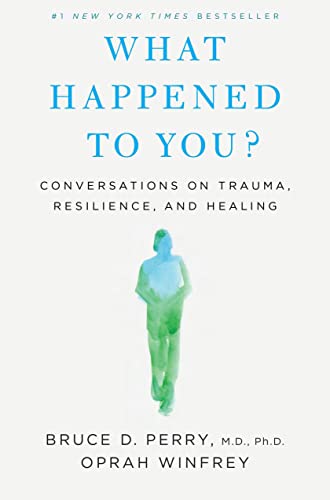
What Happened to You?
Bruce D. Perry, M.D., PhD & Oprah Winfrey
A conversational introduction to how early experience shapes us — reframing 'what's wrong with you' into 'what happened to you.'
As an Amazon Associate, Clarity House Press earns from qualifying purchases. Your price is never affected.
Found this helpful?
Share it with someone who might need it.
About the Author

Clarity House Press
Editorial Team
The editorial team at Clarity House Press curates and publishes evidence-based content on narcissistic abuse recovery, high-conflict divorce, and healing. Our content is informed by research, survivor experiences, and established trauma-informed approaches.
View all posts by Clarity House Press →Published by Clarity House Press Editorial Team