Please read our important disclaimers before using this content
I sat in my therapist's office, crying over something that felt embarrassingly small. I'd forgotten to eat lunch again, worked through exhaustion, and then berated myself for feeling tired. My therapist asked a simple question that cracked something open: "What would you say to a child who was hungry and tired?"
This type of self-neglect is extremely common after narcissistic abuse. Understanding developmental trauma and how childhood adversity shapes the brain can provide context for why these patterns run so deep.
"I'd feed them and let them rest," I answered immediately.
"So why don't you deserve the same care?"
I didn't have an answer. Or rather, the answer was buried so deep I couldn't access it consciously: because no one taught me I deserved care. My narcissistic mother taught me that my needs were burdens, my tiredness was weakness, and my hunger was my own problem to manage without bothering her. I learned to ignore my body's signals, push through pain, and never ask for help.
I'd internalized a neglectful, critical parent. And now, decades later, I was doing to myself what she'd done to me.
This is where reparenting comes in—the practice of consciously becoming the parent to yourself that you needed but didn't receive. It's giving yourself the attunement, nurturing, protection, and healthy limit-setting that should have been your birthright but was withheld, inconsistent, or conditional.
Reparenting isn't a cute self-care trend or indulgent inner child fantasy. It's necessary therapeutic work when your early caregiving damaged your relationship with yourself and left you without the internal foundation for self-care, self-trust, and self-compassion.
Why Reparenting Is Necessary After Narcissistic Abuse
In healthy development, parents provide functions that children gradually internalize and learn to provide for themselves. Good-enough parents attune to needs, soothe distress, celebrate accomplishments, set appropriate boundaries, model self-care, validate feelings, and communicate unconditional love. Over time, the child internalizes these functions and develops a secure relationship with themselves. Research on attachment theory demonstrates that early caregiving experiences shape internal working models that persist into adulthood, with secure attachment in childhood predicting healthier adult relationships and psychological well-being.1
When parents are narcissistic, neglectful, abusive, or severely inconsistent, these functions either don't happen or happen in ways that create damage rather than development. The internalization still occurs, but what's internalized is criticism, neglect, conditional love, shame, and the message that your needs don't matter. Research confirms that adverse childhood experiences, including narcissistic parenting, are significantly associated with the development of both vulnerable narcissism and complex psychological distress in adulthood.2
You learn that you're responsible for managing others' emotions. If your parent's mood dictated household stability and you learned to read subtle cues and adjust your behavior to keep them regulated, you internalized the belief that other people's feelings are more important than your own. You became hyperaware of everyone else's needs while learning to ignore or suppress your own.
You learn that your needs are shameful or burdensome. If asking for help resulted in rejection, mockery, or weaponization of your vulnerability, you learned to be self-sufficient in unhealthy ways. Not the good self-sufficiency of a well-supported person who develops competence; the harsh self-sufficiency of someone who learned that needing anything is dangerous.
You learn that love is conditional. If approval came only when you performed, achieved, or met parental expectations—and disappeared when you didn't—you internalized a relationship with yourself based on performance, not inherent worth. Your internal parent is critical and demanding, never satisfied, always moving the goalposts.
You learn that your perceptions aren't trustworthy. If gaslighting was pervasive, if your reality was regularly invalidated, if you were told your memories were wrong and your feelings were overreactions, you developed profound mistrust of your own experience. You can't trust your gut, your feelings, or your assessments. You're constantly second-guessing.
You learn that boundaries are selfish. If your boundaries were violated, mocked, or punished, you internalized the message that boundaries make you a bad person. Your internal parent is permeable to everyone else's needs and demands while rigid against your own.
All of this means that the "parent" you internalized and now unconsciously operate from is the narcissistic parent—critical, neglectful, demanding, dismissive of needs, untrusting of feelings, boundary-violating. You're parenting yourself the way they parented you, perpetuating the abuse internally long after you've escaped it externally.
Reparenting is about consciously interrupting this pattern and deliberately creating a new internal parent—the one you deserved all along. Our companion guide to inner child work and healing after abuse goes deeper into the specific techniques.
What Reparenting Actually Involves
Reparenting isn't just being nice to yourself or practicing self-care (though both are components). It's systematically identifying the ways your actual parenting was inadequate or harmful and consciously providing those missing functions for yourself now.
Attunement: The reparenting process involves learning to notice and respond to your own needs—physical, emotional, relational, creative. This starts with basic awareness (Am I hungry? Tired? Stressed? Needing connection?) and extends to responding to what you notice (I'm hungry, so I'll eat; I'm overwhelmed, so I'll take a break). For many of us raised by narcissists, this is shockingly difficult. We're so used to overriding our needs that we don't even register them anymore.
Soothing: When you're distressed, what does your internal voice say? If it's critical ("Stop being such a baby," "Get over it," "You're too sensitive"), you're activating the internalized narcissistic parent. Reparenting means developing a voice that soothes: "This is really hard. It makes sense you're upset. I'm here with you. We'll get through this." Research on self-compassion demonstrates that treating oneself with kindness during difficult times is associated with lower anxiety, depression, and post-traumatic stress symptoms.3
Celebration and delight: Narcissistic parents often couldn't celebrate your accomplishments without making it about them, or they actively diminished your successes to keep you small. Reparenting involves noticing your wins—large and small—and genuinely celebrating them. Not performance-based approval, but delight in you existing and trying and growing.
Protection: A core parental function is protecting children from harm. Reparenting yourself means setting boundaries, removing yourself from toxic situations, and advocating for your safety—physically, emotionally, and relationally. This might look like leaving a conversation when someone is being abusive, saying no to obligations that deplete you, or ending relationships that consistently harm you.
Healthy limit-setting: Paradoxically, good parenting involves both nurturing and limits. Reparenting isn't indulging every impulse; it's setting healthy structure. This might mean telling yourself you do need to go to work even when you don't feel like it, or that you can have dessert but not the entire cake, or that you need to go to bed at a reasonable hour even though you want to stay up. The key difference from internalized critical parent: the limits come from care, not control.
Validation: Narcissistic parents invalidate feelings, experiences, and perceptions. Reparenting means validating your own reality: "Yes, that was hurtful. No, you're not overreacting. Your anger makes sense. Your sadness is appropriate. You're not crazy for being confused by that." You become the witness to your own experience who believes you.
Unconditional positive regard: Perhaps the most fundamental element—relating to yourself with the unconditional love and acceptance that should have been your birthright. You're worthy not because of what you achieve or how well you perform, but because you exist. The reparenting voice reminds you of this when the critical voice attacks.
Practical Reparenting Practices
Reparenting isn't just a concept; it's daily practice. Here are concrete ways to integrate reparenting into your life:
Develop a nurturing internal voice. When you notice critical self-talk, pause and consciously shift to what a loving parent would say. Not toxic positivity or empty affirmations, but genuine compassion. Practice literally talking to yourself in second person or using your name: "[Your name], you're doing the best you can. This is really difficult. I'm proud of you for trying."
Meet basic needs consistently. This sounds obvious, but many abuse survivors chronically under-care for themselves. Commit to regular meals, adequate sleep, basic hygiene, comfortable clothing, and a safe living space. These aren't luxuries; they're foundational needs that a good parent ensures are met.
Create routines and structure. Healthy parents provide predictable structure that creates safety. You can do this for yourself: regular wake/sleep times, meal routines, designated times for work and rest, weekly check-ins with yourself. This isn't rigidity; it's creating the container for wellbeing.
Notice and respond to feelings. Throughout your day, pause and check in: "How am I feeling right now?" Don't judge the feeling or try to change it immediately. Just notice and acknowledge: "I'm anxious about that meeting. I'm sad about that loss. I'm excited about the weekend." A good parent sees and validates feelings.
Use transitional objects. Children use stuffed animals, blankets, or special objects for comfort. There's no age limit on this need. Many adults in reparenting work find comfort in weighted blankets, special pillows, or meaningful objects. This isn't childish; it's meeting a legitimate developmental need that wasn't adequately met when it should have been.
Create comfort rituals. What would a loving parent do when you're sick, sad, scared, or stressed? They might make soup, create a cozy space, put on comforting media, sit with you, or offer gentle touch. You can do all of this for yourself. Build rituals around self-soothing that activate the compassionate parent voice.
Set and enforce boundaries. Protective parenting means keeping kids safe, even when the kid doesn't understand the danger. Sometimes you need to parent yourself by enforcing boundaries your inner child resists: "I know you want to respond to that text, but it's not safe to engage with that person." Or, "I know you want to work all weekend, but you need rest. The work will be there Monday."
Celebrate yourself. Make a practice of noticing what you did well today—not just big accomplishments, but moments of trying, choosing health, being kind, or showing up. Tell yourself you're proud of yourself. If this feels awkward or induces shame, that's information about how absent this was in your childhood.
Grieve what you didn't receive. Part of reparenting is acknowledging the grief of what should have been but wasn't. You deserved unconditional love, attunement, protection, and delight. You didn't get it, and that's genuinely tragic. Allowing yourself to grieve this is part of healing, not weakness or self-pity.
Working with the Inner Child
Reparenting is deeply connected to inner child work—the practice of engaging with the younger parts of yourself that hold early wounds, needs, and experiences. This can feel weird or indulgent, but it's based in solid therapeutic frameworks (particularly Internal Family Systems and trauma therapy). Studies published in the Journal of Clinical Psychology support the efficacy of experiential techniques that access and address childhood emotional states as part of comprehensive trauma treatment.
Your "inner child" isn't a separate entity; it's the parts of you that experienced early wounds and are still operating from that developmental stage. When you have disproportionate reactions, overwhelming feelings, or patterns that don't make logical sense, often a younger part of you has been triggered and is responding from their experience and resources. Internal Family Systems (IFS) therapy, which works extensively with these "parts," has demonstrated significant effectiveness in treating depression, PTSD, and trauma-related symptoms.4
In reparenting, you intentionally create relationship between your current adult self and these younger parts. This might look like:
Visualization: Imagining your child self and having your adult self speak to them, comfort them, or rescue them from the situations they couldn't escape. This isn't pretending the past was different; it's providing now what wasn't available then and helping the younger part know the outcome (you survived, you got out, you're safe now).
Letter writing: Writing letters from your adult self to your child self, or having your child self write to you about what they needed, feared, or felt. This externalizes the internal dialogue and often brings clarity.
Photo work: Looking at childhood photos and consciously connecting with who you were then—noticing what that child needed, felt, or experienced. Offering compassion to that child in the photo, perhaps literally speaking to them.
Sensory comfort: Younger parts often respond to sensory input more than words. This might be rocking, humming, certain textures, sweet tastes, or activities you loved as a child. Letting yourself engage in "childish" comforts isn't regression; it's meeting developmental needs.
Protection: Visualizing adult you protecting child you from the abuse or neglect. Your child self couldn't protect themselves, but adult you can tell them: "You're safe now. I've got you. They can't hurt you anymore."
The key is genuine emotional engagement, not just intellectual exercise. You're creating new neural pathways and emotional experiences, not just thinking differently about old experiences.
Common Obstacles in Reparenting Work
Reparenting isn't a smooth, linear process. Most people encounter significant obstacles:
It feels selfish or indulgent. You were taught that focusing on your own needs is selfish. Reparenting activates this old programming intensely. Remember: meeting your own needs isn't selfish; it's basic self-preservation. You cannot pour from an empty cup, and you deserve to have needs met regardless of how useful you are to others.
It feels unsafe. If receiving care was historically followed by betrayal, abuse, or having that care weaponized, allowing yourself to be nurtured—even by yourself—can trigger deep fear. This is a trauma response, not truth. Take it slow, build safety gradually, and work with a therapist if this obstacle is significant. Trauma-informed care approaches emphasize the importance of establishing safety and building trust as foundational elements of healing.5
You don't know what you need. Decades of ignoring needs means you often can't identify them. This gets better with practice. Start with basics (Am I hungry? Tired? Cold? Overstimulated?) and gradually develop more nuanced awareness.
The critical voice is very loud. Your internalized narcissistic parent will fight reparenting hard. When you try to speak kindly to yourself, the critic attacks: "This is stupid. You're being weak. You don't deserve this." Expect this. It's the old programming protecting itself. You don't need to make the critic stop; you need to practice the new voice anyway.
Grief overwhelms you. As you start reparenting yourself, you often become acutely aware of what you didn't receive. This grief can be overwhelming. Allow it. Grieving is part of healing. You're not being dramatic; you're finally feeling what was too dangerous to feel as a child.
Progress is inconsistent. You'll have days where reparenting feels natural and days where you revert completely to self-neglect and self-criticism. This is normal. Healing isn't linear. Every time you notice and choose the reparenting voice, you're strengthening new neural pathways, even if it feels like you're constantly starting over.
Reparenting in Relationship with Others
A complex aspect of reparenting is how it affects your relationships. When you start treating yourself with the care and boundaries you deserved all along, relationships shift.
Some people won't like it. If others benefited from your lack of boundaries, excessive self-sacrifice, or willingness to tolerate mistreatment, they'll resist your reparenting work. They might call you selfish, accuse you of changing (you are!), or increase pressure. This is information about the relationship.
You'll outgrow some relationships. As you develop healthier relationship with yourself, you'll find that some relationships were only possible when you were unhealthy. Friendships based on mutual codependency, romantic relationships where you played caretaker to someone's perpetual child, or family dynamics where you were the scapegoat or lost child—these can't usually survive your healing. This is painful but necessary.
Healthy people will welcome it. People who genuinely care about you will support your reparenting work, even when it means you're less available to meet their needs. They'll be glad you're setting boundaries, meeting your own needs, and treating yourself well. Their support is evidence that the relationship is based on who you actually are, not just what you provide. Research emphasizes that self-care and boundary-setting are essential components of trauma recovery and healthy relationship functioning.6
You'll attract different people. As you change your relationship with yourself, you'll find yourself drawn to and attracting different people—those who also have healthy boundaries, who take responsibility for their own needs, who can engage in reciprocal relationship rather than expecting you to do all the emotional labor.
Reparenting doesn't mean others don't parent you. Part of healthy adult relationship is mutual care—sometimes your partner parents you (soothes you when you're upset, reminds you to eat, helps you rest) and sometimes you parent them. The difference from childhood: it's reciprocal, consensual, and coming from health, not filling a gaping wound.
Your Next Steps: Beginning Your Reparenting Journey
This week: Notice your internal voice. When you make a mistake, forget something, or don't meet your own expectations, what do you say to yourself? Is it critical or compassionate? Just notice for now; don't try to change it. Awareness is the first step.
This month: Identify one core need that was consistently unmet in childhood. Maybe it was emotional attunement, physical affection, celebration of your uniqueness, protection from harm, or validation of your perceptions. Choose one and consciously practice meeting that need for yourself daily in small ways.
This quarter: If you're not in therapy, consider finding a therapist who works with inner child work or reparenting. This work is possible to do alone, but it's significantly easier and more effective with support from someone who can hold compassionate witness to your process.
Ongoing: Develop your reparenting practice through consistency, not perfection. Each time you notice a need and respond to it, each time you speak kindly to yourself instead of critically, each time you set a boundary or celebrate yourself—you're rewiring your internal parent. Over time, the compassionate voice becomes more automatic and the critical voice loses power.
Remember: You deserved the parenting you're now learning to give yourself. The fact that you didn't receive it then doesn't mean you don't deserve it now. You can give to yourself what they couldn't or wouldn't give you. That's not a consolation prize; it's radical healing.
The Larger Truth
Reparenting yourself isn't about fixing what's wrong with you; it's about providing what was missing in your development. You're not broken—you're carrying the effects of inadequate care, and you can provide better care now.
The relationship you have with yourself is the longest, most important relationship of your life. If that relationship is characterized by criticism, neglect, and harsh demands—as it often is for those raised by narcissists—your entire life is lived in the context of that abuse.
But relationships can change. You can learn to speak to yourself differently, to notice and respond to your needs, to celebrate yourself, to set boundaries, and to offer the unconditional love you deserved all along.
This doesn't erase the past or make the original neglect okay. But it does mean you're no longer trapped in it. You have the power to give yourself what you needed, to become the parent you deserved, and to fundamentally change your relationship with yourself.
That's not just healing; it's liberation.
Resources
Trauma Therapy and Reparenting Support:
- Psychology Today Therapist Finder - Find trauma-informed therapists specializing in inner child work
- EMDR International Association - Find certified EMDR therapists for trauma processing
- The Center for Self-Compassion - Research-based self-compassion practices
- Internal Family Systems Institute - Resources on IFS therapy and parts work
Self-Compassion and Reparenting Resources:
- Greater Good Science Center - Evidence-based practices for well-being and self-compassion
- Adult Children of Narcissistic Parents Support - Community support and resources
- National Alliance on Mental Illness (NAMI) - Mental health education and support groups
- SAMHSA National Helpline - 1-800-662-4357 for mental health referrals
Crisis Support and Resources:
- 988 Suicide & Crisis Lifeline - Call or text 988 for crisis support (24/7)
- Crisis Text Line - Text HOME to 741741 for crisis counseling
- National Domestic Violence Hotline - 1-800-799-7233 (SAFE) for support
References
- Fraley, R. C., Roisman, G. I., Booth-LaForce, C., Owen, M. T., & Holland, A. S. (2013). Interpersonal and genetic origins of adult attachment styles: A longitudinal study from infancy to early adulthood. Journal of Personality and Social Psychology, 104(5), 817-838. https://doi.org/10.1037/a0031435 ↩
- Adverse childhood experiences leading to narcissistic personality disorder: a case report. (2024). BMC Psychiatry, 24, 803. https://pmc.ncbi.nlm.nih.gov/articles/PMC11583436/ ↩
- Neff, K. D., Tóth-Király, I., Yarnell, L. M., Arimitsu, K., Castilho, P., Ghorbani, N., Guo, H. X., Hirsch, J. K., Hupfeld, J., Hutz, C. S., Kotsou, I., Lee, W. K., Montero-Marin, J., Sirois, F. M., de Souza, L. K., Svendsen, J. L., Wilkinson, R. B., & Mantzios, M. (2019). Examining the factor structure of the Self-Compassion Scale in 20 diverse samples: Support for use of a total score and six subscale scores. Psychological Assessment, 31(1), 27-45. https://doi.org/10.1037/pas0000629 ↩
- Hodgdon, H. B., Anderson, C., Southwick, S. M., & Pietrzak, R. H. (2022). Efficacy of an online, group-based Internal Family Systems (IFS) intervention for posttraumatic stress disorder (PTSD): An individual participant data meta-analysis. Journal of Traumatic Stress, 35(6), 1708-1719. https://pubmed.ncbi.nlm.nih.gov/38934934/ ↩
- Trauma-Informed Therapy. (2024). StatPearls. National Center for Biotechnology Information. https://www.ncbi.nlm.nih.gov/books/NBK604200/ ↩
- Hammond, C. (2019). Recognising narcissistic abuse and the implications for mental health nursing practice. Issues in Mental Health Nursing, 40(8), 644-654. https://doi.org/10.1080/01612840.2019.1590485 ↩
Recommended Reading
From Clarity House Press — plus trusted books for deeper understanding


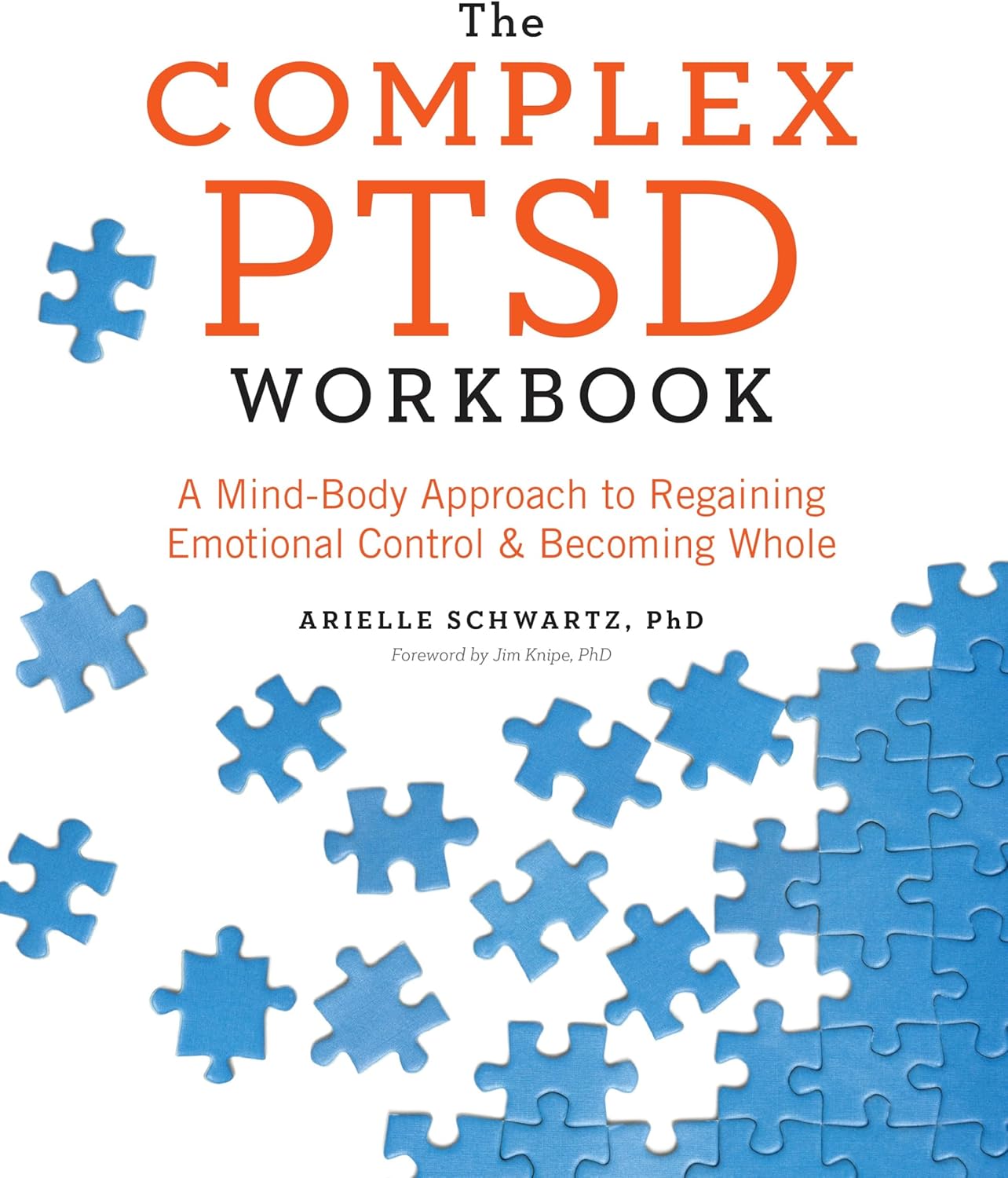
The Complex PTSD Workbook
Arielle Schwartz, PhD
A mind-body approach to regaining emotional control and becoming whole with evidence-based exercises.

Adult Children of Emotionally Immature Parents
Lindsay C. Gibson, PsyD
A gentle, practical guide to understanding relationships with emotionally distant parents and reclaiming your inner life.
As an Amazon Associate, Clarity House Press earns from qualifying purchases. Your price is never affected.
Found this helpful?
Share it with someone who might need it.
About the Author

Clarity House Press
Editorial Team
The editorial team at Clarity House Press curates and publishes evidence-based content on narcissistic abuse recovery, high-conflict divorce, and healing. Our content is informed by research, survivor experiences, and established trauma-informed approaches.
View all posts by Clarity House Press →Published by Clarity House Press Editorial Team