Please read our important disclaimers before using this content
"What do you want for dinner?"
You freeze. A simple question that most people answer without thinking triggers a cascade of anxiety. What does he want me to say? What's the right answer? What will keep the peace?
After years of having your opinions dismissed, your needs minimized, and your boundaries violated, you've learned that speaking up is dangerous. Your authentic voice—the one that expresses your actual preferences, feelings, and boundaries—has been systematically silenced.
Recovery isn't just about leaving the abusive relationship. It's about reclaiming your fundamental right to have a voice and use it.
Understanding Voice Suppression in Abusive Relationships
Narcissistic abuse doesn't silence you with a single dramatic event. It's a gradual erosion that happens through thousands of small interactions.1
How Your Voice Gets Silenced
Early subtle dismissals: "You're being too sensitive." "That's not what happened." "You're overreacting." These small invalidations teach you that your perceptions aren't trustworthy.
Punishment for speaking: When you express needs or boundaries, you face withdrawal, rage, silent treatment, or emotional punishment. Your nervous system learns: speaking up equals danger.2
Selective listening: Your abuser shows intense interest when you're saying what they want to hear, complete disinterest otherwise. You learn to perform the "right" opinions rather than express authentic ones.
Rewriting your narrative: Your experiences get reframed through their lens. "You weren't upset about that." "You're remembering it wrong." Eventually, you lose confidence in your own reality. This process of eroding your sense of reality is gaslighting, and understanding it by name is a critical step toward trusting your own perceptions again.
The Neurobiological Impact
Your brain adapts to survive. When self-expression consistently results in punishment, your nervous system develops protective mechanisms:
Hypervigilance before speaking: Scanning for danger, calculating risk, anticipating reactions before you say anything. This becomes so automatic you don't notice you're doing it.3
Freeze response: Your throat literally closes, words disappear, thoughts scatter. This isn't weakness—it's your nervous system's protective shutdown when speaking feels unsafe.4
Internal censorship: You develop an internal editor that screens every thought before it reaches your mouth, filtering for safety rather than truth.
Research Note: Trauma creates neurobiological adaptations that affect self-expression and communication. The freeze response—where the body shuts down when fight or flight aren't viable—is a well-documented trauma response. PTSD research shows that avoidance symptoms, including avoiding thoughts and feelings related to trauma, significantly impact daily functioning and relationships.5
The Mechanics of Finding Your Voice
Reclaiming your voice isn't about suddenly becoming assertive or "standing up for yourself." It's about gradually rebuilding the neurological pathways that connect your authentic feelings to external expression. This is closely tied to setting boundaries with narcissists—finding your voice is the prerequisite to any meaningful boundary-setting.
Start Internal, Then External
Phase 1: Recognizing you have a voice (even if you don't use it yet)
Before you can express preferences out loud, you need to know what they are. This sounds obvious, but many survivors genuinely don't know.
Practice internally:
- When someone asks what you want for dinner, notice what your gut response is before your brain censors it
- Keep a private journal where you write uncensored opinions nobody will see
- Complete the sentence "I actually prefer..." multiple times daily, even about tiny things
Phase 2: Low-stakes external practice
Start using your voice in situations with zero consequences:
- Tell the barista your actual coffee preference instead of ordering the simplest thing
- Choose the radio station in your car rather than leaving it where it was
- Express a movie preference to friends who genuinely don't care either way
Your nervous system needs evidence that speaking doesn't equal danger.
Phase 3: Progressive exposure with boundaries
Gradually practice in higher-stakes situations:
- Express needs to safe people who've demonstrated they can handle it
- State boundaries in professional contexts where there are consequences for violation
- Disagree respectfully about low-conflict topics
What Recovery Looks Like in Practice
Voice recovery isn't about being loud or confrontational. It's about the internal experience of having access to your authentic thoughts and the ability to express them when you choose.6
Signs you're making progress:
Internal shifts:
- You notice your actual preference before your brain censors it
- You can disagree internally even when you choose not to speak
- You recognize when you're performing vs. expressing authentically
- Your internal monologue sounds like you, not your abuser's voice
External changes:
- You state simple preferences without anxiety
- You can say "I don't know" or "I need to think about it"
- You correct small factual errors without fear
- You express needs in safe relationships
Practical Exercises for Voice Recovery
The Preference Practice
Set a timer for 2 minutes. Write down your actual preferences about anything:
- What temperature you prefer the room
- Which side of the bed you'd choose if nobody else cared
- What music you'd listen to if nobody was judging
- What time you'd wake up if you could design your ideal schedule
- Which route you'd take if traffic wasn't a factor
The goal isn't to act on these—it's to practice knowing they exist.
The Internal "Yes/No" Check
Before responding to any request, pause and notice your gut response:
- Does your body lean forward or pull back?
- Do you feel expansion or contraction?
- What's your immediate instinct before your brain calculates consequences?
You don't have to express this yet. Just practice noticing it.
Graduated Voice Practice
Create a structured exposure hierarchy:
Level 1 (safest): Express preferences when both options are genuinely fine
- "I'll take the red cup" (when you don't actually care about cup color)
- "Let's watch this one" (when both movie options are acceptable)
Level 2: Express authentic preferences in low-stakes situations
- Order modifications at restaurants
- Decline optional social invitations
- Express movie/music preferences with friends
Level 3: Express needs in relationships
- "I need 10 minutes to think about this before I respond"
- "That doesn't work for me"
- "I'd prefer to..."
Level 4: Set and maintain boundaries
- "I'm not discussing that topic"
- "This isn't working for me"
- "I need you to stop"
The Repair Practice
When you notice yourself people-pleasing or suppressing your voice, practice repair:
- Notice what happened without judgment: "I just agreed to something I didn't want to do"
- Identify what your authentic response would have been: "I actually wanted to say no"
- If safe and possible, repair: "Actually, I need to change my answer..."
- If not safe to repair externally, validate internally: "It makes sense I said yes. My nervous system was protecting me. Next time I might have more options."
This builds the neural pathway of recognizing and honoring your authentic voice, even retroactively.
Common Obstacles and How to Navigate Them
"I Don't Even Know What I Want"
After years of suppression, many survivors genuinely can't access their preferences. This isn't permanent damage—it's protective numbness.
What helps:
- Start with body cues, not thoughts: What feels comfortable vs. uncomfortable?
- Practice with zero-stakes decisions: Which color appeals to you right now?
- Notice what you avoid or gravitate toward without analyzing why
- Give yourself permission to change your mind as you rediscover preferences
"Speaking Up Makes Me Feel Selfish"
You've internalized the message that your needs are burdensome and your voice is too much.
The reality: Expressing authentic needs in healthy relationships creates intimacy, not burden. The people who taught you that expressing needs was selfish were protecting their ability to exploit you.7
What helps:
- Notice that "selfish" feeling is a conditioned response, not truth
- Practice expressing small needs with safe people who welcome it
- Observe how healthy relationships handle mutual need expression
- Remember: Having needs is human. Expressing them appropriately is healthy.
"My Voice Shakes and I Sound Weak"
Physical manifestations of nervous system activation (shaking voice, trembling, blushing) feel like weakness but are actually evidence you're pushing your growth edge.
What helps:
- Name it: "My voice is shaking because this is hard for me and I'm doing it anyway"
- Recognize that courage isn't the absence of fear—it's acting despite it
- Your voice will steady with practice as your nervous system learns safety
- Some of the strongest statements are made with shaking voices
"People Get Angry When I Set Boundaries"
Yes, they do. Especially people who benefited from your lack of boundaries.
The uncomfortable truth: Some relationships only work because you silence yourself. These relationships need to end or radically change. Others will adjust and respect your voice—those are the relationships worth keeping. Understanding healthy boundaries in new relationships can help you distinguish between relationships that respect your voice and those that merely tolerate it temporarily.
What helps:
- Accept that finding your voice will change or end some relationships
- Notice who respects your voice vs. who punishes it
- Remind yourself: A relationship that requires your silence isn't healthy
- Build new connections with people who value authentic expression
"I Tried Speaking Up and It Went Badly"
Maybe you expressed yourself with rage after years of suppression. Maybe you set a boundary and the person violated it. Maybe you spoke your truth and faced consequences.
What helps:
- One negative outcome doesn't negate your right to have a voice
- Skill development includes awkward early attempts
- Distinguish between "this didn't go well" and "I shouldn't have a voice"
- Repair and adjust, don't abandon the entire effort
Real-World Examples
Sarah's Silent Treatment
Sarah, 34, realized she'd spent her entire 10-year marriage having one-sided conversations. She would express thoughts or feelings, and her husband would respond with silence, changing the subject, or immediate criticism.
She started practicing with her therapist, then safe friends. Her voice literally shook the first time she told her sister "Actually, I don't want to go to that restaurant." Her sister said "Okay, where do you want to go?" and Sarah cried—not from sadness, but from the shock of being heard.
Two years later, she can state preferences, disagree respectfully, and maintain boundaries without her nervous system treating it as a life-threatening event.
Michael's Performance
Michael, 42, didn't realize he was performing a personality until his divorce. In his marriage, he'd adopted his wife's political views, social preferences, and even food tastes. He thought he was being accommodating.
During recovery, he couldn't answer basic questions about his preferences. "What kind of music do you like?" sent him into analysis paralysis. He started with the preference practice—just noticing, not expressing.
Gradually, he discovered he actually liked country music (which his ex had mocked), preferred quiet evenings to big social events, and had political views that didn't align perfectly with either party. His authentic voice had been there all along, just buried under years of adaptation.
Jessica's Boundary Revolution
Jessica, 29, had been the family peacekeeper—the one who absorbed everyone's emotions and kept things smooth. Speaking up felt selfish and uncomfortable.
She started with the smallest boundary: "I can't talk right now, can I call you back in an hour?" The guilt was overwhelming. But she did it anyway.
She gradually expanded: declining invitations, expressing preferences, asking for what she needed. Her mother was furious. Her father was confused. Her sister adjusted and their relationship actually deepened.
Jessica learned that some people need you voiceless to maintain their comfort. Those aren't your people.
Key Takeaways
- Voice suppression is systematic: Abuse silences you through thousands of small punishments, invalidations, and rewrites of your reality
- Your nervous system learned silence = safety: The freeze response, self-censorship, and hypervigilance before speaking are protective adaptations, not character flaws
- Recovery happens internal before external: You need to recognize your authentic voice internally before you can express it out loud
- Start with zero-stakes practice: Your nervous system needs evidence that speaking doesn't equal danger, beginning with situations that have no consequences
- Some relationships will end: Finding your voice changes relationships—some will deepen, others will end. Relationships that require your silence aren't healthy.
- Physical responses are normal: Shaking voice, trembling, anxiety when speaking up are signs you're pushing your growth edge, not evidence of weakness
- Progress isn't linear: You'll have days when you can speak freely and days when you revert to silence. Both are part of recovery.
Your Next Steps
Today
Do the preference practice for 2 minutes. Set a timer and write down your actual preferences about anything, no matter how small. You don't have to act on them—just practice knowing they exist.
This Week
Practice the internal "yes/no" check three times. When someone asks you for something or invites you somewhere, pause and notice your gut response before you calculate the "right" answer. You don't have to express this authentic response yet—just notice it exists.
This Month
Choose one Level 1 voice practice (expressing preferences when both options are genuinely fine). Practice this at least 5 times. Notice what happens in your body. Track the evidence that speaking doesn't equal danger.
Ongoing
When you notice yourself silencing your voice, practice the repair technique:
- Notice without judgment
- Identify your authentic response
- Repair externally if safe, or validate internally
- Remind yourself: Your nervous system is recalibrating. This takes time.
Additional Resources
Books on voice and boundaries:
- Boundaries by Dr. Henry Cloud and Dr. John Townsend
- The Assertiveness Workbook by Randy Paterson
- Set Boundaries, Find Peace by Nedra Glover Tawwab
- When I Say No, I Feel Guilty by Manuel J. Smith
Resources
Trauma Therapy and Voice Recovery:
- Psychology Today - Therapists - Filter for "narcissistic abuse" and "complex trauma"
- EMDR International Association - Find certified EMDR therapists for trauma processing
- Somatic Experiencing Trauma Institute - Body-based trauma healing practitioners
- The Body Keeps the Score by Bessel van der Kolk - Understanding trauma's impact on voice and expression
Communication Skills and Assertiveness:
- Nonviolent Communication by Marshall Rosenberg - Clear, compassionate self-expression framework
- Toastmasters International - Public speaking and communication skills in supportive environment
- [Authentic Relating Training](https://www.authent icrelating.org) - Practices and workshops for genuine connection
- National Alliance on Mental Illness (NAMI) - Communication skills groups and mental health support
Support Communities:
- r/NarcissisticAbuse - Reddit support community for abuse survivors
- Out of the FOG - Support forum and resources for survivors of personality-disordered abuse
- National Domestic Violence Hotline - 1-800-799-7233 (emotional abuse support)
- SAMHSA Helpline - 1-800-662-4357 (mental health treatment referrals)
References
- Van der Kolk, B. (2014). The body keeps the score: Brain, mind, and body in the healing of trauma. Viking. https://doi.org/10.1016/S0140-6736(14)60111-2 ↩
- Porges, S. P. (2011). The polyvagal theory: Neurophysiological foundations of emotions, attachment, communication, and self-regulation. W. W. Norton & Company. https://doi.org/10.1016/j.jpsychires.2009.08.015 ↩
- Hoge, C. W., Riviere, L. A., Wilk, J. E., Herrell, R. K., & Weathers, F. W. (2007). The prevalence of post-traumatic stress disorder and depression in combat veterans returning to active duty. JAMA, 298(5), 543-545. https://doi.org/10.1001/jama.298.5.543 ↩
- Geffner, & Rosenbaum (2001). Domestic Violence Offenders. Journal of Aggression, Maltreatment & Trauma. https://doi.org/10.1300/J146v05n02_01 ↩
- Jacobson, N. S., Gottman, J. M., Waltz, J., Rushe, R., Babcock, J., & Holtzworth-Munroe, A. (1994). A component analysis of behavioral marital therapy: 2-year follow-up and prediction of relapse. Journal of Consulting and Clinical Psychology, 62(4), 862-875. https://doi.org/10.1037/0022-006X.62.4.862 ↩
- Harrigan, J. A., Rosenthal, R., & Scherer, K. R. (2005). The new handbook of methods in nonverbal behavior research. Oxford University Press. https://doi.org/10.1093/acprof:oso/9780195169935.001.0001 ↩
- Williams, M. T., & Yeager, C. A. (2007). Healing after emotional abuse. McGraw-Hill. National Institute of Mental Health. PTSD resource: https://www.nimh.nih.gov/health/publications/post-traumatic-stress-disorder-ptsd ↩
- Schachner, D. A., & Shaver, P. R. (2004). Attachment style and loneliness in close relationships. Journal of Personality and Social Psychology, 88(3), 397-420. https://doi.org/10.1037/0022-3514.88.3.397 ↩
- Frazier, P. A., Tashiro, T., Berman, M., Steger, M., & Long, J. (2004). Correlates of levels and patterns of positive life changes following sexual assault. Journal of Consulting and Clinical Psychology, 72(1), 19-30. https://doi.org/10.1037/0022-006X.72.1.19 ↩
- Lanius, R. A., Vermetten, E., & Pain, C. (2010). The impact of early life trauma on health and disease: The hidden epidemic. Cambridge University Press. https://doi.org/10.1017/CBO9780511777042 ↩
Recommended Reading
From Clarity House Press — plus trusted books for deeper understanding
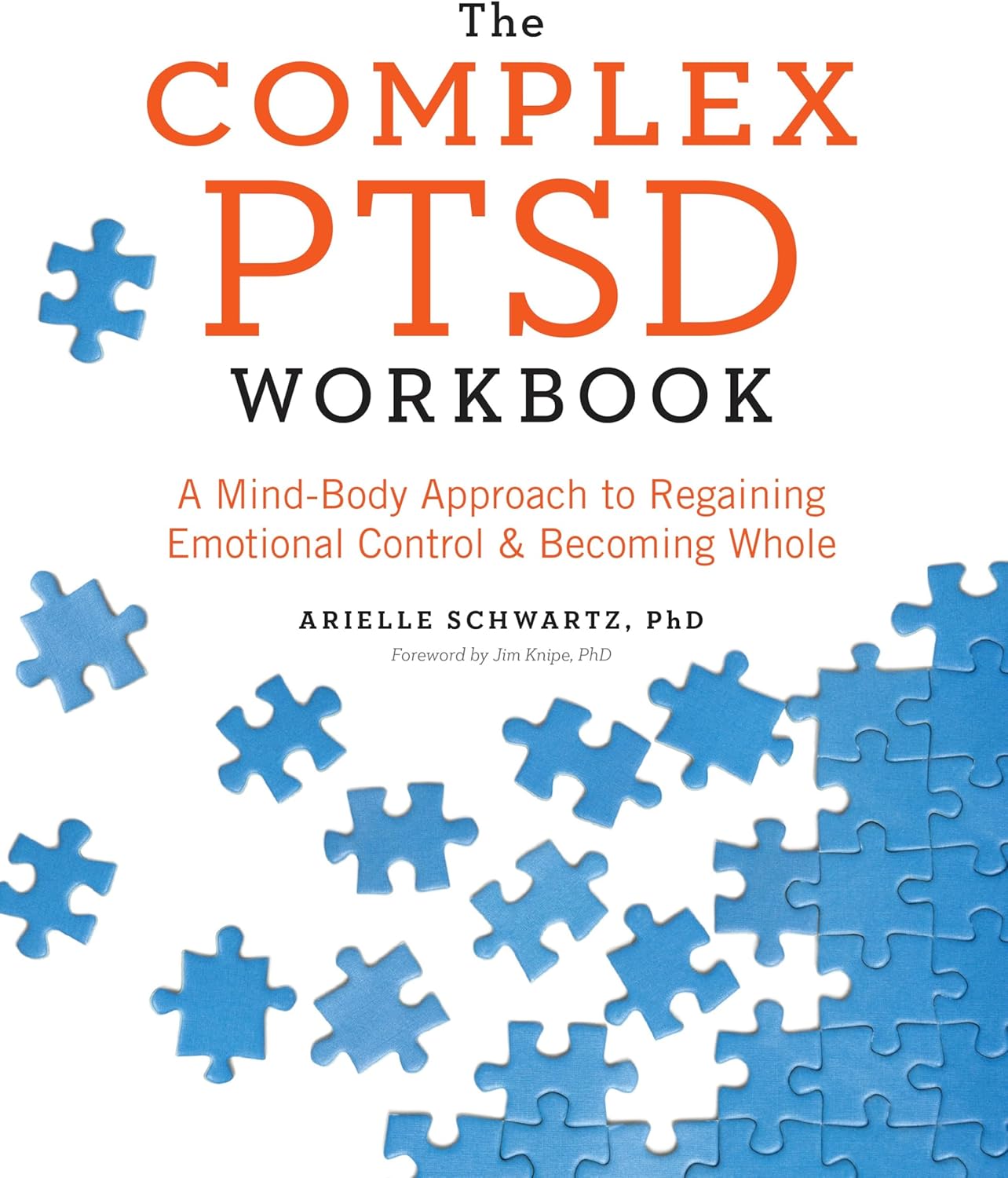
The Complex PTSD Workbook
Arielle Schwartz, PhD
A mind-body approach to regaining emotional control and becoming whole with evidence-based exercises.

My Grandmother's Hands
Resmaa Menakem, MSW, LICSW
A body-centered approach to healing trauma that lives in the nervous system, with practices for settling and self-regulation.
As an Amazon Associate, Clarity House Press earns from qualifying purchases. Your price is never affected.
Found this helpful?
Share it with someone who might need it.
About the Author

Clarity House Press
Editorial Team
The editorial team at Clarity House Press curates and publishes evidence-based content on narcissistic abuse recovery, high-conflict divorce, and healing. Our content is informed by research, survivor experiences, and established trauma-informed approaches.
View all posts by Clarity House Press →Published by Clarity House Press Editorial Team