Please read our important disclaimers before using this content
"It's like we're the same person!" "I've never met anyone who understands me like this." "We want all the same things—it's like you're my soulmate."
These statements, spoken early in a relationship, can feel like magic. You've finally found someone who shares your values, your interests, your vision for the future. The connection feels instant, deep, profound.
But for many survivors of narcissistic abuse, this "perfect match" feeling was an illusion—a carefully constructed performance called narcissistic mirroring.
Narcissistic mirroring is a manipulation tactic where the narcissist studies you intensely, identifies what you value and desire, and then reflects those qualities back to you. They become whoever you're looking for: the intellectual if you value intelligence, the spiritual seeker if you value faith, the adventurer if you crave spontaneity, the committed family person if you want stability.
The mirroring creates an instant, intense connection—a feeling of having found "the one." But once they've secured your commitment (engagement, marriage, pregnancy, cohabitation), the mirror shatters. The person you fell in love with never existed. What remains is the narcissist's true self—someone fundamentally different from the soulmate they pretended to be.
Understanding narcissistic mirroring is critical for survivors trying to make sense of the devastating bait-and-switch that defines so many relationships with narcissists. It's closely related to love-bombing and the neurobiology of idealization, where the initial intensity is manufactured to create rapid attachment.
What Is Narcissistic Mirroring?
Definition
Narcissistic mirroring is a deliberate technique where narcissists:
- Study their target intensely to identify values, interests, dreams, and desires
- Adopt those same values, interests, and dreams (falsely)
- Present themselves as the perfect partner who shares everything you want
- Create an intense sense of connection, compatibility, and "soulmate" bonding
- Maintain this false self through the courtship phase
- Drop the mask after securing commitment, revealing incompatibility
Why Narcissists Use Mirroring
Primary Functions:
- Rapid bonding: Creates instant intimacy and connection
- Supply acquisition: Secures a partner who will provide narcissistic supply
- Lowering defenses: Makes you trust them quickly and deeply
- Differentiation from exes: "Unlike everyone else, WE are perfect together"
- Future faking effectiveness: Easier to promise a shared future when you "want the same things"
Core Mechanism: Narcissists lack a stable, authentic self. They're often described as having a "false self" and an "empty core." Psychoanalyst Heinz Kohut's foundational work on self psychology identified that narcissistic individuals may become "mirror-hungry," seeking validation because their developmental needs for healthy mirroring were never met (Kohut, 1971). Mirroring serves dual purposes:
- Manipulating you into commitment
- Temporarily filling their own emptiness by adopting your identity
How Narcissistic Mirroring Works
Phase 1: Intensive Study
In the early stages, the narcissist pays exceptionally close attention to you:
What They're Observing:
- Your values (family, career, spirituality, creativity, adventure, etc.)
- Your interests and hobbies
- Your relationship history and what went wrong in past relationships
- Your dreams and goals (marriage, children, travel, business, lifestyle)
- Your vulnerabilities and wounds
- Your love language and how you prefer to be treated
- What you find attractive in partners
How They Gather Information:
- Asking extensive questions (seems like genuine interest)
- Listening intently to your stories
- Observing your reactions to various topics
- Checking your social media extensively
- Paying attention to books, music, decor in your space
- Noting what makes you light up vs. what troubles you
Your Experience: You feel deeply seen and heard. "They really get me."
Phase 2: Reflection and Adoption
Once they've identified what you want, they become that:
Common Mirroring Examples:
If you value family:
- "Family is the most important thing to me too"
- Talks about wanting children, family dinners, close relationships with relatives
- Shows interest in your family, asks about them frequently
- May present own family as close-knit (even if reality is different)
If you value career/ambition:
- Suddenly has big career goals and drive
- "Supports" your ambitions while appearing equally driven
- Matches your work ethic and professional interests
If you value spirituality/faith:
- Adopts your religious practices or spiritual interests
- Attends services, reads spiritual books, uses faith language
- Shares "profound" spiritual experiences that mirror yours
If you're intellectual:
- Becomes interested in ideas, books, deep conversations
- Mirrors your educational interests or intellectual pursuits
- Engages in philosophical discussions
If you value adventure/spontaneity:
- Presents as adventurous, spontaneous, up for anything
- Plans exciting dates and experiences
- Talks about travel dreams that match yours
If you value stability/traditional relationships:
- Emphasizes commitment, marriage, building a future
- Presents as reliable, stable, family-oriented
- May move quickly toward traditional milestones
The Pattern: Whatever you value most, they suddenly value too. Whatever you're looking for in a partner, they suddenly are.
Phase 3: Soulmate Narrative
The mirroring creates a compelling narrative:
Common Themes:
- "We're so similar, it's like we're the same person"
- "I've never met anyone who understands me like you do"
- "We want all the same things in life"
- "It feels like I've known you forever"
- "You're my soulmate" (said remarkably early)
- "We're perfect for each other"
The Function: This narrative accelerates the relationship, deepens your investment, and makes you less likely to slow down or question discrepancies.
Your Experience: You feel you've found the one. The connection feels rare, special, fated.
Phase 4: The Mask Slips
Research confirms that idealization and devaluation are core features of narcissistic relationship dynamics. A 2022 study in Personality and Mental Health found that 31% of participants in relationships with narcissistic individuals described experiencing this pattern, where initial mutual idealization gave way to criticism, blame, and harsh behaviors (Day et al., 2022).
After commitment (marriage, cohabitation, pregnancy, major financial entanglement):
What Changes:
- Interests they shared disappear ("I was never really into that")
- Values shift ("I don't actually want kids/the career I described/to live that way")
- Personality changes significantly
- Activities you enjoyed together stop
- The attentive, understanding partner becomes dismissive or critical
- You discover they were lying about major life facts, beliefs, or goals
Your Experience:
- "Who is this person? Where did my partner go?"
- Confusion about what happened to the person you married
- Discovering fundamental incompatibilities that weren't apparent during courtship
- Feeling tricked, deceived, or like you fell for a con
Phase 5: Gaslighting the Discrepancy
When you confront the changes:
Common Narcissist Responses:
- "I never said that" (denying previous statements) — this is gaslighting
- "You misunderstood me"
- "People change" (minimizing the extent of the shift)
- "You're too demanding" (blame-shifting)
- "I was just trying to make you happy" (framing deception as kindness)
- "You only care about yourself" (projection)
The Trap: You question your own memory, perception, and whether you created an unrealistic image of them.
Red Flags: Is It Mirroring or Genuine Compatibility?
Mirroring Red Flags
1. Speed:
- ✓ Instant, intense connection and compatibility
- ✓ "Soulmate" talk within weeks or a few months
- ✓ Rapid progression toward commitment
2. Perfect Match:
- ✓ TOO similar—they share ALL your interests and values
- ✓ No meaningful differences or individuality
- ✓ They seem to have been waiting for exactly someone like you
3. Surface Level:
- ✓ When they talk about shared interests, it's vague or superficial
- ✓ They don't have deep knowledge about interests they claim to have
- ✓ Their engagement with shared activities is performative
4. Identity Flexibility:
- ✓ Their personality seems to shift depending on who they're with
- ✓ Different groups of friends describe them differently
- ✓ They don't seem to have a core, stable identity
5. History Inconsistencies:
- ✓ Past relationships don't align with current values they're expressing
- ✓ Stories about their past show different priorities than they claim now
- ✓ Friends/family are surprised by interests or values they're expressing to you
6. Lack of Depth:
- ✓ Conversations about shared values stay abstract—no specific examples from their life
- ✓ They can't articulate WHY they value what they claim to value
- ✓ Their engagement with interests/values seems new or unpracticed
7. Post-Commitment Shift:
- ✓ After marriage/cohabitation/pregnancy, interests disappear
- ✓ Values "change" dramatically
- ✓ The person seems fundamentally different
Genuine Compatibility Markers
1. Realistic Differences:
- You have some shared interests AND some individual ones
- Compatibility exists alongside recognizing you're different people
- You don't agree on everything, and that's okay
2. Depth:
- When they discuss shared values, they have history, stories, and depth
- Their engagement with interests is knowledgeable and longstanding
- They can articulate the "why" behind their values
3. Consistency:
- Friends/family recognize the person you describe
- Their past aligns with current values and interests
- They have a stable sense of self over time
4. Moderate Pace:
- Connection deepens over time rather than instantly
- "Soulmate" feelings emerge gradually as you actually get to know each other
- Commitment happens after sufficient time to see them in various contexts
5. Individuality:
- They maintain their own interests, even ones you don't share
- They have opinions that differ from yours
- They're a whole person with a distinct identity, not a reflection
6. Post-Commitment Consistency:
- After marriage/cohabitation, they're the same person
- Values remain stable
- Interests continue
The Psychological Impact of Mirroring
During the Relationship
Trauma Bonding: The intense initial connection creates powerful bonding that's hard to break even when the mask slips. Research by Dutton and Painter demonstrated that intermittent reinforcement—the unpredictable alternation between reward and punishment—creates the strongest emotional bonds and explains why survivors remain attached even after leaving abusive relationships (Dutton & Painter, 1993).
Cognitive Dissonance: You're trying to reconcile the person you married with the person in front of you now. "Which version is real?"
Self-Doubt: You question your judgment, perception, and memory. "Did I imagine the person I thought they were?"
Sunk Cost Fallacy: You're invested in the "soulmate" narrative and work hard to get back to the initial connection.
After Leaving
Grief for a Person Who Never Existed: You're mourning someone who was never real—which is a unique type of loss.
Trust Issues: If you couldn't recognize mirroring then, how will you trust your judgment now? Research shows that narcissists perceive many relationship alternatives and have lower commitment levels, making them skilled at the early-stage impression management that constitutes mirroring (Campbell & Foster, 2002).
Identity Confusion: If they mirrored you so completely, do you even know who you are without their reflection? This is why rebuilding your identity after narcissistic abuse is its own distinct healing process.
Betrayal: The deception feels profound—they knew exactly what you wanted and used it against you.
How to Protect Yourself from Mirroring
During Dating
1. Slow Down:
- Resist pressure to commit quickly
- Take time to see them in multiple contexts over many months
- Don't make major decisions based on early-stage intensity
2. Watch for Actions, Not Just Words:
- Do their behaviors match claimed values over time?
- Are their interests backed up by actual knowledge, history, and engagement?
- Do they maintain these interests even when you're not around?
3. Meet Their People:
- Friends and family from different life stages
- Observe how they behave in various social contexts
- Ask people who've known them long-term about their interests and values
4. Look for Individuality:
- Do they have interests you don't share?
- Do they have opinions that differ from yours?
- Are they comfortable disagreeing with you?
- Do they maintain boundaries and a separate identity?
5. Note Depth vs. Performance:
- When they claim to share an interest, can they discuss it with depth?
- Do they have history with this interest/value, or did it just appear?
- Can they articulate WHY they value what they value?
6. Trust Your Gut About "Too Perfect":
- If it feels too good to be true, slow down and investigate
- Perfect compatibility immediately is a red flag, not a fairy tale
- Real relationships have friction, differences, and individuation
Red Flag Responses
If they pressure you to commit quickly: "I need more time to build a strong foundation. If we're right for each other, slowing down won't change that."
If they claim to share ALL your interests: Ask detailed questions. Genuine interest will have depth; mirroring will stay surface-level.
If their friends seem surprised by who they are with you: Pay attention. That's information about inconsistency.
If your gut says something feels off despite the "perfect" match: Listen to your intuition. Don't override it with the soulmate narrative.
For Survivors: Making Sense of the Mirroring
It Wasn't Your Fault
You didn't "fall for" mirroring because you're naive or flawed. You responded to what appeared to be genuine compatibility—which is normal and healthy. The deception is on them, not you.
The Person You Loved Never Existed
This is one of the hardest truths to accept. The soulmate you fell in love with was a performance, a mask, a mirror. Grieving this person is complicated because they were never real.
What helps:
- Grieve the relationship you thought you had
- Recognize you loved an illusion, and that's a real loss
- Understand that your love was real, even if their presentation wasn't
- Release yourself from trying to get back to the beginning (it was never authentic)
Your Values Are Still Valid
Just because they faked sharing your values doesn't mean your values are wrong. Don't let their deception make you cynical about what matters to you.
Rebuilding Trust in Your Judgment
Reframe:
- You weren't foolish; they were deceptive
- Even with knowledge of mirroring, it's sophisticated manipulation
- Learning the red flags now will help you recognize it in the future
- Trust is rebuilt through experience, not through eliminating all risk
Moving forward:
- Slower relationship progression
- More emphasis on actions matching words over time
- Seeking individuality and healthy differences in partners
- Trusting your gut about "too perfect"
Narcissistic Mirroring in Divorce and Custody
Their New Partner
Often, narcissists mirror their new partner just as they mirrored you. This can be particularly painful:
What you might observe:
- New partner reports the narcissist shares all THEIR interests (which may be different from what they mirrored with you)
- The narcissist suddenly has new values, hobbies, or personality traits that match new partner
- New partner believes they've found their soulmate (just like you did)
Your response:
- This confirms the mirroring pattern (they're doing it again)
- New partner will likely discover the same bait-and-switch you did
- This isn't about new partner being "better"—narcissist will mirror whoever they're with
- Resist the urge to warn new partner (they likely won't believe you; narcissist has mirrored their reality)
In Family Court
Narcissists may mirror what they think family court wants:
Common court mirroring:
- Suddenly very involved in children's activities (if that looks good to judge)
- Adopts values that align with custody evaluator's recommendations
- Presents as reformed, having "learned" from past mistakes
- Mirrors the "ideal parent" as defined by that jurisdiction
Your strategy:
- Document the inconsistency between their current claims and historical behavior
- Provide evidence of past values/behaviors that contradict current presentation
- Show pattern of mirroring (if applicable)
Final Thoughts
Narcissistic mirroring is one of the most devastating manipulation tactics because it weaponizes your deepest values and desires. The narcissist doesn't just lie about who they are—they study you, identify what would make you fall in love, and become that. Neuroscientific research has identified that narcissistic traits are associated with alterations in brain regions responsible for empathy and self-awareness, contributing to the capacity for such calculated manipulation (Jauk et al., 2024). It's targeted, calculated, and deeply violating.
You were not foolish for believing someone who presented as your perfect match.
You were not naive for trusting someone who seemed to share your values.
You were not weak for loving someone who appeared to understand you deeply.
You were human. You responded to what looked like genuine compatibility. The deception was sophisticated, and it's on them.
Moving forward, you can honor what you learned while also protecting yourself:
- Value genuine compatibility that includes healthy differences
- Allow relationships to develop slowly enough to see consistency
- Trust actions over time, not just words in the moment
- Listen to your gut about "too perfect"
And most importantly: Don't let their mirroring make you cynical about connection. Genuine compatibility exists. It just looks different from mirroring—slower, with more friction, including individuality and healthy differences, and most importantly, stable and consistent over time.
Real soulmates don't have to perform compatibility. They just are compatible.
Resources
Narcissistic Mirroring and Manipulation Recovery:
- Psychopath Free by Jackson MacKenzie - Recovery from narcissistic mirroring and love-bombing
- Out of the FOG - Support for people affected by narcissistic mirroring tactics
- Exaholics by Lisa Bobby - Breaking addiction to ex-love after mirroring deception
- Attached by Amir Levine and Rachel Heller - Attachment patterns in dating after abuse
Therapy and Professional Support:
- Psychology Today - Therapists - Find therapists specializing in narcissistic abuse recovery
- EMDR International Association - Find EMDR therapists for trauma from mirroring manipulation
- Internal Family Systems Institute - IFS therapy for grief of losing who you thought they were
- GriefShare - Grief support groups for loss of false relationship
Crisis Support and Recovery Communities:
- r/NarcissisticAbuse - Reddit community for survivors of narcissistic relationships
- 988 Suicide & Crisis Lifeline - Call or text 988 for crisis support (24/7)
- Crisis Text Line - Text HOME to 741741 for crisis counseling
- Out of the Storm Forum - Support forum for narcissistic abuse survivors
References
Campbell, W. K., & Foster, C. A. (2002). Narcissism and commitment in romantic relationships: An investment model analysis. Personality and Social Psychology Bulletin, 28(4), 484-495. https://journals.sagepub.com/doi/10.1177/0146167202287006
Day, N. J. S., Townsend, M. L., & Grenyer, B. F. S. (2022). Pathological narcissism: An analysis of interpersonal dysfunction within intimate relationships. Personality and Mental Health, 16(3), 204-216. https://pmc.ncbi.nlm.nih.gov/articles/PMC9541508/
Dutton, D. G., & Painter, S. (1993). Emotional attachments in abusive relationships: A test of traumatic bonding theory. Violence and Victims, 8(2), 105-120. https://pubmed.ncbi.nlm.nih.gov/8193053/
Jauk, E., Kanske, P., & Gittins, M. (2024). Narcissistic personality disorder through psycholinguistic analysis and neuroscientific correlates. Frontiers in Behavioral Neuroscience, 18, 1354258. https://pmc.ncbi.nlm.nih.gov/articles/PMC11299496/
Kohut, H. (1971). The analysis of the self: A systematic approach to the psychoanalytic treatment of narcissistic personality disorders. University of Chicago Press. (For clinical discussion, see https://pmc.ncbi.nlm.nih.gov/articles/PMC2860525/)
Recommended Reading
From Clarity House Press — plus trusted books for deeper understanding


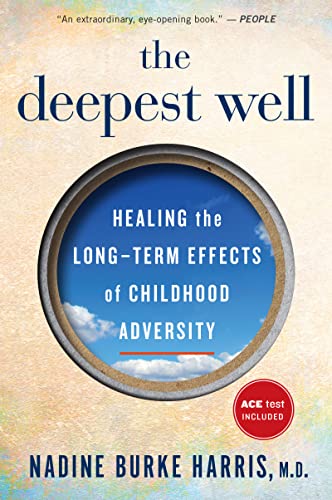
The Deepest Well
Nadine Burke Harris, M.D.
A pediatrician's clear explanation of how adverse childhood experiences affect lifelong health — and what recovery can look like.

Will I Ever Be Good Enough?
Karyl McBride, PhD
Healing the daughters of narcissistic mothers through understanding, validation, and recovery.
As an Amazon Associate, Clarity House Press earns from qualifying purchases. Your price is never affected.
Found this helpful?
Share it with someone who might need it.
About the Author

Clarity House Press
Editorial Team
The editorial team at Clarity House Press curates and publishes evidence-based content on narcissistic abuse recovery, high-conflict divorce, and healing. Our content is informed by research, survivor experiences, and established trauma-informed approaches.
View all posts by Clarity House Press →Published by Clarity House Press Editorial Team