Please read our important disclaimers before using this content
You're triggered and suddenly you're not a capable adult anymore—you're small, terrified, desperate for approval you can't earn. Or you notice yourself seeking external validation with an intensity that seems disproportionate to the situation. Or you're frozen in indecision, paralyzed by the fear of making the wrong choice.
These aren't signs of weakness or immaturity. They're indications that younger parts of you—parts that were wounded during abuse—are activated and responding from that wounded place.
Inner child work addresses these wounded parts directly, offering them the care, validation, and protection they didn't receive. It's one of the most powerful healing approaches for C-PTSD, and one of the most misunderstood. Component-based psychotherapy and reparenting interventions have shown promise for treating adult survivors of childhood emotional abuse and neglect, with research demonstrating that adults who suffered childhood maltreatment respond better to psychological interventions targeting aberrant emotional processes than to standard pharmacological approaches alone.1
Understanding Inner Child Work
Inner child work isn't regression therapy or dwelling in victimhood. It's a specific therapeutic approach based on the recognition that traumatic experiences create fragmented parts of self that remain "stuck" at the age when trauma occurred.
When the narcissist wounded you—criticized you, abandoned you, raged at you, humiliated you—your adult self might have had to keep functioning. But younger parts of you experienced that wounding as overwhelming, terrifying, or devastating. Those younger parts didn't have adult coping skills, perspective, or emotional regulation. They experienced the abuse as life-threatening.
Those wounded parts don't just disappear because you left the relationship or because time has passed. They remain active in your psyche, and when triggered, they take over. Suddenly you're responding from that wounded place—the scared child seeking safety, the ashamed teenager desperate for acceptance, the young adult convinced they're fundamentally unlovable.
Dr. Richard Schwartz' Internal Family Systems (IFS) model explains this beautifully: you're not one unified self, but rather a system of parts. Some parts are wounded ("exiles" in IFS language), carrying the pain, shame, and fear from abuse. Other parts developed to protect you from feeling that pain ("managers" who control and perfect, "firefighters" who numb and escape).2 Research on IFS therapy for adults with PTSD and childhood trauma has shown statistically significant reductions in PTSD and depressive symptoms, with 92% of participants no longer meeting PTSD diagnostic criteria at follow-up.3 Similarly, schema therapy's use of limited reparenting—defined as a wide range of therapist responses designed to meet core emotional needs previously unmet in childhood—has demonstrated effectiveness in adolescents and adults with chronic or treatment-resistant conditions.4
Healing requires accessing the wounded parts and providing what they needed then but didn't receive: safety, validation, comfort, and appropriate protection.
How Narcissistic Abuse Wounds the Inner Child
Narcissistic abuse is particularly effective at creating inner child wounds because it targets your fundamental sense of worth and safety. The shame and self-blame described here are also central features of the inner critic in C-PTSD recovery — these two aspects of healing are deeply interconnected.
Conditional Love: The narcissist's "love" was contingent on perfect performance. This teaches younger parts: "I'm only acceptable when I'm useful/perfect/compliant." The child part learns their authentic self is unlovable.
Unpredictable Abandonment: Idealization followed by devaluation creates terror in younger parts. They learn that love can disappear instantly, for reasons they can't predict or control. A 2025 systematic review found that parental narcissistic personality disorder significantly impacts parent-child relationship quality through maladaptive parenting behaviors and emotional unavailability, disrupting secure attachment formation.5 Additionally, a 2024 meta-analysis demonstrated that vulnerable narcissism is strongly associated with insecure attachment styles, highlighting the intergenerational transmission of attachment wounds.6
Parentification: If you were responsible for managing the narcissist's emotions, younger parts had to grow up too fast. The child who needed care was forced into the caregiver role.
Shame and Humiliation: Public criticism or degrading treatment deeply wounds younger parts. Shame gets internalized: "I am bad/worthless/defective."
Invalidation: When the narcissist denied your reality or feelings, younger parts learned: "My perceptions are wrong. I can't trust myself." Emotional abuse by attachment figures contributes to insecure attachment organization, which impairs emotional regulation and fosters negative internal working models that persist into adulthood.7
Rage and Terror: Narcissistic rage terrifies younger parts. Even if you weren't physically harmed, the emotional violence creates fear-based wounds. Understanding emotional flashbacks in C-PTSD explains what happens when those younger parts get triggered in the present.
One survivor described: "When my partner raged, my adult self would try to stay calm and logical. But inside, there was this terrified little girl screaming and hiding. I could feel her terror even while I was trying to manage the situation. After I left, I'd find myself curled in a ball, sobbing like a child. I didn't understand it then, but that was my inner child finally being able to express what I couldn't during the abuse."
Signs Your Inner Child Needs Attention
Wounded inner child parts make themselves known through specific patterns:
Disproportionate Reactions: Minor criticism triggers devastating shame. Small conflicts feel catastrophic. You're reacting from a wounded child place, not current adult reality.
Desperate Approval-Seeking: The intensity of your need for validation feels childlike because it is—it's a younger part seeking what they didn't get.
Age-Inappropriate Fears: Terror of abandonment, darkness, being alone, or making mistakes that feels more intense than adult fears.
Self-Soothing with Childhood Methods: Curling up in a ball, hiding, rocking, thumb-sucking, or other behaviors from childhood.
Fantasy of Rescue: Hoping someone will save you, fix everything, or provide the perfect parenting you missed. This isn't adult partnership desire—it's inner child longing.
Inability to Self-Soothe: When distressed, you can't comfort yourself. You need external validation or rescue.
Young Voice in Crisis: Your internal voice during crisis sounds young, scared, and helpless rather than adult and resourced.
Frozen or Regressed: In certain situations, you feel small, powerless, or childlike rather than adult and capable.
Beginning Inner Child Work: Making Contact
Inner child work starts with recognizing and making contact with wounded parts:
Step 1: Notice When Younger Parts Are Active
Pay attention to when your reactions seem disproportionate, when you feel small or helpless, or when your internal voice sounds young. These are moments when wounded parts are activated.
Step 2: Get Curious Instead of Critical
Rather than judging yourself for "overreacting" or "being immature," get curious: "How old does this part of me feel? What is this part afraid of? What does this part need?"
Step 3: Visualize or Sense Your Inner Child
Some people can visualize their younger self. Others just sense or feel a younger presence. There's no right way—use whatever modality works for you.
Ask: "How old are you? What's happening? What do you need?"
Step 4: Offer What Was Missing
The wounded part needed something they didn't get—safety, comfort, validation, protection. As the adult you, you can provide that now:
Safety: "You're safe now. That's not happening anymore. I've got you."
Validation: "Your feelings make sense. You're not wrong or bad. What happened to you was real."
Comfort: "I'm here. You're not alone. I won't leave you."
Protection: "I will keep you safe. I won't let that happen to you again."
This might feel awkward or artificial at first. That's normal. You're learning a new skill.
Common Inner Child Wounds from Narcissistic Abuse
Different types of abuse create different wounds:
The Abandoned Child: The narcissist's withdrawal, silent treatment, or discard wounded the part that needs consistent love and presence. This part lives in terror of abandonment and might desperately cling to relationships or sabotage them before abandonment can happen.
Reparenting work: Provide consistent presence. Show this part that you won't leave. Practice self-companionship—staying present with yourself even when uncomfortable. Limited reparenting techniques aim at meeting patients' needs that were previously unmet in their childhood, creating corrective experiences that serve as an antidote to damaging experiences.8
The Ashamed Child: Criticism, humiliation, or comparison wounded the part that needs acceptance. This part carries toxic shame and believes they're fundamentally defective.
Reparenting work: Offer unconditional acceptance. Practice self-compassion. Help this part separate mistakes/flaws from core identity.
The Terrified Child: Rage, threats, or unpredictability wounded the part that needs safety. This part lives in constant fear and hypervigilance.
Reparenting work: Create safety in your current life. Help this part recognize that the danger has passed. Use grounding and regulation techniques to teach safety.
The Invisible Child: Neglect or indifference wounded the part that needs to be seen and valued. This part feels invisible, unimportant, and like a burden.
Reparenting work: Actively attend to yourself. Notice your own needs. Practice self-prioritization. Show this part they matter.
The Responsible Child: Parentification wounded the part that needed to be a child. This part had to grow up too fast and feels responsible for everything.
Reparenting work: Give permission to rest, play, and be "irresponsible." Take care of this part instead of expecting them to care for everyone else.
Specific Techniques for Reparenting
Letter Writing
Write letters between your adult self and your inner child:
From adult to child: Offer comfort, validation, promises of protection.
From child to adult: Let the younger part express what they needed, what hurt, what they're afraid of.
This two-way communication helps integration.
Visualization and Dialogue
In a quiet, safe space, visualize or sense your younger self. Have a conversation:
Adult you: "I see you. What's wrong? What do you need?"
Inner child: (Let them answer—might be words, images, feelings)
Adult you: Provide what's needed—comfort, validation, protection.
Photo Work
Find photos of yourself at various ages. Look at that child and ask: "What did you need? What was happening?" Then speak to that child as the adult you, offering what was missing.
Body-Based Reparenting
Wounded parts are held in the body. Physical self-care can reparent at a somatic level:
- Wrap yourself in soft blankets (the comfort you didn't receive)
- Hold yourself (the soothing embrace you needed)
- Speak gently to yourself (the kind words you didn't hear)
- Create safe spaces (the sanctuary you didn't have)
Play and Joy
Wounded inner children often missed out on play, creativity, and simple joy. Give yourself permission to:
- Color, draw, play with toys
- Watch childhood favorites without judgment
- Be silly, playful, curious
- Pursue activities purely for joy, not productivity
This isn't frivolous—it's healing.
Common Challenges in Inner Child Work
This work is powerful but not always easy:
Overwhelming Emotion: Accessing wounded parts can release intense feelings. Work with a therapist if emotions feel unmanageable.
Self-Judgment: You might feel ridiculous talking to yourself or visualizing. This is internalized shame. The work is valid even if it feels strange.
Protective Parts Interfering: Parts that protected you from feeling this pain might try to shut down the work. They think they're keeping you safe. Acknowledge their concern but gently proceed.
Resistance to Self-Compassion: Offering yourself kindness might feel wrong if you carry shame or self-blame. Start small. Even tiny moments of self-compassion count. Research consistently shows that increased self-compassion is associated with reduced PTSD symptoms and better trauma recovery outcomes.9
Activation Without Resolution: If you access wounded parts but can't provide what they need, you might feel worse. Work with a therapist to develop resources before deep inner child work.
When to Work with a Therapist
Inner child work can be done independently, but therapy helps especially with:
- Severe trauma or extensive abuse history
- Dissociative parts that feel separate from you
- Overwhelming emotions you can't regulate
- Difficulty accessing wounded parts
- Complex family-of-origin trauma plus partner abuse
Therapists trained in IFS, EMDR, or trauma-focused modalities can guide this work safely. Multiple psychological interventions including trauma-focused cognitive behavioral therapy (TF-CBT) and EMDR have strong evidence bases for treating complex PTSD symptoms.10
Integration: From Wounded Parts to Wholeness
The goal isn't to eliminate your inner child or keep them separate. It's integration—bringing wounded parts into your current adult self so they're no longer stuck in the past.
As you consistently offer wounded parts what they need, several things happen:
- The intensity of triggers decreases
- You can access adult resources even when parts are activated
- Wounded parts trust that you'll care for them
- You develop internal security instead of seeking it externally
- Parts that were frozen in trauma can grow and update
Integration doesn't mean perfection. Wounded parts might still activate sometimes. But instead of taking over completely, they can coexist with your adult self. You can say, "Part of me feels terrified right now, AND I know I'm actually safe."
Your Inner Child Deserves Healing
The wounded parts of you aren't defects to fix or weaknesses to hide. They're parts of you that survived trauma and are carrying pain you haven't fully processed.
They deserve:
- To be seen and acknowledged
- To have their pain validated
- To receive the care they didn't get
- To be protected by the adult you
- To know they're safe now
You can provide this. Not perfectly—you're human, not a perfect parent. But "good enough" reparenting is transformative.
The child who was wounded by narcissistic abuse needed someone to see their pain, believe them, and protect them. They needed someone to say "that wasn't okay, you didn't deserve that, and you're not defective."
You can be that person for them now. Your adult self can offer your wounded child what the narcissist never could: unconditional acceptance, consistent presence, and genuine care.
That's inner child work. And that's healing.
Resources
Inner Child Work and Trauma Therapy:
- No Bad Parts by Richard Schwartz - Internal Family Systems therapy for trauma
- Internal Family Systems Institute - Find IFS-trained therapists
- Homecoming by John Bradshaw - Reclaiming and championing your inner child
- Psychology Today - Therapists - Filter for "inner child work" and "trauma"
Books on Reparenting and Self-Compassion:
- The Body Keeps the Score by Bessel van der Kolk - Understanding childhood trauma's lasting impact
- Complex PTSD: From Surviving to Thriving by Pete Walker - Reparenting yourself after abuse
- Self-Compassion by Kristin Neff - Learning to be kind to yourself
- Running on Empty by Jonice Webb - Healing childhood emotional neglect
Support and Crisis Resources:
- r/CPTSD - Reddit community for complex trauma survivors
- National Alliance on Mental Illness (NAMI) - Mental health support and education
- 988 Suicide & Crisis Lifeline - Call or text 988 for immediate crisis support
- SAMHSA National Helpline - 1-800-662-4357 (mental health treatment referrals)
References
- Grossman, F. K., Spinazzola, J., Zucker, M., & Hopper, E. (2017). Treating adult survivors of childhood emotional abuse and neglect: A new framework. American Journal of Orthopsychiatry, 87(1), 23-35. https://pubmed.ncbi.nlm.nih.gov/28080123/ ↩
- Schwartz, R. C. (2021). No Bad Parts: Healing Trauma and Restoring Wholeness with the Internal Family Systems Model. Sounds True. ↩
- Hodgdon, H. B., Anderson, E., Southwell, E., Hrubec, W., & Schwartz, R. (2022). Internal Family Systems (IFS) Therapy for Posttraumatic Stress Disorder (PTSD) among Survivors of Multiple Childhood Trauma: A Pilot Effectiveness Study. Journal of Aggression, Maltreatment & Trauma, 31(1), 22-43. https://doi.org/10.1080/10926771.2021.2013375 ↩
- Azeem, M. W., & Ahmad, S. (2025). Impact of parental narcissistic personality disorder on parent-child relationship quality and child well-being: A systematic review. Cureus, 17(2), e100229. https://doi.org/10.7759/cureus.100229 ↩
- Zhang, Y., Chen, M., & Wang, Y. (2024). The relationship between attachment insecurity and pathological narcissism: A three-level meta-analysis. Journal of Family Theory & Review, 16, 953-977. https://doi.org/10.1111/jftr.12593 ↩
- Riggs, S. A. (2010). Childhood emotional abuse and the attachment system across the life cycle: What theory and research tell us. Journal of Aggression, Maltreatment & Trauma, 19(1), 5-51. https://doi.org/10.1080/10926770903475968 ↩
- Bamber, M., Kraenzle Schneider, J., & McMahon, L. (2025). Applications of schema therapy in young people: A systematic review. Cognitive Behaviour Therapy. https://doi.org/10.1080/16506073.2025.2522375 ↩
- Karatzias, T., Murphy, P., Cloitre, M., Bisson, J., Roberts, N., Shevlin, M., Hyland, P., Maercker, A., Ben-Ezra, M., Coventry, P., Mason-Roberts, S., Bradley, A., & Hutton, P. (2019). Psychological interventions for ICD-11 complex PTSD symptoms: Systematic review and meta-analysis. Psychological Medicine, 49(11), 1761-1775. https://pmc.ncbi.nlm.nih.gov/articles/PMC6518394/ ↩
- Winders, S. J., Murphy, O., Looney, K., & O'Reilly, G. (2020). Self-compassion, trauma, and posttraumatic stress disorder: A systematic review. Clinical Psychology & Psychotherapy, 27(3), 300-329. https://doi.org/10.1002/cpp.2429 ↩
- Frost, R., Hyland, P., McCarthy, A., Halpin, R., Shevlin, M., & Murphy, J. (2019). The complexity of trauma exposure and response: Profiling PTSD and CPTSD among a refugee sample. Psychological Trauma: Theory, Research, Practice, and Policy, 11(2), 165-175. https://pmc.ncbi.nlm.nih.gov/articles/PMC6447576/ ↩
Recommended Reading
From Clarity House Press — plus trusted books for deeper understanding


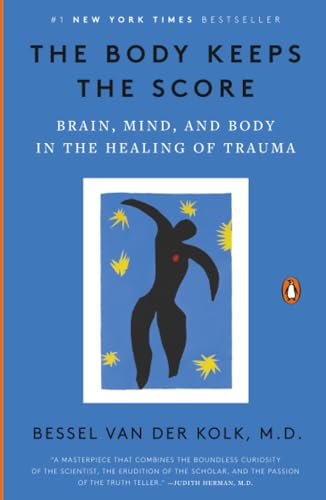
The Body Keeps the Score
Bessel van der Kolk, M.D.
A foundational look at how trauma reshapes the body and nervous system, and the approaches that help the body find safety again.

My Grandmother's Hands
Resmaa Menakem, MSW, LICSW
A body-centered approach to healing trauma that lives in the nervous system, with practices for settling and self-regulation.
As an Amazon Associate, Clarity House Press earns from qualifying purchases. Your price is never affected.
Found this helpful?
Share it with someone who might need it.
About the Author

Clarity House Press
Editorial Team
The editorial team at Clarity House Press curates and publishes evidence-based content on narcissistic abuse recovery, high-conflict divorce, and healing. Our content is informed by research, survivor experiences, and established trauma-informed approaches.
View all posts by Clarity House Press →Published by Clarity House Press Editorial Team