Please read our important disclaimers before using this content
You have done the work. You have processed trauma, developed regulation skills, built boundaries, and created safety. You are healing. But somewhere along the way, "healing" became your entire identity. You are not sure who you are beyond "survivor in recovery."
Recovery is necessary, but it is not the destination. At some point, you need to ask: what am I recovering FOR? Who do I want to become? What life am I building beyond just healing from what happened?
This transition from survival to thriving, from healing identity to integrated wholeness, is one of recovery's final challenges. You are ready to be more than your trauma. But you do not quite know how. Post-traumatic growth: thriving beyond surviving explores the research behind this transition and what it actually looks like in practice.
Future self visioning helps you develop a compelling vision of life beyond recovery—not forgetting what happened, but integrating it into a larger story where trauma is part of your past, not the organizing principle of your present.
The Trap of Trauma Identity
Trauma can become an organizing principle for life in ways that are initially helpful, then limiting.
How Trauma Becomes Identity
In the early stages of recovery:
- Understanding what happened to you is revelatory
- Identifying as a survivor connects you to community
- Learning about narcissistic abuse explains your experiences
- The trauma narrative makes sense of your life
This is necessary and valuable. You needed to understand, name, and process what happened.
But over time:
- "Survivor" becomes your primary identity
- Everything is viewed through the trauma lens
- Recovery work becomes your main activity
- You're not sure who you'd be without the trauma story
- Life feels defined by what happened rather than what's possible
Signs You're Stuck in Trauma Identity
Your conversations center on trauma: Every topic relates back to narcissistic abuse, recovery, or healing.
You define yourself through the wound: When asked who you are, the abuse story comes first.
You're waiting to be "healed" to live: "When I'm fully recovered, then I'll..."
New activities feel threatening to identity: Interests unrelated to trauma feel like betrayal or denial.
Recovery has become a full-time job: You spend more energy on healing than on living.
You struggle to imagine yourself without the trauma story: Who would you be if you weren't a survivor working on recovery?
Why This Happens
Trauma is meaningful: Understanding your trauma provided meaning during chaos. It's hard to let go of something that made sense of suffering.
Community connection: Survivor communities are valuable support. Leaving can feel like losing belonging. Building authentic relationships after abuse offers guidance on expanding your social world beyond the survivor community while keeping what matters.
Fear of forgetting: Moving beyond trauma identity can feel like minimizing what happened or abandoning your past self.
Uncertainty about what's next: At least trauma identity is known. What comes next is uncertain.
Protection: Staying in recovery can feel safer than risking new ventures that might fail.
What Lies Beyond Trauma Identity
Moving beyond trauma identity doesn't mean:
- Forgetting what happened
- Pretending you weren't affected
- Abandoning recovery practices that help
- Leaving survivor communities
- Denying the impact of abuse
Moving beyond trauma identity means:
- Trauma becomes part of your story, not the whole story
- "Survivor" is one identity among many
- You have room for identities unrelated to trauma
- Recovery supports living, not the other way around
- You can hold the past while building the future
Integration vs. Elimination
The goal isn't eliminating trauma's influence—it's integrating it. In integration:
- Trauma experiences inform but don't define
- You hold both what happened and who you're becoming
- The past exists in context with present and future
- You're neither stuck in trauma nor pretending it didn't happen
Developing Vision for Your Future Self
Future self visioning is the process of imagining who you want to become and what life you want to build.
Why Vision Matters
Vision provides direction: Without vision, you're just reacting to life. With vision, you're creating it.
Vision motivates: A compelling future pulls you forward through difficult present moments.
Vision shapes decisions: When you know where you're going, choices become clearer.
Vision counters trauma's message: Trauma says "you're broken, limited, stuck." Vision says "you're becoming, growing, possible."
Starting Points for Vision
What mattered before trauma?
- What did you enjoy before the abuse?
- What dreams did you have that got shelved?
- What interests did you abandon to survive the relationship?
- Who were you before you had to become who they needed?
What matters now despite trauma?
- What brings moments of aliveness?
- When do you feel most like yourself?
- What activities make you lose track of time?
- What would you do if healing wasn't your main project?
What might matter in the future?
- What kind of person do you want to become?
- What kind of life do you want to have?
- What do you want to contribute?
- What would make your life feel meaningful?
The Future Self Visualization
This exercise helps you connect with a vision of who you're becoming.
Find a quiet space. Close your eyes if comfortable. Take a few deep breaths.
Imagine yourself 5 years from now. This future self has continued healing but also moved into thriving. Picture them clearly:
- Where do they live? What does their environment look like?
- What kind of relationships do they have?
- What do they do for work or contribution?
- How do they spend their time?
- What brings them joy?
- How do they relate to their past trauma?
Notice the details:
- What does their body feel like? How do they carry themselves?
- What's their emotional baseline?
- What do they know that you don't know yet?
- What have they let go of?
Have a conversation:
- Ask your future self: "What helped you get here?"
- Ask: "What do I need to know?"
- Ask: "What can I start doing now?"
Write down what you received. The insights from future self often surprise us.
Vision Domains
Consider vision across different life domains:
Self and Identity:
- What qualities do I want to develop?
- What kind of person do I want to be?
- How do I want to relate to myself?
Relationships:
- What kinds of relationships do I want?
- Who do I want in my inner circle?
- How do I want to show up in relationships?
Work and Contribution:
- What do I want to do with my time and energy?
- How do I want to contribute?
- What work would feel meaningful?
Health and Wellbeing:
- How do I want to feel in my body?
- What does daily wellbeing look like?
- What practices support thriving?
Growth and Learning:
- What do I want to learn or develop?
- How do I want to grow?
- What new experiences do I want?
Joy and Pleasure:
- What brings me alive?
- What do I want more of?
- What would I do just for fun?
From Vision to Reality
Vision without action is just daydreaming. Moving from vision to reality requires intention and practice.
Reverse Engineering
Start with the vision: Where do you want to end up?
Work backward: What would you need to do in year 4 to be there in year 5? Year 3? Year 2? Year 1? This month? This week?
Identify small steps: What tiny action today moves you toward that vision?
Values as Guide
Identify your values: What matters most to you? (Connection? Creativity? Adventure? Security? Growth? Service?)
Use values to guide decisions: Does this choice align with what matters to me?
Values over trauma: Let values guide rather than trauma reactions.
Identity-Based Action
Shift from outcome to identity:
- Not "I want to get healthier" but "I am becoming a person who takes care of their body"
- Not "I want to write" but "I am becoming a writer"
- Not "I want better relationships" but "I am becoming someone who shows up authentically"
Act as if: Start behaving like the person you're becoming, even before you fully feel like that person.
Small Experiments
Try things without commitment:
- Take a class
- Start a hobby
- Meet new people
- Explore interests
Lower the stakes: You don't have to get it right. You're experimenting with possibilities.
Notice what resonates: Some experiments will feel right. Follow that.
Managing the Transition
The transition from trauma-focused identity to broader identity isn't instant or smooth.
Common Challenges
Guilt about moving on: You may feel guilty about focusing on future rather than past. Remember: thriving doesn't betray your suffering.
Fear of forgetting: You won't forget. Integration doesn't mean erasure.
Loss of community: If your main community is survivor-focused, expanding interests may feel like leaving. You can maintain connections while also building new ones.
Identity confusion: Who are you without the trauma story as central? This uncertainty is part of the transition.
Setbacks: You'll have trauma activation, hard days, times when recovery feels central again. This doesn't mean you're back at the beginning. Understanding why healing isn't linear can help you interpret these setbacks accurately rather than treating them as evidence of failure.
Holding Both/And
You can:
- Honor your past AND create your future
- Be a survivor AND be other things
- Continue healing AND start thriving
- Remember what happened AND not be defined by it
- Have hard days AND be moving forward
This isn't either/or. It's integration.
Permission to Grow
Give yourself permission:
- To want more than just "not suffering"
- To have interests unrelated to trauma
- To build identity beyond survivor
- To be excited about the future
- To claim your right to thrive
The abuse took enough. Don't let it take your future too.
Post-Traumatic Growth
Research on post-traumatic growth shows that many people don't just recover from trauma—they grow beyond their pre-trauma baseline. Understanding trauma recovery milestones and what progress looks like can help you recognize how far you've already come.
Domains of Post-Traumatic Growth
Personal strength: "If I can survive that, I can handle a lot."
New possibilities: Trauma opened paths that wouldn't have existed otherwise.
Relating to others: Deeper relationships, greater compassion, clearer boundaries.
Appreciation of life: Greater gratitude for ordinary things.
Spiritual/existential change: Deeper meaning, revised priorities, new understanding.
Growth Doesn't Minimize Trauma
Post-traumatic growth isn't "everything happens for a reason" or "it was worth it." Trauma was not necessary for your growth. Growth is what you've made from terrible circumstances—a testament to your resilience, not a justification for what happened.
You can acknowledge both:
- What happened was wrong and harmful
- AND you have grown in ways that matter
Facilitating Growth
Reflection helps: Processing trauma (in therapy or journaling) helps meaning-making.
Community helps: Connection with others who understand supports growth.
Action helps: Taking steps toward values activates growth.
Time helps: Growth unfolds over time. It can't be rushed.
Your Next Steps
This week:
- Notice when "survivor" is your primary identity vs. one identity among many
- Write down three things that mattered to you before the abuse
- Spend 15 minutes on an interest completely unrelated to trauma
- Ask yourself: "What would I be doing if recovery weren't my main project?"
This month:
- Complete the future self visualization exercise
- Identify your top 3-5 values
- Choose one small experiment—something that interests your future self
- Have one conversation about something other than trauma with a friend
Long-term:
- Develop a vision for who you're becoming across multiple life domains
- Take consistent small actions aligned with that vision
- Build community and connection around interests beyond trauma
- Practice holding both past healing and future building
Remember: Recovery is not the destination. It's the bridge that carries you from what happened to what's possible. You didn't survive just to keep surviving. You survived to live.
Your trauma is part of your story—but it's not the whole story. There are chapters yet to be written, a future self waiting to be met, a life beyond recovery ready to be built.
You've done the hard work of healing. Now comes the inviting work of becoming.
Who do you want to be? What life do you want to build? The answers are yours to create.
Resources
Post-Traumatic Growth and Recovery:
- National Center for PTSD - Research-backed information on post-traumatic growth
- [What Doesn't Kill Us by Stephen Joseph](https://www.stephenj oseph.co.uk) - The new psychology of post-traumatic growth
- Psychology Today - Therapists - Find therapists specializing in growth after trauma
- Posttraumatic Growth by Tedeschi & Calhoun - Foundational research on growth after trauma
Building Your Future Self:
- Atomic Habits by James Clear - Identity-based habit formation and future self development
- Man's Search for Meaning by Viktor Frankl - Finding meaning and purpose after trauma
- The Second Mountain by David Brooks - Quest for meaningful life and purpose
- Hal Hershfield's Future Self Research - Research on future self and decision-making
Support and Community:
- r/CPTSD - Reddit community for complex trauma survivors building new lives
- National Alliance on Mental Illness (NAMI) - Support groups for recovery and rebuilding
- SAMHSA Helpline - 1-800-662-4357 (mental health treatment referrals)
- Out of the FOG - Support forum for survivors building healthy futures
References
Tedeschi, Richard G., and Calhoun, Lawrence G. Posttraumatic Growth: Conceptual Foundations and Empirical Evidence. Psychological Inquiry, 2004.
Tedeschi, Richard G., and Calhoun, Lawrence G. Trauma and Transformation: Growing in the Aftermath of Suffering. SAGE Publications, 1995.
Joseph, Stephen. What Doesn't Kill Us: The New Psychology of Posttraumatic Growth. Basic Books, 2011.
Frankl, Viktor. Man's Search for Meaning. Beacon Press, 1959.
Brooks, David. The Second Mountain: The Quest for a Moral Life. Random House, 2019.
Clear, James. Atomic Habits. Avery, 2018.
Hershfield, Hal. Research on future self and decision-making (UCLA)
Trauma Integration:
- Herman, Judith. Trauma and Recovery. Basic Books, 1997.
- van der Kolk, Bessel. The Body Keeps the Score. Viking, 2014.
- Walker, Pete. Complex PTSD: From Surviving to Thriving. Azure Coyote, 2013.
Practical Tools:
- The future self visualization (adapted from many therapeutic traditions)
- Values clarification exercises (ACT therapy resources)
- Narrative therapy approaches to re-storying
Professional Support:
- Psychology Today therapist finder
- Therapists specializing in transition and life-building
- Life coaches (for vision work, after trauma processing is stable)
Support Communities:
- Survivor communities that support thriving, not just healing
- Interest-based communities unrelated to trauma
- Growth-oriented groups and workshops
Important Note: Moving beyond trauma identity works best when core trauma processing has happened. If you're still actively processing trauma, focus on that work first. This transition comes after healing has established a stable foundation, not as a bypass of needed work.
Additional Research Citations
Calhoun, L. G., & Tedeschi, R. G. (2006). The foundations of posttraumatic growth: An expanded framework. In L. G. Calhoun & R. G. Tedeschi (Eds.), Handbook of posttraumatic growth: Research and practice (pp. 3-23). Lawrence Erlbaum Associates.
Kashdan, T. B., & Rottenberg, J. (2010). Psychological flexibility as a fundamental aspect of health. Clinical Psychology Review, 30(7), 865-878. https://doi.org/10.1016/j.cpr.2010.03.001
Steger, M. F., Frazier, P., Oishi, S., & Kaler, M. (2006). The meaning in life questionnaire: Assessing the presence of and search for meaning in life. Journal of Counseling Psychology, 53(1), 80-93. https://doi.org/10.1037/0022-0167.53.1.80
Wilson, K. G., & Murrell, A. R. (2004). Values work in acceptance and commitment therapy: Setting a course for behavioral treatment. In S. C. Hayes, V. M. Follette, & M. M. Linehan (Eds.), Mindfulness and acceptance: Expanding the cognitive-behavioral tradition (pp. 120-151). Guilford Press.
Recommended Reading
From Clarity House Press — plus trusted books for deeper understanding

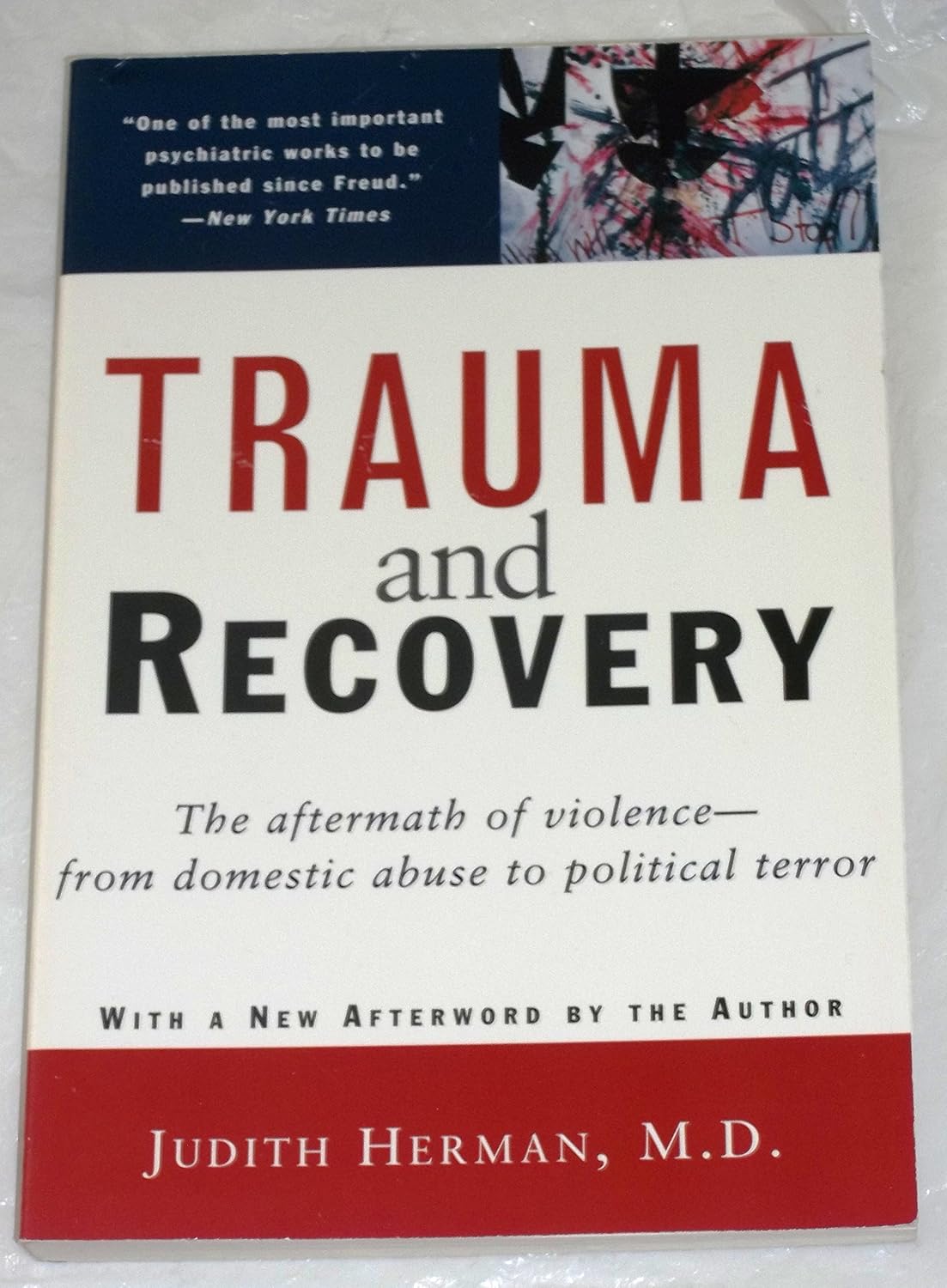
Trauma and Recovery
Judith Lewis Herman, M.D.
The seminal framework for understanding trauma and the stages of recovery — safety, remembrance, and reconnection.
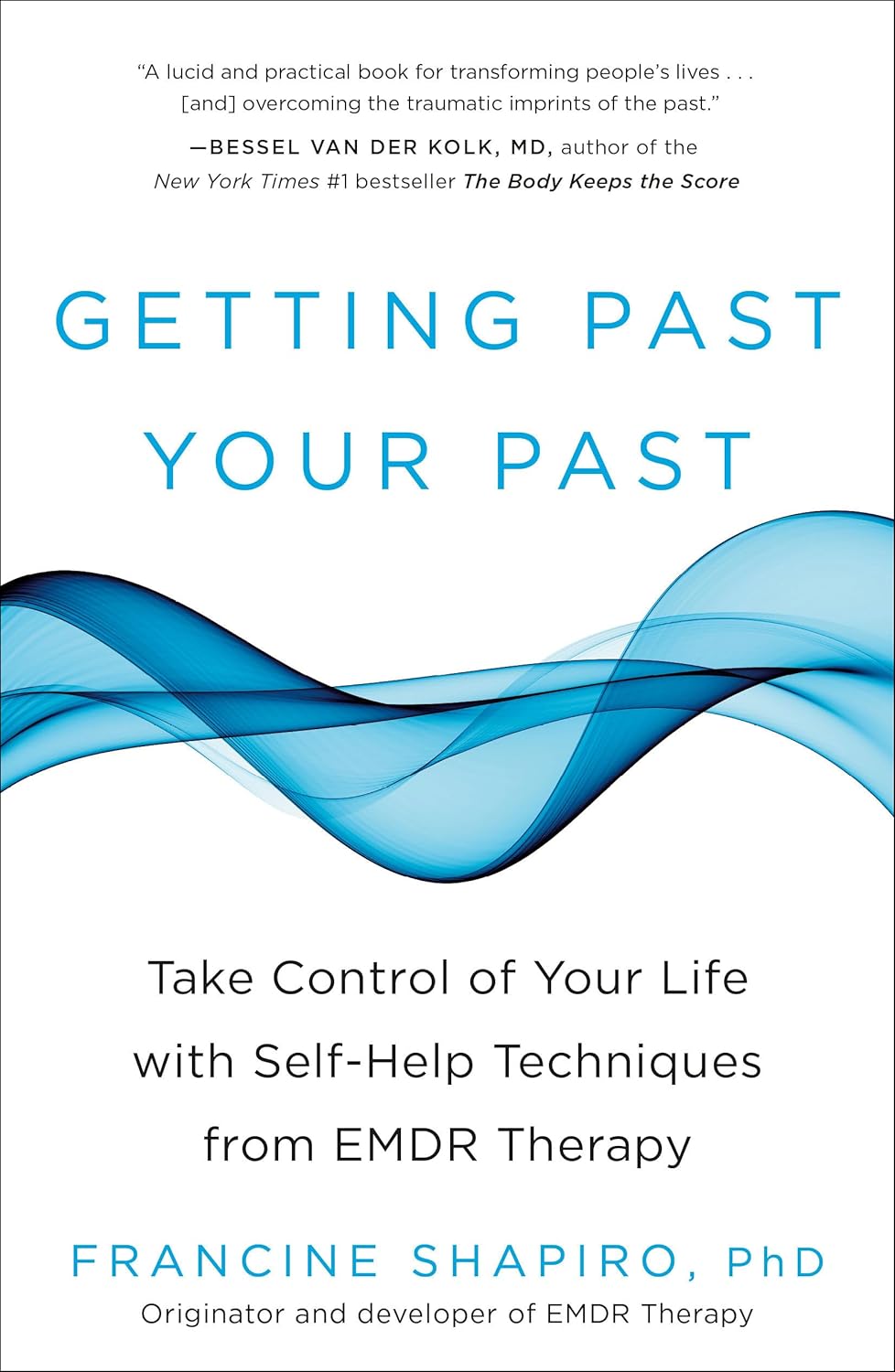
Getting Past Your Past
Francine Shapiro, PhD
Self-help techniques based on EMDR therapy to take control of your life and overcome trauma.
As an Amazon Associate, Clarity House Press earns from qualifying purchases. Your price is never affected.
Found this helpful?
Share it with someone who might need it.
About the Author

Clarity House Press
Editorial Team
The editorial team at Clarity House Press curates and publishes evidence-based content on narcissistic abuse recovery, high-conflict divorce, and healing. Our content is informed by research, survivor experiences, and established trauma-informed approaches.
View all posts by Clarity House Press →Published by Clarity House Press Editorial Team