Please read our important disclaimers before using this content
You were doing so well. Three months of no contact. Regular therapy. Actually sleeping through the night. Feeling like yourself again.
Then you saw a car that looked like theirs and spent the next four days in bed, unable to function, convinced you'd made no progress at all.
Welcome to non-linear healing. It's confusing, frustrating, and completely normal.
The Myth of Linear Progress
We're taught that healing works like this:
Day 1: Completely broken Day 30: A little better Day 60: Noticeably improved Day 90: Mostly healed Day 365: Fully recovered
Nice, neat, predictable progress. A straight line from trauma to wellness.
This is not how trauma healing works.
Trauma healing looks like:
Week 1: Survival mode Week 3: Surprisingly okay Week 5: Worst day yet Week 8: Actually good Week 9: Right back in the pit Week 12: Two great weeks in a row Week 14: Panic attack out of nowhere
It's not a line. It's a scribble. With loops and backslides and sudden drops and unexpected leaps forward.
Why Trauma Healing Can't Be Linear
Trauma gets stored in multiple systems. 1 Your conscious memory. Your body. Your nervous system. Your implicit memory (things you don't consciously remember but your body does).
You might intellectually process the trauma in therapy, but your nervous system is still operating on the old programming. You know you're safe, but your body hasn't updated the threat assessment system yet. 2
Healing happens in layers. 3 Change is not linear—it often involves destabilization and a loosening of old patterns before system reorganization occurs. You process one layer—let's say, the end of the relationship. You feel better. Then you hit the next layer—the betrayal of the person you thought they were. Then the next—the lost years. Then the next—the damaged self-trust.
Each layer can feel like starting over. You're not. You're going deeper.
Triggers are unpredictable. 4 A song. A smell. An anniversary you didn't consciously remember. Someone's tone of voice. Your nervous system recognizes danger before your conscious mind does, and suddenly you're dysregulated and you don't even know why. Mapping your trauma triggers systematically can help you anticipate the patterns even when they feel random.
Recovery isn't the absence of bad days. 5 Healing ebbs and flows, loops and spirals—it's a journey rather than a destination. It's gradually having more good days than bad days. Then more good weeks than bad weeks. The bad days don't disappear. They just become less frequent and less intense.
You're healing while still living your life. You can't put everything on hold to recover in ideal conditions. You're working, parenting, managing daily life while also processing trauma. Sometimes life stress will set you back. That's not a character flaw. That's being human.
What Setbacks Actually Mean
Setback ≠ Starting over.
When you have a bad day/week/month after a period of doing well, you haven't lost all your progress. You're not back at square one.
You're spiraling up, not circling.
Imagine a spiral staircase. You're walking up, but from above, it looks like you're just going in circles—same position, over and over. But you're actually getting higher each time.
You might face the same trigger or same feeling you faced three months ago. But this time:
- You recognize it faster
- You have more tools to cope
- You recover more quickly
- You understand what's happening
- You're less afraid of the feeling
Same position on the circle. Different altitude.
The Good Day Backlash
You have a great week. You feel strong, clear, optimistic. You think: "I'm finally done healing!"
Then something minor happens—they text you, or you remember something, or you have a bad dream—and you crash hard.
This feels like betrayal. Like your "good week" was a lie. Like you're never actually going to heal.
Here's what's actually happening:
When you feel good, your nervous system relaxes its defenses. When defenses are down, deeper material can surface. The crash isn't proof you weren't actually healing. It's evidence that you felt safe enough to access the next layer. 6
Your system won't let you process trauma when it's in survival mode. It waits until you feel relatively safe, then says "okay, now we can deal with this."
The crash is your system trusting you enough to do the deeper work.
It doesn't feel like trust. It feels like relapse. But it's actually progress.
What Progress Actually Looks Like
Not "I never think about them anymore."
Progress is:
The bad days are less intense. Used to be a 10/10 pain that kept you in bed for a week. Now it's a 6/10 that lasts a day or two.
You recover faster. Used to take weeks to get back to baseline after a trigger. Now it takes days, or hours.
You have more tools. Instead of just enduring the pain, you can ground yourself, call a friend, use a coping skill, move your body. You're not helpless anymore.
You recognize the pattern. "Oh, I'm spiraling. This is what happens when I'm triggered. It will pass." Instead of "I'm dying and it will never end."
The triggers are more specific and make sense. Early on, everything was a trigger. Now you can identify: "I'm activated because it's the anniversary of when I left" or "That tone of voice reminded me of how they sounded right before an attack."
You can function during setbacks. You're sad, but you can still work, parent, show up to therapy. The bad days don't completely derail your life anymore.
You're gentler with yourself. Less "I should be over this by now" and more "This is hard and I'm doing my best."
You can hold both truths. "I'm struggling today AND I've come so far." Both can be true simultaneously.
The Grief Waves
Grief isn't something you "get through" and then you're done. It comes in waves. Sometimes for years. 7
You'll be fine for months, then a random Tuesday in October, the loss hits you like it just happened. You sob in your car in the grocery store parking lot. You feel 14 kinds of pathetic.
You're not regressing. You're grieving.
Grief doesn't follow schedules. It doesn't care that you've already "processed" this. It shows up when it shows up.
Let it. Feel it. It will pass. And next time, it might be a little softer.
When You're Worried You're Not Healing
You are healing if:
- You're showing up to therapy (even when you don't want to)
- You're maintaining no contact (even when you want to break it)
- You're asking for help when you need it
- You're learning about abuse and trauma and recovery
- You're being honest about how you're doing
- You're trying, even when trying feels impossible
- You haven't given up
You are healing even if:
- You still think about them
- You still miss them sometimes
- You still have trauma responses
- You still have bad days
- You still make mistakes
- You still feel broken
- You still don't recognize yourself
Healing doesn't mean you're perfect. It means you're trying.
Your Next Steps
Track the trend, not the day. Journal or use a mood tracker. Look at month-over-month, not day-to-day. Understanding what recovery milestones actually look like can help you recognize progress that doesn't announce itself. Are you generally better than you were three months ago? Six months ago? That's progress.
Expect setbacks. They're not failure. They're part of the process. When one hits, remind yourself: "This is temporary. I've gotten through this before. I'll get through it again."
Celebrate small wins. You got out of bed. You didn't respond to their text. You recognized a trigger before you acted on it. These matter.
Be patient with the timeline. Complex trauma from years of abuse doesn't heal in three months or six months or even a year. You're looking at years, and that's okay. You're not on anyone's schedule. The stages of recovery from narcissistic abuse can give you a realistic framework without turning stages into a performance standard.
Connect with others who get it. Support groups for abuse survivors. People who understand that healing isn't linear and won't judge you for having a bad month after a good month.
Keep going. Even when it feels pointless. Even when you're convinced you're not making progress. Even when you have the worst day you've had in months.
The spiral is still going up. You just can't see it from where you're standing.
You're Not Broken
You're healing from something that broke you. That's different.
The setbacks don't mean you're failing. They mean you're human, and trauma is hard, and healing is messy.
You're allowed to have good days. You're allowed to have terrible days. You're allowed to have both in the same week.
You're allowed to take as long as you need.
Healing isn't linear. But it's still happening.
One messy, imperfect, non-linear step at a time.
Resources
Trauma Therapy and Support:
- Psychology Today Therapist Finder - Find trauma and C-PTSD therapists
- EMDR International Association - Find EMDR therapists
- International Society for Traumatic Stress Studies - Trauma resources and specialists
- National Alliance on Mental Illness (NAMI) - Mental health support
Healing and Recovery:
- SAMHSA National Helpline - 1-800-662-4357 (24/7)
- National Domestic Violence Hotline - 1-800-799-7233 (SAFE)
- Somatic Experiencing International - Find SE practitioners
Crisis Support:
- 988 Suicide & Crisis Lifeline - Call or text 988 (24/7)
- Crisis Text Line - Text HOME to 741741
References
- van der Kolk, B. A., Roth, S. H., Pelcovitz, D., Sunday, S., & Spinazzola, J. (2005). Disorders of extreme stress: The empirical foundation of a complex adaptation to trauma. Journal of Traumatic Stress, 18(5), 389-399. https://pubmed.ncbi.nlm.nih.gov/16281237/ ↩
- Siegel, D. J. (2012). The Developing Mind: How Relationships and the Brain Interact to Shape Who We Become (2nd ed.). Guilford Press. National Institute of Health research on implicit memory consolidation in trauma. https://www.ncbi.nlm.nih.gov/books/NBK556115/ ↩
- Hayes, Laurenceau, Feldman, Strauss, & Cardaciotto (2007). Change is not always linear: the study of nonlinear and discontinuous patterns of change in psychotherapy.. Clinical psychology review. https://pmc.ncbi.nlm.nih.gov/articles/PMC3163164/ ↩
- Tedeschi, R. G., & Calhoun, L. G. (2004). Posttraumatic growth: Conceptual foundations and empirical evidence. Psychological Inquiry, 15(1), 1-18. https://pmc.ncbi.nlm.nih.gov/articles/PMC10168173/ ↩
- Foa, E. B., & Kozak, M. J. (1986). Emotional processing of fear: Exposure to corrective information. Psychological Bulletin, 99(1), 20-35. https://pubmed.ncbi.nlm.nih.gov/2871574/ ↩
- Porges, S. W. (2011). The Polyvagal Theory: Neurophysiological foundations of emotions, attachment, communication, and self-regulation. W.W. Norton & Company. https://pubmed.ncbi.nlm.nih.gov/21116217/ ↩
- Worden, J. W. (2018). Grief counseling and grief therapy: A handbook for the mental health practitioner (5th ed.). Springer Publishing Company. PubMed Central: https://www.ncbi.nlm.nih.gov/books/NBK507164/ ↩
- Herman, J. L. (1997). Trauma and Recovery: The Aftermath of Violence—from Domestic Violence to Political Terror. Basic Books. National Institutes of Health: https://pubmed.ncbi.nlm.nih.gov/9115737/ ↩
- Brewin, C. R., Dalgleish, T., & Joseph, S. (1996). A dual representation theory of posttraumatic stress disorder. Psychological Review, 103(4), 670-686. https://pubmed.ncbi.nlm.nih.gov/8888650/ ↩
- National Institute for Health and Care Excellence. (2018). Post-traumatic stress disorder: Management. NICE Guidelines [NG116]. https://www.nice.org.uk/guidance/ng116 ↩
Recommended Reading
From Clarity House Press — plus trusted books for deeper understanding
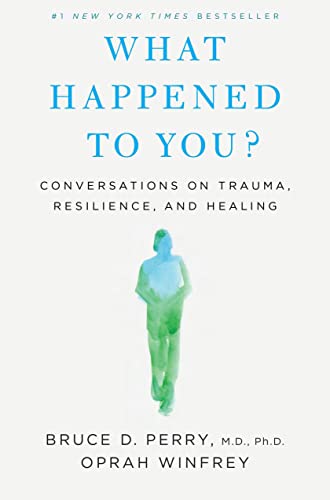
What Happened to You?
Bruce D. Perry, M.D., PhD & Oprah Winfrey
A conversational introduction to how early experience shapes us — reframing 'what's wrong with you' into 'what happened to you.'
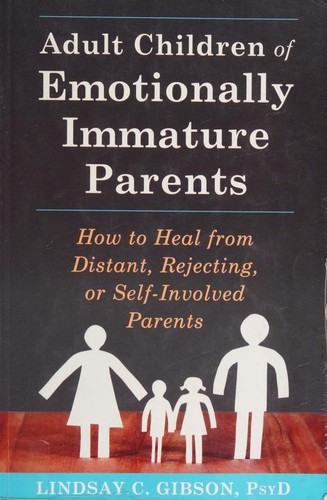
Adult Children of Emotionally Immature Parents
Lindsay C. Gibson, PsyD
A gentle, practical guide to understanding relationships with emotionally distant parents and reclaiming your inner life.
As an Amazon Associate, Clarity House Press earns from qualifying purchases. Your price is never affected.
Found this helpful?
Share it with someone who might need it.
About the Author

Clarity House Press
Editorial Team
The editorial team at Clarity House Press curates and publishes evidence-based content on narcissistic abuse recovery, high-conflict divorce, and healing. Our content is informed by research, survivor experiences, and established trauma-informed approaches.
View all posts by Clarity House Press →Published by Clarity House Press Editorial Team