Please read our important disclaimers before using this content
You're waiting for the moment when you wake up and the trauma doesn't matter anymore.
When triggers disappear. When relationships feel easy. When your nervous system finally believes you're safe.
When you're "healed."
But trauma recovery doesn't work like that. There's no finish line. No moment when you're suddenly, completely better. Understanding the stages of recovery from narcissistic abuse gives you the broader map—this guide zooms in on what progress actually looks like at each waypoint.
Instead, there are small shifts you almost don't notice. Moments when you realize something that was overwhelming last year is merely uncomfortable now. Days when you catch yourself laughing and remember you couldn't do that six months ago.
Recovery is subtle. It's cumulative. And if you're looking for dramatic transformation, you'll miss the quiet evidence that you're actually healing.
Let's talk about what progress really looks like—the milestones nobody tells you to watch for.
Early Recovery: The Foundation (Months 0-12)
The early phase of recovery aligns with what trauma researchers call the "stabilization phase." 1 Research emphasizes that building safety and developing awareness of trauma responses is foundational to healing.2 You start noticing when you're triggered instead of just being triggered—that split-second awareness between stimulus and reaction is the beginning of change.3
You start noticing when you're triggered instead of just being triggered
Huge milestone. Before: trigger → immediate reaction. Now: trigger → "Oh, I'm activated." That split second of awareness is everything. This awareness is rooted in expanding your window of tolerance—the zone where you can observe an activation rather than simply being swept away by it.
You can name emotions sometimes
You couldn't before. Everything was "fine" or "not fine." Now occasionally you can identify: "I'm angry. I'm scared. I'm sad."
You've found one coping strategy that works at least occasionally
Doesn't matter what it is. Grounding, cold water, calling someone, walking. You have something. Before you had nothing.
You've told at least one person some part of what happened
Breaking silence—even once, even partially—is massive.
You've had one session where therapy felt helpful instead of retraumatizing
This builds hope that healing is possible. If you're still searching for the right fit, selecting the right trauma therapy modality walks you through EMDR, IFS, Somatic Experiencing, and other evidence-based options so you can find an approach that works for your specific nervous system.
You can identify one boundary you need, even if you can't enforce it yet
Knowing what you need comes before being able to ask for it.
You've survived a trigger without self-destructing
You used to drink, cut, dissociate for days, sabotage relationships. This time you got through it differently.
You had one day where trauma wasn't the loudest thing in your head
Not a whole week. One day. That counts.
Mid Recovery: Building Capacity (Months 12-36)
You catch yourself in old patterns faster
Before: three days into people-pleasing before you notice. Now: three hours. Progress.
You can sometimes choose a response instead of being driven by reactivity
Not always. But sometimes. Your window between trigger and reaction is widening.
You've set a boundary and enforced it at least once
Terrifying. Hard. But you did it.
You can tolerate uncomfortable emotions for longer without numbing
You used to dissociate immediately. Now you can sit with sadness for fifteen minutes before needing to escape.
You've repaired a relationship after a dysregulated moment
Before: rupture → shame spiral → withdraw forever. Now: rupture → repair conversation → relationship continues.
You can identify your needs in real-time sometimes
"I need space." "I need reassurance." "I need to move my body." Before, needs were completely inaccessible.
You've had a flashback and come back to present faster than before
Used to lose hours or days. Now it's minutes or an hour.
You've chosen not to engage with someone unhealthy
Didn't need to prove anything, explain, or fix it. Just chose not to engage.
You feel bored sometimes (and it's not terrifying)
Boredom means your nervous system isn't in constant survival mode. This is progress.
You've advocated for yourself in a medical/professional setting
Told a doctor "that's not accurate" or pushed back against a therapist's approach.
You notice positive moments and can stay in them briefly
Before: immediate dismissal or waiting for disaster. Now: you can tolerate thirty seconds of "this is nice" before anxiety takes over.
Deep Recovery: Integration (Years 3-5+)
Triggers still happen but recovery time is significantly shorter
Same trigger that used to derail you for a week now disrupts you for hours or a day.
You can stay present in your body for longer periods
Used to be perpetually dissociated. Now you have minutes or hours of embodiment.
You can recognize when you're wrong and apologize without shame spiral
"I messed up, I'm sorry" doesn't confirm you're fundamentally defective. It's just a mistake.
You have at least one relationship that feels mostly secure
Not perfect. But mostly safe, mostly consistent, mostly trusting.
You can ask for what you need without apologizing or expecting rejection
This is huge. Direct requests without preamble or defensive preparation.
You've ended a relationship that was unhealthy without crisis
Clean ending. No drama. Just recognition that it wasn't working and choosing to leave.
Your self-talk is sometimes kind
The inner critic still exists but now there's a compassionate voice too.
You can handle success without sabotaging it
Promotion, good relationship, positive event—you don't unconsciously destroy it to prove you don't deserve it.
You had a whole week where trauma was background, not foreground
It's still part of your life but not organizing your entire existence.
You can distinguish between past and present even when triggered
Triggered, but somewhere you know: "This feels like then but it's actually now."
You've grieved what was lost
Not just anger or numbness. Actual grief for what you should have had and didn't.
You like yourself sometimes
Not love. Not constant. But sometimes, you genuinely like who you are.
Ongoing Recovery: Living (Years 5+)
You have mostly boring days and that's wonderful
Crisis isn't the baseline. Calm is.
You can be vulnerable with select people without terror
Still scary. But possible.
Your trauma is part of your history, not your entire identity
"This happened to me" instead of "This is all I am."
You can feel the full range of emotions
Joy without immediate dread. Anger without fear of being like your abuser. Sadness without falling apart. Fear without losing yourself.
You trust your own perceptions
You know what you experienced. You don't need anyone to validate it.
You can rest without feeling guilty
Rest isn't laziness. It's necessary.
You have values and live by them
You know what matters to you and make choices aligned with that.
You can handle conflict in relationships without assuming it means the end
Disagreement doesn't equal abandonment or abuse.
You've made peace with the fact that some things will always be harder for you
Not bitter about it. Just factual. And you work with it instead of against it.
You can hold complexity
People who hurt you weren't all bad. You're not all victim. Life isn't binary.
You help others sometimes without depleting yourself
Boundaries allow you to give without sacrificing your wellbeing.
You can imagine a future
It's not all dread. There's possibility.
You're grateful for who you've become, even given the cost
This doesn't mean you're glad the trauma happened. It means you've made something meaningful from it anyway.
What Doesn't Mean You're Not Healing
You still have bad days
Recovery isn't elimination of all symptoms. It's having more good days than bad, and bad days being less bad.
You still get triggered
Triggers may always exist. What changes is how long they last and how you handle them.
You still struggle with relationships
Relationships are complex for everyone. Yours might always be a bit harder. That's okay.
You still have anger
Appropriate anger at what happened to you is healthy, not a sign you're stuck.
You still need therapy
Some people need long-term support. That's not failure.
You still have flashbacks
They may be less frequent, less intense, shorter—but not entirely gone. Still counts as progress.
You still feel broken sometimes
Feelings aren't facts. You can feel broken and be healing simultaneously.
You make mistakes
Healing doesn't equal perfection. You're learning. Mistakes are part of that.
Non-Linear Progress: The Reality
Recovery looks like:
Six months of progress → two-month setback → three months forward → one month stagnant → big leap → plateau → slow upward trend
Not: steady improvement in a straight line.
Setbacks don't erase progress. They're part of the process.4 Research consistently shows that recovery trajectories vary significantly between individuals, with fluctuations being normal rather than indicating treatment failure. Some individuals show rapid symptom reduction early on, while others experience slower linear decline, and these different pathways are all associated with eventual recovery.5
Graph your healing over years, not weeks. The trend line goes up even when individual days go down.
Invisible Progress: What Others Don't See
You didn't send the reactive text
Nobody knows about the text you didn't send. But you do. That's growth.
You left the situation before it got bad
People see you leave. They don't know you used to stay until destruction. You know.
You chose the safer person even though they felt boring
Your friends don't understand why this relationship matters. You know you used to choose chaos.
You didn't apologize when you didn't do anything wrong
Tiny moment. Huge shift.
You felt the urge to self-harm and didn't
No one knows how close you came. You know you chose differently.
You sat with discomfort instead of numbing
Completely internal. Completely significant.
Much of recovery is invisible. External measures miss most of it.
Celebration Matters
Notice these milestones. Mark them. They're easy to dismiss:
"I only went three days without a flashback instead of a week."
Reframe: "I went three entire days without a flashback. That's three days I didn't have before."
Keep evidence:
- Journal entries showing how you felt then vs now
- Voice memos describing where you are in recovery
- Lists of things you can do now that you couldn't do before
- "Past Self Letters" to remind future you of how far you've come
On hard days, evidence helps you remember you're not back at the beginning even when it feels like it.
What Progress Isn't
Not perfection: You'll never be undamaged. You'll be healed and still scarred.
Not forgiveness: You don't have to forgive anyone to recover.
Not forgetting: You won't forget. You'll integrate.
Not "over it": It's not something you get over. It's something you learn to live with differently.
Not the same as others: Your timeline is yours. Comparison is useless.
Not linear: Three steps forward, two back, one sideways is still net forward.
Not complete: Recovery isn't a destination. It's a direction.
You're Healing Even If It Doesn't Feel Like It
If you:
- Are reading this
- Want to heal
- Are trying literally anything to feel better
- Haven't given up entirely
You're in recovery. Even if it doesn't feel like it. Even if progress is invisible. Even if you're convinced you're failing.
The fact that you're still here, still trying, still hoping for better—that's the foundation everything else builds on.
Recovery is quieter than you expected. Slower than you hoped. More subtle than anyone told you. For honest guidance on realistic timelines, see why healing isn't linear—and why that's not a sign that something is wrong with your recovery.
But it's happening.
And one day you'll look back and barely recognize the person you were when you started. Not because that person is gone, but because you've added so much capacity, so much resilience, so much life that they're just one part of who you've become.
That's the milestone that matters most: becoming more than your trauma.
You're doing it. Even now. Even on the hard days.
Keep going. It's working.
Resources
Trauma Therapy and Support:
- Psychology Today Therapist Finder - Find trauma therapists
- EMDR International Association - Find EMDR therapists
- National Alliance on Mental Illness (NAMI) - Mental health support
- SAMHSA National Helpline - 1-800-662-4357 (24/7)
Recovery and Healing:
- Self-Compassion.org - Dr. Kristin Neff's resources
- National Domestic Violence Hotline - 1-800-799-7233 (SAFE)
- Somatic Experiencing International - Body-based trauma therapy
Crisis Support:
- 988 Suicide & Crisis Lifeline - Call or text 988 (24/7)
- Crisis Text Line - Text HOME to 741741
References
- Cloitre, M., Courtois, C. A., Ford, J. D., Green, B. L., Alexander, P., Briere, J., ... & van der Hart, O. (2012). The ISSTD expert consensus treatment guidelines for complex PTSD in adults: Executive summary. Journal of Traumatic Stress, 25(3), 243-251. https://www.ncbi.nlm.nih.gov/pmc/articles/PMC6447620/ ↩
- Karatzias, T., Cloitre, M., Maercker, A., Kazlauskas, E., Shevlin, M., Hyland, P., ... & Brewin, C. R. (2024). Complex post-traumatic stress disorder: Clinical features, treatments, and current research directions. Nature Reviews Disease Primers, 10(1), 15. https://pmc.ncbi.nlm.nih.gov/articles/PMC9879871/ ↩
- National Center for PTSD. (2024). Psychological Interventions for Complex Post-traumatic Stress Disorder: A Systematic Review. JKMS, 40(1), e279. https://jkms.org/pdf/10.3346/jkms.2025.40.e279 ↩
- Foa, E. B., Keane, T. M., Friedman, M. J., & Cohen, J. A. (Eds.). (2009). Effective treatments for PTSD: Practice guidelines from the International Society for the Study of Posttraumatic Stress Disorder (2nd ed.). Guilford Press. https://www.ncbi.nlm.nih.gov/pmc/articles/PMC5741510/ ↩
- Hepp, U., Moergeli, H., Buchi, S., Bruchmann-Schwarz, B., Kraemer, B., Angst, J., & Schnyder, U. (2013). Early PTSD symptom trajectories: Persistence, recovery, and response to treatment. Results from the Jerusalem Trauma Outreach and Prevention Study (J-TOPS). PLOS ONE, 8(8), e70084. https://journals.plos.org/plosone/article?id=10.1371/journal.pone.0070084 ↩
- Siegel, D. J. (2012). The developing mind: How relationships and the brain interact to shape who we are (2nd ed.). Guilford Press. Window of tolerance concept foundational to understanding nervous system regulation in trauma recovery. https://www.psychologytools.com/resource/window-of-tolerance/ ↩
- Porges, S. W. (2011). The polyvagal theory: Neurophysiological foundations of emotions, attachment, communication, and self-regulation. W. W. Norton & Company. Polyvagal theory explaining the three-state nervous system model (ventral vagal, sympathetic, and dorsal vagal) critical to understanding trauma-informed recovery. https://www.psychologytools.com/resource/window-of-tolerance/ ↩
- van der Kolk, B. (2014). The body keeps the score: Brain, mind, and body in the healing of trauma. Penguin Books. Comprehensive overview of how trauma affects the nervous system and recovery pathways through somatic and therapeutic approaches. ↩
- Knefel, M., Tran, U. S., & Lueger-Schuster, B. (2016). The clinical utility of the International Trauma Questionnaire for complex PTSD screening. Journal of Traumatic Stress, 29(2), 114-121. Supporting evidence for phase-oriented treatment effectiveness in reducing C-PTSD symptoms and improving emotional regulation capacities. https://pmc.ncbi.nlm.nih.gov/articles/PMC11035878/ ↩
- Teicher, M. H., & Samson, J. A. (2016). Annual research review: Enduring neurobiological effects of childhood abuse and neglect. Journal of Child Psychology and Psychiatry, 57(3), 241-266. Neurobiological basis for understanding how trauma affects emotion regulation circuits and recovery trajectories. https://www.ncbi.nlm.nih.gov/pmc/articles/PMC10741474/ ↩
Recommended Reading
From Clarity House Press — plus trusted books for deeper understanding
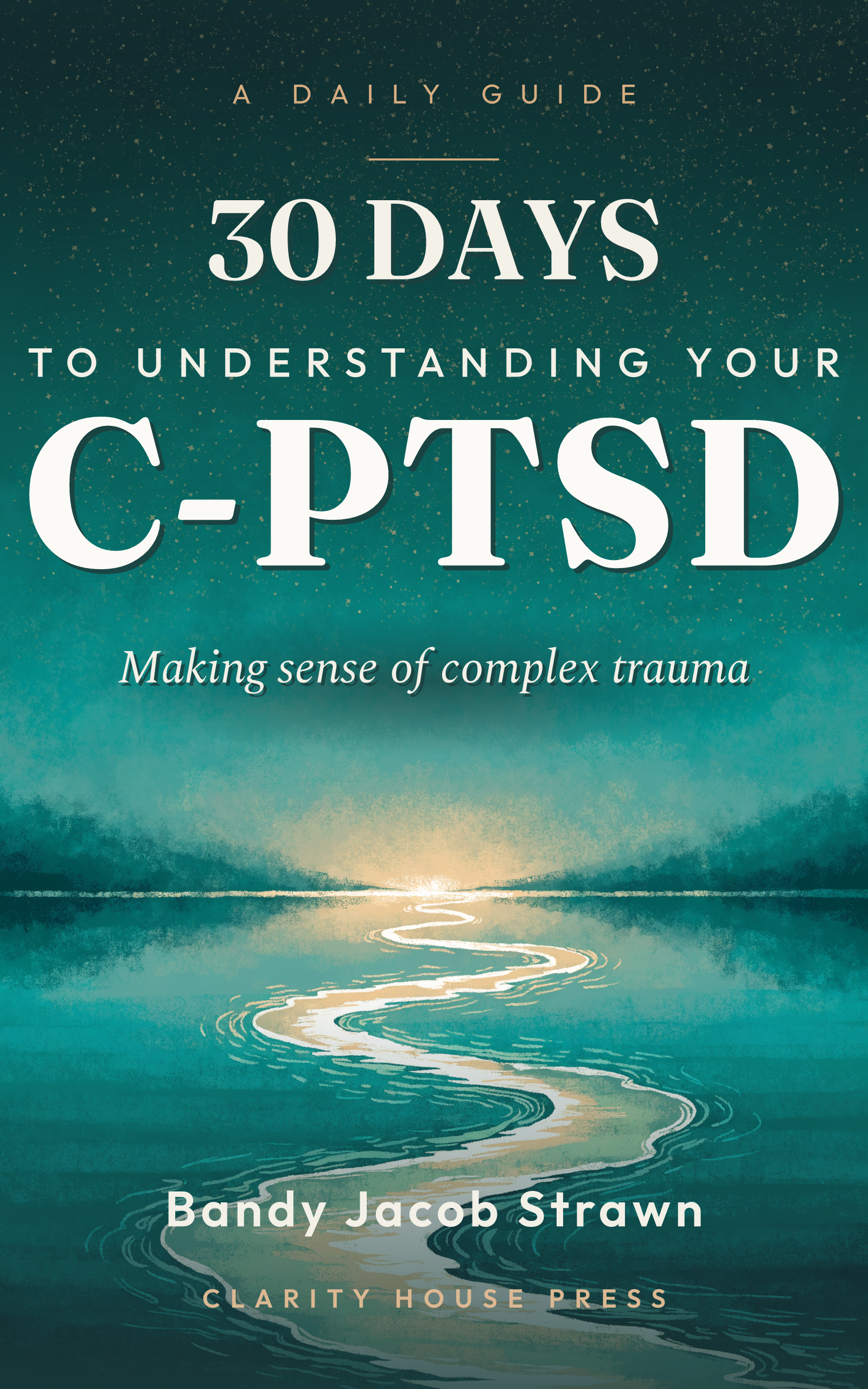


Polyvagal Exercises for Safety and Connection
Deb Dana, LCSW
50 client-centered practices for regulating the autonomic nervous system.
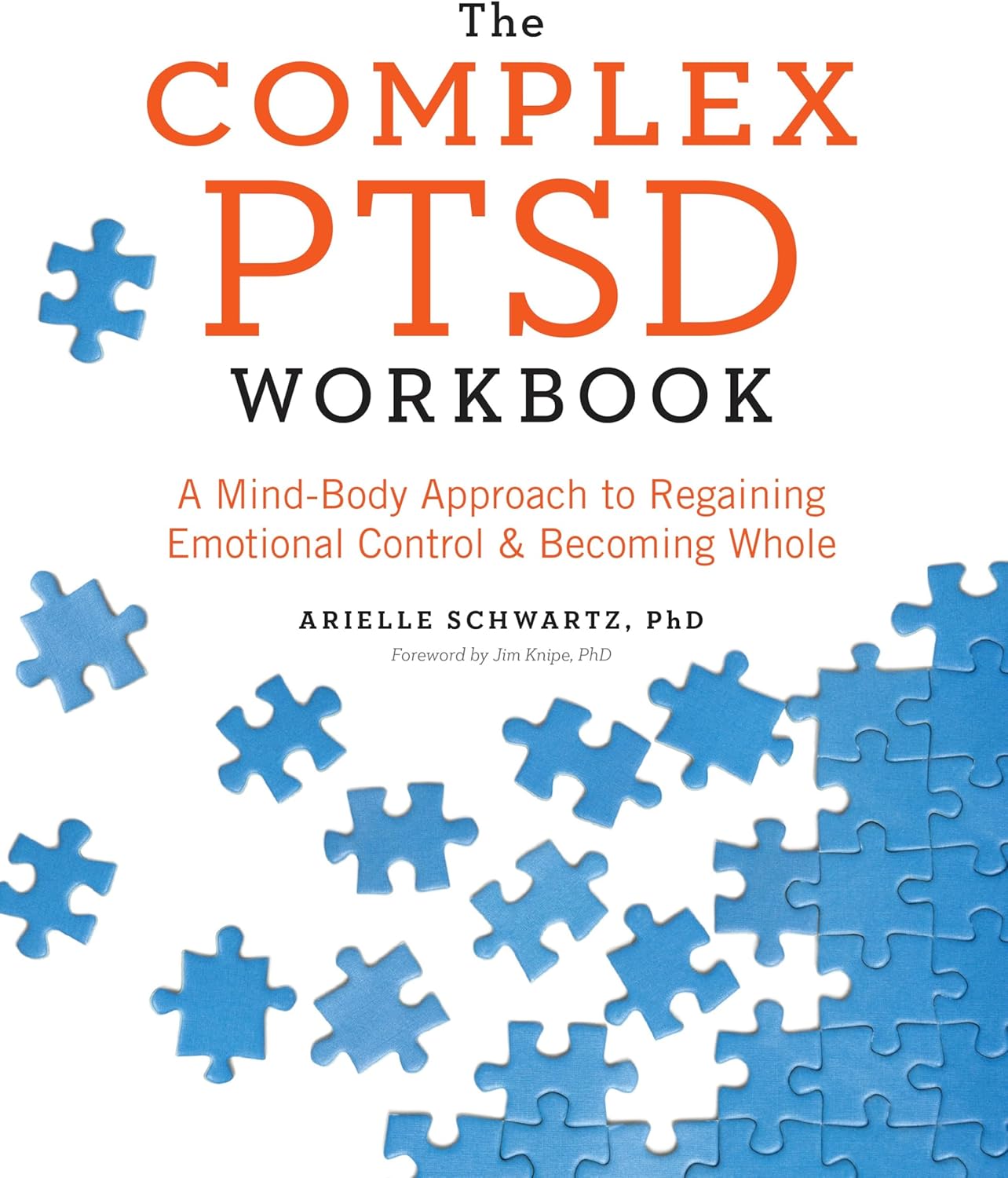
The Complex PTSD Workbook
Arielle Schwartz, PhD
A mind-body approach to regaining emotional control and becoming whole with evidence-based exercises.
As an Amazon Associate, Clarity House Press earns from qualifying purchases. Your price is never affected.
Found this helpful?
Share it with someone who might need it.
About the Author

Clarity House Press
Editorial Team
The editorial team at Clarity House Press curates and publishes evidence-based content on narcissistic abuse recovery, high-conflict divorce, and healing. Our content is informed by research, survivor experiences, and established trauma-informed approaches.
View all posts by Clarity House Press →Published by Clarity House Press Editorial Team