Please read our important disclaimers before using this content
I was two years into recovery when a new friend—someone I genuinely liked—sent me a text: "Hey, can we talk? I need to tell you something and I'm worried about how you'll react."
My stomach dropped. My hands started shaking. In the 30 minutes before she called, I ran through every possible disaster: She was angry with me. I'd done something wrong. She was ending the friendship. She'd discovered some terrible truth about me.
When she finally called, she said: "I felt hurt when you canceled our plans last week without much notice. I know you've been dealing with a lot, and I'm not mad—I just wanted to be honest about how it affected me."
That was it. A kind, direct expression of a boundary. No punishment. No silent treatment. No explosion.
I burst into tears.
Not because I was upset—because I realized I'd been bracing for warfare when all she wanted was honest communication. I didn't know what healthy conflict looked like anymore. I'd lost the ability to distinguish between "someone expressing a feeling" and "incoming abuse."
If you're struggling to build relationships after narcissistic abuse—if you oscillate between trusting too quickly and shutting everyone out, if you can't tell the difference between red flags and normal human imperfection, if vulnerability feels like handing someone ammunition—this post is for you.
Why Relationships Feel Impossible After Narcissistic Abuse
Your Template for Relationships Was Distorted
We learn how relationships work through our earliest experiences—family, early friendships, first romantic relationships. These become our template, our unconscious blueprint for how connection functions.
If your template was narcissistic abuse, you learned that:
- Love is conditional on performance and perfection
- Vulnerability is weaponized against you
- Conflict means annihilation, not resolution
- Your needs are burdensome or irrelevant
- Expressing hurt leads to punishment, not repair
- People who claim to love you will betray you
- Trust is dangerous
- You must constantly monitor others' moods to stay safe
- Disagreement means the relationship is ending
- You're responsible for other people's emotions
This becomes your normal. Not because you're broken, but because this is what relationships taught you they were. Research shows that exposure to interpersonal trauma, particularly in close relationships, fundamentally alters expectations about trust and safety in future relationships.1 Patients with complex trauma often develop an impaired ability to trust others and build intimate relationships due to non-integrated representations of self and others, leading to oscillation between needing and fearing intimacy in adult relationships.2
Now, even healthy relationship behaviors trigger your threat response:
- Someone wants to "talk" → your body braces for attack
- Someone disagrees with you → you panic that they'll leave
- Someone asks about your feelings → you freeze (is this a trap?)
- Someone shows vulnerability → you distrust it (manipulation?)
- Someone gives you space → you interpret it as abandonment or silent treatment
The Pendulum Swing: Too Trusting vs. Too Guarded
Many survivors swing between two extremes:
Too Trusting (Fawning/People-Pleasing):
- Oversharing too quickly to create false intimacy
- Ignoring red flags because you desperately want connection
- Giving too much too soon (time, energy, resources, vulnerability)
- Prioritizing others' needs at the expense of your own
- Interpreting any attention as love
- Romanticizing small kindnesses because your baseline was cruelty
Too Guarded (Isolation/Hypervigilance):
- Seeing red flags everywhere (real or imagined)
- Testing people constantly to see if they'll hurt you
- Keeping everyone at arm's length emotionally
- Ending relationships at the first sign of conflict
- Interpreting normal human flaws as evidence of narcissism
- Isolating to avoid any risk of betrayal
The truth: Both extremes are protective strategies. Too trusting is an attempt to secure connection by being valuable/lovable. Too guarded is an attempt to prevent further harm by avoiding vulnerability. Studies on attachment following intimate partner violence demonstrate that survivors often exhibit either anxious attachment (hyperactivation of attachment needs) or avoidant attachment (deactivation of attachment needs) as adaptive responses to relational trauma.3 Betrayal trauma theory posits that survivors are at increased risk of making inaccurate trust decisions in interpersonal contexts, with high betrayal trauma exposure associated with significantly lower levels of general and relational trust.4
Neither works long-term. Too trusting leads to repeated boundary violations. Too guarded leads to profound loneliness.
What you need: The middle path—calibrated trust that builds gradually, boundaries that protect without isolating, discernment that can distinguish between red flags and normal human imperfection.
The "Relationship Anxiety" Feedback Loop
After abuse, many survivors develop relationship anxiety that becomes self-fulfilling:
- You meet someone new and feel cautious excitement
- Your trauma brain scans for red flags constantly
- You interpret ambiguous behavior as threatening (they didn't text back immediately = they're manipulating you with silence)
- You respond with anxiety, testing, or withdrawal
- The other person feels confused, overwhelmed, or pushed away
- They create distance to protect themselves
- You interpret their distance as confirmation of your fears
- The relationship deteriorates or ends
- Your brain files this as evidence: "See? People can't be trusted."
The cycle repeats. Not because you're cursed, but because your trauma response is inadvertently creating the outcomes you fear.
What Healthy Relationships Actually Look Like (After Abuse, This Is Foreign)
Before you can build healthy relationships, you need to recognize what they are. For many survivors, these characteristics sound theoretical or even unbelievable:
Healthy Conflict Is Not Abuse
Unhealthy conflict (what you experienced):
- Goal: Win, dominate, punish, control
- Tactics: Yelling, insults, threats, silent treatment, gaslighting, blame-shifting
- Outcome: One person submits, issue unresolved, resentment builds
- Aftermath: Walking on eggshells, fear, shame
Healthy conflict:
- Goal: Understand each other, find solutions that work for both
- Tactics: "I feel" statements, active listening, staying on topic, taking breaks if needed
- Outcome: Compromise, repair, mutual understanding (even if you still disagree)
- Aftermath: Closer connection, trust that you can navigate hard things together
Example of healthy conflict:
- "I felt hurt when you made that joke about my weight in front of your friends. I know you probably didn't mean it harmfully, but it touched on an insecurity I've shared with you."
- Response: "I'm really sorry. You're right—that was thoughtless. I won't make jokes about that again. Thank you for telling me."
Notice: Direct. No name-calling. Accountability without defensiveness. Repair.
If healthy conflict feels terrifying or unbelievable, that's normal given your history. Your nervous system learned that conflict = danger. Relearning that conflict can = connection takes time and corrective experiences. Research on conflict resolution in intimate relationships confirms that healthy conflict involves emotional validation, mutual problem-solving, and repair attempts—all characteristics notably absent in abusive relationships.5 Between 30% and 60% of individuals betrayed by intimate partners experience clinically significant symptoms of PTSD, depression, and anxiety, making recovery from relational trauma a critical clinical concern.6
Healthy People Respect Boundaries Without Punishment
In abusive relationships:
- Stating a boundary led to rage, sulking, retaliation, or violation of the boundary
- You learned boundaries are dangerous and won't be honored anyway
In healthy relationships:
- "I can't talk right now, can we connect tomorrow?" → "Of course, no problem. Text me when you're free."
- "I'm not comfortable with that" → "Okay, I appreciate you letting me know."
- The person doesn't punish you, guilt you, or push for justification
Healthy boundary-setting is honored, not weaponized against you.
If someone consistently violates boundaries or makes you feel bad for having them, that's a red flag—your response is appropriate to the behavior, not an overreaction.
Healthy People Admit Mistakes and Repair
In abusive relationships:
- People with narcissistic traits often struggle with genuine apologies—they may deflect, minimize, blame you, or give performative apologies ("I'm sorry you feel that way") rather than demonstrating genuine remorse and behavioral change
- Repair never happens—issues resurface, resentment accumulates
In healthy relationships:
- "I messed up. I'm sorry. What can I do to make it right?"
- Changed behavior, not just words
- Genuine remorse, not performance
Example:
- Friend forgets your birthday → "I'm so sorry I forgot. I know that hurt you. Can I take you to dinner this week to celebrate?"
- They actually follow through
After abuse, genuine apologies may feel suspicious or manipulative at first. That's your trauma brain protecting you. Give yourself time to observe patterns: Do apologies lead to behavior change? Or just empty words?
Healthy Vulnerability Is Mutual
In abusive relationships:
- You were vulnerable → they used it against you later
- They were "vulnerable" → it was manipulation or a way to make you responsible for their emotions
In healthy relationships:
- Vulnerability is reciprocal and gradual
- When you share something difficult, they respond with empathy (not judgment, mockery, or later weaponization)
- They share their own struggles appropriately
- Neither person is the perpetual caretaker or perpetual victim
Healthy vulnerability builds slowly:
- First: Lower-stakes sharing (favorite movies, mild frustrations at work)
- Then: Moderate vulnerability (insecurities, past disappointments)
- Finally: Deep vulnerability (trauma, fears, core wounds)
If someone is trauma-dumping immediately or demanding your deepest wounds on date two, that's a red flag. Healthy intimacy has pacing.
Healthy Relationships Allow for Individuality
In abusive relationships:
- Your interests, friends, opinions were criticized, controlled, or mocked
- Differences were threats
- You had to become smaller to make them comfortable
In healthy relationships:
- You can have separate interests, friends, opinions
- Differences are interesting, not threatening
- You're encouraged to pursue your own growth
- Interdependence, not enmeshment or dominance
Example:
- You want to take a solo trip → Healthy partner: "That sounds great! I'll miss you, but I hope you have an amazing time."
- You have a friend they don't particularly like → Healthy partner: "I'm glad you have friends who support you, even if that person isn't my favorite."
If someone needs constant access to you, demands you abandon your interests/friends, or makes you feel guilty for having a separate life, that's not love—that's control.
Evidence-Based Practices for Building Healthy Relationships
Practice 1: The Traffic Light System for Relationship Assessment
Purpose: Learn to distinguish between green flags, yellow flags, and red flags—not everything is a dealbreaker, but not everything is safe either.
Red Flags (Dealbreakers—Leave):
- Any form of physical violence or threats
- Consistent lying or gaslighting
- Violating your boundaries repeatedly after you've clearly stated them
- Isolating you from friends/family
- Controlling your finances, appearance, or decisions
- Raging, name-calling, belittling
- Refusing to take accountability, ever
- Love-bombing followed by devaluation
- Making you feel afraid
Yellow Flags (Proceed with Caution—Assess Patterns):
- Occasional poor communication (can improve with practice)
- Conflict avoidance or people-pleasing (trauma response, not necessarily malicious)
- Past relationship baggage affecting current behavior (if they're actively working on it)
- Different communication styles causing friction
- Occasional thoughtlessness or forgetfulness
- Difficulty with emotional expression
Green Flags (Healthy—Cultivate):
- Consistent follow-through (words match actions)
- Respects boundaries without resentment
- Apologizes and repairs when they hurt you
- Communicates clearly and directly
- Supports your growth and individuality
- Handles conflict respectfully
- Takes accountability for their behavior
- Makes you feel safe to be yourself
How to use this:
- Keep a running log of interactions (red/yellow/green)
- Assess patterns over time (2-3 months minimum)
- Yellow flags that improve with communication = healthy relationship growth
- Yellow flags that persist or worsen = potential red flag
- Multiple red flags = leave, regardless of green flags
Critical: After abuse, your instinct may be to excuse red flags ("everyone has flaws") or panic at yellow flags ("this person is dangerous"). The traffic light system provides objective categories to counter both extremes.
Practice 2: The Gradual Vulnerability Ladder
Purpose: Learn to build trust incrementally instead of oversharing immediately or never sharing at all
The Ladder (Bottom to Top):
Rung 1: Surface-level sharing
- Favorite foods, movies, hobbies
- Safe, low-stakes information
- Risk: Virtually none
Rung 2: Preferences and opinions
- Political views, values, pet peeves
- What matters to you and why
- Risk: Disagreement, but not deep hurt
Rung 3: Mild vulnerabilities
- "I'm nervous about this presentation at work"
- "I had a weird interaction with my sibling"
- Slight discomfort, not core wounds
- Risk: Mild judgment or dismissiveness
Rung 4: Moderate vulnerabilities
- Past disappointments, insecurities
- "I struggle with body image"
- "My last friendship ended badly and I'm worried about trusting again"
- Risk: Rejection or mockery
Rung 5: Deep vulnerabilities
- Trauma history, core fears, profound shame
- "I'm a survivor of narcissistic abuse"
- "I have PTSD symptoms that affect my relationships"
- Risk: Weaponization, judgment, abandonment
How to use this:
- Start at Rung 1 with new people
- Share something from the current rung
- Observe their response:
- Do they listen with empathy?
- Do they respect what you shared?
- Do they reciprocate appropriately?
- Do they bring it up later in supportive or weaponizing ways?
- If response is positive, wait a week or two, then try the next rung
- If response is negative (dismissive, judgmental, later used against you), STOP climbing with this person
- Only reach Rung 5 with people who have consistently demonstrated safety at Rungs 1-4
This prevents: Sharing more than someone is ready for (which can lead to relationship strain) AND never being vulnerable with anyone (which leads to isolation).
Timeline: For most survivors rebuilding trust after abuse, reaching Rung 5 with someone might take 6-12 months, though some may move more slowly depending on their healing timeline and the depth of previous trauma. That's not slow—that's appropriate pacing for deep trust. Research on trust development following betrayal trauma confirms that gradual, evidence-based trust-building over extended periods produces more stable relationship outcomes than rapid disclosure.7
Practice 3: The "Prove Me Wrong" Experiment
Purpose: Challenge your trauma brain's assumption that everyone will hurt you by actively looking for evidence to the contrary
How it works:
-
Identify a specific fear: "If I express a need, people will get angry and abandon me"
-
Design a low-stakes test: "I'll tell my friend I need to reschedule coffee because I'm exhausted"
-
Make a prediction: "They'll be annoyed, give me the silent treatment, or make me feel guilty"
-
Run the experiment: Actually express the need
-
Document the outcome: What actually happened? Did your prediction come true?
-
Process the data:
- If they responded kindly: Your trauma brain was wrong. This person is safe. File this as evidence.
- If they responded poorly: Your trauma brain was right about THIS person. This is yellow flag data. Assess pattern.
Important: One positive outcome doesn't mean you can fully trust someone. But collecting many positive outcomes over time builds evidence that healthy relationships exist and you can identify them.
Over months, you're building a new database: "Some people are safe. I can learn to identify them. My needs don't always lead to punishment." Research on intimate partner violence recovery demonstrates that many survivors experience recovery as an ongoing process of healing, with 77% of women who had separated from abusive partners more than 10 years ago rating their recovery as significant, supporting the evidence that healing from relational trauma is possible with time and appropriate support.8
Practice 4: The Boundary Rehearsal Practice
Purpose: Get comfortable stating boundaries clearly before you're in high-pressure situations
Steps:
-
Write out boundaries you need to practice:
- "I can't lend you money"
- "I'm not comfortable discussing my ex"
- "I need space to process this before I respond"
- "I can't make plans that far in advance right now"
-
Practice saying them out loud (alone or with therapist)
- Notice what feelings come up (guilt, fear, shame)
- Breathe through them
- Repeat until you can say it without your voice shaking
-
Practice receiving pushback:
- "But I really need you to..."
- Your response: "I understand this is important to you, and I'm not able to do that."
- Practice not JADE-ing (Justify, Argue, Defend, Explain)
-
Start with lower-stakes boundaries in real life
- "I can't talk long, I have an appointment in 10 minutes"
- Build your boundary-setting muscle with less emotionally charged situations
-
Document what happens:
- Did they respect it?
- Did they push back?
- How did you feel after?
Why it works: After abuse, boundary-setting triggers intense fear because it previously led to punishment. Practicing in safe contexts (alone, with therapist, with safe friends) builds neural pathways so the words are accessible when you need them with riskier people.
Practice 5: The "Relationship Audit" Check-In
Purpose: Regularly assess whether a relationship is adding to or depleting your wellbeing
Every 3 months, for each significant relationship, ask:
-
Energy balance:
- After spending time with this person, do I usually feel energized or drained?
- Is there reciprocity, or am I always giving/supporting?
-
Safety:
- Can I be myself around this person, or do I perform/mask?
- Do I feel physically and emotionally safe?
-
Respect:
- Do they respect my boundaries?
- Do they speak to/about me respectfully?
-
Growth:
- Does this relationship support my healing and growth?
- Or does it keep me stuck in old patterns?
-
Joy:
- Do I genuinely enjoy this person's company?
- Or am I maintaining the relationship out of obligation, guilt, or fear?
Based on answers:
- Mostly positive: This is a healthy relationship worth investing in
- Mixed: Assess if issues are improving or worsening over time
- Mostly negative: Consider reducing contact or ending the relationship
This prevents: Staying in unhealthy relationships because you feel obligated, or ending healthy relationships because you're afraid of connection.
Practice 6: Co-Regulation Practice (Learning to Receive Support)
Purpose: Practice letting safe people comfort and support you (a skill abuse destroys)
In abusive relationships, you learned:
- Don't show weakness
- Don't ask for help
- Self-sufficiency is survival
Now, you struggle to:
- Accept comfort when you're upset
- Ask for help when you need it
- Believe people genuinely want to support you
The practice:
-
Identify a safe person (friend, therapist, support group member)
-
Start small: Share something mildly difficult and let them respond with support
- "I've had a really hard week"
- Notice if you deflect their comfort ("Oh, I'm fine, everyone has hard weeks")
- Practice RECEIVING: "Thank you. That means a lot."
-
Gradually increase vulnerability: Share bigger struggles
-
Notice your body's response:
- Do you tense up when they offer comfort?
- Do you want to run away?
- Can you tolerate being cared for, even briefly?
-
Practice saying: "I need support right now. Can you just listen?" or "I'm struggling. Can we talk?"
Why it works: Your nervous system needs corrective experiences where vulnerability leads to connection, not punishment. Each time someone responds to your pain with genuine empathy, you're rewiring the trauma template. This process of "earned secure attachment" through corrective relational experiences has strong empirical support in attachment research and trauma therapy literature.9
Common Obstacles and How to Navigate Them
Obstacle 1: "I Can't Tell If This Is a Red Flag or I'm Being Paranoid"
The dilemma: After abuse, you second-guess your instincts. Is this actually concerning, or is your trauma making you see danger everywhere?
Solution: The "Pattern + Severity + Response" Test:
Pattern: Is this a one-time occurrence or a repeated behavior?
- One-time: Might be a yellow flag, might be nothing. Observe.
- Repeated: Definitely assess seriously.
Severity: How significant is this behavior?
- Forgot to text back: Low severity
- Yelled at you: High severity
Response: When you addressed it, how did they respond?
- Apologized and changed behavior: Healthy
- Defensive, dismissed your feelings, or did it again: Red flag
Example:
- Your date showed up 20 minutes late without texting
- Pattern: First date (no pattern yet)
- Severity: Moderate (rude, but not abusive)
- Response: "I'm so sorry, I should have texted. I lost track of time. I'll be more considerate."
- Assessment: Yellow flag, monitor. If it happens repeatedly or they get defensive when you mention it, escalate to red.
Obstacle 2: "I'm Attracted to the Same Type of Person Over and Over"
The reality: Many survivors find themselves drawn to narcissists or emotionally unavailable people repeatedly.
Why this happens:
- Familiar = comfortable (even if familiar is unhealthy)
- Intensity feels like passion
- You're trying to "fix" the original wound by "saving" this person
- Healthy people feel boring because your nervous system is calibrated to chaos
Solution: The "Slow Burn" Practice:
-
Notice if you feel instant, intense chemistry → Pause. This might be trauma response, not compatibility.
-
Ask yourself: "Am I excited about who they actually are, or am I excited about the intensity/chase/potential?"
-
Commit to dating people who feel "too nice" or "boring" for at least 3 dates
- Sometimes safety feels bland because you're not used to it
- Give your nervous system time to adjust
-
Work with a therapist on attachment patterns and why you're drawn to unavailable people
Critical insight: The butterflies and electricity you feel with toxic people often reflects your nervous system recognizing familiar patterns and activating protective responses, rather than genuine compatibility. This intense attraction can feel like love but typically doesn't lead to secure, stable connection. Healthy love often feels calmer, steadier, and yes, initially less exciting. Neuroscience research shows that early-stage intense romantic attraction activates similar brain regions as addiction, which may explain why survivors of abuse experience powerful attraction to familiar relational patterns despite conscious awareness of their toxicity.10 Childhood maltreatment and early life stress alter trajectories of brain development, particularly affecting the prefrontal cortex and amygdala, causing enduring neurobiological changes that influence relationship choices and attachment patterns throughout the lifespan.11
Note: This understanding of attachment applies to many (especially Western) relationship models. If your cultural background emphasizes different expressions of love and commitment (duty, respect, gradual deepening of care), that's equally valid—the key is recognizing whether the relationship includes respect, safety, and mutual care.
Obstacle 3: "I'm So Lonely, But I Sabotage Every Relationship"
The pattern: You want connection desperately, but when people get close, you panic and push them away.
Why: Intimacy = vulnerability = danger (according to your trauma brain)
Solution: The "Window of Tolerance" Approach:
- Recognize you have a "too close" threshold where intimacy feels threatening
- Communicate this to safe people: "I really value our friendship, and sometimes I need space when I feel too vulnerable. It's not about you—it's my trauma response. Can I tell you when I need space, and trust you'll still be there when I'm ready to reconnect?"
- Practice tolerating slightly more closeness over time (expand your window gradually)
- Use grounding techniques when intimacy triggers panic (hand on heart, deep breaths, "I'm safe, this person is safe")
Key: Don't force yourself into intimacy that feels intolerable. But also don't let fear dictate all your relationships. Find the edge of your comfort zone and gently, gradually expand it. The "window of tolerance" concept, developed by Dr. Dan Siegel, describes the optimal arousal zone where a person can effectively process emotions and navigate relationships—trauma narrows this window, making intimacy feel overwhelming.12
Obstacle 4: "What If I Never Trust Anyone Again?"
The fear: "I'm too broken. I'll be alone forever."
The truth: Trust after betrayal is rebuilt slowly, with evidence and time. You don't have to trust everyone—you learn to identify WHO is trustworthy and offer trust incrementally.
Reframe:
- You're not broken—you're appropriately cautious given your history
- You don't need to trust everyone—you need to find a few trustworthy people
- You don't need to trust fully right away—you build trust gradually over months/years
Action step: Focus on building ONE safe relationship this year. Just one. That's enough to start proving to yourself that safe connection is possible.
Your Next Steps
This week, choose ONE practice:
-
If you struggle to identify red vs. green flags: Create a list of the last 3-5 significant relationships. Use the Traffic Light System to categorize behaviors you observed. Look for patterns in what you've tolerated vs. what felt safe.
-
If you overshare or never share: Create your Vulnerability Ladder for one current relationship. Where are you right now (which rung)? What would the next rung look like? When might you try it?
-
If you're afraid everyone will hurt you: Design one "Prove Me Wrong" experiment this week. Pick a low-stakes fear and test it.
-
If you struggle with boundaries: Choose 2 boundaries you need to practice. Rehearse them out loud. Try one this week in a low-stakes situation.
-
If you're not sure if your current relationships are healthy: Do the Relationship Audit for 1-3 key relationships. What did you learn?
Remember: You're not trying to become perfectly trusting or perfectly boundaried overnight. You're building a skill set you were never taught—or that was destroyed by abuse.
Every healthy interaction is evidence. Every boundary you set is practice. Every time you risk vulnerability and aren't punished for it, you're rewriting your relationship template.
You can learn to trust again—not blindly, but wisely. Not recklessly, but bravely.
And that's how you build relationships that heal instead of harm.
Resources
Trauma-Informed Therapy:
- Psychology Today - Trauma Therapists - Find therapists specializing in relationship trauma
- EMDR International Association - EMDR therapists for processing relational trauma
- The Gottman Institute - Research-based relationship skills and therapist directory
- Attachment Trauma Network - Attachment-focused therapy resources
Books on Healthy Relationships:
- Attached by Amir Levine and Rachel Heller - Understanding attachment styles in relationships
- Hold Me Tight by Dr. Sue Johnson - Emotionally Focused Therapy for couples
- The Body Keeps the Score by Bessel van der Kolk - Understanding trauma's impact on relationships
- Set Boundaries, Find Peace by Nedra Glover Tawwab - Practical boundary-setting guidance
Support Communities:
- Out of the Fog - Support for relationships affected by personality disorders
- National Domestic Violence Hotline - 1-800-799-7233 (24/7 relationship safety support)
- DomesticShelters.org - Support groups and resources for abuse survivors
Key Takeaways
- After narcissistic abuse, your relationship template is distorted—you learned that love = control, vulnerability = weaponization, and conflict = annihilation
- Many survivors swing between extremes: too trusting (ignoring red flags) or too guarded (isolating completely)—the goal is calibrated trust that builds gradually
- Healthy conflict doesn't look like abuse—it includes repair, accountability, and mutual respect
- Use the Traffic Light System to distinguish red flags (dealbreakers), yellow flags (monitor), and green flags (cultivate)
- Build trust using the Gradual Vulnerability Ladder—share surface-level information first, assess how it's received, then slowly increase vulnerability over months
- The "Prove Me Wrong" experiments help you collect evidence that not everyone will hurt you—your trauma brain needs data to update its threat database
- If you're attracted to the same toxic types repeatedly, practice dating people who feel "boring"—safety can feel bland when you're calibrated to chaos
- You don't need to trust everyone or be perfectly trusting—you need to learn to identify trustworthy people and offer trust incrementally with evidence
References
If you found this helpful, you might also want to read Dating After Narcissistic Abuse: Red Flags and Green Flags and Setting Boundaries Without Guilt.
References
- Cloitre, M., Stolbach, B. C., Herman, J. L., van der Kolk, B., Pynoos, R., Wang, J., & Petkova, E. (2009). A developmental approach to complex PTSD: Childhood and adult cumulative trauma as predictors of symptom complexity. Journal of Traumatic Stress, 22(5), 399-408. https://doi.org/10.1002/jts.20444 ↩
- Sandberg, D. A., Suess, E. A., & Heaton, J. L. (2010). Attachment anxiety as a mediator of the relationship between interpersonal trauma and posttraumatic symptomatology among college women. Journal of Interpersonal Violence, 25(1), 33-49. https://doi.org/10.1177/0886260508329126 ↩
- Gottman, J. M., & Levenson, R. W. (2000). The timing of divorce: Predicting when a couple will divorce over a 14-year period. Journal of Marriage and Family, 62(3), 737-745. https://doi.org/10.1111/j.1741-3737.2000.00737.x ↩
- Fisher, H. E., Aron, A., & Brown, L. L. (2006). Romantic love: A mammalian brain system for mate choice. Philosophical Transactions of the Royal Society B: Biological Sciences, 361(1476), 2173-2186. https://doi.org/10.1098/rstb.2006.1938 ↩
- Siegel, D. J. (1999). The Developing Mind: How Relationships and the Brain Interact to Shape Who We Are. New York: Guilford Press. [Seminal work on window of tolerance and interpersonal neurobiology] ↩
- Roisman, G. I., Padron, E., Sroufe, L. A., & Egeland, B. (2002). Earned-secure attachment status in retrospect and prospect. Child Development, 73(4), 1204-1219. https://doi.org/10.1111/1467-8624.00467 ↩
- Simpson, J. A. (2007). Psychological foundations of trust. Current Directions in Psychological Science, 16(5), 264-268. https://doi.org/10.1111/j.1467-8721.2007.00517.x ↩
- Semerari, A., Colle, L., Pellecchia, G., Buccione, I., Carcione, A., Dimaggio, G., Nicolò, G., Procacci, M., & Pedone, R. (2014). Metacognitive dysfunctions in personality disorders: Correlations with disorder severity and personality styles. Journal of Personality Disorders, 28(6), 751-766. [Research examining complex trauma and interpersonal relationships, impaired trust development, and oscillation between needing and fearing intimacy] ↩
- Gobin, R. L., & Freyd, J. J. (2014). The impact of betrayal trauma on the tendency to trust. Psychological Trauma: Theory, Research, Practice, and Policy, 6(5), 505-511. https://doi.org/10.1037/a0032452 ↩
- Lonergan, M., Olivera-Figueroa, L. A., Pitman, R. K., & Brunet, A. (2021). Is romantic partner betrayal a form of traumatic experience? A qualitative study. Stress and Health, 37(1), 11-22. https://doi.org/10.1002/smi.2968 ↩
- Ford-Gilboe, M., Wathen, C. N., Varcoe, C., MacMillan, H. L., Scott-Storey, K., Mantler, T., Hegarty, K., & Perrin, N. (2022). Long-term recovery from intimate partner violence: Recovery and hope. Violence Against Women, 28(15-16), 3666-3693. https://doi.org/10.1177/10778012221130138 ↩
- Anda, R. F., Felitti, V. J., Bremner, J. D., Walker, J. D., Whitfield, C., Perry, B. D., Dube, S. R., & Giles, W. H. (2006). The enduring effects of abuse and related adverse experiences in childhood: A convergence of evidence from neurobiology and epidemiology. European Archives of Psychiatry and Clinical Neuroscience, 256(3), 174-186. https://doi.org/10.1007/s00406-005-0624-4 ↩
Recommended Reading
From Clarity House Press — plus trusted books for deeper understanding



Anchored
Deb Dana, LCSW
Practical everyday ways to transform your relationship with your nervous system using Polyvagal Theory.
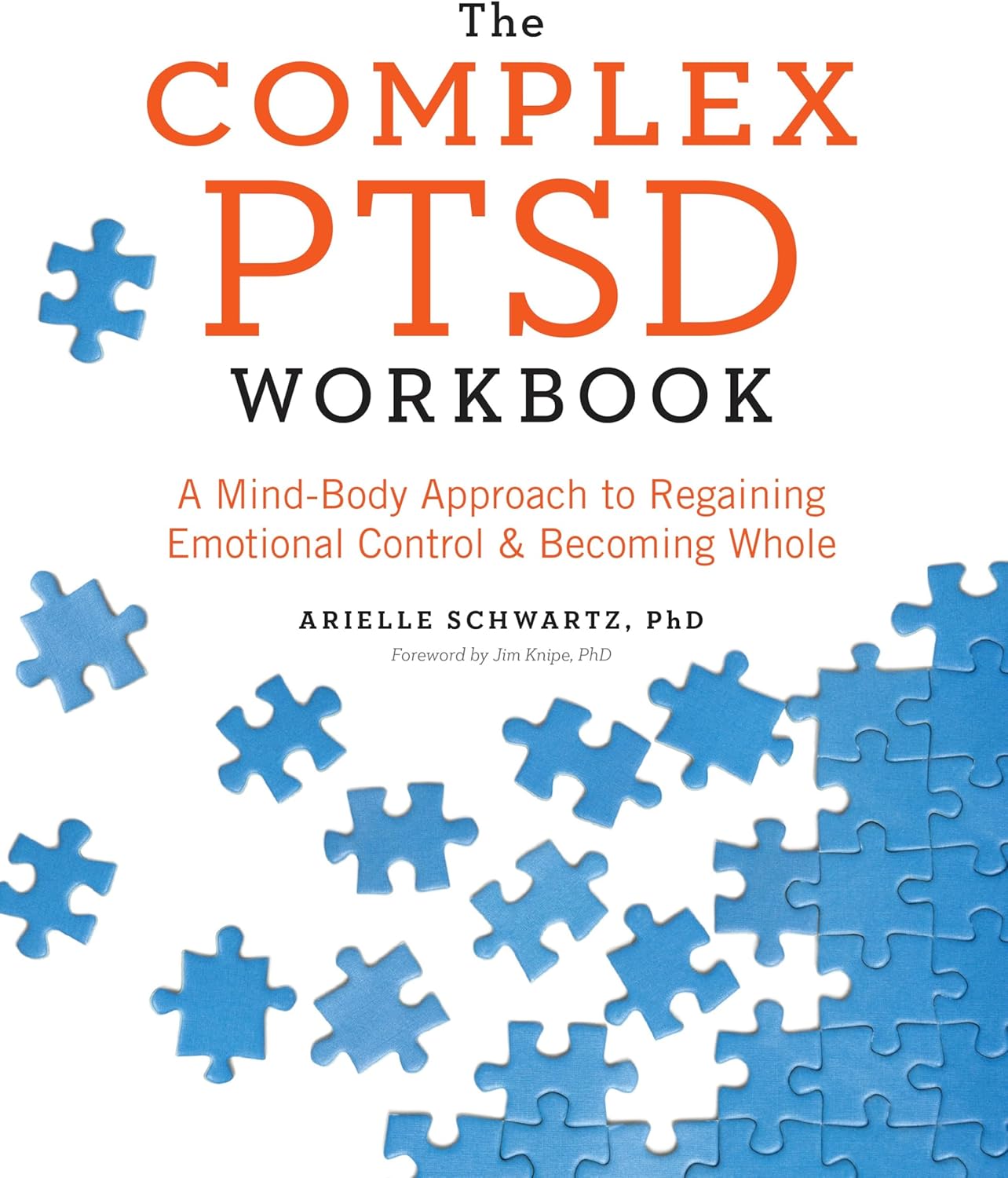
The Complex PTSD Workbook
Arielle Schwartz, PhD
A mind-body approach to regaining emotional control and becoming whole with evidence-based exercises.
As an Amazon Associate, Clarity House Press earns from qualifying purchases. Your price is never affected.
Found this helpful?
Share it with someone who might need it.
About the Author

Clarity House Press
Editorial Team
The editorial team at Clarity House Press curates and publishes evidence-based content on narcissistic abuse recovery, high-conflict divorce, and healing. Our content is informed by research, survivor experiences, and established trauma-informed approaches.
View all posts by Clarity House Press →Published by Clarity House Press Editorial Team