Please read our important disclaimers before using this content
Composite account: this narrative is drawn from common survivor experiences. Names, occupations, and identifying details are illustrative and do not depict a single real person.
I have 28 students in my third-grade classroom. I know which one forgets to eat breakfast and needs a granola bar. I know which one struggles with reading and needs extra patience. I know which one is being bullied and needs a safe person to talk to.
I recognize the signs. I intervene. I protect them. I build them up. I send them home each day hopefully a little more confident, a little more loved, a little more equipped for the world.
And then I go home to my empty apartment and call my twin sons, who are being systematically turned against me, and I can't protect them at all.
The irony is so painful I sometimes can't breathe.
The Professional Wound
Being a teacher going through high-conflict divorce adds a layer of complexity most people don't understand. My professional identity is built on nurturing children—and I'm losing my own.
What my students get from me:
- Patience when they struggle
- Encouragement when they doubt themselves
- Protection from bullies
- A safe space to be themselves
- Consistent, reliable care
- Someone who believes in them
What my sons get:
- A mother who tells them I'm dangerous
- Confusion about why daddy doesn't live with them anymore
- Limited time with me (only 40% custody)
- Anxiety during transitions
- Mixed messages about who I am
- Someone who's fighting an uphill battle for their love
I can create a safe, nurturing environment for 28 kids who aren't mine. But I can't create that for the two who are.
The Day It Hit Me Hardest
It was during parent-teacher conferences. A mother came in to discuss her son's behavioral issues—aggression, defiance, emotional outbursts.
I gently asked about home life. She broke down. Recent divorce. High conflict. Her ex was telling their son that she was a bad mom. The child was acting out his confusion and pain.
I gave her resources. Recommended a child therapist. Validated her struggle. Explained what I was seeing in her son and how we could support him together.
She thanked me, tears in her eyes. Said I understood her son better than anyone. Said she was so grateful her child had a teacher who cared.
And all I could think was: My sons don't have this. They have a mother who's doing to them exactly what's being done to this boy, and I can't intervene. I'm on the other side of this equation. I'm the targeted parent who can't protect his kids from the damage.
I went to my car after conferences and cried for an hour.
The Professional Vulnerability
Being a teacher also makes you professionally vulnerable during high-conflict custody.
The smear campaign at my workplace:
My ex knows I work at the local elementary school (not where my sons attend, thankfully). She's tried to:
- Call my principal with "concerns" about my "mental stability"
- Suggest to other parents that I'm "inappropriate" with children (horrifying)
- Imply I'm "too stressed" to be effective in my classroom
- Spread rumors in the community about why we divorced
Why this is particularly effective:
Teachers are held to higher moral and professional standards. Any hint of impropriety or instability can damage my career. She knows this.
My principal has been supportive (and has documented her calls as harassment), but the fact remains: my profession makes me an easier target. All she has to do is plant seeds of doubt.
The ironic twist:
I chose teaching specifically because I love kids. I wanted to make a difference in children's lives. And now that very identity is being weaponized against me.
What I See Every Day That Breaks My Heart
Working with children daily while my own sons are being manipulated creates a constant, painful awareness.
I can spot the signs:
When I see a student:
- Acting out after parental transitions
- Repeating adult narratives that don't sound like kid-language
- Showing anxiety about expressing love for both parents
- Displaying loyalty conflicts
- Regressing behaviorally
I know exactly what's happening. I've had the training. I know child development. I understand trauma responses.
And when my own sons exhibit these exact behaviors, I can diagnose it but I can't fix it.
I know what they need:
My sons need:
- Consistent, predictable routines
- Freedom to love both parents without guilt
- Age-appropriate explanations for the divorce
- Protection from adult conflict
- Therapy to process their feelings
They're getting:
- Manipulation and inconsistency
- Guilt for loving me
- Adult narratives about how bad I am
- Front-row seats to their mother's conflict
- No therapy (she refuses to allow it)
I can provide what my students need. I can't provide what my sons need. I don't have enough time with them, enough authority, enough access.
The Classroom as Refuge and Reminder
My classroom is both a sanctuary and a source of pain.
The sanctuary part:
When I'm teaching, I'm competent. I'm effective. I'm making a difference. For 7 hours a day, I'm good at this. I matter. I'm succeeding.
I need that. When everything in my personal life feels like failure, my classroom reminds me I'm not useless. I can still nurture. I can still protect. Just... not my own kids.1
The painful part:
Every single day, I'm surrounded by 6-7 year olds—the exact age of my twins.
When I'm reading to my class, I think about how Mateo and Miguel used to curl up next to me for bedtime stories.
When I'm mediating a conflict between students, I think about how I can't mediate the conflict in my sons' hearts.
When I'm celebrating a student's birthday, I think about how I might not get to see my sons on their next birthday (it falls during her custody week, and she's already said I can't attend their party).
When a student's parent shows up for our classroom celebration, I think about the father-son breakfast I had to miss because the court hadn't yet given me custody that day of the week.
My students are a constant mirror of what I'm losing.
The Guilt
I carry guilt that's specific to being a teacher-parent in this situation:
Guilt #1: Am I giving my students what my sons need?
Some days, I come home from giving my all to 28 kids and I'm too depleted to be fully present during my call with my sons. I've nurtured everyone else's children and I have nothing left for my own.
Guilt #2: Am I using my students as substitute children?
I've caught myself being extra nurturing to the twin boys in my class. They're not my sons, but they're the same age, same energy. Am I crossing professional boundaries by pouring into them what I can't give Mateo and Miguel? Research on secondary traumatic stress in helping professionals demonstrates that caregivers experience unique psychological burdens when they cannot apply their expertise to protect their own families.23
Guilt #3: Should I have chosen a different career?
If I worked in tech or business or construction, would I have more money for attorney fees? Would I be less professionally vulnerable to her smear campaigns? Would I have a more "flexible" schedule that the court preferred?
Did my choice to be a teacher contribute to losing my sons?
Guilt #4: Am I failing both sets of children?
My students deserve a teacher who's fully present, not one processing grief and trauma. My sons deserve a father who can protect them, not one who's powerless. Am I failing everyone?
What My Teacher Training Taught Me (That I Can't Use)
The most painful part? I have the knowledge. I have the training. I know exactly what's happening and what should be done.
I can identify the alienation tactics:
- Badmouthing the other parent
- Limiting contact and communication
- Creating the impression the other parent is dangerous
- Fostering dependency and loyalty conflicts
- Presenting the child with a negative view of the other parent4
These behaviors align with what researchers identify as parental alienation patterns that cause documented harm to children. They're the same manipulation tactics used by narcissists in adult relationships, now weaponized through children. I could teach a course on this. But I can't stop it from happening to my own children.
I know the developmental impact:
Children exposed to parental alienation experience:
- Attachment difficulties
- Anxiety and depression
- Distorted thinking patterns
- Relationship difficulties later in life
- Cognitive dissonance
- Loss of a parent (emotional abandonment)56
Research demonstrates these developmental impacts extend into adulthood, affecting relationship quality and mental health outcomes.7 I know what this is doing to Mateo and Miguel's developing brains. I can see it happening. And I'm powerless to prevent it.
I know what intervention looks like:
What my sons need:
- Family therapy with a specialist in parental alienation
- Court-appointed special advocate
- Possibly reunification therapy
- Custody arrangement that limits one parent's ability to alienate
- Consequences for the alienating parent
What we have:
- No therapy (she blocks it)
- Court date 4 months away
- Status quo custody that enables her behavior
- No consequences for her alienation
My professional expertise is useless here.
The Questions My Sons Ask
The hardest part of being a teacher is I know what questions mean what. When my students ask certain questions, I know what's really happening at home.
So when my sons ask me questions during our weekly calls, I hear what they're really saying:
They ask: "Daddy, do you not want to see us more often?" I hear: Someone is telling them I'm choosing not to see them (not that I'm fighting for more custody).
They ask: "Why did you leave mommy?" I hear: They've been told I abandoned the family (not that the relationship was unhealthy).
They ask: "Are you mean to mommy?" I hear: They're being told I'm abusive.
They ask: "Do you still love us?" I hear: They're being told my love is conditional or withdrawn.
I know these aren't their organic questions. These are her narratives, packaged as innocent kid-language. I've seen it hundreds of times with my students.
But knowing doesn't make it easier. If anything, it makes it harder. I can see the manipulation so clearly, and I still can't stop it.
What I Tell My Students vs. What I Tell My Sons
The dissonance between my professional advice and my personal reality is devastating.
To my students, I say: "Both your parents love you. Sometimes grown-ups can't be together anymore, but that doesn't change how much they love you."
To my sons, I want to say: "Your mother is lying to you. I didn't leave you. I left a relationship that was destroying me. I'm fighting for more time with you. None of this is your fault, and none of what she's saying is true."
But I can't say that. It would make me the alienating parent. So instead I say the same thing I tell my students, even though my sons are being told the opposite.
To my students, I say: "It's okay to love both your parents. You don't have to choose."
To my sons, I want to say: "I know she's making you feel like loving me means betraying her. That's not true. That's manipulation."
But I can't say that either. So I just repeat, "I love you no matter what. Nothing will change that."
To my students, I say: "If something at home is confusing or scary, you can talk to me."
To my sons, I want to say: "What she's doing is wrong. It's called parental alienation and it's abuse."
But I say nothing. Because they're six. Because I don't want to put them in the middle. Because I'm trying to be the healthy parent.
Even though it's killing me.
The Other Teachers Know
My colleagues know what I'm going through. Teachers are perceptive—we see patterns. We recognize trauma. We've all worked with kids from high-conflict divorces.
They've been incredible:
- Covering my class when I have emergency court dates
- Letting me vent in the teacher's lounge
- Reminding me I'm a good father when I doubt myself
- Sharing their own custody battle stories
- Validating that what I'm experiencing is real
But they also see the irony. The painful, terrible irony of the child development expert who can't protect his own children.
One colleague said to me: "Carlos, you're doing everything right. The problem is you're doing it in a broken system against someone with no conscience. That's not a failure of your parenting or your knowledge. That's the nature of what you're up against."
It helped. A little.
But I still go home to an empty apartment and cry into my pillow because my professional expertise means nothing when the court gives her primary custody and the power to block therapy.
What Keeps Me Going
Some days, I don't know how I keep showing up. But I do. Here's why:
My students need me. Even on days I'm struggling, those 28 kids deserve my best. They deserve a safe, nurturing classroom. I won't let my pain diminish what I give them.
My sons need me to model resilience. Even if I can't protect them right now, I can show them what it looks like to keep going. To stay consistent. To not give up.
I'm planting seeds. Every child I impact is a child who might grow up to be a better partner, a better parent, a healthier adult. If I can't save my own sons (yet), maybe I can save someone else's.
My professional expertise will matter eventually. Right now, my sons are too young to understand. But when they're 12, 16, 25—my knowledge will help me navigate those stages. I'm playing the long game.
I'm not powerless, even when it feels like I am. I document. I show up. I love them unconditionally. I fight legal battles. I take care of myself so I can keep fighting. Understanding why co-parenting isn't possible in high-conflict cases helped me stop trying to collaborate and start focusing on parallel parenting instead. That's not nothing.
To Other Helping Professionals in This Situation
If you're a teacher, therapist, social worker, pediatrician, coach, or anyone whose profession is caring for children—and you're going through this—I see you. Research demonstrates that caregivers experience unique psychological burdens when they cannot apply their expertise to protect their own families.23
I see the extra layer of pain. The professional wound. The irony that's so sharp it cuts every single day.
I see how it feels to be competent and effective with other people's children while feeling helpless with your own.
I see how your expertise makes it worse because you can diagnose everything you can't fix.
I see how your professional vulnerability makes you an easier target.
I see you. And I want you to know:
You are not failing. You're fighting an unfair fight against someone who doesn't play by rules.
Your professional knowledge matters. Even if it doesn't feel like it right now. It will matter in the long run.
You can't pour from an empty cup. Take care of yourself so you can keep showing up—professionally and personally.
Your children will remember who stayed consistent. Even if they can't appreciate it now. Research demonstrates that consistent paternal presence, even in high-conflict situations, provides long-term protective factors for children's development.8 The high-conflict custody basics guide can help you understand which legal strategies are most likely to preserve your relationship with your children.
We'll get through this. Keep showing up. Keep documenting. Keep loving your kids.
And keep teaching. Those other kids need us too.
Resources
Legal and Custody Support:
- American Bar Association Family Law Section - Find family law attorneys
- Legal Services Corporation - Find free legal aid
- LawHelp.org - State-specific legal resources
- TalkingParents - Court-admissible documentation platform
- OurFamilyWizard - Court-admissible documentation platform
Mental Health and Professional Support:
- Psychology Today Therapist Finder - Find custody and trauma therapists
- National Alliance on Mental Illness (NAMI) - Mental health support
- SAMHSA National Helpline - 1-800-662-4357 (24/7)
Crisis Support:
- 988 Suicide & Crisis Lifeline - Call or text 988 (24/7)
- Crisis Text Line - Text HOME to 741741
References
Composite account: this narrative is drawn from common survivor experiences. Names, occupations, and identifying details are illustrative and do not depict a single real person.
References
- Kelly, J. B., & Wallerstein, J. S. (1976). The effects of parental divorce: Experiences of the child in early latency. American Journal of Orthopsychiatry, 46(1), 20-32. https://doi.org/10.1111/j.1939-0025.1976.tb00082.x ↩
- Buchanan, C. M., Maccoby, E. E., & Dornbusch, S. M. (1991). Caught between parents: Adolescents' experience in divorced homes. Child Development, 62(5), 1008-1029. https://doi.org/10.2307/1131151 ↩
- Lease, McFall, Treat, & Viken (2003). Assessing Children’s Representations of their Peer Group Using a Multidimensional Scaling Technique. Journal of Social and Personal Relationships. https://doi.org/10.1177/0265407503206001 ↩
- Wallerstein, J. S., Lewis, J. M., & Blakeslee, S. (2000). The unexpected legacy of divorce: A 25 year landmark study. Hyperion. ↩
- May, & Brown (1984). Welcome Stress! It Can Help You Be Your Best. Family Relations. https://doi.org/10.2307/584728 ↩
- Afifi, T. D., & Schrodt, P. (2003). Uncertainty and the avoidance of the state of one's family in stepfamilies. Journal of Social and Personal Relationships, 20(6), 729-755. https://doi.org/10.1177/0265407503206001 ↩
- Buchanan, C. M., Maccoby, E. E., & Dornbusch, S. M. (1992). Adolescents after divorce. Harvard University Press. ↩
- Figley, C. R. (2002). Treating compassion fatigue. Brunner-Routledge. ↩
- Bride, B. E., Jones, J. L., & MacMaster, S. A. (2007). Correlates of the trauma proxyism in the National Child Traumatic Stress Network. Journal of Social Work Education, 43(3), 440-454. https://doi.org/10.5175/JSWE.2007.200600589 ↩
- Fabricius, W. V., & Luecken, L. J. (2007). Postdivorce living arrangements, parent conflict, and long-term father-child relationship. Journal of Family Psychology, 21(2), 195-205. https://doi.org/10.1037/0893-3200.21.2.195 ↩
Recommended Reading
From Clarity House Press — plus trusted books for deeper understanding

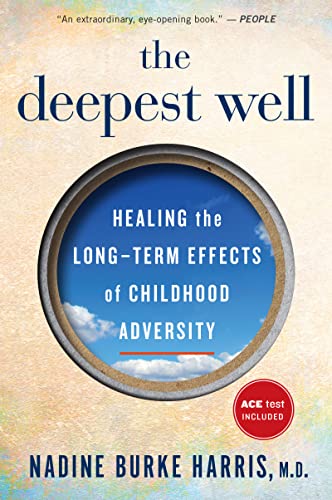
The Deepest Well
Nadine Burke Harris, M.D.
A pediatrician's clear explanation of how adverse childhood experiences affect lifelong health — and what recovery can look like.

Waking the Tiger: Healing Trauma
Peter A. Levine & Ann Frederick
An introduction to Somatic Experiencing and the body's innate capacity to release trauma and restore balance.
As an Amazon Associate, Clarity House Press earns from qualifying purchases. Your price is never affected.
Found this helpful?
Share it with someone who might need it.
About the Author

Clarity House Press
Editorial Team
The editorial team at Clarity House Press curates and publishes evidence-based content on narcissistic abuse recovery, high-conflict divorce, and healing. Our content is informed by research, survivor experiences, and established trauma-informed approaches.
View all posts by Clarity House Press →Published by Clarity House Press Editorial Team