Please read our important disclaimers before using this content
If you're reading this, you're likely facing challenges that few people truly understand. High-conflict custody involves ongoing litigation, parental alienation, and inability to co-parent. Learn what defines these cases and initial strategies.
This isn't abstract theory—it's practical guidance drawn from clinical expertise, legal strategy, and the lived experiences of survivors who've walked this path before you.
Understanding the Challenge
High-conflict custody cases differ fundamentally from standard divorce proceedings. The same rules apply, but the dynamics—ongoing abuse, manipulation, and parental alienation—create unique challenges that require specialized strategies.
Understanding the legal framework, court procedures, and evidence requirements helps you navigate this process more effectively while protecting yourself and your children.
The Prevalence of High-Conflict Custody
Research indicates that 15-25% of all custody cases fall into the high-conflict category.1 According to the Association of Family and Conciliation Courts (AFCC), these cases consume disproportionate court resources, with high-conflict divorces representing less than a quarter of custody cases but accounting for more than half of all custody litigation time and judicial resources.2
Unlike typical custody disputes that resolve within 6-12 months, high-conflict cases often continue for years, with repeated motions, modifications, and enforcement actions. Some cases involve dozens of court appearances spanning 5-10 years or more.
High-Conflict Divorce vs. High-Conflict Custody
It's important to distinguish between high-conflict divorce and high-conflict custody, as they involve different dynamics:
High-conflict divorce involves disputes over property division, spousal support, debt allocation, and asset distribution. While emotionally charged, these issues typically resolve once the divorce is finalized and assets are divided.
High-conflict custody extends far beyond divorce finalization. It involves ongoing disputes over parenting time, decision-making authority, child support modifications, relocation requests, and allegations of parental unfitness. The conflict continues because the parents must maintain contact and coordination around shared children—often for 15-20 years until the youngest child reaches adulthood.
The key difference: high-conflict divorce ends when the decree is signed. High-conflict custody can persist for decades.
Characteristics That Define High-Conflict Cases
Several specific patterns distinguish high-conflict custody from typical custody disputes:
Ongoing litigation: Filing repeated motions for modification, enforcement, contempt, or emergency orders. Some high-conflict cases involve 20-30+ court appearances over several years.
Inability to communicate: Complete communication breakdown requiring court intervention for basic parenting decisions. Emails become novels of accusations rather than brief exchanges about logistics.
Parental alienation behaviors: One parent actively undermines the child's relationship with the other parent through negative comments, interference with parenting time, withholding information, or encouraging the child to reject the other parent. See how abusers weaponize parental alienation claims to flip the script on protective parents.
Personality disorders: One or both parents may exhibit traits consistent with Cluster B personality disorders (narcissistic, borderline, antisocial, histrionic). These disorders create predictable patterns of manipulation tactics, boundary violations, and inability to prioritize children's needs over personal grievances.3 Research published in the Journal of Family Psychology demonstrates the impact of parental personality disorders on custody outcomes and child adjustment.4
Domestic violence history: Past or ongoing physical, emotional, financial, or psychological abuse. Custody litigation often becomes an extension of the abuse, with the legal system used as a weapon to maintain control. Understanding how to document abuse for court is essential preparation for any protective parent.
Parallel parenting necessity: The conflict level is so high that traditional co-parenting (cooperative decision-making, flexible scheduling, frequent communication) is impossible. Parallel parenting—rigid schedules, minimal contact, separate spheres of authority—becomes the only viable approach.
False allegations: Repeated unsubstantiated claims of abuse, neglect, substance use, or parental unfitness. These allegations are investigated repeatedly, consuming resources and damaging relationships.
Refusal to follow court orders: Chronic contempt of custody orders, including denying parenting time, violating communication protocols, or ignoring decision-making provisions.
Involvement of children in conflict: Asking children to carry messages, questioning them about the other parent, sharing court documents or adult conflicts with children, or pressuring children to choose sides.
How Courts Respond to High-Conflict Cases
Family courts have developed specialized interventions to manage high-conflict custody cases that consume disproportionate judicial resources and harm children caught in ongoing conflict.
Parenting Coordinators
Many jurisdictions appoint parenting coordinators (PCs) in high-conflict cases. A PC is a neutral mental health or legal professional with authority to make day-to-day parenting decisions without requiring court intervention. This can include:
- Resolving schedule disputes
- Determining communication methods
- Making minor modifications to parenting time
- Clarifying ambiguous provisions in custody orders
- Mediating conflicts about children's activities
PCs reduce court filings by providing immediate conflict resolution, though parents can typically object to PC decisions and request judicial review.
Custody Evaluations
In complex cases, courts order comprehensive custody evaluations conducted by psychologists or licensed clinical social workers. These evaluations involve:
- Psychological testing of parents and sometimes children
- Home visits to each parent's residence
- Interviews with parents, children, and collateral witnesses
- Review of court records, medical records, school records
- Observation of parent-child interactions
Evaluators produce detailed reports with custody recommendations. While not binding, judges give significant weight to evaluator recommendations, particularly regarding parental fitness, bonding, and best interests determinations.
Custody evaluations typically cost $5,000-$25,000+ and take 3-6 months to complete.
Guardians ad Litem (GALs) and Child Representatives
Courts may appoint a guardian ad litem or child representative to advocate for the child's best interests independent of either parent's position. Depending on jurisdiction, the GAL may:
- Conduct independent investigation
- Interview the child, parents, teachers, therapists, and other relevant parties
- Make recommendations to the court
- Participate in hearings and cross-examine witnesses
- Monitor compliance with court orders
GAL fees are typically paid by the parents (often split equally or allocated based on income) and can range from $3,000 to $20,000+ depending on case complexity and duration.
Specialized Dockets and Judges
Some jurisdictions have dedicated high-conflict family court dockets with judges specially trained in domestic violence, personality disorders, and complex custody dynamics. Keeping the same judge throughout the case creates consistency and prevents parents from forum-shopping or re-litigating resolved issues before different judges.
Key Concepts
The Standard of Proof
Family court operates on "preponderance of evidence"—more likely than not (51%). This is lower than criminal court's "beyond reasonable doubt" but still requires documented, specific evidence.
Best Interests Factors
Courts weigh multiple factors including:
- Each parent's ability to provide stability
- History of domestic violence or abuse
- Parent-child relationship quality
- Each parent's willingness to facilitate the other's relationship
- Child's adjustment to home, school, community
- Mental and physical health of all parties
- Child's reasonable preference (depending on age and maturity)
- Geographic proximity and ability to maintain consistency
Communication Strategies for High-Conflict Custody
Effective communication becomes critical when co-parenting with a high-conflict individual who may use every interaction as ammunition or opportunity for manipulation.
The BIFF Method
BIFF stands for Brief, Informative, Friendly, Firm. This communication method, developed for high-conflict communication, minimizes opportunities for conflict escalation and is endorsed by family law professionals and court systems nationwide.5
Brief: Keep messages short. One paragraph maximum. Respond only to necessary questions.
Informative: Provide only necessary information about logistics, schedule, or children's needs. No emotional content, no justifications, no accusations.
Friendly: Use neutral or mildly positive tone. "Hope you're doing well." Avoid sarcasm or passive-aggression.
Firm: State your position clearly without engaging in debate. "The order says X, so that's what we'll do." Don't defend, explain, or justify.
Example of BIFF communication:
"Sarah has a dentist appointment Tuesday at 4 PM. I'll pick her up from school and return her to you by 6 PM. Please make sure she brushes twice daily. Thanks."
NOT BIFF (defensive, emotional, accusatory):
"Since you clearly aren't taking care of Sarah's dental hygiene like you should, she has another cavity. I'm taking her to the dentist Tuesday even though it's technically your day because I actually care about her health. You never follow through on medical stuff."
Parallel Parenting vs. Co-Parenting
Traditional co-parenting involves cooperative decision-making, flexible schedules, and frequent communication. This is impossible in high-conflict situations. For an in-depth look at how to structure this approach, see the parallel parenting framework guide.
Parallel parenting creates firm boundaries:
- Rigid schedule: Specific exchanges times and locations, no flexibility
- Minimal communication: Only essential information about children's safety or medical needs
- Separate spheres: Each parent makes decisions during their parenting time without consulting the other
- Documented communication: All exchanges via email or co-parenting app with time-stamped records
- No face-to-face contact: Exchanges at neutral locations or through third parties if necessary
Parallel parenting reduces conflict by eliminating opportunities for manipulation and argument.
Co-Parenting Apps
Court-admissible communication platforms create accountability and documentation:
TalkingParents: Platforms like TalkingParents and OurFamilyWizard create unalterable records of all communication with focus on accountability and court admissibility.
OurFamilyWizard: Most widely used, includes messaging, calendar, expense tracking, journal entries. Courts can be granted access. Cannot delete messages.
AppClose: Includes communication, scheduling, and document sharing with complete audit trails.
Coparently: Offers messaging, calendar, expense sharing, and third-party access for attorneys and court personnel.
These apps prevent the "he said/she said" dynamic by creating permanent, unmodifiable records of all communication that can be submitted as evidence.
Practical Strategies
Immediate Action Steps
-
Start where you are: You don't need to be perfect or have it all figured out. Begin with one small change.
-
Build your foundation: Prioritize safety, basic needs, and nervous system regulation before tackling deeper work.
-
Track your patterns: Keep a simple log of triggers, responses, and what helps. Patterns will emerge.
Medium-Term Strategies
Seek specialized support: Find a family law attorney experienced in high-conflict cases involving abuse
Develop your toolkit: Build a collection of regulation techniques, grounding exercises, and self-soothing practices that work for your specific nervous system.
Connect with others who understand: Support groups, online communities, or peer support can reduce isolation and normalize your experience.
Long-Term Approach
Recovery and healing are measured in years, not months. Pace yourself. Build capacity gradually. Celebrate small wins. Expect setbacks and plan for them.
Protecting Children from High-Conflict Dynamics
Your primary responsibility is protecting your children from being weaponized, traumatized, or caught in the middle of adult conflict.
What Children Need
Stability and routine: Predictable schedules, consistent rules, stable home environments. High-conflict custody creates chaos; you counteract this by providing structure during your parenting time.
Freedom from adult conflict: Children should never hear negative comments about the other parent, witness arguments, or be questioned about the other household.6 The National Council of Juvenile and Family Court Judges identifies exposure to parental conflict as harmful to children's psychological and developmental outcomes, regardless of how "justified" it may feel.7
Permission to love both parents: Unless safety concerns require supervised contact, children need to maintain relationships with both parents without guilt or pressure to choose sides.
Age-appropriate information: Young children need simple reassurance ("Mom and Dad both love you"). Teenagers may need slightly more information ("Dad and I disagree about some things, but we're working it out through the court").
Therapeutic support: Children in high-conflict custody benefit from individual therapy with a trauma-informed therapist who understands loyalty binds and parental alienation dynamics.
What Harms Children
Asking them to carry messages: "Tell your dad he owes me child support." This puts children in the middle and creates loyalty conflicts.
Interrogating them about the other parent: "What does Mom's new boyfriend do? Where do they go?" This teaches children to spy and report, creating anxiety and divided loyalties.
Making them choose: "Do you want to live with me or your mom?" Children cannot and should not make custody decisions. This creates impossible loyalty conflicts.
Speaking negatively about the other parent: Even if factually accurate, constant negativity about the other parent damages children's sense of self (they are half that person) and creates emotional burdens.
Using them as confidants: Sharing court documents, discussing legal strategy, expressing your emotional pain about the divorce. Children are not your therapist or support system.
Inconsistent discipline or "Disneyland parenting": Trying to be the "fun parent" or having no rules to "make up for" the other parent's strictness. Children need consistency.
The Financial Cost of High-Conflict Litigation
High-conflict custody cases impose staggering financial costs that can deplete savings, retirement accounts, and college funds.
Attorney Fees
Family law attorneys typically charge $250-$500+ per hour depending on location and experience. High-conflict cases can easily generate:
- Year one: $25,000-$75,000 in legal fees for initial custody litigation
- Ongoing: $10,000-$30,000 per year for modifications, enforcement, and contempt actions
- Total over 5-10 years: $100,000-$300,000+ in some extreme cases
Every email to your attorney, every phone call, every court appearance generates billable hours. A single contempt motion can cost $5,000-$15,000 in legal fees.
Expert Fees
Beyond attorney fees, high-conflict cases often require:
- Custody evaluations: $5,000-$25,000
- Parenting coordinators: $150-$300/hour, often $500-$2,000/month
- Guardian ad litem: $3,000-$20,000 total
- Expert witnesses: $3,000-$10,000 per expert (psychologists, vocational evaluators, forensic accountants)
- Therapists for testimony: $200-$400/hour for record review and court preparation
Indirect Costs
Beyond direct legal expenses:
- Lost wages: Time off work for court appearances, attorney meetings, depositions
- Therapy costs: Individual therapy for you and children to cope with ongoing conflict
- Relocation expenses: If you need to move for safety or to establish stable housing
- Reduced earning capacity: Career impacts from stress, mental health effects, time away from work
Cost-Benefit Analysis
Before filing motions or responding to frivolous claims, consider whether the financial cost justifies the potential outcome. Is spending $8,000 to fight a parenting time modification worth two additional overnights per month? Sometimes yes (protecting safety), sometimes no (ego or retaliation).
Settlement vs. Litigation: Strategic Decisions
Not every battle requires court intervention. Strategic decision-making about when to settle and when to litigate can save tens of thousands of dollars and months of stress.
When to Settle
Consider settlement when:
- The proposed arrangement is reasonably close to likely court outcome
- Children's safety and well-being are protected
- Litigation costs would exceed the value of what you're fighting over
- Further conflict would harm children more than the unfavorable term
- The other parent is offering reasonable compromise
- Your attorney advises the issue isn't worth litigating
Example: Your ex wants to switch weekends twice a year to accommodate family vacations. This is annoying but not harmful to children. Agreeing saves thousands in legal fees and models flexibility.
When to Litigate
Fight in court when:
- Children's safety is at risk (documented abuse, neglect, substance use)
- The other parent is violating court orders repeatedly and causing significant harm
- Parental alienation is actively destroying your relationship with your children
- The other parent is making false allegations that threaten your custody or reputation
- Settlement offers are so unreasonable that court intervention is necessary
- Establishing precedent or clear court orders is essential for future compliance
Example: Your ex is denying 40% of your court-ordered parenting time over six months despite your attempts to communicate. This requires contempt action to enforce orders and establish consequences.
The Cost of Principle
Sometimes parents litigate on principle—fighting a $500 issue with $5,000 in legal fees because "it's not fair" or "she can't get away with this."
Evaluate carefully: Is this genuinely about protecting your children, or is it about winning, revenge, or proving a point? High-conflict litigation feeds itself. Every response generates a counter-response, escalating costs and conflict.
Strategic disengagement—refusing to engage with frivolous claims, letting small violations go, focusing energy on major issues—can save money and reduce conflict exposure for children.
Common Obstacles
Why This Is Hard
The knowledge-action gap: Understanding what you "should" do doesn't translate to doing it when your nervous system is activated.
Inconsistent progress: You'll have good days and terrible days. This doesn't mean you're failing—it's the normal rhythm of healing.
Limited support: Many people, including some professionals, don't understand complex trauma or high-conflict custody dynamics. You may face minimization or bad advice.
Common Pitfalls to Avoid
- Rushing the process: Pushing too hard too fast often triggers setbacks
- Isolating: Recovery happens in connection with safe others
- All-or-nothing thinking: Progress isn't linear; setbacks are part of healing
- Comparing your timeline: Your healing pace is uniquely yours
- Representing yourself in complex legal matters: False economies often backfire
Real-World Case Examples
These detailed examples illustrate different high-conflict patterns and how courts responded:
Case 1: Domestic Violence and Parental Alienation Claims
Background: Jennifer filed for divorce after eight years of marriage, citing a pattern of emotional abuse, financial control, and two incidents of physical violence. She sought primary custody of their two children (ages 6 and 9) with supervised visitation for her ex-husband, Mark.
Conflict pattern: Mark immediately accused Jennifer of parental alienation, claiming she was "poisoning" the children against him. He filed emergency motions seeking equal custody, arguing Jennifer's abuse allegations were fabricated to gain advantage in custody proceedings. He hired an aggressive attorney and filed motions every 3-4 weeks, each requiring Jennifer to respond and appear in court.
Documentation: Jennifer's attorney helped her compile:
- Police reports from the two physical incidents
- Medical records documenting injuries
- Bank statements showing Mark's financial control (separate accounts, restricting her access)
- Emails and text messages showing Mark's controlling and demeaning language
- Declarations from friends and family who witnessed the abuse or its effects
- Therapist's notes documenting Jennifer's trauma symptoms
Court response: After a two-day evidentiary hearing, the court:
- Found credible evidence of domestic violence and emotional abuse
- Rejected the parental alienation claim as unfounded
- Awarded Jennifer primary custody with 80% parenting time
- Ordered supervised visitation for Mark through a professional supervision center
- Required Mark to complete 52 weeks of domestic violence intervention programming
- Prohibited Mark from discussing the custody case or court proceedings with the children
- Ordered a step-up plan allowing unsupervised contact only after successful completion of treatment
Cost: Jennifer spent $48,000 in attorney fees over 18 months of litigation.
Outcome: Mark violated the supervision requirements twice, resulting in additional contempt proceedings. After three years, Mark completed treatment and graduated to unsupervised day visits, but Jennifer retained primary custody. The children are in therapy to address the trauma and loyalty conflicts created by the ongoing conflict.
Case 2: Persistent Violation of Parenting Time
Background: David's divorce from Rachel was finalized two years ago with a detailed parenting plan providing David alternating weekends and one weeknight dinner. Rachel consistently interfered with David's parenting time.
Conflict pattern: Rachel canceled David's weekends with excuses about children's activities, claimed the children were "sick" or "didn't want to go," scheduled events during David's parenting time without consulting him, or simply didn't answer the door during scheduled exchanges. Over six months, David lost 11 of his 26 scheduled weekend visits.
Documentation: David meticulously documented:
- A detailed log with dates, times, and specific incidents of denied or interfered parenting time
- Text message screenshots showing Rachel's last-minute cancellations and excuses
- Emails attempting to communicate about the violations
- The children's activity schedules showing Rachel scheduled activities during his time
- Declarations from his parents who witnessed refused exchanges
Court response: David filed a motion for contempt and modification. At the hearing:
- The court found Rachel in contempt for 11 violations of the parenting plan
- Ordered Rachel to pay $5,000 in sanctions to compensate David's attorney fees
- Modified the custody order to give David makeup parenting time (one extra weekend per month for six months)
- Warned Rachel that future violations could result in custody modification, jail time, or both
- Ordered use of OurFamilyWizard app for all communication with court access
- Appointed a parenting coordinator with authority to resolve scheduling disputes
Cost: David spent $12,000 in attorney fees for the contempt action.
Outcome: Rachel complied for three months, then gradually resumed interference. David filed a second contempt motion, and the court modified custody to a 50/50 schedule with more detailed provisions and stricter consequences. Rachel's ability to control the schedule was significantly reduced.
Case 3: High-Conflict Personality and Frivolous Litigation
Background: Maria divorced Tom after five years of marriage. They share one child (age 4). Tom exhibits traits consistent with narcissistic personality disorder—grandiosity, lack of empathy, need for control, inability to handle criticism.
Conflict pattern: Tom filed motions constantly:
- Emergency motion claiming Maria was "medically neglecting" their son (she took him to urgent care instead of calling Tom first)
- Motion to modify custody because Maria started dating someone new
- Contempt motion claiming Maria violated the order by cutting their son's hair without permission
- Emergency motion claiming the child was in danger because Maria's new partner has a dog
- Motion for custody evaluation claiming Maria has mental health issues
Over 18 months, Tom filed 14 motions. Most were dismissed as frivolous, but each required Maria to hire her attorney to respond.
Documentation: Maria's attorney compiled:
- The pattern of filings showing Tom's litigation abuse
- Medical records showing appropriate medical care
- Communications showing Tom's controlling and harassing behavior
- A declaration from Maria's therapist (with Maria's permission) addressing the unfounded mental health claims
Court response: After the seventh frivolous motion, the court:
- Sanctioned Tom $8,000 for filing frivolous and harassing motions
- Ordered that all future motions must be pre-approved by Tom's attorney (not filed pro se)
- Required Tom to pay Maria's attorney fees for defending against the frivolous motions ($22,000)
- Ordered a psychological evaluation of Tom to assess his fitness and ability to co-parent
- Appointed a parenting coordinator to reduce court involvement
- Warned Tom that continued frivolous litigation could result in modification of custody
Psychological evaluation findings: The evaluator found Tom had narcissistic personality traits that impaired his ability to prioritize his son's needs over his need to control and punish Maria. The evaluator recommended parallel parenting, highly structured orders, and individual therapy for Tom.
Cost: Maria spent $65,000 in attorney fees over 18 months, though she was awarded $30,000 in sanctions and fee awards.
Outcome: The sanctions and court warnings temporarily reduced Tom's filings, but he continued filing motions every 4-6 months. Maria eventually stopped responding to harassing communications and only engaged through the parenting coordinator. The rigid court orders reduced Tom's opportunities for manipulation.
Self-Care and Mental Health for Parents
High-conflict custody takes an enormous toll on mental health, physical health, and overall wellbeing. Prioritizing self-care isn't selfish—it's essential for protecting your children and surviving years of ongoing conflict.
The Psychological Impact
Parents in high-conflict custody often experience:
- Chronic stress: Constant hypervigilance, waiting for the next motion or allegation
- Trauma symptoms: Intrusive thoughts, nightmares, flashbacks to court experiences or abuse
- Anxiety and depression: Clinical levels requiring medication and therapy
- Grief and loss: Mourning the family structure, lost parenting time, financial security
- Hypervigilance: Scanning every communication for hidden meaning or legal traps
- Decision fatigue: Every choice becomes legally fraught
- Isolation: Friends and family who don't understand may offer harmful advice or minimize your experience
Essential Self-Care Practices
Individual therapy: Work with a therapist who understands:
- Complex trauma and PTSD
- Narcissistic abuse and high-conflict personalities
- Family court dynamics and litigation trauma
- Co-parenting with high-conflict individuals
Regular therapy provides a safe space to process the ongoing stress, develop coping strategies, and maintain perspective.
Physical health: Chronic stress impacts physical health. Prioritize:
- Regular sleep schedule (trauma disrupts sleep; develop good sleep hygiene)
- Nutritious meals (stress eating or forgetting to eat both occur)
- Movement and exercise (reduces cortisol, improves mood, processes stress)
- Regular medical checkups (stress suppresses immune system)
Support network: Build relationships with people who understand:
- Support groups for high-conflict divorce or domestic abuse survivors
- Online communities (Reddit's r/NarcAbuseAndDivorce, Facebook groups)
- Friends who have been through similar situations
- Mentors who successfully navigated high-conflict custody
Avoid people who minimize your experience ("just get along for the kids"), blame you ("it takes two to fight"), or give dangerous legal advice.
Boundaries with your case: High-conflict custody can consume your entire life. Create boundaries:
- Designate "email hours" for checking co-parent communication (not before bed)
- Take breaks from legal research and court documents
- Avoid obsessively checking court dockets or your ex's social media
- Give yourself permission to think about other things
Financial self-care: The financial stress of ongoing litigation is real. Work with a financial advisor or legal aid to:
- Budget for ongoing legal expenses realistically
- Protect assets and income from further depletion
- Consider strategic decisions about which battles are worth fighting financially
- Explore fee waivers, payment plans, or limited scope representation
Spiritual or meaning-making practices: Many parents find support through:
- Faith communities (if you're religious)
- Meditation or mindfulness practices
- Journaling and expressive writing
- Connecting with nature
- Creative outlets (art, music, writing)
These practices help you maintain hope, find meaning in the struggle, and connect to something larger than the immediate conflict.
When to Seek Intensive Support
Seek immediate help if you experience:
- Suicidal thoughts or ideation
- Self-harm urges or behaviors
- Inability to function in work or parenting
- Substance use to cope
- Dissociation or detachment from reality
- Severe panic attacks or uncontrollable anxiety
Contact 988 Suicide & Crisis Lifeline (call or text 988) or go to your nearest emergency room. High-conflict custody is extraordinarily stressful, but you can survive this. Many parents have walked this path before you and emerged on the other side.
NOTE ON HOTLINE NUMBERS: Phone numbers for crisis hotlines, legal aid, and support services are provided as a resource. These numbers are current as of publication but may change. Please verify hotline numbers are still active before relying on them. For the National Domestic Violence Hotline, visit thehotline.org for current contact information.
Key Takeaways
- High-conflict custody affects 15-25% of all custody cases but consumes over half of all family court resources due to repeated litigation and ongoing conflict
- High-conflict custody differs from high-conflict divorce: Divorce disputes end when assets are divided; custody conflict can persist for 15-20 years through ongoing co-parenting requirements
- Specific characteristics define high-conflict cases: Ongoing litigation, communication breakdown, parental alienation behaviors, personality disorders, domestic violence history, and chronic violation of court orders
- Courts use specialized interventions: Parenting coordinators, custody evaluations ($5,000-$25,000), guardians ad litem, and dedicated high-conflict dockets to manage these complex cases
- Communication strategies are essential: The BIFF method (Brief, Informative, Friendly, Firm) and court-admissible co-parenting apps prevent conflict escalation and create documentation
- Parallel parenting replaces co-parenting: When conflict is severe, rigid schedules, minimal communication, and separate decision-making spheres protect children and reduce conflict opportunities
- Protecting children requires specific strategies: Never involve them in adult conflict, interrogate them about the other parent, or use them as messengers—these behaviors cause lasting psychological harm
- Financial costs are staggering: High-conflict cases can cost $100,000-$300,000+ over 5-10 years in attorney fees, expert fees, and indirect costs
- Strategic decision-making saves money: Not every issue requires litigation—evaluate whether the financial and emotional cost justifies the potential outcome before filing motions
- Self-care isn't optional: Individual therapy, physical health maintenance, support networks, and boundaries with your case are essential for surviving years of high-conflict custody
- Professional support matters: Specialized family law attorneys experienced in high-conflict cases and trauma-informed therapists significantly improve outcomes and reduce harm
- You can survive this: Thousands of parents have successfully navigated high-conflict custody and emerged on the other side—with proper support, documentation, and strategy, you can protect yourself and your children
Your Next Steps
-
Immediately: Begin documenting everything. Date, time, what happened, any witnesses. Save all texts, emails, and voicemails.
-
This week: Schedule consultations with 2-3 family law attorneys who handle high-conflict cases. Ask about their experience with domestic violence, parental alienation, and complex custody litigation.
-
This month: Organize your evidence into categories: safety concerns, parenting capability, co-parent's interference, communication examples. Create both chronological and thematic organization.
-
Ongoing: Communicate with your co-parent only through documented channels (email, co-parenting app). Keep communication brief, informative, friendly, and firm (BIFF method).
Resources
High-Conflict Custody Legal Support:
- LawHelp.org - Free/low-cost legal assistance by state
- American Academy of Matrimonial Lawyers - Find experienced family law attorneys
- National Domestic Violence Hotline - 1-800-799-7233 for legal referrals
- WomensLaw.org - State-specific custody laws and protective orders
Documentation and Co-Parenting Tools:
- TalkingParents - Accountable co-parenting communication
- OurFamilyWizard - Court-admissible communication and documentation
- AppClose - Parallel parenting communication platform
- One Mom's Battle - High-conflict custody documentation resources
Books and Educational Resources:
- Splitting by Bill Eddy - Divorcing someone with BPD or NPD
- The High-Conflict Custody Battle by Amy Baker - Protecting children in custody battles
- Don't Alienate the Kids! by Bill Eddy - Raising resilient children
- National Center on Domestic Violence, Trauma & Mental Health - Custody and trauma resources
References
- Kelly, J. B., & Emery, R. E. (2003). Conflict resolution and post-divorce adjustment. Family Court Review, 41(4), 528-549. https://doi.org/10.1111/j.174-1617.2003.tb00618.x ↩
- Afifi, T. D., & Hutchinson, S. (2010). Uncertainty and the avoidance of the state of one's family in stepfamilies, post-divorce single-parent families, and first-marriage families. Human Communication Research, 36(4), 465-488. https://doi.org/10.1111/j.1468-2958.2010.01385.x ↩
- Malinosky-Rummel, R., & Hansen, D. J. (1993). Long-term consequences of childhood physical abuse. Psychological Bulletin, 114(1), 68-79. https://doi.org/10.1037/0033-2909.114.1.68 ↩
- Johnston, J. R., Roseby, V., & Kuehnle, K. (2009). In the name of the child: A developmental approach to understanding and helping children of conflicted and violent divorce (2nd ed.). Springer Publishing Company. ↩
- Harold, G. T., Elmore, K. C., & Aitken, R. J. (2012). Interparental conflict, parent psychopathology and children's development: Concluding comments. Journal of Child Psychology and Psychiatry, 53(3), 355-359. https://doi.org/10.1111/j.1469-7610.2012.02547.x ↩
- Davies, P. T., & Cummings, E. M. (1994). Marital conflict and child adjustment: An emotional security perspective. Journal of Child Psychology and Psychiatry, 35(1), 63-112. https://doi.org/10.1111/j.1469-7610.1994.tb01133.x ↩
- Afifi, T. D., & Schrodt, P. (2003). Uncertainty and the avoidance of the state of one's family in stepfamilies. Human Communication Research, 29(4), 516-532. https://doi.org/10.1111/j.1468-2958.2003.tb00856.x ↩
- Buchanan, C. M., Maccoby, E. E., & Dornbusch, S. M. (1991). Caught between parents: Adolescents' experience in divorced homes. Child Development, 62(5), 1008-1029. https://doi.org/10.2307/1131151 ↩
- Wallerstein, J. S., & Lewis, J. B. (2004). The unexpected legacy of divorce: Report of a 25-year study. Psychodynamic Practice, 10(2), 91-110. https://doi.org/10.1080/14753634042000228714 ↩
- Cummings, E. M., Schermerhorn, A. C., Davies, P. T., Goeke-Morey, M. C., & Cummings, J. S. (2006). Interparental discord and child adjustment: Prospective investigations of emotional security as an explanatory mechanism. Child Development, 77(1), 132-152. https://doi.org/10.1111/j.1467-8624.2006.00861.x ↩
Recommended Reading
From Clarity House Press — plus trusted books for deeper understanding


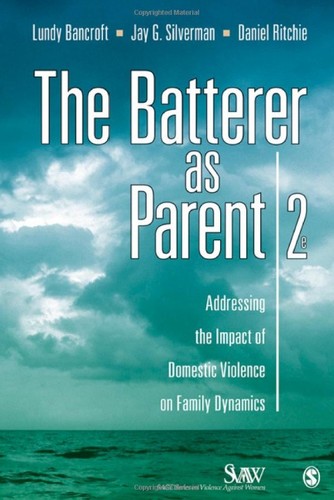
The Batterer as Parent
Lundy Bancroft, Jay G. Silverman & Daniel Ritchie
How domestic violence impacts family dynamics, with approaches for custody evaluations.

A Kidnapped Mind
Pamela Richardson
Heartbreaking memoir of parental alienation — an 8-year battle to maintain a bond with her son.
As an Amazon Associate, Clarity House Press earns from qualifying purchases. Your price is never affected.
Found this helpful?
Share it with someone who might need it.
About the Author

Clarity House Press
Editorial Team
The editorial team at Clarity House Press curates and publishes evidence-based content on narcissistic abuse recovery, high-conflict divorce, and healing. Our content is informed by research, survivor experiences, and established trauma-informed approaches.
View all posts by Clarity House Press →Published by Clarity House Press Editorial Team