Please read our important disclaimers before using this content
The mediator smiled encouragingly. "The best thing for children is when parents can work together cooperatively. Can we all agree to put the children first?"
You nodded. Your ex nodded.
The mediator had no idea that one of you meant it and one of you was performing.
This is the fundamental problem with co-parenting after narcissistic abuse: the professionals, the court system, and well-meaning family members all assume that both parents are operating in good faith. They assume that both parents, despite their differences, ultimately want what's best for the children. They assume that with the right communication tools and enough patience, cooperation is possible.
They're wrong.
What Co-Parenting Actually Requires
True co-parenting is beautiful when it works. Divorced or separated parents who genuinely cooperate can provide their children with the stability and security of two loving households that function as a team. This model works for many families, and it's what the court system is designed to facilitate.
Co-parenting requires:
Mutual respect between parents. Not necessarily affection or friendship, but basic respect for each other as human beings and as parents. This includes speaking about each other neutrally or positively to the children, respecting each other's parenting decisions, and treating communication with basic courtesy.
Shared goal of child wellbeing above personal grievances. Both parents must be willing to set aside their own anger, hurt, or desire for revenge when it conflicts with what's best for the children. This means making decisions based on the children's needs, not on what will hurt or inconvenience the other parent.
Flexibility and compromise. Schedules change. Children get sick. Work emergencies happen. School events conflict with parenting time. Co-parenting requires both parents to accommodate reasonable changes and find middle ground without keeping score or demanding exact reciprocity.
Direct communication about children's needs. Information needs to flow freely between households. Medical issues, school concerns, behavioral changes, developmental milestones—all need to be shared promptly and completely.
Consistency across households. While parenting styles will differ, basic rules and expectations should be reasonably consistent. Bedtimes, homework expectations, and discipline approaches should be coordinated enough that children don't feel whiplash between homes.
Emotional regulation during disagreements. Conflict is inevitable. The question is whether parents can navigate disagreements without escalating to hostility, without involving the children, and without creating sustained warfare.
Good faith in decision-making. Each parent trusts that the other is genuinely trying to do what's right for the children, even when they disagree about specifics.
Notice the pattern? Every single requirement demands that both parents prioritize the children over their own ego, comfort, and need to be right.
A narcissist cannot do this. Not won't. Cannot.
Why Narcissists Can't Co-Parent
Understanding why co-parenting is impossible with a narcissist requires understanding how narcissistic personality structure makes each requirement unachievable:
They cannot prioritize the child's needs over their own. Narcissists view children as extensions of themselves, not as separate individuals with their own needs1. When your child needs to miss visitation for a school event, a healthy parent says "Of course, this is important to them." A narcissistic parent says "The court order says it's my time and I'm enforcing it." The child's needs are invisible; only the narcissist's entitlement is real.
They use the children as weapons. Children are not people to a narcissist—they're tools for inflicting pain on you, for winning the competition of divorce, and for maintaining control2. Visitation becomes leverage. Information becomes currency. The child's preferences become evidence in the parent's ongoing case against you. Every interaction is an opportunity for manipulation.
They cannot tolerate not winning. Every decision becomes a power struggle. Every disagreement becomes a battle. The issue isn't summer camp—it's who gets to decide. The issue isn't the pediatrician—it's who has control. The actual topic is almost irrelevant; what matters is winning, dominating, and demonstrating superiority. The issue is always, fundamentally, who gets to decide.
They rewrite history. You'll propose something they rejected last month, and they'll claim they suggested it first. You'll reference an agreement you both made, and they'll insist it never happened. You'll have it in writing, and they'll claim the writing means something different than what it says. You cannot cooperate with someone who doesn't live in the same reality.
They communicate to manipulate, not to inform. Every text is evidence-gathering, blame-shifting, or image management. You're not having a conversation about your child's dental appointment. You're being deposed. Every exchange is analyzed for ways to use your words against you. Nothing you say is ever taken at face value.
They punish you through the children. Late to pickup because of traffic? They'll document it and call their attorney. Ask to switch weekends for a family wedding? They'll refuse and tell the child you don't want to see them. Request information about a medical appointment? They'll withhold it and claim you didn't ask properly.
You keep trying to have a reasonable discussion about parenting. They're waging a war and using your children as weapons.
The Fantasy vs. The Reality
The fantasy: "If I just communicate better, stay calm, and focus on the children, eventually they'll realize we need to work together."
The reality: You're operating in good faith. They're operating strategically. You're trying to co-parent. They're trying to win.
Every attempt you make to collaborate is information they'll use against you later. That vulnerable moment when you admitted you were struggling? Filed away for future court proceedings. That time you asked for flexibility? Documented as evidence of your unreliability. Every compromise you offer is weakness they'll exploit. Every effort to keep things civil is supply you're feeding their ego.
The fantasy: "The court will eventually see what's happening and protect the children."
The reality: Courts are designed for good-faith disputes between reasonable people. Narcissists are skilled at appearing reasonable in court while behaving abusively everywhere else. They know exactly how to present themselves to authority figures. Meanwhile, your genuine distress may be interpreted as instability.
The fantasy: "If I just try harder, eventually we'll find a way to make this work."
The reality: You've already tried harder than any person should have to try. The problem isn't your effort—it's their fundamental inability to engage in genuine cooperation. You could be the perfect co-parent and it still wouldn't work, because co-parenting requires two cooperative people.
You cannot co-parent with someone who sees parenting as a competition and the children as prizes.
The Parallel Parenting Alternative
Since co-parenting requires two healthy parents and you only have one, you need a different model: parallel parenting.
Parallel parenting acknowledges that cooperation isn't possible and creates structures that protect children while minimizing direct parental interaction3. It's not ideal—children do better when parents cooperate—but it's far better than the ongoing warfare that results from attempting to co-parent with someone who's using every interaction as a weapon.
Minimal direct communication. Use court-approved apps like TalkingParents or OurFamilyWizard. All communication documented. No phone calls unless emergency. No texts where tone can be misinterpreted or claims can be denied. Everything in writing, everything timestamped, everything preserved.
Detailed parenting plan. Everything spelled out. Who decides what. When exchanges happen. How information transfers. Which holidays which years. How school breaks are divided. Transportation responsibilities. Medical decision-making authority. Everything. Remove all ambiguity. Eliminate all negotiations.
Disengagement from conflict. You're not co-parenting. You're running parallel households. They do it their way during their time. You do it your way during yours. You don't try to control their household, and you refuse to engage with their attempts to control yours.
Boundaries over cooperation. Stop trying to get them to agree with you. Stop trying to have reasonable conversations. Stop trying to make them see reason. They won't. Every attempt you make to find common ground gives them opportunity to manipulate, gaslight, and document.
Court enforcement. When they violate the order, document and enforce. Don't negotiate. Don't give chances. Don't convince yourself it's not a big deal. They'll interpret mercy as weakness and escalate. The only language narcissists understand is consequences, and even then only when those consequences are consistently enforced.
What Parallel Parenting Looks Like in Practice
Communication
Don't: "Hey, Jayden has been struggling with math lately. I was thinking we could work together on a plan to support him. Maybe we could both use the same tutoring approach at our houses? What do you think?"
This invitation to collaborate gives them opportunity to refuse, to delay, to argue about whose fault the math struggles are, to claim you never mentioned it, to twist your words into something you'll have to defend later.
Do: "Jayden's math grade is a C. I've enrolled him in tutoring Tuesdays at 4pm during my parenting time. He'll complete homework before exchanges. Here's the tutor's contact information for your records."
This is a statement, not a discussion. You're informing, not negotiating. You're making decisions within your authority and sharing information as a courtesy. There's nothing to argue about.
Schedule Changes
Don't: "I know it's your weekend, but my mom is having her 70th birthday party and all the cousins will be there. Jayden really wants to go. Would you be willing to switch weekends this month?"
This request gives them power. They'll refuse because they can. They'll use it as leverage. They'll tell the child that you're trying to take away their time. They'll grant it graciously and then demand repayment at the most inconvenient possible moment.
Do: Say nothing. The order says it's their weekend. You cannot switch. Plan the party for your time, or accept that Jayden won't be there.
This is painful. Your children will miss events. But every request for flexibility is ammunition. Pick your battles—and pick almost none.
Disagreements
Don't: "I really think Jayden is too young for that video game. Can we talk about age-appropriate media and come up with guidelines we both follow?"
This attempt at coordination will become a weeks-long conflict about your parenting, your values, your controlling behavior, and how you're trying to undermine their relationship with the child.
Do: Say nothing. They'll do what they want during their parenting time. You enforce your rules during yours. The child learns parents have different rules. This is suboptimal but survivable.
The hardest part of parallel parenting is accepting that you cannot control their household. You can only control yours.
What About the Children?
You're worried that parallel parenting will confuse the kids, make them feel caught in the middle, or damage them.
Here's the truth: The damage isn't coming from having two different sets of rules. The damage is coming from ongoing conflict.45
[Research is clear and consistent: children are harmed by interparental conflict, not by differences in household rules]1[^3]:
- Watching parents fight4
- Being used as messengers between parents6
- Hearing one parent disparage the other5
- Feeling responsible for their parents' relationship6
- Living in chaos and unpredictability7
- Being put in the middle of adult conflicts5
- Having to manage their parents' emotions4
Children are NOT significantly harmed by:
- Different bedtimes at different houses
- Different food rules at different houses
- Understanding that parents have different parenting styles
- Clear, predictable routines even if they differ between homes
- Parents who don't interact much but don't fight
Your child is better off with two separate, stable households than one ongoing war zone. They're better off with a parent who disengages from conflict than one who's constantly embattled.
Does parallel parenting mean your child will never experience distress? No. But it dramatically reduces the ongoing conflict exposure that causes the most harm.
The Gray Rock Method
Central to parallel parenting is the gray rock method: making yourself as boring and unreactive as possible to minimize opportunities for manipulation.
What gray rock looks like:
- Short, factual responses
- No emotional content
- No justification or explanation
- No defense against accusations
- No engagement with provocations
- Bland tone, even in text
Examples:
Them: "You're always so controlling. You never let me have any input on anything regarding the kids. This is exactly why our marriage failed."
You: "Tuesday pickup will be at 5pm."
Them: "Don't you even care that Jayden told me you yelled at him? What kind of parent are you?"
You: "Jayden's soccer schedule is attached."
Them: "Fine, ignore me. Everyone will eventually see how you really are."
You: [No response—this doesn't require one]
Gray rock is hard. It goes against every instinct to defend yourself, to set the record straight, to make them understand. But every emotional response is supply. Every defense is engagement. Every explanation is an opportunity for them to twist your words.
Be boring. Be flat. Be gray.
Tools for Parallel Parenting
Communication Apps
TalkingParents and OurFamilyWizard are court-approved platforms that:
- Timestamp all communications
- Create admissible records
- Cannot be edited or deleted after sending
- Include calendars, expense tracking, and document sharing
- Remove the "he said, she said" problem
Using these apps instead of text or email protects you legally and removes deniability.
The Parenting Plan
The more detailed your parenting plan, the less there is to negotiate. Work with your attorney to include:
- Exact exchange times and locations
- Holiday schedules for years in advance
- Vacation notification requirements
- Decision-making authority for specific domains
- Communication protocols
- Consequences for violations
- Right of first refusal provisions
- Transportation responsibilities
- Introduction of significant others timelines
- Religious and cultural practice guidelines
- Extracurricular activity enrollment procedures
Every detail in the order is one less thing that can become a battle.
Documentation System
Keep records of:
- All communications (apps do this automatically)
- All parenting time exchanges
- All violations of the order
- All incidents affecting the children
- All expenses with receipts
- All important dates and events
You may never need these records. But if you do, you'll be glad you have them.
Managing Your Own Expectations
What You Can Control
- Your own behavior4
- Your own household
- Your own relationship with your children6
- Your own healing and recovery
- Your documentation
- Your response to provocations (or lack thereof)3
What You Cannot Control
- Their behavior
- Their household
- How they parent during their time
- What they tell the children
- Whether they follow the order
- How the court perceives the situation
Focus your energy on what you control. Everything else is wasted effort that only increases your suffering.
Letting Go of Fair
Parallel parenting isn't fair. You're doing all the work of being reasonable while they continue to behave badly. You're absorbing their provocations while they face no consequences. You're protecting the children while they weaponize them.
This isn't fair. But fairness isn't the goal. Protecting your children and yourself is the goal. And that goal is best achieved by disengagement, not by continuing to seek justice from someone incapable of providing it.
Protecting the Children
What Children Need from You
Stability. Create a predictable, calm household. Consistent routines, clear expectations, reliable presence.
Emotional safety. Be the parent who doesn't put them in the middle. Don't ask about the other household. Don't make them messengers. Don't share your distress about their other parent.
Unconditional love. Love them for who they are, not for what they can tell you about the other house or how they can validate your experience.
Modeling healthy behavior. Show them what emotional regulation looks like. Show them what healthy boundaries look like. Show them that you can be hurt by someone and still maintain your dignity.
Therapy if needed. Children in high-conflict custody situations often benefit from their own therapist—someone who's entirely theirs, entirely neutral, entirely safe.
What to Avoid
Using children as messengers. Don't send information through the kids. Use the app.
Questioning children about the other home. They'll tell you what they want to tell you. Interrogation puts them in the middle.
Sharing your feelings about their other parent. They love that parent, even if that parent is harmful. Your feelings are for your therapist.
Undermining the other parent. Even when they deserve it. The children will figure out the truth eventually. They don't need you to tell them.
Competing for the children's loyalty. You can't win this competition. Don't enter it.
When It Gets Worse
Sometimes narcissists escalate when they realize you're disengaging:
- False allegations
- Parental alienation attempts
- Legal harassment
- Violation of orders
- Stalking or surveillance
If this happens:
Document everything. Screenshots, records, witnesses.
Report violations to your attorney. Don't handle it yourself.
Consider a guardian ad litem. Someone whose job is to advocate for the children's interests.
Protect yourself physically if needed. Security cameras, doorbell cameras, changed locks, documented routines.
Maintain your gray rock. Escalation is designed to provoke response. Don't provide it.
Long-Term Perspective
The Children Will Grow Up
Eventually, custody orders expire. Children become adults who make their own choices. Your job is to:
- Maintain your relationship with them
- Model healthy behavior
- Be a safe, stable presence in their lives
- Let them figure out the truth in their own time
Many adult children of narcissists eventually recognize the manipulation. They often develop closer relationships with the healthy parent once they're free from the custody dynamics. Be patient. Play the long game.
You Will Heal
Co-parenting with a narcissist is ongoing trauma exposure. It's hard to fully heal while you're still engaged in the conflict. But:
- Each passing year brings you closer to freedom
- Your nervous system can adapt and become less reactive
- You can build a full, meaningful life during your parenting time
- You can model recovery and resilience for your children
Your Next Steps
1. Get a detailed parenting plan. Work with an attorney who understands high-conflict divorce. Specify everything. Leave nothing to interpretation.
2. Switch to documented communication only. TalkingParents, OurFamilyWizard, or court-ordered email. No texts. No calls. No in-person conversations beyond basic exchange pleasantries.
3. Stop trying to convince them. You're not going to win the argument. You're not going to make them see reason. You're not going to change their mind. Save your energy.
4. Build the best household you can during your time. Focus on what you control. Create stability, safety, and predictability when the children are with you.
5. Document everything. Save all communication. Note all violations. Maintain records. Not to be punitive—to protect yourself and your children when enforcement becomes necessary. Learn what evidence actually matters in family court so you're building a case that holds up, not just a personal journal.
6. Get support. Therapist who understands narcissistic abuse and high-conflict custody. Support group for parallel parents. Attorney who's dealt with these cases before.
7. Practice gray rock. Start now. Get boring. Disengage. Become unreactive.
8. Be patient with yourself. This is hard. You will slip up. You will engage when you shouldn't. You will feel guilty, angry, and exhausted. That's normal. Keep going.
You didn't fail at co-parenting. You correctly identified that it was impossible and chose a realistic alternative.
That's not failure. That's wisdom.
Your children need a parent who can see clearly, disengage from chaos, and create an island of stability in the storm. Be that parent.
The war isn't over—not while custody orders are in place. But you can stop fighting battles you can't win and focus on what actually matters: your children's wellbeing and your own survival. Understanding what makes your case high-conflict and how courts approach these situations gives you clearer eyes for the road ahead.
That's enough. That's everything.
Resources
Co-Parenting and Legal Support:
- TalkingParents - Documented communication platform
- OurFamilyWizard - Court-admissible documentation platform
- American Bar Association Family Law Section - Find family law attorneys
- Psychology Today Therapist Finder - Find high-conflict co-parenting specialists
Mental Health and Support:
- National Alliance on Mental Illness (NAMI) - Mental health support
- SAMHSA National Helpline - 1-800-662-4357 (24/7)
- National Domestic Violence Hotline - 1-800-799-7233 (SAFE)
Crisis Support:
- 988 Suicide & Crisis Lifeline - Call or text 988 (24/7)
- Crisis Text Line - Text HOME to 741741
References
- Cummings, E. M., & Davies, P. T. (2010). Marital conflict and children: An emotional security perspective. Monographs of the Society for Research in Child Development, 75(3), 4–24. https://pubmed.ncbi.nlm.nih.gov/21410656/ ↩
- Afifi, T. D. (2003). 'Uncertainty and the avoidance of the state of one's family in stepfamilies, post-divorce single-parent families, and first-marriage families. Journal of Social and Personal Relationships, 20(6), 729-755. https://pubmed.ncbi.nlm.nih.gov/25797703/ ↩
- Davies, P. T., Winter, M. A., & Cicchetti, D. (2015). Interparental conflict, children's security with parents, and long-term risk of internalizing problems: A longitudinal study from ages 2 to 10. Development and Psychopathology, 27(3), 927-946. https://pubmed.ncbi.nlm.nih.gov/25797703/ ↩
- Buchanan, C. M., Maccoby, E. E., & Dornbusch, S. M. (1991). Caught between parents: Adolescents' experience in divorced homes. Child Development, 62(5), 1008-1029. https://pubmed.ncbi.nlm.nih.gov/1756655/ ↩
- Hetherington, E. M., & Kelly, J. (2002). For better or for worse: Divorce reconsidered. New York: W.W. Norton. (as cited in National Survey of Families and Households research: Ahrons, C. R. (2004). We're still family: What grown children have to say about their parents' divorce. HarperCollins.) ↩
- Wallerstein, J. S., & Blakeslee, S. (1989). Second chances: Men, women, and children a decade after divorce. Ticknor & Fields. ↩
- Afifi, T. D., & Hutchinson, S. (2009). Uncertainty in young adults' relationships with parents, post-divorce. Journal of Divorce & Remarriage, 50(4), 242-258. https://pubmed.ncbi.nlm.nih.gov/31318261/ ↩
- Buchanan, C. M. (2020). Parenting time, parenting quality, interparental conflict, and mental health problems of children in high-conflict divorce. Journal of Divorce & Remarriage, 61(4), 289-314. https://pubmed.ncbi.nlm.nih.gov/31318261/ ↩
- Fosse, N. E. (2019). Healing the separation in high-conflict post-divorce co-parenting. Family Court Review, 57(2), 316-334. https://pmc.ncbi.nlm.nih.gov/articles/PMC9252605/ ↩
- Baker, A. J. L. (2022). The impact of parental alienating behaviors on the mental health of adults alienated in childhood. Journal of Divorce & Remarriage, 63(1), 20-44. https://pubmed.ncbi.nlm.nih.gov/35455519/ ↩
Recommended Reading
From Clarity House Press — plus trusted books for deeper understanding


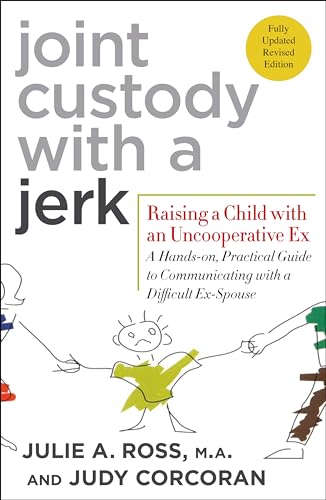
Joint Custody with a Jerk
Julie A. Ross, MA & Judy Corcoran
Proven communication techniques for co-parenting with an uncooperative ex.
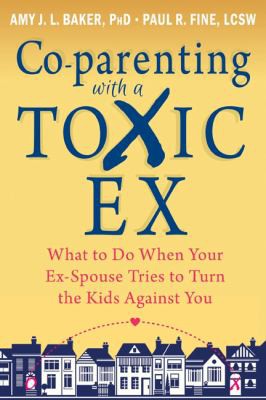
Co-Parenting with a Toxic Ex
Amy J. L. Baker, PhD & Paul R. Fine, LCSW
Evidence-based strategies when your ex tries to turn kids against you. Parental alienation prevention.
As an Amazon Associate, Clarity House Press earns from qualifying purchases. Your price is never affected.
Found this helpful?
Share it with someone who might need it.
About the Author

Clarity House Press
Editorial Team
The editorial team at Clarity House Press curates and publishes evidence-based content on narcissistic abuse recovery, high-conflict divorce, and healing. Our content is informed by research, survivor experiences, and established trauma-informed approaches.
View all posts by Clarity House Press →Published by Clarity House Press Editorial Team