Please read our important disclaimers before using this content
The silent treatment isn't just someone needing space or time to cool down. It's a deliberate manipulation tactic designed to punish, control, and create anxiety in the target. When used systematically, it represents a form of emotional abuse that can have profound psychological and neurobiological impacts.
Understanding the silent treatment as an abuse tactic—not a communication preference or personality quirk—is essential for recognizing manipulation, protecting yourself, and breaking cycles that strengthen trauma bonds. This tactic fits into a broader repertoire of manipulation strategies; for a fuller picture, see our overview of common manipulation tactics narcissists use to maintain control.
What Is the Silent Treatment? Clinical Foundation
The silent treatment is the deliberate withdrawal of communication, acknowledgment, or emotional presence as a form of punishment or control. It's characterized by:
Intentional withholding: The person consciously refuses to communicate, respond, or acknowledge your existence. This isn't forgetting to respond to a text—it's a calculated decision to punish you with silence.
Punishment orientation: The silence is deployed specifically to make you feel anxiety, panic, or distress. It's weaponized absence designed to communicate "you've displeased me and now you're being punished."
Control mechanism: The silent treatment forces the target into a position of powerlessness. You can't resolve conflict, discuss issues, or even understand what you supposedly did wrong. All the power rests with the person withholding communication.
Manipulation goal: The abuser uses silence to provoke pursuit, self-blame, and behavioral change. The goal is to train you to avoid whatever allegedly triggered the silence—often healthy boundary-setting or asking for accountability.
Psychologist John Gottman's research on relationship dynamics identifies stonewalling—refusing to communicate or cooperate—as one of the "Four Horsemen" predicting relationship dissolution and dysfunction.1 But when stonewalling becomes a systematic pattern of punishment and control, it crosses into emotional abuse territory.
What the Silent Treatment Looks Like: Recognizing the Pattern
The silent treatment manifests in multiple ways, escalating from subtle withdrawal to complete erasure:
Stonewalling: The person physically present but emotionally absent. They stare past you, refuse to respond to direct questions, or give one-word answers that communicate contempt. You're in the same room but might as well be invisible.
Withholding communication: Refusing to answer texts, calls, or emails for days or weeks. When they do respond, they pretend the silence never happened or blame you for it: "I didn't think you wanted to hear from me after what you said."
Pretending you don't exist: Walking past you in shared spaces without acknowledgment, refusing to make eye contact, acting as if you're literally not present. This is particularly painful in intimate relationships where the message is clear: you don't matter enough to acknowledge.
Refusing to acknowledge: Ignoring your attempts to discuss the issue, repair the relationship, or even understand what's wrong. Questions meet silence. Attempts to connect meet cold withdrawal. The message: you don't deserve explanations or resolution.
Extended punishment periods: Some narcissists deploy the silent treatment for days, weeks, or even months. The length of the silence often has no relationship to the severity of the alleged offense—it's about maximizing your distress and ensuring compliance.
Case Example: Romantic Relationship
Sarah questioned why her partner had charged $3,000 to their joint credit card without discussion. He immediately went silent—no response to texts, calls, or her presence in their shared home. For five days, he acted as if she didn't exist. When he finally spoke, he blamed her: "You accused me of something, so I figured you needed space to calm down." Sarah had asked a reasonable question about shared finances. The punishment was five days of anxiety, self-blame, and walking on eggshells. The next time she saw questionable charges, she said nothing.
Why Narcissists Use the Silent Treatment: Understanding the Function
The silent treatment serves multiple functions for narcissists and other manipulative personalities:
Punishment without accountability: Unlike direct verbal abuse (which can be documented and called out), the silent treatment leaves no evidence. The abuser can later claim they "just needed space" or "didn't feel like talking"—framing abuse as preference.
Control through uncertainty: Not knowing how long the silence will last, what you did to deserve it, or how to end it creates a state of hypervigilance and anxiety. You're completely at the mercy of the abuser's timeline and conditions for re-engagement.
Provoking pursuit: The silent treatment is designed to make you panic and pursue. The abuser wants you to beg for communication, apologize for offenses you didn't commit, or abandon boundaries you attempted to set. Your pursuit feeds their sense of power and control.
Creating anxiety and self-blame: The silence forces you into rumination: "What did I do wrong? How do I fix this? Am I overreacting?" This cognitive pattern shifts responsibility from the abuser (who is using a manipulation tactic) to you (who must have deserved the punishment).
Asserting dominance: The silent treatment communicates a power differential: "I decide when we communicate. I decide when this is over. I hold all the power in this relationship, and you hold none." It's a dominance display wrapped in the absence of words.
Avoiding accountability: If you raised a legitimate concern (financial abuse, broken promises, harmful behavior), the silent treatment effectively ends the conversation. Instead of addressing your concern, the abuser punishes you for raising it—training you never to bring up problems again.
Research by psychologist Kipling Williams on ostracism (social exclusion) demonstrates that being ignored activates the same neural regions as physical pain.2 A landmark fMRI study confirmed that social rejection activates the dorsal anterior cingulate cortex and anterior insula—the same regions processing physical pain.3 Narcissists intuitively understand this—they're inflicting pain while maintaining plausible deniability.
Silent Treatment vs. Healthy Space: Critical Differences
Not all requests for space represent the silent treatment. Understanding the difference is essential:
Healthy Space:
- Communicated explicitly: "I need a few hours to process this conversation. Can we talk tonight after dinner?"
- Time-bounded: A specific timeframe or check-in point is established
- Mutual respect: Both people retain dignity and acknowledgment
- Repair-oriented: The goal is to calm down and return to productive discussion
- Proportionate: The time requested matches the intensity of the conflict
- Maintains safety: Basic communication about logistics, children, or safety continues
Silent Treatment (Abuse):
- No communication: Abrupt withdrawal with no explanation or timeframe
- Indefinite duration: You have no idea how long the silence will last
- One-sided power: Only the abuser decides when communication resumes
- Punishment-oriented: The goal is to make you suffer and comply
- Disproportionate: Days or weeks of silence for minor or fabricated offenses
- Complete withdrawal: All communication ceases, even about important practical matters
The key distinction is mutuality and respect. Healthy space preserves both people's dignity and serves the relationship. The silent treatment destroys dignity and serves the abuser's need for control.
Impact on Targets: Psychological and Emotional Consequences
The silent treatment inflicts measurable psychological harm:
Anxiety and panic: Not knowing how long the silence will last or how to end it creates constant distress. Your nervous system remains in fight-or-flight mode, waiting for resolution that may never come.
Rumination and self-blame: In the absence of communication, your mind fills the void with worst-case scenarios and self-criticism. "What did I do? How do I fix this? It must be my fault." This cognitive pattern reinforces the abuser's narrative that you're the problem.
Trauma bond strengthening: The intermittent reinforcement pattern (withdrawal → anxiety → pursuit → relief when communication resumes) is one of the most powerful mechanisms for creating trauma bonds.4 The release of tension when the abuser finally speaks creates a dopamine hit that strengthens attachment to the very person harming you. Understanding the neurochemistry of trauma bonding can help explain why these attachments are so difficult to break even when you intellectually know the relationship is harmful.
Erosion of self-worth: Repeated experiences of being treated as if you don't exist gradually convince you that you don't matter, your feelings are invalid, and your needs are unreasonable. The silent treatment is a form of psychological erasure.
Hypervigilance: You become constantly vigilant for signs of displeasure, walking on eggshells to avoid triggering another period of silence. This chronic stress state has profound health consequences.
Loss of voice: Over time, targets learn not to raise concerns, set boundaries, or express needs—because the punishment (silent treatment) is worse than the ongoing harm. You silence yourself to prevent being silenced.
Case Example: Co-Parenting
David's ex-wife would go completely silent whenever he asked about their daughter's medical appointments or school events. For weeks, texts and emails went unanswered. Then, at custody exchange, she'd casually mention that he'd missed the parent-teacher conference or that their daughter had started a new medication. When David expressed frustration, she'd frame him as "aggressive" and "demanding." The silent treatment served dual purposes: withholding information about their child (control) while creating documentation of his "hostility" when he objected (narrative building for court).
Neurobiological Impact: What Happens in Your Brain
The silent treatment isn't just emotionally painful—it has measurable effects on your brain and body:
Social pain center activation: Research using fMRI imaging shows that social rejection and exclusion activate the dorsal anterior cingulate cortex (dACC) and anterior insula—the same brain regions that process physical pain. When someone gives you the silent treatment, your brain experiences it as actual injury.
Cortisol elevation: The uncertainty and stress of not knowing how long the silence will last or how to end it elevates cortisol (your primary stress hormone). Chronic cortisol elevation has wide-ranging health impacts: suppressed immune function, increased inflammation, disrupted sleep, and increased risk of cardiovascular disease.5
Attachment wound activation: If you experienced emotional neglect or abandonment in childhood, the silent treatment activates those original attachment wounds. Your nervous system interprets the withdrawal as life-threatening abandonment (the way a child's nervous system would), triggering disproportionate panic and distress.
Dopamine dysregulation: The cycle of withdrawal (distress) → pursuit (anxiety) → reconnection (relief) creates intermittent reinforcement that dysregulates your dopamine system. Research on intermittent reinforcement and trauma bonding demonstrates that the unpredictability of when communication will resume creates a variable ratio reinforcement schedule—the most addictive pattern known to neuroscience.6
Prefrontal cortex impairment: The chronic stress and anxiety created by the silent treatment impairs prefrontal cortex function (executive functioning, rational decision-making, emotional regulation).7 This is why you feel like you "can't think straight" during and after periods of silent treatment—your stress response has literally impaired your cognitive function.
Research on the neuroscience of emotions demonstrates that prolonged social rejection and ostracism can actually alter brain structure over time, particularly in regions responsible for emotional regulation and social cognition.8 The silent treatment isn't a harmless communication preference—it's a tactic that can cause lasting neurobiological harm.
Responding to the Silent Treatment: Evidence-Based Strategies
If you're currently experiencing the silent treatment, these strategies can help protect your wellbeing:
Don't pursue: The hardest but most important rule. Pursuing (calling repeatedly, apologizing for unclear offenses, begging for communication) gives the abuser exactly what they want: proof of their power and your desperation. It also reinforces the behavior—they learn the silent treatment works.
Don't beg or explain: You don't owe explanations for reasonable behavior. If you set a boundary, asked a question, or expressed a need and received the silent treatment in response, the problem is the abuser's manipulation—not your reasonable action.
Maintain your boundaries: If the silent treatment was triggered by a boundary you set (asking about finances, saying no to an unreasonable request, expressing a need), maintain that boundary. Backing down teaches the abuser that the silent treatment successfully controls your behavior.
Use the time productively: Instead of ruminating or pursuing, use the silence to gain clarity. Journal about the relationship patterns. Research emotional abuse. Connect with friends or a therapist. The silent treatment creates space—use it to strengthen yourself, not to spiral into self-blame.
Document the pattern: Keep records of when silent treatment begins, how long it lasts, what (if anything) triggered it, and how it ends. This documentation serves multiple purposes: helps you see the pattern clearly (it's not isolated incidents—it's systematic abuse), provides evidence if you're co-parenting or divorcing, and helps your therapist understand the relationship dynamics.
Establish consequences: If you're in a position to set consequences (you're not married, not co-parenting, not financially entangled), consider whether continued relationship with someone who routinely uses the silent treatment is safe or healthy. The most effective consequence is often walking away permanently.
Seek professional support: A trauma-informed therapist can help you understand the dynamics, process the emotional impact, and develop strategies for protection—whether you're planning to leave or navigating ongoing contact (like co-parenting).
Silent Treatment in Co-Parenting: Special Considerations
When you share children with someone who uses the silent treatment, the tactic becomes even more harmful:
Withholding information about children: Refusing to answer questions about medical appointments, school events, schedule changes, or the children's wellbeing. This weaponizes the children—using access to information about them as a control mechanism.
Ignoring custody communication: Not responding to messages about logistics, schedule conflicts, or the children's needs. This forces you into a position where you either make unilateral decisions (which can be used against you in court) or the children's needs go unmet.
Violating court orders: Many custody orders include communication requirements. Systematic use of the silent treatment may constitute violation of those orders—but proving "refusal to communicate" requires documentation.
Creating false narratives: When you finally express frustration about the silent treatment (after weeks of being ignored about your child's medical needs), the abuser frames your frustration as "harassment," "aggression," or "inability to co-parent effectively."
Protection strategies for co-parenting with someone who uses silent treatment:
1. Use documented communication only: Email or court-approved co-parenting apps like TalkingParents or OurFamilyWizard. No phone calls or in-person conversations that lack documentation.
2. Ask once, document, move forward: Ask the question once. If no response, document the date and time you asked and the lack of response. Make the decision that serves the children's best interest. Save evidence that you attempted to communicate and coordinate.
3. Use neutral, factual language: "I need to know if [child] has any dietary restrictions for the school field trip on [date]. Please respond by [date] so I can submit the permission slip." No emotion, no accusations, no lengthy explanations.
4. Establish baseline communication in court orders: Request specific communication requirements in custody orders: "Both parents will respond to communications regarding the children's health, education, or safety within 24 hours."
5. Bring violations to your attorney: If the silent treatment is preventing you from meeting the children's needs or violating court orders, document and bring to your attorney. Pattern evidence is more compelling than isolated incidents.
Breaking the Cycle: Recognizing the Pattern and Responding Differently
Breaking free from the silent treatment cycle requires recognizing it as abuse, not a communication problem:
Recognize the pattern: The silent treatment isn't about you or your behavior—it's about the abuser's need for control. Once you see the pattern clearly (specific triggers, predictable cycles, consistent outcomes), you can stop taking it personally and start responding strategically.
Don't give narcissistic supply: Narcissists use the silent treatment to get supply (your distress, pursuit, apologies, behavioral compliance). When you stop providing supply (you don't pursue, don't panic, don't abandon boundaries), the tactic loses its effectiveness.
Establish consequences: If you're in a position to do so, establish clear consequences: "If you withdraw communication for more than 24 hours without explanation, I will make decisions about [situation] based on the information I have." Then follow through.
Stop explaining yourself: You don't owe explanations for reasonable behavior. If setting a boundary or asking a question triggers the silent treatment, the problem is the other person's abusive response—not your reasonable action.
Build external support: The silent treatment thrives in isolation. When you have strong support systems (friends, therapist, support group), the abuser's withdrawal loses its power to devastate you.
Consider whether the relationship is viable: A relationship where one person routinely uses the silent treatment as punishment is not a healthy relationship. This is particularly important if you're dating, not yet married, or don't have children together. The pattern will not improve—it will escalate.
Case Example: Breaking the Cycle
Jennifer's partner had used the silent treatment throughout their three-year relationship—sometimes for weeks at a time. After learning about emotional abuse, Jennifer recognized the pattern. The next time her partner went silent (after she asked him to share household expenses more equitably), Jennifer didn't pursue. She didn't call, text, or apologize. She used the week of silence to pack his belongings and change the locks. When he finally called (expecting her to be desperate and compliant), she told him she'd left his things with his brother and the relationship was over. He was shocked—the silent treatment had always worked before. Breaking the pattern required Jennifer to do the unexpected: not pursue.
Recovery Perspective: Healing From Silent Treatment Trauma
If you've experienced chronic silent treatment in a relationship, recovery involves specific healing work:
Healing from silent treatment trauma:
Grief the relationship you thought you had: The person who uses the silent treatment is telling you clearly: "Your feelings don't matter. Your need for communication doesn't matter. Punishing you matters more than resolving conflict." Grieving the fantasy of the relationship you wanted allows you to accept the reality of the relationship you had.
Rebuild your sense of worth: The silent treatment is a form of psychological erasure that communicates "you don't matter enough to acknowledge." Recovery involves actively rebuilding your sense of inherent worth—independent of whether someone else chooses to acknowledge you.
Learn healthy communication: If you grew up in an environment where the silent treatment was normal, you may need to actively learn what healthy conflict resolution looks like: direct communication, taking responsibility, repair attempts, mutual respect.
Process the neurobiological impact: The chronic stress of the silent treatment may have left you with symptoms of C-PTSD: hypervigilance, emotional flashbacks, difficulty trusting, fear of abandonment. Trauma-informed therapy (EMDR, IFS, Somatic Experiencing) can help process and heal these impacts.
Establish new relational expectations: Part of recovery is establishing clear standards for future relationships: "I will not accept the silent treatment. I deserve direct communication and conflict resolution. If someone routinely withdraws as punishment, that's a dealbreaker."
Develop distress tolerance: Recovery involves building your capacity to tolerate the distress of someone being upset with you without immediately trying to fix it, apologize for unclear offenses, or abandon your boundaries. The silent treatment trained you to panic when someone withdrew—healing involves learning that you can survive someone's displeasure.
Recognize healthy space vs. punishment: Learning to distinguish between someone who needs time to process (and communicates that respectfully) vs. someone using withdrawal as punishment helps you identify green flags in future relationships. Our guide on what healthy relationships look like can help you build that discernment as you heal.
Key Takeaways: Understanding the Silent Treatment as Abuse
The silent treatment is not a communication preference, personality quirk, or isolated incident. When used systematically, it's emotional abuse designed to punish, control, and dominate.
What to remember:
- The silent treatment activates the same brain regions as physical pain—it's not "just silence"
- Healthy space is communicated, time-bounded, and mutual; the silent treatment is none of these things
- Narcissists use the silent treatment to avoid accountability, provoke pursuit, and assert dominance
- Pursuing or begging for communication reinforces the behavior—it teaches the abuser the tactic works
- In co-parenting situations, silent treatment can constitute violation of custody orders and harm children
- Breaking the cycle requires recognizing the pattern, not providing narcissistic supply, and establishing consequences
- Recovery involves healing the neurobiological impact, learning healthy communication, and rebuilding worth
The silent treatment is abuse. You don't deserve it. And you don't have to tolerate it.
Your Next Steps
If you're experiencing the silent treatment:
- Document the pattern: Record dates, duration, triggers (if known), and impacts
- Stop pursuing: Don't call, text, or beg for communication—it reinforces the behavior
- Maintain your boundaries: If a boundary triggered the silent treatment, hold the boundary
- Seek support: Connect with a trauma-informed therapist who understands narcissistic abuse
- Use the silence productively: Research, journal, strengthen external support systems
- Consider whether the relationship is viable: Systematic use of silent treatment is abuse—is this relationship safe or healthy?
If you're co-parenting with someone who uses the silent treatment:
- Switch to documented communication only: Email or co-parenting apps
- Ask once, document, decide: Don't repeatedly ask for responses you won't receive
- Bring violations to your attorney: If silent treatment prevents meeting children's needs or violates orders
- Request specific communication timelines in court orders: "Both parents will respond to communications regarding children within 24 hours"
If you're healing from silent treatment trauma:
- Engage in trauma-informed therapy: EMDR, IFS, or Somatic Experiencing for processing
- Rebuild your sense of worth: Independent of whether others choose to acknowledge you
- Learn healthy communication patterns: What conflict resolution looks like without abuse
- Establish relational standards: "I will not accept the silent treatment" as a non-negotiable boundary
The silent treatment loses its power when you stop participating in the cycle. You can't control whether someone chooses to speak to you—but you can control whether you pursue, panic, or abandon yourself in response to their manipulation.
Resources
Emotional Abuse Support and Recovery:
- Psychology Today Therapist Finder - Find therapists specializing in emotional abuse
- National Alliance on Mental Illness (NAMI) - Mental health education and support
- EMDR International Association - Find certified EMDR therapists for trauma
- Greater Good Science Center - Evidence-based well-being practices
Domestic Violence and Crisis Support:
- National Domestic Violence Hotline - 1-800-799-7233 (SAFE) for safety planning (24/7)
- Legal Services Corporation - Find free legal aid for domestic violence cases
- SAMHSA National Helpline - 1-800-662-4357 for mental health referrals
- Anxiety and Depression Association of America (ADAA) - Mental health resources
Crisis Support:
- 988 Suicide & Crisis Lifeline - Call or text 988 (24/7)
- Crisis Text Line - Text HOME to 741741
- WomensLaw.org - State-specific legal information on abuse
References
Resources:
- National Domestic Violence Hotline: 1-800-799-7233 (for emotional abuse support)
- Psychology Today Therapist Directory: Filter for "narcissistic abuse" and "trauma"
- Reading: "Why Does He Do That?" by Lundy Bancroft (dynamics of abuse)
- Reading: "The Body Keeps the Score" by Bessel van der Kolk (trauma and neurobiology)
References
- Gottman, J. M. (1994). What predicts divorce? The relationship between marital processes and marital outcomes. Journal of Family Psychology, 7(3), 257-275. https://doi.org/10.1037/0893-3200.7.3.257 ↩
- Williams, K. D. (2007). Ostracism. Annual Review of Psychology, 58, 425-452. https://doi.org/10.1146/annurev.psych.58.110405.085641 ↩
- Eisenberger, N. I., Lieberman, M. D., & Williams, K. D. (2003). Does rejection hurt? An fMRI study of social exclusion. Science, 302(5643), 290-292. https://doi.org/10.1126/science.1089134 ↩
- Dutton, D. G., & Painter, S. L. (1993). Emotional attachments in abusive relationships: A test of traumatic bonding theory. Violence and Victims, 8(2), 105-120. ↩
- Arnsten, A. F. T. (2009). Stress signalling pathways that impair prefrontal cortex function. Nature Reviews Neuroscience, 10(6), 410-422. https://doi.org/10.1038/nrn2648 ↩
- Steudte-Schmiedgen, S., Stalder, T., Schönfeld, S., Wittchen, H. U., Rief, W., & Rosmalen, J. G. M. (2014). Stress-related deficiencies in emotional empathy after acute stress. Journal of Affective Disorders, 161, 169-173. https://doi.org/10.1016/j.jad.2014.03.008 ↩
- Woo, E., Sansing, L. H., & Arnsten, A. F. T. (2021). Chronic stress weakens connectivity in the prefrontal cortex: Architectural and molecular changes. SAGE Open Nursing, 7, 2377960821029254. https://doi.org/10.1177/24705470211029254 ↩
- Eisenberger, N. I. (2012). The neural bases of social pain: Evidence for shared representations with physical pain. Psychosomatic Medicine, 74(2), 126-135. https://doi.org/10.1097/PSY.0b013e3182464dd1 ↩
Recommended Reading
From Clarity House Press — plus trusted books for deeper understanding

Surviving the Storm: When the Court Takes Your Children
Clarity House Press
For fathers in active high-conflict custody battles. Understand your CPTSD symptoms, begin stabilization, and build foundation for healing. 17 chapters covering recognition, symptoms, and the healing path.
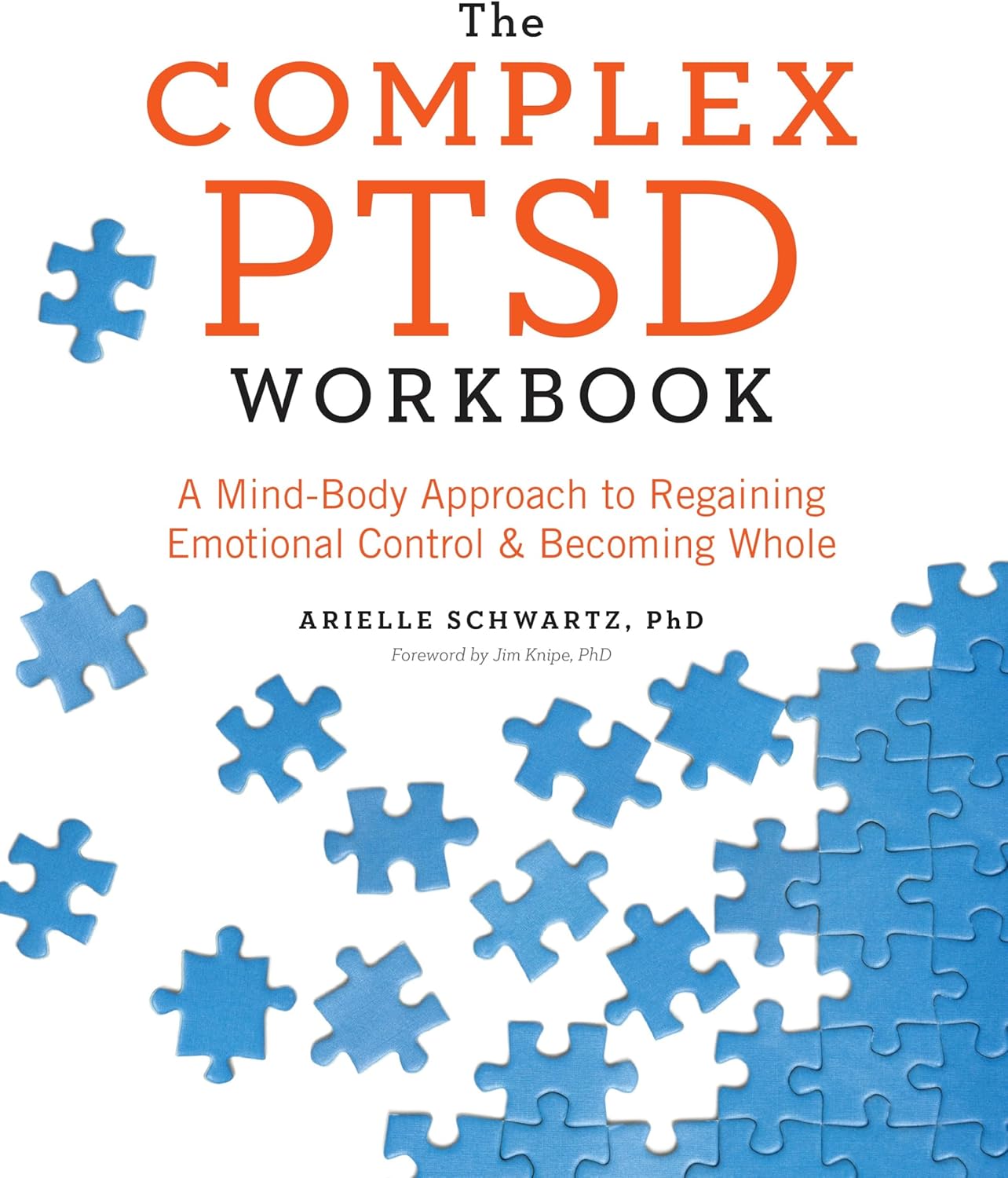
The Complex PTSD Workbook
Arielle Schwartz, PhD
A mind-body approach to regaining emotional control and becoming whole with evidence-based exercises.

The Gift of Fear
Gavin de Becker
Survival signals that protect us from violence and recognizing warning signs.
As an Amazon Associate, Clarity House Press earns from qualifying purchases. Your price is never affected.
Found this helpful?
Share it with someone who might need it.
About the Author

Clarity House Press
Editorial Team
The editorial team at Clarity House Press curates and publishes evidence-based content on narcissistic abuse recovery, high-conflict divorce, and healing. Our content is informed by research, survivor experiences, and established trauma-informed approaches.
View all posts by Clarity House Press →Published by Clarity House Press Editorial Team