Please read our important disclaimers before using this content
The first time I told someone "no" without explaining, apologizing, or offering an alternative, I felt physically ill.
It was a simple request. A friend wanted me to help them move furniture on a Saturday I'd planned to rest. Pre-recovery me would have said yes immediately, rearranged my day, and shown up exhausted but "helpful."
Instead, I said: "I'm not available that day."
She paused. "Oh. Okay."
That was it. No anger. No rejection. No catastrophe.
But my nervous system treated that boundary like I'd committed violence. Guilt, panic, the certainty that I'd ruined everything—all because I'd prioritized my need over someone else's preference.
This is the paradox of learning boundaries after codependency: intellectually, you understand they're healthy. Emotionally, they feel like cruelty. For practical guidance on enforcing boundaries specifically with narcissists, see our guide to what works and what doesn't.
What Codependency Actually Is
Codependency isn't just being caring or helpful. It's a dysfunctional pattern where your sense of worth, safety, and identity depends on managing others' emotions and needs.1 The concept involves an excessive preoccupation with the lives, feelings, and problems of others.2
Core characteristics:
Excessive responsibility for others' feelings: You believe you cause others' emotions and must fix them. If someone is upset, it's your fault and your job to make them feel better.
Difficulty identifying your own needs: You've spent so long focused on others that you don't know what you want, need, or feel. Your internal compass is set to others' preferences.
Fear of abandonment: Saying no, disappointing people, or asserting your needs feels life-threatening because historically, it led to rejection, rage, or withdrawal of love.
Poor boundaries: You can't tell where you end and others begin. Their problems feel like your problems. Their feelings override your feelings.
Enmeshment: Your identity is defined through relationships and others' perception of you, not through internal sense of self. In enmeshed relationships, both parties struggle to distinguish where their own thoughts, emotions, and needs begin and end, leading to a merging of identities.3
People-pleasing: Automatic yes to requests. Anticipating needs before they're expressed. Performing whatever role keeps others comfortable.
Codependency develops when your survival depended on managing a dysregulated caregiver's emotions. The child who had to monitor parent's mood, adjust their behavior to prevent rage, or become the family emotional regulator learns: my worth equals my usefulness, and my safety requires self-abandonment.4 This developmental pattern creates lasting impacts on attachment security and relational capacity.5 The fawn response — one of the four primary trauma responses — is the neurobiological mechanism underlying this people-pleasing pattern.
Why Boundaries Feel Impossible
For people without codependency training, boundaries are uncomfortable but manageable. For those of us with codependency patterns, they trigger survival-level terror.
Boundaries activate attachment trauma:
Setting a boundary means risking the other person getting upset. When you were young, people getting upset meant danger—rage, withdrawal, neglect, or abandonment.
Your nervous system learned: upset people equal threat. Keep people happy equals safety.6 This threat detection becomes encoded in your nervous system, leading to sustained hyperactivity when perceiving threat.7
Now, when you consider setting a boundary, your system floods with the same fear you felt as a child trying to manage an unstable parent.
Boundaries feel selfish:
You learned that your needs matter less than others' needs. That taking care of yourself is selfish. That good people sacrifice themselves.
Boundaries—which are fundamentally about honoring your needs—violate this core programming. They feel wrong, mean, bad.
Boundaries require knowing what you need:
Codependency trains you to ignore, dismiss, and disconnect from your own needs, wants, and feelings. You developed no internal reference for "what do I need right now?"
Setting a boundary requires knowing what you need to protect. If you don't know what you need, how do you know where the boundary should be? Interpersonal effectiveness skills, including boundary identification and boundary setting, are essential components of emotional and relational wellness.8
Boundaries require tolerating others' responses:
The person might be disappointed. Upset. Angry. They might push back, guilt-trip, or withdraw.
Codependency trained you to prevent these responses at all costs. Tolerating them feels impossible. Research on emotional attachments in relationships shows that the combination of intermittent maltreatment and power differentials can create prolonged patterns of avoidance and anxiety around others' emotional responses.9
The Boundary Basics
Before diving into how to build boundary capacity, let's clarify what boundaries actually are—and aren't.
Boundaries are:
- Limits on what you're willing to accept in relationships
- Protection for your time, energy, emotions, and body
- Statements about what you will/won't do, not control over what others do
- Necessary for healthy relationships
- Your right, regardless of others' preferences
Boundaries are not:
- Ultimatums or punishment
- Attempts to control or change others
- Signs of not caring about people
- Rigid walls that prevent all connection
- One-size-fits-all rules
Types of boundaries:
Physical: Who can touch you, how, and when. Personal space. Privacy.
Emotional: What emotional labor you're willing to do. How much of others' feelings you absorb. What topics you'll discuss.
Time: How you spend your time. What commitments you accept. When you're available.
Mental: What beliefs and opinions you hold. What criticism you accept. What you think about yourself.
Material: Who can use your belongings. How you spend money. What you share.
Sexual: What you're comfortable with sexually. Consent. Timing and context.
All of these have been compromised in codependent patterns. You said yes when you meant no. You absorbed others' emotions. You accepted treatment that violated your values. You gave time, energy, and resources you didn't have to give.
Starting Impossibly Small
If you've never practiced boundaries, don't start with the hardest ones. Start so small it feels trivial.
Micro-boundaries as training:
- Order what you want at a restaurant (not what's easy or what others want)
- Choose the movie occasionally
- Say "let me think about it" instead of automatic yes
- Sit where you want to sit
- Express a minor preference
- End a phone call when you're ready
These aren't "real" boundaries in high-stakes situations. They're reps. Practice. Building the neural pathways for "my preferences matter too."
Notice the guilt:
Even with tiny boundaries, you'll likely feel guilty, selfish, or mean. That's expected. The guilt isn't evidence you're doing something wrong—it's evidence you're doing something new.
The guilt is your codependency protecting you:
It's saying "this is dangerous, people will leave, you're being bad." Thank it for trying to keep you safe. Then do the boundary anyway.
Each time you survive a micro-boundary without catastrophe, you gather evidence: boundaries don't cause the disasters your system expects.
Identifying Where You Need Boundaries
Codependency blurs your sense of where you end and others begin. Learning what you need to protect requires reconnecting with yourself.
Signs you need a boundary:
- Resentment: You're angry about what you're doing but can't stop doing it
- Exhaustion: You're drained from giving beyond your capacity
- Feeling used: Others take but don't reciprocate
- Inauthenticity: You're performing a role instead of being yourself
- Physical symptoms: Tightness in chest, stomach knots, tension
- Avoiding someone: You dread interactions because they deplete you
- Rumination: You're obsessing about someone's behavior or needs
Ask yourself:
- What am I doing that I don't want to do?
- What am I giving that I can't afford to give?
- What treatment am I accepting that violates my values?
- Where do I feel resentful?
- What relationships drain me?
- What am I responsible for that isn't mine to carry?
The answer to these questions reveals where boundaries are needed.
Boundary Scripts and Language
One of the hardest parts of boundaries after codependency: you don't know what to say.
Simple boundary statements:
"I'm not available for that." "That doesn't work for me." "I need some time to think about it." "I'm not comfortable with that." "I can't take that on right now." "I need to leave in 15 minutes." "I'd prefer not to discuss that topic."
Notice what's missing:
- Justifications
- Apologies
- Long explanations
- Over-accommodation
You don't need to defend boundaries. "No" is a complete sentence (though you don't have to be that stark if it doesn't feel right).
When someone pushes back:
"I understand you're disappointed. My answer is still no." "I hear that you'd prefer differently. This is what works for me." "I'm not willing to debate this."
When you feel guilty:
"I know this might be inconvenient, but I need to [boundary]." "I care about you, and I also need to take care of myself."
When someone guilt-trips you:
"I'm sorry you feel that way. My boundary stands." "I'm not responsible for your feelings about my boundary."
These feel harsh when you're used to codependent patterns. Practice them anyway.
The Boundary-Setting Process
1. Decide the boundary
Get clear on what you need. Be specific: not "I need better boundaries" but "I won't answer work emails after 6pm" or "I won't discuss my divorce with my mother."
2. Communicate the boundary
Direct is usually best: "I'm not going to [X] anymore" or "Going forward, I need [Y]."
Sometimes you can set boundaries through action without announcement (just stop doing the thing).
3. Tolerate the response
This is the hard part. The other person might:
- Respect it (best case)
- Push back
- Guilt-trip you
- Get angry
- Test the boundary
- Withdraw
Your job isn't to prevent their response. It's to hold the boundary despite their response.
4. Maintain the boundary
Boundaries require enforcement. If you set it then abandon it under pressure, you've taught the person that pushing works.
Follow through. Repeatedly. This is where the actual change happens.
When People Don't Respect Your Boundaries
Some people won't like your boundaries. Some will actively violate them. This is information.
Boundary violations reveal:
Who respects you: People who care about you will adjust when you communicate needs, even if initially disappointed.
Who feels entitled to you: People who believe they deserve access to your time, energy, or compliance will resist boundaries.
Who was benefiting from your lack of boundaries: People who enjoyed your codependency won't like your recovery.
Unhealthy relationships require your lack of boundaries to function.
When you start setting boundaries, some relationships will end or drastically change. This is painful but necessary. Relationships built on your self-abandonment can't survive your self-protection. Our guide on knowing when to walk away from a relationship can help you navigate this evaluation.
How to handle violations:
Restate the boundary: "As I said, I'm not available for that."
State the consequence: "If you continue to [X], I'll need to [Y]." Then follow through.
Distance yourself: You can't force people to respect boundaries, but you can reduce contact with people who don't.
Let go of convincing them: You're not trying to make them agree your boundary is reasonable. You're informing them of your limit.
Some people will call you selfish, mean, or changed. That's their grief over losing access to the codependent version of you. Let them grieve.
The Guilt Phase
Expect guilt. Lots of it. For months. Maybe years.
Every boundary will likely trigger:
- Fear you've hurt someone
- Certainty you're being selfish
- Anxiety they'll leave
- Urge to take it back
- Compulsion to over-explain or apologize
This is normal.
Your codependency developed over years of learning that boundaries mean danger. Your nervous system doesn't trust yet that boundaries lead to health instead of abandonment.
Strategies for managing boundary guilt:
Name it: "This is codependency guilt, not real-guilt."
Reality-check: Did you actually do something wrong, or did you just prioritize your needs?
Self-compassion: "This feels hard because I'm learning something new. I'm allowed to protect myself."
Ride it out: The guilt will pass. Don't act on it by apologizing or rescinding the boundary.
Get support: Talk to therapist, friend, or support group who understand recovery.
The guilt decreases over time as you gather evidence that boundaries don't cause the catastrophes your system expects.
Building Boundary Muscle
Like any skill, boundaries improve with practice.
Start with low-stakes situations: Practice with acquaintances, service workers, or low-intimacy relationships before tackling family or partner boundaries.
Celebrate tiny wins: You said "no" once? That's progress. You didn't explain for 10 minutes? Growth. You tolerated someone's disappointment? Victory.
Expect mistakes: You'll set boundaries poorly, cave under pressure, over-explain, or avoid altogether. This is part of learning.
Repair when needed: If you set a boundary harshly or realized you need to adjust it, you can communicate that. "I think I could have said that more kindly, but the boundary still stands."
Notice progress: Am I saying no more often? Feeling less resentful? Tolerating others' responses better? These are signs of building capacity.
Your boundary muscle will get stronger. What felt impossible becomes uncomfortable. What felt uncomfortable becomes manageable.
Boundaries in Different Relationship Types
With family: Often the hardest because these are your original codependent training ground. Family may react strongly to boundaries because they're accustomed to your lack of them.
Start small. Expect pushback. You may need to significantly reduce contact or enforce stricter boundaries than in other relationships.
With partners: Intimate relationships trigger all your attachment patterns. Boundaries might feel like rejection or distance.
Communicate that boundaries aren't walls—they're actually what allows healthy intimacy. "I need space to recharge so I can show up better in our relationship."
With friends: Real friends will respect boundaries even if initially disappointed. Friends who can't tolerate boundaries aren't safe people.
At work: Professional boundaries protect your time, workload, and well-being. These often feel especially hard because of performance anxiety and fear of consequences.
"I'm at capacity for new projects" and "I'm not available after hours" are professional, appropriate boundaries.
The Other Side of Codependency
Recovery from codependency doesn't mean becoming cold, selfish, or disconnected. It means learning that healthy relationships include two people with boundaries, needs, and autonomy.
As you build boundaries:
You'll have more authentic relationships: People relate to the real you, not the performing you.
You'll feel less resentful: When you give from choice rather than obligation, it feels different.
You'll have more energy: You're not draining yourself taking care of everyone.
You'll trust yourself more: You're proving to yourself that you can protect yourself.
You'll attract different people: Healthy people appreciate boundaries. Unhealthy people are repelled by them.
The version of you that exists with boundaries is more whole, more real, more sustainable.
Learning boundaries after codependency is learning to exist as a person with needs, limits, and rights—not just as a function for others.
It's hard, guilt-inducing, fear-triggering work. And it's the path to relationships where you're allowed to be human, not just helpful.
Your needs matter. You're allowed to protect yourself. You don't owe anyone unlimited access to your time, energy, or body.
That's not selfishness. That's recovery.
Resources
Codependency Recovery and Boundaries:
- Co-Dependents Anonymous (CoDA) - 12-step support for codependency recovery
- Psychology Today Therapist Finder - Find therapists specializing in codependency and boundaries
- SMART Recovery - Science-based addiction and codependency support
- National Alliance on Mental Illness (NAMI) - Mental health education and support
Therapy and Mental Health Support:
- SAMHSA National Helpline - 1-800-662-4357 for mental health referrals (24/7)
- EMDR International Association - Find certified EMDR therapists for trauma
- Anxiety and Depression Association of America (ADAA) - Mental health resources
- Greater Good Science Center - Evidence-based well-being practices
Crisis Support:
- 988 Suicide & Crisis Lifeline - Call or text 988 (24/7)
- Crisis Text Line - Text HOME to 741741
- National Domestic Violence Hotline - 1-800-799-7233 (SAFE)
References
- Timmons, A. C., Arbel, R., & Margolin, G. (2017). Codependency: A concept analysis and exploration of how codependency relates to interpersonal functioning. Journal of Couple & Relationship Therapy, 16(3), 231-254. https://pubmed.ncbi.nlm.nih.gov/1939721/ ↩
- Wells, M. (1994). The concept, the symptoms and the etiological factors of codependency. Issues in Mental Health Nursing, 15(1), 87-101. https://pubmed.ncbi.nlm.nih.gov/24670293/ ↩
- Schaef, A. W., & Fassel, D. (1988). The Addictive Organization: Why We Overwork, Cover Up, Pick Up the Pieces, Ignore the Problems, and Enables Dysfunctional Individuals. HarperCollins. ↩
- Hooper, L. M. (2007). The application of attachment theory and family systems theory to the phenomena of parentification. The Family Journal, 15(3), 217-223. https://pubmed.ncbi.nlm.nih.gov/8801242/ ↩
- San, Santelices, & Miranda (2017). Manifestation of Trauma: The Effect of Early Traumatic Experiences and Adult Attachment on Parental Reflective Functioning.. Frontiers in psychology. https://pmc.ncbi.nlm.nih.gov/articles/PMC5364177/ ↩
- van der Kolk, B. A. (2014). The body keeps the score: Brain, mind, and body in the healing of trauma. Viking. ↩
- Liberzon, I., & Sripada, C. S. (2008). The functional neuroanatomy of PTSD: A critical review. Progress in Brain Research, 167, 151-169. https://pmc.ncbi.nlm.nih.gov/articles/PMC3182008/ ↩
- Dutton, D. G., & Painter, S. L. (1993). Emotional attachments in abusive relationships: A test of traumatic bonding theory. Journal of Interpersonal Violence, 8(2), 105-120. https://pubmed.ncbi.nlm.nih.gov/8193053/ ↩
- Linehan, M. M. (2015). DBT skills training manual (2nd ed.). The Guilford Press. https://pmc.ncbi.nlm.nih.gov/articles/PMC3330568/ ↩
Recommended Reading
From Clarity House Press — plus trusted books for deeper understanding


Surviving the Storm: When the Court Takes Your Children
Clarity House Press
For fathers in active high-conflict custody battles. Understand your CPTSD symptoms, begin stabilization, and build foundation for healing. 17 chapters covering recognition, symptoms, and the healing path.

My Grandmother's Hands
Resmaa Menakem, MSW, LICSW
A body-centered approach to healing trauma that lives in the nervous system, with practices for settling and self-regulation.
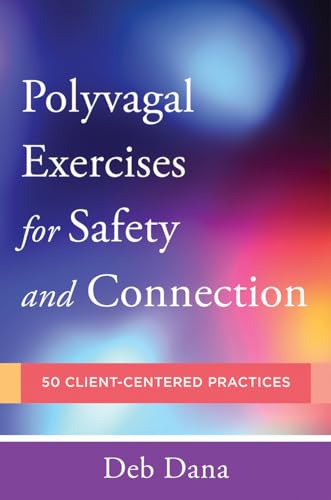
Polyvagal Exercises for Safety and Connection
Deb Dana, LCSW
50 client-centered practices for regulating the autonomic nervous system.
As an Amazon Associate, Clarity House Press earns from qualifying purchases. Your price is never affected.
Found this helpful?
Share it with someone who might need it.
About the Author

Clarity House Press
Editorial Team
The editorial team at Clarity House Press curates and publishes evidence-based content on narcissistic abuse recovery, high-conflict divorce, and healing. Our content is informed by research, survivor experiences, and established trauma-informed approaches.
View all posts by Clarity House Press →Published by Clarity House Press Editorial Team