Please read our important disclaimers before using this content
The question haunts countless survivors: How do I know when it's time to leave? This isn't a simple calculation. It's not about spreadsheets or checklists. It's about recognizing patterns, understanding your own safety, and trusting your capacity to make decisions for yourself.
The Paradox of Staying and Leaving
One of the cruelest aspects of narcissistic abuse and high-conflict relationships is that the decision to leave can feel impossible—even when staying feels unbearable. Research on relationship dissolution shows that initiators (people who make the decision to leave) experience significantly better emotional adjustment after separation than non-initiators (people who are left), reporting greater relief and faster recovery.1 Yet paradoxically, the decision-making process itself is one of the most difficult aspects of recovering from abuse.
The brain's trauma response system works against clarity. When betrayal and coercive control have been present, your nervous system may have literally reorganized around survival with this person. Betrayal trauma theory, developed by psychologist Jennifer Freyd, helps explain why leaving feels so impossible: when a person you depend on for survival is also the source of harm, your brain faces an impossible choice (Freyd, 1996). Freyd's research demonstrates that "betrayal blindness"—a form of adaptive unawareness—allows victims to maintain attachment to harmful caregivers or partners because awareness of the betrayal would threaten survival. Some survivors describe a kind of dissociative forgetting—the abuse becomes background noise while the hope for change moves to the foreground.
Recognizing the Relationship Quality Decline
Research on marital quality identifies specific predictors of relationship failure. Beyond obvious factors like conflict frequency, studies using neural imaging show that partners in satisfying relationships display synchronized brain activity when discussing relationship-relevant topics.2 Dr. John Gottman's landmark research identified four destructive communication patterns—criticism, contempt, defensiveness, and stonewalling—that predict divorce with over 90% accuracy (Gottman, 1994). Of these, contempt is the single greatest predictor of divorce. Relationships characterized by these patterns show neurobiological patterns associated with chronic stress activation.
Signs that a relationship has declined into harmful territory include:
- Persistent criticism and contempt: When your partner regularly expresses disdain for who you are, not what you've done
- Your nervous system tells you something is wrong: Hypervigilance, anticipatory anxiety, or shutdown responses when your partner is near or expected
- Isolation reinforcement: Systematic undermining of your relationships, finances, or autonomy
- Boundary violations without repair: Repeated harm without genuine acknowledgment, amends, or behavior change
- Your reality is consistently invalidated: Gaslighting, denial of events you witnessed, reframing of your accurate perceptions
These patterns create what researchers call "coercive control"—a patterned system of intimidation, isolation, and control that goes far beyond conflict.3 Recent research frames coercive control as a "liberty crime" that diminishes autonomy through repeated patterns of behavior directed at closing down the victim-survivor's "space for action" (Tolmie, Smith & Wilson, 2024).
The Decision-Making Process
When survivors of abuse contemplate leaving, multiple factors influence their decision:
Perceived safety vs. current suffering: The calculus often looks like "the devil I know versus the unknown." Research shows that leaving requires not just recognizing danger, but believing that leaving will result in greater safety—not all forms of danger are equal in our threat-detection systems.4
Economic dependency: Financial abuse and economic entanglement create very real barriers to leaving. This is not weakness; it's a structural problem that requires structural solutions.
Attachment and trauma bonding: The intermittent reinforcement cycle (occasional kindness mixed with harm) creates dopamine-driven attachment that feels as real and binding as any healthy bond. Research by Dutton and Painter found that relationship variables including intermittency of abuse accounted for 55% of the variance in attachment measures, with attachment persisting even after leaving the relationship (Dutton & Painter, 1993). A 2025 study further confirms that "intermittent reinforcement alone can produce a powerful psychological bond, even in the absence of physical captivity or financial dependence" (Lesiak & Gelsthorpe, 2025). Your brain's attachment system is not fooled by logic.
Support availability: Research on post-dissolution adjustment emphasizes the importance of social network satisfaction and external support in determining emotional recovery.1 Survivors who have isolated support systems face both practical and psychological barriers to leaving.
Children or shared custody concerns: The fear of losing custody or of children's safety in the other parent's care is a profound factor that requires strategic planning, not dismissal.
What Happens After You Leave
One critical finding from relationship dissolution research: initiators fare significantly better than non-initiators in emotional adjustment after separation. Initiators report:
- Greater relief and sense of agency
- Faster emotional recovery
- Better long-term satisfaction with the decision
- More positive post-separation relationships and quality of life1
This doesn't mean leaving is painless. Separation and divorce constitute the second most stressful life event measured on the Social Readjustment Rating Scale, with documented impacts on physical health, including elevated cardiovascular risk.5 But the data shows that for many survivors—particularly those in low-quality or harmful relationships—leaving increases life satisfaction over time.
Women in very low-quality marriages show measurable increases in life satisfaction following divorce, a change that begins almost immediately and persists long-term.6 This suggests that even though divorce is objectively stressful, leaving a harmful relationship may reduce cumulative stress enough to improve overall wellbeing.
Your Next Steps
Step 1: Get an accurate assessment of your situation Before deciding whether to stay or leave, you need clear information. Trauma and abuse cloud perception. Working with a trauma-informed therapist can help you:
- Identify patterns you've normalized
- Distinguish between relationship conflict and abuse
- Assess genuine safety risks vs. anxiety-based fears
Step 2: Build your support infrastructure Research is clear: post-separation adjustment depends heavily on having a reliable social network.1 Begin:
- Reconnecting with people you've isolated from
- Identifying practical supporters (for childcare, finances, housing)
- Finding professional support (therapist, attorney, financial advisor)
- Documenting patterns if you anticipate custody disputes
Step 3: Develop an economic safety plan Leaving without economic foundation increases risk of return. Create:
- Emergency savings (ideally 3-6 months expenses)
- Knowledge of shared assets and debts
- A plan for income stabilization
- Understanding of spousal support/child support if applicable
Step 4: Plan for nervous system safety Because your nervous system has adapted to a high-threat environment, leaving itself triggers intense dysregulation. Prepare:
- Grounding and co-regulation tools
- Safe spaces to decompress
- A plan for managing contact with your ex during transition
- Body-based trauma work (somatic experiencing, trauma-sensitive yoga)
Step 5: Make the decision from your own knowing, not others' timelines The most consistent finding across relationship dissolution research: when you make the decision to leave (being an initiator), your recovery and long-term satisfaction improve.1 Others can support your decision, but it must be yours.
This means:
- Rejecting timelines imposed by others ("You should leave now" or "Stay for the kids")
- Trusting your nervous system's information about safety
- Making the decision when you're ready, not when it seems convenient
- Understanding that "not yet ready" is valid information, not failure
The Truth About Ambivalence
It's normal to feel ambivalent about leaving, even when leaving is the right choice. You can simultaneously recognize that a relationship is harmful AND feel genuine loss about ending it. You can see clearly that your partner is abusive AND still love them. These contradictions don't mean you're confused—they mean you're human.
Ambivalence often reflects:
- Grief for the relationship you hoped to have — mourning someone who never existed is real and legitimate
- Realistic fear of the transition process
- Attachment bonds that are real, even though the relationship is harmful
- Concern for your children or your partner's wellbeing
None of these feelings mean you should stay. They mean you need support, time, and compassion for yourself during the decision-making process.
When You Know It's Time
You'll know it's time to leave when:
- Your safety is compromised (physical, financial, psychological, or sexual)
- Your reality has been persistently invalidated and you've lost trust in your own perception
- You're protecting your children from your partner rather than co-parenting
- You've been isolated from support systems and resources
- You're changing fundamental aspects of yourself to prevent your partner's anger
- Staying requires you to abandon your values or your own wellbeing
- You recognize patterns of coercive control that are unlikely to change without professional intervention
- You've grieved the relationship and the person you believed them to be
The decision to leave is one of the most courageous acts a survivor can make. It requires clarity, support, and an absolute commitment to your own survival and growth.
You deserve a relationship where your reality is honored, your boundaries are respected, and your wellbeing matters.
Key Takeaways
- Research shows that people who initiate relationship dissolution adjust better emotionally and report greater life satisfaction than those who are left
- Relationship dissolution decisions are influenced by safety perception, attachment patterns, economic dependency, and available support systems
- Leaving a harmful relationship is objectively stressful but may increase overall life satisfaction for those in very low-quality relationships
- Building support infrastructure before leaving significantly improves post-separation adjustment
- The decision to leave must be your own; your recovery depends on being the initiator of change
Resources
Books on Leaving Abusive Relationships:
- Why Does He Do That? by Lundy Bancroft - Understanding abuse and making the decision to leave
- The Body Keeps the Score by Bessel van der Kolk - Understanding trauma's impact on decision-making
- Should I Stay or Should I Go? by Lundy Bancroft and JAC Patrissi - Decision-making guide for abusive relationships
- Too Good to Leave, Too Bad to Stay by Mira Kirshenbaum - Relationship decision framework
Safety Planning and Support:
- National Domestic Violence Hotline - 1-800-799-7233 (SAFE) for safety planning and support
- WomensLaw.org - Legal information and safety planning resources
- DomesticShelters.org - Find domestic violence shelters and services
- Psychology Today - Therapists - Filter for "domestic violence" and "trauma"
Crisis Support and Community:
- 988 Suicide & Crisis Lifeline - Call or text 988 for immediate crisis support (24/7)
- Crisis Text Line - Text HOME to 741741 for crisis counseling
- r/NarcissisticAbuse - Reddit peer support community
- SAMHSA National Helpline - 1-800-662-4357 (mental health support)
References
Sources:
- Resolving relationship dissolution—What predicts emotional adjustment after breakup? (2024, Family Process)
- Neural synchronization predicts marital satisfaction (PNAS)
- Narcissism and Intimate Partner Violence: A Systematic Review and Meta-Analysis (SAGE Open)
- Staying or Leaving in Non-Violent and Violent Dating Relationships (Journal of Family Violence)
- Divorce and Health: Current Trends and Future Directions (Psychosomatic Medicine)
- Betrayal Trauma: The Logic of Forgetting Childhood Abuse (Harvard University Press)
- The Four Horsemen: Criticism, Contempt, Defensiveness, and Stonewalling (The Gottman Institute)
- Understanding Intimate Partner Violence: Why Coercive Control Requires a Social and Systemic Entrapment Framework (Violence Against Women)
- Emotional Attachments in Abusive Relationships: A Test of Traumatic Bonding Theory (PubMed)
- The Invisible Abuser: Attachment, Victimization, and Perpetrator Perception in Repeat Abuse (Violence Against Women)
References
- Tran, H., Andersen, H. S., Eichelsheim, V. I., Kristensen, T. R., & Andersen, J. H. (2024). Resolving relationship dissolution—What predicts emotional adjustment after breakup? Family Process, 63(2), 459-477. https://doi.org/10.1111/famp.12914 ↩
- Wang, Y., Doherty, M. O., Chen, Y., & Phelps, A. (2022). Neural synchronization predicts marital satisfaction. Proceedings of the National Academy of Sciences, 119(31), e2202515119. https://doi.org/10.1073/pnas.2202515119 ↩
- Oliver, E., Coates, A., Bennett, J. M., & Willis, M. L. (2024). Narcissism and intimate partner violence: A systematic review and meta-analysis. SAGE Open, 14(1), 21582440231196115. https://doi.org/10.1177/15248380231196115 ↩
- Griffing, S., Ragin, D. F., Sage, R. E., Madry, L., Bingham, L. E., & Primm, B. J. (2002). Domestic violence survivors' self-identified reasons for leaving. Journal of Family Violence, 17(4), 375-385. https://doi.org/10.1023/A:1020969428869 ↩
- Sbarra, D. A., & Coan, J. A. (2018). Divorce and health: Current trends and future directions. Psychosomatic Medicine, 80(2), 126-135. https://doi.org/10.1097/PSY.0000000000000534 ↩
- Gager, C. T., & Sanchez, L. (2003). Two as one? Couples' perceptions of time spent together, marital quality, and the risk of divorce. Journal of Family Issues, 24(1), 21-50. https://doi.org/10.1177/0192513X02238519 ↩
- Freyd, J. J. (1996). Betrayal trauma: The logic of forgetting childhood abuse. Harvard University Press. https://psycnet.apa.org/record/1996-98930-000 ↩
- Gottman, J. M. (1994). What predicts divorce? The relationship between marital processes and marital outcomes. Lawrence Erlbaum Associates. ↩
- Tolmie, J., Smith, R., & Wilson, D. (2024). Understanding intimate partner violence: Why coercive control requires a social and systemic entrapment framework. Violence Against Women, 30(1), 3-27. https://doi.org/10.1177/10778012231205585 ↩
- Dutton, D. G., & Painter, S. (1993). Emotional attachments in abusive relationships: A test of traumatic bonding theory. Violence and Victims, 8(2), 105-120. https://pubmed.ncbi.nlm.nih.gov/8193053/ ↩
- Lesiak, M., & Gelsthorpe, L. (2025). The invisible abuser: Attachment, victimization, and perpetrator perception in repeat abuse. Violence Against Women. https://doi.org/10.1177/10778012251379423 ↩
Recommended Reading
From Clarity House Press — plus trusted books for deeper understanding

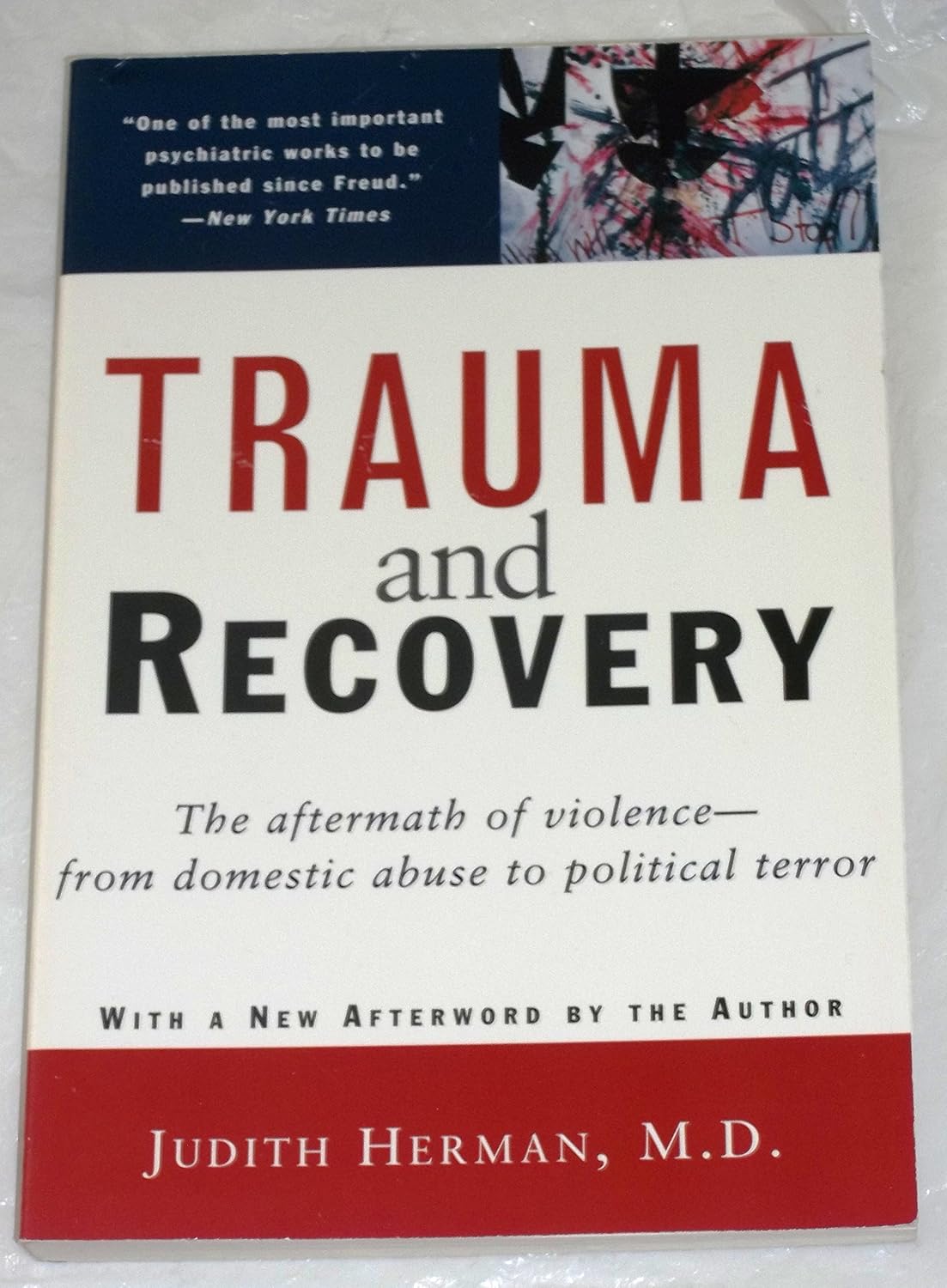
Trauma and Recovery
Judith Lewis Herman, M.D.
The seminal framework for understanding trauma and the stages of recovery — safety, remembrance, and reconnection.

The Polyvagal Theory in Therapy
Deb Dana
Accessible guide to using Polyvagal Theory to regulate your nervous system and feel safe in your body.
As an Amazon Associate, Clarity House Press earns from qualifying purchases. Your price is never affected.
Found this helpful?
Share it with someone who might need it.
About the Author

Clarity House Press
Editorial Team
The editorial team at Clarity House Press curates and publishes evidence-based content on narcissistic abuse recovery, high-conflict divorce, and healing. Our content is informed by research, survivor experiences, and established trauma-informed approaches.
View all posts by Clarity House Press →Published by Clarity House Press Editorial Team