Please read our important disclaimers before using this content
Professional reputation sabotage is a common post-separation abuse tactic—especially when your ex realizes they've lost control over you personally and targets your career as a new leverage point. When you work in a small industry, when you share professional circles, or when your ex has social capital in your field, the damage can feel insurmountable.
It's not. Reputation repair is possible, methodical, and strategic. It requires patience, documentation, and often legal intervention—but your professional credibility can be rebuilt, and in many cases, restored stronger than before. If your ex has gone further and filed complaints with a licensing board, see professional license defense during divorce for specific guidance on that threat.
Understanding Professional Reputation Sabotage
Before you can repair damage, you need to understand exactly what happened and how.
Common Sabotage Tactics
Narcissistic abusers weaponize professional reputation in predictable ways:
Direct contact with your employer: Emails or calls expressing "concern" about your mental health, substance abuse, or job performance—framed as worried, not malicious.
Social media campaigns: Vague-posting about "abusive exes" without naming you, but with enough context that mutual connections know it's you.
Professional network poisoning: Telling shared industry contacts, clients, or collaborators a distorted narrative of your relationship or competence.
Negative reviews or ratings: If you're in client-facing work, leaving negative reviews on professional sites (Google, Yelp, Avvo, Healthgrades, etc.).
Interference with opportunities: Discouraging mutual contacts from hiring you, working with you, or recommending you.
Exposing private information: Sharing personal details (mental health treatment, financial struggles, family issues) in professional contexts.
False professional complaints: Filing bogus complaints with licensing boards, ethics committees, or industry organizations.
These tactics often employ DARVO (Deny, Attack, Reverse Victim and Offender)—a manipulation strategy where perpetrators deflect blame and responsibility by portraying themselves as victims.1 Research shows that when observers are exposed to DARVO tactics, they rate actual victims as more abusive and express less willingness to punish perpetrators, contributing to victim blaming and low rates of reporting.2
What this looks like:
"I'm a licensed therapist. During our divorce, my ex filed a complaint with the state licensing board claiming I'd disclosed client information to him and was 'too mentally unstable' to practice safely. The investigation was dismissed as baseless, but it took six months—during which my anxiety was so severe I could barely work. He knew exactly how to wound me professionally."
Why Professional Sabotage Is Particularly Effective
Attacking your career hits multiple pressure points simultaneously:
- Financial leverage: Threatening your income creates immediate crisis and pressure to comply with demands
- Identity destruction: Your professional identity is core to self-concept—damaging it damages you fundamentally
- Isolation: Contaminating professional relationships cuts off support and resources
- Control maintenance: If you're financially desperate, you're more vulnerable to ongoing manipulation
- Public humiliation: Professional reputation damage feels especially shameful and exposing
Your ex understands these dynamics. That's why they chose this weapon.
Research confirms that workplace harassment and reputation damage cause significant psychological harm: exposure to workplace harassment has been associated with posttraumatic stress disorder (PTSD), depression, suicidality, substance abuse, chronic pain, and gastrointestinal disorders.3 The effects are particularly severe for members of demographic minority groups, who experience both higher rates of workplace injustice and more adverse outcomes when exposed to it.4
Documenting the Sabotage
You can't repair what you can't prove. Documentation is your first priority.
What to Document
Direct communications: Every email, text, voicemail, or letter from your ex to you, your employer, your colleagues, or professional contacts. Screenshot, save, backup.
Social media posts: Screenshot posts, comments, shares—with timestamps and full context. Use archive tools (Archive.org, screenshot with date/time stamp apps) in case they delete.
Witness statements: If colleagues, clients, or professional contacts received communications about you or witnessed sabotage, ask for written statements. "On [date], [Ex] contacted me and said [content]. I'm documenting this for legal purposes."
Impact documentation: Performance reviews before/after sabotage, lost opportunities, client departures, income reduction, job termination documentation.
Professional communications: Your employer's response to false allegations, HR investigations, licensing board inquiries—everything in writing.
Pattern evidence: If sabotage is ongoing, document dates, methods, and escalation. Patterns strengthen legal cases.
Creating a Sabotage Timeline
Organize documentation chronologically:
- Date: When did each incident occur?
- Method: How was your reputation attacked?
- Target: Who was contacted or what platform was used?
- Content: What specifically was said/claimed?
- Impact: What was the professional consequence?
- Evidence: What documentation do you have?
This timeline becomes the foundation for legal action, employer explanations, and strategic reputation repair.
Addressing False Claims with Your Current Employer
If your ex contacted your employer with false allegations, you need to control the narrative before it controls you.
Immediate Response Strategy
Request a meeting: Don't address serious allegations via email. Request private meeting with HR and/or your supervisor.
Come prepared: Bring documentation of the divorce, any protection orders, evidence of the pattern of harassment, and specific rebuttals to false claims.
Frame it clearly: "I'm going through a high-conflict divorce. My ex has begun making false allegations to damage my professional reputation. I want you to hear the truth from me directly."
Provide context without oversharing: "My ex is retaliating because I filed for divorce and requested a protection order. Their claims about [X] are fabricated. Here's documentation."
Separate personal from professional: "My personal situation is difficult, but it hasn't affected my work performance. As evidenced by [metrics/reviews/projects], I'm meeting all professional expectations."
Request protection: "I'm asking that any future communications from my ex be forwarded to HR without being acted upon. I'm pursuing legal remedies for this harassment."
What this looks like:
"When my ex emailed my boss claiming I was abusing prescription drugs—completely false—I immediately requested a meeting. I brought my divorce paperwork, the protection order, and six months of clean drug tests I'd started taking proactively when I anticipated this tactic. My boss appreciated me getting ahead of it. The email was filed as harassment, and my ex's subsequent emails were blocked."
When Your Employer Believes the Sabotage
If your employer takes adverse action based on false allegations:
Request written explanation: "I'd like documentation of the reasons for [termination/suspension/discipline] so I can understand the concerns and respond appropriately."
Provide evidence countering claims: If accused of instability, provide doctor's letter, therapist statement, performance metrics. Make the employer's belief in lies harder to maintain than accepting truth.
Involve legal counsel: Employment attorney review—especially if termination violated policy, contract, or law (some states prohibit domestic violence-related employment discrimination).
Document everything: You may have wrongful termination or defamation claims. Documentation is essential.
Consider strategic disclosure: In some cases, revealing the full abuse context (protection orders, police reports, abuse documentation) helps employer understand they're being manipulated.
Rebuilding Professional References
If your ex poisoned relationships with former colleagues, supervisors, or clients who would normally serve as references, you need to rebuild strategically.
Assessing Reference Damage
Identify contaminated references: Who might have been influenced by your ex's narrative? Mutual friends, shared industry contacts, former colleagues who maintained relationship with your ex.
Test references: Have a trusted friend call references posing as potential employer. Do they give positive, neutral, or negative information?
Evaluate risk: Some contaminated references can be saved with direct conversation. Others should be abandoned and replaced.
Rescuing Salvageable References
Direct, honest conversation: "I'm reaching out because I value our professional relationship and want to address something directly. During my divorce, my ex shared a distorted version of events with mutual contacts. I want to share the full picture with you."
Provide evidence, not just narrative: Show protection orders, police reports, court documents, therapist letters—whatever demonstrates your ex's false claims.
Acknowledge without apologizing: "You may have heard [claim]. The reality is [truth]. I understand if this affected your perception, and I wanted to give you accurate information."
Focus on professional competence: "Regardless of my personal situation, I'm proud of the work we did together on [project]. I hope that professional relationship can continue."
Accept their choice: Some people will choose your ex's version. Accept it and move on. Your energy is better spent elsewhere.
Building New References
If contaminated references can't be saved, build fresh ones:
Recent work relationships: Supervisors, colleagues, clients from jobs post-separation who never knew your ex.
Professional project collaborators: People who worked with you on specific projects, committees, or initiatives.
Volunteer leadership: Board positions, committee leadership, volunteer work—demonstrates competence and builds references outside contaminated circles.
Educational references: If you've taken recent courses or certifications, instructors who can speak to your competence.
Professional organization leaders: Active participation in industry associations creates reference-building opportunities.
LinkedIn and Professional Social Media Management
Your online professional presence is often the first impression potential employers, clients, or collaborators get. Strategic LinkedIn management is essential post-sabotage.
LinkedIn Profile Optimization
Professional photo: Current, professional, confident. If your ex controlled your image or you've avoided photos, invest in professional headshots.
Comprehensive profile: Complete all sections—summary, experience, education, skills, recommendations. Sparse profiles look suspicious.
Strategic headline: Clear professional identity. "Marketing Director | Digital Strategy Expert | B2B Growth Specialist" not "Looking for opportunities."
Accomplishment-focused experience: Quantify achievements in each role. Focus on results, not just responsibilities.
Recommendations: Request recommendations from recent colleagues, clients, supervisors who never knew your ex. Aim for 5-10 strong recommendations.
Skills endorsements: Ensure top skills accurately reflect your expertise. Remove random endorsements that dilute your brand.
Privacy and Connection Management
Review connections: Remove your ex (block if necessary). Consider removing their close friends, family, or flying monkeys who might report on your professional activity to your ex.
Adjust privacy settings: Control who sees your activity, posts, and connections. Balance visibility for opportunities with privacy from surveillance.
Google yourself regularly: See what appears when employers search your name. Address negative content strategically (more below).
Create Google Alerts: Set alerts for your name so you know when you're mentioned online—catches sabotage early.
Handling Mutual Professional Connections
Don't ask people to choose: Demanding colleagues unfriend your ex makes you look difficult. Let relationships evolve naturally.
Strategic visibility: Post professional accomplishments, share industry insights, engage thoughtfully. Demonstrate competence publicly.
Avoid vague-posting: Don't subtly reference your divorce or ex. Keep professional social media purely professional.
Document concerning behavior: If mutual connections share your content with your ex, make note. You may need to adjust connection strategy.
Legal Remedies for Defamation
When professional reputation sabotage crosses into defamation, legal action may be necessary and effective.
Understanding Defamation Law
Defamation = false statement presented as fact that damages your reputation.
Two types:
- Libel: Written defamation (emails, social media posts, letters to employer)
- Slander: Spoken defamation (phone calls, in-person conversations)
Requirements for defamation claim:
- False statement of fact (not opinion)
- Published/communicated to third party
- Damages to reputation
- Negligence or malice (knew it was false or reckless disregard for truth)
Professional defamation: False statements about professional competence, ethics, or conduct—particularly damaging and sometimes easier to prove damages.
When to Pursue Defamation Claims
Consider legal action when:
- Statements are provably false and damaging
- You've suffered quantifiable harm (job loss, lost income, lost clients)
- You have clear documentation of false statements
- Abuser has assets to collect judgment
- Your attorney believes case is strong
Don't pursue when:
- Statements are opinions, not facts ("she's a terrible person" vs. "she embezzled from clients")
- You can't prove damages
- Abuser is judgment-proof (no assets)
- Legal costs exceed likely recovery
- Lawsuit would create more publicity for lies
Cease and Desist Letters
Before filing lawsuit, attorneys often send cease and desist letter: formal demand to stop defamatory statements or face legal action.
Benefits:
- Puts abuser on notice that behavior is legally actionable
- Sometimes stops sabotage without lawsuit
- Creates evidence of pattern if sabotage continues
- Shows employers/professional contacts you're taking action
Attorney-drafted cease and desist is significantly more effective than self-written letter.
Defamation Lawsuits
Process:
- Consult with defamation attorney (often media/First Amendment specialists)
- Gather all documentation of false statements and damages
- File complaint in civil court
- Discovery process (depositions, document requests)
- Settlement negotiations or trial
- Judgment for damages if successful
Potential damages:
- Economic damages (lost income, job loss, client loss)
- Emotional distress damages
- Punitive damages (if malicious conduct)
- Attorney fees (in some jurisdictions)
Workplace discrimination and harassment have been linked to significant psychological distress and diminished psychological well-being.5 Studies examining workplace harassment over extended periods (up to 23 years) have found persistent associations with psychological distress and depression, demonstrating the long-term impact of reputation damage.3
What this looks like:
"My ex posted on Facebook that I'd been 'fired for stealing from clients'—100% false. I was never fired, never stole anything. But I lost three consulting contracts when clients saw the post. My attorney sent a cease and desist. When my ex refused to remove the post, we filed a defamation suit. We settled for $45,000 and a public retraction. It took a year, but my reputation was cleared."
Special Considerations for Small Industries
When you work in a small, interconnected professional community, reputation sabotage spreads faster and cuts deeper.
Small Industry Reputation Dynamics
Everyone knows everyone: News travels fast, gossip is currency, professional relationships are social relationships.
Long memories: Your reputation follows you for years, even decades.
Limited mobility: Can't easily escape to new company or city—industry is geographically concentrated or professionally small.
Dual relationships: Colleagues are also friends, clients are also social contacts, professional events are also social gatherings.
Strategic Reputation Repair in Small Industries
Leverage close connections for truth-telling: In small industries, respected voices carry enormous weight. One senior colleague vouching for you counteracts multiple gossips.
Professional excellence becomes reputation: Consistently exceptional work speaks louder than rumors. Deliver outstanding results on every project.
Strategic visibility at industry events: Attend conferences, present at panels, publish in industry journals. Demonstrate expertise publicly and repeatedly.
Address rumors directly with key influencers: In small industries, identify the 5-10 people whose opinion shapes everyone else's. Have direct, evidence-supported conversations with them.
Consider geographic or specialty shift: Sometimes the most strategic move is adjacent specialty within industry or geographic relocation where your reputation is clean slate.
Document everything forever: In small industries, false allegations can resurface years later. Keep documentation permanently.
What this looks like:
"I work in a tiny specialty field—maybe 200 practitioners nationwide. My ex knew everyone. After our divorce, he quietly told people I'd had an affair with a client (false). I couldn't leave the field—15 years of expertise, specialized certification. So I went on the offensive: published a research article, presented at the national conference, and had direct conversations with the 10 most respected people in the field. Within a year, my work spoke louder than his lies."
Rebuilding Professional Credibility Long-Term
Reputation repair isn't just damage control—it's strategic reputation building that makes you sabotage-resistant.
Professional Credibility Investments
Publications: Industry journal articles, blog posts, white papers—establishes expertise in writing.
Speaking engagements: Conference presentations, panel discussions, webinars—demonstrates thought leadership.
Certifications and credentials: Additional professional credentials rebuild credibility and demonstrate ongoing competence.
Awards and recognition: Apply for industry awards, excellence recognitions, professional honors.
Board service: Industry association board positions, nonprofit boards, advisory committees.
Media engagement: Expert quotes, podcast interviews, media commentary—positions you as authority.
Research on organizational reputation recovery emphasizes that reputation repair requires consistent demonstration of competence and trustworthiness over time.6 Trust repair research demonstrates that effective reputation restoration depends on both corrective action and mortification strategies, with the choice of approach depending on the severity of the situation and the organization's (or individual's) perceived culpability.7
Professional Branding After Sabotage
Define your brand: What do you want to be known for professionally? Expertise in X? Leader in Y? Known for Z approach?
Consistency across platforms: LinkedIn, professional website, email signature, conference bio—consistent messaging.
Visible expertise: Share knowledge generously. Post insights, help colleagues, answer questions publicly.
Professional generosity: Make introductions, recommend others, share opportunities. Generosity builds social capital.
Grace under pressure: How you handle professional challenges (including sabotage) demonstrates character. Professional, calm, evidence-based response builds respect.
Your Next Steps
Immediately:
- Document any professional sabotage incidents with dates, evidence, and impacts
- Google yourself and set up Google Alerts for your name
- Review and optimize your LinkedIn profile for professional credibility
This week:
- If your ex contacted your employer, schedule meeting with HR/supervisor to address directly
- Identify 3-5 recent colleagues who could serve as professional references
- Screenshot and archive any concerning social media posts about you
This month:
- Consult with employment or defamation attorney if sabotage caused job loss or significant damages
- Request professional recommendations on LinkedIn from recent colleagues
- Identify one professional credibility-building opportunity (publication, speaking, certification)
This quarter:
- Attend industry conference or networking event to rebuild professional visibility. The practical strategies in networking after isolation are directly applicable to this re-entry process.
- Publish professional content (article, blog post, social media thought leadership)
- Complete assessment of professional reputation—what needs ongoing repair vs. what's resolved
Resources
Legal and Reputation Defense:
- American Bar Association Lawyer Referral - Find defamation and employment attorneys
- Legal Services Corporation - Legal aid for workplace discrimination
- ReputationDefender - Online reputation monitoring and repair services
- Google Alerts - Free monitoring for your name and professional mentions
Professional Development and LinkedIn:
- LinkedIn Learning - Profile optimization and professional development courses
- TopResume - Professional LinkedIn profile reviews and optimization
- Toastmasters International - Public speaking and professional presence development
Career Support and Crisis Resources:
- National Career Development Association - Find certified career counselors
- Psychology Today - Therapists - Find career coaches specializing in trauma recovery
- 988 Suicide & Crisis Lifeline - Call or text 988 for crisis support (24/7)
- Crisis Text Line - Text HOME to 741741 for crisis counseling
Your professional reputation is not what your ex says it is. It's what you demonstrate through consistent, excellent work over time. Sabotage can temporarily damage perception, but it cannot destroy competence—and competence, repeatedly demonstrated, always rebuilds reputation.
The fact that your ex targeted your career isn't evidence that you're professionally vulnerable. It's evidence that your professional success threatened their control. They attacked your career because it was valuable—to you and others.
Reputation repair is slow, strategic work. It's documentation, legal action when necessary, relationship rebuilding, and relentless professional excellence. It's refusing to shrink from visibility and instead claiming space as an expert in your field.
You're not rehabilitating a legitimately damaged reputation. You're correcting a deliberately falsified one. That's not shame—it's restoration of truth.
References
- Abdulla, Lin, & Rospenda (2023). Workplace Harassment and Health: A Long Term Follow up.. Journal of occupational and environmental medicine. https://pmc.ncbi.nlm.nih.gov/articles/PMC10629840/ ↩
- Bhui, K., Dinos, S., Stansfeld, S. A., & White, P. D. (2012). Discrimination, Harassment, Abuse and Bullying in the Workplace: Contribution of Workplace Injustice to Occupational Health Disparities. American Journal of Public Health, 102(5), 962–969. National Institutes of Health. ↩
- Freyd, J. J. (n.d.). DARVO (Deny, Attack, Reverse Victim and Offender). University of Oregon. https://www.jjfreyd.com/darvo ↩
- Harsey, S. J., & Freyd, J. J. (2023). The Influence of Deny, Attack, Reverse Victim and Offender and Insincere Apologies on Perceptions of Sexual Assault. Journal of Interpersonal Violence, 38(17-18), 10440–10468. https://pubmed.ncbi.nlm.nih.gov/37154429/ ↩
- Triana, M. del C., Jayasinghe, M., & Pieper, J. R. (2015). Workplace Discrimination and Depressive Symptoms: A Study of Multi-Ethnic Hospital Employees. Ethnicity & Health, 20(3), 265–280. National Institutes of Health. https://pmc.ncbi.nlm.nih.gov/articles/PMC2867471/ ↩
- Lange, D., Lee, P. M., & Dai, Y. (2011). Organizational Reputation: A Review. Journal of Management, 37(1), 153–184. https://journals.sagepub.com/doi/10.1177/0149206310390963 ↩
- Sharma, K., Schoorman, F. D., & Ballinger, G. A. (2023). How Can It Be Made Right Again? A Review of Trust Repair Research. Academy of Management Annals, 17(1), 286–330. https://journals.sagepub.com/doi/abs/10.1177/01492063221089897 ↩
Recommended Reading
From Clarity House Press — plus trusted books for deeper understanding

Surviving the Storm: When the Court Takes Your Children
Clarity House Press
For fathers in active high-conflict custody battles. Understand your CPTSD symptoms, begin stabilization, and build foundation for healing. 17 chapters covering recognition, symptoms, and the healing path.

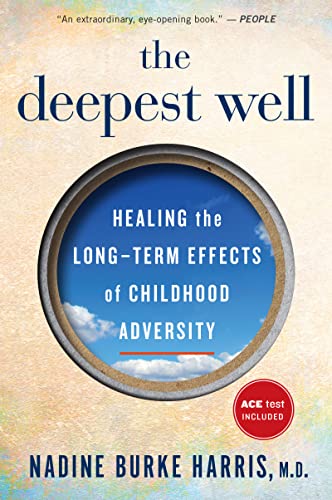
The Deepest Well
Nadine Burke Harris, M.D.
A pediatrician's clear explanation of how adverse childhood experiences affect lifelong health — and what recovery can look like.

A Mindfulness-Based Stress Reduction Workbook
Bob Stahl, PhD & Elisha Goldstein, PhD
Proven mindfulness techniques to reduce stress, anxiety, and chronic pain associated with trauma.
As an Amazon Associate, Clarity House Press earns from qualifying purchases. Your price is never affected.
Found this helpful?
Share it with someone who might need it.
About the Author

Clarity House Press
Editorial Team
The editorial team at Clarity House Press curates and publishes evidence-based content on narcissistic abuse recovery, high-conflict divorce, and healing. Our content is informed by research, survivor experiences, and established trauma-informed approaches.
View all posts by Clarity House Press →Published by Clarity House Press Editorial Team