Please read our important disclaimers before using this content
You used to be the person who never missed an industry conference. You presented at panels, served on committees, grabbed drinks after work with colleagues. Your professional network was robust, reciprocal, and valuable.
Then the abuse started. Slowly, your ex manufactured reasons you couldn't attend networking events. This kind of professional and social isolation is a deliberate tactic—not an accident. Conferences became battlegrounds—guilt trips about leaving the family, manufactured emergencies during your presentation, fights timed perfectly to destabilize you before important meetings. Eventually, it was easier to just stop going. You told yourself it was temporary, just until things calmed down.
Now you're free, and your professional network has atrophied. Former colleagues have moved on. Industry contacts stopped inviting you when you declined too many times. The thought of walking into a conference alone, explaining where you've been, and rebuilding from scratch feels overwhelming.
But professional isolation isn't permanent damage—it's an interrupted connection you can restore. Networking after isolation requires strategy, authenticity without oversharing, and giving yourself permission to re-enter imperfectly.
Understanding Professional Isolation Patterns
Before you can rebuild, understand what happened and why it feels so hard to re-engage.
How Abuse Creates Professional Isolation
Narcissistic abusers don't accidentally cut you off from professional networks—they engineer it systematically:
Creating conflict around professional events: Picking fights before conferences, creating "emergencies" during networking events, punishing you afterward with silent treatment or criticism.
Sabotaging your professional confidence: Constantly undermining your competence so you feel too insecure to network with peers.
Demanding exclusive attention: Framing professional networking as neglect of the relationship or family, creating guilt around professional development.
Controlling your schedule: Making it logistically impossible to attend events through childcare sabotage, vehicle control, or financial restriction.
Isolating you emotionally: When you do attend events, calling/texting obsessively, creating drama that distracts you, making you appear distracted or unstable to colleagues.
What this looks like:
"I was on a panel at our national conference—something I'd worked toward for two years. The morning of my presentation, my ex called saying our son was 'really sick' and I needed to come home immediately. I panicked, left the conference, drove three hours home—to find our son had a mild cold. My ex shrugged. I'd abandoned my panel. I never got invited to present again."
The Compounding Effect of Professional Isolation
Once isolation begins, it compounds:
Weakened connections: People stop reaching out when you never respond or attend.1
Lost visibility: You're forgotten when opportunities arise because you're not present.
Skill atrophy: Professional skills (public speaking, networking, industry knowledge) decline without practice.
Decreased confidence: The longer you're isolated, the scarier re-entry feels.
Career stagnation: Without networking, promotions, job opportunities, and industry knowledge all suffer.
Identity erosion: Your professional identity—separate from the relationship—weakens2 until you barely recognize the competent professional you used to be. The process of rebuilding your identity after narcissistic abuse extends into the professional realm too.
Assessing Your Current Professional Network
Before rebuilding, inventory what exists, what's salvageable, and what needs fresh development.
Network Inventory
Active connections (spoke to in last 6 months):
- Who are they?
- What's the relationship foundation (former colleague, mentor, client)?
- How can this connection grow?
Dormant connections (haven't spoken in 6+ months but relationship was previously strong):
- Who are they?
- Why did contact lapse?
- Is reconnection strategic and genuine?
Contaminated connections (influenced by your ex or connected to your ex):
- Can they be salvaged with direct conversation?
- Or should they be abandoned to avoid drama?
Lost connections (relationships that have ended or are unrecoverable):
- Accept the loss
- Focus energy elsewhere
What this looks like:
"I made a spreadsheet. Active connections: 4 people. Dormant: maybe 20 former colleagues I genuinely liked but hadn't contacted in 3 years. Contaminated: 15 people who were friends with both of us—I couldn't tell whose 'side' they'd chosen. Lost: my former mentor who retired, two colleagues who'd moved overseas. I had work to do, but I wasn't starting from absolute zero."
Strategic Prioritization
You can't rebuild everything simultaneously. Prioritize:
High value, low risk: Former colleagues who never knew your ex, industry contacts outside contaminated circles, new contacts in your current role.
High value, manageable risk: Dormant connections who were genuinely supportive, mentors who might understand a direct explanation, industry leaders whose professional relationship outweighs personal drama risk.
Low value, high risk: Social acquaintances masquerading as professional contacts, anyone actively aligned with your ex, people who bring more drama than opportunity.
Focus your energy on high-value connections, regardless of risk level. Just sequence strategically—start with low-risk to build confidence.
Explaining Your Absence Without Oversharing
When you re-engage professionally, people will wonder where you've been. You need an explanation that's honest enough to be authentic but professional enough to maintain boundaries.
The Career Gap Explanation Formula
Acknowledge + Brief Reason + Forward Focus
Examples:
"I took some time to focus on family priorities during a challenging period. I'm now fully re-engaged and excited to be back in the industry."
"I stepped back from professional activities for a few years while navigating some personal challenges. I'm thrilled to be re-engaging and reconnecting."
"Life threw some curveballs that required my full attention. I'm now in a great place professionally and personally, and looking forward to rebuilding industry connections."
"I had some family health issues that needed my focus. Everything's resolved now, and I'm excited to dive back into [industry/field]."
What NOT to Say
Too much detail: "I was in an abusive marriage and going through a terrible divorce and custody battle..."—makes people uncomfortable, seems like oversharing, positions you as victim rather than professional.
Apologetic: "I'm so sorry I disappeared, I know I let everyone down..."—creates awkward dynamic, suggests you did something wrong.
Bitter or angry: "My ex made it impossible to maintain professional relationships..."—true, but unprofessional. Don't badmouth anyone in professional contexts.
Vague to the point of suspicious: "I had some stuff going on..."—sounds evasive, invites speculation and gossip.
Defensive: "I know it's been a while, but I had really good reasons..."—creates adversarial tone when none is needed.
Reading the Room
If they push for details: "It's personal, and I prefer to keep professional and personal separate. What I can tell you is I'm fully available and energized for work now."
If they're genuinely supportive: You can share slightly more—"I went through a difficult divorce that required stepping back temporarily"—but keep focus on professional re-engagement, not trauma processing.
If they're gossipy: Minimal information. "Personal family matters. All resolved now!" and change subject.
What this looks like:
"At my first conference back, a former colleague asked where I'd been. I said, 'I had some family challenges that needed my full attention, but I'm back now and so glad to reconnect!' She said, 'I totally get it—life happens. Let's grab coffee and catch up.' That was it. No interrogation, no judgment, just genuine professional reconnection. I'd been dreading it for months, and it took 30 seconds."
Returning to Professional Events
Walking into a conference or networking event after years away feels like being the new kid at school—except everyone else has inside jokes and established relationships you're no longer part of.
Pre-Event Preparation
Set realistic expectations: You're not going to rebuild your entire network in one event. Goal: Make 3-5 genuine connections. That's success.
Research attendees: If attendee list is available, identify people you want to reconnect with. Reach out beforehand: "I see you're attending [Conference]—I'd love to catch up if you have time for coffee."
Prepare your story: Practice your career gap explanation until it feels natural, confident, not defensive.
Have conversation starters ready: Questions to ask others (people love talking about themselves): "What projects are you excited about right now?" "How has [industry trend] affected your work?" "What sessions are you most looking forward to?"
Plan self-care: Attending events while managing social anxiety and trauma responses requires energy management. Build in breaks, plan escape routes, bring grounding tools.
Bring business cards: Yes, still. Have updated, professional cards with LinkedIn, email, phone.
During the Event
Start with structured activities: Attend sessions, panels, or workshops first—easier than unstructured networking. Easier to talk to person sitting next to you than working a cocktail hour alone.
Use "buddies" if possible: If you have one active professional connection, ask them to attend with you or introduce you to people.
Practice strategic visibility: Attend opening reception, but you don't have to stay the whole time. Show up, have 3-4 conversations, leave before you're exhausted.
Ask questions in sessions: Raises your visibility, demonstrates expertise, easier than initiating cold conversations.
Follow the 70/30 rule: Listen 70% of the time, talk 30%. People remember good listeners more than good talkers.
Collect cards, not just distribute: Networking isn't broadcasting—it's relationship building. Get their card, ask about their work, find genuine connection points.
What this looks like:
"My first conference back, I set a goal: attend two sessions, have coffee with one former colleague I'd reconnected with, and introduce myself to three new people. That's it. I didn't stay for the cocktail party. I didn't attend every session. I went to two, had great conversations, and left feeling accomplished instead of overwhelmed. I built from there."
Post-Event Follow-Up
Follow up within 48 hours: Email or LinkedIn message: "Great to connect at [Conference]! I enjoyed hearing about [specific thing they mentioned]. Let's stay in touch."
Be specific: Generic "nice to meet you" messages get ignored. Reference specific conversation: "Your insights on [topic] really resonated. I'd love to hear more about [specific project you discussed]."
Offer value: If possible, include something useful: article related to their work, introduction to someone in your network, resource they mentioned needing.
Don't ask for favors immediately: First reconnection is relationship rebuilding, not job asking. Build relationship, then opportunities emerge organically.
Rebuilding Confidence in Professional Settings
Years of being told you're incompetent, emotional, or unreliable creates internalized doubt. Professional settings trigger imposter syndrome on steroids.
Competence Reality-Testing
Evidence collection: Before professional events, review your actual qualifications—education, certifications, years of experience, successful projects. You belong in professional spaces because you're qualified, not because you're confident.
Separate feelings from facts: "I feel like an imposter" ≠ "I am an imposter." Your feelings are valid trauma responses, not accurate assessments.3
Reframe anxiety: Professional anxiety isn't proof you don't belong—it's proof you care about doing well. Even highly successful people experience professional anxiety.4
Challenge negative self-talk: When your internal voice says "Everyone will see you're a fraud," counter with evidence: "I have [X credential], [Y years experience], and successfully [Z achievement]. That's not fraud—that's qualification."
Social Skill Rebuilding
If abuse damaged your social confidence, professional networking requires skill rebuilding:
Practice small talk: It's a skill. "How did you get into [field]?" "What brings you to this conference?" "Have you been to [City] before?" Practice with therapist, trusted friends, or even in low-stakes environments (coffee shop, grocery store).
Body language: Trauma survivors often have closed body language (crossed arms, avoiding eye contact, hunched posture).5 Practice open posture, appropriate eye contact, confident handshake.
Exit strategies: You don't have to stay in uncomfortable conversations forever. "I'm going to grab some water/check out another session/say hello to someone I just saw. Great to chat with you!"
Managing triggers: If professional events trigger hypervigilance, dissociation, or panic, have grounding strategies ready.6 Excuse yourself to bathroom, practice box breathing, use grounding techniques (5-4-3-2-1 sensory awareness).
What this looks like:
"I practiced networking conversations with my therapist like they were job interviews. 'Tell me about your work.' 'What challenges are you facing in your industry?' I wrote them on notecards. At my first event, I literally had the notecard in my pocket. I touched it like a talisman. By the third conversation, I didn't need it anymore."
Mentorship and Professional Guidance
Mentors and sponsors accelerate career rebuilding. But finding them after isolation requires strategy.
Mentorship vs. Sponsorship
Mentors: Provide advice, guidance, perspective. Help you develop skills and navigate challenges.
Sponsors: Actively advocate for your advancement. Recommend you for opportunities, make introductions, vouch for your competence.
You need both. They're not the same people.
Finding Mentors After Absence
Identify potential mentors: People 5-10 years ahead of you in your desired career path, people whose approach/values align with yours, people with expertise you want to develop.
Approach with specific ask: Not "Will you be my mentor?" (too vague, too much commitment). Try "I'm working on [specific skill/challenge]. Based on your experience with [relevant experience], I'd love your perspective. Could we schedule a 30-minute coffee?"
Make it easy: Be clear about what you're asking, respect their time, come prepared with specific questions.
Offer value: Mentorship is reciprocal. What can you offer? Fresh perspective, assistance with projects, connections in areas they don't have?
Formalize gradually: If one-off conversation goes well, ask for quarterly check-ins. Let mentorship relationship develop organically, not forced.
Earning Sponsors
Sponsors invest in high-performers. You earn sponsorship through demonstrated competence and making their job easier.
Deliver exceptional work: Sponsors back people who make them look good. Consistently exceed expectations.
Raise your visibility: Sponsors can't advocate for you if they don't know what you're accomplishing. Share wins, contribute visibly.
Solve their problems: Make your boss's job easier. Anticipate needs. Deliver solutions, not just identify problems.
Build trust: Sponsors risk their reputation vouching for you. Demonstrate reliability, competence, and integrity.
Ask for advocacy when ready: "I'm interested in [opportunity]. Based on my work on [project], do you feel comfortable recommending me?"
Industry Re-Entry After Extended Absence
If you've been out of your field for years, re-entry requires additional strategy.
Updating Industry Knowledge
Read industry publications: Subscribe to trade journals, newsletters, industry blogs. Get current on trends, terminology, major developments.
Take courses or certifications: Demonstrate you're current. LinkedIn Learning, Coursera, industry-specific certifications.
Attend webinars: Lower barrier to entry than conferences. Rebuild knowledge without travel/expense.
Join professional associations: Access to resources, publications, networking—often with virtual options.
Addressing the Knowledge Gap
Be honest about gap: "I've been out of the field for [timeframe] and I'm getting current on [recent development]. What resources would you recommend?"
Frame as learner: "I'm catching up on [trend/technology]. How has it affected your work?" Positions you as engaged learner, not out-of-touch.
Leverage transferable skills: "While I've been away from [specific industry], I've developed strong skills in [transferable skill] that I'm excited to bring back."
Your Next Steps
This week:
- Create your professional network inventory—active, dormant, contaminated, lost connections
- Draft your career gap explanation and practice it until it feels natural
- Identify one low-risk professional event to attend in the next month
This month:
- Reconnect with 2-3 dormant professional connections via email or LinkedIn
- Register for one professional event (conference, workshop, association meeting)
- Update your industry knowledge—read 3 industry publications, take one online course
This quarter:
- Attend 2-3 professional events or networking opportunities
- Identify 2 potential mentors and reach out with specific, time-bound request for advice
- Join one professional association or industry group
This year:
- Rebuild professional network to 20-30 active connections
- Establish 2-3 mentor relationships with regular check-ins
- Achieve one visible professional accomplishment (present at conference, publish article, earn certification)
Professional isolation after abuse wasn't your failure—it was engineered. Every networking event you skipped, every contact that lapsed, every opportunity you declined wasn't laziness or incompetence—it was survival. For those ready to take the next step, professional certifications can be a powerful way to signal re-entry and rebuild confidence simultaneously.
Now you're not just surviving—you're rebuilding. That requires different skills: strategic visibility, authentic but boundaried re-engagement, patience with yourself as you remember how to navigate professional spaces without hypervigilance.7 Many survivors find that workplace trauma impacts linger even after leaving the relationship—understanding this helps normalize the challenge.
Your professional network doesn't need to know what you survived to value what you offer. They need to see your competence, expertise, and genuine interest in mutual professional relationship building. That's what you bring. That's what you rebuild with.
One conversation at a time. One event at a time. One reconnection at a time.
You're not starting over. You're resuming from an interruption. There's a difference.
Resources
Networking Skills and Professional Development:
- Never Eat Alone by Keith Ferrazzi - Strategic networking and relationship building
- How to Win Friends and Influence People by Dale Carnegie - Classic communication skills
- The Fine Art of Small Talk by Debra Fine - Conversation skills for networking
- LinkedIn Learning - Industry-specific courses and professional skills
Professional Associations and Mentorship:
- SCORE - Free business mentoring and networking
- American Management Association - Management training and networking
- Toastmasters International - Public speaking and leadership skills
- Coursera - Professional certifications and courses
Confidence Building and Social Anxiety Support:
- Psychology Today - Therapists - Find therapists for social anxiety and professional trauma
- Social Anxiety Association - Resources for social anxiety in professional contexts
- 988 Suicide & Crisis Lifeline - Call or text 988 for crisis support (24/7)
- Crisis Text Line - Text HOME to 741741 for crisis counseling
References
- Granovetter, M. S. (1973). The strength of weak ties. American Journal of Sociology, 78(6), 1360-1380. https://doi.org/10.1086/225469 ↩
- Evan, G. W., & Cohen, S. (1987). Environmental stress. In D. Stokols & I. Altman (Eds.), Handbook of environmental psychology (Vol. 1, pp. 571-610). Wiley. Environmental stressors including social isolation significantly impact professional identity development and occupational engagement. ↩
- Spielberger, C. D., Anton, W. D., & Plutchik, R. (1976). State trait anxiety inventory. In I. B. Weiner (Ed.), Clinical diagnosis of mental disorders: A handbook (pp. 431-464). Plenum Press. Performance anxiety and trait anxiety are normative experiences across achievement domains including professional contexts. ↩
- Clance, P. R., & Imes, S. A. (1978). The imposter phenomenon in high achieving women: Dynamics and therapeutic intervention. Psychotherapy: Theory, Research and Practice, 15(3), 241-247. https://doi.org/10.1037/h0086006 ↩
- van der Kolk, B. A., McFarlane, A. C., & Weisaeth, L. (Eds.). (2007). Traumatic stress: The effects of overwhelming experience on mind, body, and society. Guilford Press. Trauma survivors demonstrate characteristic changes in posture, eye contact patterns, and non-verbal communication reflecting heightened threat detection systems. ↩
- Orenius, T., & Stoddard, S. A. (2012). A systematic review of the effects of grounding techniques on anxiety and physical pain. Journal of Evidence-Based Complementary & Alternative Medicine, 17, 12-18. https://doi.org/10.1177/2156587211414055 ↩
- Schachner, D. A., & Shaver, P. R. (2004). Attachment style and long-term singlehood. Personal Relationships, 11(3), 313-330. https://doi.org/10.1111/j.1475-6811.2004.00083.x Recovery from relationship trauma and social isolation involves gradual reengagement with social and professional networks, requiring deliberate skill rebuilding and self-compassion. ↩
Recommended Reading
From Clarity House Press — plus trusted books for deeper understanding
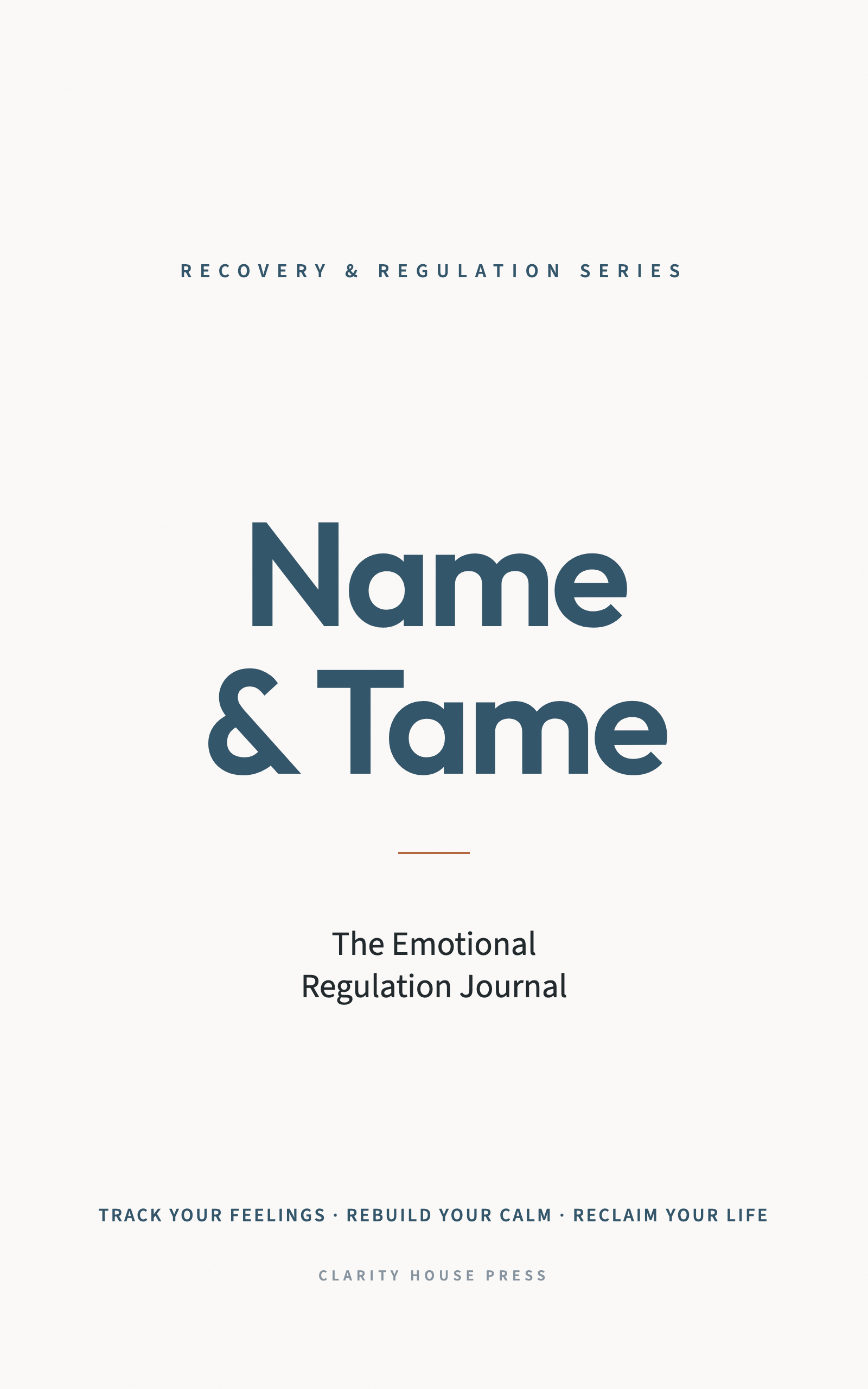

Healing Trauma
Peter A. Levine, PhD
Practical how-to guide for body-based trauma recovery with 12 guided Somatic Experiencing exercises.

Anchored
Deb Dana, LCSW
Practical everyday ways to transform your relationship with your nervous system using Polyvagal Theory.
As an Amazon Associate, Clarity House Press earns from qualifying purchases. Your price is never affected.
Found this helpful?
Share it with someone who might need it.
About the Author

Clarity House Press
Editorial Team
The editorial team at Clarity House Press curates and publishes evidence-based content on narcissistic abuse recovery, high-conflict divorce, and healing. Our content is informed by research, survivor experiences, and established trauma-informed approaches.
View all posts by Clarity House Press →Published by Clarity House Press Editorial Team