Please read our important disclaimers before using this content
You proofread the email seven times before sending. You redo tasks that are already done well because they are not perfect. You cannot start projects because you are paralyzed by the fear they will not be perfect. You apologize excessively for minor mistakes. You feel physical anxiety when something is "good enough" but not flawless.
This is not about having high standards or wanting to do well. This is perfectionism as a trauma response—the bone-deep belief that anything less than perfect will result in criticism, rejection, or abandonment.
After narcissistic abuse, many survivors develop compulsive perfectionism. Not because they are naturally perfectionistic, but because they learned that mistakes had severe consequences. Imperfection meant rage, silent treatment, humiliation, or being told they were worthless.
Their nervous system learned: perfect equals relatively safe. Imperfect equals danger. So they became hypervigilant about every detail, every potential flaw, every possible mistake—not as a personality trait, but as a survival mechanism.1 This is closely related to the fawn response—the trauma pattern of compulsive accommodation to avoid danger.
How Narcissistic Abuse Creates Perfectionism
Perfectionism doesn't appear from nowhere. It develops as a response to specific relational patterns.
Nothing Was Ever Good Enough
Narcissists often maintain control by ensuring you can never fully satisfy them:
- You cleaned the house, but they found the one spot you missed
- You got an A, but it should have been an A+
- You did exactly what they asked, but now they changed what they wanted
- You tried to please them, but they moved the goalposts
- Your best effort was met with disappointment or criticism
You learned: No matter how hard you try, you'll always fall short. So you tried even harder.
Mistakes Were Punished Severely
In healthy relationships, mistakes are learning opportunities. With a narcissist:
- Small errors were treated as catastrophes
- Mistakes became evidence of your inadequacy
- Errors were stored and retrieved to shame you later
- Forgetting something meant you "didn't care"
- Imperfection justified rage, silent treatment, or cruelty
You learned: Mistakes are dangerous. Avoid them at all costs.
You Were Responsible for Their Emotions
Narcissists make others responsible for their feelings:
- If they were unhappy, you must have done something wrong
- If they were angry, you caused it
- Your job was to anticipate and prevent their negative emotions
- You were punished for failing to manage their mood
You learned: You must be perfect to keep others from being upset. Their feelings are your fault to manage.2
Love Was Conditional on Performance
Narcissistic love is transactional:
- You were valued for what you provided, not who you were
- Affection depended on meeting expectations
- Falling short meant withdrawal of love
- You earned connection through achievement
You learned: You're only as lovable as your last performance. Imperfection means you don't deserve love.3
Your Identity Was Criticized
Narcissists often attack who you are, not just what you do:
- You weren't just wrong; you were stupid
- You didn't just make a mistake; you were a failure
- Your imperfections defined your worth
- You internalized their criticism as truth
You learned: You are fundamentally flawed. Perfection is the only way to hide your inadequacy.
What Trauma-Based Perfectionism Looks Like
Perfectionism as a trauma response has distinct characteristics.
Hypervigilance About Flaws
You notice every potential imperfection:
- Reviewing work obsessively for errors
- Scanning for what could go wrong
- Noticing tiny mistakes others wouldn't see
- Anticipating criticism before it comes
All-or-Nothing Thinking
Things are either perfect or worthless:
- If it's not perfect, why bother?
- One mistake ruins the whole thing
- Partial success feels like total failure
- "Good enough" doesn't exist
Procrastination and Paralysis
Perfectionism often looks like not doing:
- Delaying starting because you can't do it perfectly
- Avoiding tasks where you might fail
- Not finishing projects because they'll never be good enough
- Overthinking instead of acting
Over-Functioning
Working far harder than necessary:
- Doing much more than what's required
- Spending excessive time on minor tasks
- Taking on others' responsibilities to ensure things are done "right"
- Burning out from impossible standards
Excessive Apologizing
Apologizing for existing:
- Saying sorry when you've done nothing wrong
- Apologizing for taking up space, having needs, making noise
- Preemptive apologies for potential future mistakes
- Apologizing for apologizing
Difficulty Receiving Feedback
Criticism feels catastrophic:
- Any feedback feels like attack
- Can't distinguish constructive criticism from rejection
- Defensive or devastated when receiving notes
- Avoiding situations where you might be evaluated4
Physical Symptoms
Your body carries the perfectionism:
- Anxiety and tension
- Difficulty sleeping before deadlines or evaluations
- Stomach upset, headaches, muscle tension
- Exhaustion from constant hypervigilance
The Moving Goalposts Problem
A core feature of trauma-based perfectionism is that it can never be satisfied.
You finish something perfectly... but:
- You notice a tiny flaw
- You compare to something better
- You move the standard higher
- You find a new way it's inadequate
You succeed... but:
- It doesn't count because it was easy
- Anyone could have done it
- Next time you have to do better
- You got lucky; you're not actually good
The goalposts always move because perfectionism isn't about achieving a standard—it's about managing terror. No external achievement can resolve an internal sense that you're fundamentally inadequate. So you keep trying, keep achieving, keep failing to feel safe.
The Costs of Perfectionism
Perfectionism extracts significant costs:
Mental Health
- Chronic anxiety and stress
- Depression (from never being good enough)5
- Burnout and exhaustion
- Obsessive thoughts
- Eating disorders (perfectionism about body)
- Increased risk of substance use (to manage anxiety)
Relationships
- Difficulty being vulnerable (can't show imperfection)
- Critical of self and others
- Fear of intimacy (they'll discover you're not perfect)
- Difficulty accepting help
- Exhausting to be around
- Isolation
Work and Productivity
- Paradoxically, less productive (paralysis, over-working)
- Difficulty completing projects
- Avoiding challenges where you might fail
- Not applying for opportunities
- Unable to celebrate successes
Life Satisfaction
- Constant dissatisfaction (nothing's ever good enough)
- Unable to enjoy accomplishments
- Missing out on experiences due to fear
- Life governed by "should" rather than want
- Always striving, never arriving
Understanding the Function of Perfectionism
Perfectionism served a purpose. Understanding that purpose helps you heal.
It Was Protection
In the abusive relationship, perfectionism was an attempt to protect yourself:
- If I'm perfect, they won't hurt me
- If I don't make mistakes, I'll be safe
- If I anticipate everything, I can prevent their rage
- If I'm good enough, they'll love me
It didn't work—nothing could make the narcissist satisfied—but the attempt made sense. Your nervous system developed perfectionism as a survival strategy.
It Provides Illusion of Control
Perfectionism offers the sense that you can control outcomes:
- If I do everything right, bad things won't happen
- I can prevent rejection through flawlessness
- I can earn safety through performance
This is an illusion, but in chaotic, abusive situations, any sense of control—even false control—provides comfort.
It Manages Shame
For many survivors, imperfection triggers deep shame. Perfectionism manages shame by:
- Preventing shameful failures before they happen
- Hiding the imperfect self from others
- Proving that the critical voice (internal or external) is wrong
- Attempting to earn worth through achievement6
Understanding toxic shame and core belief defectiveness is important groundwork for untangling perfectionism from its deeper roots.
Healing Perfectionism
Recovery from trauma-based perfectionism involves both understanding and practice.
Recognize Perfectionism as Trauma Response
Shift from:
- "I'm too hard on myself"
- "I just have high standards"
- "I'm a perfectionist"
To:
- "This is my nervous system trying to keep me safe"
- "This pattern developed for survival reasons"
- "This is trauma, not personality"
This shift reduces shame about perfectionism and opens space for healing.
Separate Safety from Perfection
In the abusive relationship, perfection felt linked to safety. Now you can separate them:
- Safety doesn't require perfection anymore
- You're no longer in the relationship where mistakes were punished
- The current consequences of imperfection are rarely catastrophic
- You can survive making mistakes
Practice noticing: When perfectionism activates, ask: "What danger does my nervous system perceive? Is that danger real now?"
Practice "Good Enough"
Intentionally do things imperfectly:
- Send the email without the seventh proofread
- Leave a small mess
- Submit work that's good but not perfect
- Make a minor mistake on purpose
Then notice: What actually happens? The catastrophe you feared rarely occurs.
Expand the Window of "Acceptable"
Currently: Perfect = acceptable. Everything else = unacceptable.
Goal: Create a range of acceptable outcomes, including imperfect ones.
Practice:
- Define "good enough" before starting tasks
- Ask: "What would meet the actual requirements?"
- Notice when you exceed what's necessary
- Celebrate "good enough" as a success
Challenge All-or-Nothing Thinking
When you notice "it's perfect or worthless":
- Find the middle ground
- Ask: "On a scale of 1-10, where is this?" (It's rarely 0 or 10)
- Consider: "What would be acceptable to someone else?"
- Practice seeing partial success as real success
Develop Self-Compassion
Perfectionism thrives in harsh internal environments. Self-compassion provides an alternative:
Self-compassion involves:
- Self-kindness: Speaking to yourself as you would to a friend
- Common humanity: Recognizing that imperfection is human
- Mindfulness: Acknowledging struggle without over-identifying with it
Practice phrases:
- "This is hard, and I'm doing my best"
- "Everyone struggles with this sometimes"
- "I'm human, and humans make mistakes"
- "My worth doesn't depend on being perfect"
Separate Worth from Performance
Internalized message: "You're only as good as what you produce."
Truth: Your worth is inherent, not earned through performance.
Practice:
- Notice when you tie self-worth to outcomes
- Affirm worth separately from achievement
- Recognize that you have value on rest days, failure days, ordinary days
- Practice saying: "I am worthy even when I'm not productive"
Tolerate the Discomfort of Imperfection
Imperfection triggers discomfort. The goal isn't eliminating discomfort but tolerating it:
- Notice the anxiety without immediately trying to fix it
- Sit with "good enough" even when it feels wrong
- Let the discomfort exist without acting on it
- Recognize that the feeling of "not enough" isn't fact
Address Underlying Shame
Perfectionism often covers shame. Deeper work may involve:
- Therapy to address shame core beliefs
- Understanding where shame came from (usually from the abuser)
- Challenging shame-based identity ("I'm defective")
- Building a new self-image based on reality, not abuse
Specific Strategies for Common Perfectionism Traps
The Email/Message You Can't Send
When you're stuck reviewing:
- Set a review limit before you start (maximum 2 read-throughs)
- Ask: "Does this communicate what I need to communicate?"
- Send before you feel ready
- Notice that the world doesn't end
The Project You Can't Start
When you're paralyzed:
- Permission to do a "rough draft" that doesn't count
- Set a timer and work for 15 minutes without editing
- Create the worst possible version first (on purpose)
- Tell yourself you can fix it later—just get something down
The Work That's Never Done
When you can't finish:
- Define "done" before starting
- Set a deadline and honor it
- Recognize diminishing returns (more work isn't always better)
- Practice submitting before it feels finished
The Apology You Don't Need to Make
When you want to apologize:
- Pause and ask: "Did I actually do something wrong?"
- Notice if you're apologizing for existing
- Practice saying "thank you" instead of "sorry" (e.g., "Thank you for waiting" not "Sorry I'm late")
- Reserve apologies for actual harm
The Feedback That Feels Devastating
When you receive criticism:
- Take a breath before responding
- Separate the information from your worth
- Ask: "Is there anything useful here?"
- Remind yourself: feedback about work is not rejection of you
Professional Support for Perfectionism
Therapy can significantly help with trauma-based perfectionism:
Useful approaches:
- Cognitive Behavioral Therapy (CBT): Challenging perfectionist thoughts
- Acceptance and Commitment Therapy (ACT): Learning to act despite discomfort
- EMDR: Processing trauma underlying perfectionism
- Internal Family Systems (IFS): Working with the perfectionist "part"
- Compassion-Focused Therapy: Building self-compassion
- Schema Therapy: Addressing core beliefs about worth
A therapist can help you:
- Understand where perfectionism came from
- Challenge unhelpful beliefs
- Process underlying trauma
- Build new patterns
- Develop self-compassion
Your Next Steps
This week:
- Notice when perfectionism activates without trying to change it
- Identify one area where you hold yourself to impossible standards
- Practice one "good enough" task (send something with only one review)
- Speak one self-compassionate phrase when you notice criticism
This month:
- Intentionally do something imperfectly and observe the outcome
- Challenge one all-or-nothing thought pattern
- Practice separating your worth from one specific performance
- Consider whether professional support would help
Long-term:
- Build sustainable self-compassion practices
- Work with a therapist on underlying trauma and shame
- Gradually expand tolerance for imperfection
- Create a new relationship with standards—healthy striving without terror
Remember: Perfectionism isn't a personality trait you're stuck with. It's a survival mechanism you developed to navigate an impossible situation. The situation has changed. You're no longer in that relationship. The rules can change too. Developing self-compassion practices for trauma recovery is the antidote to the impossible standards abuse installed.
You don't have to be perfect to be safe. You don't have to be perfect to be loved. You don't have to be perfect to be worthy.
You're already worthy—imperfect, human, and worthy.
Resources
Therapy and Professional Support:
- Psychology Today - Therapists - Find therapists specializing in perfectionism and trauma
- EMDR International Association - Find EMDR therapists for trauma processing
- Internal Family Systems Institute - Find IFS therapists
- Anxiety and Depression Association of America - Resources for perfectionism and anxiety
Self-Compassion and Crisis Support:
- Self-Compassion.org - Dr. Kristin Neff's self-compassion exercises
- 988 Suicide & Crisis Lifeline - Call or text 988 for crisis support (24/7)
- NAMI Helpline - 1-800-950-NAMI for mental health support
- Crisis Text Line - Text HOME to 741741 for crisis counseling
References
- Egan, S. J., Wade, T. D., & Shafran, R. (2011). Perfectionism as a transdiagnostic process: A clinical review. Clinical Psychology Review, 31(2), 203-212. https://doi.org/10.1016/j.cpr.2010.04.009 ↩
- Dobos, B., Borza, M., Urban, R., & Kokonyei, G. (2021). What makes university students perfectionists? The role of childhood trauma, emotional dysregulation, academic anxiety, and social support. Scandinavian Journal of Psychology, 62(3), 443-447. https://doi.org/10.1111/sjop.12718 ↩
- Cheli, S., Cavalletti, V., Petrocchi, N., Landi, G., Saliani, A. M., Lomoriello, A. S., Fanti, E., Gragnani, A., & Mancini, F. (2024). Childhood emotional abuse, neuroticism, perfectionism, and workaholism in an Italian sample of young workers. Behavioral Sciences, 14(4), 298. https://doi.org/10.3390/bs14040298 ↩
- Wu, C., Li, R., & Wang, Y. (2025). The mediating role of maladaptive perfectionism in the relationship between childhood trauma and depression. Scientific Reports, 15, 1234. https://doi.org/10.1038/s41598-025-03783-1 ↩
- Flett, G. L., Nepon, T., Hewitt, P. L., & Fitzgerald, K. (2016). Perfectionism, components of stress reactivity, and depressive symptoms. Journal of Psychopathology and Behavioral Assessment, 38(4), 645-654. https://doi.org/10.1007/s10862-016-9554-x ↩
- Stoeber, J., &Childs, J. H. (2010). The assessment of self-oriented and socially prescribed perfectionism: Subscales make a difference. Journal of Personality Assessment, 92(6), 577-585. https://doi.org/10.1080/00223891.2010.513306 ↩
- Richardson, C. M. E., Rice, K. G., & Devine, D. P. (2014). Perfectionism, emotion regulation, and the cortisol stress response. Journal of Counseling Psychology, 61(1), 110-118. https://doi.org/10.1037/a0034446 ↩
Recommended Reading
From Clarity House Press — plus trusted books for deeper understanding

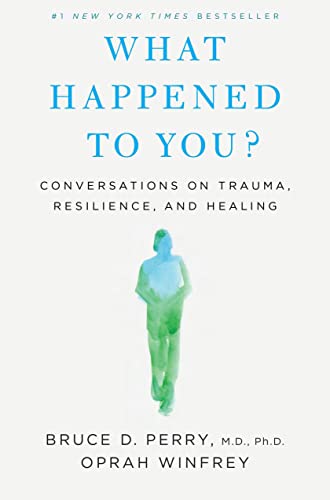
What Happened to You?
Bruce D. Perry, M.D., PhD & Oprah Winfrey
A conversational introduction to how early experience shapes us — reframing 'what's wrong with you' into 'what happened to you.'

It's OK That You're Not OK
Megan Devine, LPC
A grounded, permission-giving companion for grief that resists tidy timelines and lets loss simply be witnessed.
As an Amazon Associate, Clarity House Press earns from qualifying purchases. Your price is never affected.
Found this helpful?
Share it with someone who might need it.
About the Author

Clarity House Press
Editorial Team
The editorial team at Clarity House Press curates and publishes evidence-based content on narcissistic abuse recovery, high-conflict divorce, and healing. Our content is informed by research, survivor experiences, and established trauma-informed approaches.
View all posts by Clarity House Press →Published by Clarity House Press Editorial Team