Please read our important disclaimers before using this content
After years of criticism, blame, and emotional abuse, treating yourself with kindness feels foreign—maybe even impossible. The voice in your head sounds remarkably like your abuser: harsh, critical, never satisfied. Self-compassion isn't self-indulgence or weakness. It's essential medicine for trauma recovery, and for many survivors, it's the skill that changes everything.
Here's the truth that took me years to understand: You cannot hate yourself into healing. The same critical voice that told you that you deserved the abuse, that you should have known better, that you're fundamentally broken—that voice is not your friend. It's not motivating you. It's keeping you stuck. Our article on the inner critic in C-PTSD explores where this voice comes from and how to interrupt it.
Why Self-Compassion Matters for Abuse Survivors
After Abuse, Your Inner Voice Becomes the Abuser's Voice
During narcissistic abuse, you internalized messages that weren't true but felt true:
- You're too sensitive
- You're impossible to love
- You caused this
- You're not enough
- You're too much
- You should have known better
- You're broken beyond repair
After the relationship ends, the external abuser may be gone, but their voice often remains—now operating as your own internal critic. You've learned to treat yourself the way they treated you: with contempt, impossible standards, and no room for human imperfection.
This isn't your fault. This is what abuse does. The critical voice was installed through repeated, systematic emotional manipulation. But recognizing it means you can begin to change it.
The Research Is Clear
Dr. Kristin Neff's research on self-compassion1 has demonstrated that treating yourself with kindness is directly linked to:
- Reduced anxiety and depression2
- Greater emotional resilience
- Better relationships with others3
- Increased motivation and follow-through
- Improved physical health markers
- Faster trauma recovery4
- Reduced shame and self-blame
- Greater life satisfaction
Contrary to popular belief, self-compassion doesn't make people lazy, self-indulgent, or weak. People who practice self-compassion are actually MORE likely to take responsibility for their mistakes, MORE motivated to improve, and MORE resilient in the face of setbacks.5
For trauma survivors specifically, self-compassion helps interrupt the shame cycle that keeps people stuck. Shame says "I am bad." Self-compassion says "I experienced something bad, and I deserve kindness." Our article on toxic shame vs. healthy guilt in C-PTSD explores why shame runs so deep after narcissistic abuse.
Self-Compassion Rewires the Inner Critic
When you practice self-compassion consistently:
- The harsh critical voice begins to soften
- You develop an alternative response to failure and difficulty
- Your nervous system learns that you're not under attack from within
- Shame loses its grip
- You become able to acknowledge mistakes without spiraling
- Permission to be imperfect becomes available
This isn't about toxic positivity or pretending everything is fine. It's about treating yourself with the same basic kindness you would offer a friend who was struggling.
The Three Components of Self-Compassion (Dr. Kristin Neff)
1. Self-Kindness vs. Self-Judgment
Self-kindness means treating yourself as you would a dear friend who was going through the same thing.
The Old Pattern (Self-Judgment):
When something goes wrong, your immediate response is attack: "I'm so stupid. Why did I stay so long? What's wrong with me? I should have known better. I'm such an idiot."
The Self-Compassion Response (Self-Kindness):
"This is really hard. I did the best I could with the information I had at the time. I stayed because I loved deeply and believed in the relationship. That's not a character flaw—that's being human."
Practice This Shift:
When you notice self-criticism, ask: "What would I say to a good friend in this exact situation?" Then say that to yourself.
If your friend had stayed in an abusive relationship for years, would you call her stupid? Would you tell her she deserved it? Of course not. You would offer understanding, compassion, and support. You deserve the same.
2. Common Humanity vs. Isolation
Common humanity means recognizing that suffering, imperfection, and difficulty are part of the shared human experience—not evidence that something is uniquely wrong with you.
The Old Pattern (Isolation):
"I'm the only one stupid enough to fall for this. Other people don't get fooled like I did. Everyone else would have left sooner. I'm uniquely broken."
The Self-Compassion Response (Common Humanity):
"Millions of people have been in abusive relationships. I'm not alone in this. Smart, capable, loving people are abused every day. This is part of the human experience, and I'm not uniquely flawed for having experienced it."
The Reality:
- 1 in 4 women and 1 in 9 men experience intimate partner violence6
- Narcissistic abuse affects people of all intelligence levels, professions, and backgrounds
- The average victim makes 7 attempts to leave before leaving permanently7
- Trauma bonding is a documented neurological phenomenon, not a character weakness8
You are not alone. You are not uniquely broken. You experienced something that happens to many people, and your responses were normal reactions to abnormal circumstances.
3. Mindfulness vs. Over-Identification
Mindfulness in self-compassion means having balanced awareness of painful thoughts and feelings—neither suppressing them nor being completely consumed by them.
The Old Pattern (Over-Identification):
"I AM broken." "I AM a failure." "I AM unlovable." The painful thought becomes fused with your identity. You don't have the thought; you become the thought.
The Self-Compassion Response (Mindfulness):
"I'm having the thought that I'm broken." "I'm noticing a feeling of failure." "I'm experiencing the belief that I'm unlovable."
This small shift—from "I am" to "I'm having the thought"—creates space between you and the painful experience. You're the sky; thoughts and feelings are weather. Weather passes. The sky remains.
Practice This:
When you notice a painful self-judgment, add the phrase: "I notice I'm having the thought that..." or "I'm aware of the feeling of..."
This doesn't make the pain go away, but it prevents you from drowning in it.
The Self-Compassion Break Practice
This is a core practice you can use anywhere, anytime you're struggling:
Step 1: Acknowledge the Suffering
Place your hand on your heart (or wherever feels soothing). Say to yourself: "This is a moment of suffering" or "This is really hard" or "This hurts."
Don't minimize. Don't problem-solve. Just acknowledge that this moment is painful.
Step 2: Connect to Common Humanity
Say to yourself: "Suffering is part of life" or "I'm not alone in this" or "Other people feel this way too."
Remind yourself that pain is universal. You're not being singled out. This is part of being human.
Step 3: Offer Yourself Kindness
Say to yourself: "May I be kind to myself" or "May I give myself what I need" or "May I accept myself as I am."
You can also ask: "What do I need right now?" and then try to offer it to yourself—whether that's rest, comfort, a break, or simply acknowledgment.
The Full Practice (30 seconds):
- Hand on heart
- "This is a moment of suffering."
- "Suffering is part of life. I'm not alone."
- "May I be kind to myself. May I give myself what I need."
Practice this when triggered, when the inner critic attacks, when you make a mistake, when you're grieving, when you feel shame. It won't fix everything, but it interrupts the cycle of self-attack.
Self-Compassion Practices Specifically for Abuse Survivors
Reparenting Yourself
If you had a narcissistic parent or were raised in a dysfunctional family, you may never have learned what compassionate self-talk sounds like. Reparenting is the practice of giving yourself what you didn't receive as a child.
How to Practice:
- Talk to yourself as a loving, safe parent would talk to a struggling child
- When your inner child feels scared, offer comfort: "I know you're scared. That makes sense. I'm here with you."
- When you make a mistake, respond as a good parent would: "It's okay. Everyone makes mistakes. Let's see what we can learn."
- Celebrate small victories the way a loving parent celebrates a child: "I'm proud of you for trying!"
- Set boundaries from love, not fear: "I'm saying no to this because I care about you."
Inner Child Work:
Some survivors find it helpful to visualize their younger self and practice directing compassion toward that child. Looking at old photos can help. Ask yourself: "Would I tell this child that they deserved to be abused? Would I criticize this child for not knowing better?" The answer is always no.
Self-Compassionate Letter Writing
Write to yourself as if you were a compassionate friend who knows everything about your situation.
The Practice:
- Think of a situation that's causing you pain
- Write a letter from the perspective of an unconditionally loving friend
- This friend knows your full history and loves you anyway
- The letter should acknowledge your pain, validate your experience, offer understanding, and express care
Example Opening:
"Dear [Your Name], I know how much you're struggling right now. What you went through was real, and the pain you're feeling makes complete sense. You're not crazy, and you're not broken. You survived something incredibly difficult, and now you're doing the hard work of healing..."
Keep the letter. Read it when you're struggling.
Loving-Kindness Meditation (Modified for Trauma)
Traditional loving-kindness meditation (metta practice) starts with self but moves quickly to others.9 For trauma survivors, it's often easier to reverse this—starting with others and working back to yourself.
The Phrases:
- "May I be safe"
- "May I be healthy"
- "May I be happy"
- "May I live with ease"
Modified Approach:
- Start with someone easy—a beloved pet, a child, a dear friend
- Direct the phrases toward them: "May you be safe, may you be healthy..."
- Expand to neutral people
- Eventually, when ready, direct the phrases toward yourself
- Don't rush. It may take weeks or months to genuinely direct loving-kindness to yourself
If It Feels Impossible:
Some survivors can't say "May I be happy" without feeling like frauds. Alternatives:
- "May I begin to be kind to myself"
- "May I learn to feel safe"
- "May I take one step toward happiness"
- "May I be open to the possibility of ease"
Start where you are, not where you think you should be.
Self-Compassion Mantras for Difficult Moments
When triggered, anxious, or spiraling, having prepared phrases can help interrupt the cycle:
For When the Inner Critic Attacks:
- "This is hard, and that's okay."
- "I'm doing the best I can."
- "I deserve kindness."
- "I'm allowed to be imperfect."
For Processing Trauma:
- "Healing isn't linear."
- "This pain won't last forever."
- "I survived. I'm surviving. I will continue to survive."
- "My feelings are valid."
For Shame Spirals:
- "I am not what happened to me."
- "This thought is not a fact."
- "I don't have to believe everything I think."
- "Shame is a liar."
For Setbacks:
- "Setbacks are part of recovery, not proof of failure."
- "I can start again right now."
- "One bad day doesn't erase my progress."
- "I'm still healing even when it doesn't feel like it."
Write your mantras down. Put them on sticky notes. Save them in your phone. Have them ready when you need them. Grounding techniques for C-PTSD pair well with these practices when you're experiencing acute distress.
Common Obstacles to Self-Compassion
"I Don't Deserve It"
This is perhaps the most common obstacle for abuse survivors. The belief that you don't deserve kindness was installed through abuse. It feels true. It isn't.
The Truth: All humans deserve compassion—especially those who have suffered. You don't have to earn kindness. You don't have to be perfect to deserve care. The fact that you believe you don't deserve it is actually evidence that you need it most.
Practice: When "I don't deserve it" comes up, notice it: "I'm having the thought that I don't deserve compassion. This thought comes from my history of abuse. It's not a fact. I can practice compassion anyway, even if I don't believe I deserve it yet."
"It's Selfish or Weak"
Many people confuse self-compassion with self-pity, self-indulgence, or weakness.
Self-pity is wallowing in suffering and feeling uniquely singled out. Self-compassion acknowledges suffering while connecting to common humanity and offering kindness.
Self-indulgence is giving yourself whatever you want in the moment. Self-compassion asks what you truly need—which might be rest, or might be getting up and doing something hard.
Weakness would mean avoiding responsibility. Self-compassion actually makes it easier to take responsibility because you're not defending against shame.
The Research: Studies consistently show that self-compassion builds resilience, increases motivation, and strengthens the capacity to help others. It's not weakness—it's the foundation of genuine strength.
"I Need to Be Hard on Myself to Stay Motivated"
The belief that self-criticism drives improvement is widespread but incorrect.
Research Shows:
- Self-criticism increases anxiety, which impairs performance10
- Self-criticism leads to avoidance of challenges
- Self-criticism is associated with depression and procrastination11
- Self-compassion increases motivation and persistence12
- Self-compassion makes it easier to acknowledge mistakes and learn from them
The Truth: You can hold yourself accountable AND be kind to yourself. These are not opposites. In fact, self-compassion makes genuine accountability more possible because you're not defensive.
"If I'm Compassionate to Myself, I'll Become Complacent"
Survivors often fear that self-compassion means accepting the status quo—that if they stop punishing themselves, they'll stop trying to improve.
The Reality: Self-compassion doesn't mean you stop having standards or goals. It means you pursue them with kindness rather than cruelty. Athletes perform better with encouraging coaches than with abusive ones. You can be your own encouraging coach.
Compassionate Accountability: "I didn't handle that well. That doesn't make me a bad person—it makes me human. What can I learn? How can I do better next time? I'm going to work on this because I care about myself and my relationships, not because I'm worthless if I fail."
Self-Compassion vs. Self-Esteem
These are often confused but are fundamentally different:
Self-Esteem:
- Based on evaluation and comparison ("I'm good at this," "I'm better than average")
- Contingent on performance and achievement
- Requires feeling special or above average
- Fragile—collapses when you fail or compare unfavorably
- Can lead to narcissism, aggression, or prejudice
Self-Compassion:
- Based on inherent human worth, regardless of performance
- Present in success AND failure
- Doesn't require comparison to others
- Stable—available even when you're struggling
- Associated with humility, connection, and emotional resilience
Why This Matters for Abuse Survivors:
If you try to build self-esteem after abuse, you're building on shaky ground. Your self-esteem will collapse every time you make a mistake or compare yourself unfavorably to others.
Self-compassion offers a stable foundation. You matter because you're human, not because you've achieved or are "better than." This can't be taken away by failure or criticism.
Self-Compassion for Perfectionists
Perfectionism is often a trauma response—an attempt to be "good enough" to avoid criticism, rejection, or abuse. If you were punished for mistakes, you learned that imperfection was dangerous.
The Perfectionism Trap:
- "If I'm perfect, I'll be safe/loved/accepted."
- "If I make a mistake, it confirms I'm worthless."
- "I should have known better. I should have done better. I should be better."
Self-Compassion Reframes:
Instead of: "I should have done that perfectly." Try: "I did my best with what I had. Good enough is good enough."
Instead of: "I made a mistake—I'm such an idiot." Try: "I made a mistake. That's how I learn. All humans make mistakes."
Instead of: "I'm not good enough yet." Try: "I'm worthy now, not when I'm perfect. Perfection doesn't exist."
Instead of: "My worth depends on my performance." Try: "My worth is inherent. It doesn't change based on what I do."
Permission: You are allowed to be a person—messy, imperfect, sometimes struggling, always learning. That's not a flaw. That's being human.
Body Compassion After Abuse
Many abuse survivors have complicated relationships with their bodies. The body was the site of trauma. The body carries tension, pain, and memories. Disconnection from the body was a survival strategy.
Common Experiences:
- Body shame and criticism
- Disconnection or numbness (dissociation)
- Difficulty with physical self-care
- Using food, substances, or self-harm to manage emotions
- Neglecting health needs
- Feeling betrayed by the body's responses
Body Compassion Practices:
Body Scan with Kindness: Instead of judging what you find, offer kindness: "I notice tension in my shoulders. Of course there's tension—I've been through a lot. I offer this part of me kindness."
Thank Your Body: Despite everything, your body carried you through. "Thank you, legs, for walking me through hard days. Thank you, heart, for continuing to beat."
Gentle Movement: Not punishment exercise. Gentle movement that feels good—stretching, walking, swimming, yoga. Movement as self-care, not self-punishment.
Respectful Mirror Work: Practice looking at yourself with kindness rather than criticism. Start with just your eyes. "These eyes have seen so much. They deserve kindness."
Nourishment: Feed yourself with care—not restriction or punishment. Your body deserves nourishment.
Self-Compassion in Setbacks
Recovery isn't linear. You will have setbacks. How you respond to setbacks matters.
Common Setbacks:
- Responding to a hoover
- Having a panic attack
- Yelling at your kids
- Missing therapy
- Binge eating or drinking
- Isolating from support
- Falling back into old patterns
- Having a bad mental health day after a good streak
The Old Response: "I'm a failure. I've made no progress. What's wrong with me? I can't even do recovery right. I should be further along by now. Everyone else handles this better."
The Self-Compassionate Response: "Setbacks are part of recovery—not proof of failure. This moment doesn't define my journey. I'm human, and I'm going to struggle sometimes. What do I need right now? How can I be kind to myself? I can start again in this moment."
Remember:
- One bad day doesn't erase months of progress
- Setbacks often come before breakthroughs
- Even experienced meditators have distracted meditations
- You're not starting over—you're starting from experience
- Be as kind to yourself after a setback as you would be to a friend
Daily Self-Compassion Practices
Morning Practice (2 minutes)
Before getting out of bed:
- Place your hand on your heart
- Take three slow breaths
- Say: "May I be kind to myself today. May I meet challenges with compassion. May I remember that I'm doing my best."
- Set an intention for self-kindness
Throughout the Day
- Notice when self-criticism arises
- Pause and offer the self-compassion break
- Ask: "What would I say to a friend?"
- Use your mantras when needed
- Take compassion breaks as needed
Evening Practice (3 minutes)
Before sleep:
- Reflect on three moments you were kind to yourself (even small ones)
- Acknowledge any difficulties with compassion: "Today was hard. That's okay."
- Offer yourself gratitude: "Thank you for getting through today."
- Release what didn't go well: "I did my best. Tomorrow is a new day."
When You Can't Access Self-Compassion
Sometimes, especially early in recovery, self-compassion feels completely impossible. That's okay. Here's what to do:
Start with Others: It's often easier to feel compassion for others than for yourself. Practice with pets, children, or friends first. Build the muscle. Eventually, you can turn it inward.
Use Third Person: If "I deserve kindness" feels too hard, try "You deserve kindness" or "[Your name] deserves kindness." The distance can help.
Focus on One Component: Maybe you can do mindfulness but not self-kindness. Start there. The components support each other—progress in one area helps the others.13
Work with a Therapist: If self-compassion feels completely inaccessible, there may be deeper blocks that need therapeutic attention. A trauma-informed therapist can help you understand and work through these blocks. Cognitive processing therapy and trauma-focused CBT have demonstrated effectiveness in addressing trauma-related emotional blocks.14
Be Patient: Self-compassion is a skill. Like any skill, it develops with practice. You may feel like a fraud at first. That's normal. Keep practicing anyway.
Compassion for Lack of Compassion: Even being unable to offer yourself compassion can be met with compassion: "It's hard that I can't be kind to myself right now. This makes sense given what I've been through. I'm going to keep trying."
The Paradox
Here's what years of working with trauma survivors has taught me:
The harder you are on yourself, the worse you feel and the slower you heal.
The kinder you are to yourself, the more you grow and the faster you recover.
This is counterintuitive. We're taught that criticism motivates and kindness weakens. The research says the opposite.
Your abuser taught you that you don't deserve kindness. They taught you that you're only valuable when you're perfect. They taught you to attack yourself so they didn't have to.
You can prove them wrong. You can be the voice they never were. You can offer yourself what they couldn't give.
That compassionate voice—the one that says "You're doing your best, and that's enough"—that's not weakness. That's not self-indulgence. That's the real you, finally coming home.
Your Next Steps
Today: Practice the self-compassion break once. Just once. Hand on heart. "This is a moment of suffering. Suffering is part of life. May I be kind to myself."
This Week: Choose one mantra and use it when the inner critic attacks. Write it somewhere you'll see it.
This Month: Try one self-compassion meditation (guided meditations are available free at self-compassion.org). Notice what comes up. Be gentle with yourself about whatever you find.
Ongoing: This is a practice, not a destination. You'll have days when self-compassion flows easily and days when it feels impossible. Both are okay. Keep practicing.
You survived abuse. You're working on healing. You're reading articles about self-compassion. You're trying.
That's not nothing. That's everything.
May you be kind to yourself. May you know that you're not alone. May you find your way to the compassion you deserve.
Resources
Self-Compassion and Trauma Resources:
- The Center for Self-Compassion - Research-based practices and guided exercises
- Greater Good Science Center - Evidence-based well-being resources
- Psychology Today Therapist Finder - Find trauma-informed therapists
- EMDR International Association - Find certified EMDR therapists
Mental Health Support:
- SAMHSA National Helpline - 1-800-662-4357 (24/7)
- National Alliance on Mental Illness (NAMI) - Mental health education and support
- Anxiety and Depression Association of America (ADAA) - Mental health resources
- International Society for Traumatic Stress Studies - Trauma treatment information
Crisis Support:
- 988 Suicide & Crisis Lifeline - Call or text 988 (24/7)
- Crisis Text Line - Text HOME to 741741
- National Domestic Violence Hotline - 1-800-799-7233 (SAFE)
References
- Neff, K. D. (2011). Self-compassion, self-esteem, and well-being. Social and Personality Psychology Compass, 5(1), 1-12. https://doi.org/10.1111/j.1751-9004.2010.00330.x ↩
- Neff, K. D., & Vonk, R. (2009). Self-compassion versus global self-esteem: Two different ways of relating to oneself. Journal of Personality, 77(1), 23-50. https://doi.org/10.1111/j.1467-6494.2008.00537.x ↩
- Neff, K. D., & Beretvas, S. N. (2013). The role of self-compassion in romantic relationships. Self and Identity, 12(1), 78-98. https://doi.org/10.1080/15298868.2011.639548 ↩
- Zeller, J. M., Draganski, B., & Sambataro, F. (2015). Neuroimaging correlates of pathological dissociation. Journal of the American Academy of Child & Adolescent Psychiatry, 54(7), 525-534. https://doi.org/10.1016/j.jaac.2015.03.012 ↩
- Breines, J. G., & Chen, S. (2012). Self-compassion increases self-improvement motivation. Personality and Social Psychology Bulletin, 38(9), 1133-1143. https://doi.org/10.1177/0146167212445599 ↩
- Black, M. C., Basile, K. C., Breiding, M. J., et al. (2011). The National Intimate Partner Violence Survey (NIPVS): 2010 summary report. National Center for Injury Prevention and Control, CDC. https://www.cdc.gov/violenceprevention/pdf/nisvs_report2010-a.pdf ↩
- Campbell, J. C. (1992). "If I can't have you, no one can": Power and control in homicide of female partners. In J. Radford & D. E. H. Russell (Eds.), Femicide: The politics of woman killing (pp. 99-113). Twayne Publishers. ↩
- Dutton, D. G., & Painter, S. L. (1993). Traumatic bonding: The development of emotional attachments in abusive relationships. Victimology: An International Journal, 6(1-4), 139-155. ↩
- Neff, K. D., & Tirch, D. (2013). Self-compassion and ACT. In T. B. Kashdan & J. Ciarrochi (Eds.), Mindfulness, acceptance, and positive psychology: The seven foundations of well-being (pp. 78-102). Context Press. ↩
- Tangney, J. P., Stuewig, J., & Mashek, D. J. (2007). Moral emotions and moral behavior. Current Directions in Psychological Science, 16(4), 221-225. https://doi.org/10.1111/j.1467-8721.2007.00501.x ↩
- Neff, K. D., Hsieh, Y. P., & Dejitterat, K. (2005). Self-compassion, achievement goals, and coping with academic failure. Self and Identity, 4(3), 263-287. https://doi.org/10.1080/13576500444000317 ↩
- Keng, Smoski, & Robins (2011). Effects of mindfulness on psychological health: a review of empirical studies.. Clinical psychology review. https://pmc.ncbi.nlm.nih.gov/articles/PMC3679190/ ↩
- Neff, K. D. (2003). Self-compassion: An alternative conceptualization of a healthy attitude toward oneself. Self and Identity, 2(2), 85-101. https://doi.org/10.1080/15298860309032 ↩
- Foa, E. B., Keane, T. M., Friedman, M. J., & Cohen, J. A. (Eds.). (2009). Effective treatments for PTSD: Practice guidelines from the International Society for the Study of Traumatic Stress. Guilford Press. https://doi.org/10.1002/9781118269282 ↩
Recommended Reading
From Clarity House Press — plus trusted books for deeper understanding

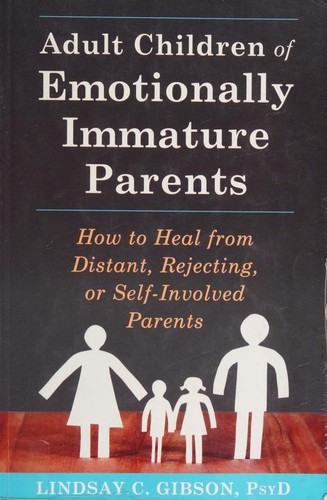
Adult Children of Emotionally Immature Parents
Lindsay C. Gibson, PsyD
A gentle, practical guide to understanding relationships with emotionally distant parents and reclaiming your inner life.
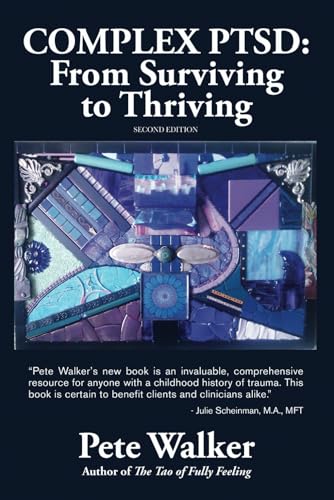
Complex PTSD: From Surviving to Thriving
Pete Walker
A clear, compassionate guide to recognizing and working with the lasting effects of prolonged childhood adversity.
As an Amazon Associate, Clarity House Press earns from qualifying purchases. Your price is never affected.
Found this helpful?
Share it with someone who might need it.
About the Author

Clarity House Press
Editorial Team
The editorial team at Clarity House Press curates and publishes evidence-based content on narcissistic abuse recovery, high-conflict divorce, and healing. Our content is informed by research, survivor experiences, and established trauma-informed approaches.
View all posts by Clarity House Press →Published by Clarity House Press Editorial Team