Please read our important disclaimers before using this content
If you're reading this, you're likely facing challenges that few people truly understand. Recovery from narcissistic abuse requires establishing stable foundations before you can address deeper trauma or rebuild specific areas of life like career, relationships, or identity.
This isn't abstract theory—it's practical guidance drawn from clinical expertise and the lived experiences of survivors who've walked this path before you.
Understanding the Challenge
Recovery from narcissistic abuse isn't linear. There will be setbacks, relapses, and moments when you question whether you're making progress at all. This is normal.
Healing means more than just removing yourself from the abusive relationship. It requires rebuilding your sense of self, learning what healthy relationships look like, and developing new neural pathways to replace trauma responses.1 The neuroscience of trauma and recovery explains precisely how these neural changes happen and what supports them.
Key Concepts
Foundations First
You can't rebuild without stable foundation:
- Safety: Physical safety from abuse
- Survival needs: Housing, food, income
- Basic regulation: Ability to manage emotions enough to function
- Minimal support: At least one safe connection
Once these foundations are in place, you're ready for higher-level work like career rebuilding, relationship reconstruction, or deeper identity exploration.
Practical Strategies
Immediate Action Steps
-
Start where you are: You don't need to be perfect or have it all figured out. You might begin with one small change, or focus on multiple small shifts if that feels more manageable.
-
Build your foundation: Prioritize safety, basic needs, and nervous system regulation before tackling deeper work.
-
Track your patterns: You might keep a simple log of triggers, responses, and what helps—whether that's written, audio notes, or mental observation. Patterns will emerge.
Medium-Term Strategies
Seek specialized support: Work with a trauma-specialized therapist who understands C-PTSD (Complex Post-Traumatic Stress Disorder—a condition that develops from prolonged trauma such as abuse, recognized in the ICD-11 and increasingly in clinical practice).2 The guide on finding a therapist who understands narcissistic abuse helps identify what to look for and what red flags signal a poor fit. Evidence-based trauma-focused therapies include Cognitive Processing Therapy (CPT), Prolonged Exposure (PE), and Eye Movement Desensitization and Reprocessing (EMDR).3
Develop your toolkit: You might build a collection of regulation techniques, grounding exercises, and self-soothing practices that work for your specific nervous system, or work with a therapist to identify what already works for you.
Connect with others who understand: Support groups, online communities, or peer support can reduce isolation and normalize your experience. Peer support is a key vehicle for establishing safety and hope, building trust, and promoting recovery and healing.4
Long-Term Approach
Recovery and healing are measured in years, not months. Pace yourself. Build capacity gradually. Celebrate small wins. Expect setbacks and plan for them.
Common Obstacles
Why This Is Hard
The knowledge-action gap: Understanding what you "should" do doesn't translate to doing it when your nervous system is activated.
Inconsistent progress: You'll have good days and terrible days. This doesn't mean you're failing—it's the normal rhythm of healing.
Limited support: Many people, including some professionals, don't understand complex trauma. You may face minimization or bad advice. Complex trauma typically involves multiple instances of interpersonal trauma where the person cannot easily escape, making the recovery process more challenging.5 Understanding the difference between PTSD and C-PTSD helps you communicate accurately about your experience when seeking support.
Common Pitfalls to Avoid
- Rushing the process: Pushing too hard too fast often triggers setbacks
- Isolating: Recovery happens in connection with safe others
- All-or-nothing thinking: Progress isn't linear; setbacks are part of healing
- Comparing your timeline: Your healing pace is uniquely yours
- Staying in abusive relationships: Healing becomes significantly harder in environments that continue to trigger you. If you're in a relationship where abuse is ongoing, prioritize your safety first
Real-World Examples
Lisa's journey: Two years post-divorce, Lisa still found herself checking her ex-husband's social media and feeling devastated by photos of him with his new partner. She realized she was grieving not the actual relationship, but the person she'd hoped he would become.
Understanding this allowed her to redirect that energy toward building her own life rather than monitoring his.
Andre's rebuilding: Andre left his marriage with destroyed credit, no savings, and a resume gap. He worked with a financial counselor to address fraudulent accounts, built credit through secured cards, and reframed his employment gap as "family caregiving" that demonstrated valuable skills.
Key Takeaways
- Foundation building is essential before attempting deeper trauma work or specialized recovery (career rebuilding, relationship reconstruction, identity work)
- You're not broken or damaged—your responses made sense in the context where they developed
- Healing takes time: Expect the process to unfold over months and years, not days and weeks
- Professional support matters: Research indicates specialized trauma therapists improve recovery outcomes. The American Psychological Association strongly recommends cognitive-behavioral therapy, cognitive processing therapy, cognitive therapy, and prolonged exposure therapy for PTSD treatment in adults.6
- Small consistent actions compound over time into substantial change
- Connection and community are essential—isolation maintains trauma's grip
Your Next Steps
-
Today (5-10 minutes): If it feels safe to do so, make one decision prioritizing your needs over others' convenience. Notice what that feels like.
-
This week (15-30 minutes): Identify one trusted person you can talk to honestly about your recovery. This might be a friend, family member, therapist, or support group member.
-
This month (1-2 hours): Create a vision for one area of your rebuilt life. What does healthy feel like in relationships? Career? Home? Start with one domain.
-
Ongoing: Practice self-compassion when you notice yourself slipping into old patterns. Progress isn't linear—setbacks are part of the process, not evidence of failure.
Resources
Financial Recovery and Credit Repair:
- Annual Credit Report - Free annual credit reports from all three bureaus
- National Foundation for Credit Counseling (NFCC) - Free credit counseling and financial education
- Consumer Financial Protection Bureau (CFPB) - Financial protection resources and complaint filing
- Benefits.gov - Locate government assistance programs you may qualify for
Support Groups and Community:
- DivorceCare - Find local divorce recovery support groups nationwide
- Al-Anon Family Groups - Support for control and manipulation dynamics (not just substance abuse)
- Co-Dependents Anonymous (CoDA) - Free 12-step recovery for codependency patterns
- SMART Recovery - Science-based support groups for mental health and recovery
Books and Self-Compassion Resources:
- Psychopath Free by Jackson MacKenzie - Recovery from emotionally abusive relationships
- Why Does He Do That? by Lundy Bancroft - Understanding controlling and angry partners
- Self-Compassion Resources by Dr. Kristin Neff - Research-based self-compassion practices
- National Domestic Violence Hotline - 1-800-799-7233 (24/7 crisis support and resources)
References
- National Center for PTSD, U.S. Department of Veterans Affairs. (2024). Understanding the Impact of Trauma. In Trauma-Informed Care in Behavioral Health Services. Substance Abuse and Mental Health Services Administration. ↩
- National Center for Biotechnology Information. (2024). Complex Psychological Trauma. U.S. National Library of Medicine, National Institutes of Health. ↩
- U.S. Department of Veterans Affairs & U.S. Department of Defense. (2023). VA/DoD Clinical Practice Guideline for the Management of PTSD and Acute Stress Disorder. National Center for PTSD. ↩
- Substance Abuse and Mental Health Services Administration. (2014). SAMHSA's Concept of Trauma and Guidance for a Trauma-Informed Approach. U.S. Department of Health and Human Services. ↩
- Substance Abuse and Mental Health Services Administration. (2014). Trauma-Informed Care in Behavioral Health Services. Treatment Improvement Protocol (TIP) Series 57. U.S. Department of Health and Human Services. ↩
- American Psychological Association. (2017). Clinical Practice Guideline for the Treatment of PTSD in Adults. Washington, DC: American Psychological Association. ↩
Recommended Reading
From Clarity House Press — plus trusted books for deeper understanding
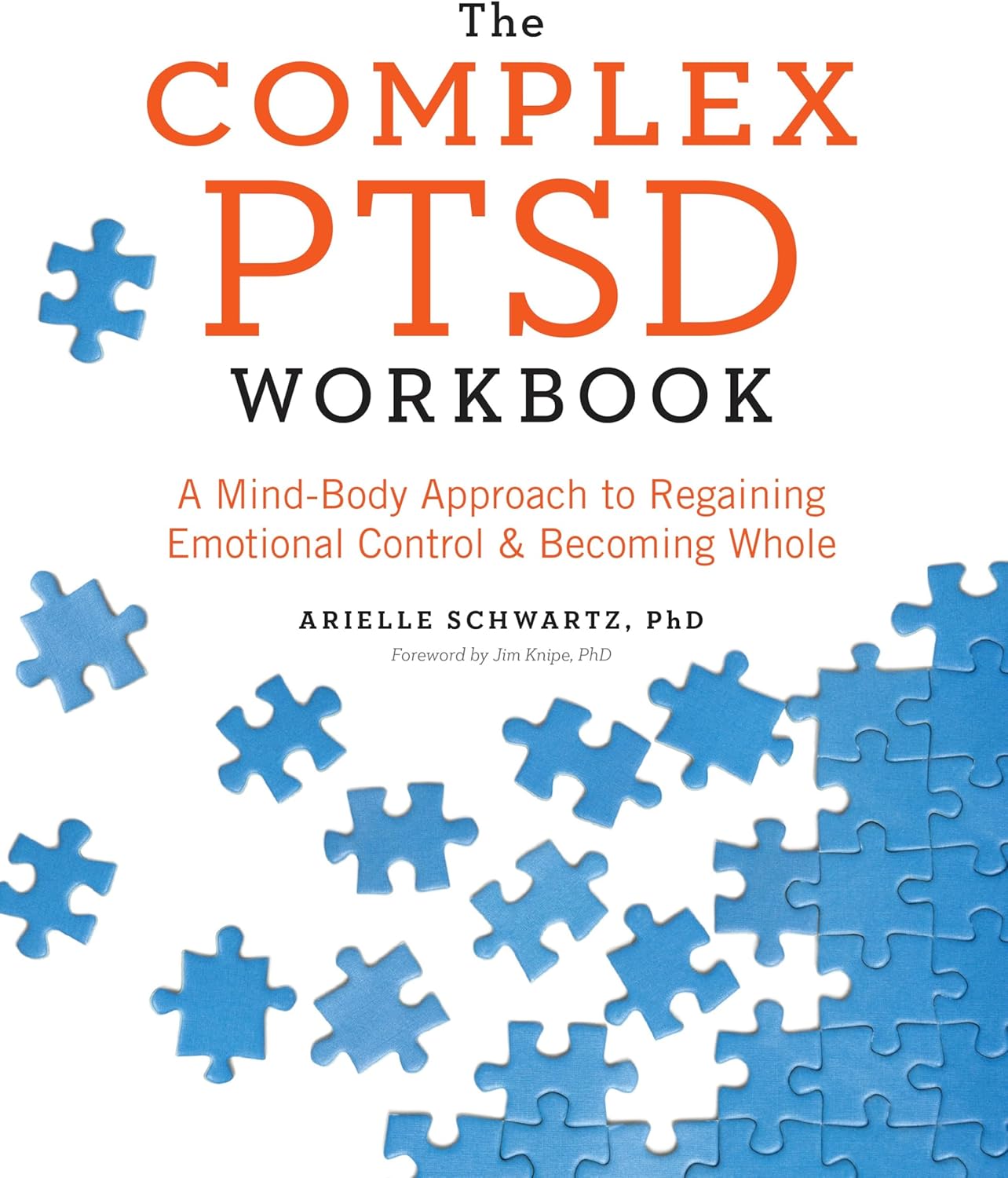
The Complex PTSD Workbook
Arielle Schwartz, PhD
A mind-body approach to regaining emotional control and becoming whole with evidence-based exercises.
Overcoming Trauma through Yoga
David Emerson & Elizabeth Hopper, PhD
Evidence-based trauma-sensitive yoga program developed at the Trauma Center with Bessel van der Kolk.
As an Amazon Associate, Clarity House Press earns from qualifying purchases. Your price is never affected.
Found this helpful?
Share it with someone who might need it.
About the Author

Clarity House Press
Editorial Team
The editorial team at Clarity House Press curates and publishes evidence-based content on narcissistic abuse recovery, high-conflict divorce, and healing. Our content is informed by research, survivor experiences, and established trauma-informed approaches.
View all posts by Clarity House Press →Published by Clarity House Press Editorial Team