Please read our important disclaimers before using this content
When you're an Asian American survivor of narcissistic abuse, you face cultural pressures that make leaving feel like betraying not just your spouse, but your entire family, community, and cultural heritage. Understanding how narcissistic grooming and conditioning work can help you recognize how cultural values were specifically weaponized to make you more compliant and harder to reach.
Cultural messaging you've internalized:
- "Divorce brings shame to the family"
- "Preserve harmony—don't make waves"
- "Save face—what will people think?"
- "You're the woman—you must endure and sacrifice"
- "Obey your husband and respect your elders"
- "Don't air dirty laundry—keep family matters private"
- "You're educated and successful—you should be able to handle this"
- "If you divorce, you're a failure and a disgrace"
The result: Asian American survivors stay in abusive relationships longer, suffer in silence to avoid shaming their families, and struggle to access help from communities that prioritize collective reputation over individual safety.
Why leaving is harder: Cultural factors can intensify trauma bonding. When your family celebrates that "things are getting better" during reconciliation phases, the intermittent positive reinforcement is amplified by cultural approval and relief from shame, making the bond harder to break.1 Understanding the neurochemistry of trauma bonding can help explain why these cultural pressures create such a powerful grip.
The reality: Research suggests that 41-61% of Asian American women experience intimate partner violence at some point in their lives—rates comparable to or exceeding other ethnic groups.2 Yet the myth persists that "Asian families don't have these problems."
Add to this the Model Minority Myth: the stereotype that Asian Americans are universally educated, successful, financially stable, and "don't have these problems." This myth erases the reality of domestic violence in Asian American communities and creates barriers to seeking help.3 Research has demonstrated that even positive racial stereotypes can cause psychological harm due to heightened pressure to achieve unrealistic expectations.
This post addresses:
- Cultural values (saving face, filial piety, collectivism) that enable abuse
- Model minority myth and its impact on survivors
- Intergenerational dynamics and immigrant family pressures
- Diversity within Asian American communities
- Navigating cultural expectations while protecting yourself
- Finding culturally-competent support
Cultural Values Weaponized by Narcissists
1. "Saving Face" (面子, Mianzi / 체면, Chemyeon / 名誉, Meiyo)
What is "saving face"? The concept of preserving one's reputation, honor, and social standing—and by extension, the family's reputation—in the community.4 Research indicates that this cultural construct fosters mental health taboos and makes individuals reluctant to disclose psychological distress, as the loss of face is perceived not only as personal failure but also as bringing shame to one's family.
How narcissists weaponize this:
- "If you leave, you'll shame our family"
- "What will people say?"
- "Your parents will be so embarrassed"
- "No one in our community will respect you after divorce"
- "You'll ruin my reputation—and yours"
- "Think of how this will reflect on our children"
The pressure: To preserve the family's public image, you must hide abuse and present a perfect façade.
Cultural truth vs. abuse:
- Cultural truth: Reputation and family honor matter in collectivist cultures
- Abuse weaponization: Using cultural values to trap you in abuse
- Your reality: Your safety matters more than your family's reputation
Reframe: Leaving abuse is not shameful. Staying silent while being harmed is what brings dishonor—to the abuser, not you.
2. Filial Piety (孝, Xiào / 효, Hyo / 孝行, Kōkō)
What is filial piety? The Confucian value of respect, obedience, and duty toward parents and elders—including caring for aging parents and honoring family hierarchy.5 Research using the Dual Filial Piety Model has found that these expectations can affect caregiver burden, psychological and physical well-being, and quality of life.
How narcissists weaponize this:
- "You must obey me—I'm your husband/head of household"
- "Your parents expect you to submit"
- "If you divorce, you're disrespecting your elders"
- "You're being selfish—think of your duty to family"
- Using in-laws to pressure you to stay ("Respect your mother-in-law—she says you should submit")
Intergenerational pressure:
- Parents or in-laws may side with abuser, invoking filial piety to pressure you to endure
- "Marriage is hard—you must persevere"
- "Your duty is to your husband and children, not your own happiness"
Cultural truth vs. abuse:
- Cultural truth: Honoring parents and family is important
- Abuse weaponization: Using respect for hierarchy to justify control and abuse
- Your reality: Filial piety does not require you to accept abuse. Protecting yourself honors your life—which your parents gave you.
3. Collectivism and Family Harmony (和, Hé / 화, Hwa)
What is collectivism? Prioritizing the group (family, community) over the individual. In collectivist cultures, maintaining harmony and avoiding conflict are highly valued.
How narcissists weaponize this:
- "You're being selfish by thinking of yourself"
- "Your job is to keep the peace—stop causing conflict"
- "You're tearing the family apart"
- "Think of the children—they need an intact family"
- "Your feelings don't matter—the family's well-being does"
The pressure: To maintain harmony, you must silence yourself, suppress your needs, and tolerate abuse.
Cultural truth vs. abuse:
- Cultural truth: Interdependence and family cohesion are valuable
- Abuse weaponization: Using collectivism to erase your individual needs and rights
- Your reality: True harmony cannot exist when one person is being abused. You cannot create peace by accepting violence.
4. Gender Roles and Subservience
Traditional gender expectations in many Asian cultures:
- Women are caretakers, nurturers, self-sacrificing
- Men are providers, decision-makers, authority figures
- Women should be obedient to husbands
- Women's value is in marriage and motherhood
- Divorce = failure as a woman
How narcissists weaponize this:
- "A good wife obeys her husband"
- "You're not fulfilling your role as a woman"
- "Your job is to serve me and make me look good"
- "If you were a better wife, I wouldn't have to treat you this way"
- Using cultural scripts to justify domination and control
Modernization conflict:
- You may be highly educated and professionally successful, yet still expected to fulfill traditional wife role at home
- "You can have a career, but you still must serve your husband and in-laws"
- Navigating dual expectations creates cognitive dissonance
Cultural truth vs. abuse:
- Cultural truth: Many Asian cultures value women's contributions to family
- Abuse weaponization: Using gender roles to justify male dominance and female submission
- Your reality: Gender roles are cultural constructs that can evolve. Abuse is never justified by culture.
5. Silence and Privacy ("Don't Air Dirty Laundry")
Cultural value on discretion:
- Family matters are private
- Don't discuss problems outside the family
- "What happens at home stays at home"
- Seeking outside help (therapy, police, DV services) is seen as betrayal
How narcissists weaponize this:
- "Don't tell anyone—this is between us"
- "You're embarrassing our family by talking about this"
- "Therapists don't understand our culture—you can't talk to them"
- "If you call the police, you're betraying our community"
The isolation: You have no one to turn to because cultural norms prohibit seeking help.
When you cannot speak about your experience: Your mind may cope through dissociation—emotional numbing, depersonalization, or feeling disconnected from reality. This is a survival response to unprocessed trauma, intensified when cultural norms prohibit acknowledgment of what's happening to you.
Cultural truth vs. abuse:
- Cultural truth: Privacy and discretion have value
- Abuse weaponization: Using privacy to isolate you and avoid accountability
- Your reality: Abuse thrives in silence. Breaking silence is necessary for safety and healing.
The Model Minority Myth and Its Impact on Survivors
What Is the Model Minority Myth?
The stereotype: Asian Americans are:
- Universally educated and high-achieving
- Economically successful and financially stable
- Law-abiding and "don't cause trouble"
- Have intact, stable families
- Don't need social services or support
The reality:
- Asian American communities are extremely diverse (economically, educationally, culturally)
- Poverty rates vary widely across Asian ethnic groups (Southeast Asian refugee communities often have lower socioeconomic status than East Asian immigrants)
- Domestic violence occurs at rates of 41-61% among Asian American women—comparable to or exceeding other ethnic groups2
- The myth erases the reality of Asian Americans who struggle
How the Model Minority Myth Harms Survivors
1. Invisibility of domestic violence:
- "Asian families don't have these problems"
- DV services and research don't focus on Asian American communities
- Assume Asian Americans don't need help
2. Shame and isolation:
- "I'm supposed to be successful—how did I end up in this situation?"
- "No one will believe me—they think Asian families are perfect"
- "Admitting abuse means I've failed as a model minority"
3. Lack of culturally-competent services:
- Few DV organizations with Asian-language services
- Therapists and advocates who don't understand cultural context
- Assumption that Asian Americans can "figure it out" without help
4. Pressure to maintain the myth:
- "Don't confirm negative stereotypes about Asians"
- "You're making our community look bad"
- Prioritizing community reputation over individual safety
5. Economic abuse hidden by success narrative:
- Assumption that all Asian Americans are financially stable
- Reality: Economic abuse, poverty, and financial control exist
- Survivors may have no access to money despite outward appearance of wealth
Diversity Within Asian American Communities
Asian American is NOT a monolith:
- East Asian: Chinese, Japanese, Korean, Taiwanese, Mongolian
- Southeast Asian: Vietnamese, Thai, Filipino, Cambodian, Laotian, Burmese, Indonesian, Malaysian, Singaporean
- South Asian: Indian, Pakistani, Bangladeshi, Sri Lankan, Nepali, Bhutanese
- Pacific Islander: (often grouped with Asian Americans but distinct) Native Hawaiian, Samoan, Tongan, Fijian, Marshallese, Chamorro
Each community has:
- Different languages, religions, cultural practices
- Different immigration histories and generational status
- Different levels of economic and educational attainment
- Different experiences of racism and discrimination
Domestic violence dynamics and cultural pressures vary:
- South Asian communities may emphasize arranged marriage, dowry, and extended family involvement
- Southeast Asian refugee communities may carry war trauma and resettlement challenges
- East Asian communities may emphasize Confucian values and academic achievement
- Pacific Islander communities may have different collectivist structures and kinship systems
LGBTQ+ Asian American survivors face compounded pressures: Cultural shame about both queerness and relationship dissolution, limited family acceptance pathways, and invisibility of same-sex relationship abuse in communities that may not acknowledge LGBTQ+ identities.
Finding culturally-specific support matters: A Chinese American survivor may need different support than a Filipina survivor or an Indian American survivor.
Intergenerational Dynamics and Immigrant Family Pressures
First-Generation Immigrants
Additional pressures:
- Language barriers (may not speak English fluently)
- Isolation from extended family (left behind in home country)
- Immigration trauma (leaving homeland, adjusting to new culture)
- Economic vulnerability (may not have work authorization, education, or job skills transferable to U.S.)
- Legal status concerns (visa dependency—see immigration post)
Cultural isolation:
- Entire social network may be within immigrant community (small, interconnected)
- Leaving abuser means losing entire community
- "Nowhere to go" because family is in home country
Abusers weaponize immigration status:
- "If you leave, I'll get you deported"
- Controlling documents (passport, visa, green card)
- Preventing English language learning (to maintain dependence)
1.5 and Second-Generation Asian Americans
Bicultural stress:
- Navigating two cultures (Asian at home, American outside)
- Code-switching between cultural expectations
- "Not Asian enough" for family, "not American enough" for peers
Generational conflict:
- Parents expect traditional values (obedience, arranged marriages, filial piety)
- You're acculturated to American values (independence, autonomy, egalitarian relationships)
- Leaving abuse feels like rejecting your culture (and disappointing parents)
Model minority pressure:
- Expected to be academically and professionally successful
- Expected to have "perfect" family
- Divorce = failure (especially for high-achieving Asian Americans)
Intergenerational Trauma
Immigrant parents' trauma:6
- War, genocide, political persecution (Vietnamese, Cambodian, Laotian refugees)
- Poverty and survival struggles in home country
- Discrimination and racism in U.S.
- Loss of status (doctors, professors in home country working low-wage jobs in U.S.)
How this affects you:
- Parents' trauma may normalize suffering ("I survived war—you can survive a difficult marriage")
- Parents' sacrifices weaponized ("I gave up everything for you—don't embarrass us with divorce")
- Mental health stigma (parents don't believe in therapy—"just work harder")
You're healing from your abuse AND carrying your parents' unprocessed trauma. Research on intergenerational trauma transmission in refugee families has found that positive communication about historical trauma fosters closer family relationships, whereas negative or absent communication can lead to family disengagement.7
Navigating Cultural Expectations While Protecting Yourself
1. Separate Cultural Values from Abuse
Cultural values are not inherently harmful—abuse is.
Reframe:
- Saving face can mean protecting your dignity by leaving abuse (not hiding it)
- Filial piety can include honoring the life your parents gave you by protecting it
- Collectivism can mean building supportive community that honors your safety
- Harmony cannot exist when one person is being harmed
- Privacy should protect your autonomy, not trap you in silence
You can honor your culture AND leave abuse. They are not mutually exclusive.
2. Find Culturally-Competent Support
What culturally-competent support looks like:
- Providers who understand Asian cultural values and pressures
- Language access (bilingual therapists, interpreters, multilingual hotlines)
- Understanding of immigration issues, family dynamics, and intergenerational trauma
- Non-judgmental about cultural practices
- Ability to help you navigate cultural expectations without dismissing them
Red flags (NOT culturally competent):
- "Just ignore your culture—you're American now"
- "Your culture is the problem"
- Dismissing your family's concerns or values
- Assuming all Asian Americans are the same
- No understanding of immigration, language barriers, or model minority myth
Finding culturally-specific help:
- Asian-specific DV organizations (see resources below)
- Therapists who specialize in Asian American clients
- Support groups for Asian survivors
- Community organizations led by and for Asian Americans
3. Address the Shame
Shame is the weapon abusers and culture use to keep you trapped.
Understanding shame vs. guilt: Clinically, shame differs from guilt. Guilt is about behavior ("I made a mistake"); shame is about identity ("I am a mistake"). Cultural shame often targets your core identity—"You ARE a failure, disgrace, bad daughter"—not just specific actions. This makes shame particularly corrosive because it attacks your fundamental sense of self.
Sources of shame:
- "I'm a failure as a wife/daughter/woman"
- "I'm bringing shame to my family"
- "I should have known better" (especially if you're educated)
- "I'm confirming stereotypes" (if you seek help)
- "I'm abandoning my culture"
Countering shame:
- Shame belongs to the abuser, not you
- Your family's reputation is not your responsibility
- Abuse is not a reflection of your worth or success
- Seeking help is strength, not failure
- You are not responsible for representing all Asian Americans
Therapy for shame: If working with a therapist, consider finding one who understands cultural shame and can help you separate your worth from cultural expectations. Choosing the right therapist for narcissistic abuse recovery includes evaluating their cultural competency—particularly their understanding of collectivist cultures, saving face, and intergenerational dynamics. Many therapists offer sliding scale fees, and some communities have free mental health clinics.
4. Navigate Family and Community Pressure
You cannot control how your family or community reacts.
Likely reactions:
- Denial: "He's not abusive—you're exaggerating"
- Minimization: "All marriages are hard—you need to try harder"
- Blame: "What did you do to provoke him?"
- Pressure to stay: "Think of the shame," "Think of the children," "Marriage is forever"
- Ostracism: "If you divorce, we won't support you"
Setting boundaries with family:
- You don't owe them explanations or justifications
- You can honor them while disagreeing with them
- Limit contact with family members who enable abuse or pressure you to stay
- Seek support from family members who do believe you (if any)
Grieving community loss:
- Leaving may mean losing your community
- This loss is real and painful—grieve it
- Build new community (other Asian American survivors, supportive friends, online communities)
5. Protect Your Children from Intergenerational Trauma
Your children are watching:
- What you tolerate teaches them what to tolerate
- Staying in abuse teaches them abuse is normal
- Leaving teaches them self-respect and boundaries
Cultural transmission:
- You can pass on cultural values (language, food, traditions, respect for elders) WITHOUT passing on abuse
- Breaking the cycle is giving your children the gift of health
Addressing grandparents' involvement:
- Grandparents may pressure children to "respect your father" even when he's abusive
- Set boundaries about what grandparents can say to your children
- Limit contact if grandparents undermine your safety or healing
Legal Considerations for Asian American Survivors
Immigration Status (If Applicable)
If you're an immigrant survivor, see the full immigration post for details on:
- VAWA (Violence Against Women Act) self-petition
- U visa for crime victims
- Visa dependency and threats of deportation
- Legal protections for immigrant survivors
Many Asian American survivors are immigrants or have immigrant parents—immigration status may be weaponized by abusers.
Custody and Cultural Practices
Cultural practices in custody:
- Some judges may lack familiarity with cultural child-rearing practices that differ from mainstream American norms
- Extended family involvement (normal in many Asian cultures, may be viewed as "intrusive" by courts unfamiliar with multigenerational households)
- Respect for elders and hierarchy (may be misinterpreted as submissiveness or enmeshment)
- Language use at home (speaking heritage language with children—a strength, not a barrier)
Strategy:
- Educate your attorney and custody evaluators about cultural practices before they misinterpret them
- Frame cultural practices as strengths (bilingualism, intergenerational support, cultural identity)
- Differentiate between healthy cultural practices and abuse disguised as "culture"
- In some jurisdictions, judges have received cultural competency training; in others, you may need to actively educate the court. Work with an attorney experienced in this area.
Financial Considerations
Model minority myth in divorce:
- Assumption that you're financially stable (may not be true)
- Economic abuse hidden by appearance of wealth
- Your career sacrifices (supporting spouse's career, caring for elders) may be invisible
Document:
- Your financial contributions (even if not monetary—childcare, elder care, household management)
- Economic abuse (hidden accounts, controlled spending, prevented employment)
- Career sacrifices you made for family
Action Steps for Asian American Survivors
If You're Currently in an Abusive Relationship
1. Validate your own experience Your abuse is real, even if:
- Your family doesn't believe you
- Your community denies it
- You're "supposed to be" successful and happy
- You're educated and should "know better"
2. Find culturally-competent support
- Asian-specific DV hotlines (see resources)
- Therapists who understand cultural pressures
- Support groups for Asian survivors
3. Safety planning
- Standard DV safety plan PLUS cultural considerations:
- Where to go if you can't return to family (culturally-specific shelters?)
- How to maintain children's cultural connection while staying safe
- Addressing language barriers (interpretation services)
- Immigration status concerns (if applicable)
4. Document the abuse
- Photos, texts, emails, medical records
- Evidence of cultural manipulation ("saving face" threats, family pressure messages)
If You're Leaving or Have Left
1. Prepare for family and community reaction
- Know that you cannot control their response
- Build support network outside your family/community
- Set boundaries (you don't owe explanations)
2. Address shame in therapy
- Work with therapist who understands cultural shame
- Process internalized messages about failure, reputation, duty
- Reclaim your worth separate from cultural expectations
3. Maintain cultural connection on your terms
- You can be culturally Asian AND reject abuse
- Teach your children cultural values and practices in healthy ways
- Engage with cultural community that supports you (may be different from abuser's community)
4. Navigate legal system with cultural competence
- Work with attorneys who understand cultural dynamics
- Educate court about cultural practices (when relevant to custody)
- Access language interpretation services
If You're Healing Long-Term
1. Integrate cultural identity with healing
- Your cultural identity is part of you—don't abandon it
- Seek culturally-affirming healing practices (if helpful)
- Explore what parts of your culture support healing vs. what enabled abuse
2. Build bicultural or multicultural support network
- Friends who understand Asian cultural pressures
- Friends who support your autonomy and healing
- Diverse community that honors all parts of your identity
3. Redefine success
- Model minority myth defines success as achievement, reputation, intact family
- Redefine success as: safety, peace, authenticity, healing
- Your worth is not measured by career, marriage, or family reputation
4. Consider giving back (when ready)
- Many Asian American survivors become advocates
- Break silence in your community (when safe to do so)
- Support other Asian survivors
- Challenge cultural norms that enable abuse
You Can Be Asian AND Free from Abuse
Cultural identity and safety are not mutually exclusive.
You can:
- Honor your parents AND protect yourself
- Respect your culture AND reject abuse
- Preserve traditions AND break harmful cycles
- Maintain your language, food, and heritage AND leave a harmful marriage
- Be a good daughter/mother/woman AND prioritize your safety
Leaving abuse is not betraying your culture—it's honoring the parts of your culture that value life, dignity, and respect.
Your ancestors survived colonization, war, poverty, and migration so you could have a better life.
Living free from abuse IS honoring their sacrifices.
Shame belongs to the abuser, not you.
Your worth is not measured by your marriage, your reputation, or your family's approval.
You deserve safety, peace, and freedom—regardless of what your family, community, or culture says.
You are not alone. Other Asian American survivors have walked this path. You can too. Many Asian American survivors find that building a new support network outside their original cultural community is an essential step—finding people who can honor both your heritage and your safety.
NOTE ON HOTLINE NUMBERS: Phone numbers for crisis hotlines, legal aid, and support services are provided as a resource. These numbers were verified in December 2025 but may change. Please verify hotline numbers are still active before relying on them. For the National Domestic Violence Hotline, visit thehotline.org for current contact information.
Resources
Asian-Specific Support Organizations:
- Asian Pacific Institute on Gender-Based Violence - National resource center
- National Asian Pacific American Women's Forum - Advocacy and support
- Asian Women's Shelter - San Francisco-based services
- Manavi - South Asian women's support
- Asian Mental Health Collective - Mental health resources
Hotlines & Crisis Support:
- National Domestic Violence Hotline - 1-800-799-7233 (200+ languages)
- Asian Pacific Islander National Hotline - 1-888-909-2743
- 988 Suicide & Crisis Lifeline - Call or text 988 (24/7)
Legal & Mental Health:
- Asian Americans Advancing Justice - Immigration legal help
- Psychology Today - Filter for Asian American therapists
- National Parent Helpline - 1-855-427-2736
References
- Chang, D. F., Shen, B. J., & Takeuchi, D. T. (2009). Prevalence and demographic correlates of intimate partner violence in Asian Americans. International Journal of Law and Psychiatry, 32(3), 167-175. https://pmc.ncbi.nlm.nih.gov/articles/PMC4449838/ ↩
- Cho, H. (2012). Examining gender differences in the nature and context of intimate partner violence. Journal of Interpersonal Violence, 27(13), 2665-2684. https://pmc.ncbi.nlm.nih.gov/articles/PMC6023771/ ↩
- Lee, Y. J., et al. (2025). Mental health help-seeking behaviours of East Asian immigrants: A scoping review. European Journal of Psychotraumatology, 16(1). https://pmc.ncbi.nlm.nih.gov/articles/PMC12243019/ ↩
- Xiao, Patrician, Montgomery, Wang, & Jablonski (2024). Filial piety and older adult caregiving among Chinese and Chinese-American families in the United States: a concept analysis.. BMC nursing. https://pmc.ncbi.nlm.nih.gov/articles/PMC10863110/ ↩
- Lee, Juon, Martinez, Hsu, & Robinson (2009). Model minority at risk: expressed needs of mental health by Asian American young adults.. Journal of community health. https://pmc.ncbi.nlm.nih.gov/articles/PMC3296234/ ↩
- Sangalang, C. C., & Vang, C. (2017). Intergenerational trauma in refugee families: A systematic review. Journal of Immigrant and Minority Health, 19(3), 745-754. https://pmc.ncbi.nlm.nih.gov/articles/PMC5362358/ ↩
- Lê Espiritu, Y., et al. (2022). Intergenerational communication about historical trauma in Asian American families. Journal of Family Psychology, 36(4), 502-512. https://pmc.ncbi.nlm.nih.gov/articles/PMC9170877/ ↩
Recommended Reading
From Clarity House Press — plus trusted books for deeper understanding


In an Unspoken Voice
Peter A. Levine, PhD
Classic guide from the creator of Somatic Experiencing revealing how the body holds the key to trauma recovery.
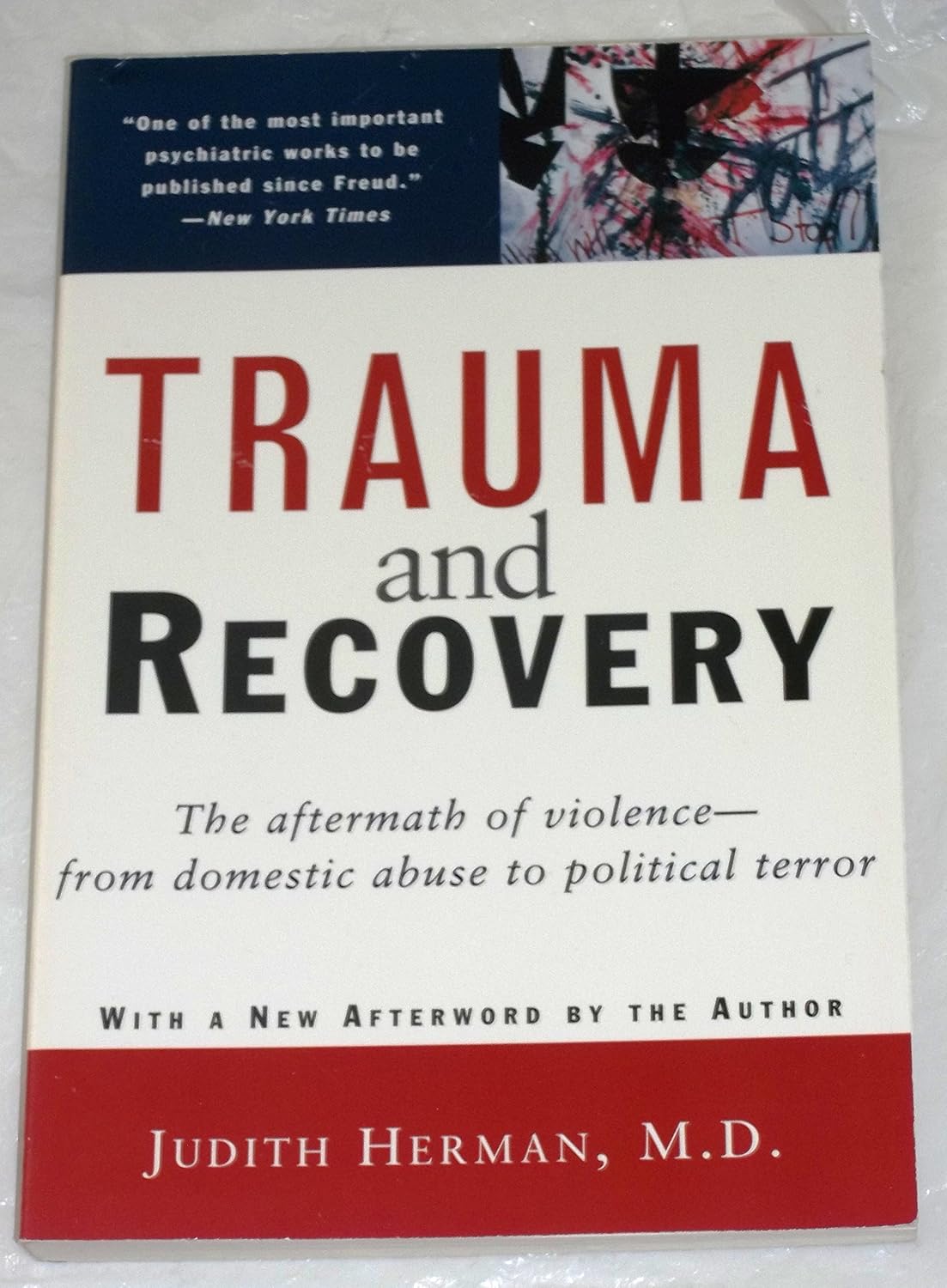
Trauma and Recovery
Judith Lewis Herman, M.D.
The seminal framework for understanding trauma and the stages of recovery — safety, remembrance, and reconnection.
As an Amazon Associate, Clarity House Press earns from qualifying purchases. Your price is never affected.
Found this helpful?
Share it with someone who might need it.
Tags
About the Author

Clarity House Press
Editorial Team
The editorial team at Clarity House Press curates and publishes evidence-based content on narcissistic abuse recovery, high-conflict divorce, and healing. Our content is informed by research, survivor experiences, and established trauma-informed approaches.
View all posts by Clarity House Press →Published by Clarity House Press Editorial Team