Please read our important disclaimers before using this content
Restraining orders can be life-saving tools. They can also be pieces of paper that don't stop determined abusers. Understanding what they can and can't do is crucial for effective safety planning.1 The Office on Violence Against Women provides federal resources on protection order effectiveness and enforcement. For a deeper analysis of the specific limitations and strategic considerations around protective orders, see our companion article on protective orders: process, effectiveness, and limitations.
Types of Restraining Orders
1. Emergency Protective Order (EPO)
- Duration: 3-7 days (varies by state)
- Who can request: Typically law enforcement, not the victim directly
- When issued: Issued by a judge after a domestic violence incident, often in the middle of the night
- Purpose: Immediate protection while you prepare to file for a longer-term order
2. Temporary Restraining Order (TRO)
- Duration: 14-30 days (varies by state)
- Who can request: The victim (called "petitioner")
- Process: Filed at the courthouse; issued same day or within 24 hours without the abuser present (ex parte)
- Purpose: Protection while waiting for full hearing
3. Permanent Restraining Order (also called "Final Protective Order")
- Duration: 1-5 years or permanent (varies by state)
- Process: Issued after a full court hearing where both parties present evidence
- Requirements: Must prove abuse/harassment by preponderance of evidence (more likely than not)
4. Civil Harassment Restraining Order
- Who it's for: Someone who isn't a domestic partner (neighbor, coworker, acquaintance)
- Requirements: Prove harassment, stalking, or threats
- Process: Similar to domestic violence restraining order
What Restraining Orders Can Do
Typical provisions include:
- No contact (in person, phone, text, email, social media, or through third parties)
- Stay-away orders (distance requirement, often 100-500 yards)
- Move-out orders (abuser must leave shared residence)
- Cease harassment or threats
- Surrender firearms (required in domestic violence orders under federal law 18 U.S.C. 922(g)(8))
- Temporary custody orders
- Temporary financial support
Legal consequences for violating:
- Criminal charges (contempt of court or separate criminal violation)
- Arrest
- Jail time
- Fines
- Impact on custody proceedings
- Felony charges for repeated violations
What Restraining Orders Can't Do
Restraining orders don't:
- Physically prevent someone from approaching you
- Guarantee police will respond immediately when called
- Eliminate the danger from a determined abuser
- Protect you in every circumstance
- Solve the underlying issue (they're a tool, not a solution)
Reality check: Restraining orders are most effective against abusers who:
- Care about legal consequences
- Don't want arrest on their record
- Have something to lose (professional license, security clearance, custody)2
They're least effective against abusers who:
- Have already demonstrated willingness to violate laws
- Have nothing to lose
- Are escalating to potentially lethal violence3
In high-danger situations, restraining orders must be paired with safety planning:4 secure living situation, documented escape plan, weapon surrender enforcement, and ongoing threat assessment.
How to Obtain a Restraining Order
Step 1: Determine eligibility Most states require (see state-by-state requirements at WomensLaw.org):
- A qualifying relationship (spouse, ex-spouse, dating relationship, cohabitant, co-parent)
- Abuse within recent time period (varies by state)
- Specific types of prohibited conduct (violence, threats, harassment, stalking)
Step 2: Go to the courthouse
- Family law division or domestic violence unit
- Bring photo ID
- Many courthouses have victim advocates who help with paperwork
Step 3: Complete forms You'll describe:
- Your relationship to the abuser
- Specific incidents of abuse (dates, descriptions, injuries)
- Why you fear for your safety
- What orders you're requesting
Be specific: "He punched me in the face on January 15, 2025, causing a black eye. He threatened to kill me on January 20, 2025, saying 'I'll make sure you never leave me.'" Not: "He's mean and scares me."
Step 4: See a judge (for TRO) Often same day. The judge reviews your petition and may ask questions. If granted, you receive temporary order effective immediately.
Step 5: Serve the abuser The restraining order must be legally "served" (delivered) to the abuser by law enforcement or process server. It's not effective until served.
Step 6: Attend full hearing (for permanent order)
- Scheduled 14-30 days after TRO is issued
- Both parties present evidence
- You may testify and bring witnesses
- Judge decides whether to issue permanent order
Evidence That Strengthens Your Case5
For comprehensive guidance on building your documentation file, see our article on documenting abuse for court.
Documented abuse:
- Police reports
- Medical records
- Photos of injuries
- Text messages or emails with threats/harassment
- Voicemails
- Witnesses who saw abuse or its aftermath
- 911 call recordings
Pattern of behavior:
- Multiple incidents over time
- Escalating severity
- Violation of prior agreements or orders
Impact on you:
- Fear for your safety
- Changes in your behavior (leaving job, moving, changing routines)
- Impact on children
Common Mistakes That Weaken Your Case
- Being too general: "He's controlling" vs. "He tracks my phone location, takes my car keys, and requires me to text him photos every hour"
- Including irrelevant information: Focus on safety threats, not all relationship grievances
- Minimizing the abuse: Be honest about severity
- Not showing up to the full hearing: This results in automatic dismissal
- Violating your own restraining order: Initiating contact with the abuser (even to "work things out") can result in dismissal
If the Order Is Violated
Immediately:
- Call 911 - Report the violation as it's happening if possible
- Document everything - Screenshot texts, save voicemails, note time/location
- File a police report - Even if police don't arrest immediately
- Return to court - Request contempt proceedings
Know your state laws:6
- Some states: Violation is automatic arrest
- Other states: Discretionary arrest (officer decides)
- Some states: Violation is misdemeanor; repeated violations are felony
Restraining Orders and Child Custody
Domestic violence restraining orders can include temporary custody orders. However:
Positives:
- Quick temporary custody protection
- Supervised visitation requirements
- Stay-away orders that include children
Limitations:7
- Temporary—must file separate custody case for long-term orders
- Abuse toward you doesn't automatically eliminate custody rights
- Abusers can request modification in family court
- False allegations can backfire severely (courts impose sanctions)
Strategy: Use DV restraining order for immediate safety; file comprehensive custody case for long-term protection. For guidance on emergency custody motions, see our guide to emergency custody and temporary restraining orders.
Mutual Restraining Orders
Some courts issue "mutual" restraining orders (both parties restrained from each other). This is generally bad practice because:8
- It implies both parties are equally at fault
- It can criminalize your defensive or reactive behaviors
- It weakens your position in future custody/divorce proceedings
- Federal law prohibits gun possession for anyone subject to restraining order—mutual orders may disarm you
Oppose mutual restraining orders. If he wants a restraining order, he should file his own petition and prove his case.
When NOT to File a Restraining Order
Restraining orders aren't always the best tool:
Don't file if:
- You're not actually afraid (using it for leverage in divorce)
- You plan to maintain contact (confuses enforcement)
- You're in active danger of lethal violence (restraining orders can escalate—prioritize escape and shelter)
Consider alternatives:
- No-contact agreements in divorce settlement
- Criminal harassment or stalking charges
- Workplace restraining orders
- Moving without forwarding address
NOTE ON HOTLINE NUMBERS: Phone numbers for crisis hotlines, legal aid, and support services are provided as a resource. These numbers are current as of publication but may change. Please verify hotline numbers are still active before relying on them. For the National Domestic Violence Hotline, visit thehotline.org for current contact information.
Key Takeaways
- Types include Emergency (3-7 days), Temporary (14-30 days), and Permanent (1-5 years or more)
- Orders can include no-contact, stay-away, move-out, custody, and firearm surrender provisions
- Process involves filing petition, temporary order, service, and full hearing
- Specific, documented evidence is crucial
- Violations are criminal but enforcement varies
- Orders are tools, not guarantees—pair with comprehensive safety planning
- Not all situations benefit from restraining orders; assess your specific circumstances
Restraining orders are powerful legal tools when used appropriately. They create documentation, establish legal consequences for continued abuse, and in many cases, successfully deter contact. But they're one component of safety planning, not a complete solution. Use them strategically, enforce violations consistently, and pair them with other protective measures: secure housing, support system, financial independence, and ongoing threat assessment.
Resources
Legal Aid and Protective Order Information:
- WomensLaw.org - State-by-state legal information on protective orders and domestic violence laws
- National Center for State Courts - Protective order state links and resources
- LawHelp.org - Free and low-cost legal assistance by state
- Legal Services Corporation - Find free legal aid offices nationwide
Domestic Violence Support and Safety Planning:
- National Domestic Violence Hotline - 1-800-799-7233 (SAFE) for safety planning and support (24/7)
- National Coalition Against Domestic Violence (NCADV) - Resources and state coalition contacts
- Violence Policy Center - Research and advocacy on domestic violence prevention
- Futures Without Violence - Resources for victims and professionals
Crisis Support and Resources:
- 988 Suicide & Crisis Lifeline - Call or text 988 for crisis support (24/7)
- Crisis Text Line - Text HOME to 741741 for crisis counseling
- RAINN National Sexual Assault Hotline - 1-800-656-4673 (HOPE) for sexual violence support
References
- Cordier, R., Chung, D., Wilkes-Gillan, S., Speyer, R., & Speyer, S. (2021). The effectiveness of protection orders in reducing recidivism in domestic violence: A systematic review and meta-analysis. Trauma, Violence, & Abuse, 22(4), 738-751. https://doi.org/10.1177/1524838019882361 ↩
- Shah, N. D., Nguyen, G., Wagman, J. A., & Glik, D. (2023). Factors influencing the use of domestic violence restraining orders in Los Angeles. Journal of Interpersonal Violence, 38(8), 11294-11320. https://pubmed.ncbi.nlm.nih.gov/35404656/ ↩
- Campbell, J. C., Webster, D., Koziol-McLain, J., Block, C., Campbell, D., Curry, M. A., ... & Laughon, K. (2003). Risk factors for femicide in abusive relationships: Results from a multisite case control study. American Journal of Public Health, 93(7), 1089-1097. https://pmc.ncbi.nlm.nih.gov/articles/PMC1447903/ ↩
- Sabri, Tharmarajah, Njie-Carr, Messing, & Loerzel (2022). Safety Planning With Marginalized Survivors of Intimate Partner Violence: Challenges of Conducting Safety Planning Intervention Research With Marginalized Women.. Trauma, violence & abuse. https://pmc.ncbi.nlm.nih.gov/articles/PMC8571112/ ↩
- Hardesty, J. L., & Ganon, G. R. (2006). How standard domestic violence procedures fail lesbian victims. The Gay and Lesbian Review Worldwide, 13(5), 34-37. Also see: McFarlane, J. M., Campbell, J. C., & Watson, K. (2002). Intimate partner stalking and femicide: Urgent implications for women's safety. Behavioral Sciences and the Law, 20(1), 51-68. https://pubmed.ncbi.nlm.nih.gov/11835255/ ↩
- Centers for Disease Control and Prevention (CDC). (2023). Violence prevention: Intimate partner violence. U.S. Department of Health and Human Services. https://www.cdc.gov/violenceprevention/intimatepartnerviolence/index.html ↩
- Sorenson, S. B., & Ho, H. (2013). The discrimination of restraining order violence survivors: A study of victims' experiences and court data. Violence Against Women, 19(12), 1522-1538. https://pubmed.ncbi.nlm.nih.gov/24253103/ ↩
- Sullivan, C. M., & Bybee, D. I. (1999). Reducing violence using community-based advocacy for women with abusive partners. Journal of Consulting and Clinical Psychology, 67(1), 43-53. https://pubmed.ncbi.nlm.nih.gov/10028207/ ↩
Recommended Reading
From Clarity House Press — plus trusted books for deeper understanding

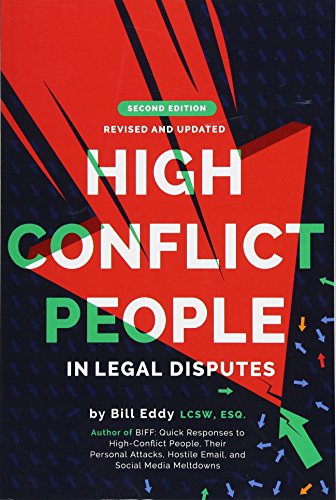
High Conflict People in Legal Disputes
Bill Eddy
Practical guide for disputing with a high-conflict personality through compelling case examples.
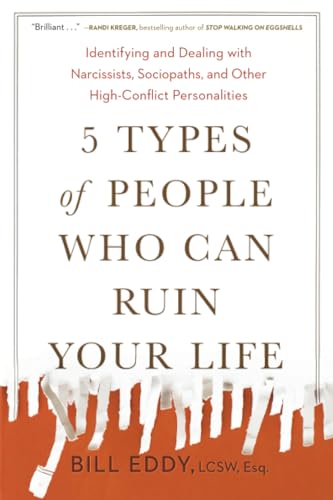
5 Types of People Who Can Ruin Your Life
Bill Eddy
Identifies five high-conflict personality types and teaches how to spot warning signs.
As an Amazon Associate, Clarity House Press earns from qualifying purchases. Your price is never affected.
Found this helpful?
Share it with someone who might need it.
About the Author

Clarity House Press
Editorial Team
The editorial team at Clarity House Press curates and publishes evidence-based content on narcissistic abuse recovery, high-conflict divorce, and healing. Our content is informed by research, survivor experiences, and established trauma-informed approaches.
View all posts by Clarity House Press →Published by Clarity House Press Editorial Team