Please read our important disclaimers before using this content
You're 54, 59, 63 years old, and divorcing after 20, 30, 40 years of marriage. You thought you were heading toward retirement with financial security. Instead, you're staring at a decimated retirement account, realizing half your assets are gone to settlement, discovering your ex hid or dissipated retirement savings, or learning you have nothing saved at all because financial abuse kept you economically trapped.
Late-life divorce after narcissistic abuse creates a financial crisis with a rapidly closing window.1 You don't have 30 years to rebuild retirement savings. You have 5, 10, maybe 15 years before you need that money to survive. The retirement you planned is gone. The question isn't whether you can retire comfortably at 62—it's whether you can survive financially at 72.
This feels hopeless. It's not. Late-life divorce requires aggressive financial strategy, but rebuild is possible. Understanding QDROs and how retirement accounts are divided is one of the most critical pieces of this puzzle. You have tools younger divorcées don't: catch-up contributions, social security claiming strategies, pension division expertise, and often higher earning potential from decades of career experience. You need expert guidance, strategic planning, and realistic expectations—but financial security after 50 is achievable.
You're not starting over. You're strategically rebuilding with limited time and hard-won wisdom.
Understanding the Late-Life Divorce Financial Reality
Before you can plan, you need clear-eyed assessment of your situation. No sugarcoating, no panic—just reality.
Common Late-Life Divorce Financial Scenarios
Scenario 1: The "Equitable" Division That Isn't You split retirement accounts 50/50 per court order. Sounds fair. But your ex took their half at 52 and has 15+ years to rebuild before retirement.2 You're 58 with 7 years until you need the money. Same division, vastly different outcomes.
Scenario 2: The Hidden/Dissipated Retirement Assets Your ex drained the 401(k) for "business investments," took early withdrawals, or hid assets. You discover this during divorce discovery—often too late to fully recover.
Scenario 3: The "I Never Worked" Retirement Gap You were stay-at-home parent for 20+ years. You have no retirement savings in your name, limited work history, and no pension.3 Divorce at 56 means starting from zero with 10 years to retirement.
Scenario 4: The Pension That's Now Halved Your ex has the pension from 30-year career. You're entitled to half the marital portion via Qualified Domestic Relations Order (QDRO)—but it's far less than you expected, and you have no pension of your own.
Scenario 5: The Social Security Shock You discover your Social Security benefit based on your own work record is $800/month. Your spousal benefit based on ex's record would be $1,400/month—but you don't understand the claiming rules and risk leaving money on the table.
What this looks like:
"I was 59 at divorce after 32 years of marriage. We split the $400K in retirement accounts—I got $200K. Sounds okay, right? But I'm 59. I can't touch that money without 10% penalty until 59½, and I need it to last from 65 to potentially 95—30 years. My ex is 56 and has time to rebuild. Same dollar amount, completely different financial reality. I was not prepared."
If you suspect your ex has hidden retirement assets, our guide to financial discovery and hidden assets explains how forensic accountants and discovery tools can uncover concealment.
The Late-Life Divorce Tax Bomb
Early retirement withdrawals (before 59½):
- 10% early withdrawal penalty + ordinary income tax applies
- Example: $20K withdrawal becomes $15K or less after penalties and taxes
- Exception: Via QDRO (Qualified Domestic Relations Order) for divorce-related distributions, the ALTERNATE PAYEE (receiving spouse) can withdraw their QDRO-awarded portion WITHOUT 10% penalty (but still owes income tax). This does NOT apply to the account owner.
Other early withdrawal exceptions (no 10% penalty, but ordinary income tax applies):
- Age 55 rule: If you separate from employer after age 55, you can withdraw from 401(k) without 10% penalty (applies at any age if separation at 55+)
- SEPP/72(t) - Substantially Equal Periodic Payments: Withdraw fixed amounts annually based on life expectancy calculation; must continue 5+ years or until age 59½, whichever is later
- First-time home purchase: Up to $10,000 from IRA (lifetime limit)
- Medical expenses: Unreimbursed expenses exceeding 7.5% of adjusted gross income (AGI)
- Higher education expenses: Tuition, room, board for yourself, spouse, children, or grandchildren
- Disability or medical hardship: Some plans allow penalty-free hardship withdrawals
- IRA only—Roth conversions: You can withdraw converted amounts penalty-free after 5-year holding period
Strategic note: SEPP is complex—requires consulting tax professional to set up correctly. One mistake and you owe back penalties. But if structured properly, allows access to retirement funds before 59½ without penalty.
Required Minimum Distributions (RMDs):
- Starting at age 73 (born 1951-1959) or 75 (born 1960+)
- You must withdraw minimum amount annually or face 25% penalty on amount not withdrawn (reduced from 50% under SECURE Act 2.0; further reduced to 10% if corrected within 2 years)
- Withdrawals taxed as ordinary income
Divorce-related retirement distribution exception:4
- If properly structured via QDRO, the alternate payee (receiving spouse) can withdraw their awarded portion at any age without 10% penalty
- Still owes income tax on withdrawal
- Strategic opportunity if you're the receiving spouse and need funds before 59½
- Does not apply to the account owner withdrawing from their own retained portion
Social Security taxation:
- Up to 85% of benefits may be taxable depending on total income
- Combined with ordinary income tax on retirement withdrawals and taxation of up to 85% of Social Security, total tax burden can reach 20-30% or more of retirement income if not planned strategically
Strategic Retirement Asset Division
Retirement asset division in divorce isn't just splitting accounts—it's strategic financial planning under extreme pressure.
Understanding QDROs (Qualified Domestic Relations Orders)
QDRO = court order that divides retirement benefits without tax penalties.5
Applies to:
- 401(k) plans
- 403(b) plans
- Pension plans
- Some 457 plans
Does NOT apply to:
- IRAs (divided via divorce decree, not QDRO)
- Social Security (federal benefit, not divided via QDRO)
Why QDROs matter:
- Without QDRO, retirement division may trigger massive tax penalties
- QDRO allows penalty-free early withdrawal for recipient (you still owe income tax)
- QDRO protects your portion from ex's creditors, bankruptcy, future divorces
QDRO mistakes cost tens of thousands:6
- Using non-specialist attorney who doesn't understand retirement division
- Generic QDRO that doesn't match plan's specific requirements
- Delays in filing QDRO (sometimes benefits lost if ex retires or dies first)
- Not accounting for survivor benefits (what happens if ex dies before you receive pension?)
What this looks like:
"My attorney said QDROs were 'standard'—she'd handle it. Eighteen months after divorce, I discovered she'd never filed the QDRO. My ex had retired, elected pension payout option that excluded survivor benefits, and started receiving full pension. By the time we corrected it, I'd lost $60K in benefits I should have received. Use a QDRO specialist. Generic divorce attorneys screw this up constantly."
Pension Division Strategies
Types of pensions:
Defined benefit pension (traditional pension): Pays monthly amount for life based on salary and years of service.
Defined contribution plan (401k, 403b): Account balance that grows based on contributions and investments.
Division methods for defined benefit pensions:
1. Shared Payment Approach: You receive portion of each monthly pension payment when ex retires. You get money when they get money.
- ✅ Simple calculation
- ❌ Tied to ex's retirement timing
- ❌ If ex dies before retirement, you may get nothing
- ❌ Requires ongoing contact with ex
2. Separate Interest Approach: Plan calculates your portion as separate benefit. You receive your own monthly payment independent of ex.
- ✅ Complete financial separation
- ✅ You control when to claim (if plan allows)
- ✅ Can elect survivor benefits for your heirs
- ❌ More complex calculation
- ❌ Not all plans allow this
Survivor benefits: If ex dies, does pension continue to you? This MUST be specified in QDRO or you risk losing everything if ex dies.
Your attorney should argue for:
- Separate interest if plan allows (clean break)
- Survivor benefits (protection if ex dies)
- Cost of living adjustments (if pension includes them)
Maximizing Your Settlement for Retirement
In your 50s/60s, retirement assets should be priority in property division.
Strategic concessions:
- Accept less equity in house to get more retirement assets (you need retirement income, not a house you can't afford)
- Trade other assets for retirement accounts
- Prioritize liquid retirement assets over illiquid property
Age-based considerations:
- You need assets you can access in 5-10 years, not 25 years
- Liquid retirement accounts more valuable to you than real estate requiring selling/managing
- Your earning years are limited—prioritize income-generating assets
What this looks like:
"In our settlement negotiation, I was 61. My attorney wanted me to fight for the house—$400K equity. I said no. I couldn't afford the taxes, maintenance, and mortgage on my income. I took $400K more in retirement accounts instead. I sold the house, downsized to affordable condo, and invested the difference. That decision gave me retirement income, not an expensive house I'd have lost to foreclosure."
Catch-Up Contributions: Your Secret Weapon
If you're 50+, you can contribute more to retirement accounts than younger workers. Use it.
2024 Catch-Up Contribution Limits
401(k), 403(b), 457 plans:
- Regular contribution limit: $23,000
- Catch-up contribution (age 50+): Additional $7,500
- Total: $30,500/year
Traditional or Roth IRA:
- Regular contribution limit: $7,000
- Catch-up contribution (age 50+): Additional $1,000
- Total: $8,000/year
SIMPLE IRA:
- Regular contribution limit: $16,000
- Catch-up contribution (age 50+): Additional $3,500
- Total: $19,500/year
If you can max catch-up contributions for 10 years (age 55-65):7
- 401(k): $305,000 contributed (before employer match and investment growth)
- IRA: $80,000 contributed
- Combined: $385,000 in retirement savings
That's rebuilding a retirement account from scratch in 10 years if you can afford maximum contributions.
Realistic Catch-Up Strategies
Few people can max out contributions. Strategic contributions at any level help.
Priority: Get employer match first If your employer matches 401(k) contributions (e.g., 50% match up to 6% of salary), contribute enough to get full match. That's free money.
Then: Max catch-up if possible After getting employer match, maximize catch-up contributions if your budget allows.
Automate contributions Automatic payroll deduction makes it painless. Money never hits checking account, so you don't miss it.
Increase contributions with raises Every raise, cost-of-living adjustment, or bonus—increase retirement contribution by half the increase. You never feel the pinch.
What this looks like:
"At 58, post-divorce, I was hired at $75K—highest salary I'd ever earned. I couldn't max contributions at $30K/year—that's 40% of my income. But I contributed 15% ($11,250) plus employer match of 3% ($2,250) = $13,500/year. Over 7 years until 65, that's $94,500 in contributions, plus investment growth. Not a full retirement, but a foundation I didn't have at divorce."
Social Security Strategies for Divorcees
Social Security claiming strategies can mean difference between financial stability and poverty in retirement.
Basic Social Security Rules for Divorcees
You may qualify for benefits based on ex-spouse's work record if:8
- Marriage lasted 10+ years
- You're 62+
- You're unmarried (if you remarry, you lose access to ex-spousal benefits—but can claim on new spouse)
- Your ex is eligible for Social Security (even if they haven't claimed yet)
Spousal benefit amount:
- Up to 50% of ex-spouse's full retirement age (FRA) benefit
- If you claim before your FRA, benefit is permanently reduced
- If ex-spouse hasn't claimed yet but is 62+, you can still claim spousal benefit if you've been divorced 2+ years
You receive higher of:
- Your own benefit based on your work record
- 50% of ex-spouse's benefit
Importantly: Your claiming spousal benefits doesn't reduce your ex's benefit at all. They don't even know you claimed.
Strategic Claiming Ages
Age 62 (earliest claiming):
- Can claim reduced benefits
- If claiming on own record: ~30% reduction from FRA benefit
- If claiming spousal: 50% of ex's FRA benefit, reduced by ~30%
- Choose this if: You desperately need income and won't live long (poor health)
Full Retirement Age (FRA) (66-67 depending on birth year):
- Full benefit amount
- No reduction for early claiming
- Choose this if: You can wait and want balance of claiming age vs. benefit amount
Age 70 (maximum benefit):
- Benefits increase 8% per year from FRA to 70
- Maximum benefit amount
- Only applies to own benefit, not spousal benefit (spousal maxes at FRA)
- Choose this if: You can wait, expect to live into 90s, want maximum lifetime benefit
Widow/Widower Benefits
If your ex dies, you may qualify for survivor benefits:
- Up to 100% of ex's benefit (not just 50% like spousal)
- Can claim as early as 60 (or 50 if disabled)
- If you remarry after 60, you still qualify
Strategic widower claiming:
- Claim survivor benefit early, let your own benefit grow to 70, then switch
- Or claim your own benefit early, switch to survivor benefit at FRA if higher
This is complex—consult Social Security specialist.
Maximizing Social Security
Work until FRA or later if possible: Every year you don't claim, benefit grows 8% (up to age 70).
Understand spousal vs. own benefit: Run calculations both ways. SSA.gov calculators help.
Coordinate with other retirement income: Social Security is taxable depending on total income. Strategic withdrawal from retirement accounts can minimize taxation.
Get expert help: Social Security claiming decisions are highly individual and depend on life expectancy, health, other retirement income, and survivor benefit considerations. Consult a fee-only financial planner or CDFA to model your specific situation before claiming. One wrong decision can cost tens of thousands over retirement.
What this looks like:
"I worked part-time most of my marriage. My Social Security at 62 would be $940/month. My ex's would be $2,600/month at his FRA. I'm entitled to $1,300/month (50% of his) at my FRA. I claimed my own benefit at 62 ($650 reduced) while I was still working part-time. At 67 (my FRA), I'll switch to spousal benefit ($1,300). By claiming mine early, I get some income now, but I maximize the spousal switch later."
Working Longer: The Unpleasant Reality
Most late-life divorcees cannot afford to retire at 65. You may need to work into your 70s.9 Our guide to rebuilding financial independence after economic abuse provides a broader framework for this longer-term rebuilding process.
Benefits of Working Longer
More years to save: Every year working = another year contributing to retirement.
Shorter retirement to fund: Retire at 70 instead of 65 = 5 fewer years your savings must cover.
Higher Social Security: Working longer increases benefit, especially if replacing low-earning or zero-earning years in calculation.
Employer health insurance: Working until 65 means Medicare eligibility, avoiding expensive private insurance.
Later RMDs: More years of tax-deferred growth before Required Minimum Distributions.
Making Extended Work Sustainable
Phased retirement: Reduce hours gradually. Part-time at 65, retire fully at 70.
Career change to less stressful work: High-stress career unsustainable into 70s. Transition to consulting, part-time work, less demanding role.
Flexibility: Remote work, flexible hours, seasonal work—work in ways that preserve health and quality of life.
Set hard retirement date: "I will work until 68, then retire regardless" prevents indefinite postponement of retirement.
What this looks like:
"I'm 64. I planned to retire at 65—that's gone. I'll work full-time until 67, then transition to part-time consulting until 70. At 70, I'll claim Social Security at maximum benefit, live on Social Security plus small retirement account withdrawals. It's not the retirement I imagined, but it's financially viable. I'm redefining 'retirement' as 'flexibility and reduced stress' rather than 'not working.'"
Finding Financial Advisors Who Understand Late-Life Divorce
Not all financial advisors understand late-life divorce dynamics. You need specialized expertise.
What to Look for in Financial Advisor
Certifications:
- CFP (Certified Financial Planner): Comprehensive financial planning credential
- CDFA (Certified Divorce Financial Analyst): Specializes in divorce financial planning
- Fee-only advisor: Paid by you, not commissions—reduces conflicts of interest
Experience with divorce:
- Ask: "What percentage of your clients are divorced or divorcing?"
- Ask: "Have you worked with clients rebuilding retirement after late-life divorce?"
Fiduciary duty:
- Legally required to act in your best interest (not all advisors are fiduciaries)
- Ask directly: "Are you a fiduciary?"
Questions to ask prospective advisors:
- How are you compensated? (Fee-only vs. commission-based)
- Are you a fiduciary?
- What experience do you have with late-life divorce retirement planning?
- Can you help with Social Security claiming strategies?
- Do you coordinate with attorneys on QDRO and pension division?
- What's your approach to aggressive catch-up savings vs. conservative risk management?
Red flags:
- Promises guaranteed returns
- Pushes products you don't understand
- Dismisses your concerns
- Doesn't ask detailed questions about your situation
- Commission-based (conflict of interest)
Working with Financial Advisor During Divorce
Ideally, hire advisor before settlement finalized:
- Advisor can analyze proposed settlements for retirement impact
- Model different division scenarios
- Identify overlooked assets or tax implications
- Coordinate with divorce attorney
Advisor can help with:
- QDRO review (though QDRO specialist still needed)
- Asset division strategy
- Tax planning
- Post-divorce budget and retirement projections
- Investment strategy for rebuilding
Your Next Steps
Immediately (during/right after divorce):
- Obtain complete documentation of all retirement accounts, pensions, Social Security statements
- Consult with CDFA or CFP specializing in divorce to analyze proposed settlement
- Ensure QDRO is drafted by specialist and filed promptly
First 6 months post-divorce:
- Create detailed budget based on new financial reality
- Establish retirement savings goal and timeline
- Maximize employer retirement contributions (at least to match level)
- Review Social Security statement and model claiming strategies
First year post-divorce:
- Establish relationship with fee-only financial advisor
- Create comprehensive retirement plan with realistic projections
- Implement aggressive catch-up contribution strategy if financially possible
- Consider whether extended working years are necessary
Ongoing:
- Review retirement plan annually and adjust as needed
- Track retirement account growth and adjust contributions
- At age 62+, revisit Social Security claiming strategy
- Reassess retirement timeline based on savings progress
Resources
Social Security and Retirement Planning:
- Social Security Administration - Official SSA website with claiming calculators and benefit information
- Open Social Security - Free claiming strategy calculator
- AARP Social Security Resource Center - Social Security guidance and tools
- NewRetirement - Comprehensive retirement planning calculator
Financial Planning and Divorce Specialists:
- National Association of Personal Financial Advisors (NAPFA) - Find fee-only financial advisors
- Financial Planning Association - Find Certified Financial Planners (CFP)
- Institute for Divorce Financial Analysts - Find Certified Divorce Financial Analysts (CDFA)
- XY Planning Network - Fee-only advisors specializing in divorce
Legal Aid and QDRO Resources:
- U.S. Department of Labor QDRO Guide - QDRO information and requirements
- Legal Services Corporation - Find free legal aid for divorce matters
- WomensLaw.org - State-specific legal information on property division
Late-life divorce after narcissistic abuse doesn't just divide your assets—it divides your timeline. Your ex may have 15 years to rebuild. You may have 7. They may have a pension they can still grow. You may have nothing.
The retirement you planned is gone. The vision of traveling at 62, leisure, grandchildren, security—that future dissolved in divorce court. Grieving that loss is legitimate. You earned that retirement through decades of work, sacrifice, and survival.
But grief doesn't fund retirement. Strategy does.
You have less time than you wanted, less money than you expected, and more obstacles than you deserve. But you have tools: catch-up contributions that younger divorcees can't access, Social Security strategies that reward patience, pension division rights that give you a share of what was built during marriage, and often decades of career experience that command higher income than you had at 25.
You're not starting over at zero. You're rebuilding with hard-won wisdom, limited time, and fierce determination to never be financially dependent on someone who weaponized that dependency.
Work longer than you hoped. Save more aggressively than feels comfortable. Claim Social Security strategically, not desperately. Find expert guidance from professionals who understand your specific late-life divorce reality.
The retirement you imagined at 30 is gone. The retirement you can build at 58 is different—smaller, later, harder-won. But it's yours. Built by you, controlled by you, secure because it doesn't depend on someone who used security as leverage.
That's not the retirement you wanted. But it's a retirement you can trust.
References
- Kislev, E., & Eisikovits, Z. (2025). The long shadow of divorce: Lifecourse, gender and later-life work and retirement. Ageing & Society, 45(2). https://www.cambridge.org/core/journals/ageing-and-society ↩
- U.S. Government Accountability Office. (2020). Retirement Security: DOL could better inform divorcing parties about dividing savings. GAO-20-541. https://www.gao.gov/products/gao-20-541 ↩
- U.S. Government Accountability Office. (2012). Retirement Security: Women still face challenges. GAO-12-699. https://www.gao.gov/products/gao-12-699 ↩
- Internal Revenue Service. (2024). Retirement plans FAQs regarding IRAs distributions (withdrawals). Retrieved from https://www.irs.gov/retirement-plans/retirement-plans-faqs-regarding-iras-distributions-withdrawals ↩
- Internal Revenue Service. (2024). Retirement topics—QDRO: Qualified domestic relations order. Retrieved from https://www.irs.gov/retirement-plans/plan-participant-employee/retirement-topics-qdro-qualified-domestic-relations-order ↩
- U.S. Department of Labor, Employee Benefits Security Administration. (2024). QDROs: The division of retirement benefits through qualified domestic relations orders. Retrieved from https://www.dol.gov/sites/dolgov/files/ebsa/about-ebsa/our-activities/resource-center/publications/qdros.pdf ↩
- Internal Revenue Service. (2026). 401(k) limit increases to $24,500 for 2026, IRA limit increases to $7,500. Retrieved from https://www.irs.gov/newsroom/401k-limit-increases-to-24500-for-2026-ira-limit-increases-to-7-500 ↩
- Social Security Administration. (2024). Research summary: Divorce and women's social security retirement benefits. Retrieved from https://www.ssa.gov/policy/docs/research-summaries/divorce-women-retirement.html ↩
- U.S. Government Accountability Office. (2014). Retirement security: Trends in marriage and work patterns may increase economic vulnerability for some retirees. GAO-14-33. https://www.gao.gov/products/gao-14-33 ↩
Recommended Reading
From Clarity House Press — plus trusted books for deeper understanding
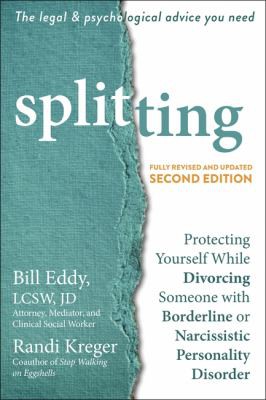
Splitting: Protecting Yourself While Divorcing Someone with Borderline or Narcissistic Personality Disorder
Bill Eddy & Randi Kreger
Updated edition covering domestic violence, alienation, false allegations in high-conflict divorce.

5 Types of People Who Can Ruin Your Life
Bill Eddy
Identifies five high-conflict personality types and teaches how to spot warning signs.
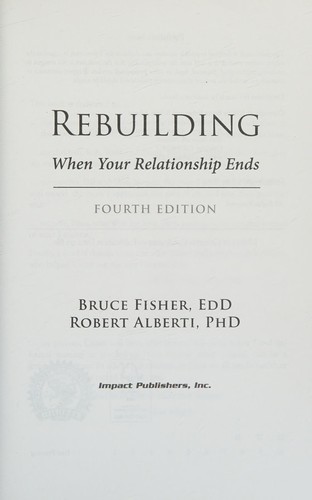
Rebuilding: When Your Relationship Ends
Bruce Fisher, EdD & Robert Alberti, PhD
Million-copy bestseller with proven 19-step divorce recovery process.
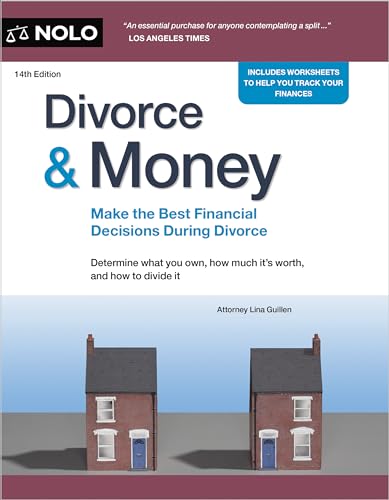
Divorce & Money
Violet Woodhouse, CFP & Lina Guillen, Esq.
Comprehensive Nolo guide covering property division, credit, tax, alimony, and child support.
As an Amazon Associate, Clarity House Press earns from qualifying purchases. Your price is never affected.
Found this helpful?
Share it with someone who might need it.
Tags
About the Author

Clarity House Press
Editorial Team
The editorial team at Clarity House Press curates and publishes evidence-based content on narcissistic abuse recovery, high-conflict divorce, and healing. Our content is informed by research, survivor experiences, and established trauma-informed approaches.
View all posts by Clarity House Press →Published by Clarity House Press Editorial Team