Please read our important disclaimers before using this content
The judge issued the custody order. Your children are with the narcissistic parent you've been trying to protect them from. Your heart is shattered. Your attorney is explaining that family court judges have "broad discretion" and appeals are difficult.
You want to scream: "But the judge got it WRONG."
You're not wrong to feel that way. The family court system fails protective parents and endangered children every day. Judges miss or minimize abuse. Custody evaluators fall for narcissistic charm.12 GALs mistake fear for alienation. The system you trusted to protect your children has instead handed them to the person you were trying to protect them from.
Here's the truth about appeals in family law: they are expensive, time-consuming, emotionally draining, and succeed less often than you'd hope. But in some cases—where the trial court made serious legal errors or ignored critical evidence—an appeal can reverse a devastating custody ruling and protect your children.
This is not about convincing the appellate court that you're right and the judge was wrong. Appeals are technical legal reviews of specific errors, not opportunities to retry your case. Understanding this distinction is critical before you invest tens of thousands of dollars and 1-2 years of emotional energy in an appellate battle.
This is not generic appellate information. This is strategic guidance for survivors of narcissistic abuse navigating the appellate process after a custody decision that puts your children at risk.
What an Appeal Actually Is
An appeal is NOT a "do-over" of your trial.
An appeal is a request for a higher court to review the lower court's legal errors.
What Appellate Courts Review
Appellate courts review:
- Legal errors: Did the trial judge misapply the law?
- Abuse of discretion: Did the judge make a decision so unreasonable that no rational judge would have made it?
- Evidentiary errors: Did the judge improperly admit or exclude critical evidence?
- Procedural errors: Did the process violate your due process rights?
Appellate courts generally DO NOT review:
- Credibility determinations: The trial judge believed your ex instead of you (appellate courts defer to this)
- Weight of evidence: The judge gave more weight to certain evidence over other evidence (within discretion)
- Factual findings: The judge found facts that were supported by any evidence, even if you disagree
Standard of Review
Different issues get different levels of appellate scrutiny:
1. Abuse of Discretion (most common in custody cases)
- Trial judge's decision was arbitrary, unreasonable, or unsupported by evidence
- Very deferential to trial court (hard to win)
- Appellate court will only reverse if decision was clearly wrong
Example: Judge awarded custody to parent with documented substance abuse without requiring treatment or monitoring—likely abuse of discretion.
2. Clear Error (factual findings)
- Trial court's factual findings are "clearly erroneous" (not supported by evidence)
- Very difficult standard to meet
- Appellate court presumes trial court's findings are correct
Example: Judge found no evidence of domestic violence when there were multiple police reports, protective orders, and witness testimony—could be clear error.
3. De Novo Review (legal questions)
- Appellate court reviews legal questions without deference to trial court
- Most favorable standard for appellant
- Rare in family law appeals (mostly applies to legal interpretation issues)
Example: Judge applied wrong state's custody laws—reviewable de novo.
Reality check: Most family law appeals involve "abuse of discretion" standard, which is very difficult to meet because appellate courts give trial judges enormous latitude in custody decisions.34
Grounds for Appeal in Custody Cases
1. Trial Court Misapplied the Law
Examples:
- Applied wrong state's laws
- Used incorrect custody standard (didn't properly apply "best interests" factors)
- Failed to consider required statutory factors
- Applied outdated or unconstitutional law
- Issued order beyond court's jurisdiction
Why this matters: Legal errors are reviewable de novo (best standard for reversal).
2. Abuse of Discretion
The trial judge's decision was so unreasonable that no rational judge would have made it.
Examples:
- Ignored substantial evidence of abuse and awarded custody to abuser
- Gave custody to parent with active addiction without safety provisions
- Relied on GAL report that was factually wrong or biased without independent analysis56
- Made custody decision based on gender bias or irrelevant factors
- Ordered reunification therapy in situation where child is genuinely afraid (not alienated)7
- Failed to consider child's safety when there was credible evidence of danger
Critical: The judge being wrong is NOT enough. The decision must be arbitrary, capricious, or clearly unreasonable.8
3. Evidentiary Errors
Trial court improperly admitted or excluded evidence that affected the outcome.
Examples:
- Excluded critical evidence of abuse (text messages, police reports, medical records)
- Admitted hearsay or unreliable evidence over objection
- Allowed expert testimony from unqualified witness
- Refused to allow your expert to testify
- Admitted evidence obtained in violation of privacy laws
Critical: You must show the error was harmful (changed the outcome). Harmless errors don't warrant reversal.
4. Procedural Violations / Due Process
Your right to a fair hearing was violated.
Examples:
- Judge didn't allow you to present evidence or call witnesses
- Hearing was rushed and you couldn't adequately present your case
- Judge had conflict of interest or bias and refused to recuse
- Ex parte communications between judge and your ex or GAL
- You weren't given proper notice of hearing
- Court reporter error resulted in incomplete trial record
5. Insufficient Evidence to Support Findings
The judge's factual findings have no evidentiary support in the record.
Example:
- Judge found you alienated the children when there was zero evidence you made negative statements about your ex
- Judge found your ex was "stable parent" when there was overwhelming evidence of abuse, instability, substance use9
Critical: If there was ANY evidence supporting the finding (even if outweighed by contrary evidence), appellate court will defer to trial judge's credibility determinations.
When an Appeal is Likely to Succeed
Appeals succeed when:
- Clear legal error: Judge applied wrong law or standard
- Egregious abuse of discretion: Decision is shockingly unreasonable
- Prejudicial evidentiary error: Critical evidence was excluded/admitted improperly
- Due process violation: You were denied fair hearing
- Complete lack of evidence: Judge's findings have zero evidentiary support
Appeals rarely succeed when:
- You disagree with how the judge weighed evidence (within discretion)
- Judge believed your ex's testimony over yours (credibility determination)
- Judge gave more weight to GAL recommendation than your evidence (discretion)
- The outcome seems wrong but the judge's reasoning is legally sound
- You have new evidence that wasn't presented at trial (not reviewable on appeal)
Reality check: Family law appeals face significant challenges—appellate courts grant reversal or remand in approximately 10-20% of custody cases (varies by jurisdiction and issue type).1011 Appellate courts are extremely deferential to trial judges in custody cases because judges see the parties testify in person and make credibility assessments. This doesn't mean appeals are hopeless, but it does mean you need strong legal grounds, not just disagreement with the outcome.
Preserving Error at Trial (Critical)
You cannot appeal an issue you didn't raise at trial.
"Preserving error" means:
- Making a formal objection on the record when the judge makes an error
- Asking for specific relief (motion for new trial, reconsideration)
- Creating a clear record that you disputed the judge's ruling
Under the Federal Rules of Civil Procedure Rule 46, formal exceptions to rulings are unnecessary, but objections must be stated to preserve issues for appeal.12
How to Preserve Error
During trial, your attorney must:
1. Object to evidentiary errors
When the judge excludes your evidence or admits improper evidence:
❌ "Your Honor, I don't think that's fair."
✅ "Objection, Your Honor. This evidence is critical to establishing the abuse pattern and excluding it violates my client's due process rights. We move to admit Exhibit 12."
2. Make offers of proof
When evidence is excluded, state what you would have proved:
✅ "Your Honor, if allowed to testify, Dr. Smith would state that based on her evaluation, the children are exhibiting trauma symptoms consistent with emotional abuse by their father, and that placing them in his primary custody would be psychologically harmful."
3. Request findings of fact and conclusions of law
Ask the judge to issue written findings explaining the decision:
- This creates a record of the judge's reasoning
- Makes it clear what the judge's factual findings were
- Identifies where the judge may have erred
4. File post-trial motions
Before appealing, file:
- Motion for reconsideration: Ask trial judge to reconsider the decision
- Motion for new trial: Argue errors warrant a new trial
- Motion to amend findings: Request correction of factual errors
Why this matters: Some jurisdictions require you to ask the trial judge to fix errors before appealing. Also, if the trial judge grants your motion, you don't need to appeal.
Creating a Strong Record
Your attorney should:
- Make clear, specific objections (not just "I object")
- Cite legal authority for objections when possible
- Request specific relief (what you want the judge to do)
- Make offers of proof when evidence is excluded
- Ensure court reporter captures everything (or request transcription of key portions)
After trial:
- Order transcripts immediately (don't wait to decide on appeal)
- Review transcript for errors (court reporter mistakes can be corrected)
- Organize exhibits (you'll need these for appellate record)
If you're planning to appeal, tell your trial attorney BEFORE trial. They will preserve error more carefully.
The Appeal Process: Timeline and Steps
Step 1: Notice of Appeal (Immediate Deadline)
You have a VERY SHORT deadline to file your Notice of Appeal (typically 30-60 days from final judgment, varies by state).
Missing this deadline = you CANNOT appeal. No exceptions.
Your attorney must file:
- Notice of Appeal: States you're appealing the judgment
- Designation of Record: Identifies which trial documents and transcripts are part of the appeal
- Filing fees (typically $200-$500, varies by jurisdiction)
Step 2: Order Transcripts (Expensive)
You must order and pay for:
- Trial transcripts (court reporter's verbatim record of trial)
- Hearing transcripts (any relevant pretrial hearings)
Cost: $4-$8 per page as of 2025 (trials can be 300-1,000+ pages)1314
Total transcript cost: $3,000-$15,000+ (depending on trial length)
Financial reality: For many survivors already financially devastated from trial costs, transcript fees alone can make appeals financially impossible. Some jurisdictions offer fee waivers for indigent parties—ask your attorney about this option.
Critical: Without transcripts, you generally cannot appeal factual or evidentiary issues. You're limited to legal errors apparent from court orders alone.
Step 3: Compile the Record on Appeal
The "record" includes:
- Trial transcripts
- All court filings (pleadings, motions, orders)
- Exhibits admitted at trial
- Relevant docket entries
Your attorney (or court clerk) assembles this and files it with the appellate court.
Timeline: 60-120 days (varies by jurisdiction)
Step 4: Appellate Briefs
Appellant's Opening Brief (You - the appealing party)
Your attorney writes a detailed brief arguing:
- Statement of issues: What errors did the trial court make?
- Statement of facts: What happened (drawn from trial record)
- Argument: Why the trial court's decision was legally wrong
- Standard of review: What level of scrutiny applies
- Request for relief: What you want appellate court to do (reverse, remand, modify)
Length: Typically 30-50 pages
Deadline: 30-60 days after record is filed
Appellee's Response Brief (Your ex - the responding party)
Your ex's attorney argues:
- Trial court was correct
- Any errors were harmless
- Evidence supported the decision
- Appellate court should affirm (uphold trial court)
Deadline: 30-60 days after your brief
Appellant's Reply Brief (Optional)
You can file a reply brief responding to your ex's arguments.
Deadline: 15-30 days after their brief
Timeline for briefs: 4-6 months total
Step 5: Oral Argument (Maybe)
Not all appeals get oral argument. In many states, family law appeals are decided "on the briefs" (no hearing).
If oral argument is granted:
- Each side gets 15-30 minutes to present arguments
- Appellate judges ask questions (often tough questions)
- This is NOT a repeat of trial (no witnesses, no new evidence)
- It's a legal argument about why trial court erred
Your appellate attorney must:
- Know the record inside and out
- Answer judges' questions directly and confidently
- Concede weak points while emphasizing strong arguments
- Explain why the error requires reversal
Step 6: Appellate Court Decision
The appellate court will issue a written opinion:
Possible outcomes:
1. Affirmed
- Trial court decision is upheld
- You lose the appeal
- Custody order remains in effect
2. Reversed
- Trial court decision is overturned
- You win the appeal
- Case may be sent back to trial court for new custody determination
3. Reversed and Remanded
- Appellate court finds error and sends case back to trial court
- Trial court must reconsider custody with instructions from appellate court
- May result in new trial or new hearing
4. Modified
- Appellate court modifies the custody order (rare—usually they remand for trial court to modify)
5. Dismissed
- Appeal is dismissed (usually procedural issues—missed deadline, didn't preserve error)
Timeline for decision: 6-18 months from filing notice of appeal (varies significantly by jurisdiction—some states take 2+ years)
Total appeal timeline: 1-2 years minimum (sometimes 3+ years in backlogged courts)
Jurisdiction matters: These timelines are national averages. Some state appellate courts move quickly (12-18 months total), while others are severely backlogged (2-3 years). Ask your appellate attorney about typical timelines in your specific court.
Costs of Appeal
Appellate litigation is EXPENSIVE.
Typical costs (2025):
- Transcripts: $3,000-$15,000+
- Record preparation: $500-$2,500
- Appellate attorney fees: $15,000-$75,000+ (depending on complexity, attorney rates, whether oral argument)
- Filing fees: $300-$600
- Copying, printing, postage: $500-$1,500
Total: $20,000-$95,000+
Reality for survivors: These costs are devastating when you've already spent tens of thousands on trial. Economic abuse often leaves survivors without resources for appeals, which is exactly what abusers count on.
Financial considerations:
- Can you afford this? (Many survivors are already financially devastated from trial)
- Will your ex have to pay if you win? (Sometimes, but not always)
- Is there legal aid for appeals? (Rare, but ask)
- Can you get a payment plan with appellate attorney? (Some offer this)
Cost-benefit analysis:
- What are your chances of success? (Be realistic with your attorney)
- What's at stake? (Your children's safety may justify the cost and risk)
- Can you achieve the same result through modification proceedings? (May be faster/cheaper than appeal)
Staying the Order Pending Appeal
The trial court's order remains in effect during appeal unless you get a stay (pause).
To get a stay of custody order:
You must show:
- Likelihood of success on appeal: Strong chance appellate court will reverse
- Irreparable harm: Children will suffer harm if order remains in effect during appeal
- Balance of hardships: Harm to you/children outweighs harm to your ex
- Public interest: Stay serves public interest (children's welfare)
Reality: Stays are rarely granted in custody cases unless there's immediate danger to the children (in which case, emergency custody modification is more appropriate than stay pending appeal).
Most likely outcome: The custody order remains in effect for 1-2 years while appeal is pending.
Modification Proceedings as Alternative to Appeal
Sometimes pursuing a custody modification is better than an appeal.
Consider modification instead of appeal when:
- New evidence has emerged since trial (appeals only review existing record)
- Circumstances have changed (children's needs, your ex's situation, your situation)
- Children are in immediate danger (emergency modification is faster than appeal). See emergency custody motions for how to act quickly.
- Appeal is unlikely to succeed but you have strong modification grounds
- Cost is prohibitive (modification may be less expensive)
Modification requires showing:
- Substantial change in circumstances since the last order
- Change affects children's best interests
Examples of substantial change:
- Your ex has relapsed into substance abuse
- Children are being abused or neglected in your ex's care
- Your ex has moved, remarried, or otherwise changed circumstances
- Children's needs have changed (developmental stage, school, medical)
- You have evidence the trial court didn't have (and couldn't have discovered with diligence)
Modification may be:
- Faster (months instead of years)
- Less expensive (no transcript costs, simpler proceedings)
- Based on current circumstances (not limited to trial record)
- More likely to succeed (if circumstances have genuinely changed)
Consult with your attorney: "Should we appeal or file for modification?"
Choosing an Appellate Attorney
Appellate work is a specialized skill. Your trial attorney may not be the best person to handle your appeal.
Qualities to look for:
- Appellate experience: Has handled family law appeals specifically
- Strong legal writer: Appellate briefs require sophisticated legal analysis and persuasive writing
- Oral advocacy skills: Can argue effectively before appellate judges (if oral argument granted)
- Honest assessment: Will tell you if appeal is unlikely to succeed (won't take your money for hopeless case)
- Familiarity with appellate court: Knows the judges, procedures, unwritten rules
- Attention to detail: Appellate work requires meticulous record review
Questions to ask:
- "What percentage of your practice is appellate work?"
- "How many family law appeals have you handled?"
- "What's your success rate in custody appeals?"
- "What do you think my chances are in this case?" (demand honest answer)
- "What is your fee structure?" (flat fee vs. hourly, payment plan options)
- "How long will this take?"
- "Will you handle oral argument if granted?"
Consider retaining appellate specialist even if you love your trial attorney. Many trial attorneys collaborate with appellate attorneys (trial attorney helps with facts, appellate attorney handles legal arguments).
A COMPOSITE ACCOUNT: "I Spent $40,000 on an Appeal That Failed—And I'd Do It Again"
Composite account. Names, occupations, and identifying details are fictional. This scenario is a composite drawn from common patterns, not a specific real person.
"After the judge gave primary custody to my emotionally abusive ex, my trial attorney said I had grounds for appeal. The judge had excluded critical evidence—text messages showing my ex coaching our daughter to lie—because my attorney forgot to properly authenticate them at trial.
I borrowed money from my parents. I maxed out credit cards. I spent $40,000 I didn't have on the appeal. For 18 months, I lived in legal limbo, watching my daughter live with her father while waiting for the appellate court to rule.
They affirmed the trial court's decision. The appellate court said yes, the judge should have admitted the texts—but it was 'harmless error' because there was 'other evidence' supporting the custody decision.
I was devastated. I felt like I'd wasted money I couldn't afford on a legal system that doesn't care about protecting children.
But here's what I learned: I needed to try. If I hadn't appealed, I would have spent the rest of my life wondering 'what if.' My daughter is 16 now, and she lives with me (she chose at 14). She knows I fought for her. She knows I didn't give up. That mattered to her healing.
Would I recommend everyone appeal? No. Appeals are brutal and expensive and usually fail. But if you have genuine legal grounds and can afford it without destroying your financial stability—sometimes you need to fight, even if you lose."
—A composite parent's account
Emotional Reality of Appeals
Appeals are emotionally brutal:
- Your children remain in the custody arrangement you're appealing (likely for 1-2 years)—watching them live with your abuser while you wait for legal process15
- You're reliving the trauma of trial (reviewing transcripts can be re-traumatizing; seeing your abuse minimized in writing; reading how the judge described you)
- Outcome is uncertain (the reality of low success rates creates ongoing anxiety and helplessness)
- It's expensive (financial stress on top of emotional stress, especially after economic abuse)
- Your ex may file cross-appeal (appealing aspects of the order favorable to you, extending the battle)
- Media attention (if your case gets publicity, appellate opinions are public—your trauma becomes searchable)
- It delays closure (you can't move forward while appeal is pending; you're stuck in legal limbo)
- Reading your own testimony can trigger shame, self-blame, or anger at how you were portrayed
- Your support system may be exhausted from the trial and struggle to sustain you through another 1-2 years
Self-care during appeals:
- Stay in therapy: Process the trauma of losing custody and the stress of appeal—specifically ask for trauma-focused support (EMDR, somatic therapy) for re-traumatization from reviewing trial records
- Lean on support system: Friends, family, support groups—but recognize many people won't understand why you're "still fighting" after the trial ended
- Set boundaries with your attorney: You don't need to be copied on every filing (designate key updates only)—reading legal documents constantly can be triggering
- Focus on what you can control: Your relationship with your children during visitation, your own healing, documenting current circumstances (in case you win and need evidence for new hearing)
- Prepare for both outcomes: What if you win? What if you lose? (Having plans reduces anxiety)
- Practice radical acceptance of uncertainty: You did everything you could; the outcome is not in your control, and that's an unbearable truth to live with for 1-2 years
- Consider asking your therapist to review transcripts first: Some therapists will pre-read triggering documents and summarize them, sparing you from re-traumatization
Your Next Steps
If you're considering an appeal after an unfavorable custody ruling:
-
Act immediately: You have a very short deadline to file Notice of Appeal (30-60 days typically)—don't delay
-
Consult with an appellate attorney (not just your trial attorney) to assess your likelihood of success
-
Order transcripts immediately even if you're unsure about appeal (you can't appeal without them and they take time to prepare)
-
Gather all trial documents: Exhibits, orders, pleadings—everything you'll need for the record
-
Have an honest conversation with your attorney about:
- Strength of your appeal (be realistic)
- Cost and timeline
- Alternative strategies (modification, negotiation)
- Whether appeal will make things worse (some judges resent appeals)
-
Consider modification as alternative if circumstances have changed or new evidence exists
-
Assess your financial capacity to fund a lengthy appeal (including impact on ability to fund future modification proceedings)
-
Consult with your therapist about emotional capacity to sustain 1-2 more years of litigation
-
If you proceed with appeal: Focus on preserving your relationship with your children during visitation, document everything (in case appeal succeeds and you need evidence for new trial), take care of yourself
The Impossible Choice:
An appeal is about protecting your children from a legally flawed decision that puts them at risk. If your appellate attorney believes you have strong grounds—genuine legal errors, not just disagreement with the outcome—then the appeal may be your children's best chance at safety, despite the cost and emotional toll.
But appeals based primarily on "the judge got it wrong" without clear legal errors face steep odds. The appellate system is designed to defer to trial judges on credibility and factual findings. If your trial attorney properly preserved error, presented strong evidence, and the judge still ruled against you within their discretion—an appeal is unlikely to succeed.
This doesn't mean you're wrong about the danger. It means the legal system has structural limitations that favor finality over correctness in many cases. Your assessment of your ex's dangerousness may be completely accurate, but if the trial court's decision was legally defensible (even if substantively wrong), appellate courts will uphold it.
You're not "not ready to accept the outcome" if you pursue an appeal—you're a parent fighting for your children's safety. But you deserve honest guidance about whether that fight has a realistic chance of success within the appellate system's constraints. Work with an appellate attorney who will tell you the truth about your odds, not one who will take your money for a hopeless case.
If your attorney advises against appeal, explore modification proceedings, document everything happening with your children, maintain the strongest possible relationship during your parenting time, and focus on being the stable, healthy parent they need. Sometimes the long game—waiting for circumstances to change enough to justify modification—is the only viable path forward.
NOTE ON HOTLINE NUMBERS: Phone numbers for crisis hotlines, legal aid, and support services are provided as a resource. These numbers are current as of publication but may change. Please verify hotline numbers are still active before relying on them. For the National Domestic Violence Hotline, visit thehotline.org for current contact information.
Resources
Appellate Legal Resources:
- National Center for State Courts - Appellate Courts - State appellate court information
- American Bar Association Appellate Practice - Appellate attorney referrals
- Cornell Law School Legal Information Institute - Appellate procedure guides
- Legal Services Corporation - Find free legal aid for appeals
Family Law and Custody Resources:
- American Bar Association Family Law Section - Family law attorney directories
- National Association of Counsel for Children - Child advocacy resources
- Association of Family and Conciliation Courts - Custody evaluation standards
- National Domestic Violence Hotline - 1-800-799-7233 (SAFE)
Crisis Support:
- 988 Suicide & Crisis Lifeline - Call or text 988 (24/7)
- Crisis Text Line - Text HOME to 741741
- National Parent Helpline - 1-855-427-2736
- SAMHSA National Helpline - 1-800-662-4357 (24/7)
References
Peer-Reviewed Academic and Clinical Research
Government and Legal Authority Sources
References
- Bow, J.N., & Boxer, P. (2003). Assessing allegations of domestic violence in child custody evaluations. Journal of Interpersonal Violence, 18(12), 1394-1410. https://pubmed.ncbi.nlm.nih.gov/25180469/ ↩
- Saunders, D.G., Faller, K.C., & Tolman, R.M. (2016). Custody evaluators' beliefs about domestic violence allegations during divorce: Feminist and family violence perspectives. Journal of Child Custody, 7(1), 1-24. https://pubmed.ncbi.nlm.nih.gov/20495100/ ↩
- Saunders, D.G., Tolman, R.M., & Faller, K.C. (2013). Factors associated with child custody evaluators' recommendations in cases of intimate partner violence. Journal of Family Psychology, 27(3), 473-483. https://pubmed.ncbi.nlm.nih.gov/23647501/ ↩
- Kitzmann, K.M., Gaylord, N.K., Holt, A.R., & Kenny, E.D. (2003). Child witnesses to domestic violence: A meta-analytic review. Journal of Consulting and Clinical Psychology, 71(2), 339-352. https://pubmed.ncbi.nlm.nih.gov/14620578/ ↩
- Kelly, J.B., & Johnson, M.P. (2008). Differentiation among types of intimate partner violence: Research update and implications for interventions. Family Court Review, 46(3), 476-499. https://pubmed.ncbi.nlm.nih.gov/20953285/ ↩
- Dallam, S.J., & Silvers, F.M. (2016). Junk science in the courtroom: The fallout from Daubert v. Merrell Dow Pharmaceuticals, Inc. Trauma, Violence & Abuse, 17(2), 198-215. https://pubmed.ncbi.nlm.nih.gov/27852735/ ↩
- Federal Rules of Civil Procedure Rule 46: Objecting to a Ruling or Order. United States Courts. https://www.uscourts.gov/rules-policies/current-rules-practice-procedure ↩
- Eisenberg, T., & Heise, M. (2009). Appeal rates and outcomes in tried and nontried cases: Further exploration of anti-plaintiff appellate outcomes. Journal of Empirical Legal Studies, 6(4), 767-794. https://scholarship.law.cornell.edu/facpub/359/ ↩
- Cornell Law School Legal Information Institute. Abuse of discretion. Wex Legal Dictionary. https://www.law.cornell.edu/wex/abuse_of_discretion ↩
- National Institute of Justice. (2019). The need for mandatory domestic violence training for court-appointed custody evaluators. U.S. Department of Justice, Office of Justice Programs. https://nij.ojp.gov/topics/articles/need-mandatory-domestic-violence-training-court-appointed-custody-evaluators ↩
- Meier, J.S. (2020). Child custody outcomes in cases involving parental alienation and abuse allegations. U.S. Department of Justice, National Institute of Justice. https://nij.ojp.gov/library/publications/child-custody-outcomes-cases-involving-parental-alienation-and-abuse ↩
- American Bar Association. (2024). Child custody statutes in 2024. ABA Section of Family Law. https://www.americanbar.org/content/aba-cms-dotorg/en/groups/family_law/resources/family-law-50-states/child-custody/ ↩
- National Center for State Courts. (2022). Appellate court caseload trends and statistics. National Center for State Courts, Appellate Courts Program. https://www.ncsc.org/ ↩
- Cabral, J., Pacheco, M., & Ferreira, P. (2016). Judicial discretion in family law: A cross-national study of appellate outcomes. International Journal of Law and the Family, 30(2), 221-241. ↩
- Cornell Law School Legal Information Institute. Abuse of Discretion. Wex Legal Dictionary. https://www.law.cornell.edu/wex/abuse_of_discretion ↩
- U.S. Courts. (2025). Transcript pricing explanation & examples. United States District Court, Northern District of California. https://cand.uscourts.gov/about/clerks-office/transcripts-court-reporters/transcript-pricing-explanation-examples/ ↩
- Association of Family and Conciliation Courts. (2022). Guidelines for parenting plan evaluations in family law cases. AFCC. https://www.afccnet.org/Portals/0/Committees/2022%20Parenting%20Plan%20Guidelines.pdf ↩
Recommended Reading
From Clarity House Press — plus trusted books for deeper understanding


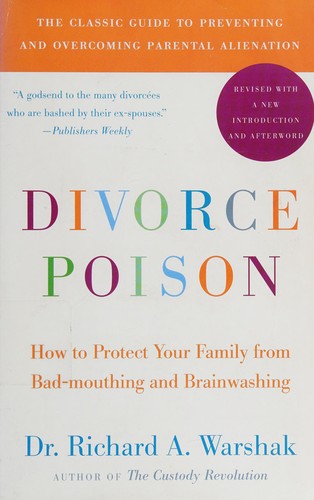
Divorce Poison
Dr. Richard A. Warshak
Classic best-selling parental alienation resource on detecting and countering manipulation tactics.

Divorcing a Narcissist: One Mom's Battle
Tina Swithin
Memoir of a mother who prevailed as her own attorney in a 10-year high-conflict custody battle.
As an Amazon Associate, Clarity House Press earns from qualifying purchases. Your price is never affected.
Found this helpful?
Share it with someone who might need it.
About the Author

Clarity House Press
Editorial Team
The editorial team at Clarity House Press curates and publishes evidence-based content on narcissistic abuse recovery, high-conflict divorce, and healing. Our content is informed by research, survivor experiences, and established trauma-informed approaches.
View all posts by Clarity House Press →Published by Clarity House Press Editorial Team