Please read our important disclaimers before using this content
If you're reading this, you're likely facing one of the most dangerous accusations in family court: that you're alienating your children from their other parent. When protective parents document abuse, set boundaries, or support their children's legitimate fears, abusive ex-partners often flip the script—accusing the protective parent of parental alienation.
This weaponization of alienation claims has become one of the most effective tools abusers use to regain control, discredit protective parents, and gain custody of children they previously showed little interest in parenting.
This isn't abstract theory—it's practical guidance drawn from clinical expertise, legal strategy, and the lived experiences of survivors who've navigated weaponized alienation claims and survived. Understanding DARVO—the deny, attack, reverse victim and offender pattern—is essential context for recognizing how this tactic operates.
Understanding Parental Alienation: The Clinical Evolution
Gardner's Discredited Legacy
The concept of "Parental Alienation Syndrome" (PAS) was introduced in 1985 by psychiatrist Richard Gardner1. Gardner claimed PAS was a disorder in which one parent systematically programs children to reject the other parent without legitimate justification. His work has been widely discredited for multiple reasons:
Lack of scientific validation: PAS has never been accepted into the DSM (Diagnostic and Statistical Manual of Mental Disorders) or recognized by major professional organizations including the American Psychological Association, American Psychiatric Association, or American Medical Association.
Dangerous applications: Gardner's work minimized child abuse and suggested children's abuse allegations were often fabrications influenced by the "alienating" parent. His writings included disturbing statements dismissing sexual abuse claims and suggesting children could benefit from sexual contact with adults.
Methodological flaws: Gardner's research lacked peer review, control groups, or scientific rigor. He based his conclusions on his own clinical observations without external validation.
Used to silence abuse disclosures: PAS became a weapon used against protective parents—particularly mothers—who reported abuse. Courts began treating abuse allegations as evidence of alienation rather than safety concerns requiring investigation.
Modern Understanding: Alienation as a Continuum
Contemporary clinical research recognizes that parental alienation exists on a spectrum, ranging from mild alignment with one parent to severe rejection of a parent without legitimate justification2. However, modern frameworks emphasize critical distinctions Gardner ignored:
Estrangement vs. alienation: When a child rejects a parent due to that parent's actual behavior (abuse, neglect, frightening conduct), this is estrangement, not alienation3. The child's response is reality-based and appropriate self-protection.
Protective parenting vs. alienating behavior: Supporting a child who expresses legitimate fear is protective parenting. Fabricating allegations or coaching a child to reject a safe parent is alienating behavior. Courts must distinguish between these fundamentally different scenarios.
Hybrid cases: Some situations involve both legitimate safety concerns and some alienating behaviors. These require nuanced evaluation, not binary thinking.
Child's developmental perspective: A child's resistance to spending time with a parent may reflect accurate perception of that parent's behavior, the child's developmental needs, or legitimate preferences—not necessarily alienation.
How Abusers Weaponize Alienation Claims
Abusive parents have learned to use alienation claims as a sophisticated legal weapon. Understanding these tactics helps protective parents recognize the pattern and respond strategically.
DARVO: Deny, Attack, Reverse Victim and Offender
When protective parents document abuse or set boundaries, abusers frequently deploy DARVO4. Research by psychologist Jennifer Freyd and colleagues found that DARVO is a commonly-used manipulation strategy, with one study finding 72% of perpetrators use these tactics during confrontations5. Experimental research has shown that exposure to DARVO leads observers to perceive victims as less believable and more responsible for the violence[^6]:
Deny the abuse: "I never hit her. She's making this up."
Attack the accuser's credibility: "She's mentally unstable. She's a vindictive liar."
Reverse victim and offender: "I'm the real victim here. She's alienating my children from me. She's the abusive one."
This reversal is particularly effective in family court where judges may view both parents' claims with equal skepticism, creating false equivalence between an abuse victim's safety concerns and an abuser's strategic accusations.
Projection as Strategy
Abusers often project their own behavior onto protective parents:
- The parent who showed minimal interest in parenting during the relationship suddenly claims to be a devoted parent being "kept away" from the children
- The parent who controlled, isolated, and manipulated the family accuses the protective parent of being controlling
- The parent who uses the children as weapons claims the other parent is weaponizing custody
This projection serves multiple purposes: it muddies the waters, creates confusion, and positions the abuser as the aggrieved party fighting for their parental rights.
Strategic Timing
Abusers typically raise alienation claims at specific strategic moments:
Immediately after abuse allegations: When a protective parent reports domestic violence, child abuse, or seeks a protective order, the counter-claim of alienation attempts to reframe safety concerns as vindictive fabrication.
When losing control: As protective parents establish boundaries, begin healing, or demonstrate independence, abusers escalate legal aggression to regain control through the court system.
During custody evaluations: Alienation claims can influence evaluators who may not understand trauma dynamics or the difference between protective parenting and alienation.
The "Friendly Parent" Trap
Many jurisdictions consider each parent's willingness to facilitate the child's relationship with the other parent—the "friendly parent provision." While well-intentioned, this provision creates a dangerous trap for protective parents:
If you express safety concerns, you may be viewed as unfriendly and alienating.
If you don't express safety concerns, you fail to protect your children and may be viewed as neglectful.
If you facilitate visitation despite abuse, you expose children to harm.
If you resist unsafe visitation, you risk losing custody for being "uncooperative."
Abusers exploit this catch-22, presenting themselves as the cooperative parent willing to co-parent while casting the protective parent as obstructive.
Distinguishing Legitimate Alienation from Protective Parenting
Courts, custody evaluators, and attorneys must distinguish between three fundamentally different scenarios:
Legitimate Alienation
Characteristics:
- Parent makes false or exaggerated claims about the other parent
- Parent coaches child to make false allegations
- Parent restricts contact without legitimate safety justification
- Parent speaks negatively about the other parent in front of the child
- Parent interferes with communication between child and other parent
- Child parrots parent's language and cannot articulate their own reasons for rejection
- Child's stated reasons for fear or rejection don't align with their actual experiences with the rejected parent
Example: A parent tells their 8-year-old that dad "abandoned" the family when dad actually sought 50/50 custody. The parent monitors and restricts phone calls, makes dismissive comments about dad's new home, and quizzes the child after visits looking for ammunition. The child begins refusing to go to dad's house but cannot explain specific reasons beyond "he's mean" (language the child heard from mom).
Weaponized Alienation Claims
Characteristics:
- Alienation claim arises immediately after abuse disclosure
- Accusing parent has documented history of abuse
- Accusing parent showed limited interest in parenting during relationship
- Child's fear or resistance is proportional to documented parenting deficits or abuse
- Protective parent has documented attempts to facilitate safe contact
- "Alienation" claim is used to dismiss or minimize abuse allegations
- Accusing parent refuses therapeutic intervention or parenting education
Example: After mom obtains a protective order documenting dad's physical violence, dad's attorney claims mom is "alienating" the children. Dad's parenting time was minimal before separation (he worked 70-hour weeks and spent weekends golfing). The children, ages 10 and 12, express fear of dad's anger and can articulate specific incidents when he screamed, punched walls, and shoved mom. Mom has offered supervised visitation but opposes unsupervised overnight visits. Dad refuses anger management or parenting classes, claiming he doesn't need them because mom is "making the kids afraid of him."
Protective Parenting Mischaracterized as Alienation
Characteristics:
- Parent supports child's relationship with other parent within safe parameters
- Parent validates child's feelings while not coaching specific responses
- Child's resistance is based on their own experiences and perceptions
- Parent seeks therapeutic support for child to process experiences
- Parent documents concerning behaviors but doesn't fabricate or exaggerate
- Parent complies with court orders while advocating for safety modifications
Example: Mom follows the parenting plan exactly, documenting each exchange time and any incidents. When her 6-year-old returns from dad's weekends anxious and withdrawn, she takes the child to a therapist. She doesn't ask leading questions but documents what the child spontaneously discloses (dad's girlfriend yells at him, dad drinks beer and falls asleep, dad says mom is stupid). She sends neutral, factual emails to dad about the child's schedule and needs. When the child resists going to dad's, she gently encourages: "I know it's hard, but the judge said you spend weekends with dad. Let's pack your favorite stuffed animal." Dad claims this is alienation because the child "never wants to come to his house."
How Courts Evaluate Alienation Claims
Understanding the evaluation process helps protective parents respond effectively and demonstrate they are not alienating.
Custody Evaluator's Role
In high-conflict cases involving alienation allegations, courts often appoint a custody evaluator—typically a psychologist or licensed clinical social worker—to assess the family dynamics and make recommendations6.
Comprehensive assessment includes:
Individual interviews: Each parent interviewed separately about parenting history, the other parent, and the conflict
Child interviews: Age-appropriate interviews with children to assess their relationships, preferences, and reasons for any resistance
Collateral contacts: Interviews with therapists, teachers, pediatricians, family members who can provide objective information
Home visits: Observation of each parent's home and parent-child interactions
Document review: Review of emails, texts, school records, medical records, police reports, protective orders
Psychological testing: May include personality assessments, parenting capacity evaluations
Red flags evaluators watch for (indicating possible alienation):
- Child uses adult language or sophisticated concepts they couldn't develop independently
- Child's stated reasons for rejecting parent are vague, scripted, or illogical
- Child shows no ambivalence (all good/all bad thinking)
- Child refuses all contact with rejected parent, even previously enjoyed activities
- Child claims to have independent memories of events that occurred before they were born or old enough to remember
- Child's fear level is disproportionate to the rejected parent's actual behavior
Red flags evaluators watch for (indicating protective parenting, not alienation):
- Child can articulate specific, age-appropriate reasons for fear or resistance
- Child shows ambivalence ("I love dad but I'm scared when he yells")
- Child's concerns are corroborated by evidence or third-party witnesses
- Protective parent demonstrates efforts to facilitate relationship within safe boundaries
- Protective parent's concerns are specific, documented, and proportional to actual events
Forensic Interviews
When abuse allegations are present, forensic interviews may be conducted by trained specialists who use evidence-based, non-leading interview protocols to assess the child's statements.
Proper forensic interviews:
- Use open-ended questions ("Tell me about your time at dad's house")
- Avoid leading questions ("Did dad hit you?")
- Document the child's spontaneous statements and language
- Assess the child's developmental capacity and suggestibility
- Evaluate whether the child's account is consistent, detailed, and age-appropriate
- Consider alternative explanations for the child's statements
Problematic interviews:
- Evaluator has preconceived conclusions
- Multiple repetitive interviews (increasing suggestibility)
- Leading questions or pressure to disclose
- Failure to consider context or corroborating evidence
Court Considerations
Judges weigh multiple factors when evaluating alienation claims:
Pattern of behavior: Is this an isolated incident or pattern of interference?
Proportionality: Are the protective parent's concerns proportional to documented events?
Compliance with orders: Does the protective parent follow court orders even when disagreeing?
Evidence quality: Are claims supported by specific, documented evidence or vague accusations?
Child's best interests: What serves the child's safety, stability, and wellbeing?
Credibility: Which parent's account is more consistent with objective evidence?
Defending Against False Alienation Accusations
If you're facing weaponized alienation claims, strategic response is essential.
Documentation That Protects You
Demonstrate facilitation efforts:
- Keep a log of every attempt to facilitate contact (calls arranged, transportation provided, items packed for visits)
- Save all communications showing you encouraging the relationship: "Tell daddy about your soccer game!" in texts
- Document that you follow the parenting plan exactly—every exchange, on time, prepared
- Photograph the child ready to go for visitation (showing you prepared them appropriately)
Document concerning behaviors without editorializing:
- Factual observations: "Child returned from visit at 6:15 pm. Stated he was hungry and hadn't eaten since breakfast. I provided dinner."
- Not: "He NEVER feeds the child! He's such a neglectful father!"
- Child's spontaneous statements in their own words: "Child said, 'Daddy's friend smells funny and sleeps on the couch.'"
- Not: "Child said daddy's drug-addict girlfriend is living there" (unless child used those exact words)
Demonstrate you're not coaching:
- Don't ask leading questions ("Did daddy hit you?")
- Document unsolicited disclosures: "While playing with dolls, child said unprompted, 'This daddy doll is mean like my daddy.'"
- Take child to therapist and allow private sessions (shows you're not controlling the narrative)
- Accept therapist recommendations even if they include facilitating contact with other parent
Communication methods that protect you:
- Use co-parenting apps like TalkingParents, OurFamilyWizard, or AppClose that timestamp and preserve all communication
- Keep all communication factual, brief, and child-focused
- Use BIFF method: Brief, Informative, Friendly, Firm
- Never trash-talk the other parent in writing (assume the judge will read everything)
Legal Strategies
Work with specialized counsel: Attorneys experienced in abuse-based custody litigation understand the weaponization of alienation claims and can counter them effectively.
Request proper evaluation: If alienation is alleged, request a comprehensive custody evaluation by an evaluator with specific training in domestic violence and trauma.
Challenge evaluator bias: If the evaluator appears biased or unfamiliar with abuse dynamics, your attorney may challenge their qualifications or seek a different evaluator.
Present affirmative evidence: Provide evidence of your facilitation efforts, the child's relationships with both parents prior to separation, and the other parent's concerning behaviors.
Expert witnesses: Consider retaining experts in trauma, domestic violence, or child development who can educate the court about protective parenting vs. alienation.
Guardian ad litem: In some cases, requesting a guardian ad litem (attorney for the child) can provide another voice advocating for the child's safety rather than parental rights.
Therapeutic Support
Individual therapy for you: Processing trauma, managing stress, and maintaining emotional regulation during litigation is essential.
Therapy for children: A trauma-informed child therapist can help children process their experiences and provide objective observations to the court.
Family therapy (when appropriate): If recommended by evaluators, engage in therapy—but ensure the therapist understands abuse dynamics and won't pressure reconciliation in unsafe situations.
Impact of Alienation Claims on Custody Outcomes
Understanding how alienation claims affect custody helps protective parents anticipate and respond to these dynamics.
Statistical Realities
Research indicates troubling patterns. A landmark National Institute of Justice-funded study by Professor Joan Meier and colleagues at George Washington University analyzed over 2,000 custody cases and found significant gender disparities in how courts handle abuse allegations[^8]:
Abuse victims who report abuse are more likely to lose custody: The Meier study found that when mothers reported abuse—including child abuse and domestic violence—they lost custody 28% of the time. When fathers alleged abuse, they lost custody only 12% of the time. Even when the father's abuse was proven in court, mothers alleging the abuse still lost custody 13% of the time.
Gender bias intersects with alienation claims: Courts believed mothers' claims of child physical abuse only 21% of the time and child sexual abuse only 19% of the time. When fathers cross-claimed parental alienation, courts' rejection of mothers' abuse claims virtually doubled, and mothers' losses of custody to the accused father increased correspondingly7.
False allegations are rare: Research consistently shows false allegations of abuse in custody cases occur in only 2-8% of cases8—yet alienation claims are raised far more frequently, suggesting they're used strategically rather than based on actual prevalence.
Worst-Case Scenarios
Custody reversals: Some protective parents lose primary custody or have custody completely reversed based on alienation findings.
Supervised visitation for protective parent: In extreme cases, the protective parent may be restricted to supervised visitation while the abusive parent gains unsupervised or primary custody.
Reunification therapy ordered: Courts may order coercive reunification programs that override children's safety concerns and force contact with feared parents.
Contempt findings: Protective parents who resist unsafe contact may be held in contempt, facing fines or jail time.
Gag orders: Some courts impose orders prohibiting parents from discussing abuse with children, therapists, or others—silencing safety concerns.
Protective Factors
Strong documentation: Protective parents who methodically document facilitation efforts, concerning incidents, and compliance with orders fare better. See what documentation actually matters in court for specific guidance.
Specialized legal counsel: Attorneys experienced in abuse-based custody litigation significantly improve outcomes.
Expert testimony: Experts who can educate the court about trauma, protective parenting, and the weaponization of alienation claims can counter false narratives.
Credible presentation: Remaining calm, factual, and focused on the child's needs (rather than anger at the ex) increases credibility with judges and evaluators.
Child's voice (age-appropriate): When children are old enough (typically 12+), many courts give significant weight to their stated preferences and reasons—assuming those preferences appear genuine and not coached.
Reunification Therapy: Therapeutic vs. Coercive
When alienation is found (accurately or inaccurately), courts often order reunification therapy. Understanding the difference between therapeutic and coercive approaches is critical.
Appropriate Reunification Therapy
When it's appropriate:
- Child has rejected a parent primarily due to the other parent's alienating behaviors
- Rejected parent is safe and capable
- Child's rejection is not based on actual abuse or legitimate fear
- Therapeutic intervention can help restore a damaged but salvageable relationship
Characteristics of ethical reunification therapy:
- Child's safety is paramount
- Therapy proceeds at the child's pace, not forced timeline
- Therapist assesses for abuse and safety concerns before proceeding
- Both parents participate in therapy to address their contributions to conflict
- Child's perspective is validated even while working toward reconciliation
- Therapy can be paused or terminated if safety concerns emerge
- Goals are relationship repair, not blind compliance
Coercive Reunification Programs
Red flags of problematic programs:
- No assessment for abuse or safety concerns
- Child's resistance is automatically labeled as alienation requiring "deprogramming"
- Intensive programs that separate child from protective parent for days or weeks
- Punitive approaches (threatening loss of contact with preferred parent)
- No accountability for rejected parent's behavior
- Protective parent is blamed and excluded from therapeutic process
- Programs claim near-100% success rates (suggesting they override legitimate resistance)
Concerning programs include:
- Multi-day "reunification camps" that separate children from protective parents
- Custody reversals disguised as therapy (child placed with rejected parent to force bonding)
- Therapists who view all child resistance as pathological alienation
- Programs created by Richard Gardner followers or those promoting discredited PAS theories
What protective parents can do:
- Research the proposed therapist and program thoroughly
- Request therapist's CV, training, and approach to abuse allegations
- Ask whether therapist will conduct independent abuse assessment
- Propose alternative therapists if the suggested one raises red flags
- Document any concerning approaches or statements made during therapy
- Appeal orders requiring participation in coercive programs
Detailed Case Examples
Case 1: Genuine Alienation (Rare but Real)
Background: Mark and Jennifer divorced when their daughter Emma was 5. The divorce was contentious but did not involve abuse. Both parents were capable and involved during the marriage.
Alienating behaviors: Over two years, Jennifer systematically undermined Mark's relationship with Emma. She scheduled activities during Mark's parenting time, told Emma that Mark "didn't want her anymore" when he remarried, intercepted and hid gifts Mark sent, told Emma that Mark's new wife was "trying to replace mommy," and quizzed Emma after visits looking for any negative reports.
Child's response: Emma, now 7, began resisting visits with Mark. When asked why, she said "He doesn't love me anymore. He loves his new family now." She couldn't identify any specific incidents of Mark being unkind or unsafe. During visits, Emma was anxious initially but relaxed and enjoyed time with Mark—until the next visit when the cycle repeated.
Evaluation findings: Custody evaluator found: (1) Emma's stated reasons were scripts from Jennifer, not based on Emma's actual experiences with Mark, (2) Mark's home was appropriate and his parenting was competent and nurturing, (3) Jennifer monitored all communication, spoke negatively about Mark in front of Emma, and interfered with parenting time, (4) Emma showed typical child development and secure attachment—except regarding Mark, where her anxiety appeared learned rather than based on Mark's behavior.
Outcome: Court found Jennifer had alienated Emma from Mark. Court ordered therapy for Jennifer to address her behavior, reunification therapy for Emma and Mark, and modified custody to increase Mark's time with stepwise plan for rebuilding trust. Jennifer was warned that continued interference could result in custody reversal.
Key factors indicating genuine alienation: No abuse or safety concerns. Child's fears were not based on father's actual behavior. Child couldn't articulate specific reasons. Mother demonstrated pattern of interference and negative talk. Child relaxed during visits when away from mother's influence.
Case 2: Weaponized Alienation Claim (The Dangerous Reversal)
Background: Taylor and Jordan divorced after 8 years of marriage. Taylor had documented evidence of Jordan's controlling behavior, verbal abuse, and one incident of physical violence (pushing Taylor into a wall during an argument, police report filed). Their children were ages 4 and 7.
What actually happened: Jordan rarely participated in parenting during the marriage—worked long hours, spent weekends pursuing hobbies, showed little interest in the children's school or activities. After Taylor filed for divorce and included the domestic violence incident, Jordan suddenly became "Father of the Year"—joined the PTA, started coaching the older child's soccer team, and fought for 50/50 custody.
The accusation: Jordan's attorney claimed Taylor was alienating the children by "making false accusations of abuse" and "turning the children against their father." When the 7-year-old expressed fear of Jordan's anger and didn't want to stay overnight at Jordan's new apartment, Jordan claimed this proved alienation.
Taylor's protective parenting: Taylor followed the temporary parenting plan exactly, documented every exchange, never spoke negatively about Jordan in front of the children, and took the 7-year-old to a child therapist to process the divorce and exposure to domestic conflict.
The trap: The custody evaluator, unfamiliar with domestic violence dynamics, noted that the 7-year-old "appeared to have absorbed the mother's fear of the father" and that the child's resistance to overnight visits "suggested possible parental alienation." The evaluator recommended increased time with Jordan to "counteract the mother's influence."
What the evaluator missed: (1) The 7-year-old had directly witnessed Jordan's violence and was having normal trauma responses, (2) Jordan's sudden parenting interest coincided with the divorce and was performative, (3) Taylor's documented compliance with orders and facilitation efforts contradicted alienation claims, (4) The 4-year-old showed no resistance—suggesting the 7-year-old's fears were based on that child's direct experiences, not coaching by Taylor.
Outcome: Despite Taylor's attorney presenting evidence of Jordan's abuse history and Taylor's facilitation efforts, the judge ordered overnight visits to begin immediately and warned Taylor against "interfering with the father-child relationship." Taylor was placed in an impossible position: comply with an order that frightened the 7-year-old, or risk contempt charges.
Key factors indicating weaponized claim: Allegation arose immediately after abuse disclosure. Accusing parent had documented abuse history and limited prior parenting involvement. Child's fear was proportional to actual witnessed violence. Protective parent demonstrated facilitation and compliance. "Alienation" claim was used to dismiss legitimate safety concerns.
Case 3: Protective Parenting Mischaracterized as Alienation
Background: Maria and Chris divorced after Maria discovered Chris's alcohol problem was worse than she'd realized. During the marriage, Chris functioned well at work but drank heavily at home. After separation, Maria learned Chris had been driving the children while intoxicated on multiple occasions.
Maria's approach: Maria documented her concerns (dates, observations, the children's statements), consulted an attorney, and proposed supervised visitation until Chris completed treatment and demonstrated sobriety. She did not prohibit contact—she facilitated supervised visits with Chris's parents present.
Chris's response: Chris claimed Maria was "making up" the alcohol problem to alienate the children. Chris's attorney argued that Maria was being vindictive and trying to destroy the father-child relationship because she was angry about the divorce.
The children's perspective: The children (ages 9 and 11) loved their father but expressed worry about his drinking. The 11-year-old told the custody evaluator, "I love dad, but I don't feel safe when he drinks. Sometimes he falls asleep and forgets to make dinner. One time he drove us to practice and I could smell beer."
Maria's documentation: Maria provided: (1) A log of incidents when Chris appeared intoxicated at pickup, (2) Text messages where Chris's language was slurred/incoherent late at night, (3) The children's spontaneous statements (not in response to questioning), (4) Evidence that she facilitated supervised visitation and encouraged the children to call their father regularly.
Evaluation findings: The custody evaluator found: (1) Maria's concerns were specific, documented, and corroborated by the children's independent statements, (2) Maria demonstrated appropriate efforts to facilitate contact within safe parameters, (3) The children's statements were detailed, age-appropriate, and not coached, (4) Maria did not speak negatively about Chris but validated the children's feelings and concerns.
Critical test: Maria's therapist testified that Maria repeatedly said in therapy, "I want the kids to have a relationship with their father. I just need to know they're safe. If he gets sober, I'll support more time."
Outcome: Court ordered Chris to complete substance abuse evaluation and treatment. Visitation remained supervised pending treatment completion. Court specifically found that Maria was not alienating but rather engaging in protective parenting based on legitimate safety concerns. After Chris completed treatment and maintained sobriety for six months, visitation gradually increased to unsupervised.
Key factors indicating protective parenting, not alienation: Parent's concerns were specific and documented. Children's statements were spontaneous, detailed, and age-appropriate. Parent facilitated safe contact rather than prohibiting all contact. Parent's goal was children's safety, not punishing ex-partner. Parent complied with court orders and participated in evaluations. Children showed normal ambivalence (love for parent plus legitimate concern).
NOTE ON HOTLINE NUMBERS: Phone numbers for crisis hotlines, legal aid, and support services are provided as a resource. These numbers are current as of publication but may change. Please verify hotline numbers are still active before relying on them. For the National Domestic Violence Hotline, visit thehotline.org for current contact information.
Key Takeaways
-
Parental alienation exists but is often weaponized: Genuine alienation is rare; false alienation claims against protective parents are common tactics used by abusers to regain control and discredit abuse allegations.
-
Gardner's PAS is scientifically discredited: "Parental Alienation Syndrome" has never been accepted by major medical or psychological organizations and was used to silence children's abuse disclosures.
-
Estrangement is not alienation: When children resist contact with a parent due to that parent's actual abusive or frightening behavior, this is justified estrangement—not alienation.
-
The "friendly parent" provision creates impossible traps: Protective parents face a catch-22: express safety concerns and risk being labeled "unfriendly," or stay silent and fail to protect children.
-
DARVO is the core abuser tactic: Deny the abuse, Attack the victim's credibility, Reverse Victim and Offender—positioning the abuser as the "alienated" parent and the protective parent as the abuser.
-
Documentation is your strongest defense: Meticulous records of facilitation efforts, factual incident logs, and child's spontaneous statements (not coached responses) protect against false alienation accusations.
-
Custody evaluators vary dramatically in competence: Evaluators trained in domestic violence and trauma can distinguish protective parenting from alienation; those without this training often conflate the two dangerously.
-
Reunification therapy ranges from therapeutic to coercive: Ethical therapy respects child safety and proceeds at the child's pace; coercive programs override legitimate fear and force contact with abusive parents.
-
Statistical reality contradicts the narrative: False abuse allegations occur in only 2-8% of custody cases, yet alienation claims are raised far more frequently—revealing their strategic weaponization rather than prevalence of actual alienation.
-
Specialized legal counsel is essential: Attorneys experienced in abuse-based custody litigation understand how to counter weaponized alienation claims and protect both you and your children.
Your Next Steps
Immediate Actions (Today)
-
Begin meticulous documentation: Create a detailed log with dates, times, specific incidents, witnesses, and any communications. Use factual language without editorial comments. Document every facilitation effort you make.
-
Secure evidence: Save all texts, emails, voicemails from your co-parent. Take screenshots with timestamps visible. Back up everything to cloud storage the co-parent cannot access.
-
Switch to documented communication: If you're not already using one, sign up for a court-admissible co-parenting app like TalkingParents, OurFamilyWizard, or AppClose that timestamps and preserves all messages.
This Week
-
Consult specialized attorneys: Schedule consultations with 2-3 family law attorneys who specifically handle high-conflict custody cases involving domestic violence. Ask directly: "What is your experience with weaponized parental alienation claims? How do you defend protective parents accused of alienation?"
-
Research custody evaluators: If evaluation is likely or already ordered, research the proposed evaluator's background. Look for training in domestic violence, trauma, and child development. If the evaluator lacks this training or has concerning biases, your attorney may challenge the appointment.
-
Document your facilitation pattern: Create a comprehensive record showing you've consistently facilitated the child's relationship with the other parent (encouraged phone calls, sent photos/updates, prepared child for visits, spoke positively or neutrally about other parent).
This Month
-
Organize evidence thematically: Create categories for your documentation: (a) Safety concerns with specific dates and incidents, (b) Your facilitation efforts, (c) Compliance with court orders, (d) Child's spontaneous statements (not responses to your questions), (e) Third-party observations (teachers, therapists, family).
-
Establish therapeutic support: Find a trauma-informed therapist for yourself to process the stress of litigation. If your child is showing signs of distress, find a child therapist who understands family trauma—and ensure they'll allow private sessions (demonstrating you're not controlling the narrative).
-
Learn the BIFF communication method: Brief, Informative, Friendly, Firm. Practice writing communications that are factual and child-focused without defensiveness, accusations, or emotional content. Every message should read as if the judge will see it (because they might). The BIFF response technique explains how to use this method in practice.
Ongoing Strategies
-
Document without editorializing: Record what happened, what was said, who was present—not your interpretations or conclusions. "Child stated, 'Dad's friend yells a lot and it scares me'" vs. "Dad's abusive girlfriend is traumatizing our child."
-
Never speak negatively about the other parent in front of children: Even if your concerns are legitimate, your job is to document for the court, not to influence the child's perceptions. Let the child's experiences speak for themselves.
-
Comply meticulously with all court orders: Even if you believe an order is wrong or unsafe, comply (unless it creates imminent danger) while simultaneously working with your attorney to modify it. Noncompliance plays into the alienation narrative.
-
Validate your child's feelings without coaching: If your child expresses fear or resistance, validate ("I hear that you're feeling scared") without asking leading questions or suggesting responses. Document what the child says spontaneously.
-
Prepare for the long game: High-conflict custody litigation involving weaponized alienation claims often takes 1-3 years to resolve. Pace yourself. Build your support system. Protect your mental health. This is a marathon, not a sprint. Understanding the impact of loyalty binds on children in these situations helps you support your child's wellbeing throughout.
Resources
Legal Aid and Custody Resources:
- LawHelp.org - Free/low-cost legal assistance by state
- NCJFCJ - A Judicial Guide to Child Safety in Custody Cases - Judicial guide to child safety
- Child Welfare Information Gateway - Best interests factors by state
- American Academy of Matrimonial Lawyers - Find experienced family law attorneys
Documentation and Co-Parenting Tools:
- TalkingParents - Court-admissible communication platform
- OurFamilyWizard - Co-parenting communication platform
- AppClose - Co-parenting documentation and records
- Splitting by Bill Eddy - Divorcing someone with BPD or NPD
Domestic Violence and Crisis Support:
- National Domestic Violence Hotline - 1-800-799-7233 (SAFE) for safety planning
- 988 Suicide & Crisis Lifeline - Call or text 988 for crisis support (24/7)
- Crisis Text Line - Text HOME to 741741 for crisis counseling
- Psychology Today - Therapists - Find therapists specializing in high-conflict custody
References
- Baker, A. J. L. (2005). Parental alienation syndrome (PAS): A review of critical issues. Journal of the American Academy of Matrimonial Lawyers, 20(1), 131-152. https://www.leadershipcouncil.org/1/res/dallam/3.html ↩
- Buchanan, C. M., Maccoby, E. E., & Dornbusch, S. M. (1991). Caught between parents: Adolescents' experience in divorced homes. Child Development, 62(5), 1008-1029. PMC. https://pubmed.ncbi.nlm.nih.gov/32069364/ ↩
- Isailă, & Hostiuc (2022). Medical-Legal and Psychosocial Considerations on Parental Alienation as a Form of Child Abuse: A Brief Review.. Healthcare (Basel, Switzerland). https://pmc.ncbi.nlm.nih.gov/articles/PMC9223241/ ↩
- Freyd, J. J. (1997). Violations of power, adaptive blindness, and betrayal trauma theory. Feminism & Psychology, 7(1), 22-32. https://www.jjfreyd.com/darvo ↩
- Harsey, C. M., Zurbriggen, E. L., & Freyd, J. J. (2017). Perpetrator responses to victim confrontation: DARVO and victim self-blame. Journal of Family Violence, 32(7), 683-692. https://journals.sagepub.com/doi/abs/10.1177/08862605231169751 ↩
- Harsey, C. M., & Freyd, J. J. (2020). Deny, attack, and reverse victim and offender (DARVO): What is the influence on perceived perpetrator and victim credibility? Journal of Family Violence, 35(5), 521-533. https://www.tandfonline.com/doi/full/10.1080/10926771.2020.1774695 ↩
- Dallam, S. J., & Silvers, F. M. (2016). Parental alienating attitudes in the DSM-5. Journal of the American Academy of Matrimonial Lawyers, 28(2), 237-255. PMC. https://pmc.ncbi.nlm.nih.gov/articles/PMC9223241/ ↩
- Meier, J. S., Dickson, S., Haley, V., Fineman, M. A., Bala, N., & Caldwell, J. E. (2020). Child custody outcomes in cases involving parental alienation and abuse allegations. Journal of Interpersonal Violence, 36(8), 4005-4033. https://www.tandfonline.com/doi/abs/10.1080/09649069.2020.1701941 ↩
- Thoennes, N., & Tjaden, P. G. (2000). Extent, nature, and consequences of intimate partner violence. National Institute of Justice. https://www.ojp.gov/ncjrs/virtual-library/abstracts/child-custody-outcomes-cases-involving-parental-alienation-and ↩
- Perry, B. D. (2019). Early life exposure to violence: Developmental consequences on brain and behavior. Frontiers in Behavioral Neuroscience, 13, 156. https://www.frontiersin.org/journals/behavioral-neuroscience/articles/10.3389/fnbeh.2019.00156/full ↩
Recommended Reading
From Clarity House Press — plus trusted books for deeper understanding



Divorce Poison
Dr. Richard A. Warshak
Classic best-selling parental alienation resource on detecting and countering manipulation tactics.
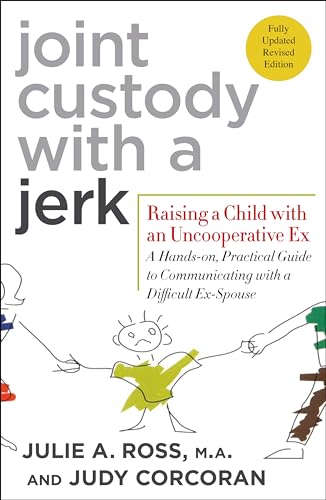
Joint Custody with a Jerk
Julie A. Ross, MA & Judy Corcoran
Proven communication techniques for co-parenting with an uncooperative ex.
As an Amazon Associate, Clarity House Press earns from qualifying purchases. Your price is never affected.
Found this helpful?
Share it with someone who might need it.
About the Author

Clarity House Press
Editorial Team
The editorial team at Clarity House Press curates and publishes evidence-based content on narcissistic abuse recovery, high-conflict divorce, and healing. Our content is informed by research, survivor experiences, and established trauma-informed approaches.
View all posts by Clarity House Press →Published by Clarity House Press Editorial Team