The Library
Start where you are
Two free, research-based check-ins to help you name what you're living through — private, anonymous, and yours to take at your own pace.
Filtered tools
Showing 9 tools in Assessment & Understanding · Assessment Tool.
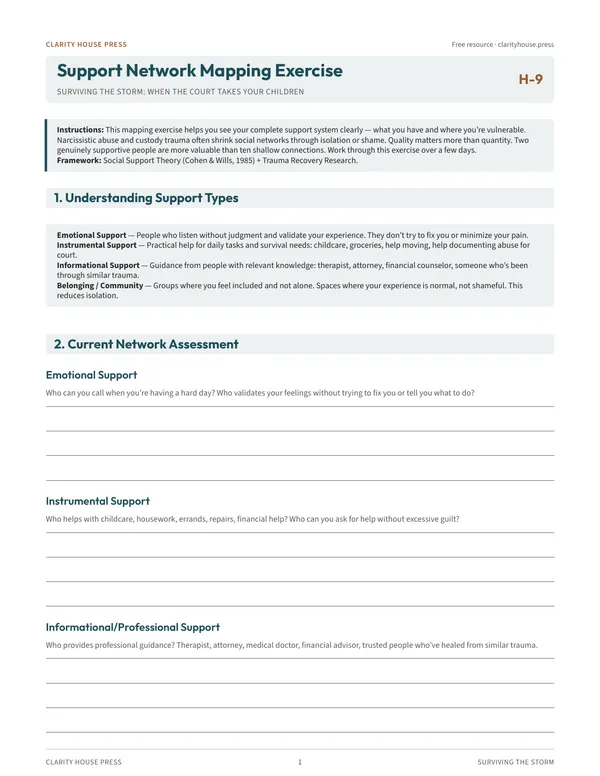
Support Network Mapping
Map who's actually in your corner — and where the gaps are — so you're not facing this alone.
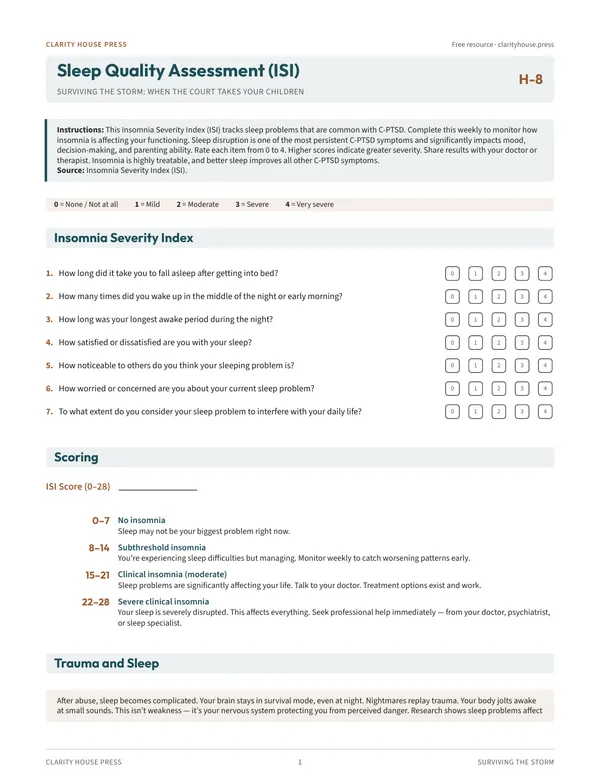
Sleep Quality Assessment
Take stock of how trauma is affecting your sleep — the part of recovery that quietly affects everything else.
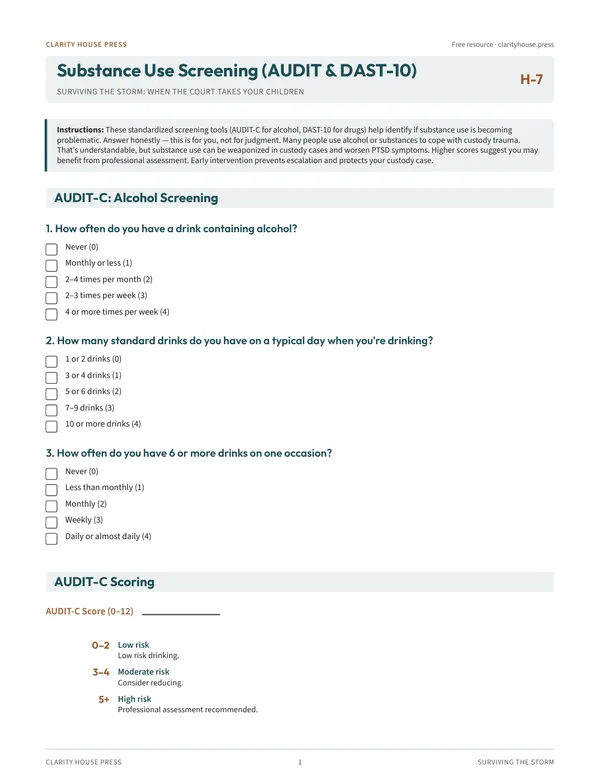
Substance Use Screening
An honest, judgment-free self-screen for how substances may be helping you cope — and at what cost.
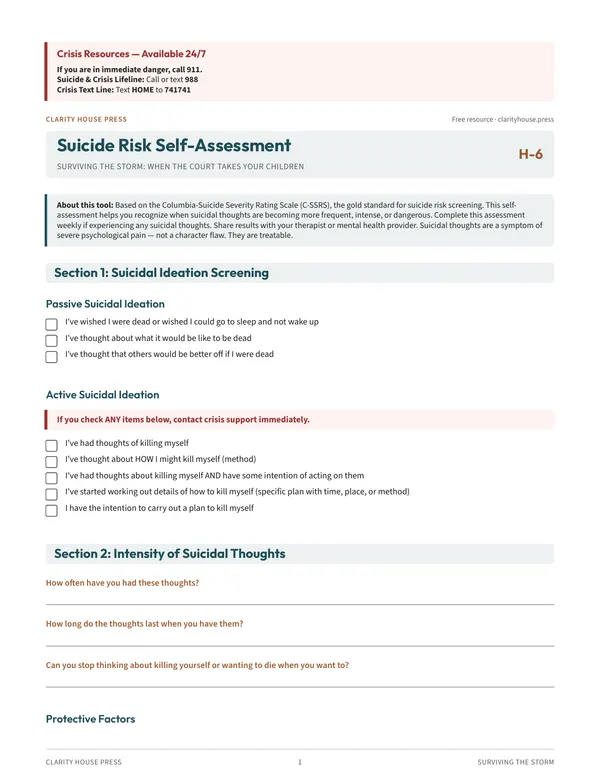
Suicide Risk Self-Assessment
A private check-in on thoughts of suicide or self-harm — to help you reach for support sooner.
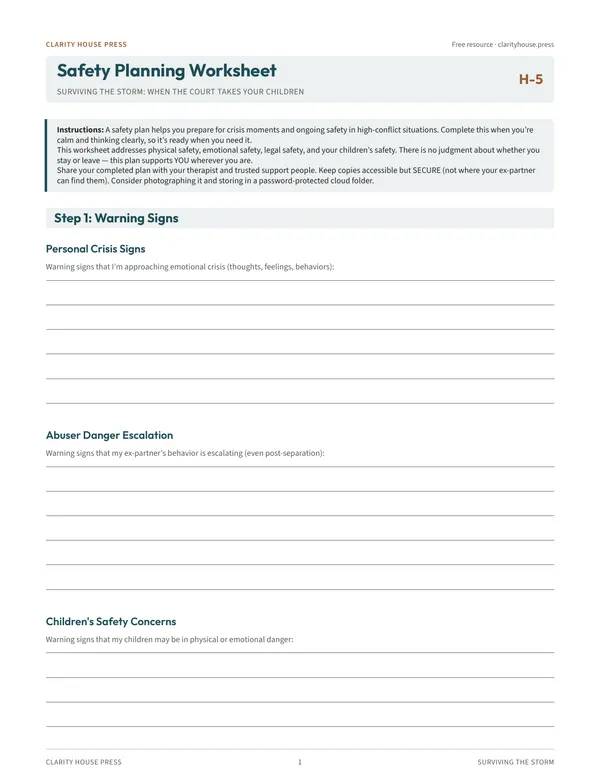
Safety Planning Worksheet
Build a concrete plan for staying safe — exits, contacts, essentials, and where to go.
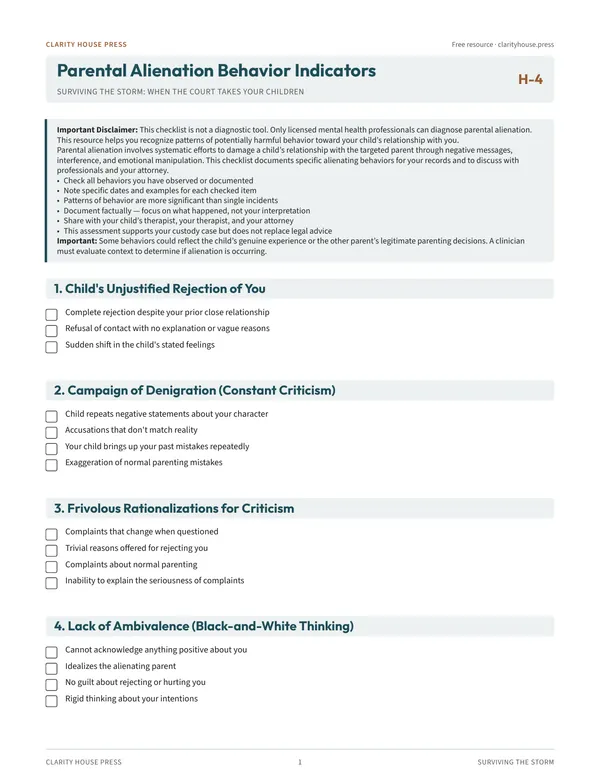
Parental Alienation Indicators
Spot the signs a child is being turned against you — and capture them as they happen.
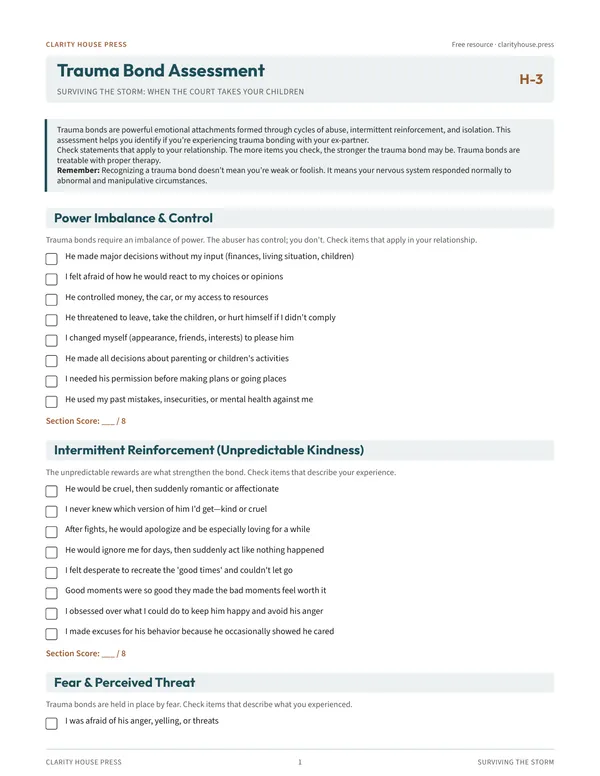
Trauma Bond Assessment
Recognize the pull of a trauma bond — the intermittent kindness, the hope, the difficulty leaving — for what it is.
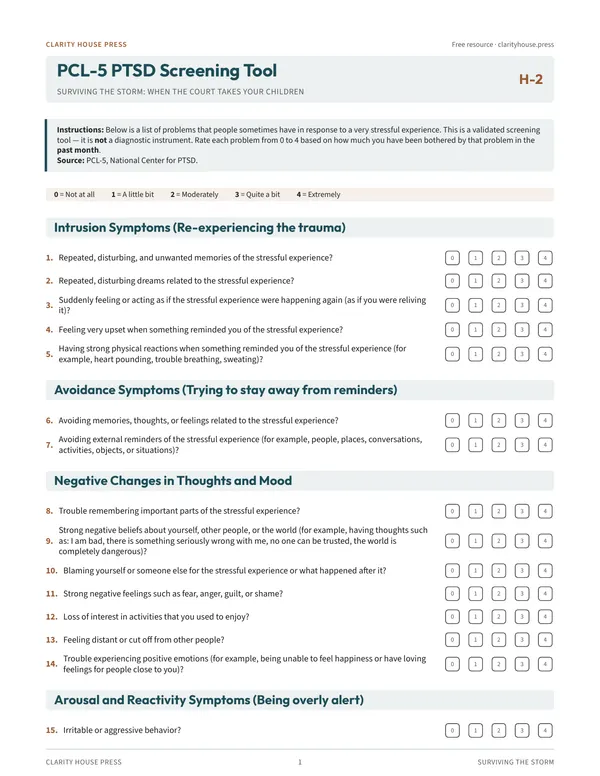
PCL-5 PTSD Screening
A widely used PTSD self-screen to gauge how trauma symptoms are showing up for you right now.
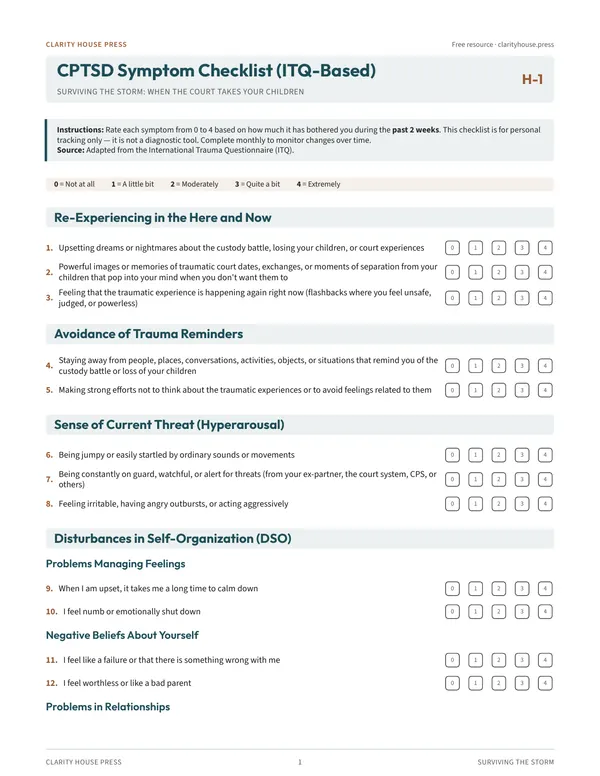
C-PTSD Symptom Checklist
Quietly check the patterns of complex trauma — flashbacks, shame, hypervigilance — and see where you're carrying them.
Prefer to browse by category?
Filter the shelf by where you are in recovery, or by the kind of tool you need.