Please read our important disclaimers before using this content
You finally worked up the courage to go to therapy. You spent the first session explaining the relationship—the love bombing, the gaslighting, the devaluation, the discard. You described how they made you question your sanity, isolated you from friends, and convinced you that you were the problem.
Your therapist nodded thoughtfully, then said: "It sounds like you both have some communication issues to work on. Have you considered couples counseling?"
Your heart sank.
They don't get it.
Why Generic Therapy Isn't Enough
Most therapists are trained in general mental health treatment. Depression, anxiety, relationship issues, grief. They're competent, caring professionals who genuinely want to help.
But narcissistic abuse isn't a standard relationship problem. And treating it like one can actually make things worse.
What doesn't work:
"Both partners contribute to relationship problems." True in healthy relationships. Completely false when one person is systematically manipulating the other. This framework blames you for your own abuse.
"Have you tried communicating your needs more clearly?" You communicated. They ignored, twisted, or punished you for it. The problem wasn't your communication skills.
"You need to set boundaries." You tried. They violated them, then convinced you that having boundaries was controlling, unreasonable, or proof you didn't love them.
"Maybe they didn't mean it that way." They meant it. They chose it. They did it systematically and strategically. Giving them the benefit of the doubt is what kept you trapped.
"You should try to see their perspective." You spent years trying to understand their perspective. They never tried to understand yours. This is the problem, not the solution.
These are reasonable approaches for relationship difficulties between two healthy people. They're actively harmful when applied to narcissistic abuse.
Red Flags Your Therapist Doesn't Understand Narcissistic Abuse
They suggest couples counseling with your abuser. Couples therapy with a narcissist gives them a new audience, new ammunition, and professional validation. It's dangerous.
They focus on what you did to contribute to the dynamic. While you may have developed unhealthy coping mechanisms, you didn't cause the abuse. Therapy that centers your behavior is missing the point.
They minimize the abuse. "Everyone has arguments." "All relationships have ups and downs." "Maybe they were just having a bad day." This invalidates your reality and keeps you stuck.
They encourage you to "work on the relationship." If you're being abused, the relationship doesn't need work. It needs to end. Or if it has ended, you don't need to repair it.
They pathologize your trauma responses as character flaws. Your hypervigilance isn't paranoia. Your difficulty trusting isn't commitment issues. Your emotional reactivity isn't borderline personality disorder. These are normal responses to abnormal situations.
They don't understand trauma bonding. If they're confused why you miss someone who hurt you, they don't understand the neurobiological reality of trauma bonds.1
They suggest forgiveness as a primary goal. Forgiveness might come eventually, or it might not. Either is fine. Healing doesn't require forgiving your abuser.
They've never heard the terms "narcissistic abuse," "gaslighting," "trauma bonding," "DARVO," or "C-PTSD." Vocabulary matters. If they don't know the language, they probably don't know the dynamics.
What Narcissistic Abuse-Informed Therapy Looks Like
They validate your reality. "That was abuse." "Your reaction makes sense." "You're not crazy." Validation is foundational. [Research consistently shows]2 that the quality of the therapeutic relationship predicts PTSD outcomes more than the specific type of therapy—therapeutic alliance is a consistent predictor across both in-person and remote therapies.
They understand the manipulation tactics. When you describe gaslighting, love bombing, or triangulation, they recognize the patterns immediately.
They focus on your healing, not the relationship. Whether you stay or leave, whether you forgive or don't, the focus is your recovery, safety, and wellbeing.
They help you rebuild self-trust. They don't tell you what to do. They help you reconnect with your own judgment, preferences, and decision-making capacity.
They address trauma symptoms specifically. Hypervigilance, flashbacks, intrusive thoughts, freeze response, difficulty regulating emotions—they treat these as trauma responses, not character defects.
They understand why you can't "just leave." Or if you have left, why you're struggling to stay gone. They get trauma bonding,3 financial abuse, custody concerns, and the average of 7 attempts it takes to leave.
They warn you about hoovering. They help you prepare for the inevitable attempts to pull you back in.
They never suggest couples counseling with an abuser. They understand it's contraindicated and potentially dangerous.4
They know the research. They're familiar with Bancroft, van der Kolk, Walker, Herman. They base their approach on evidence, not assumptions.
Modalities That Work for Narcissistic Abuse Recovery
Not all therapy approaches are equally effective for complex trauma. These have the strongest evidence base:
Trauma-Focused Cognitive Behavioral Therapy (TF-CBT): Addresses trauma-specific thoughts and beliefs. Helps reframe cognitive distortions installed by abuse.5
Eye Movement Desensitization and Reprocessing (EMDR): Processes traumatic memories so they're stored as "past" rather than "ongoing threat." Particularly effective for flashbacks and intrusive thoughts.6
Internal Family Systems (IFS): Works with the different parts of yourself—the part that wants to go back, the part that knows you need to stay away, the part that's afraid, the part that's angry. Integrates them into a coherent self.7
Somatic Experiencing (SE): Addresses trauma stored in the body. Helps discharge incomplete defensive responses and regulate the nervous system.
Dialectical Behavior Therapy (DBT): Originally developed for borderline personality disorder but very effective for emotional regulation, distress tolerance, and interpersonal effectiveness—all of which are impacted by narcissistic abuse.
Schema Therapy: Identifies and changes deeply held beliefs formed in childhood or through repeated trauma. Addresses core schemas like "I'm not good enough" or "I can't trust anyone."
Your therapist doesn't need to be an expert in all of these, but they should be trained in trauma-specific modalities, not just general talk therapy. The in-depth guide on finding a therapist who understands narcissistic abuse walks through specific red and green flags to watch for in the intake process. [Trauma-informed practice requires]8 specific knowledge of trauma theory and expertise beyond general clinical training.
Questions to Ask When Searching for a Therapist
"Do you have training or experience working with narcissistic abuse survivors?"
Listen for specifics. "I've worked with relationship trauma" isn't the same as "I've completed training in treating complex trauma from coercive control and have been working with narcissistic abuse survivors for five years."
"What's your approach to trauma treatment?"
You want to hear specific modalities (EMDR, IFS, somatic work) not just "I use an eclectic approach."
"Have you ever suggested couples counseling for someone in an abusive relationship?"
The answer should be a clear no with an explanation of why it's contraindicated.
"How do you approach situations where a client is struggling to leave an abusive relationship?"
You want: "I support them in assessing safety, building resources, and making the decision that's right for them on their timeline."
You don't want: "I'd encourage them to leave immediately" (doesn't understand complexity/danger) or "I'd help them work on the relationship" (doesn't understand abuse).
"Are you familiar with trauma bonding?"
They should immediately know what this is and be able to explain the neurobiological basis.
"What's your understanding of C-PTSD?"
They should distinguish it from PTSD and understand its connection to prolonged relational trauma.9 If they can't, that's a clear signal—understanding the difference between PTSD and C-PTSD is foundational knowledge for anyone treating narcissistic abuse survivors.
What If You're Already in Therapy With Someone Who Doesn't Get It?
Option 1: Educate them. Some therapists are willing to learn. Share articles, book recommendations (like Psychopath Free or The Body Keeps the Score), or research. See if they're open to expanding their understanding.
Option 2: Seek additional support. Stay with your current therapist for general mental health support but join a narcissistic abuse recovery support group or work with a coach who specializes in this area.
Option 3: Find a new therapist. You're allowed to outgrow your therapist. You're allowed to need someone with more specialized knowledge. Ending the relationship doesn't mean they're a bad therapist—just not the right fit for this specific issue.
How to end the relationship professionally:
"I've really appreciated working with you, but I've realized I need someone with specific training in complex trauma and narcissistic abuse. I'm going to transition to a therapist who specializes in that area. Thank you for your support."
You don't owe them an extensive explanation. You don't need their permission. You're not betraying them by finding better-matched care.
Where to Find Narcissistic Abuse-Informed Therapists
Psychology Today directory: Filter by "trauma and PTSD," "domestic violence," "relationship abuse." Look for therapists who list EMDR, IFS, or somatic approaches.
EMDR International Association (EMDRIA): Directory of EMDR-certified therapists.
Internal Family Systems Institute: Directory of IFS-trained therapists.
Somatic Experiencing Trauma Institute: Directory of SE practitioners.
National Domestic Violence Hotline: Can provide referrals to trauma-informed therapists in your area.
Online directories specific to abuse recovery: Platforms like BetterHelp or Talkspace allow you to filter by specialization.
Support groups for narcissistic abuse survivors: Ask for therapist recommendations from people who've been through it.
Trust your gut in the consultation call. Do they use language that resonates? Do they validate your experience? Do you feel heard? If something feels off, keep looking.
Your Next Steps
Assess your current therapy honestly. Is it helping? Do you feel validated? Does your therapist understand the dynamics you're describing?
If it's not working, you're allowed to change. Staying with a therapist who doesn't understand narcissistic abuse is like seeing an orthopedist for a heart condition. They're a good doctor, but they're not the right specialist.
Research therapists with narcissistic abuse specialization. Use the directories above. Read their websites. Look for the vocabulary and frameworks that match your experience.
Schedule consultation calls. Most therapists offer a free 15-minute phone consultation. Ask the questions above. See who feels like the right fit.
Trust yourself. If a therapist dismisses your experience, minimizes the abuse, or makes you feel worse instead of better, that's information. You're allowed to fire them.
You deserve a therapist who:
- Believes you
- Validates your reality
- Understands the specific dynamics of narcissistic abuse
- Has training in trauma treatment
- Helps you heal, not just cope
That therapist exists. Keep looking until you find them.
Your recovery is too important to settle for someone who doesn't get it. Part of knowing what good therapy looks like is understanding your own stages of narcissistic abuse recovery—then you can assess whether your therapist's interventions match where you actually are.
Resources
Finding Trauma-Informed Therapists:
- Psychology Today Therapist Finder - Filter by trauma and narcissistic abuse
- EMDR International Association - Find EMDR therapists
- International Society for the Study of Trauma and Dissociation - Find complex trauma specialists
- Internal Family Systems Practitioners - Find IFS therapists
Mental Health Support:
- National Alliance on Mental Illness (NAMI) - Mental health education and support
- SAMHSA National Helpline - 1-800-662-4357 (24/7)
- Open Path Collective - Affordable therapy network
Crisis Support:
- National Domestic Violence Hotline - 1-800-799-7233 (24/7)
- 988 Suicide & Crisis Lifeline - Call or text 988 (24/7)
- Crisis Text Line - Text HOME to 741741
References
- Howard, M. C., Mouton, A., Osborn, T. L., & Haendel, J. (2021). Therapeutic alliance in psychological therapy for posttraumatic stress disorder: A systematic review and meta-analysis. Clinical Psychology & Psychotherapy, 28(4), 943-960. https://pubmed.ncbi.nlm.nih.gov/34237173/ ↩
- Olff (2012). Bonding after trauma: on the role of social support and the oxytocin system in traumatic stress.. European journal of psychotraumatology. https://pmc.ncbi.nlm.nih.gov/articles/PMC3402118/ ↩
- Substance Abuse and Mental Health Services Administration. (2014). Trauma-informed care in behavioral health services. SAMHSA Publication. https://www.ncbi.nlm.nih.gov/books/NBK604200/ ↩
- Dutton, D. G., & Painter, S. (1993). Emotional attachment in abusive relationships: A test of traumatic bonding theory. Violence and Victims, 8(2), 105-120. ↩
- Cohen, J. A., Mannarino, A. P., & Deblinger, E. (2006). Treating trauma and traumatic grief in children and adolescents. Guilford Press. [Referenced in systematic review: Asim et al., 2022]. https://pubmed.ncbi.nlm.nih.gov/35850621/ ↩
- Shapiro, F. (1995). Eye movement desensitization and reprocessing: Basic principles, protocols, and procedures (2nd ed.). Guilford Press. [Evidence base reviewed in: Oren et al., 2020]. https://pubmed.ncbi.nlm.nih.gov/32043428/ ↩
- Sweezy, M., & Friedman, G. H. (2022). Internal Family Systems (IFS) therapy for posttraumatic stress disorder (PTSD) among survivors of multiple childhood trauma: A pilot effectiveness study. Journal of Aggression, Maltreatment & Trauma, 31(3), 309-333. https://www.tandfonline.com/doi/full/10.1080/10926771.2021.2013375 ↩
- Møller, Søgaard, Elklit, & Simonsen (2021). Differences between ICD-11 PTSD and complex PTSD on DSM-5 section III personality traits.. European journal of psychotraumatology. https://pmc.ncbi.nlm.nih.gov/articles/PMC8049462/ ↩
- Griffing, S., Ragin, D. F., Sage, R. E., Madry, L., Bingham, L. E., & Primm, B. J. (2002). Domestic violence survivors' self-identified reasons for returning to abusive relationships. Journal of Interpersonal Violence, 17(3), 306-319. [Evidence regarding contraindications of couples therapy in abuse: PMC5050084]. https://pmc.ncbi.nlm.nih.gov/articles/PMC5050084/ ↩
Recommended Reading
From Clarity House Press — plus trusted books for deeper understanding

Surviving the Storm: When the Court Takes Your Children
Clarity House Press
For fathers in active high-conflict custody battles. Understand your CPTSD symptoms, begin stabilization, and build foundation for healing. 17 chapters covering recognition, symptoms, and the healing path.

My Grandmother's Hands
Resmaa Menakem, MSW, LICSW
A body-centered approach to healing trauma that lives in the nervous system, with practices for settling and self-regulation.
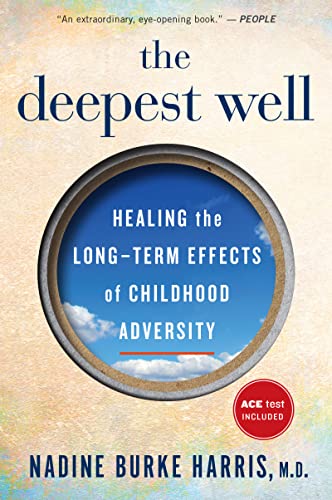
The Deepest Well
Nadine Burke Harris, M.D.
A pediatrician's clear explanation of how adverse childhood experiences affect lifelong health — and what recovery can look like.
As an Amazon Associate, Clarity House Press earns from qualifying purchases. Your price is never affected.
Found this helpful?
Share it with someone who might need it.
About the Author

Clarity House Press
Editorial Team
The editorial team at Clarity House Press curates and publishes evidence-based content on narcissistic abuse recovery, high-conflict divorce, and healing. Our content is informed by research, survivor experiences, and established trauma-informed approaches.
View all posts by Clarity House Press →Published by Clarity House Press Editorial Team