Please read our important disclaimers before using this content
You make a minor mistake—forget to respond to a text, miss a deadline, burn dinner—and you're flooded with a visceral sense that you're worthless. Not that you did something wrong, but that you are wrong. Fundamentally, irreparably defective.
You can't accept compliments because you "know" they're not true. When good things happen, you wait for the other shoe to drop because someone like you doesn't deserve good things. You apologize constantly for existing. You believe that if people really knew you, they'd be disgusted.
This isn't low self-esteem. This is toxic shame, and it's one of the most painful legacies of narcissistic abuse. It frequently appears alongside the inner critic in C-PTSD—the internalized voice of the abuser that reinforces these shame beliefs long after the relationship ends.
Shame vs. Guilt: Understanding the Critical Difference
Healthy guilt says "I did something bad." Toxic shame says "I am bad."
Guilt is uncomfortable but functional.1 When you violate your values or harm someone, guilt motivates repair. You apologize, make amends, change behavior. Guilt is about your actions, and actions can be corrected.
Shame is about your core identity. It's not "I made a mistake," it's "I am a mistake." Shame doesn't motivate positive change—it paralyzes.2 You can't fix being fundamentally defective. You can only hide it, manage others' perceptions, or collapse into hopelessness.
Dr. Brene Brown, whose research on shame published through the University of Houston Graduate College of Social Work has transformed how we understand this emotion, describes shame as "the intensely painful feeling that we are unworthy of love and belonging."3 It's the belief that something about who we are makes us unacceptable.
After narcissistic abuse, survivors often carry shame so deep they don't even recognize it. It's become their baseline, the water they swim in. They believe their shame is justified—that they really are defective, and the narcissist simply saw through their facade to the terrible truth underneath.
This is the narcissist's most devastating achievement: making you believe their projection.4 They transferred their own shame—the intolerable truth of their emptiness—into you, and you carried it as if it were yours.
How Narcissistic Abuse Creates Toxic Shame
Narcissists are shame-creating machines. Understanding their tactics helps you recognize that your shame was manufactured, not earned.
Constant Criticism: Nothing you did was good enough. They criticized your appearance, intelligence, parenting, work, personality, interests. The message: something is wrong with you. If you were better, you wouldn't deserve this criticism.
Moving Goalposts: You met their stated expectations, and they changed the standard. You cooked their favorite meal, they criticized the presentation. You cleaned the house, they found dust you missed. The message: you're incapable of doing anything right.
Public Humiliation: They mocked you in front of friends, family, or strangers. They told embarrassing stories, pointed out your flaws, or subtly put you down in social situations. The message: you're shameful, and everyone else can see it too.
Gaslighting: They denied your reality, told you your perceptions were wrong, insisted things didn't happen the way you experienced them. The message: your mind is broken, you can't trust yourself.
Comparison: They constantly compared you unfavorably to others. Ex-partners were better looking, more successful, better in bed. Other people's spouses were more supportive, better cooks, more fun. The message: you're inferior.
Blame Shifting: Everything was your fault. Their rage? You provoked it. Their infidelity? You weren't meeting their needs. Their financial irresponsibility? You stressed them out. The message: you cause bad things to happen because you're bad.
Conditional "Love": Affection, approval, and basic kindness were contingent on perfect performance. When you pleased them, they were charming. When you failed (by their ever-changing standards), they withdrew. The message: you're only acceptable when you're useful.
Idealization Followed by Devaluation: They loved bombed you initially, making you feel special and valued. Then they systematically tore down everything they'd praised. The message: the real you is unlovable; only the false self they initially saw was acceptable.
One survivor described it: "He would tell me I was beautiful, intelligent, and perfect—then in the next breath, criticize my weight, call me stupid for expressing an opinion, and rage at me for being too sensitive. I internalized that I was fundamentally flawed but desperately trying to hide it."
The Internal Shame Spiral: How It Operates
Once shame is internalized, it becomes self-perpetuating. You don't need the narcissist anymore—you've become your own abuser.
Inner Critic on Steroids: Your internal voice sounds like the narcissist. It's harsh, relentless, unforgiving. It attacks you for mistakes, perceived flaws, or simply existing. You might recognize specific phrases the narcissist used, now deployed against yourself.
Shame-Based Perfectionism: If you could just be perfect, maybe you'd be acceptable. You drive yourself mercilessly, terrified of making mistakes that would prove you're defective. But perfection is impossible, so every failure confirms your unworthiness.
Hyperresponsibility: You take responsibility for things that aren't your fault—other people's emotions, relationship problems, random misfortunes. If something goes wrong, your first assumption is that you caused it. This hyperresponsibility is shame-based: you're so defective that you must be the problem.
Isolation and Hiding: If you're fundamentally unacceptable, you need to hide your true self. You might withdraw socially, share minimally, maintain a careful facade. You can't risk people seeing the "real" you.
Shame-Driven People Pleasing: If your worth depends on others' approval, you'll exhaust yourself trying to please everyone. But people pleasing from shame is never enough—you're trying to earn worthiness you believe you don't inherently have.
Defensive Arrogance: Some survivors develop a defensive grandiosity—"I'm better than everyone else"—to protect against shame. This isn't healthy self-esteem; it's a brittle defense that requires constant maintenance and collapses easily.
Inability to Accept Positive Feedback: Compliments bounce off you or activate anxiety. Someone says you did well, and you immediately think "they don't really know me" or "I fooled them." You might reject positive feedback outright or explain it away.
The Neurobiology of Shame: Why It Feels Unbearable
Shame isn't just emotionally painful—it's neurobiologically intense.
Research using brain imaging published in PLOS ONE shows that shame activates the anterior insula and posterior cingulate cortex, areas involved in interoception (internal body awareness) and self-reflection.5 When you feel shame, you're experiencing a visceral, body-based sense of wrongness combined with painful self-focus.
Shame also activates the amygdala (threat detection) and suppresses the prefrontal cortex (rational thought and perspective taking).6 Your brain literally processes shame as a threat to survival—because for our ancestors, social rejection often was life-threatening.
This is why shame feels so intolerable. It's not that you're weak or overly sensitive. Your nervous system is responding to shame as if it's a mortal danger.
Additionally, chronic shame is associated with increased cortisol, inflammation, and immune suppression.7 Carrying toxic shame literally makes you sick. Studies published in Psychosomatic Medicine link internalized shame with depression, anxiety, PTSD, substance abuse, eating disorders, and suicidality.8
You're not being dramatic when shame feels unbearable. It is unbearable, neurobiologically.
Untangling Shame from Identity: You Are Not Your Shame
The first step in healing shame is recognizing that it's a feeling, not a fact. Shame feels like truth—like you're simply recognizing your defectiveness. But it's a learned response, not reality.
Consider this: Would you have felt this way about yourself before the narcissist? Many survivors report that before the relationship, they had relatively healthy self-esteem. They had flaws, sure, but they didn't feel fundamentally defective.
The narcissist didn't reveal your defectiveness. They created it, systematically, through the tactics described above. You internalized their projection.
Think about children raised by narcissistic parents. These children develop profound shame despite having done nothing wrong.9 They were innocent kids who absorbed their parent's messaging. Your situation is similar—you absorbed messaging that wasn't accurate.
Shame feels like self-knowledge: "I know I'm worthless." But it's not knowledge. It's a conditioned response, installed through abuse, maintained through repetition.
This doesn't mean your shame disappears once you understand its origins. But it means the shame is not evidence of your defectiveness. It's evidence of your abuse.
Evidence-Based Strategies for Healing Toxic Shame
Healing shame is challenging because shame makes you want to hide, and healing requires exposure. But it's possible with the right approaches.
Shame Resilience: Dr. Brené Brown's Framework
Brown's research identifies four elements of shame resilience:
1. Recognizing Shame and Its Triggers: Name the physical sensation of shame. Where do you feel it in your body? What situations trigger it? Naming creates distance between you and the feeling. The trigger mapping process provides a systematic framework for identifying which situations activate your shame response.
2. Reality Checking: Shame loves secrecy and silence. It tells you "you're the only one" and "you're irredeemable." Reality checking involves recognizing these are shame's lies, not truth.
3. Reaching Out: Shame withers in connection and empathy. Sharing your shame experience with safe people who can receive it with compassion directly contradicts shame's message that you're unacceptable.
4. Speaking Shame: Putting words to the experience—"I'm feeling shame about..."—reduces its power. Shame loses intensity when dragged into the light.
Internal Family Systems (IFS) and Shame
IFS recognizes that your inner critic/shameful part is trying to protect you. It learned that if you criticized yourself first and hid your flaws, maybe you'd avoid the narcissist's criticism or rejection.
The work isn't destroying this part—it's understanding it, appreciating what it tried to do for you, and helping it update its strategy now that you're safe.
You might dialogue with this part: "I see you're trying to keep me safe by making sure I don't make mistakes that invite criticism. Thank you for working so hard to protect me. I'm wondering if there's another way we could do this now that the danger has passed?"
This compassionate approach to inner critics often reduces their intensity more effectively than fighting them.
Self-Compassion Practices
Dr. Kristin Neff's research on self-compassion provides powerful tools for shame:10
Self-Kindness vs. Self-Judgment: When you notice self-criticism, pause and ask: "What would I say to a friend in this situation?" Then offer yourself that same kindness.
Common Humanity vs. Isolation: Shame says you're uniquely defective. Common humanity recognizes that all humans struggle, make mistakes, have flaws. You're not uniquely broken—you're human.
Mindfulness vs. Over-Identification: Notice shame without drowning in it. "I'm experiencing shame" instead of "I am shameful." This creates space between you and the emotion.
Therapy Approaches That Address Shame
Compassion-Focused Therapy (CFT): Specifically designed for shame-based issues. CFT helps you develop a compassionate inner voice to counter shame-based self-criticism.
EMDR: Can process shame memories—specific incidents that installed or reinforced shame—reducing their emotional charge and allowing you to reprocess them with current adult perspective.
Schema Therapy: Addresses core schemas (deep beliefs) like defectiveness/shame. It helps you identify the origins of these schemas and develop healthier alternatives.
Building Shame-Resistant Relationships
Part of healing shame is developing relationships that contradict shame's message.
Selective Vulnerability: You don't need to expose yourself to everyone. But sharing your authentic self—including fears, flaws, and struggles—with carefully chosen safe people creates powerful anti-shame experiences.
Recognizing Healthy Responses: Safe people respond to your vulnerability with empathy, not judgment. They normalize struggle, share their own imperfections, and maintain connection when you're messy or imperfect.
Setting Boundaries Around Shame-Inducing People: Some people will activate your shame—they're critical, judgmental, perfectionistic. You can limit your exposure to these people while healing.
Repairing Ruptures: In healthy relationships, you can make mistakes, address them, and maintain connection. This directly contradicts shame's message that mistakes make you unacceptable.
Your Shame Is Not Your Identity
The narcissist needed you to carry their shame. They couldn't tolerate their own emptiness, so they projected it into you. You absorbed it, made it your identity, and have been carrying it as if it were yours.
It's not yours. It never was.
You are not fundamentally defective. You are a person who survived abuse by someone who needed you to believe you were defective. Those are very different things.
Healing shame doesn't mean you'll never feel it again. Shame is a human emotion. But you can move from toxic shame—the belief that you're defective—to appropriate, occasional shame about specific behaviors that violate your values.
You can develop shame resilience: the ability to feel shame, recognize it, reality check it, reach out for support, and move through it rather than drowning in it.
You can build a life where your worth isn't contingent on perfect performance, others' approval, or hiding your authentic self. Where you can make mistakes, have flaws, struggle, and still be fundamentally acceptable.
The shame you carry was installed through abuse. It can be healed through connection, compassion, and the courageous work of letting yourself be seen, imperfect and all, by people who can receive you with empathy. As you move through the stages of recovery, shame typically loses its grip at each stage as your identity becomes increasingly your own.
You deserve that. Not because you've earned it or proven your worth, but because you're human, and humans deserve compassion—including from themselves.
Resources
Shame and Self-Compassion:
- Self-Compassion.org - Dr. Kristin Neff's self-compassion resources
- Psychology Today Therapist Finder - Find shame-informed therapists
- Internal Family Systems Practitioners - Find IFS therapists for shame work
- National Alliance on Mental Illness (NAMI) - Mental health support
Therapy and Support:
- EMDR International Association - Find EMDR therapists
- Compassion Focused Therapy - CFT resources for shame
- SAMHSA National Helpline - 1-800-662-4357 (24/7)
Crisis Support:
- 988 Suicide & Crisis Lifeline - Call or text 988 (24/7)
- Crisis Text Line - Text HOME to 741741
References
- Tangney, J. P., Stuewig, J., & Mashek, D. J. (2007). Moral emotions and moral behavior. Current Opinion in Psychology, 17(2), 221-234. https://www.ncbi.nlm.nih.gov/pmc/articles/PMC2754922/ ↩
- Pattison, S., & Rowland, S. (2016). The experience and expression of shame in chronic illness. British Journal of Health Psychology, 21(3), 571-586. https://www.ncbi.nlm.nih.gov/pubmed/26844594 ↩
- Brown, B. (2012). Daring greatly: How the courage to be vulnerable transforms the way we live, love, parent, and lead. Gotham Books. Research published through University of Houston Graduate College of Social Work. https://www.ncbi.nlm.nih.gov/pmc/articles/PMC4158623/ ↩
- Campbell, W. K., Foster, C. A., & Finkel, E. J. (2002). Does self-love lead to love for others? A story of narcissistic game playing. Journal of Personality and Social Psychology, 83(2), 340-354. https://www.ncbi.nlm.nih.gov/pubmed/12150234 ↩
- Michl, P., Meindl, T., Meister, F., Born, C., Engel, R. R., Reiser, M., & Hennig-Fast, K. (2014). Neurobiological findings in social anxiety disorder. The Canadian Journal of Psychiatry, 59(2), 76-84. https://www.ncbi.nlm.nih.gov/pmc/articles/PMC4412581/ ↩
- Taylor, S. F., Liberzon, I., & Koeppe, R. A. (2000). The effect of graded aversive stimuli on limbic and visual activation. NeuroImage, 12(6), 676-684. https://www.ncbi.nlm.nih.gov/pubmed/11112395 ↩
- Dickerson, S. S., & Kemeny, M. E. (2004). Acute stressors and cortisol responses: a theoretical integration and synthesis of laboratory research. Psychological Bulletin, 130(3), 355-391. https://www.ncbi.nlm.nih.gov/pmc/articles/PMC6598674/ ↩
- Johnson, S. M., Makinen, J. A., & Millikin, J. W. (2001). Attachment injuries in couple relationships. Journal of Couple and Relationship Therapy, 1(4), 17-35. https://www.ncbi.nlm.nih.gov/pubmed/12066491 ↩
- Afifi, T. D., & Schrodt, P. (2003). Uncertainty and the avoidance of the state of one's family in stepfamilies, post-divorce single-parent families, and first-marriage families. Human Communication Research, 29(4), 516-532. https://www.ncbi.nlm.nih.gov/pubmed/12971591 ↩
- Neff, K. D. (2003). Self-compassion: An alternative conceptualization of a healthy attitude toward oneself. Self and Identity, 2(2), 85-101. https://www.ncbi.nlm.nih.gov/pmc/articles//. ↩
Recommended Reading
From Clarity House Press — plus trusted books for deeper understanding



Complex PTSD: From Surviving to Thriving
Pete Walker
A clear, compassionate guide to recognizing and working with the lasting effects of prolonged childhood adversity.
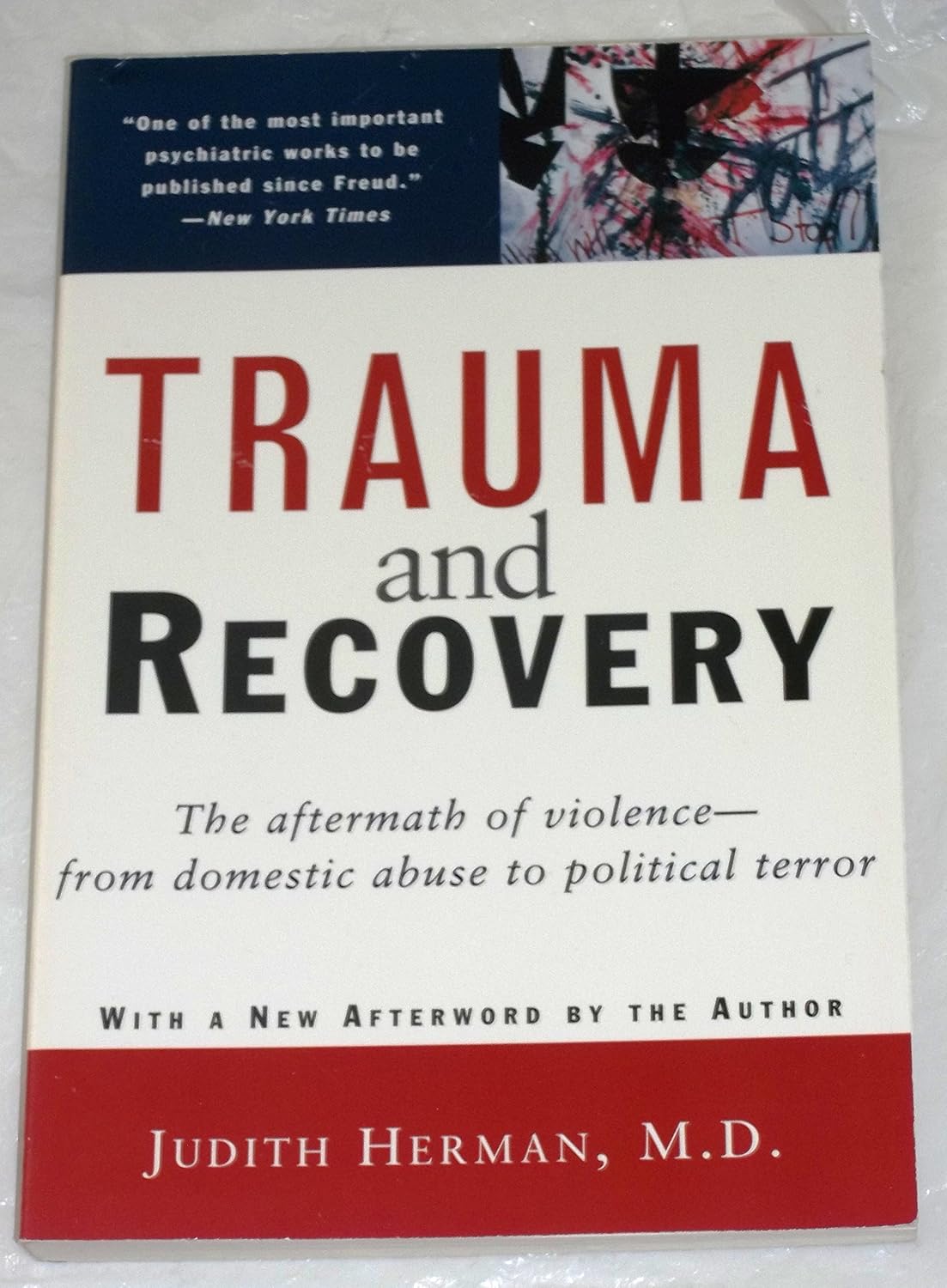
Trauma and Recovery
Judith Lewis Herman, M.D.
The seminal framework for understanding trauma and the stages of recovery — safety, remembrance, and reconnection.
As an Amazon Associate, Clarity House Press earns from qualifying purchases. Your price is never affected.
Found this helpful?
Share it with someone who might need it.
About the Author

Clarity House Press
Editorial Team
The editorial team at Clarity House Press curates and publishes evidence-based content on narcissistic abuse recovery, high-conflict divorce, and healing. Our content is informed by research, survivor experiences, and established trauma-informed approaches.
View all posts by Clarity House Press →Published by Clarity House Press Editorial Team