Please read our important disclaimers before using this content
The voice starts the moment you wake up: "You're so lazy. Everyone else is already productive." It attacks when you make a mistake: "You're such an idiot. You ruin everything." It sabotages moments of peace: "You don't deserve to feel good after everything you've done wrong."
If you've survived narcissistic abuse or complex trauma, you know this voice intimately. It's relentless, cruel, and sounds exactly like the people who hurt you.
This is your inner critic—the abuser's words internalized into an automatic self-attacking system that continues the abuse long after you've escaped the relationship.
Understanding the inner critic is essential to healing from C-PTSD because you cannot recover while an internal voice constantly retraumatizes you. The stages of recovery from narcissistic abuse show how inner critic work fits into the broader arc of healing. This article will help you recognize the inner critic's specific patterns, understand why it developed, and learn evidence-based strategies to challenge and shrink its power.
What Is the Inner Critic in C-PTSD?
The inner critic is the harsh, shaming voice in your mind that attacks your core worth, not just specific behaviors. Trauma therapist Pete Walker, author of Complex PTSD: From Surviving to Thriving, describes the inner critic as "an internal persecutor" that developed from internalizing the messages of abusive or neglectful caregivers.1
When a parent screams "You're so stupid!" hundreds of times, the developing brain absorbs this as objective truth. When a narcissistic partner repeatedly tells you that you're "too sensitive," "crazy," or "impossible to love," your mind begins repeating these messages automatically—even after the relationship ends.
The inner critic is distinct from normal self-reflection or healthy accountability. It doesn't help you grow—it paralyzes you with shame. It doesn't offer constructive feedback—it delivers absolute verdicts about your fundamental defectiveness.
How the Inner Critic Differs from Legitimate Self-Reflection
Many survivors struggle to distinguish the inner critic from healthy self-awareness. Here's the key difference:
Healthy self-reflection:
- "I handled that situation poorly. Next time I'll try a different approach."
- "I'm struggling with this task. I might need help or more practice."
- "I hurt someone's feelings. I need to apologize and make amends."
- Focuses on specific behaviors and future learning
- Feels constructive, even if uncomfortable
- Motivates growth and problem-solving
Inner critic attack:
- "I'm such an idiot. I always ruin everything."
- "I'm pathetic for struggling. What's wrong with me?"
- "I'm a terrible person. I don't deserve good things."
- Attacks your core identity and worth
- Feels shaming and paralyzing
- Leads to hopelessness and self-punishment
Notice: healthy reflection focuses on what you did and how to improve. The critic attacks who you are and insists you're fundamentally defective.
The inner critic uses absolute language ("always," "never," "everyone"), globalizes from specific incidents to total worth, and offers no constructive path forward—only shame.
How the Inner Critic Develops: From External Abuse to Internal Voice
The inner critic doesn't spontaneously appear. It develops through a specific process of internalizing external abuse. Research on negative self-concept and trauma shows that individuals exposed to childhood maltreatment demonstrate significantly lower self-esteem and develop internalized critical thought patterns.2
Stage 1: Repeated Exposure to Criticism and Abuse
When caregivers, partners, or other authority figures repeatedly deliver harsh criticism, the developing brain faces a problem: these are the people you depend on for survival. If they say you're worthless, your child brain has two options:
- "The person I depend on is wrong, dangerous, and can't be trusted." (This creates unbearable anxiety for a dependent child.)
- "They must be right. I must be the problem." (This feels safer because it offers a sense of control—if I'm the problem, maybe I can fix myself and become safe.)
Most children choose option two. It's psychologically more tolerable to believe you're defective than to accept your caregiver is dangerous and you're trapped.
Stage 2: Internalization as Survival Strategy
Once you internalize the critical voice, it begins serving a protective function: "If I criticize myself first, I can prevent worse criticism from others. If I catch my mistakes before the abuser does, maybe I can avoid their rage."
The inner critic becomes hypervigilant, constantly scanning for flaws, mistakes, and vulnerabilities that could trigger abuse. This felt like survival when you were trapped with an abuser.
Psychologist Richard Schwartz, creator of Internal Family Systems therapy, identifies this as the critic operating as a "protective part"—attempting to keep you safe through preemptive self-attack. Victims of intimate partner abuse often internalize the abuser's perspective of them, resulting in diminished self-worth and internalized shame that persists long after the relationship ends.3
Stage 3: Toxic Shame Becomes the Fuel
As the inner critic repeats its attacks over years, it creates a foundation of toxic shame—the deep belief that you are fundamentally flawed, defective, or bad.
Researcher Brené Brown distinguishes healthy guilt ("I did something bad") from toxic shame ("I am bad"). Guilt motivates behavior change. Shame only convinces you that you're unfixable.4 This distinction is neurobiologically important: guilt activates problem-solving brain regions, while shame activates regions associated with social withdrawal and self-punishment.
The critic feeds on shame. Every attack reinforces the core belief that you're worthless. This creates a vicious cycle: shame fuels the critic, the critic creates more shame, round and round for decades.
Stage 4: The Voice Becomes Automatic
After thousands of repetitions, the inner critic's voice becomes automatic—neurologically ingrained like any practiced skill. You don't consciously choose these thoughts anymore than you consciously choose to breathe.
This is why "just think positive" or "just stop being so hard on yourself" doesn't work. You're not dealing with conscious choices—you're dealing with deeply wired neural pathways that fire automatically in response to triggers. Research on intergenerational trauma shows that maladaptive cognitive schemas and self-defeating thought patterns become organized at implicit neural levels, operating largely outside conscious awareness.5
Pete Walker's Four Types of Inner Critic
In Complex PTSD: From Surviving to Thriving, Pete Walker identifies four distinct types of inner critic commonly seen in complex trauma. Understanding which type (or combination) dominates your experience helps you develop targeted strategies.
1. The Perfectionist Critic
The perfectionist tells you nothing you do is ever good enough. It sets impossible standards, then attacks you for inevitable failure. It notices every flaw while dismissing accomplishments as meaningless or flukes.
Common messages:
- "That's not good enough. You could have done better."
- "Everyone else does this effortlessly. What's wrong with you?"
- "If you can't do it perfectly, you shouldn't do it at all."
- "One mistake ruins everything you've accomplished."
Behavioral impact:
- Procrastination (paralyzed by fear of imperfection)
- Overworking (desperate attempts to meet impossible standards)
- Never finishing projects (nothing ever meets the critic's standards)
- Anxiety when trying new things (guaranteed imperfection at first)
- Difficulty celebrating accomplishments (immediately dismissed as inadequate)
Where it comes from: Parents who withheld approval unless you performed perfectly, or narcissistic partners who constantly criticized and compared you to others.
2. The Inner Controller
The inner controller polices your emotions, needs, and authentic expression. It insists that your feelings are wrong, your needs are too much, and your true self is unacceptable. You must hide, suppress, and control yourself at all times.
Common messages:
- "Don't be so emotional. You're being ridiculous."
- "Nobody wants to hear about your problems. You're burdening everyone."
- "You're too needy/too sensitive/too much."
- "Control yourself. What will people think?"
Behavioral impact:
- Emotional suppression (can't access or express feelings)
- People-pleasing (your authentic self is dangerous)
- Difficulty identifying your own needs and wants
- Constant self-monitoring in relationships
- Disconnection from your body and intuition
Where it comes from: Caregivers who punished emotional expression, or abusers who weaponized any vulnerability you showed.
3. The Underminer
The underminer specializes in sabotaging hope, progress, and healing. Whenever you start to feel better or make progress, it attacks with catastrophizing and discouragement.
Common messages:
- "This won't work. Why are you even trying?"
- "You're not actually getting better. You're just fooling yourself."
- "One setback proves you're not making progress. You might as well give up."
- "Hope is dangerous. Better to stay cynical so you won't be disappointed."
Behavioral impact:
- Self-sabotage when things are going well (it feels safer to fail on your terms)
- Inability to celebrate progress (immediately dismissed as temporary)
- Chronic pessimism and hopelessness
- Abandoning healing practices when they start helping (too threatening)
- Relationship sabotage when intimacy deepens
Where it comes from: Abusers who punished success, happiness, or independence—teaching you that hope is dangerous and leads to worse pain.
4. The Destroyer (Annihilator)
The destroyer is the most dangerous type of inner critic. It attacks your core right to exist, delivering messages of worthlessness and suicidal ideation. Walker calls this the "annihilator" because it literally tries to convince you that you should die.
Common messages:
- "You're completely worthless. You have nothing to offer anyone."
- "The world would be better off without you."
- "You're beyond repair. You're permanently damaged."
- "You deserve to suffer. You deserve to die."
Behavioral impact:
- Suicidal thoughts (passive or active)
- Deep hopelessness and despair
- Self-harm impulses
- Complete withdrawal from life and relationships
- Inability to imagine a future worth living
Where it comes from: Severe abuse, especially abuse that included explicit messages that you shouldn't exist or threats to your life. Also common in survivors who experienced extreme neglect (the message was "you don't matter enough to care about").
CRITICAL SAFETY NOTE: If you experience the destroyer critic frequently, you need professional support immediately. This level of inner critic attack is dangerous and not something to manage alone. The resources at the end of this article include crisis support.
Your Critic Profile
Most survivors experience multiple types of inner critic, often with one or two dominating. Understanding your profile helps you recognize patterns:
"My perfectionist keeps me working late, then my controller tells me I can't be tired because that's weakness, then my underminer says this work won't matter anyway."
Identifying the voices helps you stop experiencing them as objective truth and start seeing them as learned patterns you can challenge.
The Four-Step Process for Working with the Inner Critic
Pete Walker's approach to the inner critic involves four essential steps. This isn't about immediately replacing negative thoughts with positive ones—it's about gradually building awareness and creating space between you and the automatic voice.
Step 1: Recognition - Catching the Critic in Action
You cannot challenge what you don't notice. The first step is developing awareness of when the inner critic is speaking versus when you're engaging in healthy self-reflection.
Recognition practices:
The "Who does this sound like?" test: When you hear a harsh internal message, ask: "Whose voice is this, really?" Often you can identify the exact person—your raging parent, contemptuous ex-partner, bullying sibling. This reminds you: this isn't objective truth, it's an old recording.
The "Would I say this to someone I love?" test: Would you tell a friend they're worthless? A child they're stupid? If not, it's the critic, not healthy reflection.
The body sensation check: Notice what physical sensations accompany critic attacks. Many people experience:
- Chest tightness or heart racing
- Stomach clenching
- Shoulders tensing and rising
- Shallow breathing
- Feeling small or wanting to collapse
These body sensations signal the critic is active. Learning to notice them helps you catch attacks earlier.
Common trigger tracking: Keep a log for one week noting when the critic attacks:
- What were you doing?
- What just happened?
- What time of day was it?
- Who were you with or thinking about?
Common patterns emerge: critic attacks after social interactions, when attempting something new, at bedtime, after any perceived mistake, when things are going well (underminer), when you're tired or hungry.
Knowing your triggers helps you anticipate and prepare.
Step 2: Externalization - Separating the Voice from Your Identity
Once you recognize the critic, the next step is creating psychological distance. The critic is not you—it's a learned pattern, a protective part that developed in trauma.
Externalization techniques:
Name the critic something that's not "me": Give it a name that reminds you this isn't your authentic voice. Some survivors use:
- "The Judge"
- "My mother's voice"
- "The Abuser"
- "The Perfectionist" (if that's your dominant type)
- Humorous names that reduce its power: "Voldemort," "The Gremlin," "Karen"
Change your internal language: Instead of "I'm so stupid," practice: "The critic is saying I'm stupid." This small shift is powerful—it reminds you that you're observing a part, not stating a fact.
Visualize the critic as external: Some people imagine the critic as a cartoon character, a person from their past, or a symbol. Seeing it outside yourself reinforces that it's not the truth of who you are.
Thank the critic for trying to protect you (IFS approach): "Thank you for trying to keep me safe by pointing out potential mistakes. I understand you developed when harsh self-criticism felt like survival. I'm safe now, and I don't need this level of attack anymore."
This compassionate externalization often reduces the critic's intensity more effectively than fighting it.
Step 3: Challenge - Questioning the Critic's Claims
Now you can examine the critic's messages with evidence and logic. This isn't about forcing positive thoughts—it's about reality-testing distorted claims.
Cognitive challenge techniques:
Evidence examination: When the critic says "You're a complete failure":
- What is the actual evidence for this claim? (Usually none—or distorted interpretation of normal mistakes)
- What is the evidence against this claim? (Specific examples of competence, learning, accomplishments—even small ones count)
- Would this evidence convince a jury? (Usually not—the critic uses emotional reasoning, not facts)
Absolute language detector: The critic loves absolutes: "always," "never," "everyone," "no one," "completely," "totally."
- "You always mess things up" → Actually, I handle many things well. I made one mistake today.
- "Everyone thinks you're annoying" → I have friends who choose to spend time with me. This is catastrophizing, not fact.
Predictions vs. reality: The critic makes catastrophic predictions. Test them:
- "If you set a boundary, everyone will abandon you." → Set a small boundary and observe what actually happens.
- "If you try this, you'll fail and prove you're worthless." → Try it anyway. Notice that making a mistake doesn't actually destroy your worth.
The "best friend" challenge: What would you say to your best friend if they told you what your critic just told you?
- Critic: "You're stupid for making that mistake."
- To friend: "You made a mistake. Everyone does. It doesn't mean you're stupid—it means you're learning."
Whatever compassion you'd offer others, you deserve.
Step 4: Replacement - Building the Compassionate Alternative Voice
The final step is actively developing a compassionate inner voice to compete with and eventually counterbalance the critic. This takes sustained practice—you're building new neural pathways to replace decades-old automatic patterns.
Compassionate voice development:
The compassionate counter-statement: For every critic attack, practice a compassionate response. This feels artificial at first. That's normal and expected.
Examples:
-
Critic: "You're so lazy. You should be doing more." Compassion: "I'm exhausted from surviving trauma. Rest is how my nervous system heals. I deserve care."
-
Critic: "You're damaged goods. No one will ever love you." Compassion: "I carry wounds from abuse, and I'm healing. I'm worthy of love exactly as I am."
-
Critic: "You should be over this by now." Compassion: "Healing from complex trauma takes years, not months. I'm exactly where I need to be in my process."
Compassionate letter writing (Paul Gilbert's CFT approach): Write a letter to yourself as if from a perfectly compassionate, wise figure who knows your entire story and loves you unconditionally. What would they say about your struggles? Your worth? Your healing path?
Read this letter when the critic attacks. Let the compassionate voice become as familiar as the critic's voice.
Self-compassion break (Kristin Neff): When you notice suffering, practice these three steps:
- Mindfulness: "This is a moment of suffering. I'm having a hard time right now."
- Common humanity: "Suffering is part of life. I'm not alone in struggling with this."
- Self-kindness: "May I be kind to myself. May I give myself the compassion I need."
Research shows this three-component practice reduces shame and increases emotional resilience.6 Randomized controlled trials demonstrate that self-compassion training reduces depression, anxiety, and self-criticism in trauma survivors.
Pete Walker's "Shrinking the Inner Critic" Technique
Pete Walker offers a specific visualization and dialogue technique for reducing the critic's power over time. This practice works best after you've developed some skill with the four steps above.
The Shrinking Practice
When you notice a critic attack:
-
Recognize and name it: "This is my perfectionist critic attacking me."
-
Visualize the critic: Imagine the critic as having a form—a person, a shape, a symbol. Notice its size, energy, and tone.
-
Talk back firmly: "Stop. I don't deserve this attack. This is distorted thinking from my trauma, not reality."
-
Visualize it shrinking: As you assert your boundary with the critic, imagine it getting smaller, quieter, less powerful. Some people visualize it shrinking to the size of a small, manageable creature.
-
Redirect to compassion: "I'm doing my best in difficult circumstances. I deserve patience and support, not attack."
-
Notice the shift: Pay attention to any reduction in the critic's intensity, even small. This builds confidence that you can impact it.
This isn't a one-time cure—it's a practice you repeat hundreds of times. Each time, you're rewiring the automatic pathway from trigger → critic attack → shame. You're building a new pathway: trigger → recognition → boundary → compassion.
Dialogue Technique: Having a Conversation with Your Critic
Writing out a dialogue between your healthy adult self and your inner critic can reveal the critic's underlying fears and help you update its outdated strategies.
The Dialogue Process
Set up two columns on paper or in a document:
- Left column: Inner Critic
- Right column: Healthy Adult Self (or Compassionate Self)
Start with the critic's message:
- IC: "You're so lazy. You should be working instead of resting."
Respond as your healthy adult:
- Healthy Adult: "I hear you, but I'm not lazy. I'm exhausted from years of trauma. My body needs rest to heal. What are you actually worried about?"
Let the critic respond:
- IC: "If you rest, you'll fall behind. Everyone will see you're worthless. You'll lose everything."
Address the underlying fear with information:
- Healthy Adult: "I understand you're scared. That fear made sense when rest was punished. But I'm safe now. Resting won't destroy my life—it's necessary for my healing. I need you to trust that I can rest AND be okay."
Continue until the critic's intensity reduces:
- IC: "But what if...?"
- Healthy Adult: "I know you're trying to protect me from being criticized like I was in the past. Thank you for trying to help. I need you to know that I can handle feedback without attacking myself now. Your harsh approach isn't needed anymore."
This dialogue often reveals that the critic is terrified—of abandonment, abuse, failure, vulnerability. When you address those fears with compassionate information, the critic often relaxes.
The Shame-Critic Cycle and How to Break It
The inner critic and toxic shame operate in a self-perpetuating cycle that maintains C-PTSD symptoms. Understanding this cycle is essential to breaking free. The connection between C-PTSD and attachment wounds explains why the critic's attacks tend to be loudest in close relationships, where old patterns are most easily activated. Research demonstrates that shame-driven avoidance and social isolation prevent the corrective emotional experiences that challenge shame-based core beliefs.7
The Cycle
- Trigger occurs (mistake, social interaction, perceived failure, or even success)
- Inner critic attacks ("You're worthless/stupid/defective")
- Shame floods your system (painful feeling of being fundamentally flawed)
- Shame drives isolation and hiding (shame says: "Don't let anyone see how defective you are")
- Isolation prevents corrective experiences (no one can offer contradicting evidence of your worth)
- Shame intensifies in secrecy (Brené Brown: "Shame needs three things to grow: secrecy, silence, and judgment")
- Critic attacks intensify (feeding on unchallenged shame)
- Cycle repeats and strengthens
Breaking the Cycle
Researcher Brené Brown's work on shame resilience identifies that shame cannot survive being spoken and met with empathy. The critic loses power when you stop suffering its attacks in silence.8 Neuroimaging research confirms that sharing shame experiences with compassionate others activates reward centers and downregulates threat-detection systems in the brain.
Break point 1: Name shame when you feel it "I'm experiencing shame right now. My inner critic is attacking me and I feel fundamentally defective."
Simply naming the experience disrupts the automatic cycle.
Break point 2: Distinguish shame from guilt
- Guilt: "I did something bad." (Can motivate amends and change)
- Shame: "I am bad." (Only paralyzes and isolates)
Most critic attacks deliver shame, not guilt. Recognizing this helps you reject the message.
Break point 3: Share shame with a safe person Tell a trusted therapist, friend, or support group: "My inner critic is telling me I'm worthless. I'm drowning in shame."
When they respond with empathy instead of judgment, shame's power literally breaks. You receive contradicting evidence: "I shared my deepest defectiveness belief and this person still cares about me. Maybe I'm not as defective as the critic claims."
Break point 4: Challenge the critic's core shame message "I'm not fundamentally defective. I was abused, and that created wounds. Wounded is not the same as defective. I'm healing."
Break point 5: Practice shame resilience Build tolerance for vulnerability by practicing self-compassion before shame spirals deepen. The stronger your compassionate voice becomes, the less shame can take hold.
When Inner Critic Work Backfires: Important Safety Considerations
Inner critic work is powerful, but it's not always safe to do alone or in certain circumstances.
When to Get Professional Support
Seek trauma therapy if you experience:
- Destroyer/annihilator critic with suicidal thoughts: This is dangerous territory requiring professional intervention
- Critic attacks that lead to self-harm urges: Not safe to manage alone
- Dissociation when attempting inner critic work: You need a therapist to help you stay grounded
- Critic intensifies dramatically when challenged (extinction burst): Professional support helps you persist through this phase
- Fear of compassion is overwhelming: A trauma therapist can help you gradually build tolerance
When Self-Compassion Feels Threatening
Many trauma survivors experience what researchers call "fears of compassion"—anxiety, panic, or intensified critic attacks when attempting self-kindness.
This happens because:
- Your nervous system learned that self-attack equals survival and self-kindness equals danger
- Compassion from caregivers was conditional, unpredictable, or followed by abuse
- Self-criticism felt like the only control you had in chaos
- Vulnerability (which compassion requires) was weaponized against you
If compassion feels threatening:
- Start with self-neutrality: "I'm a human having a hard time." (Not positive, not negative—just factual)
- Work with a therapist trained in Compassion Focused Therapy (CFT) who understands fears of compassion
- Go slowly—building compassion tolerance is like building physical strength, not flipping a switch
The Ongoing Abuse Problem
Critical safety qualifier: You cannot effectively build a compassionate inner voice while actively experiencing external abuse.
If a narcissistic partner spends all day telling you you're worthless, your attempts at self-compassion will be constantly contradicted by their attacks. The inner critic will be continuously reinforced by the outer critic.
If you're still in an abusive relationship:
- Prioritize safety planning with a domestic violence advocate
- Focus on practical strategies for protection and exit planning
- Save deep inner critic work for after you've achieved physical and psychological distance from the abuser
- You can begin practicing recognition and externalization, but full healing requires safety
Realistic Expectations: Timelines and Progress
The inner critic developed over years or decades of repeated abuse. It won't disappear in weeks.
What Realistic Healing Looks Like
First 3 months of practice:
- Increased awareness of critic attacks (may feel like it's getting worse—you're just noticing it more)
- Ability to recognize the critic's voice 20-30% of the time
- Occasional success at challenging critic messages
- Compassionate voice feels forced and artificial
- Frequent relapses into believing the critic
6-12 months of practice:
- Recognition becomes more automatic
- Can identify critic types and patterns
- Compassionate voice feels less artificial
- Able to recover from critic attacks more quickly
- Notice the critic isn't always accurate
- Still believe the critic frequently, but with more doubt
1-2 years of practice:
- Compassionate voice becomes more automatic
- Can catch and challenge critic attacks 50-70% of the time
- Shame spirals are shorter and less intense
- Able to use dialogue and shrinking techniques effectively
- Beginning to experience self-compassion as natural
- Critic still attacks, but with less power
2-5 years of practice:
- Critic's voice is noticeably quieter
- Compassion is often the first response, not the forced alternative
- Shame spirals are rare and brief
- Can maintain self-compassion even during setbacks
- Critic still appears during high stress, but you can manage it
- Fundamental shift from "I am defective" to "I was hurt and I'm healing"
Ongoing maintenance:
- Critic never completely disappears (it's a learned neural pathway)
- During high stress, trauma anniversaries, or major life changes, it may temporarily intensify
- Continued practice keeps compassionate voice stronger than critic
- Relapses are normal and don't erase progress
Progress is not linear. You'll have days, weeks, or months where the critic feels quieter, then sudden intensification. This is normal and doesn't mean you're failing—it means you're human and healing is complex.
Your Next Steps
This Week: Build Recognition Skills
-
Start a critic tracking log. When you notice harsh self-talk, write down:
- What the critic said (exact words)
- Which of Walker's four types it sounds like
- What triggered it
- How it made you feel physically and emotionally
-
Practice the "Who does this sound like?" test. When you hear harsh internal messages, identify whose voice you're actually hearing.
-
Try one externalization practice. Give your critic a name that's not "me" and practice saying "The [name] is attacking me" instead of "I'm such a [negative label]."
This Month: Begin the Challenge Process
-
Keep a thought record. For one critic attack per day, write down:
- The critic's claim
- Evidence for this claim (usually emotional reasoning or distorted interpretation)
- Evidence against this claim (specific facts)
- A balanced, compassionate response
-
Practice the compassionate counter-voice daily. For one critic attack, write out a compassionate response as if speaking to a beloved friend.
-
Research trauma-specialized therapists. Look for therapists trained in:
- Internal Family Systems (IFS)
- Compassion Focused Therapy (CFT)
- Schema Therapy
- EMDR with complex trauma specialization
- Look for "C-PTSD," "narcissistic abuse," or "developmental trauma" in their specialties
Within 3 Months: Get Professional Support and Deepen Practice
-
Begin therapy with a trauma specialist who understands inner critic dynamics. Self-help is valuable, but professional guidance significantly improves outcomes and helps you navigate fears and resistance.
-
Try Pete Walker's shrinking technique once you have some recognition and externalization skills.
-
Join a C-PTSD or abuse survivor support group. Hearing others challenge their critics normalizes the process and provides the empathetic witnessing that breaks shame's power.
-
Read Pete Walker's book. Complex PTSD: From Surviving to Thriving has an entire chapter on the inner critic with additional exercises and frameworks.
Long-Term Practice: Patience and Self-Compassion
Inner critic work is measured in years, not months. This isn't failure—it's realistic expectation given that the voice developed over a lifetime. For a detailed map of what the healing journey actually looks like across different timeframes, see trauma recovery milestones—including the subtle signs that the critic's grip is loosening.
Your job isn't to immediately silence the critic. Your job is to:
- Notice it more often
- Question it more consistently
- Build the compassionate alternative voice gradually
- Reduce shame by speaking it to safe others
- Practice patience with yourself as these new pathways strengthen
You're literally rewiring your brain. That takes time, repetition, and compassion for the process.
Key Takeaways
- The inner critic is the internalized voice of abusers, not objective truth about your worth
- Pete Walker identifies four types: Perfectionist, Inner Controller, Underminer, and Destroyer—most survivors experience multiple types
- The critic developed as a protective strategy during abuse when harsh self-criticism felt safer than trusting dangerous caregivers
- Toxic shame fuels the critic in a self-perpetuating cycle that maintains C-PTSD symptoms
- The four-step process—Recognition, Externalization, Challenge, Replacement—gradually reduces the critic's power
- Distinguishing the critic from healthy self-reflection is essential: critics attack core identity with absolutes and shame, healthy reflection addresses specific behaviors constructively
- Pete Walker's shrinking technique and dialogue practices help you set boundaries with the critic and update its outdated protective strategies
- Shame cannot survive being spoken and met with empathy—sharing shame with safe others breaks the critic's power
- Self-compassion may initially feel threatening—this is a normal trauma response called "fears of compassion" that therapy can address
- Healing takes years, not months—and ongoing practice is needed to maintain compassionate voice strength
- You cannot do deep inner critic work while still in active abuse—physical and psychological safety from ongoing abuse is necessary for healing
Additional Resources
Books
- Complex PTSD: From Surviving to Thriving by Pete Walker (comprehensive inner critic chapter with exercises)
- The Compassionate Mind by Paul Gilbert (Compassion Focused Therapy framework)
- Self-Compassion: The Proven Power of Being Kind to Yourself by Kristin Neff
- No Bad Parts by Richard Schwartz (Internal Family Systems approach to inner critic as protective part)
- Reinventing Your Life by Jeffrey Young and Janet Klosko (Schema Therapy approach to punitive parent mode)
Therapy Approaches and Directories
- IFS therapists: ifs-institute.com/practitioners
- CFT resources: compassionatemind.co.uk
- Schema therapy: schematherapy.com
- General directory: Psychology Today (filter for "complex trauma," "C-PTSD," "narcissistic abuse")
Online Communities
- r/CPTSD (Reddit community for complex trauma survivors)
- r/raisedbynarcissists (childhood narcissistic abuse focus)
- Out of the Storm (moderated forum for complex trauma)
NOTE ON HOTLINE NUMBERS AND CRISIS RESOURCES: Phone numbers for crisis hotlines, legal aid, and support services are provided as a resource. These numbers are current as of publication (2025) but may change. Please verify hotline numbers are still active before relying on them. For the National Domestic Violence Hotline, visit thehotline.org for current contact information. If you are experiencing suicidal thoughts or self-harm urges related to destroyer/annihilator critic attacks, seek immediate professional support.
Crisis Support
If you are experiencing destroyer/annihilator critic attacks with suicidal thoughts, get help immediately:
The inner critic is powerful, but it's not permanent. It's a learned pattern that can be unlearned with awareness, practice, and compassionate support. You deserve the same kindness you'd offer anyone else who survived what you have.
The voice that tells you otherwise is not the truth. It's the abuser's legacy—and you have the power to challenge it, shrink it, and replace it with something far more accurate: You are worthy of compassion, healing, and peace.
Resources
Inner Critic and Self-Compassion Work:
- Self-Compassion.org - Dr. Kristin Neff's resources
- Psychology Today Therapist Finder - Find trauma therapists
- Internal Family Systems Practitioners - Find IFS therapists
- National Alliance on Mental Illness (NAMI) - Mental health support
Therapy and Support:
- EMDR International Association - Find EMDR therapists
- Compassion Focused Therapy - CFT resources
- SAMHSA National Helpline - 1-800-662-4357 (24/7)
Crisis Support:
- 988 Suicide & Crisis Lifeline - Call or text 988 (24/7)
- Crisis Text Line - Text HOME to 741741
- National Domestic Violence Hotline - 1-800-799-7233 (SAFE)
References
- Walker, P. (2013). Complex PTSD: From surviving to thriving. Azure Coyote Press. ↩
- Melamed, Botting, Lofthouse, Pass, & Meiser-Stedman (2024). The Relationship Between Negative Self-Concept, Trauma, and Maltreatment in Children and Adolescents: A Meta-Analysis. Clinical Child and Family Psychology Review. https://doi.org/10.1007/s10567-024-00472-9 ↩
- Dutton, D. G., & Painter, S. L. (1993). Emotional attachments in abusive relationships: A test of traumatic bonding theory. Journal of Interpersonal Violence, 8(1), 63-88. https://pubmed.ncbi.nlm.nih.gov/8193053/ ↩
- Brown, B. (2018). Dare to lead: Brave work. Tough conversations. Whole hearts. Random House. Brown's research distinguishes shame (I am bad) from guilt (I did something bad) with significant neurobiological implications for trauma recovery. ↩
- van der Kolk, B. (2014). The body keeps the score: Brain, mind, and body in the healing of trauma. Penguin. Research on intergenerational transmission demonstrates that early maladaptive schemas organize information processing at implicit neural levels, creating automatic threat-detection patterns that operate outside conscious awareness. ↩
- Tangney, J. P., & Dearing, R. L. (2002). Shame and guilt. Guilford Press. Research on emotion regulation demonstrates that shame-driven avoidance prevents extinction of threat responses and the formation of new, non-threatening associations with social interaction. ↩
- Brené Brown, B. (2012). Daring greatly: How the courage to be vulnerable transforms the way we live, love, parent, and lead. Gotham Books. Brown's shame resilience research identifies social connection and empathic witnessing as the primary mechanisms through which shame loses power. ↩
- Neff, K. D., & Germer, C. K. (2013). A pilot study and randomized controlled trial of the mindful self-compassion program. Journal of Clinical Psychology, 69(1), 28-44. https://pubmed.ncbi.nlm.nih.gov/23070875/ Meta-analyses demonstrate that self-compassion interventions significantly reduce depression, anxiety, rumination, and self-critical thought in both general and trauma populations. ↩
Recommended Reading
From Clarity House Press — plus trusted books for deeper understanding



Anchored
Deb Dana, LCSW
Practical everyday ways to transform your relationship with your nervous system using Polyvagal Theory.
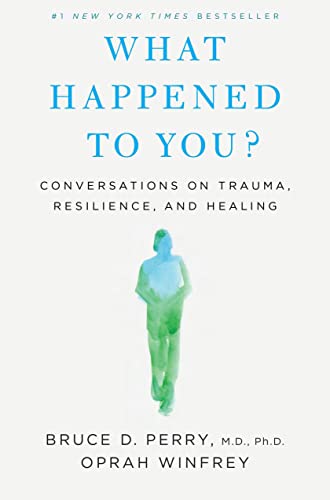
What Happened to You?
Bruce D. Perry, M.D., PhD & Oprah Winfrey
A conversational introduction to how early experience shapes us — reframing 'what's wrong with you' into 'what happened to you.'
As an Amazon Associate, Clarity House Press earns from qualifying purchases. Your price is never affected.
Found this helpful?
Share it with someone who might need it.
About the Author

Clarity House Press
Editorial Team
The editorial team at Clarity House Press curates and publishes evidence-based content on narcissistic abuse recovery, high-conflict divorce, and healing. Our content is informed by research, survivor experiences, and established trauma-informed approaches.
View all posts by Clarity House Press →Published by Clarity House Press Editorial Team