Please read our important disclaimers before using this content
Composite account: this narrative is drawn from common survivor experiences. Names, occupations, and identifying details are illustrative and do not depict a single real person.
I'll never forget the day I learned the word "gaslighting."
I was sitting in my car outside the hospital where I work as a cardiac nurse, scrolling through my phone during a rare break between 12-hour shifts. Tyler, my oldest, had just texted me asking if I could pick up groceries on the way home. My ex-husband—who hadn't worked in months—was apparently "too busy" to go to the store.
I remember staring at that text and feeling something I couldn't name. Exhaustion, yes. Frustration, certainly. But also confusion. How had I ended up here? Working 60-hour weeks, raising three children, managing every aspect of our household—and still somehow being told I was the problem in our marriage?
Something made me google "why does my husband make me feel crazy."1
That search changed my life — and introduced me to what gaslighting actually is, how to recognize it, and how to heal from it.
The Article That Changed Everything
The first article I clicked on felt like someone had been recording my life for the past 18 years and turned it into a checklist:
Does your partner deny saying things you clearly remember?
Yes. Constantly. I'd started recording conversations on my phone just to prove to myself I wasn't losing my mind. He'd say something cruel, and when I brought it up later, he'd look at me with genuine-seeming confusion. "I never said that. Why would you make that up? Are you okay? Maybe you need to see someone about your memory issues."
I was 41 years old with no history of memory problems, but I'd genuinely started to wonder if I was developing early-onset dementia.2 Research demonstrates that intimate partner violence significantly impacts cognitive functioning and memory, with emotional abuse showing particular associations with reduced cognitive performance.3
Do they tell you you're too sensitive when you react to their hurtful behavior?
Every single time I expressed hurt or frustration, the conversation immediately pivoted to what was wrong with me. If he said something cutting about my appearance, and I looked hurt, suddenly we weren't talking about what he said—we were talking about how I "overreact to everything" and "can't take a joke." If I cried, I was "too emotional" and "dramatic."
After years of this, I'd stopped trusting my own emotional reactions. Maybe I really was too sensitive. Maybe normal people didn't feel hurt by these things. Maybe there was something wrong with my ability to process reality.4 This invalidation of emotional responses is a documented pattern in intimate partner abuse, where victims' natural reactions to harmful behavior are reframed as character flaws rather than legitimate responses to harm.
Do they make you doubt your own memory and perception?
I had notebooks full of documentation because I couldn't trust my own recollection anymore. I wrote down conversations right after they happened. I took screenshots of text messages before he could claim they said something different. I photographed the state of the house before leaving for work because he'd insist I'd left it messy when I knew I hadn't.
I'd become a detective in my own life, desperately trying to catch reality before it was twisted.
The term for this? Gaslighting.5
Named after a 1944 movie where a husband manipulates his wife into thinking she's going insane by making small changes to their environment and then insisting she's imagining things when she notices. Gaslighting is a form of psychological manipulation that undermines another person's confidence and stability by causing them to doubt their memories, thoughts, and perception of reality.6
I sat in that hospital parking lot and cried for 20 minutes. Not sad tears—relieved tears. Finally, there was a name for what was happening to me. Finally, I had evidence that it wasn't just in my head.
Because that's the cruelest thing about gaslighting: it makes you unable to trust the very perception you'd need to identify the gaslighting.7 This deceptive quality distinguishes gaslighting from overt psychological abuse like threats or insults, where the aggressor's harmful intent is clear. Instead, gaslighting inflicts psychological pain indirectly, through sowing doubt and confusion.
The Pattern Becomes Clear
Once I had a name for it, I started seeing the pattern everywhere in our marriage. What I'd experienced as a series of confusing incidents suddenly organized itself into a systematic campaign to undermine my grip on reality. Understanding the full range of manipulation tactics used in narcissistic abuse helped me recognize just how deliberate and calculated this had been.
Financial Gaslighting
He'd complain we never had money, looking at me accusingly as if I were somehow hiding income or spending recklessly. Conveniently, he forgot that I was the only one working. He'd been unemployed—or "between opportunities," as he called it—for two years.
When I pointed out that his unemployment was the issue, not my spending, he'd rewrite history: "I've been applying constantly. You know how hard the job market is. Maybe if you were more supportive instead of constantly criticizing me, I'd have more confidence in interviews."
Suddenly the conversation wasn't about his unemployment. It was about my lack of support. And I'd end up apologizing.8 This pattern—where financial control and blame-shifting serve to maintain dominance—is characteristic of coercive control, a systematic pattern of abuse designed to exercise power over an intimate partner. The specific tactics of economic abuse and financial control often run alongside gaslighting, each reinforcing the other.
Parental Gaslighting
When I'd ask him to help more with our three kids—homework help, meal prep, doctor appointments, the endless logistics of keeping three humans alive—he'd respond with an elaborate accounting of everything he'd done that day.
"I unloaded the dishwasher. I took the garbage out. I called the plumber about the leak. I went through the mail."
None of those were things I'd asked him to do. The dishwasher could have waited. The garbage wasn't full. The leak had existed for months. The mail was junk.
But actual parenting—being present for the kids, helping with homework, driving to soccer practice, managing their emotional needs—that fell entirely on me. When I pointed this out, I was "never satisfied" and "impossible to please." He'd done things! He'd list the things! Why couldn't I appreciate what he did?
I started doubting myself. Was I being unreasonable? He had technically done things. Maybe I was expecting too much.
Emotional Gaslighting
My exhaustion from working full-time as a cardiac nurse, raising three children essentially solo, and managing all household responsibilities wasn't acknowledged as a natural consequence of being completely overwhelmed.
Instead, it was reframed as a personal failing.
"Maybe you need medication." "You should talk to someone about your inability to handle stress." "Normal people can manage their lives without falling apart." "I think you have anxiety issues that need treatment."
I actually went to a therapist, convinced something was wrong with me. I sat in her office and listed all my "symptoms": exhaustion, emotional dysregulation, feeling overwhelmed, confusion, difficulty trusting my own perceptions.
She asked about my life. When I described my marriage and my daily responsibilities, she looked at me with something like horror.
"These aren't symptoms of a disorder," she said gently. "These are normal responses to an impossibly stressful situation. The question isn't what's wrong with you. The question is why you think this is normal."9 Research confirms that psychological abuse significantly predicts reduced mental well-being and that victims of intimate partner violence often exhibit symptoms resembling trauma disorders, including depression, anxiety, and post-traumatic stress, that are direct consequences of the abuse rather than preexisting conditions.10
Weaponizing My Expertise
The cruelest twist? He'd weaponize my nursing background against me.
"You're supposed to be a healthcare professional—don't you think you should recognize when YOU'RE the one with a problem?"
This was devastating. I prided myself on my clinical skills, my ability to assess patients, to recognize when something was wrong. If I couldn't recognize my own mental health issues, what kind of nurse was I? What did that say about my professional competence?
He'd turned my greatest strength—my education and expertise—into another tool for making me doubt myself.
The Moment of Clarity
That same night I found the article on gaslighting, I had what I now call my "awakening moment."
It was close to midnight. I was sitting at the kitchen table with my laptop, deep into articles about narcissistic abuse, tears streaming down my face. Not from sadness—from recognition. From relief. From 18 years of confusion suddenly making sense.
My 16-year-old son Tyler came downstairs for a glass of water. He saw me crying, saw what was on my screen, and sat down across from me.
"Mom," he said quietly, "you're not crazy."
I looked up at him.
"I know what he's like when you're not around," Tyler continued. "I've known for years. The way he talks about you to us. The way he tries to get us to see things his way. The way he acts like he's the reasonable one and you're the problem. I see it, Mom. I've always seen it."
I couldn't speak.
"The younger ones are starting to see it too. We just... we didn't know how to tell you. We didn't want to make things worse."
My teenager—my child—had been watching his mother get psychologically dismantled for years. And he'd been protecting me from his father's manipulation without me even realizing it. Trying to shield me while I was too confused to see what was happening.
That's when I understood with absolute clarity: If a 16-year-old could see through the gaslighting, it wasn't because there was something wrong with my perception. It was because there was something wrong with what was being done to me.
I wasn't crazy. I had never been crazy. I was a sane person being systematically driven to doubt my own sanity.
The Fog Begins to Lift
Learning about gaslighting didn't immediately fix everything. I still had three and a half years of brutal divorce litigation ahead of me. My ex would gaslight the attorneys, the mediators, and the court—claiming I was mentally unstable, that I'd brainwashed the children, that I was making up allegations to get custody.
But something fundamental had shifted. I now had three things I'd never had before:
1. A Framework for Understanding
Suddenly, 18 years of confusion had an explanation. The patterns I'd attributed to my own failings had a name. I wasn't "too sensitive"—I was responding normally to abnormal behavior. I wasn't "forgetting things"—I was being manipulated into doubting my memory. I wasn't "unable to handle stress"—I was being crushed under impossible circumstances while being told the crushing was my own fault.
Understanding the framework of gaslighting let me look back at hundreds of incidents with new eyes. It wasn't isolated "misunderstandings." It was a systematic pattern of reality distortion designed to keep me off-balance, dependent, and doubting myself.
2. Validation
Discovering that gaslighting is a documented, recognized form of psychological abuse meant I wasn't alone. This wasn't something I'd invented or imagined. Thousands of people had experienced exactly what I was going through. Researchers had studied it. Therapists specialized in treating its effects.11
That validation was lifesaving. For the first time in years, I felt like I could trust my own experience. Not because someone else told me I could—but because I finally understood why I'd stopped trusting myself in the first place.
3. A Strategy
Once I understood the tactics, I could document them. I started keeping detailed records—not out of paranoia, but out of necessity.12 Every conversation, every incident, every manipulation attempt got logged.
Those 53 instances of custody order violations I eventually presented to the court? I never would have tracked them if I hadn't learned to trust my own perception again. The documentation that helped me win primary custody? It only existed because I finally believed my reality was worth recording. In family law proceedings, detailed documentation—journals, communications records, and dated incident logs—serves as crucial evidence, particularly in establishing patterns of emotional and psychological abuse.
What I Wish I'd Known Sooner
Looking back, I see the signs I missed for years—and I see why I missed them. Gaslighting is designed to be invisible to its victim. That's what makes it so effective.
But I also see now that there were moments I could have recognized the pattern if I'd known what to look for. I wish someone had told me:
If you're constantly apologizing and you don't know why: That's not normal. In healthy relationships, apologies are specific—you know what you did, you genuinely feel remorse, and the issue gets resolved. If you're apologizing for vague offenses you can't quite identify, something is wrong.
If you're keeping records just to prove your reality: Sane people in healthy relationships don't need to document every conversation to prove what was said. If you've started recording interactions, taking screenshots, or writing things down "just in case"—trust that instinct. You're responding to something real.
If your partner's descriptions of your behavior don't match your internal experience: A healthy partner might disagree with your actions, but they don't fundamentally misrepresent who you are. If you feel constantly mischaracterized—told you're angry when you're calm, selfish when you're giving everything, crazy when you're being reasonable—pay attention to that disconnect.
If you feel like you're going crazy, but only in one relationship: This was the biggest clue I missed. I was completely functional at work. My coworkers saw me as competent and reliable. My patients trusted me. My friends (the few I had left after isolation) saw me as reasonable. I only felt "crazy" at home, in my marriage.
That's not a coincidence. That's evidence.
To Anyone Reading This Now
If you're googling phrases like "am I going crazy" or "why does my partner make me feel insane" or "do I have memory problems," please know this:
Your reality is real. What you perceive, you perceive. What you remember, you remember. If you feel like you're being manipulated, you probably are. Trust that instinct—it's trying to protect you.
The confusion is the goal. Gaslighters don't want you to feel confident in your perceptions. Confusion keeps you dependent, keeps you second-guessing, keeps you unable to mobilize against them. The fact that you're confused is evidence that something is being done to confuse you.
Documentation is power. Start keeping records. Dated notes, screenshots, recordings (where legal). You're not being paranoid—you're creating evidence. Evidence you might need someday. Evidence that will help you see the pattern when you look back. Evidence that proves your reality is real. The complete guide to documentation that abusers don't want you to keep covers exactly how to build and organize that record.
You're not alone. The fact that you're even asking these questions means you're already starting to see through the fog. Millions of people have been where you are. They found their way out. You can too.
It's not your fault. You didn't ask to be gaslighted. You didn't cause this by being too sensitive or too gullible or too trusting. Good people get targeted precisely because they're good—because they give others the benefit of the doubt, because they try to see the best in people, because they want to believe in love.
Those aren't weaknesses. They were just exploited.
Getting Help
If you recognize yourself in this post, here's where to start:
Research. Read about narcissistic abuse, gaslighting, emotional manipulation, and coercive control. Education is the first step to liberation. When you can name what's happening to you, it loses some of its power.
Find a specialized therapist. Not just any therapist—one who specializes in trauma from emotional abuse. Someone who understands the specific patterns of narcissistic abuse. Someone who won't inadvertently gaslight you further by suggesting you "see both sides" or "work on your communication."
Connect with support communities. Online groups for survivors of narcissistic abuse. People who've been where you are. The validation I found in those communities—being believed when everyone else thought I was "overreacting to a normal divorce"—was essential to my recovery.
Document everything. In writing. With dates and times. Details you might think aren't important. Patterns that emerge when you look at the whole picture. This documentation will serve you legally, emotionally, and psychologically.
Trust yourself. This is the hardest part. But you can rebuild your ability to trust your own perceptions. It takes time. It takes practice. It takes support. But the person you were before the gaslighting still exists. You can find her again.
It took me 18 years to learn the word "gaslighting." 18 years of doubt. 18 years of apologizing for things I didn't do. 18 years of wondering if I was losing my mind.
Don't let it take that long for you.
Your perception is valid. Your feelings are real. Your memories are accurate.
You're not crazy.
You never were.
Composite account: this narrative is drawn from common survivor experiences. Names, occupations, and identifying details are illustrative and do not depict a single real person.
Resources
Mental Health and Trauma Support:
- Psychology Today Therapist Finder - Find trauma-informed therapists
- National Alliance on Mental Illness (NAMI) - Mental health education and support
- EMDR International Association - Find EMDR therapists
- SAMHSA National Helpline - 1-800-662-4357 (24/7)
Legal and Support Resources:
- American Bar Association Family Law Section - Find family law attorneys
- Legal Services Corporation - Find free legal aid
- National Domestic Violence Hotline - 1-800-799-7233 (SAFE)
Crisis Support:
- 988 Suicide & Crisis Lifeline - Call or text 988 (24/7)
- Crisis Text Line - Text HOME to 741741
References
- Darke, L., Paterson, H., & van Golde, C. (2025). Gaslighting and memory: The effects of partner-led challenges on recall and self-perception. Memory, 33(7), 828–844. https://doi.org/10.1080/09658211.2025.2533253 ↩
- Sweet, P. L. (2019). The sociology of gaslighting. American Sociological Review, 84(5), 851–875. https://doi.org/10.1177/0003122419874843 ↩
- Klein, W., Wood, S., & Bartz, J. A. (2025). A theoretical framework for studying the phenomenon of gaslighting. Sex Roles, 92(5-6), 291–305. https://doi.org/10.1177/10888683251342291 ↩
- Tager-Shafrir, T., Szepsenwol, O., Dvir, M., & Zamir, O. (2024). The gaslighting relationship exposure inventory: Reliability and validity in two cultures. Journal of Family Violence, 39(6), 1251–1268. https://doi.org/10.1177/02654075241266942 ↩
- Darke, L., Paterson, H., & van Golde, C. (2025). Gaslighting and memory: The effects of partner-led challenges on recall and self-perception. Memory, 33(7), 828–844. https://doi.org/10.1080/09658211.2025.2533253 ↩
- Dalmonte, S., Stöckl, H., & Delvecchio, E. (2023). The psychological subtype of intimate partner violence and its effect on mental health: A systematic review with meta-analyses. Systematic Reviews, 11, 80. https://doi.org/10.1186/s13643-022-02025-z ↩
- Lohmann, S., Cowlishaw, S., Ney, L., O'Donnell, M., & Felmingham, K. (2024). The trauma and mental health impacts of coercive control: A systematic review and meta-analysis. Trauma, Violence, & Abuse, 25(1), 630–647. https://doi.org/10.1177/15248380231162972 ↩
- J., S.D., Kealy, Biberdzic, Green, & Denmeade (2025). Coercive Control and Intimate Partner Violence: Relationship With Personality Disorder Severity and Pathological Narcissism. Personality and Mental Health. https://doi.org/10.1002/pmh.70038 ↩
- Giotakos, O. (2020). Neurobiology of emotional trauma. Psychiatriki, 31(2), 162–171. https://doi.org/10.22365/jpsych.2020.312.162 ↩
- Lohmann, S., Cowlishaw, S., Ney, L., O'Donnell, M., & Felmingham, K. (2024). The trauma and mental health impacts of coercive control: A systematic review and meta-analysis. Trauma, Violence, & Abuse, 25(1), 630–647. https://doi.org/10.1177/15248380231162972 ↩
- Tolmie, J., Smith, R., & Wilson, D. (2023). Understanding intimate partner violence: Why coercive control requires a social and systemic entrapment framework. Violence Against Women, 30(1), 54–74. https://doi.org/10.1177/10778012231205585 ↩
- Klein, W., Wood, S., & Bartz, J. A. (2025). A theoretical framework for studying the phenomenon of gaslighting. Sex Roles, 92(5-6), 291–305. https://doi.org/10.1177/10888683251342291 ↩
Recommended Reading
From Clarity House Press — plus trusted books for deeper understanding

Surviving the Storm: When the Court Takes Your Children
Clarity House Press
For fathers in active high-conflict custody battles. Understand your CPTSD symptoms, begin stabilization, and build foundation for healing. 17 chapters covering recognition, symptoms, and the healing path.

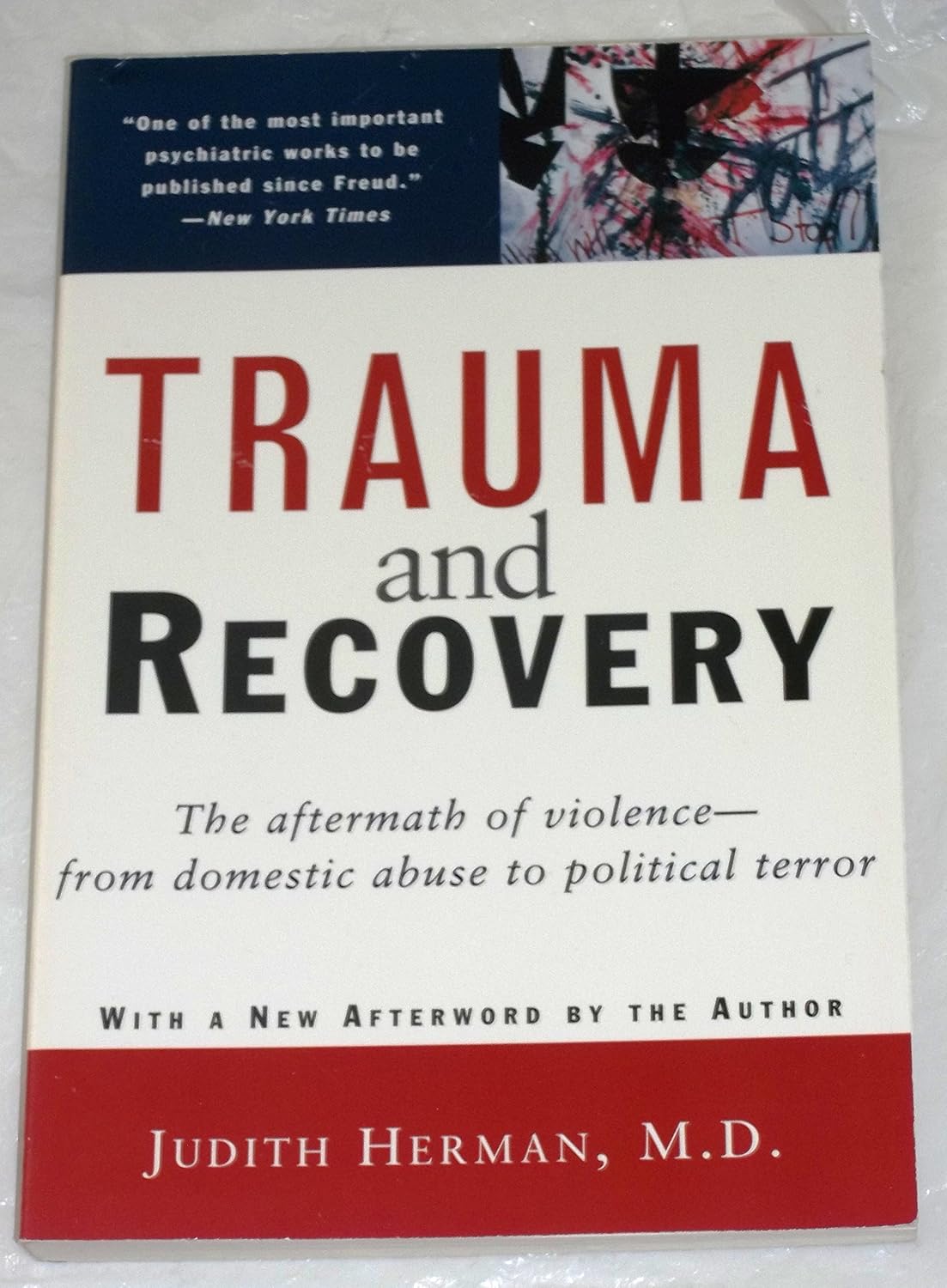
Trauma and Recovery
Judith Lewis Herman, M.D.
The seminal framework for understanding trauma and the stages of recovery — safety, remembrance, and reconnection.
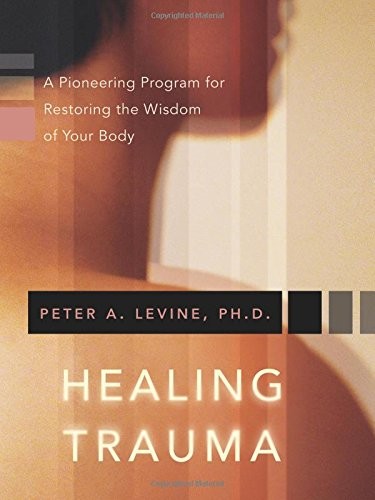
Healing Trauma
Peter A. Levine, PhD
Practical how-to guide for body-based trauma recovery with 12 guided Somatic Experiencing exercises.
As an Amazon Associate, Clarity House Press earns from qualifying purchases. Your price is never affected.
Found this helpful?
Share it with someone who might need it.
About the Author

Clarity House Press
Editorial Team
The editorial team at Clarity House Press curates and publishes evidence-based content on narcissistic abuse recovery, high-conflict divorce, and healing. Our content is informed by research, survivor experiences, and established trauma-informed approaches.
View all posts by Clarity House Press →Published by Clarity House Press Editorial Team