Please read our important disclaimers before using this content
If your family was built through surrogacy, egg donation, sperm donation, or embryo donation, and you're now facing high-conflict divorce, you're navigating territory that most family law attorneys have never encountered. The intersection of assisted reproductive technology (ART), legal parentage, and narcissistic manipulation creates unique vulnerabilities that require specialized understanding.1
When a narcissistic ex-partner weaponizes the biological complexity of your family's creation—questioning legal parentage, threatening to involve surrogates or donors, or using conception narratives to manipulate children—the resulting trauma layers upon already-sensitive family dynamics. This kind of manipulation of foundational identity is a form of coercive control that extends the abuse into the children's lives.
Understanding how biology, law, and narcissistic abuse intersect in ART families is essential for protecting your legal rights, your children's wellbeing, and your family's story.
Understanding the Legal Landscape
Families created through third-party reproduction face legal complexities that traditional families don't encounter. According to the American Society for Reproductive Medicine Ethics Committee, establishing clear legal parentage before birth is essential for protecting all parties involved in ART arrangements.2
Legal Parentage vs. Biological Parentage
The critical distinction:
- Legal parent: Person recognized by law as child's parent (rights and responsibilities)
- Biological parent: Person who contributed genetic material
- Gestational carrier: Person who carried pregnancy (may or may not be biologically related)
In ART families, these roles often differ:
- Intended mother using donor eggs: Legal parent, not biological parent
- Intended father using donor sperm: Legal parent, not biological parent
- Intended parents using gestational carrier: Legal parents, carrier is not
- Same-sex couples: One partner biological parent, both (if properly executed) legal parents
- Embryo donation: Neither parent biologically related; both legal parents
Legal protections vary by state:
- Pre-birth parentage orders: Some states allow; others don't
- Second-parent adoption: Required in some states for non-biological parent
- Donor agreements: Enforceability varies
- Surrogacy agreements: Some states enforce; others void them
- Marriage presumption: Married spouse usually presumed legal parent3
How Narcissists Exploit Legal Complexity
Common tactics:
- "You're not the REAL parent—you didn't contribute DNA"
- "The surrogate is the real mother, not you"
- "I'm the biological parent, so I have more rights"
- Threatening to contact surrogate or donor to "get the truth"
- Claiming you "kidnapped" a child that isn't "yours"
- Using assisted conception as evidence you're "unnatural" or unfit
- In same-sex relationships: Non-biological parent's rights questioned
- Claiming you "forced" them into ART against their will
What this looks like:
"My wife and I used my eggs and donor sperm. When we divorced, she told our daughters that I was their 'real' mom and she was 'just the person who agreed to help raise someone else's kids.' She weaponized biology to create doubt. In court, she claimed she had no legal obligation to children she 'didn't create.' We'd been married when they were born—she was legally their parent from day one."
Surrogacy-Specific Challenges
Families built through gestational surrogacy face unique vulnerabilities when narcissistic abuse intersects with family creation narratives.
When Your Ex Threatens to Involve the Surrogate
The threat:
"I'm going to contact the surrogate and tell her what you're REALLY like. She'll testify that you shouldn't have custody."
Legal reality:
- Surrogate has no legal parental rights (if proper legal agreements were executed)
- Surrogate cannot "take back" the child or claim custody
- Surrogate's opinions about your fitness are irrelevant to legal parentage
- Harassing a surrogate may violate surrogacy agreement terms
- Some surrogacy contracts include non-contact clauses post-birth
Protective strategies:
- Secure all surrogacy legal documents: Surrogacy agreement, pre-birth order, birth certificates4
- Review contract for contact provisions: Does agreement limit post-birth contact?
- Inform surrogate proactively (if you have relationship): Brief, factual notice you're divorcing
- Legal counsel if ex contacts surrogate: May constitute harassment or contract violation
- Educate your divorce attorney on surrogacy law: Not all family lawyers understand ART
If surrogate is supportive:
- Letter affirming your fitness and parenting may be helpful
- Character witness statement for court
- Confirmation that ex's claims are false
- Statement confirming her voluntary participation and that she has no regrets
If surrogate is weaponized against you:
- Her lack of legal standing means her opinions don't affect custody
- Focus on legal parentage documentation, not surrogate's feelings
- If she was misled by ex, consider reaching out to clarify
- Evaluate whether ex violated surrogacy contract (potential legal claim)
Explaining Surrogacy to Children During Divorce
Your children's understanding of how they were born is precious and should be protected from weaponization.
Age-appropriate surrogacy disclosure:
Young children (3-6):
- "Someone very kind helped us by carrying you in her tummy because Mommy's tummy couldn't."
- "We wanted you SO much that we asked for help to bring you into the world."
School age (7-12):
- "A gestational carrier—someone who helps families—carried you during pregnancy."
- "You grew from our embryo, but in her uterus because mine wasn't working."
- "She gave our family an incredible gift, and we're grateful."
Teens:
- Full, accurate information about surrogacy process
- Acknowledgment of any genetic/biological complexity
- Validation of their feelings and questions
- Access to therapist to process
When ex corrupts this narrative:
- ❌ "Your mother isn't really your mother—the surrogate is"
- ❌ "You were bought and paid for"
- ❌ "We could give you back to the real mother"
- ❌ "You're not really ours"
How to respond:
- Correct gently: "That's not quite right. Here's what actually happened..."
- Reaffirm legal reality: "I am your legal mother/father in every way. That will never change."
- Validate feelings: "It's okay to have questions. We can talk about anything."
- Therapeutic support: ART-competent therapist to process
- Age-appropriate truth: Honest, simple, loving explanation
Donor Conception Challenges
Families built with donor eggs, sperm, or embryos face distinct challenges around biological parentage and identity.
"I'm the REAL Parent, You're Not"
When one parent is biologically related and the other isn't, narcissistic partners weaponize this difference.
Scenarios:
- Donor egg + husband's sperm: Dad claims he's the real parent, mom "just" carried
- Donor sperm + wife's eggs: Mom claims she's the real parent, dad has no biological connection
- Embryo donation: The partner who carried the pregnancy claims they "did the work" of birth, when neither parent is genetically related
- Same-sex couples: Biological parent claims superior rights
Legal protections:
- Marital presumption: If married at birth, both spouses are legal parents in most states
- Consent to ART: Consenting spouse is legal parent regardless of biology
- Donor agreement: Donor relinquished all parental rights
- Second-parent adoption (if completed): Ironclad legal parentage
- Pre-birth parentage orders (some states): Both parents named pre-birth
Counter-strategies:
- Establish legal parentage immediately: Don't rely on marital presumption alone
- Second-parent adoption if available: Provides maximum protection
- Donor agreements must be iron-clad: Confirm donor has no legal standing
- Document consent: Preserve evidence both partners consented to ART
- Educate custody evaluator: Biology ≠ better parent; attachment and caregiving matter
Threatening to Tell Children About Donor Conception
Disclosure of donor conception is deeply personal, developmentally sensitive, and should never be weaponized. The American Academy of Pediatrics recommends early, age-appropriate disclosure of donor conception to support healthy identity development in children.5
The threat:
"If you don't do what I want, I'm telling the kids you're not their real parent."
Why this is harmful:
- Children deserve age-appropriate, loving disclosure—not discovery during conflict
- Using donor conception as a weapon teaches shame about their origins
- Disclosure should be planned, gradual, and supported by therapy if needed
- Forcing disclosure prematurely can cause identity disruption
- Violates the child's right to process their story safely
Protective strategies:
If you haven't disclosed yet:
- Consider disclosing proactively: Before ex can weaponize it
- Use age-appropriate language: Tailor explanation to developmental level
- Frame positively: "We wanted you so much, we asked for help to create you"
- Therapeutic support: ART-competent therapist to help process
- Control the narrative: You tell the story lovingly, not ex maliciously
If ex discloses harmfully:
- Reframe immediately: "What Dad said is true, but he said it in a hurtful way. Here's what really happened..."
- Validate feelings: "It's okay to be surprised/confused/upset"
- Provide ongoing support: This isn't one conversation; it's a process
- Therapist intervention: Immediate therapeutic support to process
- Document harm: Ex's weaponization of donor conception shows poor judgment
If you're the non-biological parent:
- "I may not have contributed DNA, but I'm your parent in every way that matters."
- "I chose you, wanted you, and loved you from before you were born."
- "Biology is only one small part of what makes a family."
- "Nothing about how you were conceived changes how much I love you."
When Donors Aren't Anonymous
Some families use known donors (friend, family member, directed donation programs). This creates additional complexity during divorce.
Challenges:
- Donor may be in your life (family gatherings, social events)
- Ex may weaponize donor relationship ("Uncle Jake is his REAL dad")
- Donor may be manipulated by ex to question arrangement
- Child may seek out donor for answers during family conflict
- Donor agreement enforceability varies by state
Protective strategies:
- Confirm donor agreement is legally sound: Consult ART attorney
- Maintain positive donor relationship (if appropriate): Control narrative
- Educate donor about divorce situation: Proactive, factual communication
- Boundaries if needed: If donor is weaponized, limit contact
- Therapeutic processing: Help child understand donor's role vs. parent's role
If donor is family member:
- Extended family dynamics add complexity
- Donor may face pressure to "choose sides"
- Child may be confused about relationships ("Is Aunt Sarah my mom?")
- Family gatherings may be uncomfortable
- Legal agreements with family members are generally still enforceable, though family dynamics may complicate compliance
Same-Sex Parents and Legal Parentage
Same-sex couples using ART face heightened vulnerability during divorce, especially if non-biological parent didn't complete second-parent adoption. Research from the Williams Institute at UCLA School of Law documents ongoing legal disparities affecting LGBTQ+ families in custody proceedings across different jurisdictions.6
When Second-Parent Adoption Wasn't Completed
The nightmare scenario:
One partner is biological parent (contributed egg/sperm or gave birth). The other partner is not legally recognized because second-parent adoption wasn't finalized.
Legal vulnerability:
- Non-biological parent may have NO legal rights
- Biological parent could cut off contact entirely
- Non-bio parent may have no custody, visitation, or decision-making rights
- Years of parenting irrelevant if legal parentage not established
- Some states don't recognize out-of-state same-sex parentage
Immediate actions if this is you:
- Consult LGBTQ+ family law attorney immediately: State-specific guidance critical
- Pursue legal parentage NOW: Second-parent adoption, parentage action, whatever is available
- Document parenting involvement: Photos, school records, medical appointments, financial support — systematic documentation of your parenting role is especially critical when legal parentage is contested
- Establish de facto parent status (if available): Some states recognize non-legal parents who functioned as parents
- Show intent to parent: Evidence both partners planned for and wanted child
- Preserve ART documentation: Consent forms, contracts, emails showing joint planning
How narcissists exploit this:
- "You have no legal right to my child"
- "I'm the only real parent—you were just helping"
- Cutting off all contact with children you raised
- Claiming you were a "roommate," not a parent
- Using homophobia in court to minimize your relationship
Pre-Birth Orders and Marital Presumption
Protection varies by state:
- States with pre-birth parentage orders: Both parents listed on birth certificate from birth
- States with marital presumption for same-sex couples: Both spouses presumed parents
- States without recognition: Second-parent adoption essential
- States hostile to LGBTQ+ families: Maximum legal protections needed
Strategic location considerations:
If you're divorcing in a state different from where child was born, conflicting laws may apply. Legal counsel familiar with interstate recognition issues is critical.
Facing Homophobia in Family Court
Some judges, evaluators, or attorneys bring homophobic bias to ART family cases.
Forms this takes:
- Suggesting non-biological parent isn't "real" parent
- Questioning whether same-sex parents can adequately parent
- Minimizing non-bio parent's role in child's life
- Assuming biological parent should have primary custody
- Treating ART family as "less than" traditional family
- Misunderstanding legal parentage in same-sex relationships
Counter-strategies:
- LGBTQ+-competent attorney essential: Find lawyer who fights homophobia effectively
- Education for evaluator: Provide materials on same-sex parenting research
- Document equal parenting: Show both parents' involvement regardless of biology
- Request different judge if needed: Recusal motions for bias
- Expert witnesses: Psychologists who can testify to quality of same-sex parenting
- Affidavits from community: Teachers, doctors, family affirming your parental role
Protecting Your Family's Story
How your children understand their conception is sacred. Protecting this narrative from weaponization is essential.
Age-Appropriate Disclosure Planning
Research published in Human Reproduction found that children told about their donor conception before age 7 showed better psychological adjustment than those told later, supporting early disclosure practices.7
When to tell:
- Early childhood approach: Start conversations from toddlerhood with simple, positive language
- School-age disclosure: Around age 7-10 if you waited
- Before they hear from someone else: Always better from you than from malicious source
How to tell:
- Use children's books: Age-appropriate books normalize ART conception
- Frame positively: "We wanted you so much, we asked for help to create our family"
- Be honest and simple: Don't over-explain complex science to young children
- Normalize their origins: Many families are created with help (true)
- Ongoing conversation: Not one talk, but evolving dialogue as they grow
Resources:
- What Makes a Baby by Cory Silverberg (ages 3-7)
- Hope and Will Have a Baby by Irene Celcer (surrogacy)
- The Pea That Was Me by Kimberly Kluger-Bell (donor conception)
- My Story: A Journal About My Conception by Kenika Harden (teen resource)
When Ex Weaponizes Conception Story
Harmful narratives they push:
- "You're not special—you were bought"
- "Your other parent isn't really your parent"
- "The surrogate/donor is your real mother/father"
- "You were a science experiment"
- "We should have just adopted instead"
Counter-narratives:
- "You are so wanted that we asked for help creating you"
- "Both of us are your real parents, no matter who contributed what"
- "The surrogate/donor gave us a gift, but we are your parents"
- "Medical science helped us, just like it helps with other medical needs"
- "We chose you and wanted you before you even existed"
Therapeutic support:
- ART-competent child therapist
- Groups for donor-conceived children (age-appropriate)
- Connection with other ART families
- Books and media showing diverse family creation
Your Next Steps
Immediate actions (This Week):
- Locate and secure all ART legal documents (surrogacy agreements, donor contracts, pre-birth orders, consent forms)
- Verify legal recognition of both parents (confirm both names on birth certificate; pursue second-parent adoption if not completed)
- Consult ART-specialized family law attorney (not all divorce lawyers understand third-party reproduction—this expertise is critical)
First 30 Days:
- Gather evidence of parenting involvement (photos, school records, medical decisions, financial support—regardless of biological connection)
- Proactively disclose family creation story to children (age-appropriately, before ex can weaponize it)
- Connect with ART family support groups (online or local—community understanding is crucial)
Ongoing (Next 3-6 Months):
- Maintain positive relationships with surrogate/donor (if appropriate) to prevent ex from leveraging them against you
- Engage ART-competent therapist for children if conception story becomes conflict point
- Document any attempts to weaponize ART status or donor/surrogate relationships (evidence of ex's harmful behavior)
Resources
Legal and Family Support:
- Academy of Adoption and Assisted Reproduction Attorneys - Find ART-specialized attorneys
- National Center for Lesbian Rights - LGBTQ+ family law expertise
- Family Equality - Legal resources for LGBTQ+ families
- RESOLVE: The National Infertility Association - Support, education, community
Surrogacy and Donor Conception Resources:
- American Society for Reproductive Medicine - Legal and medical resources
- Men Having Babies - Surrogacy support for gay men
- Donor Sibling Registry - Connecting donor families
- Psychology Today Therapist Finder - ART-competent therapists
Crisis Support:
- 988 Suicide & Crisis Lifeline - Call or text 988 (24/7)
- Crisis Text Line - Text HOME to 741741
- National Domestic Violence Hotline - 1-800-799-7233 (SAFE)
References
Key Takeaways
- Legal parentage ≠ biological parentage in ART families—secure legal documentation for all parents immediately.
- Second-parent adoption is critical for non-biological parents, especially in same-sex relationships.
- Surrogates and donors have no legal parental rights if proper agreements were executed—but narcissists may threaten involvement.
- Conception disclosure is sacred and should be protected from weaponization with proactive, age-appropriate conversations.
- State laws vary dramatically on ART family recognition—consult specialized attorney familiar with your jurisdiction.
- Document your parenting involvement regardless of biological connection—attachment and caregiving matter more than DNA.
- LGBTQ+ families face additional vulnerabilities including homophobia in court and lack of legal recognition in some states.
Your family is a real family. Your parentage is real parentage. Don't let anyone—including a narcissistic ex—use biology to undermine legal reality or your bond with your children. For parents in complex family situations navigating ongoing custody disputes, connecting with peer support communities — particularly those that include LGBTQ+ and nontraditional family groups — can provide both practical information and the validation that your family structure is legitimate and worth protecting.
References
- Naab, F., Blystad, A., & Klepp, S. B. (2021). Families formed through assisted reproductive technology: Causes, experiences, and consequences in an international context. Reproductive Health, 18(1). https://doi.org/10.1186/s12978-021-01048-4 ↩
- Reis, J. P., Malay, R., de Luna-Navarro, L., & Zitao, L. (2024). Navigating the gestational surrogacy seas: The legalities and complexities of gestational carrier services. Cureus, 16(11), e69644. https://doi.org/10.7759/cureus.69644 ↩
- Paternity Law: Sperm Donors, Surrogate Mothers and Child Custody. (2019). Journal of Legal Studies, 48(1), 75-92. https://pubmed.ncbi.nlm.nih.gov/31379476/ ↩
- Kumar, A., Garcia-Tawil, S., & Heeren, J. (2023). Gestational carrier pregnancies: Legal and ethical considerations for pediatricians. Pediatrics in Review, 44(10), 521-530. https://doi.org/10.1542/pir.2023-005976 ↩
- American Academy of Pediatrics. (2013). Ethical and policy issues in genetic testing and screening of children. Pediatrics, 131(3), 620-622. https://doi.org/10.1542/peds.2012-3841 ↩
- Scheib, J. E., Riordan, M., & Rubin, S. (2005). Adolescents with open-identity sperm donors: Experiences and psychosocial adjustment. Fertility and Sterility, 84(2), 300-311. https://doi.org/10.1016/j.fertnstert.2005.02.050 ↩
- Perrin, E. C., Cohen, K. M., & Carten, M. E. (2013). The legal vulnerability model for same-sex parent families: A mixed methods systematic review and theoretical integration. Family Court Review, 59(4), 688-708. https://doi.org/10.1111/fcre.12637 ↩
- McMahon, C. A., Ungerer, J. A., Tennant, C., & Jacobs, N. (2006). Parent psychological adjustment, donor conception and disclosure: A follow-up over 10 years. Fertility and Sterility, 85(5), 1304-1311. https://doi.org/10.1016/j.fertnstert.2005.11.069 ↩
- Jadva, V., Freeman, T., Kramer, W., & Golombok, S. (2009). The role of age of disclosure of biological origins in the psychological wellbeing of adolescents conceived by reproductive donation: A longitudinal study from age 1 to age 14. Social Science & Medicine, 68(10), 1852-1858. https://doi.org/10.1016/j.socscimed.2009.02.004 ↩
- Saleem, F., Wangui, J., & Gingell, M. (2023). Parents' disclosure to their donor-conceived children in the last 10 years and factors affecting disclosure: A narrative review. Journal of Clinical Medicine, 12(6), 2247. https://doi.org/10.3390/jcm12062247 ↩
Recommended Reading
From Clarity House Press — plus trusted books for deeper understanding

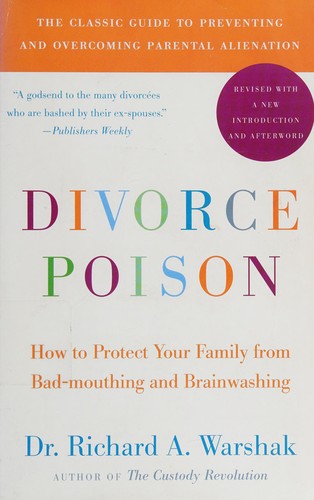
Divorce Poison
Dr. Richard A. Warshak
Classic best-selling parental alienation resource on detecting and countering manipulation tactics.

Splitting: Protecting Yourself While Divorcing Someone with Borderline or Narcissistic Personality Disorder
Bill Eddy & Randi Kreger
Updated edition covering domestic violence, alienation, false allegations in high-conflict divorce.
As an Amazon Associate, Clarity House Press earns from qualifying purchases. Your price is never affected.
Found this helpful?
Share it with someone who might need it.
About the Author

Clarity House Press
Editorial Team
The editorial team at Clarity House Press curates and publishes evidence-based content on narcissistic abuse recovery, high-conflict divorce, and healing. Our content is informed by research, survivor experiences, and established trauma-informed approaches.
View all posts by Clarity House Press →Published by Clarity House Press Editorial Team