Please read our important disclaimers before using this content
Composite account: this narrative is drawn from common survivor experiences. Names, occupations, and identifying details are illustrative and do not depict a single real person.
Three years ago, I lived in a 4-bedroom house in a Phoenix suburb. We had two cars, retirement savings, college funds for the kids, and enough money for annual vacations.
I was a stay-at-home mom. My job was raising our children and managing our household. For 22 years.
Today, I work retail at a home goods store. I make $15.50/hour. I live in a one-bedroom apartment with furniture from Facebook Marketplace. I'm 51 years old, and I'm starting over from scratch.
This is what financial abuse looks like after the divorce.
The bruises are invisible. The control was insidious. And the damage lasts decades. For a structured look at the patterns that make economic abuse so effective at creating long-term dependency, it helps to understand how financial control operates as a deliberate strategy, not just a bad habit.
How I Got Here: The 22-Year Setup
I didn't "just" stay home. I made a choice—or so I thought—in partnership with my then-husband.
The conversation in 2001 (I was 29):
Him: "With your salary and childcare costs, you'd basically be working to pay someone else to raise our son. Why don't you stay home? We can afford it on my income, and the kids will benefit from having you there."
Me: "Are you sure? What about my career?"
Him: "You can always go back when they're older. This is an investment in our family."
It sounded reasonable. It sounded like partnership.
What I didn't understand: It was the first move in a decades-long plan to make me completely financially dependent.
Year 1-5: The Golden Years (The Setup)
I stayed home with our son, then our daughter. I managed the household:
- Cooking, cleaning, laundry
- Doctor appointments, school activities, playdates
- Budgeting grocery money
- Organizing family schedules
- Managing his mother's visits and holiday planning
He worked. Brought home the paycheck. Paid the bills.
It felt like a partnership. I did my job, he did his.
What I didn't see: He was controlling ALL the money. I had access to a joint account for groceries and household expenses, but HE decided:
- How much went into savings
- What we could afford
- When we'd buy a new car
- If we'd go on vacation
I had input. But he had final say.
Because it was "his" money.
Year 6-15: The Slow Erosion (The Trap)
As the kids got older, I started thinking about going back to work.
Every time I brought it up:
"The kids still need you home after school." "We're doing fine on my salary—why add stress?" "What would you even do? You've been out of the workforce for 10 years." "Your job is HERE. You want to abandon that?"
He didn't forbid me from working. That would have been obvious control.
Instead, he made me believe it was my idea to stay home. That I'd be a bad mother if I left. That I had no marketable skills anyway.
By year 15, I believed:
- My worth was in caregiving and homemaking
- I had no skills the job market valued
- Going back to work would be selfish
- I was lucky he "provided" for me
That's what financial abuse does: It convinces you that your dependence is your choice.
Year 16-22: The Devaluation (The Control)
As the kids needed me less, his resentment grew.
Things he said:
- "Must be nice to stay home all day while I work."
- "What do you even DO all day?"
- "I pay for everything—you contribute nothing."
- "You're not a partner, you're a dependent. Like another child."
Meanwhile:
- I had no retirement savings in my name (he "handled" that)
- No credit cards in my name (he "managed" the credit)
- No assets in my name (house, cars, investments—all his or joint)
- No recent work history (22-year gap)
- No financial literacy (he "took care of the complicated stuff")
Consider using identity theft protection services like Aura or Norton LifeLock to monitor your credit and financial accounts, especially important when your abuser has controlled all financial access and may have your personal information.
By the time he asked for divorce, I was 48 years old with:
- No career
- No savings
- No credit history
- No financial education
- No safety net
That's not an accident. That's the design.
The Divorce: When Financial Abuse Becomes Visible
He filed when I was 48. Our daughter had just started college. Our son was 26 and living on his own.
His timing was perfect:
- Kids were grown (minimal child support)
- I was too old to easily re-enter workforce
- I had no separate assets
- I was completely unprepared
His attorney argued:
- I'd been "out of the workforce by choice"
- I was "capable of working" (therefore spousal support should be minimal)
- I'd had "22 years to build job skills" and chose not to
- The house was "marital property" but he could afford to keep it, I couldn't
My attorney argued for:
- Spousal maintenance (Arizona's term for alimony)
- Split of retirement assets
- Reimbursement for my contributions to his career advancement
What I got:
- 3 years of spousal maintenance ($2,400/month, decreasing annually)
- Half of retirement assets (roughly $60,000 after taxes/penalties for early withdrawal to survive)
- No house (he kept it, bought out my equity at market low during negotiation)
What I lost:
- The home I'd lived in for 18 years
- Financial security
- Health insurance (I was on his plan)
- The life I'd built
- 22 years of earning potential I'll never get back
Net result: I went from middle-class comfort to working-class survival overnight.
The Reality Three Years Later
My current situation:
Job: Retail associate at HomeGoods, $15.50/hour Income: ~$28,000/year (before taxes) Housing: 1-bedroom apartment, $1,100/month Car: 2008 Honda Civic (150k miles, paid off) Savings: $3,200 Retirement: $41,000 (after I had to withdraw $19k for divorce legal fees and moving expenses) Debt: $8,000 credit card (rebuilding credit, high interest)
Monthly budget:
- Rent: $1,100
- Utilities: $150
- Car insurance: $95
- Gas: $120
- Groceries: $250
- Phone: $50
- Credit card payment: $200
- Student loan (my daughter's, I co-signed): $180
- Health insurance: $380 (subsidized ACA plan)
- Misc/emergency fund: Whatever's left (~$100)
Total: ~$2,625/month Take-home pay: ~$2,100/month
I'm $500 short every month.
I make up the difference by:
- Picking up extra shifts when available
- Skipping meals
- Delaying medical care
- Not buying anything non-essential
- Using the food bank when I'm really short
This is my life at 51. After 22 years of partnership.
The Things No One Tells You About Financial Abuse Recovery
Research on economic abuse and its impacts shows that financial abuse occurs in approximately 76-99% of intimate partner violence cases among service-seeking survivors.1 Women struggle more than men to recover financially from divorce impacts, often exacerbated by unequal division of caregiving labor, with abuse significantly increasing the risk of post-separation poverty.2
1. You're "Too Old" and "Too Inexperienced" at the Same Time
The job search at 48 was brutal.3 Research documents significant age and gender discrimination in hiring, particularly for women re-entering the workforce after employment breaks.4
Feedback I got (or read between the lines):**
- "We're looking for someone with recent experience" (you're out of touch)
- "This is an entry-level position" (you're overqualified/too old)
- "We need someone who can grow with the company" (we want someone younger)
- "What have you been doing for 22 years?" (not working = not valuable)
I applied to 87 jobs before I got the retail position.
Positions I applied for:
- Administrative assistant
- Receptionist
- Customer service
- Retail
- Childcare (ironic, right? I raised two kids but needed certification)
- Food service
- Cleaning services
I have a bachelor's degree. It's 30 years old and might as well be decorative at this point. Extended employment gaps significantly reduce wages and career advancement prospects, even for educated workers.5
2. Spousal Maintenance Ends—The Consequences Don't
My spousal maintenance ended after 3 years. The judge determined that was "sufficient time to become self-supporting." Research on post-divorce economic outcomes demonstrates that three years is insufficient for financial recovery, especially for women with employment gaps.6 The financial consequences of divorce persist for decades, with women experiencing sharper and longer-lasting declines in income than men.7
Three years to:**
- Find a job with a 22-year gap
- Build a career from entry-level in your 50s
- Recover financially from decades of economic abuse
- Somehow match the lifestyle you had for 22 years
It's impossible. But the court doesn't care.
When the maintenance ended:
- I lost $1,200/month
- Had to move to cheaper apartment
- Picked up a second part-time job (night stocking, gave up after 4 months—my body couldn't handle it)
3. Your Adult Children May Not Understand
My kids are 26 and 24. They grew up comfortable. They don't remember struggle. Research identifies post-separation economic abuse as a distinct pattern that continues after divorce, including economic sabotage, withholding resources, financial harassment, and asset theft—behaviors that intensify when abusive partners seek revenge or punishment.8
What they see:**
- Dad in the house we grew up in
- Mom in a small apartment
- Dad with financial stability
- Mom working retail
What they said (early on):
- "Why don't you just get a better job?" (As if I haven't tried)
- "Did you ask Dad for help?" (Miss the point entirely)
- "Maybe you should have planned better" (Victim-blaming)
It took TWO YEARS for them to start understanding that this wasn't my failure—this was done TO me.
4. Rebuilding Credit From Zero Is Expensive
I had no credit history in my name. Everything was joint or his.
After divorce:**
- Joint accounts closed
- His credit cards (where I was authorized user) removed me
- No credit score to speak of
Building credit when you're broke:
- Secured credit card ($300 deposit I could barely afford)
- High interest rates (because no credit history)
- Credit-building loan (paying to borrow money to prove I can pay it back—makes no sense but necessary)
Three years later:
- Credit score: 640 (not great, but better than nothing)
- One credit card ($2,500 limit, $1,800 balance)
- Able to rent apartment without co-signer now
5. Age Discrimination Is Real and Unspoken
I'm competing with 25-year-olds for entry-level positions. Research confirms that age discrimination in hiring is systemic, particularly for women over 50 re-entering the labor market.9 Studies show that older female applicants for administrative positions receive callbacks at rates 47% lower than younger female applicants for identical positions.10
They have:**
- Recent degrees
- Tech skills
- Energy
- No health issues
- Willingness to work for less (they live with roommates, I need to survive)
- Decades of earning potential ahead
I have:
- Life experience (not valued in retail)
- Outdated degree
- Health issues (arthritis, back problems from physical work)
- Need for livable wage
- Maybe 15 years of work left before retirement age
Guess who gets hired?
The Strategies That Are Helping (Slowly)
I'm not going to lie and say I've "thrived" or found some secret to bouncing back.
I'm surviving. Barely. But I'm learning.
1. Community Resources (No Shame)
I use:
- Food bank (twice a month)
- Community health clinic (sliding scale medical care)
- Thrift stores (all my clothes)
- Free community events (socialization without cost)
- Library (books, internet, programs)
The shame was hard at first.** I went from middle-class "provider" to food bank recipient.
Now I see it differently: I paid into this system through my husband's taxes for 22 years. I'm using what I paid for.
2. Skill-Building (Free Options)
I'm trying to build marketable skills:
- YouTube tutorials (Excel, basic coding, design programs)
- Library computer classes
- Free online courses (Coursera, Khan Academy)
Progress is slow.** I work 35-40 hours a week, I'm exhausted, and learning new tech at 51 is HARD.
But it's something.
3. Side Income (Small But Helps)
I've found small ways to bring in extra money:
- Selling items on Facebook Marketplace
- Occasional dog-walking through Rover ($15-20/walk)
- Survey sites (maybe $30/month—not much but it's something)
I'm not going to side-hustle my way out of poverty.** But every $50 helps when you're $500 short.
4. Budgeting (Painfully Detailed)
I track every penny. I use a notebook (can't afford budgeting apps).
What this looks like:**
- Groceries planned to the dollar
- No eating out (except birthday or holiday with kids)
- No subscriptions (no Netflix, Spotify, nothing)
- Medical care delayed unless urgent
- No gifts for birthdays/holidays (I bake or make things)
It's exhausting. But it's the only way I survive.
5. Therapy (When I Can Afford It)
I see a therapist monthly at a sliding-scale clinic ($35/session).
What we work on:**
- Grief for the life I lost
- Anger at the system that failed me
- Shame about my financial situation
- Rebuilding self-worth after decades of devaluation
This is the most important $35 I spend.
What I Want You to Know
If you're in a relationship where your partner controls the money—even if it "makes sense" right now—please hear this:
Financial abuse is invisible until it's too late. Knowing the specific red flags of financial abuse during divorce can help you see the pattern clearly — and protect yourself in court proceedings before assets are hidden.
Red Flags I Missed:
❌ He controlled all accounts (even if you have "access") ❌ He made all major financial decisions ❌ You had to ask permission for purchases ❌ He discouraged you from working ❌ He criticized your financial contributions (even non-monetary ones) ❌ Everything was in his name or "managed" by him ❌ You have no credit in your own name ❌ You don't know the full financial picture ❌ He uses money as punishment or reward
What You Should Do (That I Didn't):
✅ Keep a credit card in YOUR name ✅ Maintain some work history (even part-time) ✅ Have access to ALL financial accounts ✅ Know where all assets are and what they're worth ✅ Build your own retirement savings ✅ Keep your own bank account (even if small) ✅ Stay financially literate ✅ Have a safety fund he doesn't know about
I thought partnership meant trust. He thought partnership meant control.
Don't make my mistake.
Where I Am Three Years Later
I won't lie: This is hard. I'm 51, working retail, living paycheck to paycheck, and facing a retirement with almost nothing saved.
But:
✅ I'm out. I'm free from daily devaluation. ✅ My relationship with my kids is improving as they understand what happened. ✅ I have my own space (small, but mine). ✅ I'm building skills slowly. ✅ I'm learning my worth isn't tied to his money.
The grief and anger are real, and they're part of the process. Many survivors find moving forward through practical rebuilding steps helps when the emotional weight of everything lost is too heavy to carry alone.
Some days I'm angry. I gave 22 years. I did my part. I raised beautiful humans. I supported his career.
And I'm here. Broke. Starting over.
Other days I'm proud. I survived. I'm learning. I'm building something new.
It's not the life I planned. But it's MY life now.
And that has value too.
Resources
Financial Assistance and Economic Abuse Support:
- National Domestic Violence Hotline - 1-800-799-7233 (SAFE) includes financial abuse resources
- WomensLaw.org - State-specific legal and financial information
- Benefits.gov - Federal and state benefit program finder
- Legal Services Corporation - Find free legal aid
Employment and Career Resources:
- CareerOneStop - U.S. Department of Labor career resources and job training
- American Job Centers - Local employment services
- SNAP Employment & Training - Food assistance and job training
- Women's Bureau - U.S. Department of Labor - Resources for working women
Crisis Support:
- 988 Suicide & Crisis Lifeline - Call or text 988 (24/7)
- Crisis Text Line - Text HOME to 741741
References
Composite account: this narrative is drawn from common survivor experiences. Names, occupations, and identifying details are illustrative and do not depict a single real person.
NOTE ON HOTLINE NUMBERS: Phone numbers for crisis hotlines, legal aid, and support services are provided as a resource. These numbers are current as of publication but may change. Please verify hotline numbers are still active before relying on them. For the National Domestic Violence Hotline, visit thehotline.org for current contact information.
References
- Trevillion, K., Oram, S., Feder, G., & Howard, L. M. (2012). Experiences of domestic violence and mental disorders: A systematic review and meta-analysis. PLOS ONE, 7(12), e51740. https://pubmed.ncbi.nlm.nih.gov/23300562/ ↩
- Coy, R., Williamson, E., & Bragg, A. (2023). Examining the impact of economic abuse on survivors of intimate partner violence: A scoping review. BMC Public Health, 22(1), 1263. https://pmc.ncbi.nlm.nih.gov/articles/PMC9121607/ ↩
- McDowell, M. J., Laughlin, L., & Gemme, E. (2020). The Motherhood Penalty at Midlife: Long-Term Effects of Children on Women's Careers. NCBI Bookshelf, National Center for Biotechnology Information. https://pmc.ncbi.nlm.nih.gov/articles/PMC4041155/ ↩
- Neumark, Burn, Button, & Chehras (2019). Do State Laws Protecting Older Workers from Discrimination Reduce Age Discrimination in Hiring? Evidence from a Field Experiment.. The Journal of law & economics. https://pmc.ncbi.nlm.nih.gov/articles/PMC7015261/ ↩
- Pal, I., & Waldfogel, J. (2016). The Family Gap in Pay for College-Educated Women. Work, Employment and Society, 30(6), 964-980. https://pmc.ncbi.nlm.nih.gov/articles/PMC5074082/ ↩
- Lin, I. F., & Brown, S. L. (2012). The Economic Consequences of Gray Divorce for Women and Men. Journals of Gerontology Series B: Psychological Sciences and Social Sciences, 67(6), 731-741. https://pmc.ncbi.nlm.nih.gov/articles/PMC8599059/ ↩
- Gadalla, T. M., Gagnon, J., & Yeom, B. (2011). Gender Differences in the Consequences of Divorce: A Study of Multiple Outcomes. American Journal of Orthopsychiatry, 81(4), 493-502. https://pmc.ncbi.nlm.nih.gov/articles/PMC5992251/ ↩
- Thiara, R., Gill, K., & Reavey, P. (2024). Types of Economic Abuse in Postseparation Lives of Women Experiencing Intimate Partner Violence: A Qualitative Study. BMC Public Health, 24(1), 2821. https://pmc.ncbi.nlm.nih.gov/articles/PMC10775644/ ↩
- Bureau of Labor Statistics. (2017). Is there age discrimination in hiring? Monthly Labor Review. U.S. Department of Labor. https://www.bls.gov/opub/mlr/2017/beyond-bls/is-there-age-discrimination-in-hiring.htm ↩
- Neumark, D., & Button, P. (2014). Did Age Discrimination Protections Help Older Workers? AARP Public Policy Institute. National Bureau of Economic Research. https://pmc.ncbi.nlm.nih.gov/articles/PMC7015261/ ↩
Recommended Reading
From Clarity House Press — plus trusted books for deeper understanding
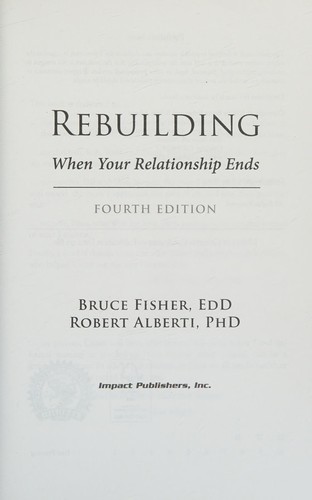
Rebuilding: When Your Relationship Ends
Bruce Fisher, EdD & Robert Alberti, PhD
Million-copy bestseller with proven 19-step divorce recovery process.
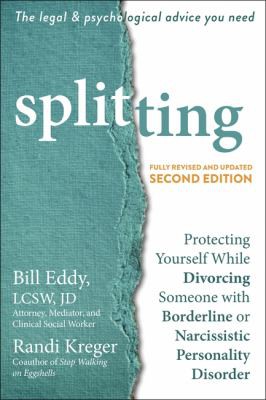
Splitting: Protecting Yourself While Divorcing Someone with Borderline or Narcissistic Personality Disorder
Bill Eddy & Randi Kreger
Updated edition covering domestic violence, alienation, false allegations in high-conflict divorce.

The High-Conflict Custody Battle
Amy J. L. Baker, PhD & J. Michael Bone, PhD
Expert legal and psychological guide to defending against false accusations in custody.
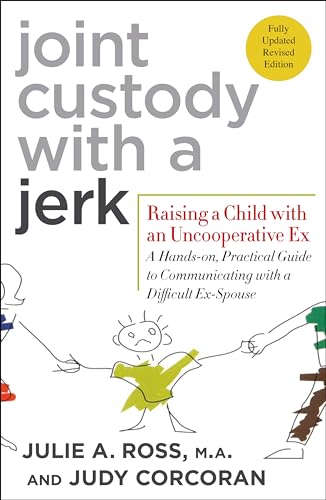
Joint Custody with a Jerk
Julie A. Ross, MA & Judy Corcoran
Proven communication techniques for co-parenting with an uncooperative ex.
As an Amazon Associate, Clarity House Press earns from qualifying purchases. Your price is never affected.
Found this helpful?
Share it with someone who might need it.
Tags
About the Author

Clarity House Press
Editorial Team
The editorial team at Clarity House Press curates and publishes evidence-based content on narcissistic abuse recovery, high-conflict divorce, and healing. Our content is informed by research, survivor experiences, and established trauma-informed approaches.
View all posts by Clarity House Press →Published by Clarity House Press Editorial Team