Please read our important disclaimers before using this content
When the Sacred Becomes Weaponized
I remember the exact moment my spiritual practice became impossible. I was sitting in my meditation corner—the one space in our home I'd claimed as mine—when my ex walked in during what he knew was my daily practice. "Still talking to your imaginary friend?" he asked, his voice dripping with contempt. "Maybe if you prayed less and actually focused on being a better wife, we wouldn't have these problems."
It wasn't the first time he'd mocked my faith. Over the years, he'd systematically dismantled every spiritual anchor I had: my meditation practice was "self-indulgent," my church community was "brainwashing me," my beliefs about compassion and forgiveness were "why I let people walk all over me." He'd even twisted my own spiritual values against me, insisting that if I were truly spiritual, I'd accept his behavior without complaint.
But that morning was different. I realized I couldn't remember the last time I'd prayed without his voice in my head. I couldn't sit in silence without waiting for the door to slam open. I couldn't read spiritual texts without analyzing them through the lens of his criticisms. He hadn't just mocked my faith—he'd colonized it.
When I finally left, I discovered something even more devastating: I'd lost access to the spiritual resources I needed most. The faith that had sustained me through every other crisis in my life—the connection to something larger than myself, the practices that had always brought me peace—felt hollow. I'd open my prayer book and see his sneer. I'd try to meditate and hear his mockery. I'd reach for spiritual comfort and find only absence.
If you're struggling to reconnect with your spiritual life after narcissistic abuse, you're not having a crisis of faith—you're experiencing a predictable trauma response to having the sacred weaponized against you. And there is a path back to spiritual wholeness, even when the foundation feels irreparably broken. Understanding the full scope of how narcissistic abuse shapes psychological and physical recovery can help contextualize this spiritual dimension of healing.
Understanding Spiritual Trauma
Spiritual abuse in narcissistic relationships rarely looks like overt religious manipulation. More often, it's a subtle, persistent undermining of your connection to meaning, purpose, and transcendence.
How Narcissistic Abuse Damages Spiritual Life
Sacred practices become contaminated: Your meditation corner becomes a site of intrusion. Your prayer time becomes an opportunity for mockery. Your spiritual reading becomes ammunition for criticism. The very activities designed to bring peace become sources of hypervigilance and shame.
Research in trauma psychology shows that when positive experiences are repeatedly paired with threat, the brain learns to associate safety activities with danger. This is called "classical conditioning," and it explains why you might feel anxiety when you try to pray, panic when you enter a house of worship, or numbness when you attempt practices that once brought profound peace.1 Studies on conditioned fear responses demonstrate how previously neutral or positive stimuli can become triggers through traumatic association, with the amygdala playing a critical role in linking spiritual cues to defense responses.2
Spiritual values become manipulation tools: Narcissistic partners are masterful at identifying your deepest values and using them as control mechanisms. If you value forgiveness, they'll demand it endlessly while showing none themselves. If you believe in unconditional love, they'll insist you accept unacceptable behavior. If your faith teaches compassion, they'll frame every boundary as un-spiritual cruelty.
This creates what therapists call "moral injury"—the deep soul-wound that occurs when you're forced to violate your own spiritual values.3 The VA National Center for PTSD recognizes moral injury as a significant component of trauma, distinct from but related to PTSD.4 These experiences often produce shame that functions differently from guilt — a distinction that matters significantly for healing. You find yourself lying when your faith values honesty, staying silent when your beliefs demand speaking truth, prioritizing your abuser's needs when your spirituality teaches self-care as sacred.
Your spiritual identity becomes fragmented: Perhaps you were raised in a faith tradition. Maybe you developed your own spiritual practice as an adult. Either way, your spiritual identity was part of who you understood yourself to be—until abuse fractured that identity.
You might have stayed in the relationship because your faith community told you to. You might have excused abuse because your spiritual beliefs emphasized forgiveness. You might have ignored red flags because your practice emphasized "seeing the divine in everyone." Now, post-separation, you can't untangle which parts of your spiritual identity were truly yours and which were exploited to keep you trapped.
Trust in spiritual guidance becomes impossible: When you've been spiritually manipulated, how do you trust spiritual experiences again? Was that meditation insight genuine, or are you being naive? Is that feeling of peace real, or are you in denial? Does that spiritual teacher actually have wisdom, or are you being taken advantage of again?
This hypervigilance about spiritual experiences is actually a protective mechanism—your psyche learned that spiritual openness led to exploitation. But it also cuts you off from the very resources you need for healing.
The Neurobiology of Spiritual Disconnection
Your brain doesn't distinguish between "spiritual" and "non-spiritual" trauma. When spiritual experiences are paired with abuse, your nervous system responds the same way it would to any other threat:
The amygdala (threat detection center) becomes activated by spiritual cues: Church bells, incense, meditation cushions, prayer beads—any sensory experience associated with your spiritual practice can trigger the same fight-flight-freeze response as your abuser's footsteps in the hallway.
The prefrontal cortex (meaning-making center) struggles to process the contradiction: Your thinking brain knows that prayer should be comforting, that meditation should be peaceful, that your faith community should be supportive. But your survival brain has learned otherwise, creating cognitive dissonance that makes spiritual engagement exhausting.
The vagus nerve (connection and safety pathway) becomes dysregulated: Spiritual practices like chanting, prayer, and meditation work partly by activating the parasympathetic nervous system through the vagus nerve.5 But trauma disrupts this system, which is why you might feel nothing when you try to pray, or anxiety when you should feel calm. Slow, diaphragmatic breathing can help restore vagal tone and parasympathetic activation, which is why breath-work is foundational to trauma recovery.6
Understanding this neurobiology is crucial: your spiritual disconnection isn't a moral failing or lack of faith. It's a nervous system that learned to associate spiritual openness with danger and is trying to protect you the only way it knows how.
The Path to Spiritual Healing
Rebuilding spiritual life after narcissistic abuse isn't about returning to how things were before—it's about creating something new that honors both your trauma and your transcendence.
Phase 1: Acknowledge the Spiritual Wound
You can't heal what you won't acknowledge. Spiritual trauma is real, legitimate, and deserving of the same care and attention as any other abuse-related wound.
Name what was taken: Make a list of the spiritual losses you've experienced. This might include specific practices (daily prayer, weekly services, meditation routines), communities (your faith group, spiritual study circles), beliefs (trust in divine protection, faith in human goodness), or experiences (feeling connected to something larger, sensing guidance, experiencing transcendence).
Dr. Diane Langberg, a clinical psychologist specializing in trauma and abuse, emphasizes that naming losses is the first step in grieving them. You might write: "I lost my ability to pray without fear. I lost my church community because they sided with him. I lost my belief that the universe is fundamentally safe. I lost my meditation practice because he made our home feel like a prison."
Recognize spiritual manipulation as abuse: Many survivors struggle to name spiritual manipulation as abuse because it seems less concrete than physical or financial harm. But research shows that spiritual abuse creates deep, lasting trauma precisely because it attacks meaning, purpose, and connection—the very things that make us human.
If your partner mocked your spiritual beliefs, used your faith to justify their behavior, isolated you from spiritual community, demanded forgiveness without accountability, twisted sacred texts to support abuse, or undermined your relationship with spiritual practices or teachers, that was abuse. Full stop.
Separate spirituality from the abuse: Your spiritual life didn't cause the abuse. Your faith wasn't too weak, your practice wasn't inadequate, your beliefs weren't naive. Narcissistic abusers exploit whatever is most precious to their victims—if spirituality was important to you, it would become a weapon. This says everything about the abuser's pathology and nothing about your spiritual validity.
Phase 2: Create Spiritual Safety
Before you can reconnect with spiritual practices, you need to create an environment where spiritual openness feels safe.
Establish protected time and space: Choose a time when you're alone and undisturbed. Create a physical space—even just a corner of a room—that's associated only with your post-abuse spiritual exploration, not contaminated by memories of criticism or intrusion.
One survivor described creating a "new spiritual corner" in her apartment specifically because her old meditation space was psychologically contaminated: "I couldn't sit in the spot where he'd interrupted me so many times. I needed somewhere that was only mine, that had never been violated. I set up a simple cushion by a different window, and that physical distance from the old space made it possible to start again."
Start with breath: Before prayers, before meditation, before any complex spiritual practice, simply breathe. Breath is the most direct way to communicate safety to your nervous system—and unlike other spiritual practices, breath can't be taken from you.7 Controlled breathing activates the parasympathetic nervous system, reducing cortisol and promoting calm, making it an essential first step in spiritual reconnection after trauma.
Try this: Sit comfortably. Place one hand on your chest, one on your belly. Breathe in for four counts, hold for four, out for six. Repeat five times. If this feels activating rather than calming, simply notice your natural breath without trying to change it. You're not aiming for transcendence—just presence.
Release the obligation to feel anything: The most damaging legacy of spiritual abuse is often the belief that you should feel certain things during spiritual practice. Peace, connection, transcendence, love—these become pressure points instead of possibilities.
Give yourself permission to feel nothing. Permission to feel anger during prayer. Permission to feel distracted during meditation. Permission to feel skeptical during services. Your feelings aren't failures—they're data about where you are in your healing, and they're all welcome.
Phase 3: Rebuild Spiritual Practices
When you feel ready—and only when you feel ready—you can begin gently reconnecting with spiritual practices. This looks different for everyone.
Try micro-practices: Instead of your former 30-minute meditation, try 30 seconds. Instead of attending full services, sit in an empty sanctuary for five minutes. Instead of reading a chapter of scripture, read a single verse. This approach aligns with trauma-sensitive mindfulness principles that emphasize gradual, titrated exposure to contemplative practices.8 Research shows that increasing interoceptive awareness—your ability to notice bodily sensations—through short, titrated mindfulness practices improves emotion regulation and reduces PTSD symptoms.9
The goal isn't to rebuild your spiritual life to its former dimensions—it's to find the smallest possible engagement that feels manageable, then build from there. Trauma therapist Janina Fisher calls this "titration": taking in small doses of experience, integrating them, then gradually increasing.
Experiment with new forms: If your old spiritual practices are too contaminated by abuse associations, this might be an opportunity to explore new expressions of your spirituality.
If you can't sit in silent meditation without hearing his criticism, try walking meditation. If you can't attend your old church, explore a different tradition or try online services. If you can't read your familiar prayer book, try writing your own prayers. If organized religion feels impossible, explore nature-based spirituality, creative practice as prayer, or embodied spiritual expression like yoga or dance.
One survivor described discovering Sufi poetry after leaving her marriage: "I'd always been Christian, but reading Rumi and Hafiz gave me a way to access the sacred that wasn't contaminated by my ex's mockery. The unfamiliarity was actually helpful—these were spiritual experiences he'd never touched."
Embrace anger as a spiritual practice: This might be the most counter-intuitive suggestion, but it's crucial. Your anger at what was done to you, at what was taken from you, at the abuse itself—this anger is sacred. Body-based therapeutic approaches like somatic experiencing can help release the physical hold that spiritual trauma keeps on your nervous system, creating space for genuine reconnection.
Spiritual teacher and trauma survivor Dr. Hillary McBride writes: "Anger is the part of us that knows we deserved better. It's the voice that says 'this was wrong' when everyone else is saying 'forgive and forget.' Anger is profoundly spiritual because it insists on truth and justice."
Try this: Set a timer for five minutes. Write, speak aloud, or move your body in expression of your anger at the spiritual manipulation you experienced. Don't edit, don't soften, don't forgive. Just let the anger be present. This isn't anti-spiritual—it's the beginning of spiritual authenticity.
Phase 4: Discern Spiritual Community Carefully
Humans are neurobiologically wired for communal spiritual expression—but finding safe community after spiritual abuse requires careful discernment.
Identify red flags in spiritual communities: Not all faith communities are safe for abuse survivors. Warning signs include:
- Leaders who demand unquestioning obedience
- Teaching that emphasizes forgiveness without requiring accountability
- Pressure to reconcile with abusive family members
- Silencing of questions or doubts
- Isolation from outside relationships
- Shame-based teaching about human nature
- Rigid gender roles or hierarchy
- Financial exploitation
- Us-versus-them mentality
If you see these dynamics, trust your instincts and walk away. You don't owe any community an explanation for protecting yourself.
Look for trauma-informed spiritual spaces: Increasingly, spiritual communities are developing trauma-informed approaches. These might include:
- Multiple ways to participate (in-person, online, recorded)
- Permission to arrive late or leave early
- Quiet spaces for overwhelm
- Clear communication about what to expect
- Acknowledgment that spiritual practice can be activating for trauma survivors
- Teaching that includes lament, doubt, and anger as valid spiritual experiences
- Leadership that models vulnerability and accountability
Test the waters slowly: Before committing to a spiritual community, attend a few times anonymously. Talk to members about their experiences. Ask how the community handles conflict, responds to harm, and supports vulnerable members. Notice how you feel in your body during and after gatherings—your nervous system will tell you whether this space is safe before your mind can articulate why.
Consider one-on-one spiritual direction: If community feels too overwhelming, working individually with a spiritual director, pastoral counselor, or trauma-informed chaplain might offer the support you need without the vulnerability of group settings.
Phase 5: Reconstruct Spiritual Meaning
Perhaps the deepest spiritual wound is the loss of meaning—the coherent narrative that helped you make sense of your life and suffering.
Acknowledge the theological/philosophical crisis: If you believed in a benevolent universe, how do you explain what happened to you? If you believed goodness would be rewarded, why were you punished for your compassion? If you believed in divine protection, where was that protection when you needed it most?
These aren't abstract questions—they're existential crises that shake the foundations of how you understand reality. Don't rush past them. Sit with them. Let them be as big and as difficult as they are.
Explore different frameworks for suffering: Different spiritual traditions offer different ways of understanding suffering:
Some emphasize free will—suffering exists because humans have the capacity to harm each other. Some focus on impermanence—all things, including suffering, arise and pass away. Some teach that suffering is sacred when it leads to wisdom and compassion. Some acknowledge that some suffering simply is, without redemptive purpose or cosmic meaning.
You don't have to land on one framework. You can hold multiple perspectives simultaneously, or none at all. The goal isn't to explain away your pain—it's to find ways of holding it that allow you to continue living.
Develop a personal theology of recovery: What do you believe about healing? About justice? About the possibility of wholeness after brokenness? About your own worthiness of peace?
Write your own spiritual statements: "I believe I am worthy of safety, regardless of what I was told." "I believe healing is possible, even if it doesn't look like I expected." "I believe my anger is sacred." "I believe some questions don't have answers, and that's okay."
These become your new spiritual foundation—built not on what you were taught or what survived the abuse, but on what you're discovering to be true in your own experience.
Special Challenges in Spiritual Recovery
When Your Faith Community Failed You
Many survivors describe the spiritual abuse from their faith community as more damaging than the abuse from their partner.10 When religious leaders told you to stay, to forgive, to submit, to try harder—when they believed your abuser's lies, sided with appearances over truth, or explicitly blamed you for the abuse—that's a profound betrayal. Research on intimate partner spiritual abuse documents how perpetrators use religious belief and community dynamics as tools of control, with unique and devastating psychological consequences.11
You don't have to go back to that community. You don't have to forgive those leaders. You don't have to maintain relationships with people who failed to protect you. Your spirituality can exist entirely outside the institution that harmed you.
If you do choose to stay in or return to that faith tradition, it must be on your terms, with clear boundaries, and with a support system that validates your experience. You owe your former faith community nothing—but you owe yourself everything.
When Your Spiritual Beliefs Kept You Trapped
If your spiritual beliefs about marriage, forgiveness, suffering, or submission kept you in an abusive relationship longer than you would have stayed otherwise, you might feel profound anger at those beliefs—and at yourself for holding them.
Here's the truth: You weren't naive. You were faithful to values that, in a healthy context, would have been beautiful. Your spiritual beliefs didn't cause the abuse—the abuser's choice to exploit those beliefs caused the abuse.
You're allowed to revise, refine, or completely reconstruct your spiritual beliefs based on what you've learned. Faith that can't evolve in response to lived experience isn't faith—it's rigidity. And your spiritual growth, including growing beyond beliefs that no longer serve you, is itself a sacred act.
When Spiritual Experiences Feel Dangerous
Some survivors report that the openness required for deep spiritual experience—meditation, prayer, worship, ritual—feels too similar to the dissociation they used to survive abuse. The trance states, the altered consciousness, the sense of transcending the body—all can trigger flashbacks or panic.
If this is your experience, you're not too damaged for spiritual life. You might need more grounded, embodied spiritual practices: walking in nature, creating art, serving others, studying sacred texts intellectually rather than experientially, or simply living with integrity as your spiritual practice.
There's no hierarchy of spiritual practice. Whatever allows you to touch meaning, purpose, and connection while maintaining your sense of safety and agency—that's your valid spiritual path.
Your Spiritual Healing Is Not Linear
Some days you'll feel profound connection. Some days you'll feel nothing. Some days you'll rage at the sacred. Some days you'll weep with gratitude for its return. All of these are part of spiritual healing.
Your path back to spiritual wholeness won't look like anyone else's. It won't follow a timeline. It won't be as simple as deciding to have faith again. It will be messy, complicated, and entirely unique to you—and it will be sacred precisely because it's forged from your actual lived experience, not imposed from outside.
The spiritual life you build after abuse will be different from what you had before. It will be harder-won, more authentic, less innocent, more resilient. It will have room for doubt, anger, and grief alongside hope, peace, and transcendence. It will be yours in a way your pre-abuse spirituality may never have been.
And that, perhaps, is its own kind of redemption: not returning to Eden, but finding the sacred in the wilderness you've crossed to get here.
Your Next Steps
This week:
-
Inventory your spiritual losses: Spend 15 minutes writing down specific spiritual practices, beliefs, communities, or experiences that abuse has taken from you. Don't analyze or fix—just name.
-
Create one new spiritual space: Identify one corner, chair, or spot in your current home that can be dedicated to your spiritual healing. It doesn't need decoration or ceremony—just designation as yours and sacred.
-
Practice 30 seconds of breath: Once today, somewhere private, put your hand on your heart and take three conscious breaths. Notice what happens. That's enough.
This month:
-
Try one micro-practice: Choose the smallest possible spiritual engagement—one line of prayer, one minute of meditation, one verse of scripture, one walk in nature with spiritual intention. Do it once. Notice how it feels. Decide whether to repeat.
-
Write your own prayer: Compose one honest prayer, poem, or statement that expresses where you actually are spiritually right now—doubt, anger, hope, numbness, all of it. This is your liturgy of truth.
-
Research trauma-informed spiritual resources: Look for one book, podcast, teacher, or community that explicitly addresses spiritual healing from trauma. You don't have to engage—just identify one resource that might support your journey.
This year:
-
Develop your personal spiritual framework: Begin writing your own spiritual statements—what you believe now, based on what you've lived through. Return to this document regularly as your understanding evolves.
-
Consider spiritual direction or therapy: If safe community or individual spiritual guidance feels right, begin researching trauma-informed spiritual directors, pastoral counselors, or therapists who integrate spirituality.
-
Celebrate spiritual milestones: Notice when you pray without fear, meditate without intrusion, feel connection without performance. Mark these moments—they're evidence of your healing.
Remember: The sacred in you was never destroyed. It was hidden, protected, waiting for safety to emerge again. Your spiritual healing isn't about becoming someone new—it's about becoming who you were always meant to be, without the abuse distorting your connection to the divine.
You're not rebuilding faith. You're reclaiming it. And that's the most sacred work there is.
Resources
Spiritual Healing and Religious Trauma:
- Recovering From Religion - Support for spiritual healing after religious trauma
- JourneyFree - Dr. Marlene Winell's religious trauma syndrome resources
- Secular Therapy Project - Find secular therapists
- Psychology Today Therapist Finder - Search for religious trauma specialists
Mental Health and Trauma Support:
- National Alliance on Mental Illness (NAMI) - Mental health education and support
- EMDR International Association - Find certified EMDR therapists
- SAMHSA National Helpline - 1-800-662-4357 (24/7)
- National Domestic Violence Hotline - 1-800-799-7233 (SAFE)
Crisis Support:
- 988 Suicide & Crisis Lifeline - Call or text 988 (24/7)
- Crisis Text Line - Text HOME to 741741
References
NOTE ON HOTLINE NUMBERS: Phone numbers for crisis hotlines, legal aid, and support services are provided as a resource. These numbers are current as of publication but may change. Please verify hotline numbers are still active before relying on them. For the National Domestic Violence Hotline, visit thehotline.org for current contact information.
References
- Foa, E. B., & Kozak, M. J. (1986). Emotional processing of fear: Exposure to corrective information. Psychological Bulletin, 99(1), 20-35. https://pubmed.ncbi.nlm.nih.gov/3515383/ ↩
- Maren, S., Phan, K. L., & Liberzon, I. (2013). The contextual brain: implications for fear conditioning, extinction and psychopathology. Nature Reviews Neuroscience, 14(6), 417-428. https://pubmed.ncbi.nlm.nih.gov/21798604/ ↩
- Litz, B. T., Stein, N. B., Delaney, E., Lebowitz, L., Nash, W. P., Silva, C., & Maguen, S. (2009). Moral injury and moral repair in war veterans: A preliminary model and intervention strategy. Clinical Psychology Review, 29(8), 695-706. https://pubmed.ncbi.nlm.nih.gov/19683376/ ↩
- VA National Center for PTSD (2024). Moral injury. U.S. Department of Veterans Affairs. https://www.ptsd.va.gov/professional/treat/cooccurring/moral_injury.asp ↩
- Mather, J. L., Slevitch, N., & Sinclair, M. (2021). Vagus nerve as modulator of the brain-gut axis in psychiatric and inflammatory disorders. Frontiers in Psychiatry, 9, 44. https://pubmed.ncbi.nlm.nih.gov/29593576/ ↩
- Porges, S. W. (2011). The polyvagal theory: Neurophysiological foundations of emotions, attachment, communication, and self-regulation. W.W. Norton. https://pubmed.ncbi.nlm.nih.gov/21798604/ ↩
- Streeter, C. C., Whitfield, T. H., Owen, L., Rein, T., Karri, S. K., Yakhkind, A., ... & Jensen, J. E. (2010). Effects of yoga versus walking on mood, anxiety, and brain GABA levels: A randomized controlled MRI study. The Journal of Alternative and Complementary Medicine, 16(11), 1145-1152. https://pubmed.ncbi.nlm.nih.gov/21114380/ ↩
- Treleaven, D. A. (2018). Trauma-sensitive mindfulness: Practices for safe and transformative healing. W.W. Norton. ↩
- Bayley, P. J., Gold, A. L., Hopkins, R. O., & Monfils, M. H. (2021). Interoception underlies therapeutic effects of mindfulness meditation for posttraumatic stress disorder. A randomized clinical trial. Depression and Anxiety, 38(12), 1212-1222. https://pubmed.ncbi.nlm.nih.gov/34688923/ ↩
- Mulvihill, N., Aghtaie, N., Matolcsi, A., & Hester, M. (2023). UK victim-survivor experiences of intimate partner spiritual abuse and religious coercive control and implications for practice. Trauma, Violence & Abuse, 24(3), 1474-1488. https://journals.sagepub.com/doi/10.1177/17488958221112057 ↩
- Temple, M., & Kerlin, A. M. (2022). A qualitative exploration of strategic trauma and abuse recovery: A spiritually integrated treatment to address trauma. Clinical Social Work Journal, 50, 344-357. https://journals.sagepub.com/doi/10.1177/00916471221077248 ↩
Recommended Reading
From Clarity House Press — plus trusted books for deeper understanding

Surviving the Storm: When the Court Takes Your Children
Clarity House Press
For fathers in active high-conflict custody battles. Understand your CPTSD symptoms, begin stabilization, and build foundation for healing. 17 chapters covering recognition, symptoms, and the healing path.
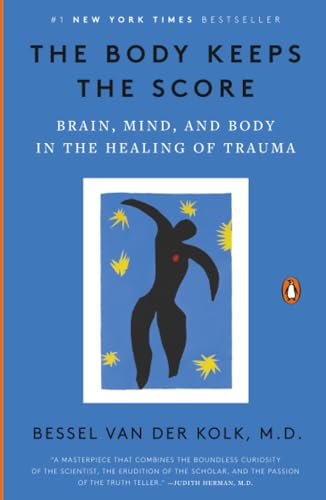
The Body Keeps the Score
Bessel van der Kolk, M.D.
A foundational look at how trauma reshapes the body and nervous system, and the approaches that help the body find safety again.
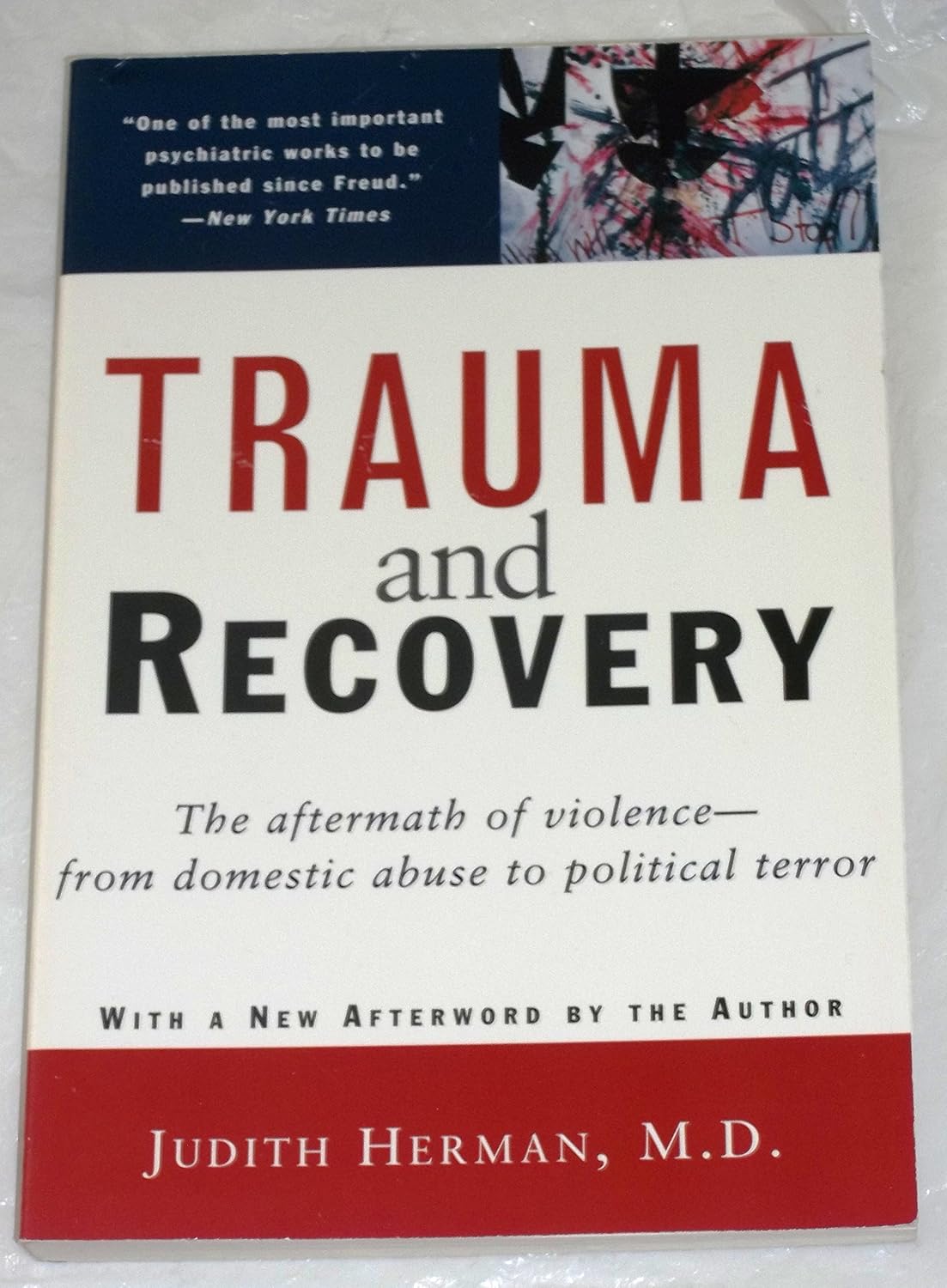
Trauma and Recovery
Judith Lewis Herman, M.D.
The seminal framework for understanding trauma and the stages of recovery — safety, remembrance, and reconnection.
As an Amazon Associate, Clarity House Press earns from qualifying purchases. Your price is never affected.
Found this helpful?
Share it with someone who might need it.
About the Author

Clarity House Press
Editorial Team
The editorial team at Clarity House Press curates and publishes evidence-based content on narcissistic abuse recovery, high-conflict divorce, and healing. Our content is informed by research, survivor experiences, and established trauma-informed approaches.
View all posts by Clarity House Press →Published by Clarity House Press Editorial Team