Please read our important disclaimers before using this content
"You don't trust anyone," my friend observed. We were discussing my reluctance to date two years after my divorce.
She wasn't wrong. I didn't trust anyone. But what she framed as a problem, I experienced as protection.
The person I'd trusted most in the world had systematically lied to me for years. He'd manipulated my reality, weaponized my vulnerabilities, and maintained a perfect facade while destroying me privately.
I trusted him completely. That trust had nearly cost me everything.
Now, my nervous system treated trust itself as dangerous. Every new connection activated alarm systems. Every vulnerability felt like walking toward a cliff edge. Every time someone seemed kind, I waited for the inevitable revelation that it was performance hiding exploitation.
My friend thought two years was enough time to "move on." My body knew differently.
Betrayal trauma—the specific harm that comes from intentional deception and exploitation by someone you trusted—doesn't heal on convenient timelines. Research shows that between 30% and 60% of betrayed individuals experience symptoms of PTSD, depression, and anxiety to clinically meaningful levels.1 It rewires your nervous system, alters your assessment of safety, and fundamentally changes how you relate to other people.
Rebuilding trust isn't about deciding to be less damaged. It's about slowly, carefully teaching your system that trust is possible again while honoring the protection mechanisms that kept you alive. Understanding the broader landscape of narcissistic abuse and complex PTSD can help explain why betrayal trauma runs so deep.
Understanding Betrayal Trauma
Betrayal trauma occurs when someone you depend on or trust violates that trust through intentional harm.2 Research by Jennifer Freyd and colleagues has documented the unique psychological impact of this type of trauma.
The harm comes not just from what happened, but from who did it.
Physical assault by a stranger is traumatic. Physical assault by your spouse is betrayal trauma. Financial fraud by a corporation is harmful. Financial abuse by your partner is betrayal trauma.
Betrayal trauma specifically damages your capacity for trust because the mechanism that's supposed to keep you safe—your ability to recognize who's trustworthy—failed catastrophically.
You trusted the wrong person with access to your most vulnerable self. They used that access to harm you. Your trust system didn't just fail once; it failed repeatedly over time while you adjusted your perception to match their lies.
The result is both hypervigilance and self-doubt.
Hypervigilance: scanning constantly for danger signals, interpreting ambiguous situations as threatening, maintaining distance from anything that could possibly hurt you.
Self-doubt: if you couldn't recognize untrustworthy behavior in someone you loved, how can you trust your judgment now? Maybe everyone else sees what you're missing. Maybe you're the problem.
This combination creates paralysis. You can't trust others and you can't trust yourself to assess others accurately.
What Betrayal Trauma Does to Your System
Narcissistic abuse creates specific trauma responses that affect trust rebuilding.
Your threat detection system recalibrates. Behaviors that seemed normal or loving in your abusive relationship now trigger alarm responses. Someone who's attentive might be love-bombing. Someone who's generous might be creating obligation. Someone who seems perfect might be performing.
You're not paranoid. You're pattern-matching based on experience.3
Your nervous system remains dysregulated. Betrayal trauma often creates chronic hyperarousal—your system stays in a state of high alert, ready to detect and respond to threats.4
This isn't a choice. It's a physiological state that makes calm presence with others difficult.
Your attachment system is disrupted. Healthy attachment involves approaching connection as safe and desirable. Betrayal trauma creates disorganized attachment5—research shows this manifests as simultaneous desire for connection and terror of vulnerability.
You want intimacy and push it away in the same breath.
Your reality testing becomes complicated. You learned that your perception couldn't be trusted, that what seemed real wasn't, that your gut instincts led you into danger.
Now, even when you notice red flags, you question whether you're seeing things clearly or projecting trauma onto innocent situations.
Your tolerance for normal relationship friction disappears. Small conflicts, misunderstandings, or disappointments that healthy relationships navigate easily feel catastrophic.
Your system learned that small cracks are previews of major faults, that minor lies predict major deceptions, that any criticism is the beginning of systematic devaluation.
The Problematic "Just Trust Again" Narrative
Well-meaning people often encourage trust rebuilding with advice that ranges from unhelpful to actively harmful.
"Not everyone is like your ex." This is statistically true and emotionally meaningless. Knowing that not everyone is abusive doesn't make your nervous system feel safe with new people.
"You have to take risks to find love." Risk-taking when your risk assessment is damaged isn't brave—it's dangerous. You need to rebuild judgment before you can take healthy risks.
"If you don't trust, you'll push everyone away." This frames your protective response as the problem rather than recognizing it as adaptation to real danger. You're not pushing people away randomly; you're maintaining boundaries while your system heals.
"Trust is a choice." Trust has components of choice, but it's built on neurological and physiological foundations. You can't choose your way out of trauma-based hypervigilance.6
"Therapy will fix your trust issues." Therapy helps process trauma and develop new patterns—particularly evidence-based approaches like EMDR7—but it doesn't provide shortcuts through the slow work of nervous system regulation and evidence gathering about new relationships.
"Two years should be enough time to move on." There's no universal timeline for betrayal trauma recovery. Your healing proceeds at the pace that serves your nervous system, not arbitrary social timelines.
These narratives share a common flaw: they treat betrayal trauma as a thinking problem solvable through cognitive adjustment rather than a nervous system injury requiring physiological healing.
Distinguishing Protection from Trauma Response
Not all post-betrayal caution is maladaptive. Some of it is legitimate pattern recognition and boundary-setting.
Healthy protection:
- Taking time to know someone before trusting them with vulnerability
- Noting red flags and acting on them instead of dismissing your concerns
- Maintaining boundaries appropriate to relationship depth
- Ending relationships when behavior patterns prove problematic
- Choosing to be selective about who has access to you
Trauma response:
- Assuming every kindness is manipulation
- Ending relationships at the first sign of imperfection
- Never allowing anyone close enough to know you
- Testing people excessively to prove they'll fail
- Interpreting all ambiguous situations as threatening
- Recreating isolation because nothing feels safe
The difference often lies in flexibility and proportionality.
Healthy protection adapts to evidence. If someone consistently demonstrates trustworthy behavior, you're able to incrementally increase trust. If they demonstrate untrustworthy behavior, you're able to pull back or exit.
Trauma responses are rigid. Everyone is either completely safe or completely dangerous. No amount of positive evidence shifts your assessment because your system won't update based on new information.
Both can coexist. You might have healthy boundaries about not sharing financial information early in relationships while also having trauma responses that prevent any emotional vulnerability ever.
Healing involves strengthening the healthy protection while gently challenging the trauma responses that keep you completely isolated.
What Trust Rebuilding Actually Looks Like
Trust doesn't return all at once or evenly. It's rebuilt incrementally, in specific contexts, with specific people, through accumulated evidence over time.
Trust is contextual, not global. You might trust your therapist with emotional vulnerability but not with financial decisions. You might trust a friend with logistics but not with deep emotional needs. You might trust a new partner with some aspects of yourself while maintaining boundaries around others.
This isn't inconsistency—it's appropriate calibration.
Trust develops through testing. Not deliberate tests (which are trauma responses), but natural relationship experiences that reveal how someone handles various situations.
Do they follow through on commitments? Do they respect your boundaries? Do they respond appropriately to your needs? Do they take accountability when they make mistakes? Do they show up consistently over time?
Small positive experiences accumulate into patterns that your nervous system can begin to recognize as different from betrayal patterns.
Trust rebuilding requires risk titration. You can't hide forever, but you also don't have to immediately become fully vulnerable.
You take small risks—sharing slightly more than feels completely safe—and notice what happens. If the response is trustworthy, you take another small risk. If it's not, you pull back and reassess.
This is different from trust in relationships that haven't been marked by betrayal, where you might naturally share deeply without such careful calibration.
Trust develops at different rates with different people. Someone who's been through similar experiences might feel safer faster because they understand without explanation. Someone with very secure attachment might feel threatening because their ease with intimacy triggers your hypervigilance.
There's no right pace or type of person that automatically feels safe.
Trust rebuilding includes learning to trust yourself. Can you trust your read of situations? Can you trust that you'll notice red flags? Can you trust that you can handle it if someone proves untrustworthy?
This self-trust is foundational. Without it, no amount of evidence about others' trustworthiness feels sufficient.
The Role of Nervous System Healing
Trust rebuilding isn't primarily a cognitive process. It's a nervous system recalibration that happens through felt safety over time.
Your system needs to learn that connection can be safe. This doesn't happen through thinking about it. It happens through embodied experiences of being with others and remaining safe.
Somatic practices help. Yoga, dance, martial arts, bodywork, breathwork—practices that work with your physical body and nervous system8—research shows these create foundation for emotional trust by regulating the autonomic nervous system.
When your body can regulate and feel safe in general, it becomes possible to feel safe with specific people.
Titrated social connection builds capacity. Time with people who feel safest, in doses that don't overwhelm your system, gradually expands your window of tolerance for connection.
This might start with very brief interactions or highly boundaried contexts (support groups, time-limited activities) before building to more open-ended intimate connection.
Co-regulation with safe people helps. Being with someone whose nervous system is regulated can help regulate yours. This is part of why therapy works—the therapist's calm presence provides external regulation that your system can begin to internalize.
Safety cues matter. Your system scans constantly for signals of safety or threat. Learning to identify and prioritize safety cues (consistency, respect for boundaries, appropriate emotional responses) helps you distinguish between safe people and dangerous patterns disguised as safety.
Timelines and Expectations
How long does trust rebuilding take? The unsatisfying answer is: it depends.
Factors that affect timeline:
- Length and severity of the betrayal trauma
- Whether you've had previous betrayal trauma (childhood, earlier relationships)
- Quality of current support system
- Access to trauma-informed therapy
- Nervous system regulation capacity
- Whether you're still dealing with the person who betrayed you (co-parenting, shared community)
- Your own attachment history and resilience factors
General patterns many survivors experience:
First year post-betrayal: Acute trauma responses, difficulty distinguishing between self-protection and isolation, minimal capacity for new vulnerability.
Years 2-3: Nervous system begins to settle, can tolerate some connection with careful boundaries, starting to rebuild self-trust.
Years 3-5: Can engage in meaningful relationships with continued caution, trauma responses are less constant though still triggered in specific contexts.
Years 5+: Trust capacity continues expanding though may never return to pre-betrayal baseline. Some hypervigilance may remain as permanent recalibration.
These are rough patterns, not prescriptions. Some people rebuild trust faster, some slower. Neither is failure.
What matters more than timeline is trajectory. Are you able to tolerate slightly more connection than you could last year? Can you take marginally larger risks? Do you have any relationships where you experience moments of safety?
Progress isn't linear and isn't measured by whether you're "back to normal." It's measured by slow expansion of what feels possible.
Trust in New Romantic Relationships
Romantic relationships involve the vulnerability most directly wounded by narcissistic abuse, making them particularly complex territory for trust rebuilding.
You may need extended time before dating. Not everyone does, but many survivors need significant healing before they can engage in romantic connection without recreating trauma patterns.
There's no shame in taking years before dating. You're not "wasting time"—you're healing.
Early dating will likely activate trauma responses. The intensity of new romantic connection, even when healthy, can trigger your system's association between intimacy and danger.
Knowing this is normal helps you distinguish between "this person is dangerous" and "my system is responding to intimacy as dangerous."
You'll need to communicate about your needs. Partners who haven't experienced betrayal trauma may not understand why you need extra time, clear communication, or specific reassurances.
Being able to articulate what you need—"I need to move slowly physically," "I need you to follow through on commitments consistently," "I need direct communication, not hints"—helps healthy partners support your healing.
You'll encounter people who aren't equipped to handle your healing. Some people need relationships to move at specific paces or can't handle the complexity of partnering with someone healing from trauma.
This doesn't mean you're too damaged. It means they're not the right match for where you are.
Red flags will trigger strong responses. This is protective. The key is developing capacity to notice red flags, assess whether they're dealbreakers, and act accordingly without either dismissing your concerns or ending everything at the first imperfection.
Healthy people will respect your pace. Someone who pressures you to trust faster, dismisses your needs for boundaries, or makes you feel damaged for your caution is demonstrating that they're not safe.
Someone who meets your needs with patience, maintains consistency, and accepts your timeline is providing evidence of trustworthiness.
Learning to Trust Your Judgment
One of the deepest wounds from narcissistic abuse is loss of faith in your own perception.
You trusted someone untrustworthy. Therefore, you conclude, you can't trust your judgment about who's trustworthy. Every assessment feels suspect.
Rebuilding self-trust requires understanding why you trusted the wrong person.
Often, you trusted them because:
- They were skilled at deception
- They exploited normal trust-building processes
- You had vulnerabilities they targeted
- You had attachment patterns that made their manipulation effective
- You prioritized hope and relationship preservation over warning signs
None of these mean your judgment is fundamentally broken. They mean you encountered sophisticated manipulation in a context that made you vulnerable.
Rebuilding judgment involves:
Learning what you missed. Not to punish yourself, but to understand what red flags looked like so you can recognize them earlier next time.
Understanding your vulnerabilities. What made you susceptible to that specific manipulation? These vulnerabilities may be sites of healing work, but they're also human qualities (compassion, hope, commitment) that aren't flaws.
Practicing assessment in low-stakes situations. You can practice noticing your gut responses, identifying what feels off, and acting on those instincts with people who matter less to you (acquaintances, service providers, casual friendships).
Getting external perspectives. Trusted friends, therapists, or support group members can provide reality checks when you're uncertain about your read of situations.
Trusting small instincts first. You don't have to immediately trust major judgment calls. Start with noticing and trusting small instincts—"this feels uncomfortable," "that sounded off," "I want to leave"—and acting on them.
Building evidence that you can recognize safe people. As you develop relationships with people who prove trustworthy, you gather evidence that your judgment can work.
Supporting Your Own Process
Trust rebuilding isn't something that happens to you—it's an active process you can support.
Choose relationships consciously. You get to be selective about who has access to you while you heal. People who pressure you, dismiss your needs, or can't respect your pace aren't required relationships.
Practice vulnerability titration. Share slightly more than feels completely safe and notice what happens. Build vulnerability incrementally rather than all at once or never.
Develop emotional vocabulary. Being able to name what you're feeling—anxious vs. gut warning, trauma response vs. legitimate concern—helps you sort through complex internal experiences. Our guide to distinguishing real danger from trauma responses can help with this specific skill.
Create safety in other areas. If relationships feel too risky, develop safety and trust through other avenues—with pets, in nature, through creative practice, in spiritual connection.
Track evidence. When you notice someone being trustworthy, mark it mentally or in writing. Accumulated evidence helps your nervous system update its threat assessment.
Get support. Therapy, support groups, and trusted friends who understand betrayal trauma can help you process as you rebuild.
Be patient with yourself. Trust rebuilding isn't linear. Some days feel like progress, others like you're back at the beginning. This is normal.
Honor your protection. Your caution isn't a problem to fix. It's a protective response that kept you alive. As you heal, it will soften naturally. You don't have to force it.
When Trust Feels Impossible
Sometimes despite time and therapeutic work, trust feels completely inaccessible. Connection seems permanently dangerous. Isolation feels like the only safety.
This can indicate:
- Complex PTSD requiring more intensive treatment
- Ongoing contact with the person who betrayed you, preventing nervous system settling
- Unprocessed trauma from earlier in life that the betrayal activated
- Insufficient support or resources for your healing
- Nervous system dysregulation that needs somatic intervention
It doesn't mean:
- You're broken beyond repair
- You'll never trust again
- You should force yourself to connect before you're ready
- Something is wrong with you
If trust feels completely impossible:
Consider whether you need different or additional therapeutic approaches. Trauma-specific modalities (EMDR, somatic therapy, neurofeedback) might help where talk therapy alone hasn't.
Assess whether ongoing contact with your abuser is preventing healing. If you're co-parenting or otherwise required to interact regularly, you may need parallel support systems while that contact continues.
Explore whether there's unresolved trauma from earlier in life. Often narcissistic abuse in adulthood activates childhood wounds that also need healing.
Build capacity for non-romantic connection. Friendship, community involvement, volunteer work, or group activities create trust-building opportunities with lower stakes than romantic relationships.
Remember that healing isn't required to happen on anyone else's timeline. Some wounds take years. Some leave permanent sensitivity. That's real, not failure.
Your Next Steps
Assessment:
- Notice where you are in trust rebuilding—can you tolerate connection with anyone? Are some relationships easier than others?
- Identify whether your caution is mostly healthy protection or trauma response
- Recognize your specific trust wounds and what they need for healing
Nervous system support:
- Engage somatic practices that help regulation
- Build capacity for co-regulation with safe people
- Notice and cultivate safety cues in your environment
- Practice titrated exposure to connection
Relationship navigation:
- Choose consciously who has access to you during healing
- Communicate your needs clearly in new relationships
- Practice vulnerability in small increments
- End relationships that don't respect your pace
Self-trust building:
- Understand what made you vulnerable to manipulation
- Practice trusting small instincts
- Get external reality checks when you doubt your perception
- Gather evidence of your capacity to recognize safe people
Long-term perspective:
- Release timeline expectations
- Honor protection while gently expanding capacity
- Seek support appropriate to your needs
- Trust that healing continues even when it's not visible
Resources
Finding Trauma-Informed Therapy:
- Psychology Today - Therapists - Find trauma and betrayal specialists
- EMDR International Association - Find EMDR therapists for trauma processing
- GoodTherapy - Search for betrayal trauma specialists
- IFS Institute - Find Internal Family Systems practitioners
Crisis Support and Resources:
- National Domestic Violence Hotline - 1-800-799-7233 (SAFE) for safety planning
- 988 Suicide & Crisis Lifeline - Call or text 988 for crisis support (24/7)
- Crisis Text Line - Text HOME to 741741 for crisis counseling
- RAINN National Sexual Assault Hotline - 1-800-656-4673 for sexual assault support
References
Note on Research Quality: All citations included in this article are peer-reviewed academic sources from PubMed Central, academic journals, and published clinical guides from the International Society for Traumatic Stress Studies (ISTSS), Department of Veterans Affairs, and other government research institutions. This information is presented for educational purposes and should complement, not replace, professional mental health treatment.
References
- Goldsmith, R. E., Freyd, J. J., & DePrince, A. P. (2012). Betrayal trauma: Associations with psychological and physical health in young adults. Journal of Interpersonal Violence, 27(3), 547-567. https://journals.sagepub.com/doi/10.1177/0886260511421672 ↩
- Freyd, J. J. (1996). Betrayal trauma: The logic of forgetting childhood abuse. Harvard University Press. ↩
- Flaherty, & Sadler (2011). A review of attachment theory in the context of adolescent parenting.. Journal of pediatric health care : official publication of National Association of Pediatric Nurse Associates & Practitioners. https://pmc.ncbi.nlm.nih.gov/articles/PMC3051370/ ↩
- van der Kolk, B. (2014). The body keeps the score: Brain, mind, and body in the healing of trauma. Viking Penguin. See also: Payne, P., Levine, P. A., & Crane-Godreau, M. A. (2015). Somatic experiencing: Using interoception as a vehicle for psychological healing. Frontiers in Psychology, 6, 93. https://www.ncbi.nlm.nih.gov/pmc/articles/PMC4219936/ ↩
- Testa, R. J., & Donaldson, W. (2012). The associations among betrayal trauma, dissociation, and non-suicidal self-injury in college-going women. Psychology of Trauma: Theory, Research, Practice, and Policy, 4(2), 208-215. https://pubmed.ncbi.nlm.nih.gov/29884098/ ↩
- Najavits, L. M., Schmitz, M., Gotthardt, S., & Weiss, R. D. (2005). Seeking safety plus community reinforcement and family training for women with PTSD and substance use disorder: A randomized controlled trial. Journal of Clinical Psychiatry, 66(3), 338-345. https://www.ncbi.nlm.nih.gov/pmc/articles/PMC8682852/ ↩
- Jongh, A. D., Resick, P. A., & Zoellner, L. A. (2024). State of the science: Eye movement desensitization and reprocessing (EMDR) therapy. Journal of Traumatic Stress, 37(1), 15-28. https://onlinelibrary.wiley.com/doi/10.1002/jts.23012 ↩
- Shapiro, F. (2001). Eye Movement Desensitization and Reprocessing (EMDR): Basic principles, protocols, and procedures (2nd ed.). Guilford Press. See also: Seidler, G. H., & Wagner, F. E. (2006). Comparing the efficacy of EMDR and trauma-focused CBT in the treatment of PTSD: a meta-analytic study. Psychological Medicine, 36(11), 1515-1522. https://pubmed.ncbi.nlm.nih.gov/16740177/ ↩
Recommended Reading
From Clarity House Press — plus trusted books for deeper understanding

Surviving the Storm: When the Court Takes Your Children
Clarity House Press
For fathers in active high-conflict custody battles. Understand your CPTSD symptoms, begin stabilization, and build foundation for healing. 17 chapters covering recognition, symptoms, and the healing path.
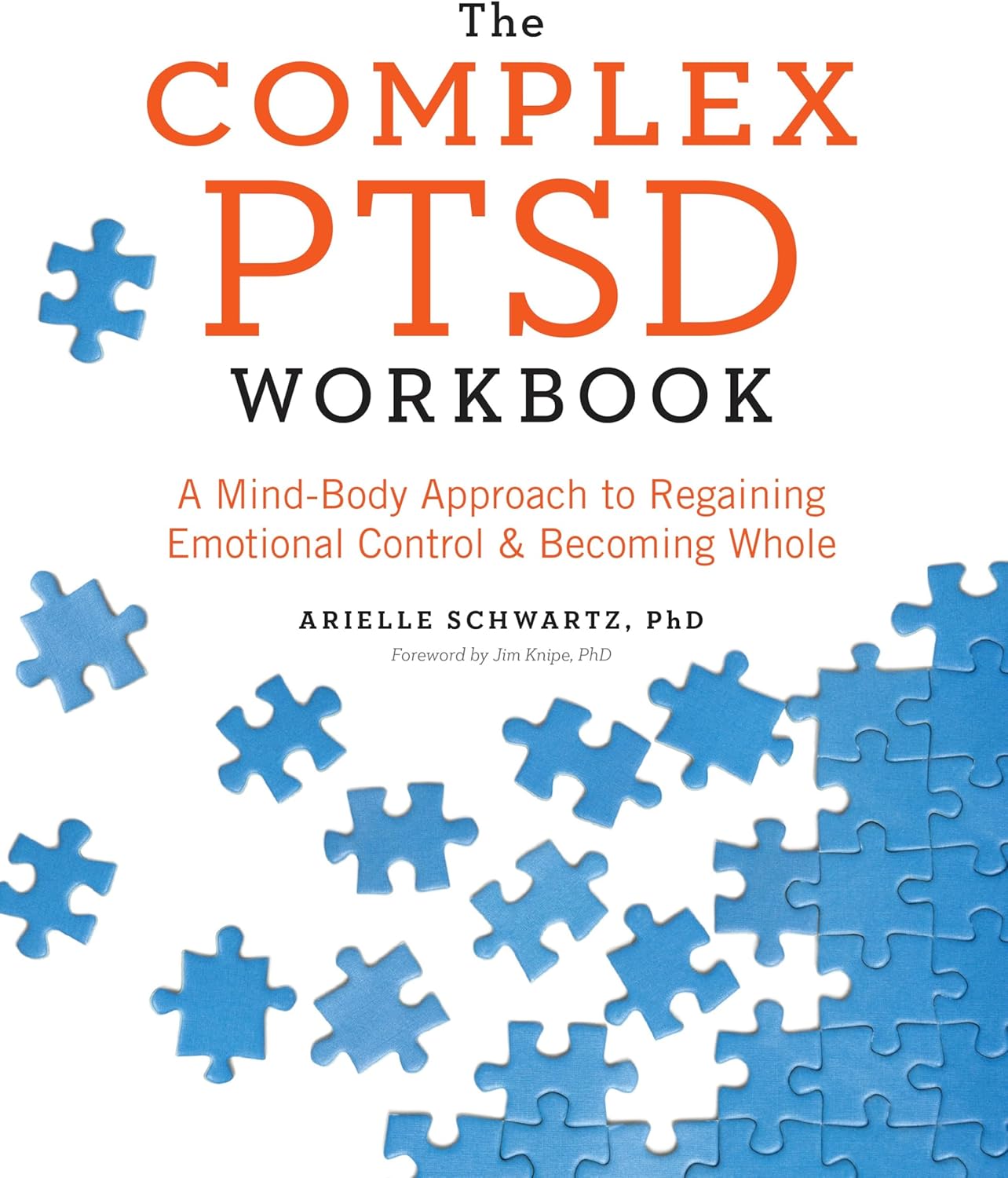
The Complex PTSD Workbook
Arielle Schwartz, PhD
A mind-body approach to regaining emotional control and becoming whole with evidence-based exercises.
In an Unspoken Voice
Peter A. Levine, PhD
Classic guide from the creator of Somatic Experiencing revealing how the body holds the key to trauma recovery.
As an Amazon Associate, Clarity House Press earns from qualifying purchases. Your price is never affected.
Found this helpful?
Share it with someone who might need it.
About the Author

Clarity House Press
Editorial Team
The editorial team at Clarity House Press curates and publishes evidence-based content on narcissistic abuse recovery, high-conflict divorce, and healing. Our content is informed by research, survivor experiences, and established trauma-informed approaches.
View all posts by Clarity House Press →Published by Clarity House Press Editorial Team