Please read our important disclaimers before using this content
After surviving narcissistic abuse, you have developed heightened awareness of potential danger.1 Your nervous system learned to detect threat quickly, often before your conscious mind catches up. This sensitivity protected you during the abuse and continues to try to protect you now.
But this protective system creates a challenge: How do you know if your alarm is responding to actual danger or to a trauma trigger? Is that uncomfortable feeling you have about your new partner a genuine red flag worth heeding, or is it your trauma misreading a healthy situation?
Getting this distinction wrong has costs either way. Ignoring real red flags can lead you back into abusive relationships. Treating every trigger as a red flag can prevent you from building healthy connections. Learning to discern the difference is essential for recovery. Our detailed guide to understanding and mapping your triggers can help with the first part of this work.
Understanding Triggers
Triggers are stimuli that activate trauma responses.2 They create a reaction in your nervous system that echoes past danger, regardless of whether current danger exists.
How Triggers Work
During trauma, your brain encodes many elements of the experience together: sensory details, emotional states, body positions, relationship dynamics, words, tones, and more. Any of these elements can later serve as a trigger.
The triggering process is often unconscious.3 Your nervous system detects something that was present during abuse and reacts before your conscious mind even processes what happened. You find yourself activated, defensive, or shut down without knowing why.
Common Relational Triggers
After narcissistic abuse, common triggers include:
Tone of voice: A certain tone that sounds like your abuser's voice, especially tones that preceded abuse.
Conflict: Any disagreement may trigger fear because conflict with your abuser was dangerous.
Criticism: Even constructive feedback may trigger shame or defense if criticism from your abuser was destructive.
Emotional intensity: Strong emotions in a partner may trigger fear if your abuser's emotions were volatile.
Withdrawal: A partner needing space may trigger abandonment fear if your abuser used silent treatment.
Attention from others: A partner talking to others may trigger jealousy fear if your abuser was unfaithful or if you were accused of jealousy.
Requests for alone time: A partner wanting independence may trigger if your abuser isolated you.
Physical similarities: Someone who looks like, moves like, or smells like your abuser.
Characteristics of Triggered Reactions
When you are triggered rather than responding to real danger:4
Intensity exceeds the situation: Your reaction is bigger than what is happening. A minor disagreement feels catastrophic.
Speed exceeds processing: You react before you have had time to evaluate. Your body responds before your mind assesses.
Pattern matches past, not present: The situation resembles past abuse but is not actually abusive.
Emotions feel old: There may be a sense that these feelings are familiar, even ancient, not new.
Physical symptoms dominate: Racing heart, tight chest, nausea, shaking, feeling young or small.
Difficulty accessing reason: You cannot think clearly, access perspective, or consider alternative explanations.
Understanding Red Flags
Red flags are actual warning signs that something is wrong. They indicate potential danger, incompatibility, or problematic patterns in another person.
What Makes Something a Red Flag
Red flags are not about your reaction; they are about the other person's behavior:
Consistent patterns: One instance might be mistake or misunderstanding; patterns indicate character.
Escalation over time: Problematic behavior that increases in frequency or intensity.
Lack of accountability: Refusing to take responsibility, always having an excuse, blaming others.
Boundary violations: Repeatedly crossing lines you have set, ignoring your no.
Inconsistency between words and actions: Saying one thing, doing another.
Isolation attempts: Trying to separate you from support systems.
Control behaviors: Attempting to control decisions, money, time, or relationships.
Contempt: Disgust, dismissiveness, or superiority toward you or others.
Common Red Flags in Relationships
Warning signs that indicate potential problems:
Love bombing: Excessive attention, gifts, and intensity early in relationship.
Moving too fast: Pushing for commitment before you have time to evaluate.
Jealousy presented as caring: Possessiveness framed as love.
Disrespect toward others: How they treat servers, ex-partners, or family members.
Always the victim: Every ex was crazy, every job was unfair, everyone wrongs them.
Dismissing your concerns: Your feelings are overreactions, your needs are too much.
Testing boundaries: Seeing what they can get away with.
Inconsistency: Hot and cold behavior, unpredictability.
Secrecy: Hiding aspects of their life, becoming defensive when asked questions.
Gut feeling of unease: A persistent sense that something is off, even if you cannot name it.
Characteristics of Red Flag Recognition
When you are responding to a real red flag:
Behavioral evidence: You can point to specific things the person did or said.
Pattern over time: The concerning behavior has happened multiple times.
Others might notice: A trusted friend observing the behavior would likely agree it is concerning.
Your reaction makes sense: Your concern is proportionate to what happened.
Reason is accessible: You can think about it, describe it, analyze it.
Present-focused: The concern is about what is happening now, not a past event.
The Overlap Zone
This is where it gets complicated: triggers and red flags can co-occur.
True Red Flag, Triggered Response
Sometimes a real red flag activates trauma. Your partner does something genuinely concerning, and because it echoes past abuse, you react intensely. The reaction may be triggered (bigger than current circumstances warrant alone), but the underlying concern is valid.
Example: Your partner raises their voice once in frustration. You have a triggered response (shaking, crying, wanting to flee) because your abuser screamed at you. The triggered response is trauma. But if raising voice is part of a pattern of intimidation, that is also a red flag. Both can be true.
Trauma Misread as Red Flag
Sometimes trauma creates false positives. Your partner does something neutral or healthy, but it echoes abuse patterns, and your nervous system screams danger.
Example: Your partner asks for alone time to pursue a hobby. You feel abandoned and terrified. Your abuser used withdrawal as punishment, so alone time feels dangerous. But your current partner's request for healthy independence is not a red flag; it is your trauma misreading the situation.
How to Navigate the Overlap
When you cannot tell if you are triggered or seeing a red flag:
Pause before acting: Give yourself time to regulate before making decisions.
Get grounded: Use grounding techniques to bring your window of tolerance online.
Examine the evidence: What specifically did the person do? What pattern are you seeing?
Consider context: Is there a benign explanation? What would a neutral observer think?
Check with trusted others: Get outside perspective from people who understand both your history and healthy relationships.
Watch for patterns: One concerning incident may or may not be a red flag. Watch for repetition.
Trust both intuition and reason: Neither alone is sufficient. Use both.
Practical Discernment Questions
When something feels wrong, ask yourself:
About Your Response
- Does my reaction intensity match what happened?
- Am I reacting before I have had time to think?
- Does this feeling remind me of past trauma specifically?
- Am I feeling young, small, or like I have been here before?
- Can I access reason, or am I in survival mode?
About Their Behavior
- What specifically did they do that concerns me?
- Has this happened before? Is it a pattern?
- Would I be concerned if a friend described this behavior?
- How do they respond when I raise concerns?
- Are words and actions consistent?
About the Situation
- Is there a reasonable explanation I might be missing?
- What would a neutral observer say?
- Am I expecting this person to be different from who they are showing themselves to be?
- Have I clearly communicated my boundaries and concerns?
- How does this relationship feel overall, beyond this specific concern?
Building Discernment Over Time
Your ability to distinguish triggers from red flags improves with practice and healing.
Keep a Journal
Track incidents where you felt alarmed:
- What happened (facts, not interpretations)?
- What was your reaction?
- In retrospect, was it more trigger or red flag?
- What helped you figure it out?
Over time, patterns emerge that help you calibrate.
Process Trauma
As you heal from past abuse, triggers decrease in frequency and intensity.5 Trauma therapy (EMDR, Somatic Experiencing, IFS) helps your nervous system update so it is not constantly detecting past danger.6
Learn What Healthy Looks Like
If you have never experienced healthy relationships, you may not know what to compare against. Read about healthy relationship green flags. Observe couples who have healthy dynamics. Work with a therapist to understand what normal conflict, independence, and intimacy look like.
Get Support
Discernment is easier with help:
- A trauma-informed therapist can help you sort triggers from red flags
- Trusted friends can offer outside perspective
- Support groups provide reality-checking from people who understand
Key Takeaways
- Triggers are trauma responses activated by things that echo past danger, regardless of current threat
- Red flags are actual warning signs about another person's behavior that indicate potential problems
- Triggered responses are intense, fast, pattern-match past trauma, and make reason hard to access
- Red flag recognition involves behavioral evidence, patterns over time, proportionate concern, and accessible reason
- Triggers and red flags can co-occur: something can be both a trauma trigger and a genuine warning sign
- Discernment involves examining both your response and their behavior, using trusted others for perspective, and watching for patterns
- Discernment improves over time through journaling, trauma processing, learning healthy baselines, and getting support
Your Next Steps
-
Start a discernment journal: When something feels wrong in a relationship, write down what happened (facts) and your reaction.
-
Identify your common triggers: What specifically tends to activate your trauma responses? Knowing this helps you recognize when you are triggered.
-
Learn red flag patterns: Study the common red flags of problematic relationships so you can recognize them.
-
Build a discernment team: Identify trusted people who can help you reality-check relationship concerns.
-
Process your trauma: Working on trauma healing reduces trigger sensitivity and improves discernment.
Resources
Finding Trauma Processing Support:
- Psychology Today - Therapists - Find trauma specialists
- EMDR International Association - Find EMDR therapists for trauma processing
- GoodTherapy - Search for trauma-informed therapists
- IFS Institute - Find Internal Family Systems practitioners
Crisis Support and Resources:
- National Domestic Violence Hotline - 1-800-799-7233 (SAFE) for safety planning
- 988 Suicide & Crisis Lifeline - Call or text 988 for crisis support (24/7)
- Crisis Text Line - Text HOME to 741741 for crisis counseling
- Love Is Respect - Text LOVEIS to 22522 for relationship support
Additional Resources
- Books: Why Does He Do That? by Lundy Bancroft; The Gift of Fear by Gavin de Becker; Psychopath Free by Jackson MacKenzie; Safe People by Cloud and Townsend
- Therapy approaches: EMDR; Somatic Experiencing; IFS; attachment-focused therapy
- Online resources: Relationships subreddits for reality-checking (use with caution); domestic violence resources (thehotline.org)
- Crisis support: 988 Suicide and Crisis Lifeline; Crisis Text Line (text HOME to 741741); National Domestic Violence Hotline (1-800-799-7233)
References
- van der Kolk, B. A., Roth, S. H., Pelcovitz, D., Sunday, S., & Spinazzola, J. (2005). Disorders of extreme stress: The empirical foundation of a complex adaptation to trauma. Journal of Traumatic Stress, 18(5), 389-399. https://pubmed.ncbi.nlm.nih.gov/16281237/ ↩
- Foa, E. B., & Kozak, M. J. (1986). Emotional processing of fear: Exposure to corrective information. Psychological Bulletin, 99(1), 20-35. https://pubmed.ncbi.nlm.nih.gov/2871574/ ↩
- LeDoux, J. E. (2014). Coming to terms with fear. Proceedings of the National Academy of Sciences, 111(8), 2871-2878. https://doi.org/10.1073/pnas.1400335111 ↩
- American Psychiatric Association. (2013). Diagnostic and Statistical Manual of Mental Disorders (5th ed.). Arlington, VA: American Psychiatric Publishing. https://doi.org/10.1176/appi.books.9780890425596 ↩
- Pietrzak, R. H., Tsai, J., Armour, C., Mota, N., Harpaz-Rotem, I., & Southwick, S. M. (2015). Functional significance of amygdala-prefrontal connectivity during imagery of severe post-traumatic stress disorder-related situations in veterans. Journal of Psychiatric Research, 71, 34-41. https://pubmed.ncbi.nlm.nih.gov/26523868/ ↩
- Shapiro, F. (2018). Eye Movement Desensitization and Reprocessing (EMDR) therapy: Basic principles, protocols, and procedures (3rd ed.). New York: Guilford Press. https://doi.org/10.1521/978.14625/28645 ↩
- Porges, S. W. (2011). The Polyvagal Theory: Neurophysiological foundations of emotions, attachment, communication, and self-regulation. New York: W.W. Norton & Company. ↩
- Hanson, R. F., & Gray, M. J. (2012). PTSD in children and adolescents: Clinical assessment and intervention. Journal of Clinical Psychology, 68(11), 1224-1235. https://pubmed.ncbi.nlm.nih.gov/22931544/ ↩
Recommended Reading
From Clarity House Press — plus trusted books for deeper understanding

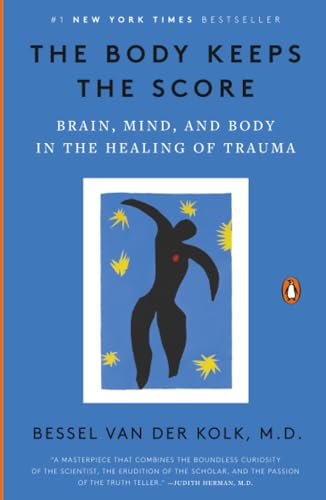
The Body Keeps the Score
Bessel van der Kolk, M.D.
A foundational look at how trauma reshapes the body and nervous system, and the approaches that help the body find safety again.
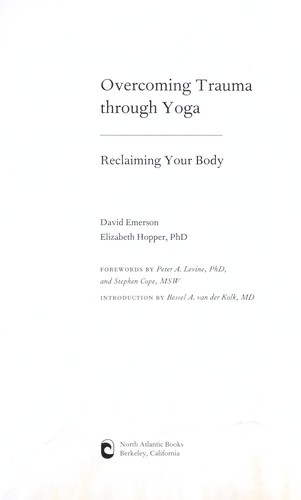
Overcoming Trauma through Yoga
David Emerson & Elizabeth Hopper, PhD
Evidence-based trauma-sensitive yoga program developed at the Trauma Center with Bessel van der Kolk.
As an Amazon Associate, Clarity House Press earns from qualifying purchases. Your price is never affected.
Found this helpful?
Share it with someone who might need it.
About the Author

Clarity House Press
Editorial Team
The editorial team at Clarity House Press curates and publishes evidence-based content on narcissistic abuse recovery, high-conflict divorce, and healing. Our content is informed by research, survivor experiences, and established trauma-informed approaches.
View all posts by Clarity House Press →Published by Clarity House Press Editorial Team