Please read our important disclaimers before using this content
Composite account: this narrative is drawn from common survivor experiences. Names, occupations, and identifying details are illustrative and do not depict a single real person.
Three years ago:
- Credit score: None (no credit history in my name)
- Savings: $0
- Debt: $12,000 (legal fees on payment plan)
- Income: $28,000/year (retail)
- Financial literacy: Almost zero
Today:
- Credit score: 682
- Emergency savings: $6,247
- Debt: $2,100 (and dropping)
- Income: $34,500/year (promoted to shift supervisor)
- Financial literacy: Still learning, but competent
I'm not wealthy. I'm still working retail at 51. But I'm financially stable for the first time in my adult life.
And I did it on my own.
This is the step-by-step guide I wish I'd had three years ago. For the broader recovery picture — how financial abuse works and how to recognize it — see our guide to economic abuse tactics and financial control.
Month 1-3: The Crisis Phase (Just Survive)
The first three months post-divorce were pure survival mode.
My situation:
- Living in a one-bedroom apartment ($1,100/month)
- Working retail ($15.50/hour, ~$2,100/month take-home)
- Paying spousal maintenance (yes, I paid HIM $400/month per court order for one year—long story)
- $500 short every month
I had to:
- Use credit card for groceries (adding to debt)
- Skip meals
- Delay medical care
- Accept help from friends (hardest thing I've done)1
What I learned: You can't build wealth when you're drowning. First priority is stop the bleeding.
What Actually Helped:
1. I Tracked Every Dollar
I bought a $3 notebook and wrote down every expense.
Why this mattered: I thought I knew where my money went. I didn't.
What I discovered:
- $140/month on convenience food (stopping for coffee, vending machine at work, quick lunch)
- $80/month on subscription services I forgot about
- $65/month on ATM fees and overdraft fees
Just by tracking, I found $285/month I was wasting.
2. I Called Every Bill and Asked for Help
I was embarrassed. I did it anyway.
What I said: "I'm going through a divorce and financially struggling. Do you have any hardship programs or payment plans?"
Results:
- Electric company: Enrolled in budget billing (spread costs evenly, avoided spikes)
- Internet: Reduced to basic plan (saved $35/month)
- Car insurance: Raised deductible, shopped around (saved $28/month)
- Phone: Switched to prepaid (saved $25/month)
Total monthly savings: $88
3. I Signed Up for Every Assistance Program I Qualified For
I had to swallow my pride. Middle-class people don't go to food banks, right?
Wrong. I did.
What I used:
- Food bank (twice a month, saved ~$120/month)
- SNAP benefits (food stamps—got $87/month)2
- ACA health insurance subsidy (saved $200/month on premiums)
- LIHEAP (Low Income Home Energy Assistance—one-time $300 credit)
Total monthly help: ~$400
This is what closed the $500/month gap.
Month 4-6: The Stabilization Phase (Stop Digging the Hole)
Once I wasn't drowning, I could start making progress.
Goal 1: Stop Adding to Debt
I had $12,000 in debt:
- $8,000 divorce legal fees (payment plan, $200/month)
- $4,000 credit card (interest accumulating)
I made a rule: No new credit card charges unless emergency.3
What counted as emergency:
- Medical care
- Car breakdown
- Nothing else
What didn't count:
- Birthday gifts (I baked instead)
- New clothes (thrift store only)
- Entertainment (library, free events)
It was hard. But for 3 months, I added $0 to the credit card.
Goal 2: Build a Tiny Emergency Buffer
Financial experts say you need 3-6 months of expenses saved.4
That's $6,000-$12,000 for me. Impossible.
So I set a micro-goal: $500.
How I did it:
- Picked up extra shifts (1-2 per week)
- Sold stuff on Facebook Marketplace (old furniture, books, kitchen items from the marriage)
- Tax refund ($287—went straight to savings)
It took 5 months to save $500. But I did it.
Why it mattered: The first time my car needed a repair ($340), I didn't have to put it on the credit card. I used savings.
That was the first time I felt financially competent in my entire life.
Month 7-12: The Credit Building Phase
I had no credit score. Everything had been in my ex's name or joint accounts.
Post-divorce:
- Joint accounts closed
- I was removed from his credit cards
- No credit history = no credit score
This was a problem because:
- Couldn't get approved for apartment (needed co-signer)
- Couldn't get reasonable interest rates
- Couldn't get approved for better job (some employers check credit)
I had to build credit from zero. At 48 years old.
Step 1: Secured Credit Card
I couldn't get approved for a regular credit card. So I got a secured card. The Consumer Financial Protection Bureau recommends secured credit cards as an effective way to build or rebuild credit.5
How it works:
- You deposit money (mine was $300—it HURT to come up with that)
- That becomes your credit limit
- You use the card and pay it off
- After 12 months of on-time payments, you get your deposit back and they convert to regular card
My strategy:
- Put one recurring bill on it (my $25/month phone bill)
- Set up autopay from checking account
- Never used it for anything else
Result: 12 months of perfect payment history.
Step 2: Credit Builder Loan
This felt ridiculous, but it works. Research from the CFPB confirms that credit-builder products can help consumers with thin credit files establish payment history.5
How it works:
- Credit union loans you $500
- They hold it in a locked savings account
- You make monthly payments ($45/month for 12 months)
- After 12 months, you get the $500 (minus interest)
- Each payment reports to credit bureaus
Basically: I paid interest to borrow my own money to prove I could pay it back.
But it worked. More payment history = better credit score.
Step 3: Authorized User (Use With Caution)
My daughter (24, good credit) added me as an authorized user on one of her cards.
Why this helped:
- Her good payment history showed up on my credit report
- Increased my "credit age"
- Improved my score by ~30 points
Important: I NEVER used the card. I didn't even have the physical card. This was purely for the credit history boost.
After 12 months of these three strategies:
My credit score went from "no score" to 610.
Not great. But enough to:
- Rent an apartment without co-signer
- Get approved for a basic credit card
- Have options
Year 2: The Momentum Phase (Actual Progress)
Year 2 goals:
- Pay off credit card debt
- Build emergency fund to $2,000
- Increase income
Strategy 1: The Debt Snowball Method
I had:
- $8,000 divorce legal fees ($200/month payment plan)
- $4,000 credit card debt ($180/month minimum payment)
Debt snowball approach:
- Pay minimums on everything
- Put every extra dollar toward the SMALLEST debt
- When smallest is paid off, roll that payment into the next debt
I focused on credit card first (smaller balance, higher interest).
How I did it:
- Minimum payment: $180/month
- Extra from side hustles: ~$100/month
- Total toward credit card: $280/month
It took 16 months, but I paid it off.
Then: I took that $280/month and applied it to the legal fee debt.
Strategy 2: Increasing Income
I couldn't live on $28,000/year forever.
What I did:
- Asked for raise at work (got $0.75/hour—not much, but something)
- Took management training (free through employer)
- Applied for shift supervisor role (got it—$3/hour raise)
New income: $34,500/year
That $6,500 difference was life-changing.
Strategy 3: The "Pay Yourself First" Savings Method
I used to save "whatever was left" at the end of the month.
There was never anything left.
New strategy:
- Every paycheck, $50 went to savings FIRST
- I lived on the rest
Some months it meant I ate rice and beans for two weeks. But the savings happened.
Year 2 results:
- Credit card: PAID OFF
- Emergency savings: $2,340
- Credit score: 651
- Income: Up $6,500/year
Year 3: The Building Phase (Creating Stability)
Year 3 was about building on the foundation.
Goal 1: 6 Months Emergency Fund
I increased my savings goal from $2,000 to $6,000 (roughly 3 months of expenses).
How:
- $75/paycheck to savings (increased from $50)
- All "extra" money (tax refund, birthday money, overtime) → savings
- One month I got a $400 rebate from utility company (budget billing overpayment) → savings
It took all of Year 3, but I hit $6,000.
Goal 2: Eliminate Remaining Debt
I still owed $3,600 on the legal fee payment plan.
I attacked it:
- Regular payment: $200/month
- Extra payments when possible
- One lump sum from selling my old car ($800—bought a cheaper one)
Paid off 8 months early.
Goal 3: Build Financial Literacy
I realized: I'm 51 years old and I don't understand money. Building knowledge about your career options after economic abuse helped me see income growth as part of the same recovery journey.
I educated myself (all free):
- YouTube: "The Financial Diet," "Two Cents," "Money Guy Show"
- Library books: "Your Money or Your Life," "The Total Money Makeover"
- Podcast: "Afford Anything" with Paula Pant
- Free course: Khan Academy personal finance
What I learned:
- How compound interest works (both for and against you)
- Why emergency funds matter
- How to read my credit report
- What a 401(k) is (I NEVER understood this during the marriage)
- How to create a real budget
For the first time in my life, I understood my own finances.
The Exact Numbers: Where I Am Today
Here's my current financial picture (November 2025, 3 years post-divorce):
Income:
- Base salary: $34,500/year
- Occasional overtime: ~$1,500/year
- Total: ~$36,000/year
- Take-home: ~$2,600/month
Monthly Expenses:
- Rent: $1,200 (moved to slightly nicer/safer building)
- Utilities: $140
- Car insurance: $67 (paid in full annually for discount)
- Gas: $110
- Groceries: $280
- Phone: $25
- Internet: $45
- Health insurance: $285 (ACA subsidy)
- Roth IRA: $100 (new!)
- Misc/personal: $100
- Total: $2,352
What's left: $248/month
That $248 goes to:
- Emergency fund top-ups (currently at $6,247)
- Occasional fun (movie, coffee with friend, thrift store find)
- Building Christmas/birthday fund ($20/month)
Debt: $2,100
- Student loan co-sign for daughter (paying minimum, she pays the rest)
- No other debt
Credit Score: 682
Retirement:
- Roth IRA: $1,430 (started 11 months ago)
- Work 401(k): $890 (started when I got promoted, 3% contribution with 3% match)
It's not a lot. But it's mine.
The Strategies That Made the Difference
Looking back at three years of financial recovery, these made the biggest impact:
1. Track Everything (Awareness Is Step One)
I still use my $3 notebook. Every dollar has a line item.
This isn't about restriction—it's about awareness.**
When I know where my money goes, I can make intentional choices.
2. Automate Savings (You Can't Spend What You Don't See)
$75 from every paycheck goes to savings automatically.
I never see it. I live on the rest.
In 3 years, that automatic savings added up to $5,400** (plus interest and extra deposits).6
3. Pay Yourself First (Savings Is a Bill)
I used to save "whatever was left."
Nothing was ever left.
Now:** Savings is the first bill I pay. Everything else adjusts around it.
4. Increase Income (There's a Limit to Cutting Expenses)
I cut expenses to the bone: no subscriptions, food bank, thrift stores, free everything.
I couldn't cut more without suffering.**
So I focused on increasing income: raise, promotion, occasional overtime.
That made more difference than any budget tweak.7
5. Educate Yourself (Financial Literacy Is Freedom)
For 22 years, my ex "handled" the money. I was deliberately kept ignorant.
Learning about money was learning about power.8**
Now I understand:
- My paycheck (taxes, deductions, net vs gross)
- My credit (score, report, how it works)
- My benefits (401k, IRA, how retirement accounts work)
- My future (compound interest, retirement calculators)
I'm not an expert. But I'm competent.
And that's revolutionary.
The Emotional Shift: From Shame to Pride
The first year, I felt deep shame about my financial situation.
I thought:
- I should have "planned better"
- I was a failure for working retail at 48
- I was a burden for using food banks
Now I see it differently.
I was financially abused for 22 years.9 Set up to fail. Deliberately kept dependent.
And in three years, I:
- Stabilized my finances
- Built an emergency fund
- Paid off debt
- Increased my income
- Built my credit from nothing
- Educated myself about money
That's not failure. That's resilience.
For Anyone Starting From Zero
If you're where I was three years ago—broke, scared, financially illiterate, starting over at midlife—here's what I want you to know:
You CAN do this. Even if you're 48, 51, 60. Even if you've never managed money. Even if you're working minimum wage.
Progress is slow. Three years to get to a 682 credit score and $6,000 saved. That's YEARS. But they're going to pass anyway.
Start where you are. I started with a $3 notebook and tracking expenses. That's it. You don't need fancy apps or perfect plans.
Educate yourself. YouTube is free. Library is free. Financial literacy is accessible if you look for it.
Get help. Food banks, SNAP, energy assistance, sliding scale everything. These programs exist for a reason. Use them.
Celebrate small wins. First $100 saved. First month without credit card use. First credit score increase. They matter.
You're not starting over. You're starting new. With knowledge you didn't have before. With strength you didn't know you had. This kind of resilience is at the heart of post-traumatic growth.
Three years ago, I thought I'd never be financially stable.
Today, I have $6,247 in savings and a 682 credit score.
If I can do it, you can too.
Composite account: this narrative is drawn from common survivor experiences. Names, occupations, and identifying details are illustrative and do not depict a single real person.
Resources
Credit Building and Financial Education:
- AnnualCreditReport.com - Free annual credit reports from all three bureaus
- Consumer Financial Protection Bureau - Credit and financial protection resources
- National Foundation for Credit Counseling - Find certified credit counselors
- MyMoney.gov - Federal government financial literacy resources
Financial Abuse Recovery:
- National Network to End Domestic Violence - Financial Empowerment - Financial abuse education and resources
- FreeFrom - Financial security for survivors of gender-based violence
- Allstate Foundation Purple Purse - Financial empowerment for domestic violence survivors
- National Domestic Violence Hotline - 1-800-799-7233 (SAFE) for safety planning
Assistance Programs and Support:
- Benefits.gov - Find government assistance programs (SNAP, energy, housing)
- Legal Services Corporation - Find free legal aid offices
- 988 Suicide & Crisis Lifeline - Call or text 988 for crisis support (24/7)
- Crisis Text Line - Text HOME to 741741 for crisis counseling
References
- Mellar, Fanslow, Gulliver, & McIntosh (2024). Economic Abuse by An Intimate Partner and Its Associations with Women's Socioeconomic Status and Mental Health.. Journal of interpersonal violence. https://pmc.ncbi.nlm.nih.gov/articles/PMC11465629/ ↩
- Johnson, Chen, Stylianou, & Arnold (2022). Examining the impact of economic abuse on survivors of intimate partner violence: a scoping review.. BMC public health. https://pmc.ncbi.nlm.nih.gov/articles/PMC9121607/ ↩
- Reichman, N. E., & Fox, N. A. (2019). Links of the Supplemental Nutrition Assistance Program with food insecurity, poverty, and health: Evidence and potential. New England Journal of Medicine, 380(15), 1474-1476. https://pmc.ncbi.nlm.nih.gov/articles/PMC6836787/ ↩
- Hilgert, M. A., Hogarth, J. M., & Beverly, S. G. (2003). Household financial management: The connection between knowledge and behavior. Federal Reserve Bulletin, 89(7), 309-322. https://pmc.ncbi.nlm.nih.gov/articles/PMC10645357/ ↩
- Lusardi, A., & Mitchell, O. S. (2011). Financial literacy and planning: Implications for retirement wellbeing. In A. Lusardi & O. S. Mitchell (Eds.), Financial literacy: Implications for retirement security and the financial marketplace (pp. 17-39). Oxford University Press. https://pmc.ncbi.nlm.nih.gov/articles/PMC7236434/ ↩
- Consumer Financial Protection Bureau. (2023). What is a secured credit card? Ask CFPB. https://www.consumerfinance.gov/ask-cfpb/what-is-a-secured-credit-card-en-45/ ↩
- Davydenko, Kolbuszewska, & Peetz (2021). A meta-analysis of financial self-control strategies: Comparing empirical findings with online media and lay person perspectives on what helps individuals curb spending and start saving.. PloS one. https://pmc.ncbi.nlm.nih.gov/articles/PMC8266115/ ↩
- Warneryd, K. E. (1999). The psychology of saving: A study on economic psychology. Edward Elgar Publishing, and Halvorsen, B. (2006). When does an increase in income lead to increased environmental consumption? Journal of Economic Psychology, 27(5), 693-708. https://pmc.ncbi.nlm.nih.gov/articles/PMC4686135/ ↩
- Scheresberg, C. B. (2013). Financial literacy and financial behavior among young adults: Evidence and implications. Numeracy, 6(2), 5. https://pmc.ncbi.nlm.nih.gov/articles/PMC5445906/ ↩
Recommended Reading
From Clarity House Press — plus trusted books for deeper understanding
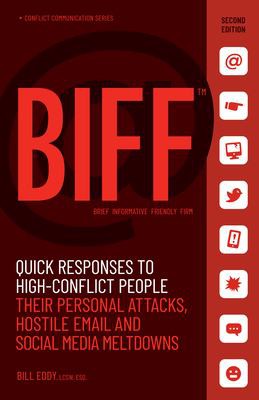
BIFF: Quick Responses to High-Conflict People
Bill Eddy, LCSW Esq.
Brief, Informative, Friendly, and Firm responses for dealing with high-conflict people.
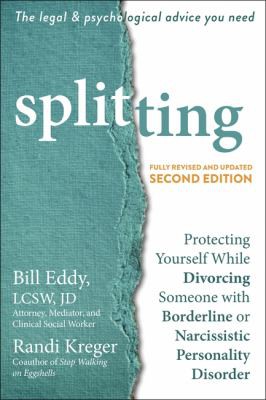
Splitting: Protecting Yourself While Divorcing Someone with Borderline or Narcissistic Personality Disorder
Bill Eddy & Randi Kreger
Updated edition covering domestic violence, alienation, false allegations in high-conflict divorce.
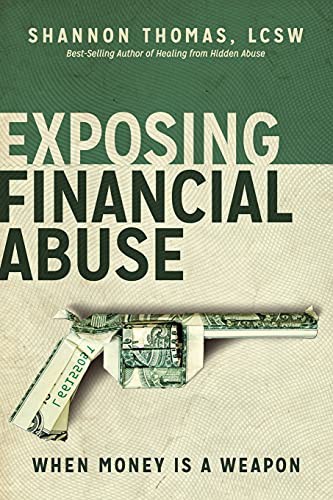
Exposing Financial Abuse
Shannon Thomas, LCSW
Expose of financial exploitation within families, relationships, and courts.
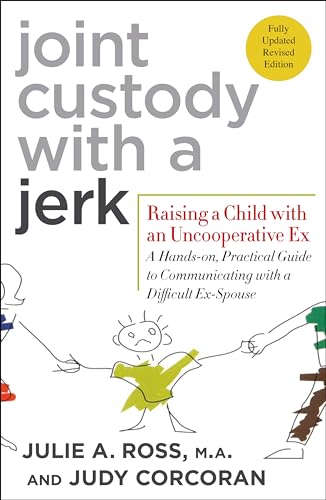
Joint Custody with a Jerk
Julie A. Ross, MA & Judy Corcoran
Proven communication techniques for co-parenting with an uncooperative ex.
As an Amazon Associate, Clarity House Press earns from qualifying purchases. Your price is never affected.
Found this helpful?
Share it with someone who might need it.
Tags
About the Author

Clarity House Press
Editorial Team
The editorial team at Clarity House Press curates and publishes evidence-based content on narcissistic abuse recovery, high-conflict divorce, and healing. Our content is informed by research, survivor experiences, and established trauma-informed approaches.
View all posts by Clarity House Press →Published by Clarity House Press Editorial Team