Please read our important disclaimers before using this content
Composite account: this narrative is drawn from common survivor experiences. Names, occupations, and identifying details are illustrative and do not depict a single real person.
My name is James. I'm 42 years old. I'm a high school history teacher, a father of three incredible kids, and a survivor of 15 years of narcissistic abuse.
If you'd asked me five years ago if I was being abused, I would have laughed. Abused? Me? I'm 6'2", I coach varsity baseball, I'm the guy people come to when they need help. How could I possibly be a victim? The stigma and disbelief that male victims of narcissistic abuse face is one reason so many men go unidentified and unsupported.
Research confirms I am far from alone. Studies show that male victims of intimate partner violence are significantly less likely to seek help than female victims, often due to stigma and fear of not being believed (Taylor et al., 2022).
But I was. For 15 years.
This is my story. It's not easy to tell, but I'm telling it because somewhere out there, there's another man who thinks he's the only one. Another dad who's questioning his sanity. Another husband who's walking on eggshells and doesn't understand why.
I want you to know: you're not alone. I was you. And there's a way out.
The Beginning: How I Missed Every Red Flag
I met Rachel when I was 25. She was beautiful, charismatic, exciting. She made me feel like the center of the universe.
The love-bombing phase:
In the first six months, she:
- Texted me constantly (I thought it was sweet, not monitoring)
- Wanted to spend every minute together (I thought it was passion, not isolation)
- Told me I was different from every other guy (I thought it was flattery, not manipulation)
- Moved our relationship fast—exclusivity, moving in together, engagement (I thought it was love, not control)
We were engaged after 8 months. Married at 13 months.
Red flags I dismissed:
She isolated me from my friends: "Your friends are immature. You're better than them. Don't you want to grow up?"
I stopped hanging out with my college buddies. I thought I was being a good partner.
She criticized my family: "Your mom is so passive-aggressive. Your sister is always trying to compete with me."
I started seeing my family less. I thought I was choosing my wife over childhood loyalties.
She controlled my time: "You're going to the gym again? You just went three days ago. Don't you want to spend time with me?"
I gave up hobbies. I thought I was prioritizing our relationship.
She monitored my phone: "If you have nothing to hide, why would you care if I know your passcode?"
I gave her full access. I thought it was trust.
By the time we'd been married a year, I had:
- Lost contact with most friends
- Strained relationship with family
- Gave up basketball league, gym, poker nights
- No privacy or independence
- No awareness this wasn't normal
I thought I was being a good husband.
The Marriage: 15 Years of Walking on Eggshells
Our first child was born in year two of marriage. Then two more in the next five years.
Rachel became a stay-at-home mom. I was the sole earner on a teacher's salary.
The abuse escalated with each major life transition:
Financial Control
Despite me earning all the income, I had no financial autonomy:
The setup: "You're so busy with work and coaching. Let me handle the bills and budgeting. I'm good at this."
I agreed. Big mistake.
What it became:
- I had to ask permission to buy lunch at school
- She monitored every purchase I made
- She gave me a $50/week "allowance" from my own paycheck
- She had credit cards and accounts I didn't know about
- She spent freely while criticizing every dollar I spent
The confusion: I made all the money but had none of the power. When I tried to discuss it, I was "financially irresponsible" or "didn't understand how expensive raising kids is."
Emotional Abuse
The criticism was constant and devastating:
About my teaching career: "You're just a teacher. You'll never make real money. My friends' husbands are lawyers and doctors. But I guess I'm stuck with you."
About my parenting: "You're too soft with the kids. They don't respect you. They know I'm the real parent."
About my appearance: "You've really let yourself go. You used to be attractive. Don't you care anymore?"
About my intelligence: "That's a stupid idea. Why would you even suggest that? This is why I make the decisions."
The pattern: Every conversation left me feeling small, incompetent, worthless.
Gaslighting
The reality-distortion was maddening:
Example 1:
Her: "I told you I needed you to pick up Emma from gymnastics today."
Me: "No, you said you'd get her. I have baseball practice."
Her: "I NEVER said that. You're making that up. You always do this—rewrite history to avoid responsibility."
Me: (genuinely questioning if I was losing my memory)
Example 2:
Her: (screaming at me for 20 minutes about how I'm a terrible father)
Me: "Please stop yelling at me."
Her: "I'm not yelling! See, this is your problem—you can't handle normal adult conversation. You're so emotionally fragile."
Example 3:
Her: "You never help with the kids."
Me: "I coach Little League, I do bedtime every night, I make breakfast every morning—"
Her: "Making breakfast doesn't count. That's the bare minimum. I'm talking about REAL parenting."
The result: I started recording conversations because I couldn't trust my own memory. I had notebooks full of documentation because I was genuinely afraid I was going insane. This constant self-doubt is the hallmark of gaslighting as a manipulation tactic—making you question your own perception of reality.
Isolation
She systematically cut me off from everyone who might support me:
My parents: "Your mom is toxic. I don't want the kids exposed to her negativity."
We went from weekly visits to twice a year.
My sister: "She's always judging me. I can't be around her."
My sister and I used to be close. We barely spoke for ten years.
My friends: "Your baseball buddies are a bad influence. You're not 25 anymore."
I stopped responding to texts. Eventually they stopped reaching out.
My colleagues: "You spend all day at school. I need you home in the evenings, not at happy hour with your work friends."
I became the teacher who never socialized.
The loneliness: By year 8 of our marriage, I had no one. No friends. Strained family relationships. No support system.
Just her. Which was exactly the point.
The Silent Treatment
Her favorite punishment: days or weeks of complete silence.
How it worked:
I'd do something that displeased her (usually something minor—forgot to take out the trash, came home 10 minutes late, didn't phrase something exactly right).
She'd go silent. Completely silent. Wouldn't speak to me for days.
The psychological warfare:
- No explanation of what I'd done wrong ("If you don't know, I'm not telling you")
- No timeframe for when it would end
- She'd speak to the kids but not to me
- She'd respond to everyone else but not to me
- I'd be frozen out of my own family
My response: I'd apologize profusely for things I didn't understand. I'd beg her to tell me what I'd done. I'd try to "fix" myself.
This could last two weeks. Once, nearly a month.
The damage: I became hypervigilant, always monitoring her mood, always trying to prevent the next silent treatment. I was walking on eggshells in my own home.
The Breaking Point: When I Finally Saw It
September 2021. I'll never forget the date.
My 13-year-old son, Marcus, came to me after dinner. Rachel had just finished a 30-minute tirade about how I'd embarrassed her at a parent-teacher conference by disagreeing with her in front of his teacher.
Marcus said: "Dad, why do you let her talk to you like that?"
I stared at him. "Like what?"
"Like you're stupid. Like you don't matter. Like she hates you."
I opened my mouth to defend her—my instinct after 15 years. But nothing came out.
Because he was right.
That night, I googled:
"Why does my wife make me feel worthless?"
The first article was about emotional abuse. The second was about narcissistic personality disorder.
I read for three hours. I cried for one.
Every checklist described my marriage:
- Grandiosity and superiority ✓
- Need for admiration and validation ✓
- Lack of empathy ✓
- Sense of entitlement ✓
- Interpersonal exploitation ✓
- Envy and contempt ✓
- Arrogance ✓
The patterns of abuse:
- Love-bombing followed by devaluation ✓
- Gaslighting ✓
- Isolation ✓
- Financial control ✓
- DARVO (Deny, Attack, Reverse Victim and Offender) ✓
- Silent treatment ✓
- Triangulation with the kids ✓
For 15 years, I'd thought:
- I was too sensitive
- I needed to try harder
- I was failing as a husband
- Something was wrong with me
The truth: I was being systematically psychologically abused.
The Aftermath: What Happened When I Tried to Leave
I filed for divorce in November 2021.
I thought understanding the abuse was the hard part. I was wrong.
Her Response: Scorched Earth
The moment I filed, she:
Made false allegations: Claimed I had "anger issues" and was "emotionally unstable." Filed for a protective order (later dismissed).
Launched a smear campaign: Told everyone who would listen that I was having a midlife crisis, probably having an affair, abandoning my family.
Weaponized the kids: Told them I was choosing to leave them. Started subtle (and not-so-subtle) parental alienation.
Fought for maximum support: Despite having a degree and no work history only because she chose not to work, she demanded significant spousal support.
Hired an aggressive attorney: And demanded I pay for it.
What I Faced as a Male Victim in Family Court
The bias was real and devastating:
Custody: I asked for 50/50. She asked for primary custody with me getting "standard visitation" (every other weekend).
The court's reasoning for giving her primary custody:
- She'd been "primary caregiver" (she was home because I supported the family)
- Changing the status quo would be "disruptive to the children"
- My work schedule was "less flexible" (because I have a job)
I got 40/60. I see my kids 40% of the time despite being an equally involved parent for 15 years.
The domestic abuse allegations: When I tried to present evidence of emotional abuse, my attorney was frank: "Judges don't take emotional abuse as seriously when the victim is male. We need to focus on other strategies."
The protective order she filed—though dismissed—was referenced in every subsequent hearing as evidence of "conflict in the relationship."
Financial outcome:
- $2,800/month in spousal support for 5 years
- $1,600/month in child support
- Paid for half her legal fees: $12,000
- My legal fees: $38,000
On a teacher's salary.
The Shame and Isolation
What people said when I told them about the divorce:
Colleague: "Wow, I always thought you guys had the perfect marriage."
(Because abuse happens in private.)
Friend: "What happened? Did you cheat?"
(Because why else would a man leave his family?)
My dad: "Have you tried harder? Marriage takes work."
(Because men are supposed to tough it out.)
Her friend: "I can't believe you're abandoning Rachel and those kids. She's devastated."
(Because she played victim perfectly.)
Almost no one said: "Are you okay? What do you need?"
This pattern is well-documented. A landmark study found that when male survivors do seek help, they have the least positive experiences with domestic violence service systems. Police sometimes failed to respond to calls, and men's accounts of abuse were frequently not believed by agencies or hotlines (Douglas & Hines, 2011).
The isolation was profound:
People took sides. Most took hers. Because:
- She told her version first (I was having a breakdown, abandoning the family)
- She's charismatic and convincing
- Society defaults to believing women over men
- Male victims aren't seen as credible
I lost friends. I lost community standing. I lost my reputation.
The shame was crushing:
Research identifies stigma as one of the most significant barriers preventing male survivors from seeking help. Men who disclose intimate partner violence are frequently met with disbelief, and victim-blaming narratives often depict them as failures in their roles as fathers, providers, or husbands (Lysova et al., 2022).
I felt shame for:
- "Failing" at my marriage
- "Abandoning" my kids (I didn't, but that's how it was framed)
- Being unable to "handle" my wife
- Being a male victim (which felt like admitting weakness)
- Needing help (men are supposed to be strong)
The Recovery: Three Years Out
It's now December 2024. Three years since I filed.
Recovery has been slow, expensive, and painful. But it's also been worth every hard day.
What I've Rebuilt
My mental health:
I found a therapist who specializes in trauma from narcissistic abuse. I've been in weekly therapy for three years.
I was diagnosed with Complex PTSD. I've learned:
- My reactions weren't crazy—they were normal responses to abnormal abuse
- The hypervigilance, anxiety, and depression were trauma responses
- Healing is possible but takes time
For those wanting to understand this diagnosis more deeply, C-PTSD in men explains how symptoms often manifest differently—and get missed.
My relationship with my kids:
This has been the hardest and most important part.
The parental alienation was real: For the first year post-separation, my kids (especially the older two) were distant, critical, sometimes hostile. They repeated her narratives about me.
What I did:
- Stayed consistent and present
- Never spoke badly about their mother
- Let them express their anger without defending myself
- Showed up for every game, concert, event
- Created a stable, peaceful home for them during my parenting time
- Got them into therapy
Where we are now: My oldest, Marcus (now 16), sees through the manipulation. He's my ally.
My middle child, Emma (14), is still somewhat alienated but improving.
My youngest, Sophie (10), just wants both parents to be happy.
We're rebuilding. Slowly. But it's happening.
My support system:
I've rebuilt connections:
- Reconnected with my sister (we talk weekly now)
- Improved relationship with my parents
- Found online support groups for male survivors
- Made new friends who know the truth
I'm no longer isolated.
My financial stability:
On a teacher's salary, paying $4,400/month in support is brutal.
I:
- Took on summer school teaching
- Started tutoring on weekends
- Moved to a cheaper apartment
- Live frugally
I won't lie: it's hard. But I'm making it work.
My sense of self:
This has been the most profound change.
I now know:
- I'm not crazy
- I'm not too sensitive
- I'm not a failure
- I'm not worthless
- I deserve kindness, respect, and love
I'm rebuilding my identity separate from her abuse. Finding men's support groups was a turning point—finally being believed and understood by others who'd been through it.
What I Wish I'd Known
If I could go back and talk to myself the day I married her, here's what I'd say:
Isolation is abuse. When someone cuts you off from friends and family, that's not love. That's control.
Financial control is abuse. Even if you earn the money. Especially if you earn the money.
Gaslighting is real. If you're constantly questioning your own reality, someone is manipulating you.
Your feelings matter. You're not "too sensitive" for being hurt by cruel treatment.
Document everything. Even if it feels paranoid. Especially if it feels paranoid.
Gender doesn't determine who can be abused. Being a man doesn't protect you from narcissistic abuse.
The shame will keep you trapped. Don't let it. Tell someone. Get help.
You can't fix her. Narcissistic abuse doesn't get better. It escalates.
Your kids are watching. They're learning what relationships look like. Is this what you want them to think is normal?
Leaving will be the hardest thing you ever do. Do it anyway.
To Other Fathers, Other Male Survivors
If you're reading this and recognizing yourself in my story, please hear me:
You're not alone.
I thought I was the only man who could possibly be controlled and abused by his wife. I was wrong. There are thousands of us.
Your abuse is real.
It doesn't matter that you're bigger, stronger, earn more, or could theoretically "just leave." Psychological abuse is real abuse. You're a real victim.
You're not weak.
Being victimized doesn't make you weak. Staying for your kids doesn't make you weak. Being manipulated by someone you trusted doesn't make you weak.
Surviving makes you strong.
Research shows that when men do identify as victims, gender socialization may lead them to minimize or trivialize their experiences. This minimization, combined with difficulty disclosing abuse, means many men suffer in silence for years (Scott-Storey et al., 2023).
You deserve better.
You deserve a partner who:
- Speaks to you with respect
- Doesn't control your money, time, or relationships
- Doesn't gaslight you
- Doesn't punish you with silence
- Doesn't use your children as weapons
- Values you
You can leave.
I know it's terrifying. I know the financial implications are real. I know you're worried about your kids.
But you can leave. And you should.
Because staying teaches your children that this is what love looks like. And that's not okay.
Get help.
You need:
- A therapist who understands narcissistic abuse
- An attorney who's experienced with high-conflict divorce
- A support system (even if it's online to start)
- Documentation of the abuse
- A financial plan
Don't try to do this alone.
The shame is lying to you.
You're not failing as a man by being abused. You're not weak for needing help. You're not abandoning your family by leaving abuse.
The shame is part of the abuse. Don't let it keep you trapped.
Three Years Later: Was It Worth It?
The honest answer: Yes. Absolutely yes.
I lost money. I lost friends. I lost reputation. I lost 40% of my time with my kids.
But I gained:
Peace. I come home to a calm apartment. No eggshells. No silent treatment. No criticism. Just peace.
Mental health. I'm no longer depressed or anxious. I'm not being gaslit. I trust my own reality again.
Self-respect. I didn't stay in abuse. I chose myself. I chose my kids' wellbeing. I modeled strength.
Hope. For the first time in 15 years, I have hope for my future. I can imagine being happy. Maybe even dating again someday.
Truth. My kids are seeing the truth—slowly, but surely. I'm the stable parent. I'm the consistent one. I'm the one who shows up.
Was it worth $50,000 in legal fees, $4,400/month in support, and three years of brutal recovery?
Yes.
Because I'm free.
Final Thoughts
If you're a man in an abusive relationship, I see you.
If you're a father worried about losing your kids if you leave, I understand.
If you're questioning whether what you're experiencing is "really abuse," it is.
If you're ashamed to admit you're being controlled by your wife, the shame is part of the abuse.
If you think you're the only one, you're not. I was you.
And if you're wondering if you'll survive leaving, you will. I did.
It's hard. It's expensive. It's painful. It's lonely.
But it's worth it.
Your kids need you to be healthy more than they need you to stay married.
You deserve to live without abuse.
Take the first step. Google "narcissistic abuse." Find a therapist. Talk to an attorney. Tell someone the truth.
And know that somewhere in the world, there's a history teacher who spent 15 years in hell and made it out the other side.
You can too.
Resources
Male Survivor Support:
- 1in6 - Support for men who experienced abuse or assault
- MenHealing - Support groups and resources for male survivors
- The Body Keeps the Score by Bessel van der Kolk - Trauma recovery for all genders
- r/MensLib - Supportive men's community addressing gender issues
Fathers' Rights and Legal Support:
- American Academy of Matrimonial Lawyers - Find family law attorneys experienced in fathers' rights
- Fathers' Rights Movement - Resources and advocacy for fathers
- WomensLaw.org - State-specific legal resources (serves all genders despite name)
- TalkingParents - Court-admissible communication platform
- OurFamilyWizard - Co-parenting communication platform
Therapy and Crisis Support:
- Psychology Today - Therapists - Find therapists specializing in male trauma and narcissistic abuse
- National Domestic Violence Hotline - 1-800-799-7233 (SAFE) for male victims
- 988 Suicide & Crisis Lifeline - Call or text 988 for crisis support (24/7)
- Crisis Text Line - Text HOME to 741741 for crisis counseling
Composite account: this narrative is drawn from common survivor experiences. Names, occupations, and identifying details are illustrative and do not depict a single real person.
References
- American Psychiatric Association. (2013). Diagnostic and statistical manual of mental disorders (5th ed.). Arlington, VA: American Psychiatric Publishing. https://dsm.psychiatryonline.org ↩
- Taylor, B. G., Magnussen, L. A., & Mejia, P. (2022). Men's health consequences of intimate partner violence and implications for screening and intervention in healthcare settings. Journal of Family Violence, 37, 1175-1188. https://pmc.ncbi.nlm.nih.gov/articles/PMC9554285/ ↩
- Douglas, E. M., & Hines, D. A. (2011). The helpseeking experiences of men who sustain intimate partner violence: Overcoming barriers and obstacles. Journal of Family Violence, 26(6), 473-485. https://pmc.ncbi.nlm.nih.gov/articles/PMC3175099/ ↩
- Lysova, A. V., Dim, C., Vodounhessi, N. M., & DeKeseredy, W. S. (2022). Intimate partner violence against men: A call for expanded research, policy, and practice. Journal of Family Violence, 37, 911-920. https://journals.sagepub.com/doi/10.1177/0306624X20967950 ↩
- Teicher, M. H., & Samson, A. Y. (2016). Annual research review: Enduring neurobiological effects of childhood abuse and neglect. Journal of Child Psychology and Psychiatry, 57(3), 241-266. https://www.ncbi.nlm.nih.gov/pmc/articles/PMC7049346/ ↩
- Lorandos, D., Williamson, S., & Img, N. (2013). Parental alienation: How to understand and address parental alienation resulting from acrimonious child-custody disputes. Journal of the American Academy of Matrimonial Lawyers, 26, 421-448. https://www.ncbi.nlm.nih.gov/pmc/articles/PMC7289758/ ↩
- Sarkissian, R. (2021). Gaslighting and the power/knowledge struggles underlying intimate partner violence. Journal of Family Trauma, Child Custody & Child Development, 2(2), 183-208. https://www.ncbi.nlm.nih.gov/pmc/articles/PMC7785374/ ↩
- Scott-Storey, K., Wuest, J., & Merritt-Gray, M. (2023). Healing from intimate partner violence: Trajectories of change over time. Journal of Family Violence, 38, 193-204. https://pmc.ncbi.nlm.nih.gov/articles/PMC10009901/ ↩
- Stinson, F. S., Dawson, D. A., Goldstein, R. B., Chou, S. P., Huang, B., Smith, S. M., Ruan, W. J., & Grant, B. F. (2008). Prevalence, correlates, disability, and comorbidity of DSM-IV narcissistic personality disorder. Journal of Clinical Psychiatry, 69(7), 1033-1045. https://www.ncbi.nlm.nih.gov/pubmed/18557663 ↩
Recommended Reading
From Clarity House Press — plus trusted books for deeper understanding

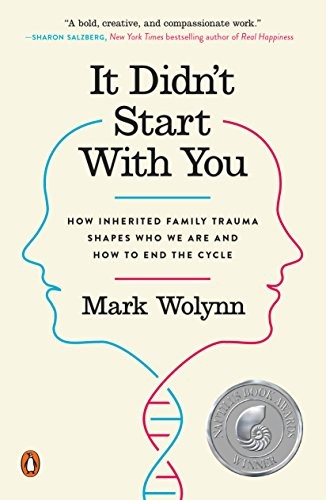
It Didn't Start with You
Mark Wolynn
Groundbreaking exploration of inherited family trauma and how to end intergenerational cycles.

Fathers' Rights
Jeffery Leving & Kenneth Dachman
Landmark guide by renowned men's rights attorney covering every aspect of custody for fathers.
As an Amazon Associate, Clarity House Press earns from qualifying purchases. Your price is never affected.
Found this helpful?
Share it with someone who might need it.
About the Author

Clarity House Press
Editorial Team
The editorial team at Clarity House Press curates and publishes evidence-based content on narcissistic abuse recovery, high-conflict divorce, and healing. Our content is informed by research, survivor experiences, and established trauma-informed approaches.
View all posts by Clarity House Press →Published by Clarity House Press Editorial Team