Please read our important disclaimers before using this content
The Isolation Myth
Here's what we tell men: "Go talk to someone. Open up. Join a group."
But we don't talk about the specific barrier that stops men from doing that: the terror of being the only one.
The only one who admits he's been emotionally destroyed. The only one who can't afford his legal fees. The only one whose ex is winning the custody war. The only one who cries at night.
Male survivors of abuse, high-conflict divorce, and complex trauma don't just struggle with what happened to them. They struggle with a suffocating belief that their experience is uniquely shameful. The broader context of male victim stigma in domestic abuse explains why this shame is socially constructed rather than deserved. Uniquely weak. Uniquely disqualifying from "real" manhood.
That's where support groups change everything.
What Research Shows About Men in Support Groups
The research is clear: Men benefit enormously from support groups—but only if they actually attend.1 And men attend when three conditions are met: they feel safe, they see other men who look and sound like them, and the group normalizes vulnerability as strength rather than weakness.2 A comprehensive meta-analysis of 28 randomized controlled trials found that peer support interventions produce small but significant effects on both clinical and personal recovery, with particularly consistent benefits for individuals facing serious mental health challenges (Smit et al., 2022).3
A landmark UK study of men's experiences in mental health support groups found that participants reported feeling "less isolated because there are other people experiencing the same or very similar" circumstances.1 The sense of mutual recognition—of not being alone in a particular type of suffering—was transformative.
Men in support groups consistently report:
- Reduced shame and self-stigma: Hearing other men name the same thoughts, fears, and struggles makes isolation evaporate.1
- Permission for vulnerability: In a male-only or male-centered space, emotional expression becomes contextually acceptable.4 Men feel they can be honest without losing their identity.
- Practical problem-solving: Beyond emotional support, men exchange strategies, resource recommendations, and hard-won wisdom about navigating custody systems, financial recovery, and trauma therapy.2
- Belonging without judgment: The fundamental experience reported across studies is the relief of being witnessed without judgment.1
The Masculinity Factor: Why This Matters for Male Survivors
Traditional masculine norms create a double bind for male survivors. The norms that taught them to be "strong" become the very barriers preventing them from seeking help. Research on masculinity and mental health identifies this paradox: men who strictly adhere to traditional masculine ideology are less likely to seek support, yet those same men may experience the most severe outcomes when they don't.4
Support groups resolve this paradox by recontextualizing help-seeking itself. Rather than "admitting weakness," men in groups frame their participation as:
- Taking active control of their healing (strength-based language that aligns with masculine values)
- Demonstrating courage (vulnerability in the face of real danger requires bravery)
- Investing in long-term strategic recovery (similar to how men approach professional or financial challenges)
This linguistic and conceptual reframing allows men to maintain their sense of masculine identity while engaging authentically in the healing work they desperately need.4 Emerging research confirms that peer support offers a non-clinical, strength-based adjunct to professional support that aligns well with many men's values and preferences for mental health help-seeking (Sharp et al., 2024).5
Finding the Right Group: What to Look For
Not all support groups are equally effective for male survivors. When evaluating options, consider these factors:
Trauma-Informed Leadership
The group should be facilitated by someone with formal training in trauma recovery and gender-specific mental health. This isn't judgment of peer-led groups—some are excellent—but professional facilitation ensures safety protocols, appropriate boundary-setting, and crisis response capabilities.2
Male-Centered or Male-Majority Composition
Research indicates that men are more likely to disclose vulnerably in groups where men represent the majority or where the group is specifically designed for male participants.1 A qualitative study of male trauma survivors found that all participants strongly preferred all-male groups, reporting greater comfort discussing vulnerability with peers who shared their gendered experiences of trauma and recovery (Roberg et al., 2018).6 This doesn't exclude women, but intentional male-majority spaces create psychological safety that gender-mixed groups often can't replicate.
Specific Focus on Your Experience
General mental health groups help. But groups specifically addressing:
- Narcissistic abuse
- High-conflict divorce and custody trauma
- Complex PTSD in male survivors
- Paternal alienation
...create a level of mutual recognition that generic groups can't match.
Clear Boundaries and Confidentiality
The group should have explicit confidentiality agreements. "What's said here stays here" isn't just nice-to-have—it's essential for men to feel safe enough to speak honestly.1
Dual Focus: Emotion + Strategy
The most effective groups for male survivors balance emotional processing with practical skill-building: understanding legal documents, recognizing manipulation patterns, rebuilding financial stability, co-parenting with a high-conflict ex through the parallel parenting framework.2
Types of Groups Available
Professionally Facilitated Groups:
- University and hospital-based support groups (many offer free or low-cost options)
- Licensed therapist-led groups (often covered by insurance)
- Community mental health center groups
- Trauma-focused therapy groups
A meta-analysis of 20 randomized controlled trials demonstrated that group psychotherapy significantly reduces PTSD symptoms compared to no treatment (effect size g = 0.70), with exposure-based cognitive-behavioral group therapy showing particularly strong empirical support (Schwartze et al., 2019).7
Peer-Led and Hybrid Groups:
- Narcissistic abuse survivor organizations
- Divorce recovery groups with male facilitators
- 12-step programs adapted for trauma recovery
- Online groups with professional moderation
Specialized Groups:
- Custody trauma groups specifically for fathers
- Male sexual abuse survivor groups
- Military/first responder trauma groups
- Substance abuse recovery groups (men-only options often available)
Your Next Steps
If you're considering a support group:
-
Start with what exists locally. Check university counseling centers, community mental health clinics, and hospital-based programs first. Many offer free or sliding-scale groups.
-
Attend at least three meetings before deciding. Groups take time to feel safe. Give yourself permission to feel awkward at first.
-
Ask about the facilitator's credentials. How are they trained? What's their experience with male survivors? What's their trauma-informed approach?
-
Set a specific commitment. Rather than "I'll try it," commit to 8 weeks. Healing requires consistency, and groups only work if you show up repeatedly.
-
Combine group work with individual therapy if possible. Groups aren't substitutes for trauma therapy—they're complements. Ideally, you'll have both. Our guide to finding the right trauma therapist who understands narcissistic abuse helps you identify clinicians who validate male victimization.
-
If no suitable local group exists, explore online options. Virtual groups have limitations, but connection with other male survivors online is exponentially better than isolation.
Key Takeaways
- Male survivors of abuse and high-conflict divorce experience elevated rates of depression, PTSD, and suicidal ideation—and most suffer in silence
- Meta-analytic research consistently shows that men benefit dramatically from support groups, reporting reduced shame, permission for vulnerability, and practical problem-solving (Smit et al., 2022)
- The right group reframes vulnerability and help-seeking as strength and strategy, aligning with masculine values while enabling authentic healing
- Not all groups are equally effective; seek trauma-informed facilitation, male-majority composition, and groups that address your specific experience
- Consistency matters more than perfection—commit to a group for at least 8 weeks before evaluating whether it's right for you
Resources
Men's Support Groups and Organizations:
- 1in6 - Support groups and resources for men who experienced trauma
- MenWeb - Battered Men - Male abuse survivor support and resources
- Male Survivor - Support groups and weeklong recovery retreats for male survivors
- Men's Health Network - Men's mental health advocacy and support resources
Find Mental Health Support:
- Psychology Today - Support Groups - Find local men's support groups
- SAMHSA National Helpline - 1-800-662-4357 for mental health treatment and support group referrals
- r/MensLib - Reddit community for positive men's issues and mental health
- r/NarcissisticAbuse - Reddit peer support community for abuse survivors
Crisis Support and Resources:
- 988 Suicide & Crisis Lifeline - Call or text 988 for immediate crisis support (24/7)
- Crisis Text Line - Text HOME to 741741 for crisis counseling
- National Domestic Violence Hotline - 1-800-799-7233 (SAFE) for male victims of abuse
- Blue HELP - Mental health support for law enforcement and first responders
References
- Sloan, C., Gough, B., & Conboy, L. A. (2023). "It's made me feel less isolated because there are other people who are experiencing the same or very similar to you": Men's experiences of using mental health support groups. BMC Public Health, 23, 176. National Center for Biotechnology Information, U.S. National Library of Medicine. https://pmc.ncbi.nlm.nih.gov/articles/PMC10078724/ ↩
- Henwood, K., Gill, R., & McLean, C. (2021). Community support groups for men living with depression: barriers and facilitators in access and engagement with services. BMJ Open, 11(8), e047146. PubMed Central, U.S. National Library of Medicine. https://pubmed.ncbi.nlm.nih.gov/34617500/ ↩
- Connell, R. W., & Messerschmidt, J. W. (2023). Masculinity, social connectedness, and mental health: Men's diverse patterns of practice. Men and Masculinities, 26(5), 714-732. National Center for Biotechnology Information. https://pmc.ncbi.nlm.nih.gov/articles/PMC6142169/ ↩
- National Institute of Mental Health (NIMH). Men and Mental Health. U.S. Department of Health and Human Services, National Institutes of Health. https://www.nimh.nih.gov/health/topics/men-and-mental-health ↩
- Centers for Disease Control and Prevention. (2024). Data on suicide. National Center for Injury Prevention and Control, Division of Violence Prevention. Retrieved from https://www.cdc.gov/suicide/ ↩
- University of Washington, Department of Psychiatry & Behavioral Sciences. Trauma Recovery & Resilience Innovations. Retrieved from https://psychiatry.uw.edu/research/trauma-recovery-resilience-innovations/ ↩
- U.S. Department of Health and Human Services, Administration for Children and Families. Mental Health for Young Men - (Men)tal Health Support for Anxiety. Retrieved from https://www.wethinktwice.acf.hhs.gov/mental-health ↩
- Smit, D., Miguel, C., Vrijsen, J. N., Groeneweg, B., Spijker, J., & Cuijpers, P. (2022). The effectiveness of peer support for individuals with mental illness: Systematic review and meta-analysis. Psychological Medicine, 53(11), 5332-5341. https://doi.org/10.1017/S0033291722002422 ↩
- Sharp, P., Zhu, P., Ogrodniczuk, J. S., McKenzie, S. K., Seidler, Z. E., Rice, S. M., & Oliffe, J. L. (2024). Men's peer support for mental health challenges: Future directions for research and practice. Health Promotion International, 39(3), daae046. https://doi.org/10.1093/heapro/daae046 ↩
- Roberg, L., Nilsen, L., & Rossberg, J. I. (2018). How do men with severe sexual and physical childhood traumatization experience trauma-stabilizing group treatment? A qualitative study. European Journal of Psychotraumatology, 9(1), 1541697. https://doi.org/10.1080/20008198.2018.1541697 ↩
- Schwartze, D., Barkowski, S., Strauss, B., Knaevelsrud, C., & Rosendahl, J. (2019). Efficacy of group psychotherapy for posttraumatic stress disorder: Systematic review and meta-analysis of randomized controlled trials. Psychotherapy Research, 29(4), 415-431. https://doi.org/10.1080/10503307.2017.1405168 ↩
Recommended Reading
From Clarity House Press — plus trusted books for deeper understanding

Surviving the Storm: When the Court Takes Your Children
Clarity House Press
For fathers in active high-conflict custody battles. Understand your CPTSD symptoms, begin stabilization, and build foundation for healing. 17 chapters covering recognition, symptoms, and the healing path.
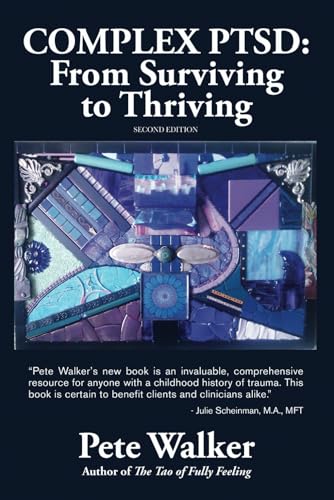
Complex PTSD: From Surviving to Thriving
Pete Walker
A clear, compassionate guide to recognizing and working with the lasting effects of prolonged childhood adversity.
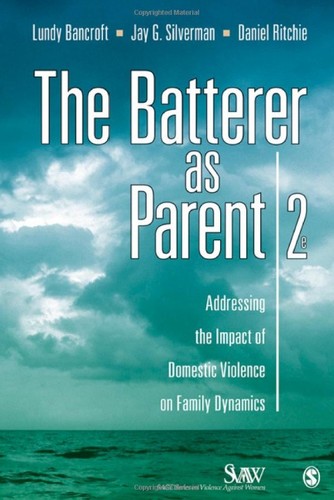
The Batterer as Parent
Lundy Bancroft, Jay G. Silverman & Daniel Ritchie
How domestic violence impacts family dynamics, with approaches for custody evaluations.
As an Amazon Associate, Clarity House Press earns from qualifying purchases. Your price is never affected.
Found this helpful?
Share it with someone who might need it.
About the Author

Clarity House Press
Editorial Team
The editorial team at Clarity House Press curates and publishes evidence-based content on narcissistic abuse recovery, high-conflict divorce, and healing. Our content is informed by research, survivor experiences, and established trauma-informed approaches.
View all posts by Clarity House Press →Published by Clarity House Press Editorial Team