Please read our important disclaimers before using this content
Your seven-year-old comes home from Dad's house and casually mentions that Dad's girlfriend screamed at them and called them names. Your teenager texts you in distress because Mom's new boyfriend is drunk and aggressive. Your ex introduces a new partner to your children after dating for two weeks—the third partner your child has met this year.
Your ex's dating life is generally not your business. Except when it becomes your child's problem.
Here's how to assess whether your ex's new partner poses a genuine risk to your children—and what you can actually do about it legally and practically. If you're already seeing parental alienation warning signs alongside a new partner introduction, this situation requires immediate strategic attention.
Your Legal Rights (and Limitations)
Hard truth first: You have very limited legal control over who your ex dates or introduces to your children.
What courts generally WON'T do:
- Prohibit your ex from dating
- Require them to get your approval before introducing partners
- Order them to wait a specific amount of time before introductions
- Restrict relationships based on your discomfort or jealousy
What courts WILL consider:
- Actual harm or risk of harm to the child
- Partner's criminal history (especially violent crimes, sex offenses, child abuse)
- Substance abuse affecting the child's safety
- Inappropriate sexual behavior around the child
- Abuse or neglect of the child by the new partner
- Patterns of unstable relationships harming the child
The legal standard: Best interests of the child1
To restrict your ex's partner's contact with your child, you must show the partner poses a risk to the child's physical or emotional wellbeing.
"I don't like them" or "They're moving too fast" won't be enough.
Assessing the Risk: Red Flags vs. Discomfort
Separate your feelings from genuine child safety concerns.
Category 1: Your Discomfort (Not Legally Actionable)
These don't warrant legal intervention:
- You don't like the new partner personally
- They're younger/older/different race/different religion than your ex
- Your ex introduced them "too soon" (no legal standard exists)
- New partner has different parenting philosophy
- You're jealous or hurt that your ex moved on
- Partner is wealthy/attractive/successful (triggers comparison)
- Your child likes them (and you feel threatened)
What to do:
- Process your feelings in therapy, not in court
- Focus on your relationship with your child
- Don't badmouth the new partner to your child
- Monitor for actual problems, not just uncomfortable feelings
Category 2: Legitimate Concerns (Monitor Closely)
These warrant monitoring and possibly intervention:
- Partner has history of substance abuse (but currently sober)
- Partner has past criminal record (non-violent, not involving children)
- Your child expresses discomfort about the partner
- Rapid introduction (child met them within weeks of relationship starting)
- Multiple partners introduced in short timeframe2
- Partner attempts to discipline your child aggressively
- Partner speaks negatively about you to your child
What to do:
- Document everything
- Talk to your child about what's happening
- Address concerns with your ex (if communication is possible)
- Consult attorney to understand your options
- Don't rush to court yet; gather evidence
Category 3: Serious Red Flags (Immediate Action Required)
These warrant legal intervention:
- Active substance abuse around your child
- Criminal history involving violence, sex offenses, or child abuse
- Physical or emotional abuse of your child
- Inappropriate sexual behavior or boundary violations
- Driving under the influence with your child in the car
- Leaving your child unsupervised with dangerous partner
- Partner's own children removed by CPS
- Domestic violence between your ex and new partner witnessed by your child3
What to do:
- Document immediately
- Report to CPS if abuse/neglect
- Report to police if criminal behavior
- Emergency custody filing if child is in immediate danger
- Consult attorney immediately
What Information Can You Legally Obtain?
You have the right to know:
- The full name of anyone spending significant time with your child (reasonable request)
- If your child will be left alone with the new partner
- If the new partner will be living in the same home as your child
You generally do NOT have the right to:
- Run a background check on your ex's partner without their consent (in most states)
- Demand to interview them before your child meets them
- Require your ex to provide their social security number, address, or employment information
- Vet or approve every person your child meets
However:
If you have legitimate safety concerns, you can:
- Request court-ordered background check as part of custody modification
- Hire a private investigator (legal but expensive)
- Search public records (criminal records, sex offender registries, court records)
Legal Options
Option 1: Communicate Directly with Your Ex (If Possible)
If you have a non-hostile relationship, address concerns directly first.
Via co-parenting app (written, documented):
"I have concerns about [Child] spending time with [Partner]. [Child] reported [specific incident]. I'd like to discuss safety measures to ensure [Child's] wellbeing when they're at your home. Please let me know when you're available to talk."
Don't:
- Attack or insult the new partner
- Make demands ("You need to break up with them")
- Threaten legal action immediately
If your ex responds reasonably:
- Establish boundaries (no overnight visits yet, no unsupervised time, etc.)
- Formalize in writing
- Monitor compliance
If your ex refuses to engage or dismisses your concerns:
- Document the lack of response
- Proceed to legal options
Option 2: Request Custody Modification
When to file:
You have evidence that the new partner poses a risk to your child's safety or wellbeing.
What to request:
Right of first refusal: "During Parent A's parenting time, if Parent A is unavailable for [X hours], Parent B has the right to care for the child before a third party (including new partner)."
Why it helps: Limits new partner's unsupervised time with your child.
Restriction on overnight guests: "Neither parent shall have overnight guests of the opposite sex when the child is present unless the parents are married or engaged."
Why it helps: Prevents revolving door of partners staying overnight.
Supervised visitation (if serious risk): "Parent A's visitation shall be supervised by [neutral third party] until [conditions met]."
Why it helps: Protects child while allowing parent-child relationship.
Background check requirement: "Any adult residing in either parent's home or spending substantial time with the child shall submit to background check."
Why it helps: Screens for criminal history, sex offender status, child abuse history.
What you'll need to prove:
- Substantial change in circumstances (new partner's presence)
- Risk to child's wellbeing (evidence-based)
- Modification is in child's best interests
Evidence to gather:
- Child's statements (recorded, if legally allowed in your state)
- Witness testimony (others who've observed concerning behavior)
- Criminal records
- CPS reports
- Police reports
- Medical records (if child injured)
- Photos/videos
- Expert testimony (therapist, evaluator)
Option 3: Protective Order (Restraining Order)
When applicable:
New partner has committed domestic violence, made threats, or poses imminent danger.
Types:
Domestic violence protective order: Requires proof of abuse or threat of abuse. May extend to prohibit contact with your child.
Civil harassment restraining order: For harassment, stalking, or threats not involving domestic relationship.
Emergency protective order: Immediate protection (72 hours) if child is in danger. Police can request on your behalf.
What it does:
- Prohibits contact between new partner and your child
- May require partner to stay away from child's school, home, activities
- Violation is criminal (arrest)
What you'll need:
- Specific incidents of violence or threats
- Police reports
- Medical records
- Witness statements
- Evidence of ongoing threat
Option 4: Child Protective Services Report
When to report:
You have reasonable belief your child is being abused or neglected by your ex's new partner.
What constitutes abuse/neglect:4
- Physical abuse (hitting, shaking, burning)
- Sexual abuse or inappropriate sexual behavior
- Emotional abuse (severe, persistent)
- Neglect (failure to provide food, shelter, supervision, medical care)
- Exposure to domestic violence
- Substance abuse endangering the child
How to report:
- Call your state's CPS hotline (Google "[your state] CPS reporting")
- Provide specific information: names, addresses, incidents, dates
- Be factual, not emotional
What happens:
- CPS investigates (interviews child, parents, witnesses; visits homes)
- If founded: CPS may require services, supervision, or remove child
- Unfounded: Case closed
Warning:
False CPS reports can backfire legally. Only report if you genuinely believe abuse is occurring.
Option 5: Request Guardian ad Litem (GAL) or Custody Evaluation5
When useful:
- Complex situation requiring neutral investigation
- He-said/she-said disputes
- You need professional assessment of the situation
What they do:
- Investigate both homes
- Interview parents, children, new partners, witnesses
- Review records
- Make recommendations to court
Cost:
- $3,000-$15,000+ (split between parents usually)
- May be worth it if serious concerns exist
Option 6: Emergency Custody Hearing
When to file:
Your child is in immediate danger and cannot wait for regular court proceedings.
Examples:
- Active substance abuse with child present
- Physical abuse
- Sexual abuse
- Child abandoned or unsupervised in dangerous situation
What happens:
- File ex parte (without notice to other parent)
- Hearing within days
- Temporary custody change if judge finds imminent risk
- Follow-up hearing with both parties present
Standard:
Must show imminent risk of serious harm. High bar to meet.
What to Say to Your Child
If your child reports concerning behavior:
1. Believe them
"Thank you for telling me. I'm glad you told me about that."
Don't: Interrogate, dismiss, or overreact.
2. Reassure safety
"You're safe now. It's my job to keep you safe."
3. Don't promise what you can't deliver
Don't say: "You never have to see them again" (you may not be able to ensure this).
Do say: "I'm going to do everything I can to make sure you're safe."
4. Don't badmouth your ex
Don't say: "Your dad is terrible for letting this happen."
Do say: "I'm sorry that happened to you. That must have been scary."
5. Document, don't interrogate
Don't: Ask leading questions ("Did [partner] hit you?").
Do: Ask open-ended questions ("Tell me what happened." "How did that make you feel?").
Record their words if legally allowed (check your state's laws).
6. Get professional help
If your child reports abuse, get them to a therapist immediately—preferably one trained in forensic interviewing.6 The expert witnesses in custody cases guide explains how therapists, GALs, and custody evaluators can help document what your child is experiencing.
What NOT to Do
1. Don't make false allegations
Temptation: Exaggerate or fabricate to keep child away from new partner.
Reality: Courts punish false allegations. You'll lose credibility and potentially custody.
Do: Report only what you can substantiate.
2. Don't use your child as a spy
Don't: "Tell me everything [partner] does." "Did [partner] stay overnight?"
Why: Parentifies child, creates loyalty conflict, looks manipulative in court.
Do: Listen if child volunteers information.
3. Don't violate custody orders
Don't: Refuse to return child because you don't like new partner (unless imminent danger).
Why: Violating court orders gives your ex ammunition and makes you look unreasonable.
Do: Follow orders while pursuing modification through proper channels.
4. Don't badmouth new partner to your child
Don't: "She's awful." "He's dangerous." "I can't believe your dad chose her over us."
Why: Puts child in middle, damages your credibility, harms child.
Do: Let child form their own opinions while protecting their safety.
5. Don't act out of jealousy disguised as concern
Examine your motives honestly:
Is this about your child's safety, or your ego?
If you're not sure, consult your therapist before consulting your attorney.
Learning about introducing new partners to children after divorce can also help you understand the timing standards courts and psychologists recommend—so you can assess how far outside those norms your ex's behavior actually falls.
Supporting Your Child Through This
What your child needs:
1. A safe space to talk
"If anything ever happens at Dad's house that makes you feel uncomfortable or scared, you can always tell me."
2. Validation without alienation
"It sounds like that was really hard. I'm sorry you experienced that."
3. Maintained relationship with other parent (when safe)
Even if the new partner is concerning, the child's relationship with your ex may still be valuable.
4. Therapy
A neutral professional can help your child process their feelings and assess safety.
5. Stability with you
The more chaos at the other home, the more stability you need to provide.7 Understanding how children respond to parental alienation and high-conflict dynamics can help you know what to watch for in your child's behavior.
6. To not be the referee
They shouldn't mediate between you and your ex about the new partner.
Your Action Plan
If you have concerns about your ex's new partner:
Immediately:
- Document specific incidents (dates, quotes, witnesses)
- Assess risk level (discomfort vs. legitimate concern vs. emergency)
- Ensure your child's immediate safety
- Report to authorities if abuse or imminent danger
Within 1 week:
- Consult family law attorney
- Decide whether to address directly with ex or proceed legally
- Research partner's background (public records)
- Talk to your child's therapist (if they have one)
Within 1 month:
- File appropriate legal motions if warranted
- Get your child into therapy if not already
- Continue documenting
- Follow court orders while pursuing modification
Ongoing:
- Monitor child's reports and behavior
- Keep detailed records
- Support child without alienating other parent
- Focus on what you can control (your home, your relationship with child)
NOTE ON HOTLINE NUMBERS: Phone numbers for crisis hotlines, legal aid, and support services are provided as a resource. These numbers are current as of publication but may change. Please verify hotline numbers are still active before relying on them. For the National Domestic Violence Hotline, visit thehotline.org for current contact information.
Resources
Child Protection and Legal Support:
- Child Welfare Information Gateway - State-by-state child abuse reporting and CPS contacts
- National Child Abuse Hotline - 1-800-422-4453 (24/7 reporting and guidance)
- American Bar Association - Child Custody - Find custody modification attorneys
- LawHelp.org - Free and low-cost legal assistance for emergency custody motions
Therapy and Mental Health for Children:
- Psychology Today - Child Therapists - Find trauma-informed child therapists
- American Academy of Child and Adolescent Psychiatry - Child mental health resources and provider directory
- National Center for PTSD - Resources for children exposed to trauma and violence
- Substance Abuse and Mental Health Services Administration (SAMHSA) - 1-800-662-4357 (treatment referrals)
Documentation and Safety Planning:
- TalkingParents - Document communications about partner concerns for court
- OurFamilyWizard - Certified records of safety concerns and custody violations
- National Domestic Violence Hotline - 1-800-799-7233 (safety planning for children)
- Rape, Abuse & Incest National Network (RAINN) - 1-800-656-HOPE (4673) (sexual abuse reporting and support)
References
Remember: Your concern is legitimate. Your child's safety is paramount.
But you must act strategically, not reactively.
Document. Consult professionals. Follow legal procedures.
Going to court without evidence will make you look vindictive. Waiting too long to act when there's real danger will haunt you.
The line between protective parent and alienating parent is intention and evidence.
If you're motivated by your child's safety and you have evidence to support your concerns, advocate fiercely.
If you're motivated by jealousy, control, or revenge and you lack evidence, step back and work on yourself in therapy.
Your child needs you to be the sane, stable, protective parent.
Sometimes that means going to court to protect them. Sometimes that means processing your feelings in therapy and letting go of what you can't control.
Know the difference. Act accordingly.
Your child's safety—and their relationship with you—depends on it.
References
- Child Welfare Information Gateway. (2019). Definitions of Child Abuse and Neglect. U.S. Department of Health and Human Services, Children's Bureau. https://www.childwelfare.gov/topics/systemwide/laws-policies/statutes/define/ ↩
- Lee, M. H., Chung, D. S., Moon, D. S., & Kwack, Y. S. (2020). The Concept and Historical Background of Custody Evaluation. Journal of the Korean Academy of Child and Adolescent Psychiatry, 31(2), 53-57. https://doi.org/10.5765/jkacap.200005 https://pmc.ncbi.nlm.nih.gov/articles/PMC7289476/ ↩
- Manning, W. D. (2015). Cohabitation and Child Wellbeing. The Future of Children, 25(2), 51-66. https://doi.org/10.1353/foc.2015.0012 https://pmc.ncbi.nlm.nih.gov/articles/PMC4768758/ ↩
- Doroudchi, A., Zarenezhad, M., Hosseininezhad, H., Malekpour, A., Ehsaei, Z., Kaboodkhani, R., & Valiei, M. (2023). Psychological complications of the children exposed to domestic violence: a systematic review. Egyptian Journal of Forensic Sciences, 13(1), 26. https://doi.org/10.1186/s41935-023-00343-4 https://pmc.ncbi.nlm.nih.gov/articles/PMC10213576/ ↩
- Mahrer, N. E., O'Hara, K., Sandler, I. N., & Wolchik, S. A. (2018). Does Shared Parenting Help or Hurt Children in High Conflict Divorced Families? Journal of Divorce and Remarriage, 59(4), 324-347. https://doi.org/10.1080/10502556.2018.1454200 https://pmc.ncbi.nlm.nih.gov/articles/PMC7986964/ ↩
- Lamb, M. E., Orbach, Y., Hershkowitz, I., Esplin, P. W., & Horowitz, D. (2007). Structured forensic interview protocols improve the quality and informativeness of investigative interviews with children: A review of research using the NICHD Investigative Interview Protocol. Child Abuse & Neglect, 31(11-12), 1201-1231. https://doi.org/10.1016/j.chiabu.2007.03.021 https://pmc.ncbi.nlm.nih.gov/articles/PMC2180422/ ↩
- Anderson, J. (2014). The impact of family structure on the health of children: Effects of divorce. The Linacre Quarterly, 81(4), 378-387. https://doi.org/10.1179/0024363914Z.00000000087 https://pmc.ncbi.nlm.nih.gov/articles/PMC4240051/ ↩
Recommended Reading
From Clarity House Press — plus trusted books for deeper understanding



High Conflict People in Legal Disputes
Bill Eddy
Practical guide for disputing with a high-conflict personality through compelling case examples.
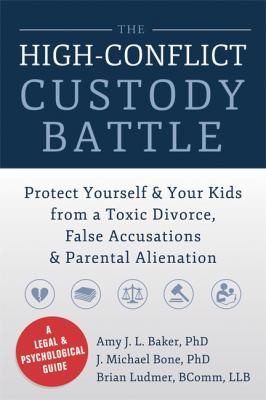
The High-Conflict Custody Battle
Amy J. L. Baker, PhD & J. Michael Bone, PhD
Expert legal and psychological guide to defending against false accusations in custody.
As an Amazon Associate, Clarity House Press earns from qualifying purchases. Your price is never affected.
Found this helpful?
Share it with someone who might need it.
About the Author

Clarity House Press
Editorial Team
The editorial team at Clarity House Press curates and publishes evidence-based content on narcissistic abuse recovery, high-conflict divorce, and healing. Our content is informed by research, survivor experiences, and established trauma-informed approaches.
View all posts by Clarity House Press →Published by Clarity House Press Editorial Team