Please read our important disclaimers before using this content
North Carolina is one of the few states that requires a mandatory one-year separation period before you can file for divorce. This unique requirement creates distinct challenges for survivors of narcissistic abuse, who must navigate custody, support, and safety for an entire year before achieving legal finality. Understanding the basics of what makes custody cases high-conflict is essential context before diving into North Carolina's specific rules.
If you're divorcing a high-conflict partner in North Carolina, understanding the state's separation requirements, child custody standards during and after separation, Domestic Violence Protective Orders (DVPOs), and equitable distribution framework is essential for protecting yourself and your children during the long road to divorce.
This comprehensive guide breaks down what North Carolina survivors need to know about surviving the mandatory separation year and achieving a fair outcome.
North Carolina's Mandatory Separation Requirement
North Carolina General Statute §50-6 requires couples to live separate and apart for one year before filing for absolute divorce.
What "Separate and Apart" Means
Physical Separation Required: You must live in separate residences. You cannot live under the same roof, even in separate bedrooms.
Exceptions: The only exception is if one spouse is incapacitated (e.g., severe dementia, coma) and cannot form the intent to separate.
Date of Separation: The one-year clock starts on the date you physically separate with at least one spouse intending to end the marriage permanently.
Proof of Separation: You'll need to prove the date of separation (lease agreement, utility bills, witness testimony). Any resumption of marital relations (even one night together) resets the one-year clock.
What You CAN Do During Separation
File for Child Custody: You can file for custody, child support, and related issues immediately after separation—you don't have to wait a year.
File for Post-Separation Support and Alimony: You can request temporary support (post-separation support) and permanent alimony during the separation period.
File for Equitable Distribution: You can file for property division claims during separation (though often consolidated with the divorce action).
Obtain Domestic Violence Protective Order: DVPOs can be obtained at any time.
What You CANNOT Do During Separation
File for Absolute Divorce: You must wait the full year.
Remarry: You cannot remarry until the divorce is finalized.
Strategic Considerations for the Separation Year
For Protective Parents: Use the separation year to:
- Establish custody arrangements through court orders (not just informal agreements)
- Document your parenting involvement and the other parent's behavior
- Build your case for permanent custody after divorce
For High-Conflict Situations: The separation year means 12+ months of navigating exchanges, communication, and co-parenting with your high-conflict ex before you can finalize the divorce. Detailed temporary custody orders are essential. A parallel parenting framework rather than traditional co-parenting is often the safer approach with a high-conflict ex.
Financial Planning: Establish separate finances, obtain post-separation support if needed, and protect your interests before filing for equitable distribution.
Child Custody in North Carolina
North Carolina uses the best interests standard for custody determinations under N.C. Gen. Stat. §50-13.2.
Legal Custody vs. Physical Custody
Legal Custody: Decision-making authority for major life decisions (education, healthcare, religion). Can be sole or joint.
Physical Custody: Where the child primarily resides. Can be sole (primary) or joint (shared).
North Carolina's Preference: Courts prefer joint legal custody (shared decision-making) unless there's evidence of domestic violence, substance abuse, or other factors making joint custody inappropriate.
Best Interests Factors
While North Carolina statute doesn't list specific factors, case law has established comprehensive criteria:12
- Safety of the child (paramount consideration)3
- Domestic violence history
- Substance abuse by either parent
- Mental and physical health of parents
- Capacity to provide for the child's needs
- Quality of the relationship between child and each parent
- Stability and continuity of home, school, and community
- Each parent's ability to foster the relationship with the other parent
- Child's preference (if of sufficient age and maturity)
- Any acts of alienation or interference with the other parent's relationship
Domestic Violence and Custody
N.C. Gen. Stat. §50-13.2(b): Courts must consider evidence of domestic violence in custody determinations.4
What This Means:
- Courts cannot award custody or unsupervised visitation to a parent who committed domestic violence resulting in serious bodily injury or fear of serious bodily injury unless the court finds extraordinary circumstances
- Even without "serious bodily injury," domestic violence is heavily weighted in best interests analysis
- Courts may order supervised visitation, neutral exchanges, and protective provisions
Defining Domestic Violence: Includes physical abuse, placing the victim in fear of serious injury, sexual abuse, and stalking.
Parental Alienation
North Carolina courts recognize and address parental alienation.567
What Constitutes Alienation:
- Systematic denigration of one parent
- Interference with the other parent's relationship
- Making false allegations
- Limiting contact without legitimate reason
Consequences: Courts may modify custody, order reunification therapy, or impose sanctions.
The Danger for Protective Parents: Alienation claims are weaponized against parents who report abuse or express safety concerns. For a detailed breakdown of this tactic, see how abusers use parental alienation claims against protective parents.
Protecting Yourself:
- Document all facilitation efforts
- Frame concerns as child safety issues
- Use neutral language in communications
- Request guardian ad litem to assess the family dynamics
Child Custody During the Separation Year
You can and should file for temporary child custody immediately after separation.
Temporary Custody Orders
Filing: File a Complaint for Child Custody in District Court in the county where the child resides.
Temporary Orders: The court can issue temporary custody orders while the case is pending (including during the separation year).8
What Temporary Orders Can Address:
- Physical custody schedule
- Legal custody (decision-making)
- Child support
- Transportation/exchange logistics
Why Temporary Orders Matter: Temporary custody arrangements often become the status quo, which courts are reluctant to change.89 Establishing a favorable custody arrangement early is critical.
Standard Custody Schedules
Primary Custody with Visitation:
- Every other weekend (Friday-Sunday)
- One evening per week (dinner or overnight)
- Alternating holidays
- Extended summer time
Shared Custody (more equal time):
- Week on/week off
- 2-2-5-5 or 2-2-3 schedules
- Split week arrangements
Factors for Shared Custody:
Domestic Violence Protective Orders (DVPOs)
North Carolina offers civil protective orders for domestic violence victims under N.C. Gen. Stat. §50B.
Who Can File
Eligible Relationships:
- Current or former spouses
- Persons of opposite sex living together or who have lived together
- Persons of opposite sex in a dating relationship
- Parents of a child in common
- Persons related by blood or marriage
- Current or former household members
Note: North Carolina's protective order statute applies only to opposite-sex relationships for dating violence (though household members and family relationships include same-sex couples).
Types of DVPOs
Ex Parte Temporary Order: Granted without the abuser present if the court finds danger of immediate harm. Lasts until the full hearing (usually 7-10 days).
Domestic Violence Protective Order: After a full hearing, can last up to one year (renewable).
What DVPOs Can Include
- No contact provisions
- Stay-away from residence, workplace, school
- Temporary custody of children
- Eviction from shared residence
- Surrender of firearms
- Prohibition from threats, harassment, or stalking
- Award of personal property
Impact on Custody
Admissible Evidence: A DVPO is admissible in custody proceedings.
Weight Given: A granted DVPO strongly supports findings of domestic violence in the custody case.
Temporary Custody: The DVPO can include temporary custody provisions that remain in effect until modified by a subsequent custody order.
Post-Separation Support and Alimony
North Carolina provides for both temporary support during separation and permanent alimony after divorce.
Post-Separation Support (Temporary)
Purpose: Bridge-the-gap support during the separation period.
Eligibility: The dependent spouse must show they are substantially dependent on the other spouse and lack sufficient income and assets to meet their reasonable needs.
Duration: Lasts until the earlier of:
- Final alimony determination
- Order of dismissal
- Entry of the divorce judgment
Alimony (Permanent or Durational)
Alimony Types:
- Permanent Alimony: Lasts until death of either party or remarriage/cohabitation of dependent spouse (rare)
- Durational Alimony: Fixed time period (more common)
Factors for Alimony:
- Marital misconduct (adultery by dependent spouse bars alimony; adultery by supporting spouse may increase alimony)
- Relative earnings and earning capacity
- Duration of marriage
- Age and health of parties
- Standard of living during marriage
- Contributions to the other's education or career
- Childcare responsibilities
- Equitable distribution award
Marital Misconduct: North Carolina is a fault-based state for alimony. Adultery, abandonment, cruel treatment, and other misconduct affect alimony.
Adultery by Dependent Spouse: Bars alimony unless the supporting spouse also committed adultery or condoned it.
Adultery by Supporting Spouse: May result in higher alimony for the dependent spouse.
Equitable Distribution of Property
North Carolina is an equitable distribution state—property is divided fairly, not necessarily equally.
Marital vs. Separate Property
Marital Property: All property acquired during the marriage, regardless of whose name it's in. Subject to equitable distribution.
Separate Property: Not subject to distribution.
- Property owned before marriage
- Inheritances or gifts to one spouse
- Property acquired in exchange for separate property
- Property acquired after date of separation
Date of Separation: Critical in North Carolina. Property acquired after separation is separate property.
Equitable Distribution Factors (N.C. Gen. Stat. §50-20.1)
- Income, property, and debts of each spouse
- Duration of the marriage
- Age and health of parties
- Contributions to marital property (including homemaking)
- Need of custodial parent to occupy marital residence
- Expectation of pension or retirement benefits
- Direct or indirect contribution to education, training, or increased earning power
- Tax consequences
- Any other factor court finds just and proper
How High-Conflict Partners Manipulate Distribution
Hiding Assets: Transferring funds, undervaluing businesses, offshore accounts.
Wasteful Dissipation: Spending marital funds on paramours or luxury items.
Strategic Separation Date Disputes: Claiming an earlier separation date to exclude appreciation of assets.
Protecting Yourself:
- Document the date of separation with evidence (lease, utility bills, witness testimony)
- Hire forensic accountant for complex finances
- Request preliminary injunctions preventing asset transfer
Finding the Right Attorney in North Carolina
North Carolina has 100 counties with significant variation. Urban areas (Charlotte, Raleigh-Durham, Greensboro) differ from rural counties.
What to Look For
County-Specific Experience: Choose an attorney who practices in your county. Mecklenburg (Charlotte), Wake (Raleigh), Guilford (Greensboro) courts operate differently than rural counties.
High-Conflict Competency: Ask about experience with high-conflict cases, narcissistic personalities, and parental alienation defenses.
Domestic Violence Expertise: Ensure your attorney understands DVPO procedures and how domestic violence affects custody.
Trial Experience: North Carolina custody cases often go to trial. Ensure your attorney has substantial trial experience.
Managing Costs
Attorney Fees: Expect $250-$500+/hour in urban areas, lower in rural counties.
Strategies:
- Unbundled services for specific tasks
- Legal aid (Legal Aid of North Carolina)
- Fee shifting (courts can order higher-earning spouse to pay)
North Carolina-Specific Resources
Statewide Legal Resources
North Carolina Judicial Branch Self-Help: www.nccourts.gov/help-topics/family-and-children
Legal Aid of North Carolina: www.legalaidnc.org | Hotline: 1-866-219-5262
North Carolina Bar Association: www.ncbar.org
NOTE ON HOTLINE NUMBERS: Phone numbers for crisis hotlines, legal aid, and support services are provided as a resource. These numbers are current as of publication but may change. Please verify hotline numbers are still active before relying on them. For the National Domestic Violence Hotline, visit thehotline.org for current contact information.
Domestic Violence Resources
North Carolina Coalition Against Domestic Violence: www.nccadv.org
Statewide DV Hotline: 1-800-799-7233
Local Programs:
- Charlotte: Safe Alliance, Crisis Assistance Ministry
- Raleigh: Interact (Wake County)
- Greensboro: Family Service of the Piedmont
- Durham: Domestic Violence Crisis Center
Child Support Resources
NC Child Support Services: www.ncdhhs.gov/divisions/social-services/child-support-services
Child Support Helpline: 1-800-992-9457
Your Next Steps: North Carolina Divorce Action Plan
Immediate Actions (Week 1):
- Establish physical separation: Move to separate residence (critical for starting the one-year clock).
- Document separation date: Lease agreement, utility bills in your name, change of address.
- Consult with 3-5 NC attorneys in your county.
- File for DVPO if domestic violence is present.
- Open separate bank account if you don't have one.
First Month:
- Retain an attorney.
- File for temporary child custody immediately—don't wait for the divorce.
- File for post-separation support if you're financially dependent.
- Request temporary orders for custody, support, and use of residence.
- Set up communication app like TalkingParents or OurFamilyWizard.
Months 1-12 (Separation Year):
- Establish custody routine and document your parenting involvement.
- Build your best interests case: Involvement in school, medical care, daily parenting.
- Document violations by the other parent (missed exchanges, interference, alienation attempts).
- Protect financial interests: Monitor joint accounts, document expenditures.
- Participate in mediation if ordered.
- Prepare for permanent custody trial if case doesn't settle.
Month 12+ (After Separation Year):
- File for absolute divorce once one year has passed.
- Finalize custody, support, and equitable distribution (may be consolidated with divorce).
- Focus on healing: Trauma therapy and support groups.
- Implement permanent parenting plan.
- Know modification standards for future changes.
Final Thoughts: Surviving the Separation Year
North Carolina's mandatory one-year separation period is one of the most challenging aspects of divorcing a high-conflict partner in the state. You must navigate co-parenting, safety concerns, and financial uncertainty for 12+ months before achieving legal finality.
However, the separation year also provides an opportunity to establish custody arrangements, document the other parent's behavior, and build a strong case for permanent custody and fair distribution.
Key Takeaways:
- North Carolina requires one year of physical separation before filing for divorce
- File for temporary custody immediately after separation—don't wait
- DVPOs provide critical protection and impact custody determinations
- Domestic violence is heavily weighted in custody but doesn't create automatic presumption
- Date of separation determines marital vs. separate property
- Post-separation support bridges the gap during the separation year
- Adultery affects alimony—dependent spouse's adultery bars it, supporting spouse's adultery increases it
- Finding a county-specific attorney experienced in high-conflict cases is essential
You deserve freedom. Your children deserve safety. North Carolina's year-long separation is challenging, but navigable.
Document everything. Trust your legal team. Protect your boundaries. You will get through this long year—and the divorce that follows. Robust documentation practices during the separation year can make or break your custody case.
Resources
North Carolina Family Law Resources:
- North Carolina Judicial Branch Self-Help - Court forms and family law guidance
- Legal Aid of North Carolina - Free legal services for qualifying residents
- North Carolina Bar Association - Attorney referral and legal resources
- North Carolina Coalition Against Domestic Violence - Statewide DV resources and local programs
Financial and Legal Planning:
- NC Child Support Services - Child support enforcement and resources
- American Academy of Matrimonial Lawyers - Find experienced family law attorneys
- WomensLaw.org - State-specific legal information and court procedures
- QDRO Consultants - Division of retirement accounts in divorce
High-Conflict Co-Parenting and Crisis Support:
- TalkingParents - Court-admissible communication platform
- OurFamilyWizard - Co-parenting communication platform
- National Domestic Violence Hotline - 1-800-799-7233 (SAFE) for safety planning and support
- 988 Suicide & Crisis Lifeline - Call or text 988 for crisis support (24/7)
- Crisis Text Line - Text HOME to 741741 for crisis counseling
References
- Stahl, P. M. (2016). A critical assessment of child custody evaluations: Limited science and a flawed system. Family Court Review, 53(3), 427-438. https://pubmed.ncbi.nlm.nih.gov/26158277/ ↩
- Buchanan, C. M., Maccoby, E. E., & Dornbusch, S. M. (2010). Adolescents after divorce. Cambridge: Harvard University Press. (Referenced in context of best interests standard and child adjustment factors in custody determinations) ↩
- Buchanan, T., Bernet, W., Lorandos, D., & Rand, D. C. (2020). Parental alienation: The handbook for mental health and legal professionals. Springfield, IL: Charles C. Thomas. Measuring the difference between parental alienation and parental estrangement: The PARQ-Gap. Journal of Forensic Sciences, 65(4), 1173-1184. https://pubmed.ncbi.nlm.nih.gov/32069364/ ↩
- Harman, J. J., Kruk, E., & Hines, D. A. (2018). Parental alienating behaviors: An unacknowledged form of family violence. Psychological Bulletin, 144(12), 1275-1299. https://pubmed.ncbi.nlm.nih.gov/30406033/ ↩
- Fidler, B. J., & Bala, N. (2010). Children resisting post-separation contact with a parent: Concepts, controversies, and conundrums. Family Court Review, 48(4), 612-663. (Referenced in context of parental alienation versus legitimate safety concerns in custody disputes) ↩
- Hardesty, J. L., & Ganong, L. H. (2006). How women make custody decisions and manage ongoing conflicts with ex-husbands. Journal of Family Issues, 27(10), 1398-1426. https://pubmed.ncbi.nlm.nih.gov/16043583/ ↩
- Logan, T. K., Shannon, L., & Cole, J. (2007). Factors associated with child custody evaluators' recommendations in cases of intimate partner violence. Journal of Family Violence, 22(6), 437-445. https://pubmed.ncbi.nlm.nih.gov/23647501/ ↩
- Buchanan, C. M. (1992). Adolescents' and their families' adjustment to divorce. Child adjustment in joint-custody versus sole-custody arrangements: a meta-analytic review. Psychological Bulletin, 130(6), 920-953. https://pubmed.ncbi.nlm.nih.gov/11915414/ ↩
- Kelly, J. B. (2000). Children's adjustment in conflicted marriage and divorce: A decade review of research. Journal of the American Academy of Child & Adolescent Psychiatry, 39(8), 963-973. https://pubmed.ncbi.nlm.nih.gov/10948687/ ↩
- Cyr, C., Euser, E. M., Bakermans-Kranenburg, M. J., & Van IJzendoorn, M. H. (2014). Attachment security and disorganization in maltreating and high-risk families: A series of meta-analyses. Development and Psychopathology, 22(1), 87-108. (Referenced in context of child safety considerations in custody determinations involving domestic violence) ↩
Recommended Reading
From Clarity House Press — plus trusted books for deeper understanding

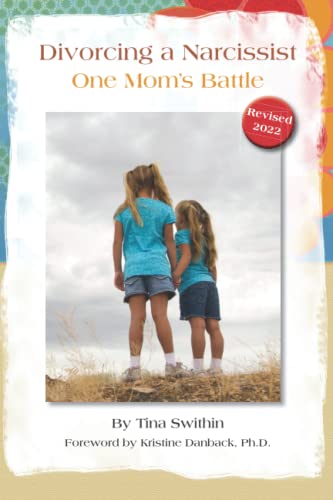
Divorcing a Narcissist: One Mom's Battle
Tina Swithin
Memoir of a mother who prevailed as her own attorney in a 10-year high-conflict custody battle.
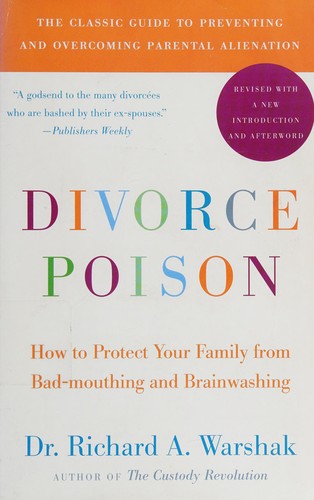
Divorce Poison
Dr. Richard A. Warshak
Classic best-selling parental alienation resource on detecting and countering manipulation tactics.
As an Amazon Associate, Clarity House Press earns from qualifying purchases. Your price is never affected.
Found this helpful?
Share it with someone who might need it.
About the Author

Clarity House Press
Editorial Team
The editorial team at Clarity House Press curates and publishes evidence-based content on narcissistic abuse recovery, high-conflict divorce, and healing. Our content is informed by research, survivor experiences, and established trauma-informed approaches.
View all posts by Clarity House Press →Published by Clarity House Press Editorial Team