Please read our important disclaimers before using this content
"Well, at least you don't have kids with him. That makes it so much easier."
I've heard variations of this statement at least fifty times since leaving my marriage. Understanding what recovery actually looks like challenges many of these minimizing assumptions. From therapists. From support groups. From well-meaning friends. From family members.
And every single time, I've wanted to scream.
Let me be clear: I'm not saying my experience is harder than parents dealing with custody battles and parental alienation. It's not a competition. But I am saying that being childfree didn't make my abuse less real, my recovery less painful, or my leaving any easier.
If you're a childfree survivor and you've felt invisible, minimized, or dismissed because you don't fit the "typical" narrative—this one's for you.
The Assumptions People Make
When people learn I don't have children with my ex-husband, I can see the thought process play out on their faces:
Oh, so she could just leave. No custody battles. No co-parenting. No ongoing contact. Lucky her.
Here's what they don't understand:
Not having children didn't mean I could "just leave."
I was with him for eight years—married for five. We owned a home together. We had a business together. Our finances were completely entangled. Our friend groups overlapped entirely. We lived in a city where I'd moved for him, far from my family.
Leaving wasn't simple. It was devastating.
Not having children didn't mean I avoided ongoing contact.
We had to divide assets. Negotiate the business dissolution. Navigate shared friend groups. Deal with his family who blamed me for "abandoning" him. Handle the smear campaign in our professional community.
I still see him at industry events. I still get messages from his mother. I still deal with the fallout.
Not having children didn't make the abuse less severe.
Narcissistic abuse doesn't require children to be traumatic. The gaslighting, the control, the emotional manipulation, the isolation, the financial abuse—none of that required kids to be absolutely devastating.
What Childfree Narcissistic Abuse Looks Like
My abuse didn't involve parental alienation or custody battles. But it was abuse nonetheless.
He systematically dismantled who I was:
- Criticized my career ambitions as "selfish"
- Mocked my hobbies as "childish"
- Belittled my friends as "bad influences"
- Controlled how I dressed, spoke, socialized
- Made me feel like I needed to earn his approval constantly
By the end, I didn't recognize myself. I'd become a supporting character in his story.
Professional sabotage:
This is where the abuse hit hardest for me. Without children, my career was my primary focus—and he knew it.
- Scheduling "emergencies" during important work meetings
- Criticizing my work in front of colleagues
- Undermining my professional relationships
- Taking credit for my ideas
- Creating drama that made me unreliable at work
- Threatening to tell my boss I was "unstable"
He weaponized my career because he knew it mattered to me the way children matter to parents. Career sabotage is a recognized form of abuse—rebuilding your professional life after abuse addresses this specific wound.
- Gradually cut me off from friends ("they don't really like you")
- Created conflicts with my family
- Demanded all my free time
- Made me feel guilty for any activity that didn't include him
- Monitored my phone and social media
- Accused me of cheating if I went anywhere alone
By the time I left, I had no friends. None. I'd lost them all.
Financial control:
- Joint bank accounts he monitored obsessively
- "Allowance" despite me making more money than him
- Investments in his name only
- Using the business to hide assets
- Threatening financial ruin if I left
The "why don't you have kids" weapon:
This one is specific to childfree survivors and it's brutal.
He used my childfree status against me constantly:
- "No wonder you don't want kids, you're too selfish"
- "What kind of woman doesn't want to be a mother?"
- "You're broken, that's why you don't have maternal instincts"
- "When you change your mind and want kids, it'll be too late"
The childfree choice became evidence of my fundamental wrongness.
The Unique Challenges of Childfree Recovery
When I finally left and started looking for support, I quickly realized most resources assume you have children with your abuser.
Support groups:
Every domestic abuse support group I tried was 90% mothers dealing with custody issues. Which is valid and necessary—but I couldn't relate to their primary source of ongoing trauma.
When I'd share about the business dissolution or the professional smear campaign, I'd see eyes glaze over. My problems seemed "manageable" in comparison.
I eventually stopped going.
Therapy:
I went through three therapists before I found one who understood that my trauma was real even without children involved.
The first two kept circling back to: "But at least you can make a clean break."
No. I couldn't. And that invalidation in therapy just compounded my pain.
Online resources:
Try Googling "leaving narcissistic abuse." 90% of results focus on co-parenting, protecting children, custody strategies.
Where were the resources for:
- Dividing a business with a narcissist?
- Navigating shared professional communities?
- Rebuilding a career after professional sabotage?
- Recovering from childfree-specific emotional abuse?
They barely existed.
Social validation:
People understand why you can't leave when kids are involved. There's sympathy for "staying for the children."
But staying eight years without children? People wonder why you didn't leave sooner. They question whether it was really that bad. They minimize your experience.
What People Don't Understand
Let me break down the assumptions:
"You don't have to see him anymore."
Technically true. But we live in the same city. Work in overlapping industries. Have mutual friends. I don't have forced contact like custody exchanges, but I haven't escaped him either.
I've had to change jobs. Rebuild my professional network. Avoid certain industry events. Change my gym. Find a new dentist. Leave the running club we both attended.
"No contact" required rebuilding my entire life.
"At least you can date freely without worrying about introducing someone to your kids."
You know what I worry about instead? Whether I'll ever be able to trust anyone again. Whether my picker is broken forever. Whether I'll ever be able to be vulnerable in a relationship without constant anxiety.
Also, childfree dating after narcissistic abuse comes with its own challenges:
- Trusting new partners who seem "too good"
- Hypervigilance about red flags
- Explaining my marriage without kids (people find it odd)
- Attracting men who see childfree as "low maintenance"
- Fear that my childfree choice makes me less desirable
"You have more freedom to focus on your career."
After he sabotaged my professional reputation? After he destroyed my confidence? After I developed anxiety so severe I had panic attacks before work presentations?
Sure, I don't have childcare logistics. But I also have to rebuild a career from rubble.
"You can move anywhere, start fresh."
This is true, and I'm grateful for this freedom. But:
- Moving requires money I spent on attorney fees
- My family is here
- My therapist is here
- The few friends I've rebuilt are here
- Running away doesn't heal trauma
Moving might be easier logistically, but it's not the automatic solution people think it is.
What Childfree Survivors Actually Need
Validation that our abuse was real.
Not "at least you don't have kids." Not "it could be worse."
Just: "What happened to you was abuse. Your pain is valid. You didn't deserve that."
Support resources that address our specific challenges:
- Professional recovery after workplace sabotage
- Navigating shared social/professional circles
- Business dissolution with a narcissist
- Identity recovery when career was your focus
- Childfree-specific emotional abuse patterns
Recognition that "no kids" doesn't mean "no ongoing impact."
I might not have custody battles, but I have:
- PTSD triggers when I see him at events
- Career setbacks that will take years to overcome
- Lost friendships that are still grieved
- Financial damage that impacts my future
- Trust issues that affect every relationship
Space to grieve our specific losses.
I grieve:
- The eight years I gave to someone who destroyed me
- The career momentum I lost
- The friends I'll never get back
- The version of myself I was before him
- The belief that my childfree choice made me immune to certain types of abuse
These losses matter, even if they look different from parental alienation.
What I Wish I Could Tell Every Childfree Survivor
Your trauma is not less-than because you don't have children.
Abuse is abuse. Trauma is trauma. Whether or not kids are involved doesn't change the fundamental reality that someone you loved systematically destroyed you.
You're not "lucky" to be able to leave.
Leaving is still hard. Rebuilding is still hard. Healing is still hard. Don't let anyone minimize your courage.
Your childfree status doesn't define your recovery timeline.
People expect you to "move on faster" because you're not tied to him through kids. Ignore that pressure. Heal at your own pace.
You deserve support spaces too.
If traditional survivor groups don't fit, create your own. Online communities exist for childfree survivors. Find your people.
Your choice to be childfree is valid—it always was.
He weaponized it. Society questions it. But you don't owe anyone children. You don't owe anyone an explanation.
The Unexpected Gift
Here's something I've realized two years into my recovery:
Being childfree did give me one significant advantage: the ability to go completely no contact.
I don't have custody exchanges. I don't have to coordinate holidays. I don't have to watch him manipulate children we share. I don't have to maintain civility for the sake of kids. For anyone in the same position, no contact: why it's necessary and how to maintain it is the definitive guide to implementing full separation.
I could block him completely. Change my number. Cut all ties.
For that, I am deeply grateful.
But that doesn't erase the years of abuse. It doesn't minimize the trauma. It doesn't make my recovery "easier."
It just means my recovery looks different. Not easier. Not harder. Different.
To Those Who've Minimized Childfree Survivors
If you've ever said "at least you don't have kids" to a survivor, please understand:
We know you mean well. We know you're trying to find a silver lining. We know you think you're being supportive.
But what we hear is: "Your pain doesn't count as much."
What would help instead:
- "That sounds incredibly difficult."
- "How are you holding up?"
- "What do you need right now?"
- "Your experience is valid."
You don't need to compare suffering. You just need to witness ours.
Two Years Later
I'm 37 now, two years post-divorce. Here's where I am:
Professionally: I changed industries. Rebuilt my reputation. Started my own consulting business so no one can sabotage my career again. I'm earning more than I ever did when I was with him.
Socially: I have three close friends. Real friends, not the surface friendships I had before. Quality over quantity. I've learned to set boundaries and protect my energy.
Romantically: I'm dating. Slowly. Carefully. With a therapist on speed dial. I'm learning what healthy love looks like.
Personally: I'm still childfree by choice—that never wavered. I'm still healing. I still have triggers. But I also have clarity, freedom, and a sense of self I thought I'd lost forever. The work of rebuilding identity after narcissistic abuse has been the most profound part of my recovery.
And most importantly: I no longer question whether my trauma was "bad enough" to count. I no longer apologize for not having kids with him. I no longer minimize my own experience.
I survived narcissistic abuse. The fact that I don't have children doesn't change that truth.
Final Thoughts
To the childfree survivors reading this: your story matters. Your pain is real. Your recovery is valid.
You don't need to have children to have survived abuse.
You don't need custody battles to have real ongoing struggles.
You don't need parental alienation to have lost something precious.
You lost yourself. You lost years. You lost your sense of safety and trust.
That's enough. That counts. You count.
Don't let anyone tell you otherwise.
Jennifer is a marketing consultant and childfree survivor of narcissistic abuse. She writes about career recovery, childfree identity, and rebuilding after professional sabotage.
Resources
Childfree Survivor Support:
- Psychopath Free by Jackson MacKenzie - Recovery from narcissistic abuse
- r/NarcissisticAbuse - Community for all survivors regardless of parent status
- Out of the FOG - Support for people affected by personality disorders
- DivorceCare - Divorce recovery support groups (not parent-specific)
Therapy and Trauma Recovery:
- Psychology Today - Therapists - Find trauma-informed therapists
- EMDR International Association - EMDR therapy for trauma from abuse
- Internal Family Systems Institute - IFS therapy directory
- The Body Keeps the Score by Bessel van der Kolk - Trauma recovery
Crisis Support and Validation:
- National Domestic Violence Hotline - 1-800-799-7233 (SAFE) for all survivors
- 988 Suicide & Crisis Lifeline - Call or text 988 for crisis support (24/7)
- Crisis Text Line - Text HOME to 741741 for crisis counseling
- SAMHSA National Helpline - 1-800-662-4357 for mental health referrals
References
- Campbell, J. C., & Lewandowski, L. A. (1997). Intimate partner violence and physical health consequences. Archives of Internal Medicine, 157(10), 1141-1147. https://www.ncbi.nlm.nih.gov/pubmed/9146551 ↩
- Williamson, E. (2000). Domestic abuse and health: the response of the medical profession. Policy Press. ↩
- Abt, Foster, Lapidus, Clum, & Sun (2010). Complete genome sequence of Cellulomonas flavigena type strain (134).. Standards in genomic sciences. https://pmc.ncbi.nlm.nih.gov/articles/PMC3035266/ ↩
- Spinhoven, P., Penninx, B. W., Krempeniou, A., van Hemert, A. M., & Elzinga, B. M. (2015). Trait rumination predicts onset of post-traumatic stress disorder symptoms in depression patients. Behaviour Research and Therapy, 73, 19-23. https://www.ncbi.nlm.nih.gov/pubmed/26228423 ↩
- Golding, J. M. (1999). Intimate partner violence as a risk factor for mental disorders: A meta-analysis. Journal of Family Violence, 14(2), 99-132. https://www.ncbi.nlm.nih.gov/pubmed/20725591 ↩
- Johnson, R., & Zlotnick, C. (2006). A review of individual psychotherapy outcomes for adult survivors of childhood abuse. Clinical Psychology Review, 26(8), 1045-1082. https://www.ncbi.nlm.nih.gov/pubmed/16820246 ↩
- Anderson, D. K., & Saunders, D. G. (2003). Leaving an abusive partner: An empirical review of predictors, the process of leaving, and psychological well-being. Trauma, Violence, & Abuse, 4(2), 163-191. https://www.ncbi.nlm.nih.gov/pubmed/14697342 ↩
- Tjaden, P., & Thoennes, N. (1998). Prevalence, incidence, and consequences of violence against women: Findings from the National Violence Against Women Survey. National Institute of Justice, U.S. Department of Justice. https://www.ncjrs.gov/pdffiles/172837.pdf ↩
- Coker, A. L., Davis, K. E., Arias, I., Desai, S., Sanderson, M., Brandt, H. M., & Smith, P. H. (2002). Physical and mental health effects of intimate partner violence for men and women. American Journal of Preventive Medicine, 23(4), 260-268. https://www.ncbi.nlm.nih.gov/pubmed/12406480 ↩
Recommended Reading
From Clarity House Press — plus trusted books for deeper understanding
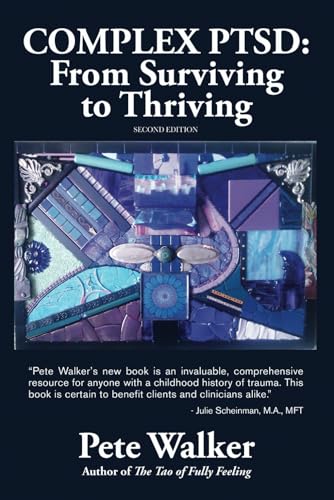
Complex PTSD: From Surviving to Thriving
Pete Walker
A clear, compassionate guide to recognizing and working with the lasting effects of prolonged childhood adversity.
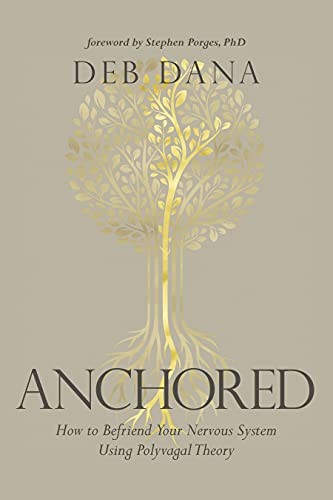
Anchored
Deb Dana, LCSW
Practical everyday ways to transform your relationship with your nervous system using Polyvagal Theory.
As an Amazon Associate, Clarity House Press earns from qualifying purchases. Your price is never affected.
Found this helpful?
Share it with someone who might need it.
About the Author

Clarity House Press
Editorial Team
The editorial team at Clarity House Press curates and publishes evidence-based content on narcissistic abuse recovery, high-conflict divorce, and healing. Our content is informed by research, survivor experiences, and established trauma-informed approaches.
View all posts by Clarity House Press →Published by Clarity House Press Editorial Team