Please read our important disclaimers before using this content
Content warning: This post discusses suicide, suicidal ideation, and mental health crises. If you're in immediate danger, please call 988 (Suicide & Crisis Lifeline) or text HOME to 741741 (Crisis Text Line).
Men die by suicide at nearly 4 times the rate of women.
We know this statistic. We talk about it every Movember. We share awareness posts about men's mental health. We say "men need to talk about their feelings more."
But we don't talk about one of the significant contributing factors: narcissistic abuse.
Here's what we're not saying:
Male survivors of narcissistic abuse have elevated rates of:
- Depression
- Anxiety
- Complex PTSD
- Substance abuse
- Suicidal ideation
- Suicide attempts
Research confirms that C-PTSD in men presents differently than in women—externalizing as anger, substance abuse, or withdrawal rather than the more recognizable anxiety and hypervigilance presentations.
And we don't talk about it. Because we don't acknowledge that men can be victims of domestic abuse. Because male victimhood doesn't fit our cultural narratives.
So men suffer in silence. And some of them die.
I'm going to talk about what we're not talking about.
The Statistics We Ignore
Male suicide:
- Men die by suicide 3.88 times more often than women according to CDC data, with males accounting for approximately 80% of all suicides
- Middle-aged white men account for nearly 70% of all suicide deaths
- Men aged 75+ have the highest suicide rate of any demographic, with rates exceeding 40 per 100,000
Domestic abuse and suicide risk:
- Domestic violence victims are at significantly elevated risk for suicide—research shows a 2-3x increased risk of suicidal ideation and attempts among IPV victims
- Intimate partner violence is a documented risk factor for completed suicide independent of other mental health conditions
- Psychological abuse increases suicide risk independent of physical abuse—emotional abuse alone is associated with elevated suicidality
- A comprehensive study found that one in five suicides involved intimate partner problems, including breakups, separation, and divorce (Logan et al., 2023)
The connection no one talks about:
Male survivors of narcissistic abuse are experiencing:
- Prolonged psychological torture
- Isolation from support systems
- Systematic destruction of self-esteem
- Societal disbelief and invalidation
- Legal and financial devastation
- Loss of access to their children
All while being told:
- They're not really victims
- They should be able to "handle" it
- They're weak for struggling
- Real men don't need help
Is it any wonder male survivors are at elevated suicide risk?
What Narcissistic Abuse Does to Male Mental Health
Before I explain the suicide connection, I need you to understand what narcissistic abuse does to the male brain.
It Creates Complex PTSD
What Complex PTSD is: Prolonged, repeated trauma that occurs in the context of a relationship where escape is difficult or impossible.
How narcissistic abuse creates it:
Chronic stress response: Living with a narcissist means living in a constant state of hypervigilance. You're always:
- Monitoring their mood
- Trying to prevent the next explosion
- Walking on eggshells
- Anticipating criticism or punishment
This chronic stress literally changes your brain. Elevated cortisol levels. Hyperactive amygdala. Shrinking hippocampus.
Emotional flashbacks: Long after leaving the relationship, triggers (a tone of voice, certain phrases, conflict) can send you back to the trauma state. You experience the same fear, shame, and helplessness you felt during the abuse.
Negative core beliefs: After years of being told you're worthless, incompetent, unlovable, and the problem, you internalize it. You believe it.
These become core beliefs about yourself:
- I'm fundamentally flawed
- I'm not worthy of love
- Everything is my fault
- I can't trust my own perceptions
Symptoms of C-PTSD:
- Difficulty regulating emotions
- Negative self-perception
- Relationship difficulties
- Feelings of detachment and disconnection
- Loss of sense of meaning or purpose
Sound like suicide risk factors? That's because they are.
It Destroys Self-Esteem and Identity
Male survivors describe feeling:
"Like a shell of who I used to be."
"I don't even recognize myself anymore."
"I used to be confident. Now I second-guess everything."
"I feel like I'm broken. Like she broke something fundamental in me."
These accounts align with research documenting severe psychological consequences for male victims, including suicidal ideation, depression, and post-traumatic stress (Machado, Hines, & Douglas, 2020).
What happens to male identity under narcissistic abuse:
Loss of confidence: Years of criticism and gaslighting destroy your belief in your own competence, judgment, and worth.
Shame: You feel ashamed that you're being controlled by a woman. Ashamed you can't "handle" her. Ashamed you're weak. Ashamed you need help.
Loss of purpose: Many men derive purpose from being providers and protectors. Narcissistic abuse attacks both:
- Financial control makes you feel like a failed provider
- Inability to protect yourself or your children makes you feel like a failed protector
Identity confusion: After years of being told who you are by an abuser, you don't know who you actually are anymore.
The result: A profound sense of worthlessness and emptiness. Classic risk factors for suicide.
It Creates Inescapable Situations
The suicide research is clear: Suicide risk increases when someone feels trapped in an intolerable situation with no escape—this "entrapment" is a core component of suicidal crisis according to the Interpersonal Theory of Suicide.
Male survivors of narcissistic abuse feel trapped by:
Financial barriers:
- She controls the money
- Divorce would be financially devastating
- He'd owe support payments he can't afford
- He'd lose the home, assets, savings
- Legal fees could bankrupt him
Custody fears:
- Courts favor mothers
- She's threatened to take the children
- False allegations could destroy his parental rights
- He can't leave his kids alone with her
- But he can't protect them if he stays
Social barriers:
- No one will believe him
- He'll lose friends who take her side
- His family doesn't understand
- He'll be seen as abandoning his family
- Male victims face mockery and shame
Psychological barriers:
- He's been gaslit into believing he's the problem
- He thinks if he just tries harder, it will get better
- He's trauma-bonded and can't imagine life without her
- He doesn't recognize it as abuse
The trap: Staying is destroying him. Leaving feels impossible. He sees no way out.
This is when men become suicidal.
It Isolates Men from Support Systems
Isolation is both a feature of narcissistic abuse AND a suicide risk factor.
How narcissistic abusers isolate male victims:
- Criticize his friends and family until he distances himself
- Demand all his time and attention
- Create conflict with anyone who might support him
- Frame independence as betrayal
- Punish him for having outside relationships
The result: By the time the abuse is severe, he has no one to turn to.
Why isolation is deadly for male survivors:
Men are already:
- Less likely to seek mental health support
- Less likely to talk about emotional struggles
- More likely to "tough it out" alone
- Socialized to view asking for help as weakness
Add systematic isolation from abuse on top of existing male socialization around help-seeking?
Research confirms this pattern: a 2025 systematic review found that traditional masculinity norms consistently deter men from seeking mental health support, with fear of being judged as "less masculine" identified as a recurring barrier across multiple studies (Mokhwelepa & Sumbane, 2025).
Men suffer alone. And they die alone.
The Crisis Points: When Male Survivors Are Most at Risk
Suicide risk isn't constant. There are specific crisis points when male survivors are most vulnerable.
Crisis Point #1: When He Finally Sees the Abuse
The moment of realization: He discovers the term "narcissistic abuse" or "gaslighting." He reads checklists. He realizes: I'm being abused.
Why this creates suicide risk:
Grief: He grieves the relationship he thought he had. The partner he thought he married. The years he lost.
Shame: "How did I let this happen?" "Why didn't I see it sooner?" "What kind of man gets abused by his wife?"
Despair: If he sees it clearly for the first time, he also sees clearly how trapped he is. How long it's gone on. How much damage has been done.
This awareness can be devastating.
Crisis Point #2: When He Tries to Leave and Faces Retaliation
What happens when narcissists feel they're losing control: They escalate. Dramatically.
Common retaliation tactics:
- False allegations of domestic violence
- False allegations of child abuse
- Smear campaigns to destroy his reputation
- Parental alienation
- Financial warfare
- Legal abuse (frivolous motions, constant litigation)
Why this creates suicide risk:
He finally found the courage to leave. And the abuse got worse.
He's now facing:
- Loss of his children (temporarily or long-term)
- Criminal charges or protective orders from false allegations
- Destroyed reputation
- Isolation as people believe her lies
- Mounting legal fees he can't afford
- Employment consequences
He tried to escape. And escape made everything worse.
Research confirms that the end of a relationship is a critical intervention point. A 2022 study found that helping men adaptively regulate shame in the context of relationship breakdown is essential for interrupting paths to suicide, as separation often leaves men socially isolated with limited support (Fitzpatrick et al., 2022).
This is when men think: "I can't do this. I can't survive this."
Crisis Point #3: The Custody Battle
This is the most dangerous period for male survivors.
Why custody battles are suicide risk factors:
The stakes are unbearable: His children—the people he loves most—are being used as weapons. He's at risk of losing them.
The system is biased: Courts favor mothers. His abuse claims aren't taken seriously. Her false allegations are.
The financial devastation is real: Legal fees of $30,000, $50,000, $100,000+. On top of support payments. While maintaining a home for his kids.
Parental alienation is torture: Watching his children turn against him. Hearing them repeat her lies about him. Being rejected by his own kids.
The timeline is brutal: Custody battles can take 1-2 years. That's 1-2 years of:
- Ongoing abuse and retaliation
- Uncertainty about his children
- Financial hemorrhaging
- Legal stress
- Emotional devastation
Many male survivors describe this period:
"I thought about suicide daily."
"It was the darkest time of my life."
"I didn't see how I could survive this."
"The only thing that kept me alive was my kids—but fighting for them was also what made me want to die."
Crisis Point #4: When He Loses Custody Time
What happens: Despite being a good father, despite evidence of her abuse, despite his best efforts—he loses.
He gets 40% custody instead of 50/50. Or every other weekend. Or supervised visitation based on her false allegations.
Why this creates suicide risk:
Loss of purpose: For many fathers, being a dad is core identity. Losing time with his children feels like losing himself.
Failure: He fought for his kids and lost. He couldn't protect them. He failed as a father.
Injustice: The system didn't believe him. Her abuse was invisible. His victimization was dismissed. False allegations worked.
Hopelessness: If he did everything right and still lost, what's the point? The system is rigged. He can't win.
Ongoing torture: He has to watch his children stay with their abuser. And he's powerless to stop it.
For some fathers, this is unbearable.
Crisis Point #5: Post-Divorce Financial Collapse
The reality: Many male survivors face financial devastation after divorce.
The burden:
- Spousal support payments
- Child support payments
- Half the marital debt (even debt she created)
- Legal fees (often for both parties)
- New housing costs
- Maintaining a home for the kids during parenting time
On a fraction of his previous household income.
Why this creates suicide risk:
Insurmountable burden: He's working full-time, sometimes multiple jobs, and still can't make ends meet.
Loss of future: His retirement is gone. His savings are gone. His ability to build wealth is compromised for years.
Shame: Men are socialized to be providers. Financial failure feels like fundamental failure.
Resentment: He's paying support to his abuser. He's funding the lifestyle of the person who destroyed him.
Some men see suicide as the only way out of financial ruin.
Especially when life insurance would provide for their children better than they can while barely surviving.
This is a horrifying calculation that some male survivors make.
The Barriers That Keep Male Survivors from Getting Help
Even when suicidal, male survivors don't seek help.
Why not?
Barrier #1: "Real Men Don't Ask for Help"
Toxic masculinity kills.
Men are socialized to:
- Be stoic and strong
- Handle problems independently
- Never show weakness
- Provide, protect, endure
Asking for mental health help violates all of these masculine norms.
Research provides compelling evidence: a 2024 study of Australian men found that adherence to the self-reliance masculine norm is significantly associated with suicidal thoughts. The researchers emphasized that men's risk of attempting suicide increased dramatically when they adhered to masculine standards of emotional suppression and stoicism (King et al., 2024).
The shame: "I should be able to handle this myself."
"Needing therapy means I'm weak."
"Real men don't fall apart."
The result: Men suffer in silence until crisis becomes catastrophe.
Barrier #2: "Male Victims Aren't Real"
Society doesn't recognize male victimization.
When male survivors try to get help:
From friends/family: "You're overreacting."
"Just leave if it's so bad."
"How can she abuse you? You're twice her size."
From therapists: Not all therapists understand narcissistic abuse or male victimization. Some have actively harmful responses.
From the legal system: "Emotional abuse claims don't play well when the victim is male."
From crisis resources: Most domestic violence resources are gendered female. Male survivors calling hotlines report being:
- Dismissed
- Offered resources for female victims
- Redirected to anger management (as if they're the problem)
- Made to feel their abuse isn't real
Research confirms this systemic barrier: male victims encounter professional dismissal and ridicule from domestic violence agencies, police bias and failure to investigate properly, and court systems favoring female partners in custody disputes (Machado, Hines, & Douglas, 2020). Studies consistently show that attempting to address abuse through formal channels often escalates victimization rather than providing relief.
When you seek help and are told your abuse isn't real, you stop seeking help.
Barrier #3: "Suicide is Weakness"
Even suicidal ideation feels shameful for men.
Thoughts like: "I can't even handle this."
"I'm so weak I want to die."
"Real men don't think about suicide."
The stigma around male mental health makes suicidal thoughts feel like evidence of fundamental failure.
So men don't tell anyone. They don't get help. They suffer alone.
Barrier #4: Financial Barriers to Mental Health Care
Good trauma therapy is expensive.
Male survivors are often:
- Paying massive support and legal fees
- Supporting two households
- Financially devastated
They can't afford therapy.
And insurance often doesn't cover:
- Specialized trauma therapy
- The frequency of sessions needed
- Long-term treatment
So they go without.
What Actually Helps: Suicide Prevention for Male Survivors
If you're a male survivor experiencing suicidal thoughts, here's what you need:
Immediate Crisis Support
If you're in immediate danger:
Call 988 - Suicide & Crisis Lifeline (24/7, free, confidential)
Text HOME to 741741 - Crisis Text Line (24/7, free, text-based support)
Call 911 - If you're in immediate danger or have a plan to harm yourself
Go to the nearest emergency room - They can provide immediate psychiatric evaluation and safety planning
These resources are for men too. You are not being dramatic. You are not overreacting. If you're thinking about suicide, you need and deserve help.
Long-Term Mental Health Support
What helps male survivors with suicidal ideation:
1. Trauma-informed therapy
Not all therapy is created equal. You need:
- Therapist who understands narcissistic abuse
- Specialization in Complex PTSD
- Evidence-based trauma treatment (EMDR, CPT, DBT, IFS)
- Someone who validates male victimization
How to find this:
- Psychology Today therapist directory (filter by specialization)
- Ask specifically: "Do you work with male survivors of narcissistic abuse?"
- Online therapy platforms if local options are limited
- Sliding scale/reduced fee options if finances are tight
2. Psychiatric evaluation if needed
Depression and PTSD are medical conditions that often require medication. Understanding which medications help with CPTSD symptoms—and which to avoid—helps you have an informed conversation with a prescriber.
There's no shame in medication for:
- Depression
- Anxiety
- PTSD
- Sleep disturbance
If therapy alone isn't enough, talk to a psychiatrist about medication options.
3. Support groups
Online communities for male survivors:
- r/NarcissisticAbuse on Reddit
- Male survivor-specific Facebook groups
- DadsInDistress.org
- Local DV groups (though many are female-focused)
Why groups help:
- Validation from people who've experienced the same abuse
- Reduced isolation
- Practical strategies and resources
- Hope from seeing others survive
You're not alone. But you have to find your people.
Safety Planning
If you're having suicidal thoughts, create a safety plan:
1. Warning signs: What situations, thoughts, or feelings make suicidal thoughts worse?
- Anniversary dates
- Court hearings
- Custody exchanges
- Seeing her
- Being alone
- Alcohol use
2. Internal coping strategies: What can you do on your own to distract from suicidal thoughts?
- Go for a run
- Call a friend
- Watch a movie
- Work on a project
- Play video games
- Anything that provides temporary relief
3. People who can help: Who can you talk to? (Need at least 2-3 people)
- Friends who believe you
- Family members who support you
- Support group members
- Crisis line
4. Professionals to contact:
- Your therapist's emergency number
- Crisis hotline: 988
- Your psychiatrist if you have one
5. Make environment safe: If you have means of self-harm accessible:
- Give firearms to someone for safekeeping
- Remove medications beyond daily doses
- Ask someone to hold anything you might use
6. Reasons for living: Write them down. Read them when suicidal thoughts are strong.
For most male survivors, this is:
- Your children
- The truth coming out eventually
- Not giving her the satisfaction
- Proving you can survive this
- Future hope for happiness
- People who believe and support you
Addressing the Root Causes
Long-term suicide prevention means addressing what's making you suicidal:
If you're still in the abusive relationship: You won't heal while being actively abused. Start planning your exit.
If you're in the custody battle: Get the best attorney you can afford. Build your support team. Focus on the long game.
If you've lost custody time: Focus on the time you do have. Stay consistent and present. Document everything. Play the long game.
If you're financially drowning: Consult with a bankruptcy attorney. Explore support modification. Get financial counseling.
The crises will pass. They feel permanent but they're not.
What I Need You to Hear
If you're a male survivor struggling with suicidal thoughts:
You're not weak. Suicidal ideation in response to prolonged psychological torture is a normal human response to unbearable pain. It doesn't mean you're weak. It means you're hurting.
You're not alone. Thousands of male survivors have been exactly where you are. Many of them wanted to die. They're alive today and glad they survived.
Your pain is real. Even if society doesn't validate it. Even if your friends don't understand. Even if the court dismissed it. Your abuse was real. Your pain is real.
Your children need you alive. Not perfect. Not winning. Alive and present. Even 40% of the time. Even supervised. Alive.
This won't last forever. The crisis will pass. The custody battle will end. The financial situation will stabilize. The pain will lessen. You will heal.
You can survive this. You're stronger than you know. You've survived everything so far. You can survive this too.
There's life after narcissistic abuse. Peace. Healing. Joy. Relationships. Purpose. It exists. I've seen it. Other survivors are living it.
But you have to stay alive to get there.
To Everyone Else: How to Help Male Survivors
If you know a man going through divorce, custody battle, or abuse:
Take him seriously. Don't minimize. Don't joke. Don't question whether his abuse is real.
Check in regularly. Isolation is deadly. Be the person who reaches out.
Offer specific help. Not "let me know if you need anything" but "I'm bringing you dinner Tuesday" or "I'm coming over Saturday to hang out."
Believe him. About the abuse. About the gaslighting. About how bad it is.
Don't judge his decisions. Whether he stays, leaves, fights, settles—support him.
Know the warning signs of suicide:
- Talking about death or suicide
- Giving away possessions
- Withdrawing from social contact
- Risky or self-destructive behavior
- Sudden calm after depression (can mean decision has been made)
- Saying goodbye
If you see warning signs, ask directly: "Are you thinking about suicide?"
This won't plant the idea. It gives permission to talk about it.
If yes: Don't leave him alone. Help him call 988. Go to emergency room with him.
Your presence might save his life.
The Truth About Men's Mental Health and Narcissistic Abuse
We can't talk about male suicide without talking about narcissistic abuse.
We can't tell men to "talk about their feelings" while simultaneously:
- Refusing to believe they can be abused
- Mocking male victimization
- Offering no resources for male survivors
- Perpetuating "man up" toxic masculinity
- Dismissing their pain as weakness
For a broader look at the stigma male victims face when seeking help, including why they're disbelieved and what's changing, see our dedicated article.
Male survivors are suffering. Some are dying.
Not because they're weak. Because:
- The abuse is real
- The trauma is severe
- The system fails them
- Society invalidates them
- Resources don't exist
- Shame keeps them silent
If we want to prevent male suicide, we need to:
- Acknowledge that men can be victims of narcissistic abuse
- Validate male survivors without judgment
- Provide resources specifically for male victims
- Train mental health professionals in male victimization patterns
- Reform family court bias
- Make mental health care accessible and affordable
- Create spaces where men can talk about abuse without shame
- Believe male survivors when they tell us they're hurting
Until we do these things, men will continue to suffer in silence.
And some of them will die.
You Can Survive This
To every male survivor reading this:
I don't know your specific situation. I don't know how bad it is. I don't know if you're still in the relationship, in the middle of custody battle, or years into recovery.
But I know this:
You can survive this.
Not easily. Not without pain. Not without cost.
But you can.
Other men have faced what you're facing and made it through. They wanted to die. They thought about suicide. Some had plans.
They're alive today. And they're glad they survived.
You will be too.
Get help. Call 988. Find a therapist. Join a support group. Tell someone the truth. Our guide to finding safe spaces in men's support groups can help you locate communities where male victimization is understood and validated.
Stay alive.
Your story doesn't end here. This is the middle, the darkest chapter.
But there are chapters after this. Better ones.
You have to stay alive to read them.
Crisis Resources for Male Survivors:
Suicide & Crisis Lifeline: 988 (24/7, free, confidential)
Resources
Crisis Support and Suicide Prevention:
- 988 Suicide & Crisis Lifeline - Call or text 988 for immediate crisis support (24/7)
- Crisis Text Line - Text HOME to 741741 for crisis counseling (24/7)
- National Domestic Violence Hotline - 1-800-799-7233 (SAFE) for male victims of abuse
- Blue HELP - Mental health support for law enforcement officers
Male Survivor Support:
- 1in6 - Support and resources for men who experienced trauma
- MenWeb - Battered Men - Resources for male abuse survivors
- Male Survivor - Support for male survivors of abuse
- Dads in Distress - Australian resources for fathers in crisis
Mental Health and Therapy Resources:
- Psychology Today - Therapists - Find trauma-informed therapists
- r/NarcissisticAbuse - Reddit peer support community
- SAMHSA National Helpline - 1-800-662-4357 (mental health treatment referrals)
- Men's Health Network - Men's mental health resources and advocacy
Clarity House Press recognizes the elevated suicide risk for male survivors of narcissistic abuse. If you're struggling, please reach out. Your life matters. We see you. We believe you.
References
Fitzpatrick, S. J., Brew, B. K., Handley, T., & Perkins, D. (2022). Men, suicide, and family and interpersonal violence: A mixed methods exploratory study. Sociology of Health & Illness, 44(6), 991-1008. https://pmc.ncbi.nlm.nih.gov/articles/PMC9543582/
King, T. L., Kavanagh, A. M., Scovelle, A. J., & Milner, A. (2024). Does help-seeking mediate the relationship between the masculine norm of self-reliance and suicidal thoughts among men? Social Psychiatry and Psychiatric Epidemiology. https://link.springer.com/article/10.1007/s00127-024-02788-x
Logan, J., Bossarte, R. M., & Kaplan, M. S. (2023). One in five suicides involved intimate partner problems. CDC/University of Georgia Study. https://www.eurekalert.org/news-releases/986468
Machado, A., Hines, D., & Douglas, E. M. (2020). Male victims of female-perpetrated partner violence: A qualitative analysis of men's experiences, the impact of violence, and perceptions of their worth. Psychology of Men and Masculinity, 21(4), 612-621. https://pmc.ncbi.nlm.nih.gov/articles/PMC8336931/
Mokhwelepa, L. W., & Sumbane, G. O. (2025). Men's mental health matters: The impact of traditional masculinity norms on men's willingness to seek mental health support; A systematic review of literature. American Journal of Men's Health. https://pmc.ncbi.nlm.nih.gov/articles/PMC12117241/
Recommended Reading
From Clarity House Press — plus trusted books for deeper understanding

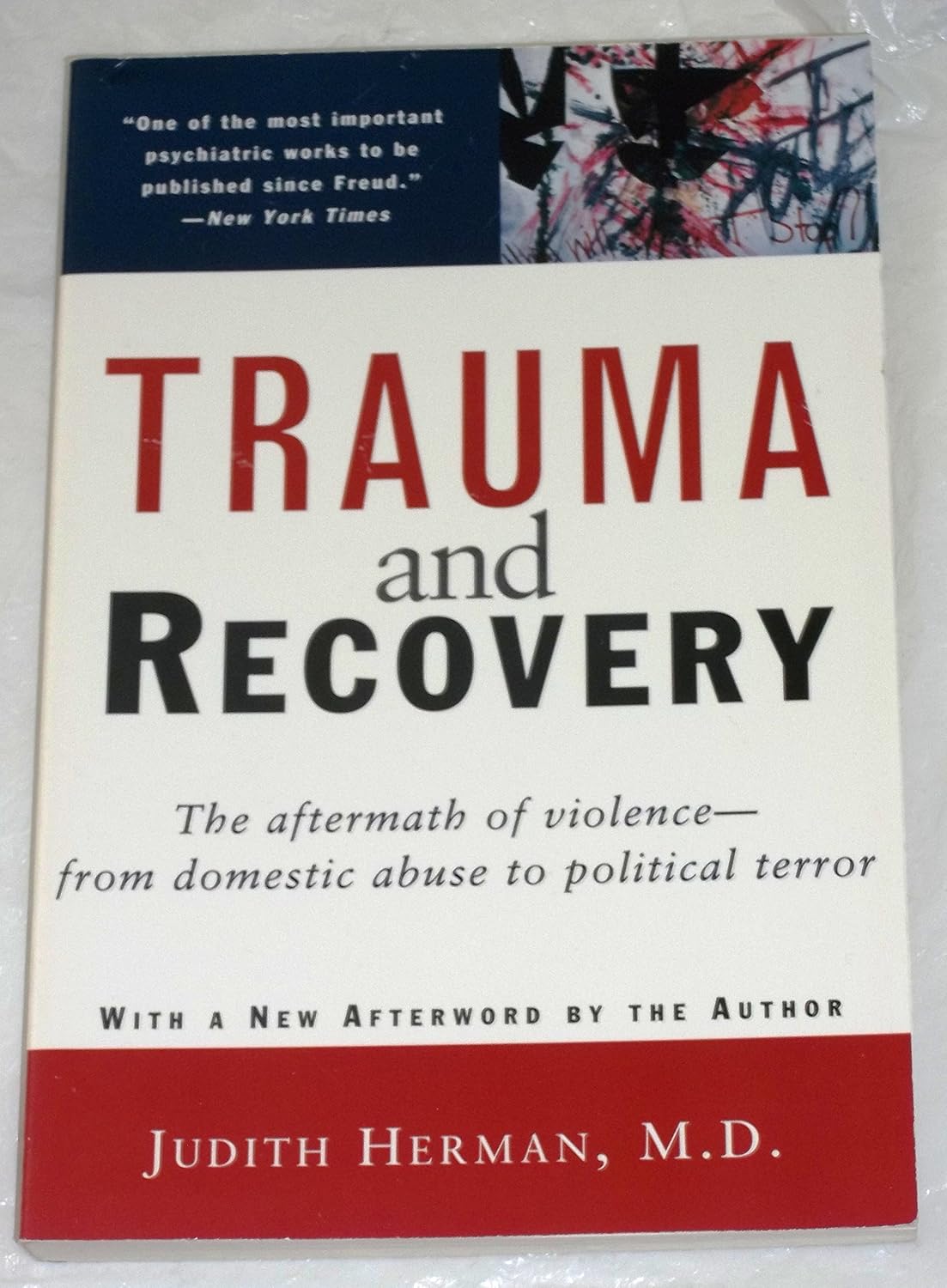
Trauma and Recovery
Judith Lewis Herman, M.D.
The seminal framework for understanding trauma and the stages of recovery — safety, remembrance, and reconnection.

What My Bones Know: A Memoir of Healing from Complex Trauma
Stephanie Foo
A journalist's honest, hopeful account of living with and healing from complex PTSD, woven with the science behind it.
As an Amazon Associate, Clarity House Press earns from qualifying purchases. Your price is never affected.
Found this helpful?
Share it with someone who might need it.
About the Author

Clarity House Press
Editorial Team
The editorial team at Clarity House Press curates and publishes evidence-based content on narcissistic abuse recovery, high-conflict divorce, and healing. Our content is informed by research, survivor experiences, and established trauma-informed approaches.
View all posts by Clarity House Press →Published by Clarity House Press Editorial Team